Search results
Search for "dielectric" in Full Text gives 463 result(s) in Beilstein Journal of Nanotechnology. Showing first 200.
Induced electric conductivity in organic polymers
Beilstein J. Nanotechnol. 2022, 13, 1551–1557, doi:10.3762/bjnano.13.128
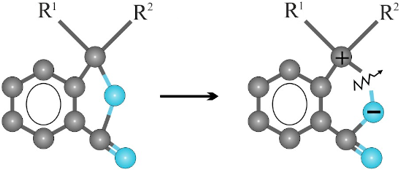
- conditions, PDP is a wide-gap dielectric material and is characterized by the following parameters: band gap ≈4.3 eV, electronic work function ≈4.2 eV, electron affinity ≈2 eV, first ionization potential ≈6.2 eV. Experimental evaluations of the electronic parameters of PDP have been made earlier by various
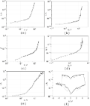
- solution of specified concentration was applied onto the dielectric substrate fixed on a centrifuge holder. The rotation speed was typically 2000 rpm. The resulting polymer film was dried in air for about 45–60 min at room temperature. Then the final drying was carried out to remove solvent residues at a
- the voltage corresponding to the transition point from linear to parabolic dependency of the I–V’s, n0 is the equilibrium concentration of charge carriers, ε and ε0 dielectric constants of the polymer and vacuum, respectively, and μ is the maximum mobility of charge carriers. According to this model



Photoelectrochemical water oxidation over TiO2 nanotubes modified with MoS2 and g-C3N4
Beilstein J. Nanotechnol. 2022, 13, 1541–1550, doi:10.3762/bjnano.13.127
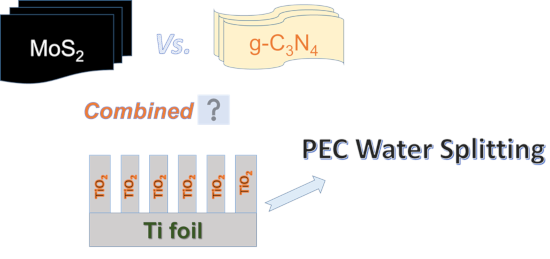
- Mott–Schottky relationship involving the apparent capacitance as a function of the potential under depletion conditions [54]: where C, ε, ε0, N, A, Va, Vfb, k, and T are the capacitance of the space charge region, the dielectric constant of the semiconductor, the vacuum permittivity, the donor density


Structural studies and selected physical investigations of LiCoO2 obtained by combustion synthesis
Beilstein J. Nanotechnol. 2022, 13, 1473–1482, doi:10.3762/bjnano.13.121
- with silver paste (Hans Wolbring GmbH) to form electrodes. IS measurements were performed using a Novocontrol AlphaA Broadband Dielectric/Impedance Spectrometer (Novocontrol GmbH) at room temperature. Measurements were carried out in the frequency range from 1 Hz to 1 MHz with an oscillation voltage of




Coherent amplification of radiation from two phase-locked Josephson junction arrays
Beilstein J. Nanotechnol. 2022, 13, 1445–1457, doi:10.3762/bjnano.13.119
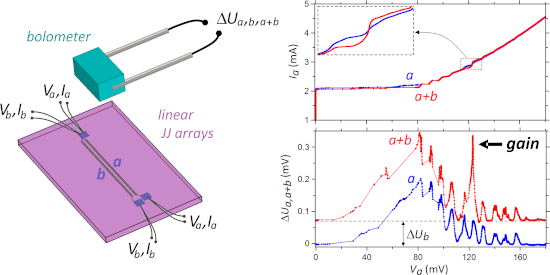
- working similar to lasers is discussed in more detail in [8]. The resonator can be a cavity of the JJs itself [2], an electrode with embedded JJs [9], or the dielectric substrate on which the JJ array is arranged [10]. Coherent superradiant amplification of emitted power is caused by a constructive
- dielectric permittivity of silicon). Under this condition, the fundamental resonant mode can be excited in the substrate between the arrays. This condition is beneficial for inter-array coupling. Numerical Calculations The experimental results presented above show that phase locking of two large JJ arrays is
- contains two identical JJ arrays arranged on a common substrate with a dielectric permittivity of ε = 12, close to that of silicon. The lateral dimensions of the substrate are 2 × 0.6 mm while the thickness is 0.3 mm. We chose such a narrow substrate to avoid excitation of transverse resonant modes inside


Double-layer symmetric gratings with bound states in the continuum for dual-band high-Q optical sensing
Beilstein J. Nanotechnol. 2022, 13, 1408–1417, doi:10.3762/bjnano.13.116
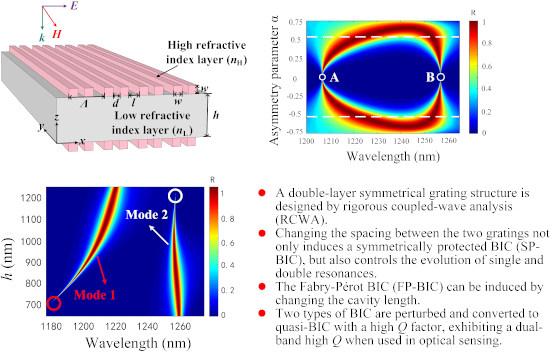
- resonance. We find that the artificial bound states in the continuum (BIC) and Fabry–Pérot BIC (FP-BIC) can be induced by optimizing structural parameters of DLSG. Interestingly, the artificial BIC is governed by the spacing between the two rectangular dielectric gratings, while the FP-BIC is achieved by
- researchers have focused their interests on the single high-Q resonance of various structures and proposed different types of structures to achieve high-Q-factors, such as metallic structures based on surface plasmon resonances [5][6], Mie resonance-based dielectric structures [7][8], and high-contrast
- infinite structure or in extreme values of the parameters [25][26]. The structures that are commonly used to induce the BIC include metasurfaces [27][28], dielectric gratings [29][30], photonic crystals [31], and whispering-gallery resonators [32]. In 2016, Wang et al. investigated a symmetry-protected BIC


LED-light-activated photocatalytic performance of metal-free carbon-modified hexagonal boron nitride towards degradation of methylene blue and phenol
Beilstein J. Nanotechnol. 2022, 13, 1380–1392, doi:10.3762/bjnano.13.114
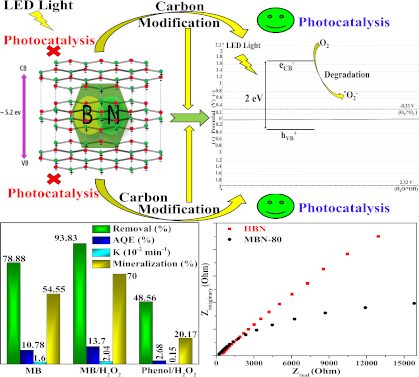
- –Schottky analysis through the following equations [28][31][32]. where Csc, e, A, ε, ε0, kB, and T indicate the capacitance of the space charge region, charge of an electron, active area of the electrode, dielectric constant, permittivity of free space, Boltzmann’s constant, and absolute temperature


Enhanced electronic transport properties of Te roll-like nanostructures
Beilstein J. Nanotechnol. 2022, 13, 1284–1291, doi:10.3762/bjnano.13.106
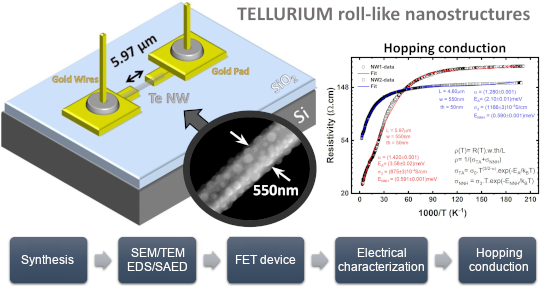
- vacuum, εav = 1.95 is the averaged relative permittivity of the SiO2/air interface of the FET [19][29]. Also, w = 550 nm, t = 50 nm, and L = 5.97 µm are the diameter of the nanostructure, the thickness of the nanostructure, and the length of the FET channel, respectively. The thickness of the dielectric




A super-oscillatory step-zoom metalens for visible light
Beilstein J. Nanotechnol. 2022, 13, 1220–1227, doi:10.3762/bjnano.13.101
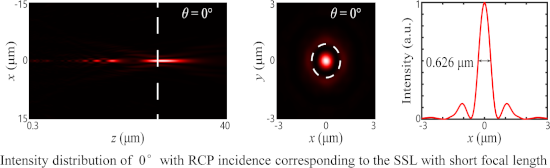
- field at the subwavelength scale [16][17][18][19][20][21][22]. Compared with metallic metasurfaces, all-dielectric metasurfaces are characterized by high amplitude transmittance, which is important for super-oscillatory lenses with comparatively low focusing efficiency. Generally, for all-dielectric


Application of nanoarchitectonics in moist-electric generation
Beilstein J. Nanotechnol. 2022, 13, 1185–1200, doi:10.3762/bjnano.13.99
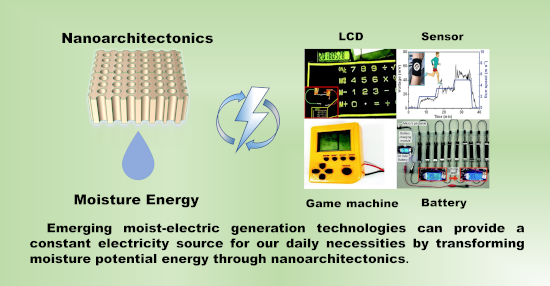
- cylindrical, the potential change (ΔV) is given by [10]: where ε is the dielectric constant of the fluid, ε0 is the vacuum permittivity, R is the flow resistance of the channel, ζ is the zeta potential of the ionic double layer on the channel surfaces, η is the liquid viscosity, C is the ionic concentration
- resistance and surface potential, directly contribute to the flow potential. At the same time, the parameters of the fluid in the nanochannel, such as dielectric constant and ion concentration, are directly related to the magnitude of the flow potential. In the nanochannel, the flow velocity ν of the fluid
- interaction. The actual charge transfer is much more complicated, involving the contact angle, dielectric function, temperature, and ion concentration [15][16][17]. In MEGs, compared to bulk materials, nanoarchitectonics yields a higher specific surface area to the active material, which makes the contact


Analytical and numerical design of a hybrid Fabry–Perot plano-concave microcavity for hexagonal boron nitride
Beilstein J. Nanotechnol. 2022, 13, 1030–1037, doi:10.3762/bjnano.13.90
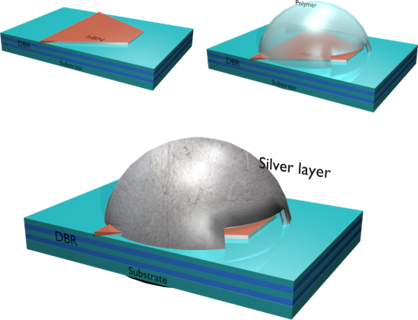
- the desired shape. A natural extension to the development of polymer photonic structures consists of the fabrication of hybrid (i.e., metal-dielectric) resonant structures [15] with the potential to enhance the light–matter interactions of such SPEs. This work will focus on finding an optimal design
- known as the q-parameters for the Gaussian beams, where z2 = L2 − Lp, z1 = L1 and zR,1,2 is the Rayleigh length for each beam. For a Gaussian beam passing through a plane dielectric interface, we have A = B = C = 0, and D = n2/n1, where n1 = 1 is the refractive index of the air gap, therefore, by
- + DBR system a L(HL)15 dielectric stack. A transfer matrix model [24] was used to calculate the electric field distribution inside the hBN + DBR system (Figure 6). The full transfer matrix S of our microcavity is defined as: where L and I represent the transfer and interface matrix, respectively, of the


Numerical study on all-optical modulation characteristics of quantum cascade lasers
Beilstein J. Nanotechnol. 2022, 13, 1011–1019, doi:10.3762/bjnano.13.88
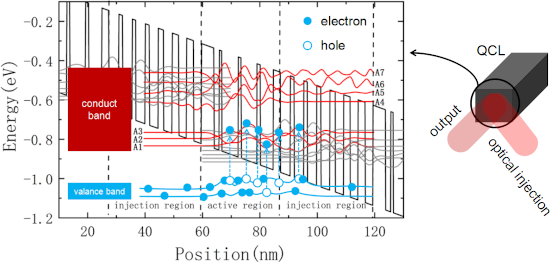
- physics in QCL’s gain medium which consists of multiple of dielectric nanostructures with high refractive index under light injection, we modified the 1½-period model to calculate values of electron population and lifetime in each subband which is separated by the nanostructures, optical gain, current and
- optimizing its use and dielectric nanostructure design. Keywords: all-optical modulation; dielectric nanostructures; high refractive index materials; numerical study; quantum cascade lasers; Introduction The quantum cascade laser (QCL) was invented nearly 30 years ago [1], and its cavity consists of
- simulation, it would be very helpful for optimizing its use and dielectric nanostructure design. Although there has been much research on all-optical modulation of QCLs, only optical injection locking [14] and quenching [15][16] can currently provide one-sided numerical support. Based on the classical 1


Theoretical investigations of oxygen vacancy effects in nickel-doped zirconia from ab initio XANES spectroscopy at the oxygen K-edge
Beilstein J. Nanotechnol. 2022, 13, 975–985, doi:10.3762/bjnano.13.85
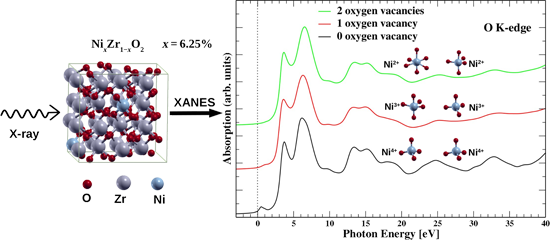
- which is being currently employed in ultra-scaled electronics for its high dielectric constant [24][25] have received significant attention because of its practical applications. Thus, recently, exploiting first principles simulations and X-ray absorption near edge spectroscopy (XANES) in high magnetic


Comparing the performance of single and multifrequency Kelvin probe force microscopy techniques in air and water
Beilstein J. Nanotechnol. 2022, 13, 922–943, doi:10.3762/bjnano.13.82
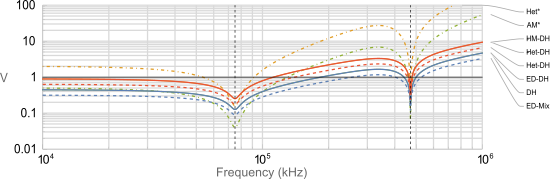
- dielectric media and do not consider additional properties such as electrodynamics or the effect of the tip–sample position relative to the position of the double layer. (3) We only compare frequency responses off resonance, ωoff, and for the first two eigenmodes of the cantilever and combinations thereof
Ultrafast signatures of magnetic inhomogeneity in Pd1−xFex (x ≤ 0.08) epitaxial thin films
Beilstein J. Nanotechnol. 2022, 13, 836–844, doi:10.3762/bjnano.13.74
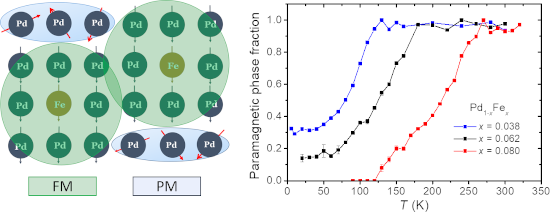
- dielectric permittivity tensor of a medium proportional to its magnetization. Therefore, any of the real θK (rotation angle) or imaginary ηK (ellipticity) parts of the complex Kerr angle ΘK = θK + iηK provide a measure of the magnetization of a medium. An ability to track modifications of these quantities on


Recent advances in nanoarchitectures of monocrystalline coordination polymers through confined assembly
Beilstein J. Nanotechnol. 2022, 13, 763–777, doi:10.3762/bjnano.13.67
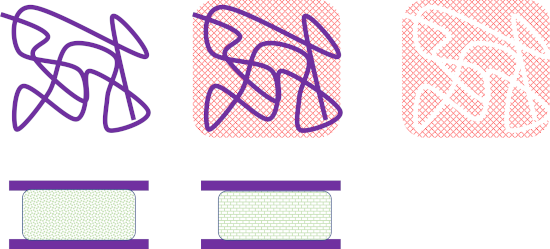
- demonstrated in millimeter-sized superstructures formed by ZIF-8 or UiO-66 [131]. Owing to the porous structure of the monocrystalline coordination polymers. The dielectric constant of the particles may be changed upon adsorption of molecules such as organic vapor. This can lead to a change of the structural




Tunable high-quality-factor absorption in a graphene monolayer based on quasi-bound states in the continuum
Beilstein J. Nanotechnol. 2022, 13, 675–681, doi:10.3762/bjnano.13.59
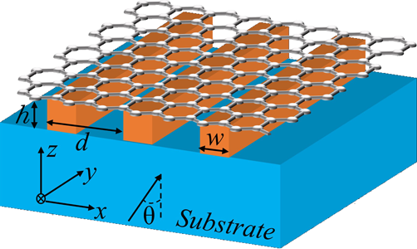
- /bjnano.13.59 Abstract A tunable graphene absorber, composed of a graphene monolayer and a substrate spaced by a subwavelength dielectric grating, is proposed and investigated. Strong light absorption in the graphene monolayer is achieved due to the formation of embedded optical quasi-bound states in the
- continuum in the subwavelength dielectric grating. The physical origin of the absorption with high quality factor is examined by investigating the electromagnetic field distributions. Interestingly, we found that the proposed absorber possesses high spatial directivity and performs similar to an antenna
- , which can also be utilized as a thermal emitter. Besides, the spectral position of the absorption peak can not only be adjusted by changing the geometrical parameters of dielectric grating, but it is also tunable by a small change in the Fermi level of the graphene sheet. This novel scheme to tune the


Antibacterial activity of a berberine nanoformulation
Beilstein J. Nanotechnol. 2022, 13, 641–652, doi:10.3762/bjnano.13.56
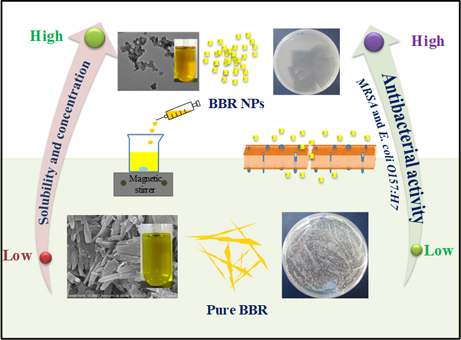
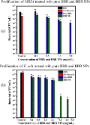
- first to report that glycerol can serve as an effective green solvent for BBR NP formation. Being non-toxic, renewable, and biodegradable, and having a suitable dielectric constant to dissolve various compounds such as BBR, glycerol is a promising candidate to replace toxic organic solvents. The effect



Detection and imaging of Hg(II) in vivo using glutathione-functionalized gold nanoparticles
Beilstein J. Nanotechnol. 2022, 13, 549–559, doi:10.3762/bjnano.13.46
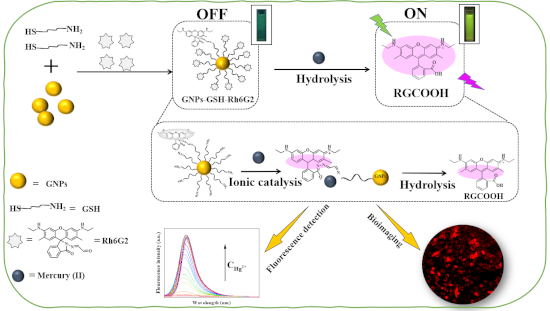
- , caused by a change in the local dielectric environment and the plasmonic absorption bands of GSH and GSH-Rh6G2-modified GNPs [43][44]. The maximum fluorescence absorption peak of GNPs-GSH-Rh6G2 is at 536 nm, whereas the emission peak is at 560 nm (Figure 1d). The excitation of GNPs-GSH-Rh6G2 was examined


Zinc oxide nanostructures for fluorescence and Raman signal enhancement: a review
Beilstein J. Nanotechnol. 2022, 13, 472–490, doi:10.3762/bjnano.13.40
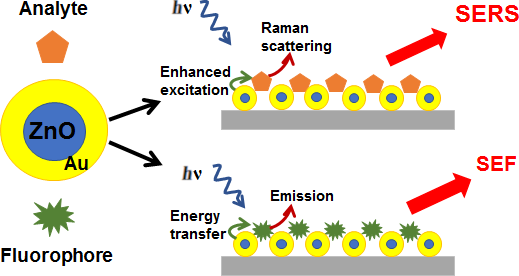
- polyols, such as high boiling point (up to 320 °C) and dielectric constant, the solubility of simple metal salt precursors, and coordinating properties for surface functionalization preventing agglomeration [27]. The ZnO NPs obtained from polyol synthesis showed excellent crystalline quality and




The role of sulfonate groups and hydrogen bonding in the proton conductivity of two coordination networks
Beilstein J. Nanotechnol. 2022, 13, 437–443, doi:10.3762/bjnano.13.36
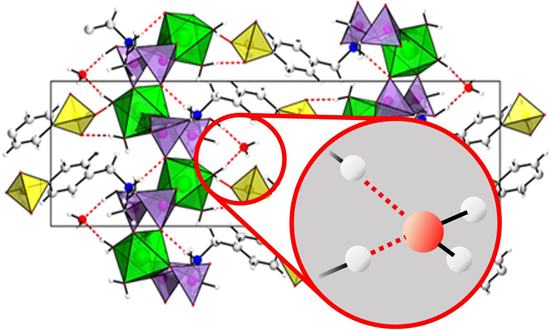
- Novocontrol broadband dielectric spectrometer (Alpha-A High Performance Frequency Analyzer). The samples were mounted between two Novocontrol BDS1200 based blocking gold-plated electrodes, and two-wire mode measurements were made, as described in earlier studies [21][29]. The impedance data was recorded in


Electrostatic pull-in application in flexible devices: A review
Beilstein J. Nanotechnol. 2022, 13, 390–403, doi:10.3762/bjnano.13.32
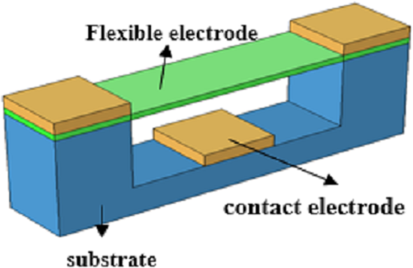
- effect The pull-in effect is a common phenomenon occurring in magnetostatic actuators, dielectric elastomer actuators, and electrostatic actuators, which can cause failure [1]. Electrostatic pull-in is a nonlinear effect caused by intensive electromechanical coupling, a unique characteristic for MEMS
- tear of the switches, especially for CNT [16] and GR [29] switches. Permanent adhesion caused by the dielectric charging [52][53] and chemical bonding [24] are the focus of the research on improving the life cycles. At present, it is mainly solved by reducing the electrode contact area [14] or
- charges, forming a dielectric charging effect. Molinero et al. [52][53] characterized the dielectric charging when the switch electrodes were contacted and proved that the surface dielectric charging caused by friction would lead to a shift of the switch voltage and shorten the life cycles of the switch


Systematic studies into uniform synthetic protein nanoparticles
Beilstein J. Nanotechnol. 2022, 13, 274–283, doi:10.3762/bjnano.13.22
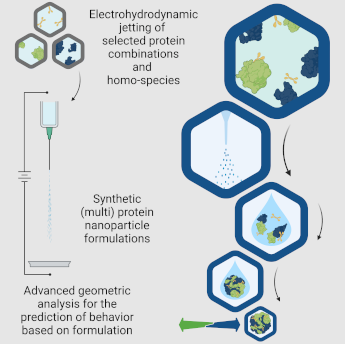
- proteins with specific biological functions, such as transferrin, insulin, albumin, mucin, or hemoglobin, may represent powerful candidates as next-generation biologics. The EHD jetting process is influenced by a number of governing principles, such as viscosity and dielectric constant of the premixture
- used for all jetting experiments. This inclusion of ethanol decreased the dielectric constant and surface tension of the solution. The exception was insulin- and mucin-based SPNPs, which were manufactured as described in the Materials section. Furthermore, a homobifunctional amine-reactive macromer


Effects of drug concentration and PLGA addition on the properties of electrospun ampicillin trihydrate-loaded PLA nanofibers
Beilstein J. Nanotechnol. 2022, 13, 245–254, doi:10.3762/bjnano.13.19
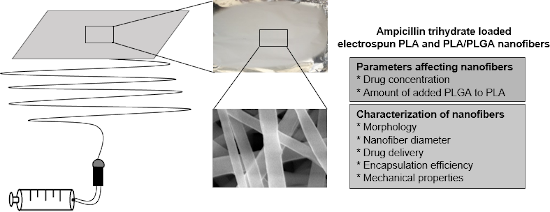
- critical component of the bacterial cell walls [9]. 1,1,1,3,3,3-Hexafluoro-2-propanol (HFIP) was used as solvent in the study. It is preferred due to its sufficiently low surface tension, sufficiently high dielectric constant, and volatility [10]. The aim of this study was to produce and characterize


Engineered titania nanomaterials in advanced clinical applications
Beilstein J. Nanotechnol. 2022, 13, 201–218, doi:10.3762/bjnano.13.15
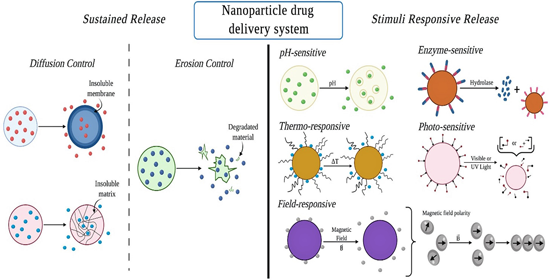
- environments, and a high strength-to-weight ratio. Moreover, titanium is somewhat negatively charged at physiological pH values because of the formation of a passive oxide layer, and its dielectric constant is equivalent to that of water [25]. The specific energy structure of TiO2 is responsible for its


Thermal oxidation process on Si(113)-(3 × 2) investigated using high-temperature scanning tunneling microscopy
Beilstein J. Nanotechnol. 2022, 13, 172–181, doi:10.3762/bjnano.13.12
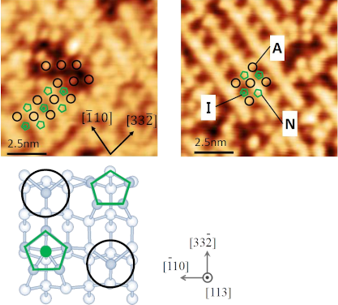
- three-dimensional metal oxide semiconductor field-effect transistors (MOSFETs) [1]. Here, formation processes of ultrathin SiO2 at the interface are considered to be quite important in determining its dielectric properties. To study procedures to fabricate gate dielectrics, it will be necessary to