


Search results
Search for "electrodes" in Full Text gives 617 result(s) in Beilstein Journal of Nanotechnology. Showing first 200.
A graphene quantum dots–glassy carbon electrode-based electrochemical sensor for monitoring malathion
Beilstein J. Nanotechnol. 2023, 14, 701–710, doi:10.3762/bjnano.14.56
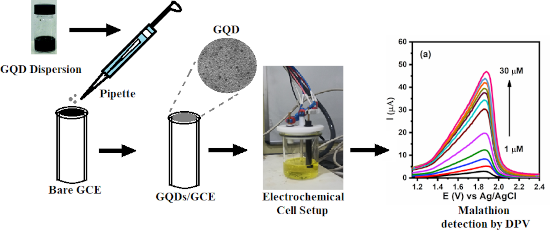
- /reduction behavior and charge transfer resistance, cyclic voltammetry and electrochemical impedance spectroscopy were performed. An investigation of the relationship between concentrations and peak currents was conducted using differential pulse voltammetry (DPV). In this study, the modified GQD electrodes
- GCE and GQDs/GCE electrodes was first evaluated using cyclic voltammetry in 0.1 M KCl containing 0.05 M [Fe(CN)6]3−/4− at a scan rate of 100 mV·s−1, as shown in Figure 7a. The bare GCE exhibits well-defined anodic and cathodic redox peaks at 1.45 and 0.16 V, respectively. In the cathodic direction
- quantitation (LOQ) of 2.06 nM was calculated using a k value of 10. A comparison of the GQDs/GCE electrode with other existing electrodes for malathion detection is presented in Table 1. It indicates that the proposed GQDs-based electrode has a lower detection limit than other electrodes. The modified GQDs/GCE


Humidity-dependent electrical performance of CuO nanowire networks studied by electrochemical impedance spectroscopy
Beilstein J. Nanotechnol. 2023, 14, 683–691, doi:10.3762/bjnano.14.54
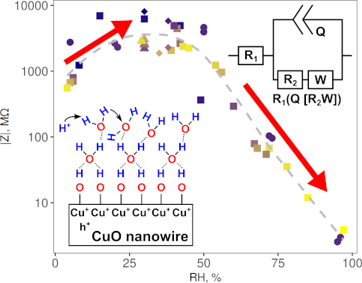
- , which was explained by water chemisorption on the nanowire surface [6][13][18][19]. Nevertheless, for single nanowires assembled on electrodes by dielectrophoresis (DEP), the opposite response to humidity was observed [21]. Besides, unusual responses to humidity were shown for nanowires of other
- the gap (Figure 1d); however, the electrical signal was assumed to come from the CuO nanowire bundles interconnecting the electrodes. Examples of impedance spectra of the CuO networks interconnecting the metal electrodes are shown in Figure 2. Figure 2a shows Nyquist plots measured for variable
- −12, and “pseudo chi imaginary” was less than 1.0 × 10⁻¹⁰, meaning that these spectra are valid for further analysis [36]. The EIS model of the whole tested sample consisted of 152 electrochemical cells, formed by nanowires interconnecting a pair of electrodes, connected in a parallel circuit. Using


Metal-organic framework-based nanomaterials as opto-electrochemical sensors for the detection of antibiotics and hormones: A review
Beilstein J. Nanotechnol. 2023, 14, 631–673, doi:10.3762/bjnano.14.52
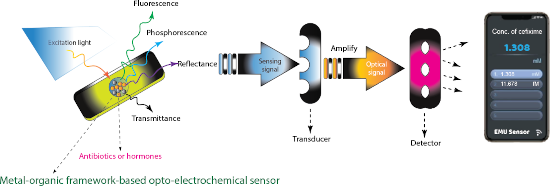
- then measure the resulting current [61]. In voltammetric sensors that typically have two or three electrodes (the working electrode, the counter electrode, and the reference electrode), the current is measured as a function of the applied voltage at the working electrode. Currently, cyclic voltammetry
- nanocomposites. Because of their large surface area, ordered structure, tunable physico-chemical properties, and good absorbability, MOFs exhibit high potential among the various materials used for electrochemical sensor electrodes [63]. Strong interactions between the functional groups of MOFs and the target


Evaluation of electrosynthesized reduced graphene oxide–Ni/Fe/Co-based (oxy)hydroxide catalysts towards the oxygen evolution reaction
Beilstein J. Nanotechnol. 2023, 14, 420–433, doi:10.3762/bjnano.14.34
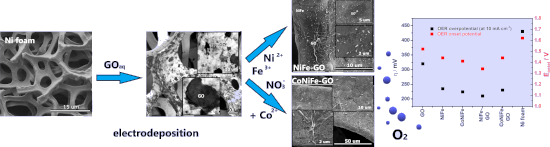
- influence of the addition of GO to NiFe and CoNiFe oxides/(oxy)hydroxides catalysts towards the OER was studied. NiFe, CoNiFe, NiFe-GO, and CoNiFe-GO were synthesized by electrodeposition directly on nickel foam. The process made it possible to fabricate OER electrodes with reduced GO and without any
- plate-like structure remained for NiFe and CoNiFe catalysts. However, in each case, some material agglomeration occurred randomly on the surface of the electrodes. No detachment of the catalyst from the surface of the nickel foam was observed. Discussion The studies showed that the addition of GO to
- , the substrates were cleaned ultrasonically in distilled water (5 min) and acetone (5 min). The reference and counter electrodes were Ag/AgCl (4 M KCl) and platinum mesh, respectively. Distilled water was used for the solutions. The measurement temperature was controlled by a thermostat (Julabo F12




A novel approach to pulsed laser deposition of platinum catalyst on carbon particles for use in polymer electrolyte membrane fuel cells
Beilstein J. Nanotechnol. 2023, 14, 190–204, doi:10.3762/bjnano.14.19
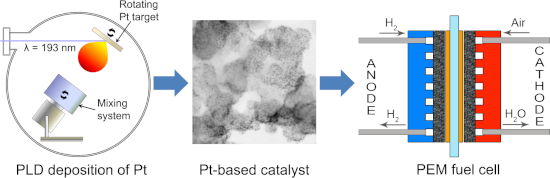
- support Platinum was deposited on the synthesized carbon material C-11 and Vulcan XC-72R, one of the most popular materials used as catalyst support in the anode and cathode electrodes of PEMFCs. The platinum deposition was performed in vacuum at a pressure of around (4.6 ± 0.8) × 10−5 mbar. The PLD
- properties of the investigated catalysts. The number of electrons obtained in the oxygen reduction reaction (the number of electrons per O2 molecule) on electrodes made of the tested catalytic materials, and the resulting amount of hydrogen peroxide produced were determined based on polarization curves
- . The durability of fabricated catalysts in RRDE tests is, after all, proportional to the amount of deposited platinum. Efficiency of manufactured catalysts in a fuel cell system Fabricated materials A, B, C, and D were used to make electrodes to investigate the efficiency of the fabricated Pt-based



A distributed active patch antenna model of a Josephson oscillator
Beilstein J. Nanotechnol. 2023, 14, 151–164, doi:10.3762/bjnano.14.16
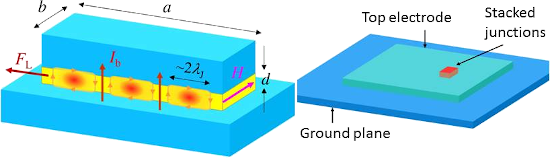
- and the flux-flow phenomenon. (iii) The slow propagation speed of EMWs inside the JJ, c0 ≪ c. This is caused by a large kinetic inductance of superconducting electrodes. For Nb-based JJs, c/c0 ≈ 40 (see the estimation in section Discussion). For atomic-scale intrinsic JJs in layered cuprates, c0 can
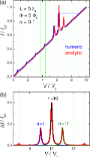
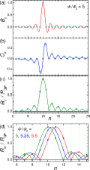
- mode, the argument of J0 becomes (c0/c)πnsinΘ. Since c0 ≪ c, k0a is small. Expanding in Equation 6, J0(x) ≃ 1 − x2/4 (for x ≪ 1), we obtain: It is seen that the mutual conductance for a JJ with thin electrodes (slow c0) is not negligible and can be as big as the single-slot conductance G1, Equation 5
- radiative losses to free space, characterized by the radiative resistance Rrad. They are connected by the transmission line impedance, Here Zsurf is the surface impedance of the electrodes, GQP = 1/RQP is the quasiparticle conductance, L is the inductance, and C is the capacitance of the JJ. The bars


Cooper pair splitting controlled by a temperature gradient
Beilstein J. Nanotechnol. 2023, 14, 61–67, doi:10.3762/bjnano.14.7
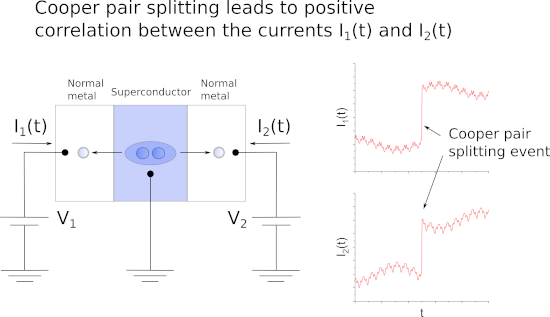
- Moscow, Russia 10.3762/bjnano.14.7 Abstract Electrons in two different normal metallic electrodes attached to a sufficiently thin superconducting island may become entangled due to the effect of Cooper pair splitting. This phenomenon is of fundamental importance and may also have serious implications
- reflection (CAR): A Cooper pair may split into two electrons [2] (see Figure 1a), thereby generating pairs of entangled electrons in different metallic electrodes [3]. This phenomenon and its effect on electron transport in normal metal–superconductor–normal metal (NSN) hybrid structures were intensively
- conducting channel transmissions τ1,n and τ2,n with n being the integer number enumerating all conducting channels. The two junctions are located at a distance considerably shorter than the superconducting coherence length ξ. Normal electrodes are kept at different temperatures T1 and T2, thus creating a


Observation of collective excitation of surface plasmon resonances in large Josephson junction arrays
Beilstein J. Nanotechnol. 2022, 13, 1578–1588, doi:10.3762/bjnano.13.132
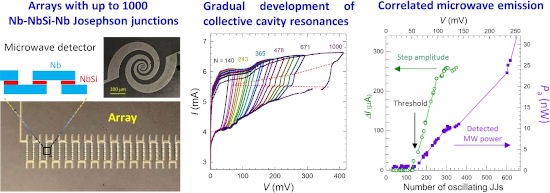
- oscillating state. We use an external detector to measure the emission of electromagnetic waves. The emission power correlates with the step amplitude. Our results indicate that the emission is facilitated by the cavity modes in the electrodes. The modes are collectively excited by active junctions. In turn
- , the standing wave imprints its order on the array, facilitating mutual phase-locking of junctions. This provides an indirect coupling mechanism, allowing for the synchronization of junctions, which do not directly interact with each other. Our results demonstrate that electrodes can effectively work
- interaction via shared electromagnetic fields and currents [26]. For conventional overlap JJs the scale of such interaction is short (nanoscale) because it is limited by the corresponding screening lengths in superconducting electrodes [27]. However, for planar JJs the direct interaction can be of long range




Utilizing the surface potential of a solid electrolyte region as the potential reference in Kelvin probe force microscopy
Beilstein J. Nanotechnol. 2022, 13, 1558–1563, doi:10.3762/bjnano.13.129
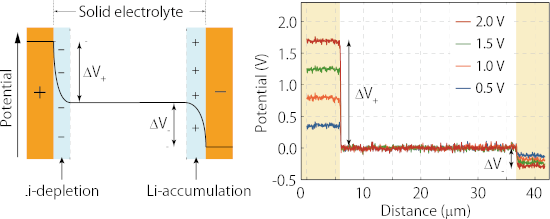
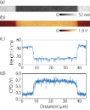
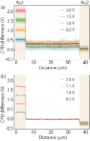
- electrodes. In Kelvin probe force microscopy (KPFM) measurements on electrochemical cells, the surface potential is generally measured relative to electrical ground instead of a stable reference. Here, we show that the changes in the surface potential, measured using KPFM relative to the surface potential in
- interface [13]. In the case of KPFM measurements, the CPD can be measured not only at the electrodes but also over the electrolyte region. Therefore, the change in the potential difference across the electrode–electrolyte interface can, in principle, be detected without a reference electrode, although this
- has not yet been directly confirmed. This study explored the possibility of obtaining a stable reference for KPFM measurements performed on electrochemical devices without a reference electrode. To this end, we prepared an electrochemical cell consisting of two Au electrodes and one Li reference




Induced electric conductivity in organic polymers
Beilstein J. Nanotechnol. 2022, 13, 1551–1557, doi:10.3762/bjnano.13.128
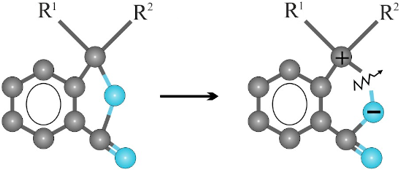
- cyclohexanone immediately before applying the polymer solution. The electrodes consisted of two mutually perpendicular lead strips with a width of ≈1 mm, between which the PDP polymer film was ‘sandwiched’ (Figure 2a). Lead was chosen as fairly low-melting metal exhibiting superconducting properties. Formation
- of thin-film lead electrodes with thicknesses from 50 nm to 200 nm was carried out by thermal evaporation in vacuum. The critical temperature of bulk lead is Тс(Pb3D) = 7.2 K. However, in the form of a thin film, the critical temperature of a superconductor can differ significantly from the tabulated
- value [15][16]. In our samples, the critical temperature of lead electrodes varied from 7.8 K < Tc(Pbfilm) < 8.2 K. Submicron PDP films were prepared by centrifuging the polymer from a solution in cyclohexanone on a solid substrate. When preparing the solution, the polymer was first soaked in a small



Photoelectrochemical water oxidation over TiO2 nanotubes modified with MoS2 and g-C3N4
Beilstein J. Nanotechnol. 2022, 13, 1541–1550, doi:10.3762/bjnano.13.127
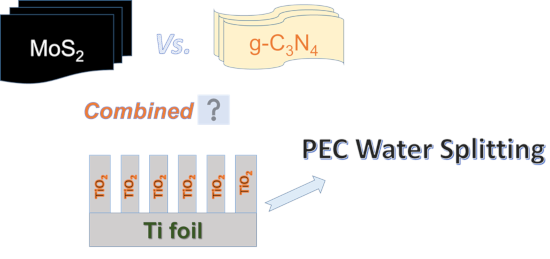
- electrodes were a Pt counter electrode, a Ag/AgCl 3 M reference electrode, and a MoS2/TNAs or g-C3N4/TNAs working electrode in a 1 M Na2SO4 (pH 7.4) electrolyte solution. The light source used in this study was a 150 W Xe lamp (ABET Instruments) with a calibrated luminous intensity of 100 mW·cm−2 and a UV
- temperature (500 °C for 2 h) in [35] yielded better results better than those of this study. The investigation of the stability of the PEC electrodes from MoS2/TNAs and g-C3N4/TNAs is described in Figure S3, Supporting Information File 1. After every PEC test cycle, we immersed the PEC electrode in DI water
- for 1 h and let it dry completely before the next test. We can conclude that the stability of the MoS2/TNAs heterojunction is higher than that of the g-C3N4/TNAs heterojunction. The decrease in catalytic activity of the PEC electrodes is explained by the leaching of the catalysts MoS2 and g-C3N4 after


A TiO2@MWCNTs nanocomposite photoanode for solar-driven water splitting
Beilstein J. Nanotechnol. 2022, 13, 1520–1530, doi:10.3762/bjnano.13.125
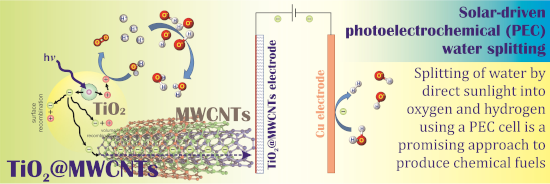
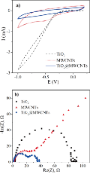
- performed in 0.1 M KCl solution at a scan rate of 50 mV·s−1 with a three-electrode cell using Ag/AgCl and Pt wire as the reference and counter electrodes, respectively. The prepared TiO2@MWCNTs electrode is used as the working electrode. The measurement is carried out in a lab under 350 ± 10 lux of
- photoelectrochemical processes occurring at the interface between electrode and electrolyte [31]. Cyclic voltammetry measurements are utilized to analyze the characteristics of charge and discharge of the photoelectrochemical electrodes. Figure 8a shows the cyclic voltammograms (CVs) generated using the prepared TiO2
- , MWCNTs, and TiO2@MWCNTs electrodes as working electrodes in 0.1 M KCl electrolyte at a sweep rate of 50 mV/s. In Figure 8a, oxidation and reduction peaks are not observed in the CVs in the scanned potential range from −1.0 to +0.2 V. In the CV of the TiO2 electrode, the current decreases significantly at



Structural studies and selected physical investigations of LiCoO2 obtained by combustion synthesis
Beilstein J. Nanotechnol. 2022, 13, 1473–1482, doi:10.3762/bjnano.13.121
- with silver paste (Hans Wolbring GmbH) to form electrodes. IS measurements were performed using a Novocontrol AlphaA Broadband Dielectric/Impedance Spectrometer (Novocontrol GmbH) at room temperature. Measurements were carried out in the frequency range from 1 Hz to 1 MHz with an oscillation voltage of




Rapid and sensitive detection of box turtles using an electrochemical DNA biosensor based on a gold/graphene nanocomposite
Beilstein J. Nanotechnol. 2022, 13, 1458–1472, doi:10.3762/bjnano.13.120
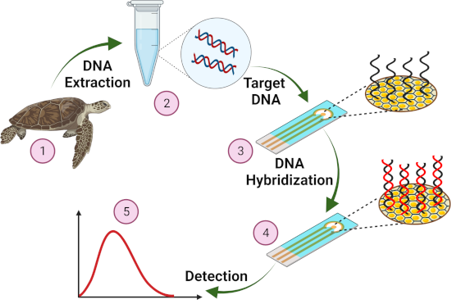
- scanning electron microscopy and structural characteristics were analysed by using energy-dispersive X-ray, UV–vis, and Fourier-transform infrared spectroscopy. The electrochemical characteristics of the modified electrodes were studied by cyclic voltammetry, differential pulse voltammetry (DPV), and
- the immobilisation of DNA. Supporting Information File 1, Table S1 illustrates the major peaks and their shifting after each modification of the nanocomposites. Modified effective surface area of screen-printed carbon electrodes Cyclic voltammetry (CV) was employed to measure SPCE and modified SPCE at
- ). Electrochemical characterisation of screen-printed carbon electrodes Figure 3b shows the CV behaviour of SPCE and different modified SPCEs with 2 mM of a [Fe(CN)6]3−/4− aqueous solution in 0.2 M KCl at a scan rate of 100 mV/S. Compared with bare SPCE, the peak currents of Gr/SPCE and AuNPs/SPCE considerably



Coherent amplification of radiation from two phase-locked Josephson junction arrays
Beilstein J. Nanotechnol. 2022, 13, 1445–1457, doi:10.3762/bjnano.13.119
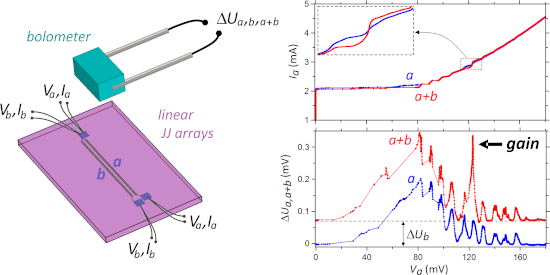
- straight electrodes with niobium JJs have been directly visualized recently using low-temperature scanning laser microscopy [13]. The scans revealed that the standing waves can provide the global coupling of all junctions in the array, that is, extended parts of the array can interact with each other. This
- generates the two-dimensional resonant mode that should lead to the increased output power. Therefore, along with the interaction between individual JJs, there is also a mutual coupling between different arrays (including JJs and electrodes) [14]. In the ideal case of two perfectly phase-locked arrays with
- the array electrodes. This leads to a profound enhancement of resonant step amplitudes in the IVCs of the arrays, indicating that the state of one array is strongly affected by oscillations in another array. The inter-array coupling is manifested by a significant amplification of emitted power with a


LED-light-activated photocatalytic performance of metal-free carbon-modified hexagonal boron nitride towards degradation of methylene blue and phenol
Beilstein J. Nanotechnol. 2022, 13, 1380–1392, doi:10.3762/bjnano.13.114
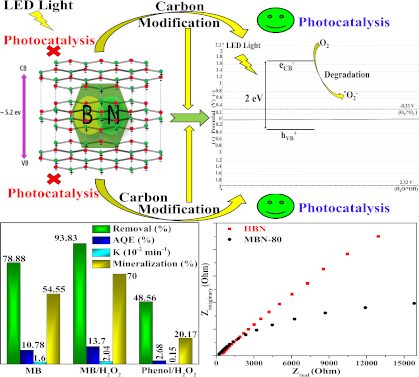
- utilizing an EMX micro A200-9.5/12/S/W, Bruker Biospin, Germany. Photoelectrochemical study The photoelectrochemical properties of the studied materials were evaluated through a CHI 650 electrochemical workstation comprising a three-electrode system with Pt and Ag/AgCl as counter and reference electrodes



Near-infrared photoactive Ag-Zn-Ga-S-Se quantum dots for high-performance quantum dot-sensitized solar cells
Beilstein J. Nanotechnol. 2022, 13, 1337–1344, doi:10.3762/bjnano.13.110
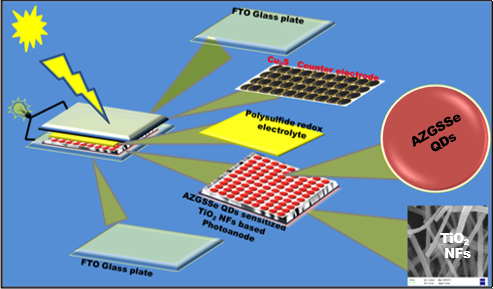
- glass. This substrate was then dried at 60 °C in vacuum for 12 h to obtain the Cu2S-based CE. CE and photoanode were sandwiched with a 60 µm hot melt spacer at 110 °C for 50 s and clipped together. After that, the electrolyte was injected between the electrodes through pre-drilled holes in the CE to get


Studies of probe tip materials by atomic force microscopy: a review
Beilstein J. Nanotechnol. 2022, 13, 1256–1267, doi:10.3762/bjnano.13.104
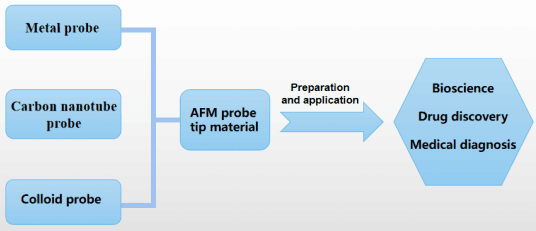
- broad particle size distribution, which was observed to be in the range of 2–80 μm. The polydispersity due to evaporation in the spark helps to select particles of suitable diameter size. The evaporation of sparks is a universal process that can be applied to basically all metals suitable as electrodes
Role of titanium and organic precursors in molecular layer deposition of “titanicone” hybrid materials
Beilstein J. Nanotechnol. 2022, 13, 1240–1255, doi:10.3762/bjnano.13.103
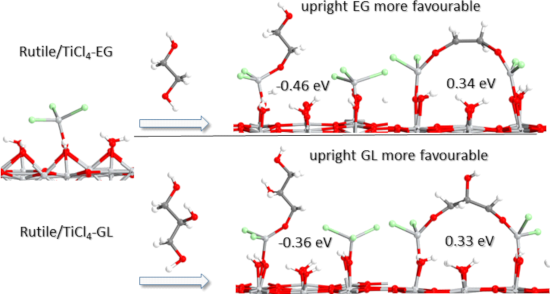
- catalytic and photocatalytic properties [46] porous TiO2 frameworks formed by the annealing of titanicone films may serve as catalytic supports [47]. Titanicone films can also be pyrolyzed under Ar to yield conducting TiO2/carbon composite films with important electrochemical applications as electrodes for
- Li ion batteries or pseudocapacitance supercapacitors [31]. These films were also employed as coatings of nano Si electrodes and successfully improved their performance [48]. As described above, different titanicone and Ti–organic MLD processes have been developed and although first principles


Design of surface nanostructures for chirality sensing based on quartz crystal microbalance
Beilstein J. Nanotechnol. 2022, 13, 1201–1219, doi:10.3762/bjnano.13.100
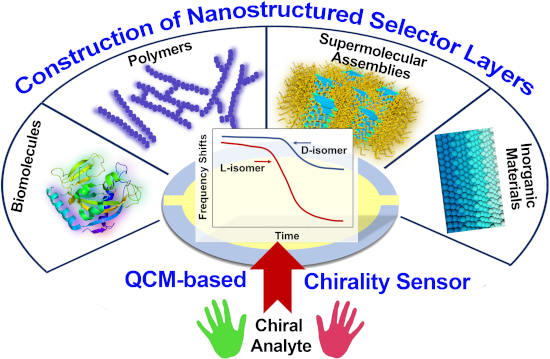
- layers, composed of biomolecules, polymers, supramolecular assemblies, and functional organic hybrids have been successfully constructed on the surface of QCM electrodes. According to frequency shifts of QCM upon adsorption, detection efficiencies of various selectors for chiral analytes could be
- are a type of simple natural molecule which is widely applied for the specific recognition of chiral analytes in QCM. The molecular layers of amino acids may be immobilized on the surface of electrodes by chemical modification and self-assembly. Mandelic acid (MA) is an important chiral intermediate
- electrodes [45]. After removal of the template by acetic acid–acetonitrile solution, permeable MIP-sensing films with an imprinted cavity could be obtained. The real-time adsorption measurements indicated that this MIP film exhibited specific recognition only for S-propranolol. Luo et al. used the in situ


Application of nanoarchitectonics in moist-electric generation
Beilstein J. Nanotechnol. 2022, 13, 1185–1200, doi:10.3762/bjnano.13.99
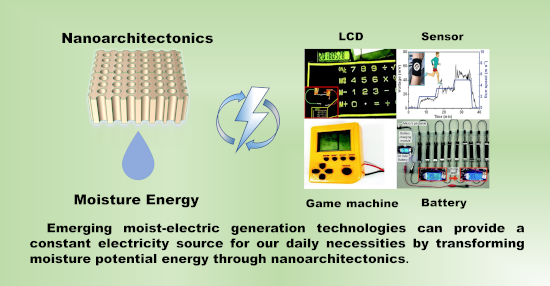
- exploiting the flow potential in nanochannels [34][39][40][41][42][43][44]. In 2014, Jun Yin et al. harvested wave energy using a single-layer graphene sheet [8][45]. The device produced a detectable electrical signal between the upper and lower electrodes when the graphene sheet was not fully immersed in
- induced voltage was detected from the top and lower electrodes during movement. Annealing treatment and plasma cleaning of the carbon particle layer have significant effects on the output voltage. After the treatment, the material changes from hydrophobic to hydrophilic, the contact angle decreases from
- propylene (FEP) film and made it have a nanoscale network structure with rough surface as shown in Figure 6g,h [21]. On a fluctuating water surface, the upper and lower electrodes on the back of the polymer will generate a potential difference, thereby generating current and voltage. Multiple device groups


DNA aptamer selection and construction of an aptasensor based on graphene FETs for Zika virus NS1 protein detection
Beilstein J. Nanotechnol. 2022, 13, 873–881, doi:10.3762/bjnano.13.78
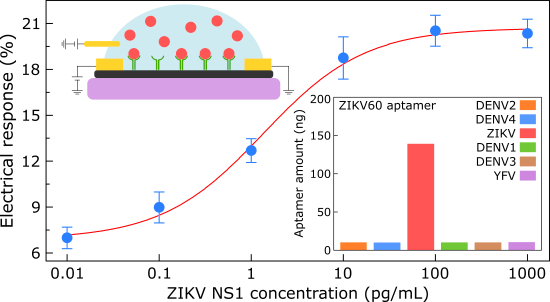
- previously described by our group elsewhere [24]. The dimensions of the sensing region (100 μm × 100 μm) were defined by O2 plasma etching. The source and drain electrodes were fabricated by electron-beam evaporation of 2 nm/100 nm of Ti/Au, and we covered the metal contacts with a 10 μm thick passivation



Self-assembly of C60 on a ZnTPP/Fe(001)–p(1 × 1)O substrate: observation of a quasi-freestanding C60 monolayer
Beilstein J. Nanotechnol. 2022, 13, 857–864, doi:10.3762/bjnano.13.76
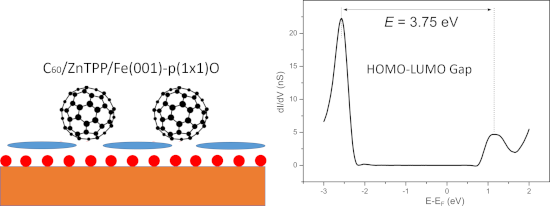
- [15][16]. The ability to tailor the degree of electronic coupling between the molecules and the substrate is of utmost importance when it comes to embedding the interface in a specific application. For instance, if the molecules are interfaced with ferromagnetic electrodes in spin-valve architectures


Recent advances in nanoarchitectures of monocrystalline coordination polymers through confined assembly
Beilstein J. Nanotechnol. 2022, 13, 763–777, doi:10.3762/bjnano.13.67

- increased by using these materials as positive electrodes. The networks can also help to accelerate ion transfer in coordination polymers. When the Prussian blue nanocrystals contain a double-network PAAm/PAMPS hydrogel, the uptake of Cs+ ions from solution could be as high as 397 mg·g−1, which is very
- . Such an enhancement could also be found in the case of electrodes for supercapacitors. The carbons derived from the inverse opal single crystals showed excellent cycling stability [120]. When the networks do not have lattice similarity with the grown monocrystalline coordination polymers, the crystal
- function is quite attractive because this function is versatile even for nanoparticles. Electrodes of sodium-ion batteries can be fabricated by using the Ni–CN–Ni colloids as glue. The contribution to the adhesion strength among 2D coordination polymers was generally considered to be van der Waals forces






Hierarchical Bi2WO6/TiO2-nanotube composites derived from natural cellulose for visible-light photocatalytic treatment of pollutants
Beilstein J. Nanotechnol. 2022, 13, 745–762, doi:10.3762/bjnano.13.66
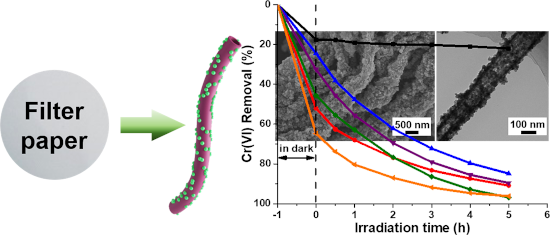
- × 1.0 cm2) and saturated calomel electrode (SCE) were used as the reference and counter electrodes, respectively. The Na2SO4 aqueous solution (0.5 M) was employed as the electrolyte and a xenon lamp with a 420 nm cutoff filter was used as the light source. The corresponding sample (5.0 mg) was
- photogenerated electron−hole pairs. It is reported that the transient photocurrent responses of the samples depend on the amounts of photogenerated charges and the kinetics of charge separation of the corresponding electrodes under irradiation of light [62]. As shown in Figure 10a, under irradiation of visible
- efficiencies of the photogenerated charges of the corresponding electrodes. As displayed in Figure 10b, the circular arc radii in the EIS Nyquist plots of all the Bi2WO6/TiO2-NT nanocomposites are smaller than those of the pure Bi2WO6 powder sample apart from the 30%−Bi2WO6/TiO2-NT nanocomposite. This





