Search results
Search for "electrostatic interactions" in Full Text gives 141 result(s) in Beilstein Journal of Nanotechnology.
pH-mediated control over the mesostructure of ordered mesoporous materials templated by polyion complex micelles
Beilstein J. Nanotechnol. 2019, 10, 144–156, doi:10.3762/bjnano.10.14
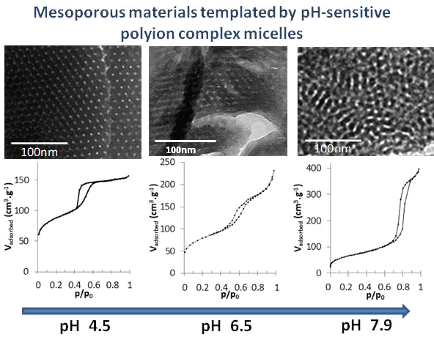
- structure, whose core is formed by electrostatic interactions between the two charged blocks (i.e., the PAA and the weak polybase) and the corona is constituted by the neutral PEO block of the DHBC, which ensures the steric stabilization of the assembly in water. In the presence of silica precursors, the
- is not formed (see Figure 1) due to the lack of favorable electrostatic interactions, whereas the organic–inorganic interface is thought to be formed by the N0/I0 pathway. Then the pH of the reaction medium was increased in order to promote both formation of PIC micelles and condensation of silica
- the amphiphilic system is constituted by a polyion electrostatic complex of OC/PAA and the corona by the H-bonded assembly of PEO block and silica species. As the pH of the synthesis medium is increased (from pH 4.5 to 6.5), the extent of the electrostatic interactions increases and the hydrogen bond


Interaction-induced zero-energy pinning and quantum dot formation in Majorana nanowires
Beilstein J. Nanotechnol. 2018, 9, 2171–2180, doi:10.3762/bjnano.9.203
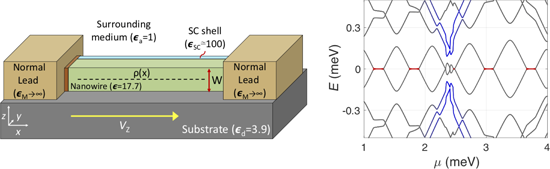
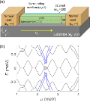
- -length wire posses a finite charge, typically distributed uniformly along the wire [34], which can be susceptible to electrostatic interactions with the surrounding medium. We considered the case of a grounded parent superconductor, thus avoiding the effect of a charging energy associated to the Cooper



The inhibition effect of water on the purification of natural gas with nanoporous graphene membranes
Beilstein J. Nanotechnol. 2018, 9, 1906–1916, doi:10.3762/bjnano.9.182
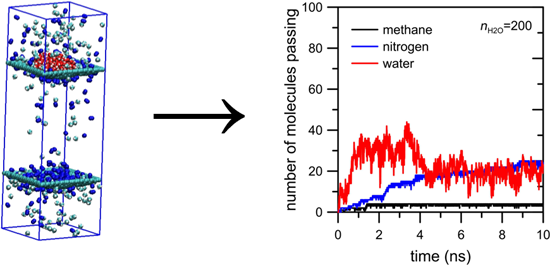
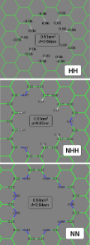
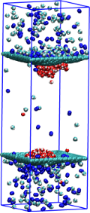
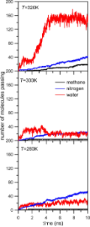
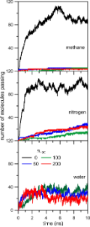
- membranes, respectively. This result is surprising. Nitrogen atoms in an NHH nanopore have a less negative charge than the average charge of nitrogens in an NN nanopore. It is possible that hydrogen bonds between water and nitrogen from NHH membrane can be stabilized due to the electrostatic interactions






SO2 gas adsorption on carbon nanomaterials: a comparative study
Beilstein J. Nanotechnol. 2018, 9, 1782–1792, doi:10.3762/bjnano.9.169

- caused by the electrostatic interactions of SO2 molecules with CO functionalities. By investigating the adsorption of a multicomponent mixture containing SO2, NO, chlorobenzene and H2O on activated carbon using a fixed-bed reactor, Li et al. observed that the presence of carbonyl groups enhances the SO2


Interaction-tailored organization of large-area colloidal assemblies
Beilstein J. Nanotechnol. 2018, 9, 1582–1593, doi:10.3762/bjnano.9.150
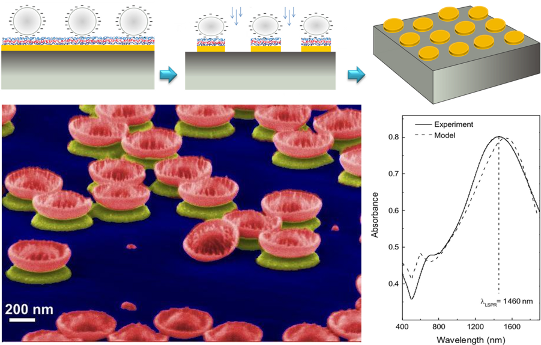
- different sizes and materials. Keywords: colloidal lithography; electrostatic interactions; large-area nanostructure patterning; localized surface plasmon resonance; spherical nanoparticles; Introduction In recent years, ordered nanostructured arrays have attracted great interest because of their
- obtain good surface coverage, we exploited electrostatic interactions between negatively charged, polystyrene, spherical, nanoscale materials and a functionalized, positively charged surface. In the case of small spheres (diameter of 80 nm), the interparticle distance and the number of randomly adsorbed
- spheres on the surface were tuned by changing the ionic strength of the particle suspension as a means to adjust the strength of their electrostatic interactions. In the case of larger diameter spheres (500 nm), this approach presents some limitations. For these samples, while drying, the higher surface


Correlative electrochemical strain and scanning electron microscopy for local characterization of the solid state electrolyte Li1.3Al0.3Ti1.7(PO4)3
Beilstein J. Nanotechnol. 2018, 9, 1564–1572, doi:10.3762/bjnano.9.148
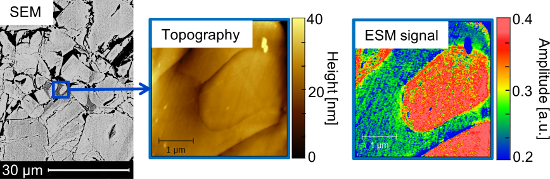
- observed ESM amplitude signal. Electrostatic interactions are discussed to be an important additional parameter that can influence ESM experiments [28][30][31] and will be the subject of future research. Additionally, LATP is known to have a strong anisotropic thermal expansion [3]. LTP, which has the same


Robust topological phase in proximitized core–shell nanowires coupled to multiple superconductors
Beilstein J. Nanotechnol. 2018, 9, 1512–1526, doi:10.3762/bjnano.9.142

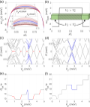
- of electrostatic interactions on the properties of the normal electronic states in core–shell nanowires can be important. The effect of interactions should be calculated using a Schrödinger–Poisson scheme, e.g., like in [55], to take into account both the interface potential between the core and the


![[Graphic 30]](/bjnano/content/inline/2190-4286-9-142-i36.svg?max-width=637&scale=1.18182) ) = 0 and
) = 0 and ![[Graphic 31]](/bjnano/content/inline/2190-4286-9-142-i37.svg?max-width=637&scale=1.18182) = 0. The white areas are t...
= 0. The white areas are t...


![[Graphic 40]](/bjnano/content/inline/2190-4286-9-142-i46.svg?max-width=637&scale=1.18182) ) ≠ 0 and
) ≠ 0 and ![[Graphic 41]](/bjnano/content/inline/2190-4286-9-142-i47.svg?max-width=637&scale=1.18182) = 0. The white areas are topol...
= 0. The white areas are topol...

![[Graphic 50]](/bjnano/content/inline/2190-4286-9-142-i56.svg?max-width=637&scale=1.18182) ) ≠ 0 and
) ≠ 0 and ![[Graphic 51]](/bjnano/content/inline/2190-4286-9-142-i57.svg?max-width=637&scale=1.18182) 1 = 0,
1 = 0, ![[Graphic 52]](/bjnano/content/inline/2190-4286-9-142-i58.svg?max-width=637&scale=1.18182) 3 = π/2,
3 = π/2, ![[Graphic 53]](/bjnano/content/inline/2190-4286-9-142-i59.svg?max-width=637&scale=1.18182) 5 = −π/2. T...
5 = −π/2. T...

![[Graphic 65]](/bjnano/content/inline/2190-4286-9-142-i71.svg?max-width=637&scale=1.18182) ) ≠ 0 and
) ≠ 0 and ![[Graphic 66]](/bjnano/content/inline/2190-4286-9-142-i72.svg?max-width=637&scale=1.18182) 1 = π/2,
1 = π/2, ![[Graphic 67]](/bjnano/content/inline/2190-4286-9-142-i73.svg?max-width=637&scale=1.18182) 3 = −π/2,
3 = −π/2, ![[Graphic 68]](/bjnano/content/inline/2190-4286-9-142-i74.svg?max-width=637&scale=1.18182) 5 = π/2, and ...
5 = π/2, and ...


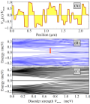
![[Graphic 79]](/bjnano/content/inline/2190-4286-9-142-i85.svg?max-width=637&scale=1.18182) = 3 of a triangular wi...
= 3 of a triangular wi...


Colorimetric detection of Cu2+ based on the formation of peptide–copper complexes on silver nanoparticle surfaces
Beilstein J. Nanotechnol. 2018, 9, 1414–1422, doi:10.3762/bjnano.9.134
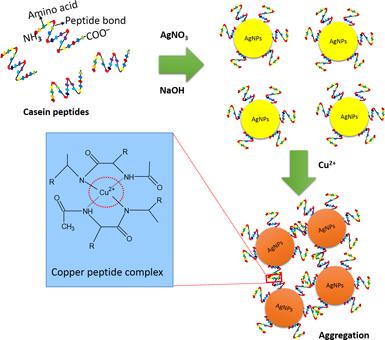
- appropriate to develop analytical applications. It can be concluded that amino acids bind to the nanoparticle surfaces through NH2–OH hydrogen bonds and electrostatic interactions [17]. In the N 1s spectrum two peaks were identified. The peak at 398.2 eV was allocated to deprotonated nitrogen bindings (N–C=O


Atomic-level characterization and cilostazol affinity of poly(lactic acid) nanoparticles conjugated with differentially charged hydrophilic molecules
Beilstein J. Nanotechnol. 2018, 9, 1328–1338, doi:10.3762/bjnano.9.126
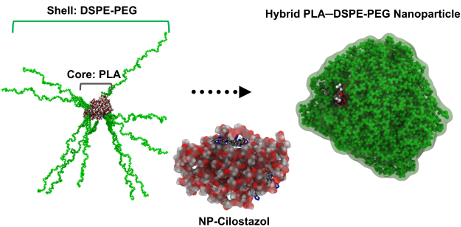
- with a novel reactive force field (ReaxFF) [36][37]. This force field considers both covalent and electrostatic interactions by employing a bond-order formalism and a polarizable charge description, enabling depiction of chemical bonding (bond formation and rupture) without expensive quantum mechanics
- the surface of the NP, interacting with the terminal groups of lipid chains (for example through electrostatic interactions) or with the solvent, and thus, the protective function of the nanocarrier would be revoked. However, significant differences in experimental results (drug loading) have been


Nanoscale mapping of dielectric properties based on surface adhesion force measurements
Beilstein J. Nanotechnol. 2018, 9, 900–906, doi:10.3762/bjnano.9.84
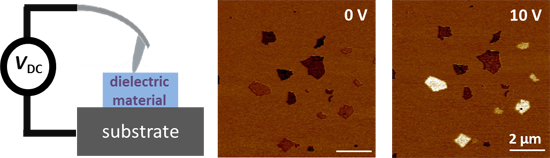
- -range electrostatic interactions between the sample and a biased AFM tip, which in turn is closely related to the intrinsic dielectric properties of materials. In this regard, one of the primary disadvantages of these dielectric-related AFM measurements is their lower lateral resolution compared to the


Tuning adhesion forces between functionalized gold colloidal nanoparticles and silicon AFM tips: role of ligands and capillary forces
Beilstein J. Nanotechnol. 2018, 9, 660–670, doi:10.3762/bjnano.9.61
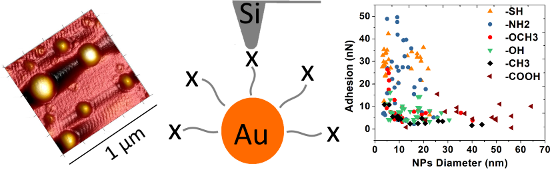
- exchange only electrostatic interactions with Au atoms and residues of Au3+ ions. However, this interaction between Au NP and ligands is strong enough to provide a long-term stability of Au NPs in solution. In addition, it allows functionalization of the NPs with a partially hydrophilic thin coating. From


The nanofluidic confinement apparatus: studying confinement-dependent nanoparticle behavior and diffusion
Beilstein J. Nanotechnol. 2018, 9, 301–310, doi:10.3762/bjnano.9.30
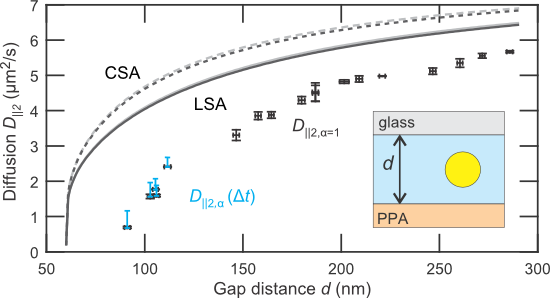
- 100 nm. This distance range interferes with several natural length scales of particle–surface interactions [8], such as the electrostatic interactions. The electrostatic interactions between charged objects and surfaces in a nanofluidic system decay approximately exponentially with separation and a



Dielectric properties of a bisimidazolium salt with dodecyl sulfate anion doped with carbon nanotubes
Beilstein J. Nanotechnol. 2018, 9, 164–174, doi:10.3762/bjnano.9.19
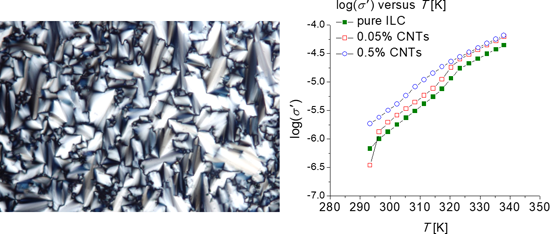
- assignment of a SmA phase. ILCs are well known to exhibit predominantly lamellar phases, with the SmA phase being the most common phase for such materials, in particular due to electrostatic interactions and ion–ion stacking in ILCs. Differential scanning calorimetry (DSC) The transitions and their


A comparative study of the nanoscale and macroscale tribological attributes of alumina and stainless steel surfaces immersed in aqueous suspensions of positively or negatively charged nanodiamonds
Beilstein J. Nanotechnol. 2017, 8, 2045–2059, doi:10.3762/bjnano.8.205
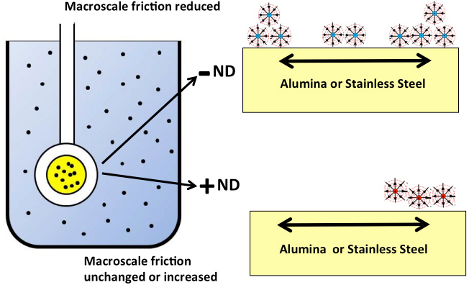
- at all. Therefore, electrostatic interactions alone would not explain effects on −ND on tribological properties of SS304 surfaces. One common feature observed in the data sets is that −ND dispersions produced through carboxylation consistently reduced the macroscopic friction coefficient relative to


Two-dimensional carbon-based nanocomposites for photocatalytic energy generation and environmental remediation applications
Beilstein J. Nanotechnol. 2017, 8, 1571–1600, doi:10.3762/bjnano.8.159
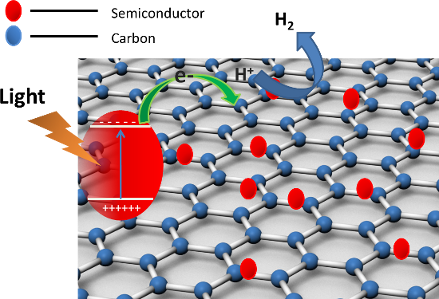
- electrostatic interactions between graphene nanoplatelets are responsible for self-assembly of graphene sheets. In addition to the above-mentioned methods, there are also other efficient methods for synthesis of graphene–metal oxide hybrid nanocomposites, such as solution mixing [59], UV-assisted reduction [13
- of g-C3N4 can remove toxic acidic molecules through electrostatic interactions [68]. The surface hydrophobicity of g-C3N4 can be changed by chemical oxidation by introducing various hydroxyl and carbonyl groups, which eventually lead to good dispersion during catalytic process. The layered g-C3N4


Development of polycationic amphiphilic cyclodextrin nanoparticles for anticancer drug delivery
Beilstein J. Nanotechnol. 2017, 8, 1457–1468, doi:10.3762/bjnano.8.145
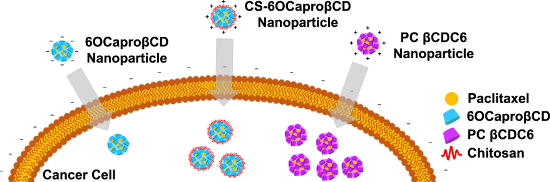
- Table 3, the drug loading capacity of the nanoparticles was strongly related to the surface charge of the CD nanoparticles. As is known, PCX itself is negatively charged, so encapsulation due to electrostatic interactions is favored for the cationic CD nanoparticles, CS-6OCaproβCD and PC βCDC6


Scaling law to determine peak forces in tapping-mode AFM experiments on finite elastic soft matter systems
Beilstein J. Nanotechnol. 2017, 8, 968–974, doi:10.3762/bjnano.8.98
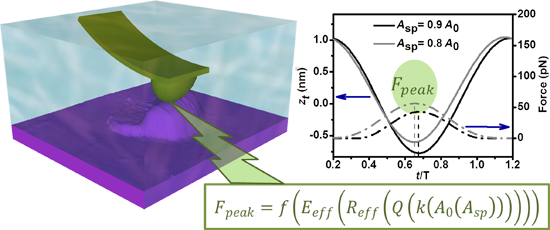
- has been deduced. Such deduction has been based in the previous works by the author [15]. The fact of reducing the electrostatic interactions of the surface charge depends strongly on the ionic strength and pH values of the liquid [32]. Thus, immersing the surface sample and the probe into a liquid
- with a certain salt concentration that reduces the electrostatic interactions to a minimum are assumed as medium conditions in this article [33]. The use of Hertzian mechanics has been generalized to model the tip–sample interaction forces for relatively rigid materials [34]. However, for finite soft


Selective detection of Mg2+ ions via enhanced fluorescence emission using Au–DNA nanocomposites
Beilstein J. Nanotechnol. 2017, 8, 762–771, doi:10.3762/bjnano.8.79
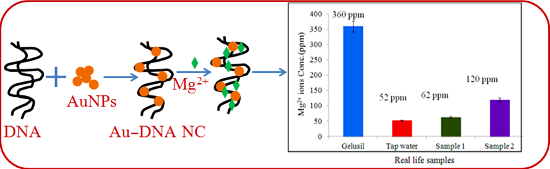
- idea about the electrostatic interactions between DNA and AuNPs. Metal-ion detection Upon excitation at 260 nm, the AuNPs did not exhibit fluorescence, however, bare herring sperm DNA used for detection showed fluorescence emission at 400 nm. A significant increase in the fluorescence emission (λex




Analysis and modification of defective surface aggregates on PCDTBT:PCBM solar cell blends using combined Kelvin probe, conductive and bimodal atomic force microscopy
Beilstein J. Nanotechnol. 2017, 8, 579–589, doi:10.3762/bjnano.8.62
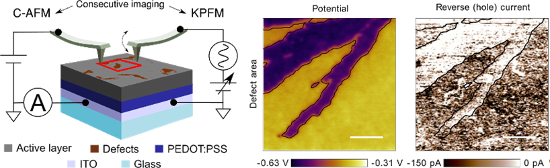
- of the bulk film. Although an artifact based on electrostatic interactions could also influence the measured height, we can exclude this possibility because the electrostatic force is a long-range force [24] that leads to blurred boundaries and lower resolution than in the phase images, as is clear


Streptavidin-coated gold nanoparticles: critical role of oligonucleotides on stability and fractal aggregation
Beilstein J. Nanotechnol. 2017, 8, 1–11, doi:10.3762/bjnano.8.1
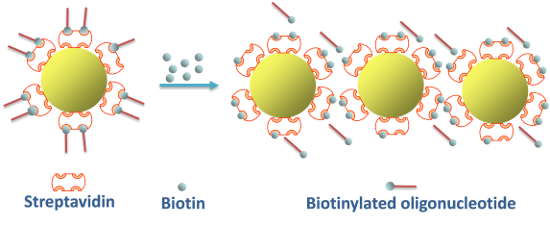
- that is polymer-depleted because of increased steric hindrance. Non-specific protein-DNA interactions are mediated by electrostatic interactions with the charged DNA backbone, hydrogen bonding, van der Waals forces and hydrophobic interactions [62][63][64]. The whole non-specific interaction can push




Intercalation and structural aspects of macroRAFT agents into MgAl layered double hydroxides
Beilstein J. Nanotechnol. 2016, 7, 2000–2012, doi:10.3762/bjnano.7.191
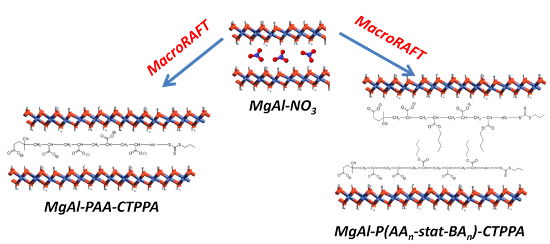
- counterions (MgAl-NO3 LDH). At basic pH, the copolymer chains (macroRAFT agents) carry negative charges which allowed the establishment of electrostatic interactions with the LDH interlayer and their intercalation. The resulting hybrid macroRAFT/LDH materials displayed an expanded interlamellar domain


Organoclay hybrid materials as precursors of porous ZnO/silica-clay heterostructures for photocatalytic applications
Beilstein J. Nanotechnol. 2016, 7, 1971–1982, doi:10.3762/bjnano.7.188
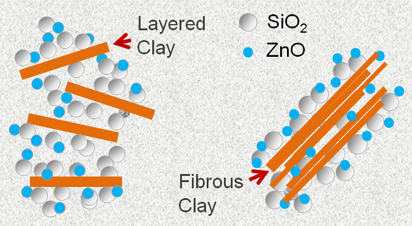
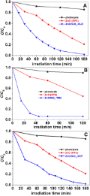
- from solution. This is especially relevant in the present case as MB is a cationic molecule that may be adsorbed by the clay component due to electrostatic interactions in an ion-exchange mechanism. The initial amount of MB adsorbed by the different substrates is in the range of 8–12 mmol/100g. The





Nano- and microstructured materials for in vitro studies of the physiology of vascular cells
Beilstein J. Nanotechnol. 2016, 7, 1620–1641, doi:10.3762/bjnano.7.155
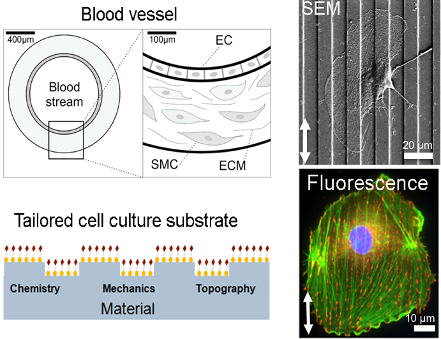
- substrate due to electrostatic interactions. The sum of these ligand–receptor interactions, basically the biological adhesion, is signaling outside–inside and is a key factor for regulation of cell functions [137][138]. Therefore, adequate and controlled (bio)functionalizing of a materials surface is
- through electrostatic interactions [149][150]. A more native coating of artificial surfaces can be achieved by absorbing molecules from the extracellular matrix (ECM). Commonly used cell ligands enabling a specific cell adhesion are either the full molecules or peptides with motifs from ECM molecules such



An efficient recyclable magnetic material for the selective removal of organic pollutants
Beilstein J. Nanotechnol. 2016, 7, 1447–1453, doi:10.3762/bjnano.7.136
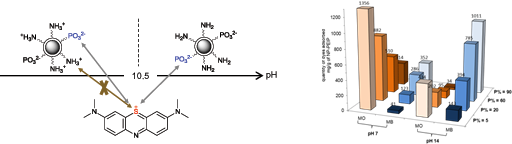
- , therefore they have strongest influence on the behaviour of the particles. We can predict that the MO extraction is maximized between pH 3.4 (above its pKa) and pH 10.5, corresponding to the amine deprotonation on the NP-PEIP. In this range of pH, the electrostatic interactions between numerous ammonium and
- . All of these results show that, in the case of maghemite coated with phosphonated PEI adsorbing MO and MB, electrostatic interactions are predominant. Quantities of pollutant extracted according to the percentage of phosphonation Performances of remediation for nanoparticles coated with different


High performance Ce-doped ZnO nanorods for sunlight-driven photocatalysis
Beilstein J. Nanotechnol. 2016, 7, 1338–1349, doi:10.3762/bjnano.7.125
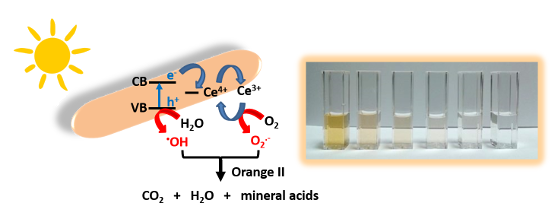
- the electrostatic repulsion of Orange II with the catalyst or that these cations increase the amount of dye at the surface of the catalyst due to electrostatic interactions between the negatively charged Ce-doped ZnO, the cation and the anionic Orange II dye. We also varied the nature of the anions