Search results
Search for "highly sensitive" in Full Text gives 169 result(s) in Beilstein Journal of Nanotechnology.
Wearable, stable, highly sensitive hydrogel–graphene strain sensors
Beilstein J. Nanotechnol. 2019, 10, 475–480, doi:10.3762/bjnano.10.47
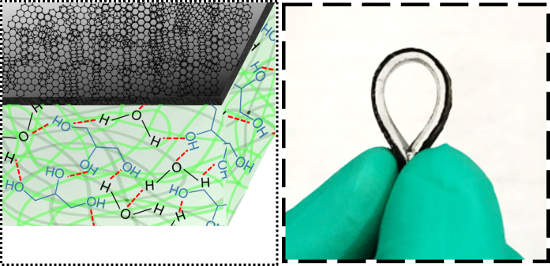
- 21500, P. R. China Research institute of Xi'an Jiaotong University, Hangzhou, Zhejiang, 311215, P. R. China 10.3762/bjnano.10.47 Abstract A stable and highly sensitive graphene/hydrogel strain sensor is designed by introducing glycerol as a co-solvent in the formation of a hydrogel substrate and then
- sensor to be used in a real working scenario. Conclusion We have demonstrated a wearable, stable, and highly sensitive strain sensor, based on a binary solvent, graphene/WG-hydrogel composite material, synthesized using a two-step process. The long-term water-retention properties of the graphene/WG


A comparison of tarsal morphology and traction force in the two burying beetles Nicrophorus nepalensis and Nicrophorus vespilloides (Coleoptera, Silphidae)
Beilstein J. Nanotechnol. 2019, 10, 47–61, doi:10.3762/bjnano.10.5
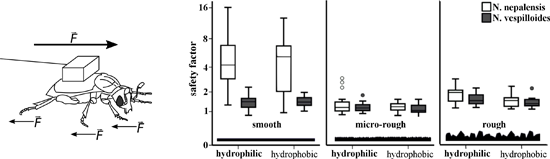
- (CSM Instruments, Peseux, Switzerland) equipped with a dual-beam cantilever STH-001 as previously described [19]. This cantilever features a highly sensitive dual-beam spring able to measure forces in the x-direction (Ft, stiffness = 4.8139 mN/µm) and z-direction (Fn, stiffness = 0.5122 mN/µm) with a




A new bioinspired method for pressure and flow sensing based on the underwater air-retaining surface of the backswimmer Notonecta
Beilstein J. Nanotechnol. 2018, 9, 3039–3047, doi:10.3762/bjnano.9.282
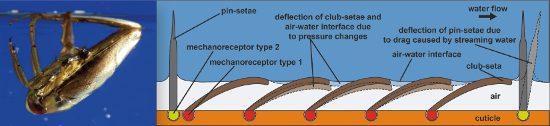
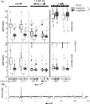
- , we provide a biomimetic proof of principle to validate our hypothesis. The suggested sensory principle has never been documented before and is not only of interest for sensory biologists but can also be used for the development of highly sensitive underwater acoustic or seismographic sensory systems


Graphene-enhanced metal oxide gas sensors at room temperature: a review
Beilstein J. Nanotechnol. 2018, 9, 2832–2844, doi:10.3762/bjnano.9.264
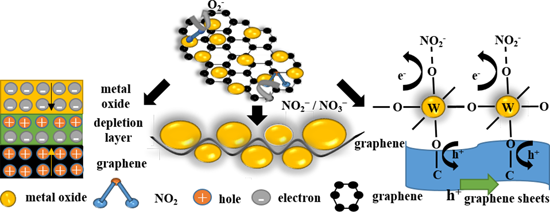
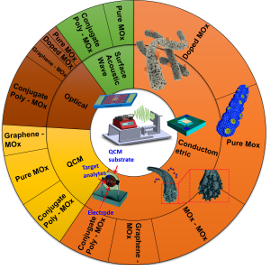
- composites. The ZnO–rGO sensor exhibited a response of 1.2 to NH3 with ultra-fast response/recovery times of 78 s/188 s, which was much better than that of a pure rGO sensor (low response and endless recovery time). The composite sensor with the optimal amount of GO (1.5 mL) was highly sensitive to low



Magnetic and luminescent coordination networks based on imidazolium salts and lanthanides for sensitive ratiometric thermometry
Beilstein J. Nanotechnol. 2018, 9, 2775–2787, doi:10.3762/bjnano.9.259
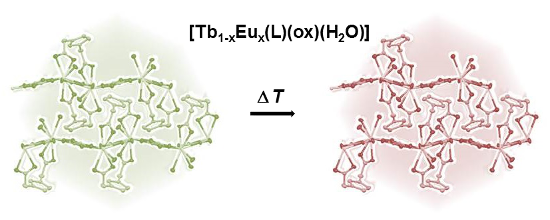
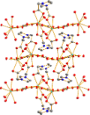
- ). The emission of Eu3+ is highly sensitive to slight changes in the first coordination sphere of the metal, and because of this it is widely used as a local probe [61]. For [Eu(L)(ox)(H2O)], the emission spectra recorded at 297 K and 12 K show i) a single 5D0→7F0 transition and a local-field splitting



Nanostructured liquid crystal systems and applications
Beilstein J. Nanotechnol. 2018, 9, 2644–2645, doi:10.3762/bjnano.9.245

- well as in food production. The molecules of the human body (e.g., DNA, proteins) can also form liquid crystal phases. Many applications of liquid crystals require the manipulation of structures on the nanometer scale. For example, these highly sensitive materials are capable of changing their
Effective sensor properties and sensitivity considerations of a dynamic co-resonantly coupled cantilever sensor
Beilstein J. Nanotechnol. 2018, 9, 2546–2560, doi:10.3762/bjnano.9.237
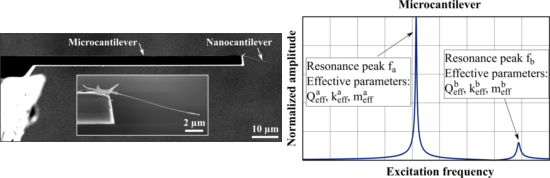
- of highly sensitive cantilevers with state-of-the-art equipment. Therefore, new concepts which access the high sensitivity of a nanocantilever but at the same time preserve the ease of oscillation detection need to be explored. One approach is a recently introduced co-resonant measurement principle
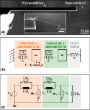
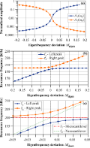
- cantilevers. Thus, any interaction applied at the highly sensitive nanocantilever alters the oscillatory state of the coupled system as a whole and can be detected by measuring the coupled system’s amplitude response curve at the microcantilever [13][14]. Details about the basic underlying sensing principle


![[Graphic 7]](/bjnano/content/inline/2190-4286-9-237-i43.svg?max-width=637&scale=1.18182) ...
...


Directional light beams by design from electrically driven elliptical slit antennas
Beilstein J. Nanotechnol. 2018, 9, 2361–2371, doi:10.3762/bjnano.9.221
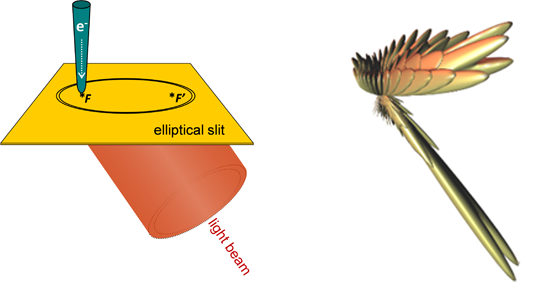
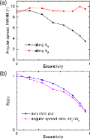
- angular spread of the emitted beam depends on the length of the ellipse axes and not on its eccentricity. In addition, light beaming is robust to amplitude inhomogeneities of the scattered field from the slit (which becomes more inhomogeneous as the eccentricity increases) but is highly sensitive to its





Influence of the thickness of an antiferromagnetic IrMn layer on the static and dynamic magnetization of weakly coupled CoFeB/IrMn/CoFeB trilayers
Beilstein J. Nanotechnol. 2018, 9, 2198–2208, doi:10.3762/bjnano.9.206
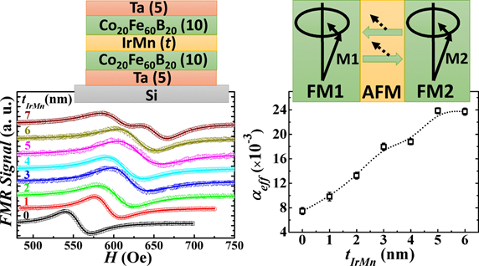
- to the oblique deposition geometry [39]. Since CoFeB is highly sensitive to this induced anisotropic stress (owing to their large positive saturation magnetostriction coefficient λs [40]), the deposition geometry effectively results in the observed UMA [41]. The UMA in films is found to be directly


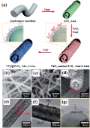
Electrospun one-dimensional nanostructures: a new horizon for gas sensing materials
Beilstein J. Nanotechnol. 2018, 9, 2128–2170, doi:10.3762/bjnano.9.202
- important active materials for gas sensing applications. Such highly sensitive and selective elements can be embedded in sensor nodes for internet-of-things applications or in mobile systems for continuous monitoring of air pollutants and greenhouse gases as well as for monitoring the well-being and health






Self-assembled quasi-hexagonal arrays of gold nanoparticles with small gaps for surface-enhanced Raman spectroscopy
Beilstein J. Nanotechnol. 2018, 9, 1977–1985, doi:10.3762/bjnano.9.188
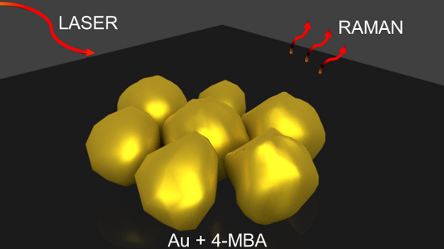
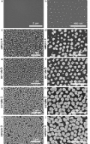
- increases, their size increases up to about 100 nm to 120 nm. A systematic offset can be discerned between the separate test series, indicating that the process is highly sensitive to the exact preparation conditions during the fabrication process even when the same recipe is followed. In addition, the



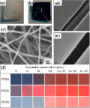
Colorimetric detection of Cu2+ based on the formation of peptide–copper complexes on silver nanoparticle surfaces
Beilstein J. Nanotechnol. 2018, 9, 1414–1422, doi:10.3762/bjnano.9.134
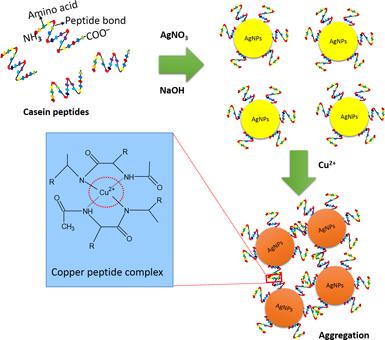
- ., atomic emission spectrometer, atomic absorption spectrometer, inductively coupled plasma mass spectrometer) are only of limited use for on-site applications [6]. Thus, the development of a convenient but highly sensitive and selective sensing method for Cu2+ with improved practicality is urgently needed


A simple extension of the commonly used fitting equation for oscillatory structural forces in case of silica nanoparticle suspensions
Beilstein J. Nanotechnol. 2018, 9, 1095–1107, doi:10.3762/bjnano.9.101
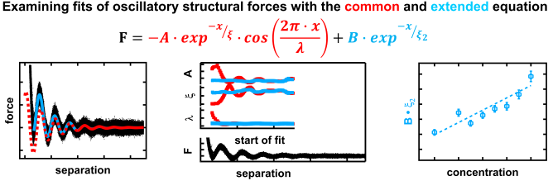
- multiple factors. On one hand, identifying the factual A depends on the correct determination of the spring constant. As mentioned above this was done via the thermal noise method and already introduces an error of about 10%. On the other hand, it is highly sensitive to the correct transformation of the


Theoretical study of strain-dependent optical absorption in a doped self-assembled InAs/InGaAs/GaAs/AlGaAs quantum dot
Beilstein J. Nanotechnol. 2018, 9, 1075–1084, doi:10.3762/bjnano.9.99
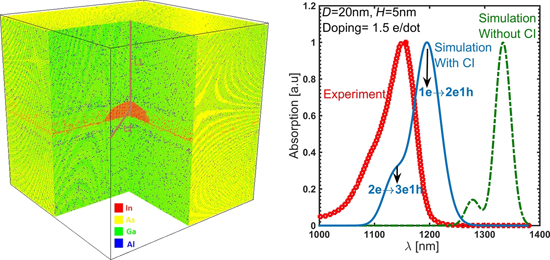
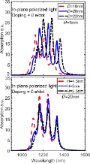
- effects of alloy mole fraction of the strain controlling layer and quantum dot dimensions are discussed. Increasing the mole fraction of the strain controlling layer leads to a lower energy gap and a larger absorption wavelength. Surprisingly, the absorption wavelength is highly sensitive to the changes




Comparative study of sculptured metallic thin films deposited by oblique angle deposition at different temperatures
Beilstein J. Nanotechnol. 2018, 9, 954–962, doi:10.3762/bjnano.9.89
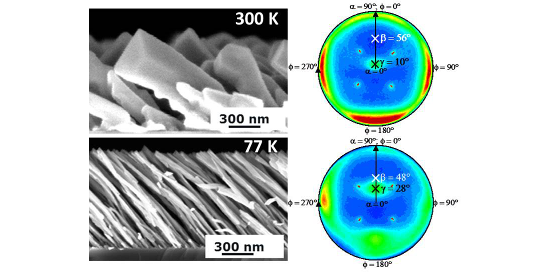
- , such thin films are the basis for surface enhanced Raman sensors, which are highly sensitive in the detection of environmental toxics [2] or glycated hemoglobin [3]. It has also been shown that highly porous metallic thin films can be used to improve the electrode’s performance for applications in fuel



Facile chemical routes to mesoporous silver substrates for SERS analysis
Beilstein J. Nanotechnol. 2018, 9, 880–889, doi:10.3762/bjnano.9.82
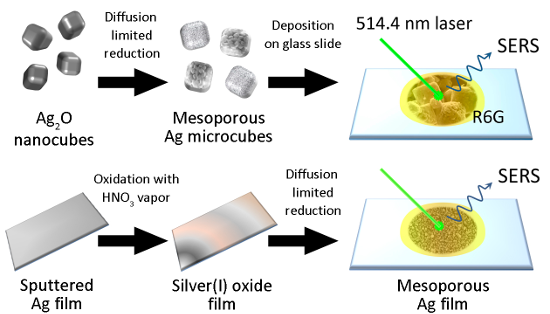
- nanostructured silver recrystallization and degradation processes. Conclusion In summary, an efficient and convenient synthesis method was proposed for mesoporous silver micrometer and submicrometer-sized particles. The obtained porous silver cubes were found to be highly sensitive SERS substrates with an


Valley-selective directional emission from a transition-metal dichalcogenide monolayer mediated by a plasmonic nanoantenna
Beilstein J. Nanotechnol. 2018, 9, 780–788, doi:10.3762/bjnano.9.71
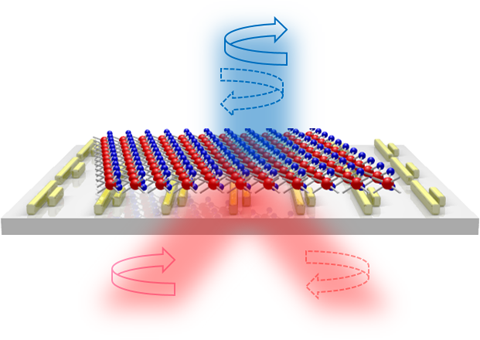
- emission from local emitters enabled by plasmonic nanoantenna is highly sensitive to the position of the emitters [33][37]. The hotspots of the nanoantenna presented here might affect the observed directionality too, while the accurate effects rely on experimental studies. To improve the directionality, we


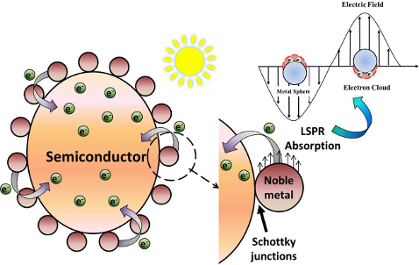
Mechanistic insights into plasmonic photocatalysts in utilizing visible light
Beilstein J. Nanotechnol. 2018, 9, 628–648, doi:10.3762/bjnano.9.59
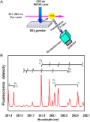
- -induced fluorescence methods This highly sensitive method is employed to detect an low concentration of •OH radicals in the atmosphere. Figure 15a shows the experimental framework to measure the •OH radicals generated from irradiated TiO2 [128]. A dye laser, which acts as a source of the emission





Gas-sensing behaviour of ZnO/diamond nanostructures
Beilstein J. Nanotechnol. 2018, 9, 22–29, doi:10.3762/bjnano.9.4
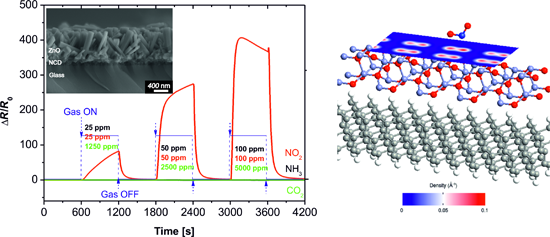
- concentration is increased, whereas for CO2 no change of transmission occurred. These preliminary results open new perspectives in the development of highly sensitive gas sensors based on hybrid nanostructures. Schematic drawing of the sensor assembly designs: (a) continuous NCD film, (b) ZnO nanorods, and (c


Material discrimination and mixture ratio estimation in nanocomposites via harmonic atomic force microscopy
Beilstein J. Nanotechnol. 2017, 8, 2771–2780, doi:10.3762/bjnano.8.276
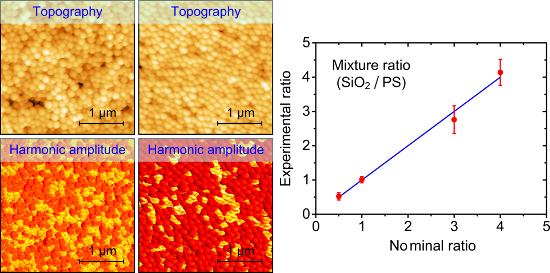
- force, the cantilever oscillation will show certain higher harmonic components [18], which are dominated by contact force and contact time [19][20][21]. Theoretical analysis and preliminary experiments have demonstrated that the harmonic signals are highly sensitive to the variation of local elasticity




Hyperthermic intracavitary nanoaerosol therapy (HINAT) as an improved approach for pressurised intraperitoneal aerosol chemotherapy (PIPAC): Technical description, experimental validation and first proof of concept
Beilstein J. Nanotechnol. 2017, 8, 2729–2740, doi:10.3762/bjnano.8.272
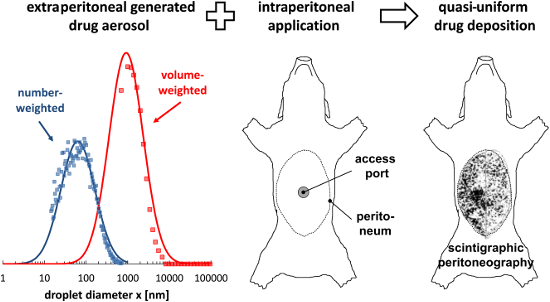
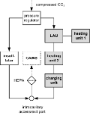
- a few nanometres by means of highly sensitive aerosol-analytic instruments. To ensure quantitative data evaluation, these analyses were performed within a flow channel. A schematic diagram of the operated experimental setup is given in Figure 3. For the purpose of defined aerosol dilution, the


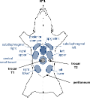


Beyond Moore’s technologies: operation principles of a superconductor alternative
Beilstein J. Nanotechnol. 2017, 8, 2689–2710, doi:10.3762/bjnano.8.269



Amplified cross-linking efficiency of self-assembled monolayers through targeted dissociative electron attachment for the production of carbon nanomembranes
Beilstein J. Nanotechnol. 2017, 8, 2562–2571, doi:10.3762/bjnano.8.256
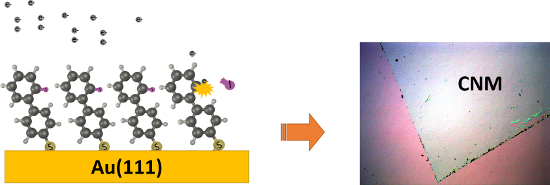
- analyzer energy (CAE) mode at varying energies of 20–50 eV, depending on the element under detection. Since 2-I-BPT is highly sensitive to light exposure, its preparation and the experiments were performed either in the dark or using a yellow-light environment. The HIM images were recorded using a Zeiss

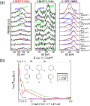
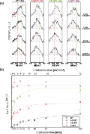

Ferrocholesteric–ferronematic transitions induced by shear flow and magnetic field
Beilstein J. Nanotechnol. 2017, 8, 2552–2561, doi:10.3762/bjnano.8.255
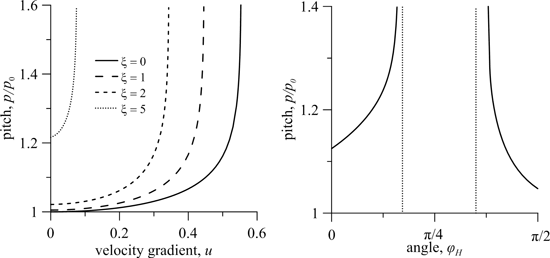
- mechanism of interaction between the LC and an external magnetic field, the addition of magnetic particles into the LC leads to the appearance of an additional dipole mechanism of the influence on the system. Some types of synthesized ferroliquid crystals have ferromagnetic properties and are highly
- sensitive to an external magnetic field [11][12]. If the carrier medium in the ferroliquid crystal is a cholesteric liquid crystal (CLC), such a composite system is called ferrocholesteric (FC). A distinctive feature of a CLC is the presence of a supramolecular helical structure, which is very sensitive to


Refractive index sensing and surface-enhanced Raman spectroscopy using silver–gold layered bimetallic plasmonic crystals
Beilstein J. Nanotechnol. 2017, 8, 2492–2503, doi:10.3762/bjnano.8.249
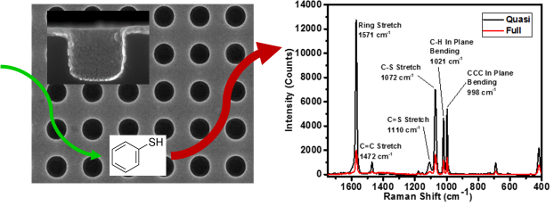
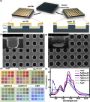
- a metal nanostructure (localized surface plasmons). The attributes of these excitations are highly sensitive to local refractive index changes, which in turn allow for their exploitation in chemical and biological sensing [7][8][9]. In this way, surface plasmonic resonance (SPR) sensors are
- -sized features of the metallic structures. The appropriate optical constants for each material and the geometrical model of the periodic nanohole array are crucial for FDTD modeling because all of the plasmonic modes are highly sensitive to the structural details and dielectric properties of the
- the blue wavelength region expected for Ag in contrast to Au. The optical features appearing between 400–600 nm for the Ag PCs suggest a possibility for a highly sensitive response for such PCs at near-UV and visible wavelengths [62][63]. Bulk refractive index sensitivity of bimetallic plasmonic