Search results
Search for "metal oxides" in Full Text gives 228 result(s) in Beilstein Journal of Nanotechnology. Showing first 200.
Targeted therapeutic effect against the breast cancer cell line MCF-7 with a CuFe2O4/silica/cisplatin nanocomposite formulation
Beilstein J. Nanotechnol. 2019, 10, 2217–2228, doi:10.3762/bjnano.10.214
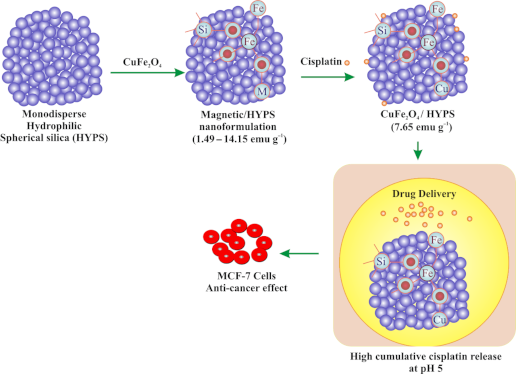
- between 15–30°. For the metal oxides, the diffraction patterns correlate with the cubic phase of copper ferrite (JCPDS 77-0010) and CuO. The presence of broad CuFe2O4 peaks demonstrates the formation of nanometer-sized particles at the nanopores of HYPS. In order to optimize the saturation magnetization


Ultrathin Ni1−xCoxS2 nanoflakes as high energy density electrode materials for asymmetric supercapacitors
Beilstein J. Nanotechnol. 2019, 10, 2207–2216, doi:10.3762/bjnano.10.213
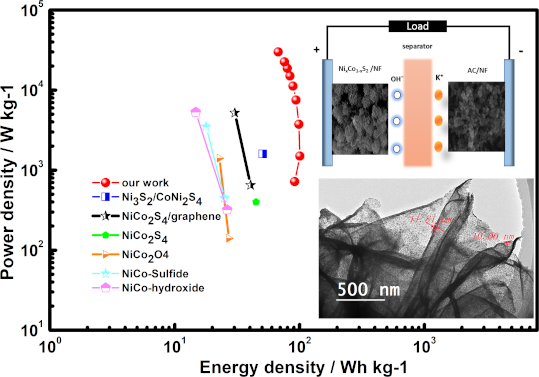
- from both nickel and cobalt ions in the bimetallic sulfides can provide relatively affluent redox reactions, resulting in higher specific capacitance and electrical conductivity [6][7]. Moreover, layered ultrathin nanoflakes in the synthesised nanomaterials, derived from metal oxides/dichalcogenides
- preserved the hierarchical flower-like nanostructures of metal oxides. The material exhibited much higher specific capacitance and rate capability than the NiCo oxide counterparts. The results show that ternary nickel–cobalt sulfides indeed possess better intrinsic electrochemical properties than the
- of 3000 charge/discharge cycles at 10 A·g−1, Ni1−xCoxS2 retains 67% of its initial capacity, indicating a good cycling stability. The above results imply that this facile sulfurization method can be used as a universal method for enhancing the electrochemical performance of transition metal oxides



Synthesis of highly active ETS-10-based titanosilicate for heterogeneously catalyzed transesterification of triglycerides
Beilstein J. Nanotechnol. 2019, 10, 2039–2061, doi:10.3762/bjnano.10.200
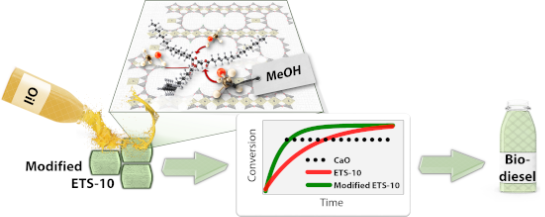
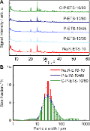
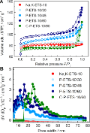
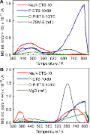
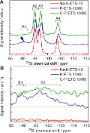
- removal [13]. Amongst the prospective solid catalysts designed for transesterification reactions, such as calcium [14] and other metal oxides [15], metal–organic frameworks (MOFs) [10], silica-supported catalysts [16], biochar [17] and other biomass-derived catalysts [18], zeolites and molecular sieves









Improvement of the thermoelectric properties of a MoO3 monolayer through oxygen vacancies
Beilstein J. Nanotechnol. 2019, 10, 2031–2038, doi:10.3762/bjnano.10.199
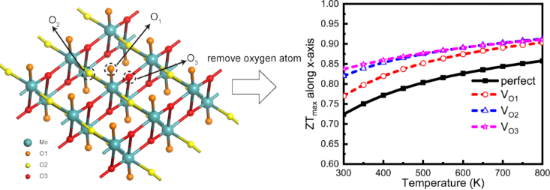
- . Unfortunately, the application of conventional thermoelectric materials is still limited by inefficiency and problems with high-cost, stability and toxicity. As promising candidates to address these severe challenges, transition metal oxides (TMOs) provide a vast variety of low-cost and environmentally friendly


Facile synthesis of carbon nanotube-supported NiO//Fe2O3 for all-solid-state supercapacitors
Beilstein J. Nanotechnol. 2019, 10, 1923–1932, doi:10.3762/bjnano.10.188
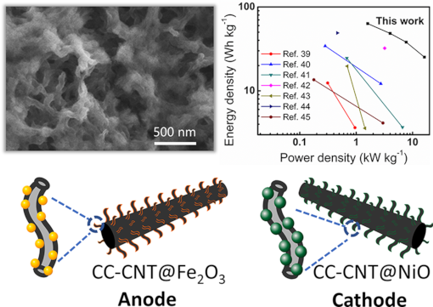
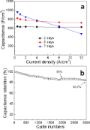
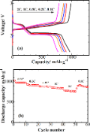
- carbon cloth–carbon nanotube@metal oxide (CC-CNT@MO) three-dimensional structures combine the high specific capacitance and rich redox sites of metal oxides with the large specific area and high electrical conductivity of carbon nanotubes. The prepared CC-CNT@Fe2O3 anode reaches a high capacity of 226
- these two electrodes delivers a high energy density of 63.3 Wh·kg−1 at 1.6 kW·kg−1 and retains 83% of its initial capacitance after 5000 cycles. These results demonstrate that our simple aqueous reduction method to combine CNT and metal oxides reveals an exciting future in constructing high-performance
- are widely used in commercial supercapacitors [6][7][8][9]. Although they have a higher capacity than the conventional capacitors, their average energy density is low to about 10 Wh·kg−1 whereas batteries reach 200 Wh·kg−1. Transition metal oxides such as RuO2, MnO2, NiO, and Fe2O3 [10][11][12][13][14


Synthesis of nickel/gallium nanoalloys using a dual-source approach in 1-alkyl-3-methylimidazole ionic liquids
Beilstein J. Nanotechnol. 2019, 10, 1754–1767, doi:10.3762/bjnano.10.171
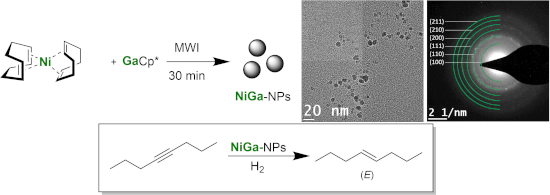
- metal oxides for which the binding energy would have to appear around 529–530 eV [50] (for full XP spectra see Figure S6). The comparison of the samples after 1 h and 12 h of dispersion shows, that the size of the Ga(Ni) nanoparticles was reduced from 90 ± 20 nm to 30 ± 10 nm, respectively (Figure 4




TiO2/GO-coated functional separator to suppress polysulfide migration in lithium–sulfur batteries
Beilstein J. Nanotechnol. 2019, 10, 1726–1736, doi:10.3762/bjnano.10.168
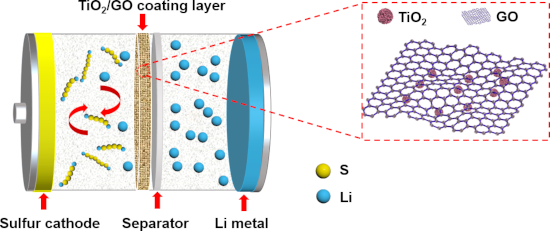
- , and nonpolar carbon-based materials offer weak interactions with polar polysulfides [27][28]. On the other hand, metal oxides can form chemical bonds with sulfur to trap sulfur species. As a result, sulfur species are confined at the cathode/separator interface and the shuttle effect is minimized
- . Hence, the carbon/metal-oxide hybrid interlayer combines the advantages of carbon and metal oxides and exhibits superior performance over monolithic materials. Recently, the inclusion of V2O5/CNT [29], MoO3@CNT [30], TiO2@CNF [31], TiO2/graphene [32] interlayers has been shown to suppress the shuttle


Novel hollow titanium dioxide nanospheres with antimicrobial activity against resistant bacteria
Beilstein J. Nanotechnol. 2019, 10, 1716–1725, doi:10.3762/bjnano.10.167
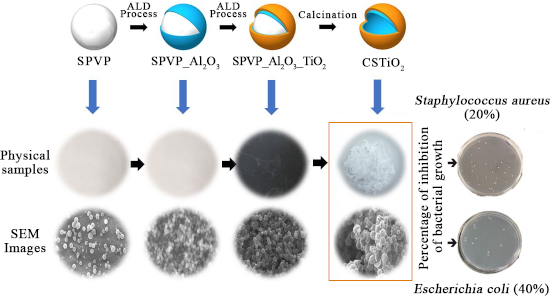
- thin layer of alumina prior to the titania deposition to physically stabilize these low weight particles. Although previous works have demonstrated the successful deposition of metal oxides on nanofibers, the morphological change to spherical particles entailed a more difficult deposition process that
- possibilities for the development of further nanostructures with different morphologies based on different metal oxides. Experimental Chemicals and microorganisms Poly(vinylpyrrolidone) (PVP) (molecular weight 40.000), trimethylaluminium (TMA), tetrakis(dimethylamide)titanium (TDMAT) (99.99% trace metals basis


Layered double hydroxide/sepiolite hybrid nanoarchitectures for the controlled release of herbicides
Beilstein J. Nanotechnol. 2019, 10, 1679–1690, doi:10.3762/bjnano.10.163
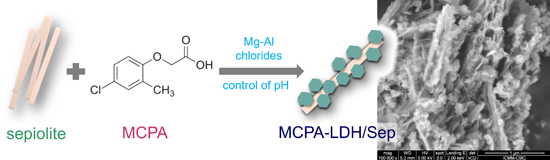
- are arranged regularly along the structural edges of the fiber, being advantageous to produce functional nanoarchitectures. Thus, in recent years the number of publications related to the assembly of different types of nanoparticulated solids (e.g., metals, metal oxides, and graphene) and sepiolite or


Kelvin probe force microscopy work function characterization of transition metal oxide crystals under ongoing reduction and oxidation
Beilstein J. Nanotechnol. 2019, 10, 1596–1607, doi:10.3762/bjnano.10.155
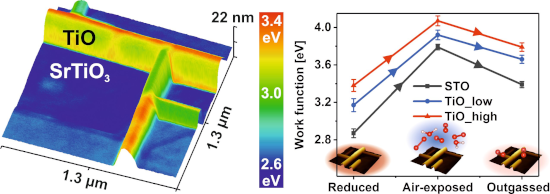
- , Germany Peter Grünberg Institute (PGI-7), Forschungszentrum Jülich GmbH, 52425 Jülich, Germany August Chelkowski Institute of Physics, University of Silesia, 40–007 Katowice, Poland 10.3762/bjnano.10.155 Abstract Controlling the work function of transition metal oxides is of key importance with regard to
- method employing KPFM and local conductivity AFM for the characterization of the work function of transition metal oxides may help in understanding the impact of reduction and oxidation on electronic properties, which is of high importance in the development of effective sensing and catalytic devices
- . Keywords: Kelvin probe force microscopy (KPFM); reduction and oxidation; SrTiO3; TiO nanowires; TiO/SrTiO3 heterostructure; transition metal oxides; work function; Introduction Transition metal oxides are viewed today as some of the most promising materials in various fields, ranging from (photo)catalysis


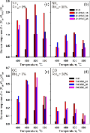
High-temperature resistive gas sensors based on ZnO/SiC nanocomposites
Beilstein J. Nanotechnol. 2019, 10, 1537–1547, doi:10.3762/bjnano.10.151
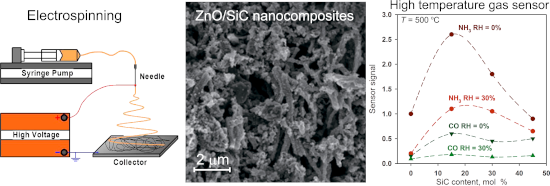
- , ultrathin fibers of SiC and metal oxides as well as MO/SiC composites from polymer solutions [16][17][18][19]. The combination of unlimited length, highly porous microstructure, and high surface area come together to create ideal gas sensor materials. In this work, we prepared ZnO/SiC nanocomposite



Selective gas detection using Mn3O4/WO3 composites as a sensing layer
Beilstein J. Nanotechnol. 2019, 10, 1423–1433, doi:10.3762/bjnano.10.140
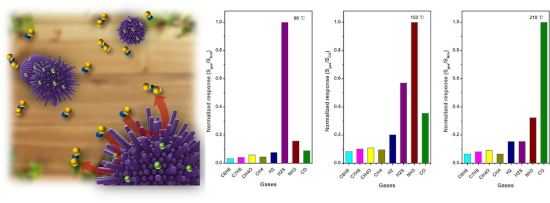
- between the two metal oxides. The sensor based on the Mn3O4/WO3 composite with 3 atom % Mn showed a high selective response to hydrogen sulfide (H2S), ammonia (NH3) and carbon monoxide (CO) at working temperatures of 90 °C, 150 °C and 210 °C, respectively. The demonstrated superior selectivity opens the


Gas sensing properties of individual SnO2 nanowires and SnO2 sol–gel nanocomposites
Beilstein J. Nanotechnol. 2019, 10, 1380–1390, doi:10.3762/bjnano.10.136
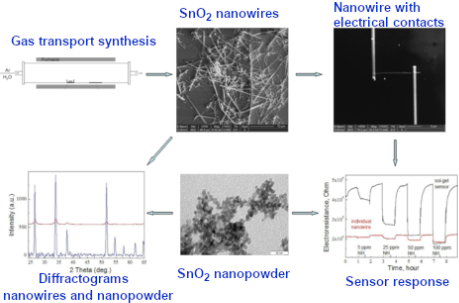
- Besòs, Catalonia, Barcelona, 08019, Spain 10.3762/bjnano.10.136 Abstract This work is an investigation of the properties of semiconductor materials based on metal oxides, their catalytic properties, and their application as gas sensors, which were shown to exhibit high sensitivity, stability, and




Photoactive nanoarchitectures based on clays incorporating TiO2 and ZnO nanoparticles
Beilstein J. Nanotechnol. 2019, 10, 1140–1156, doi:10.3762/bjnano.10.114
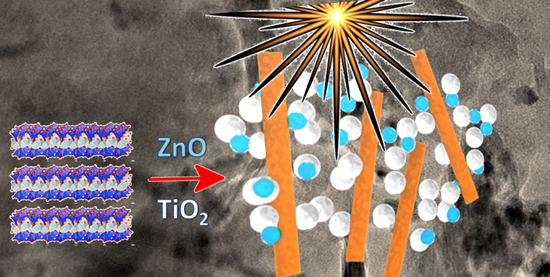
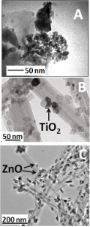
- considered the most extensively studied solid among the diverse transition-metal oxides and transition-metal chalcogenides investigated with that focus over the last decades. However, TiO2 has disadvantages such as limited activity together with a reduced sensitivity to sunlight. Hence, alternative
- metal oxides exhibit a large exciton binding energy, large piezoelectric constants and strong photoluminescence. This is of interest not only for applications as photocatalysts but also as sensors, solar cell devices, disinfectants, and cosmetics [137][138]. As discussed above, the dispersion of the
- decrease in the bandgap values by doping with Ag, Pd and other transition metals such as Zr, W, Ce, Sn, Sb and In improve the photoactivity efficiency [140]. Alternatively, combination of TiO2 and ZnO with other metal oxides leads to mixed oxide NPs, including the TiO2–ZnO compositions, which exhibit



Porous N- and S-doped carbon–carbon composite electrodes by soft-templating for redox flow batteries
Beilstein J. Nanotechnol. 2019, 10, 1131–1139, doi:10.3762/bjnano.10.113
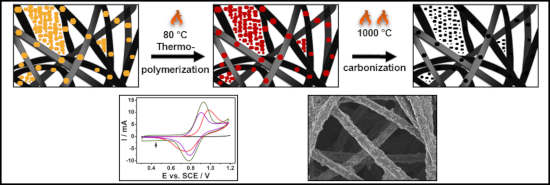
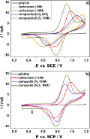
- of the commercial felts (400 °C, up to 30 h) [7]. Also acid treatment [8], electrochemical activation [9], catalytic decoration with metal oxides [10][11], as well as methods to increase the surface area of the felts [12][13] have been reported as possible ways to obtain enhanced activity. Several



Synthesis and characterization of quaternary La(Sr)S–TaS2 misfit-layered nanotubes
Beilstein J. Nanotechnol. 2019, 10, 1112–1124, doi:10.3762/bjnano.10.111
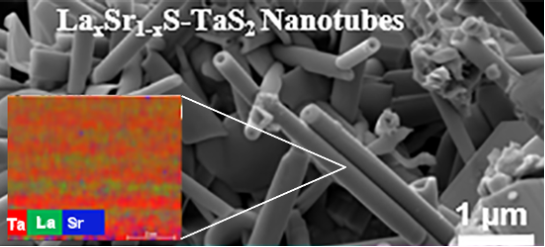
- , and consequently, the lattice strain. It also appears that beyond an Sr content of ≈60 atom %, the MLC lattice becomes unstable and new modes >680 cm−1 appear, which is typical for metal oxides. DFT calculations of the pristine LaS–TaS2 and the SrxLa1−xS–TaS2 MLC bulk alloys were undertaken. Overall


Glucose-derived carbon materials with tailored properties as electrocatalysts for the oxygen reduction reaction
Beilstein J. Nanotechnol. 2019, 10, 1089–1102, doi:10.3762/bjnano.10.109
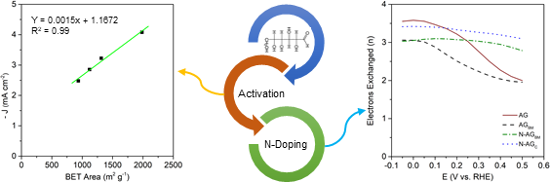
- electrocatalyst used for the reaction. The most commonly used electrocatalyst to supply faster kinetics and a four-electron pathway are platinum-based materials [3][4], which are costly and may assume up to 50% of the total cost of a fuel cell [5]. Transition metals [6][7], metal oxides [8][9] and carbon


The systemic effect of PEG-nGO-induced oxidative stress in vivo in a rodent model
Beilstein J. Nanotechnol. 2019, 10, 901–911, doi:10.3762/bjnano.10.91
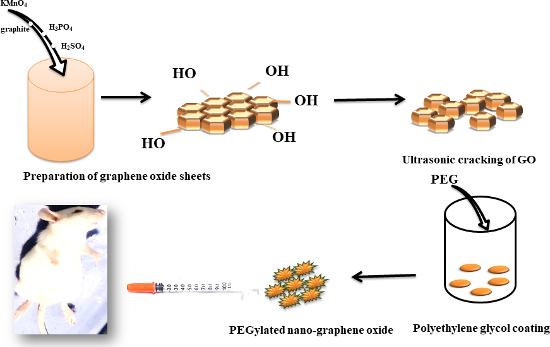
- made in the synthesis of graphene oxide nanoparticles and their use in medicine, so there is an urgent need to look at the safety and efficacy of these particles in vivo. It has been observed that engineered nanomaterials, e.g., from metals or metal oxides, have the potential to induce toxicity by


Comparing a porphyrin- and a coumarin-based dye adsorbed on NiO(001)
Beilstein J. Nanotechnol. 2019, 10, 874–881, doi:10.3762/bjnano.10.88
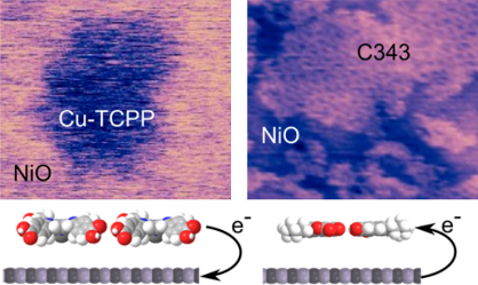
- , Switzerland 10.3762/bjnano.10.88 Abstract Properties of metal oxides, such as optical absorption, can be influenced through the sensitization with molecular species that absorb visible light. Molecular/solid interfaces of this kind are particularly suited for the development and design of emerging hybrid
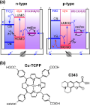
- semiconductor TiO2 has become one of the most extensively studied metal oxides, especially in the context of scanning probe microscopy (SPM) [1]. The working principle of an n-type DSSC, which is shown in Figure 1a, relies on the functionalization of TiO2 surfaces with dye molecules enabling the absorption of



Synthesis of MnO2–CuO–Fe2O3/CNTs catalysts: low-temperature SCR activity and formation mechanism
Beilstein J. Nanotechnol. 2019, 10, 848–855, doi:10.3762/bjnano.10.85
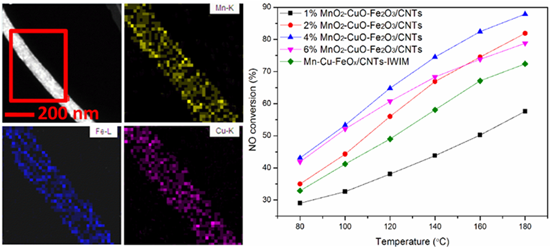
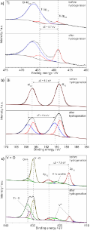
- , only a weak peak of MnO2 (PDF#53-0633) can be observed when the loading was greater than or equal to 4%, whereas no diffraction peaks of metal oxides could be found, suggesting the formation of amorphous metal oxide phases. Amorphous catalytic materials are conducive to SCR activity [19], which is also
- , also verifying the generation of metal oxide catalysts on the CNT surface. The EDX spectrum (Figure 3d) shows signals of Mn, Cu, Fe, O and C. Clear lattice fringes of the metal oxides cannot be observed in the HRTEM images, indicating the generation of amorphous materials, which is consistent with the





Tungsten disulfide-based nanocomposites for photothermal therapy
Beilstein J. Nanotechnol. 2019, 10, 811–822, doi:10.3762/bjnano.10.81
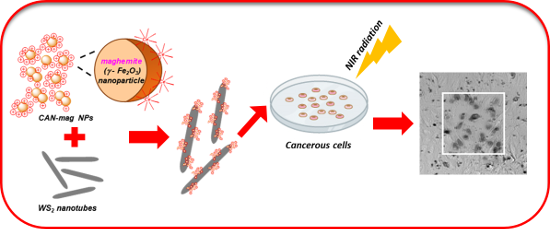
- latter group, nanostructures of metals [38], metal oxides (including iron oxides) [39], and metal chalcogenides [40][41] were studied. Tungsten oxides [42] and molybdenum oxides [43] were studied, as well as their disulfides. The disulfides were tested mainly in the forms of nanosheets [44], nanoflakes






A porous 3D-RGO@MWCNT hybrid material as Li–S battery cathode
Beilstein J. Nanotechnol. 2019, 10, 514–521, doi:10.3762/bjnano.10.52
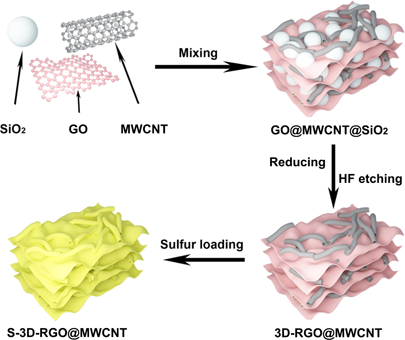
- sulfur loading is essential for the practical implementation of Li–S batteries [5][6][7]. To overcome the above-mentioned challenges in Li–S batteries, many strategies have been proposed [8][9][10][11][12]. For example, metal oxides, such as TiO2, ZnO, MnO2, and SiO2, were reported to provide active
- sites for strong S–metal bonding that have been reported to suppress the shuttle effect in polysulfides [13][14][15][16]. Moreover, designing metal oxides into various unique morphologies, e.g., hollow structures, can also provide a physical (or structural) confinement for sulfur [17]. Metal-oxide
- sulfur loading [24][25]. Since sulfur is the major active ingredient in the Li–S cathode, adding more non-sulfur components, such as metal oxides, in the cathode will result in a lower specific capacity. Therefore, the present study will focus on the development of a pure carbon material for the Li–S



Widening of the electroactivity potential range by composite formation – capacitive properties of TiO2/BiVO4/PEDOT:PSS electrodes in contact with an aqueous electrolyte
Beilstein J. Nanotechnol. 2019, 10, 483–493, doi:10.3762/bjnano.10.49
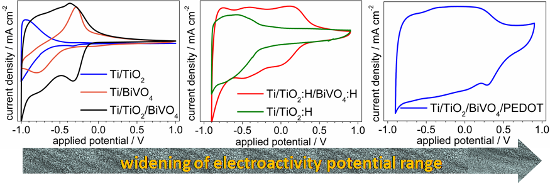
- charged and discharged over a wide potential range. Both electrical double-layer capacitance and faradaic reactions can contribute to the final capacitance of an electrode. Many different materials have been tested as electrode materials for supercapacitors, such as metal oxides [6][7][8], carbon




Sub-wavelength waveguide properties of 1D and surface-functionalized SnO2 nanostructures of various morphologies
Beilstein J. Nanotechnol. 2019, 10, 379–388, doi:10.3762/bjnano.10.37
- light during the medical process. Among metal oxides, SnO2 NWs, an n-type direct wide-band semiconductor (Eg = 3.6 eV at 300 K), was proved to be excellent sub-wavelength waveguide [3][4][5][6][7][12]. The high refractive index (n = 2.1) of SnO2 allows NWs with an optimal size range (100 to 500 nm) to
- nanoparticles [18] have been reported in our previous studies. We have also deciphered strong correlations of various defects in SnO2 NSs for chemical gas sensing [13] and wettability properties [19]. The growth of metal oxides with controllable dimensions is an important area for technological applications. In
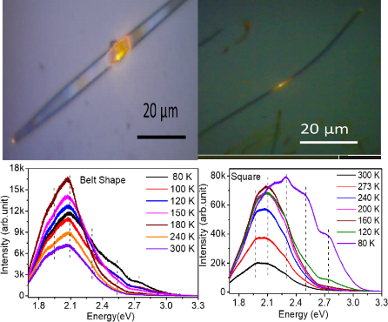
- , which matches closely with our experimental results. Optical properties Waveguide nature SnO2 NBs have been shown to be very good sub-wavelength waveguides among the metal oxides [6][12]. Figure 6 and Figure 7 depict optical images of the single SnO2 NWs demonstrating their waveguide behaviour. Similar


A Ni(OH)2 nanopetals network for high-performance supercapacitors synthesized by immersing Ni nanofoam in water
Beilstein J. Nanotechnol. 2019, 10, 281–293, doi:10.3762/bjnano.10.27
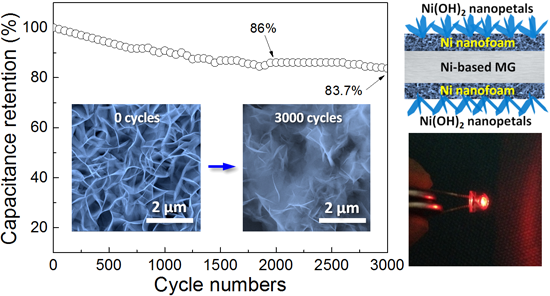
- between active materials and electrolyte, for which transition metal oxides/hydroxides with multiple valence are used as electrode materials [8][9]. EDLCs hold a high power density and long cycling stability, but their practical application is limited by the low energy density. In comparison, pseudo
- -capacitors possess a higher energy density and are regarded as promising candidates for energy storage systems [10]. Among the various transition metal oxides/hydroxides, Ni(OH)2 is an ideal candidate for pseudo-capacitors due to its unique features such as high theoretical capacity and outstanding redox