Search results
Search for "modelling" in Full Text gives 187 result(s) in Beilstein Journal of Nanotechnology.
Charged particle single nanometre manufacturing
Beilstein J. Nanotechnol. 2018, 9, 2855–2882, doi:10.3762/bjnano.9.266
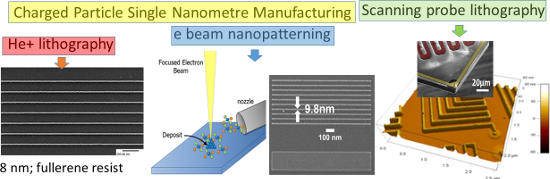
- demonstrates the need for better modelling of the SE emission profile, as also carried out by Fowlkes et al. [77] and Smith et al. [78] to enable the prediction of 3D deposit geometry and growth rate as a function of the patterning parameters. The high resolution of the technique has been utilised in the


Accurate control of the covalent functionalization of single-walled carbon nanotubes for the electro-enzymatically controlled oxidation of biomolecules
Beilstein J. Nanotechnol. 2018, 9, 2750–2762, doi:10.3762/bjnano.9.257
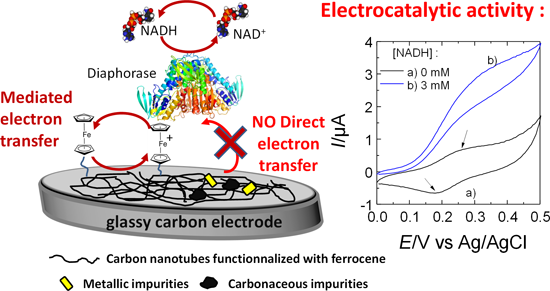
- samples were used in an aqueous medium. The alkyl linker being hydrophobic while PEG linkers are hydrophilic strongly suggests also modelling the interaction between the functionalized nanotubes and the water molecules. The corresponding results are reported in the next paragraph. Determining the role of






Friction reduction through biologically inspired scale-like laser surface textures
Beilstein J. Nanotechnol. 2018, 9, 2561–2572, doi:10.3762/bjnano.9.238
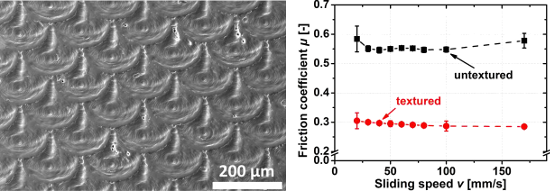
- or micro-hydrodynamic pressure build-up as these experiments were performed under dry sliding. Understanding and exploiting this size effect phenomenon therefore will be the focus of future research. These investigations will mainly involve a detailed modelling of the contact mechanics for each
- . In the case of lubricated contacts, we will also involve fluid dynamics modelling to understand and optimize the tribological behaviour of these surfaces. For dimpled surface morphologies, such simulations have recently been able to explain the beneficial effect of laser surface texturing [27][50
- scale-like surface textures needs to be tested in the future. Such effects were reported for a variety of biological systems [55][56] and polymeric [21][22] as well as metallic [24] surface morphologies inspired by snake skin. Modelling efforts revealed that anisotropy is a function of the counter


Effective sensor properties and sensitivity considerations of a dynamic co-resonantly coupled cantilever sensor
Beilstein J. Nanotechnol. 2018, 9, 2546–2560, doi:10.3762/bjnano.9.237
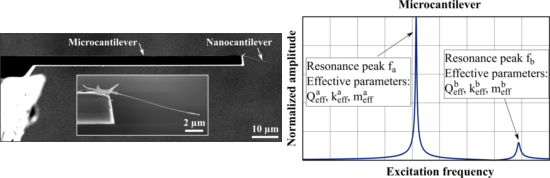
- important in addition to the effective spring constant and effective mass which are already indicated by Equation 2 and Equation 3. In the next section, the modelling approach will be introduced. Then, the derivation of effective properties based on that model as well as the resulting expressions will be
- represented by an effective harmonic oscillator with effective properties as outlined in [14]. Consequently, that requires the derivation of expressions for effective spring constant, resonance frequency and quality factor and a discussion about the oscillation amplitude of the co-resonant system. Modelling
- Approach The derivation of analytical expressions for the effective properties of the co-resonant system will be based on a modelling approach which has been discussed extensively in [13] and [14] and will therefore only briefly be outlined here. As mentioned above, the co-resonant cantilever system can be
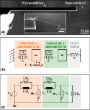

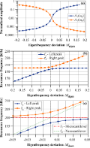

![[Graphic 7]](/bjnano/content/inline/2190-4286-9-237-i43.svg?max-width=637&scale=1.18182) ...
...


Surface energy of nanoparticles – influence of particle size and structure
Beilstein J. Nanotechnol. 2018, 9, 2265–2276, doi:10.3762/bjnano.9.211
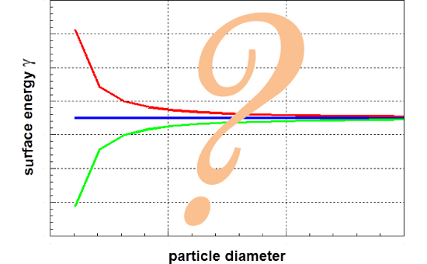
- that, except for the hydrogen atom, exact solutions of this equation do not exist. Therefore, a large number of methods for numerical solutions have been developed. Most successful are calculations based on density functional theory (DFT). This kind of modelling has some restrictions, i.e., the





Nanoconjugates of a calixresorcinarene derivative with methoxy poly(ethylene glycol) fragments for drug encapsulation
Beilstein J. Nanotechnol. 2018, 9, 2057–2070, doi:10.3762/bjnano.9.195
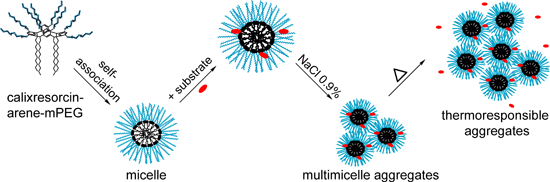
- invariant asymptotics and is about 82301 Å3. The theoretic volume of macrocycle 3 (with a maximum of 12 oxyethylene groups in the mPEG chains) is about 5556.2 and 5298.0 Å3 calculated by two methods [29][30] using the Molecular Modelling Pro software. Therefore, 14–15 molecules of macrocycle 3 can


Sulfur-, nitrogen- and platinum-doped titania thin films with high catalytic efficiency under visible-light illumination
Beilstein J. Nanotechnol. 2018, 9, 1629–1640, doi:10.3762/bjnano.9.155
- Faculty of Chemistry and Chemical Technology for help with computer modelling.


Interaction-tailored organization of large-area colloidal assemblies
Beilstein J. Nanotechnol. 2018, 9, 1582–1593, doi:10.3762/bjnano.9.150
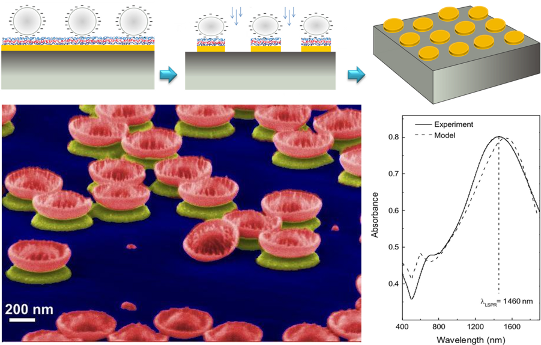
- modelling. A simple 3D model based on finite element analysis was implemented in Comsol Multiphysics software in order to investigate the optical response of single and ordered arrays of different gold nanostructures under the excitation of a uniform p-polarized electromagnetic field. The magnetic


Cathodoluminescence as a probe of the optical properties of resonant apertures in a metallic film
Beilstein J. Nanotechnol. 2018, 9, 1491–1500, doi:10.3762/bjnano.9.140
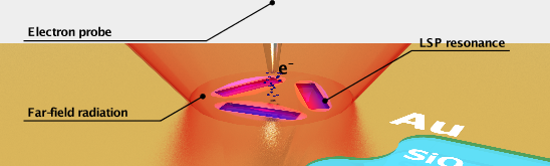
- slot, but the relative phase between the modes differs between the excitations in each aperture. Insight into our results is obtained through modelling the radiation emitted by a point dipole in close proximity to the air–gold surface using the finite element method. Experimental A gold film of
- on a glass substrate and using CL we have shown that various modes of the system can be excited. Modelling results show that these resonances may be accompanied by transmission through the aperture, suggesting that cavity resonances of the apertures are being excited. There are however, spectral


Atomic-level characterization and cilostazol affinity of poly(lactic acid) nanoparticles conjugated with differentially charged hydrophilic molecules
Beilstein J. Nanotechnol. 2018, 9, 1328–1338, doi:10.3762/bjnano.9.126
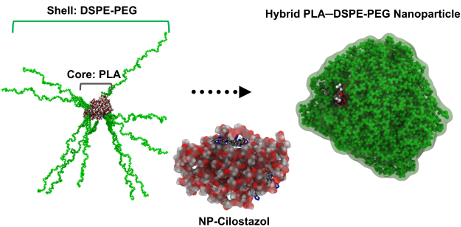
- , computational modelling provides useful approaches to help elucidate the behavior at the atomic level of various nanosystems, predict their drug affinity, and at the same time, reduce the number of preliminary experimental tests (or to be used as a complementary approach to experimental work). The structural


The electrical conductivity of CNT/graphene composites: a new method for accelerating transmission function calculations
Beilstein J. Nanotechnol. 2018, 9, 1254–1262, doi:10.3762/bjnano.9.117
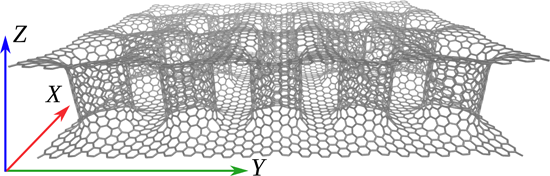
- investigated single-layer composite films and the results of modelling. Data of investigated two-layer composite films and the results of modeling. Acknowledgements The research described in this paper was supported by the grant of the Russian Science Foundation #15-29-01025 and by the Russian Presidential


High-contrast and reversible scattering switching via hybrid metal-dielectric metasurfaces
Beilstein J. Nanotechnol. 2018, 9, 460–467, doi:10.3762/bjnano.9.44
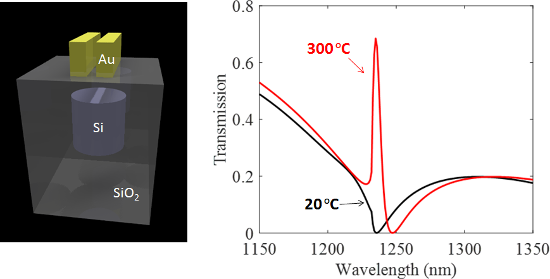
- important step towards tunable flat optics. Methods Here, we study the transmission properties of the nanostructures using rigorous coupled-wave analysis (RCWA) method [49][50] which has been widely used for modelling periodic optical structures due to its fast converging and accurate far-field calculations


Nanoparticle delivery to metastatic breast cancer cells by nanoengineered mesenchymal stem cells
Beilstein J. Nanotechnol. 2018, 9, 321–332, doi:10.3762/bjnano.9.32
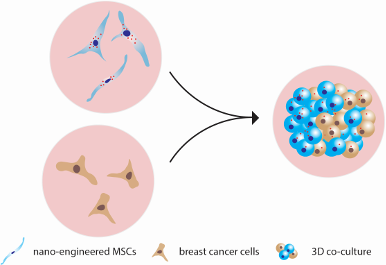
- nanoparticle transfer between stromal and cancer cells in close spatial proximity. QDs are semiconductor nanocrystals with improved light emission, signal brightness, and resistance to photobleaching, thus making them a suitable imaging agent for the modelling of nanoparticle transfer [22]. The aim of the



Review: Electrostatically actuated nanobeam-based nanoelectromechanical switches – materials solutions and operational conditions
Beilstein J. Nanotechnol. 2018, 9, 271–300, doi:10.3762/bjnano.9.29
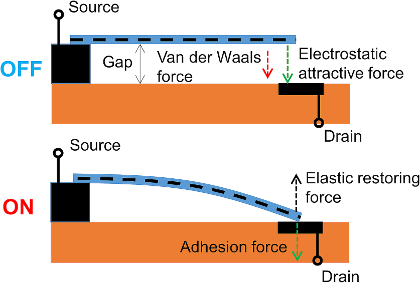
- switches is mostly focused on developing experimental approaches for device prototype fabrication and testing in laboratory environment and theoretical modelling based on continuum mechanics and molecular dynamics, allowing simulations to be performed on the processes occurring in NEM switching devices and


Humidity-dependent wound sealing in succulent leaves of Delosperma cooperi – An adaptation to seasonal drought stress
Beilstein J. Nanotechnol. 2018, 9, 175–186, doi:10.3762/bjnano.9.20
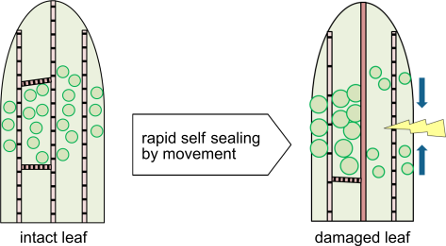
- modelling by Konrad et al. [7] supports the idea that the new stress and strain distribution additionally increases leaf bending and improves the sealing of the incision. Leaf movement continues until a new equilibrium between the internal compressive and tensile stresses has been established. In the case
- equilibrium between the internal compressive and tensile stresses has been established [2][7]. The dimensions and mechanical properties measured or calculated for the five different tissue types found in D. cooperi leaves also corroborate the results of modelling the existence of such a supporting


Electrical properties of a liquid crystal dispersed in an electrospun cellulose acetate network
Beilstein J. Nanotechnol. 2018, 9, 155–163, doi:10.3762/bjnano.9.18
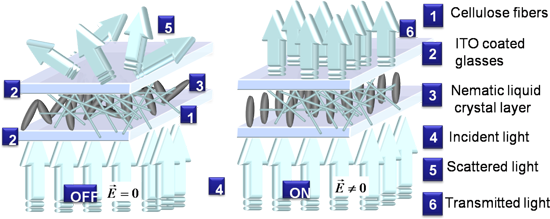
- impedance shift to higher frequencies (Figure 8). The Cole–Cole [32] diagrams, Z″ = f(Z′), are presented in Figure 9. The semicircular shapes of the diagrams allow for modelling the raw data with a theoretical three-element electric circuit model, consisting of a series resistance, a parallel resistance and


Combined scanning probe electronic and thermal characterization of an indium arsenide nanowire
Beilstein J. Nanotechnol. 2018, 9, 129–136, doi:10.3762/bjnano.9.15
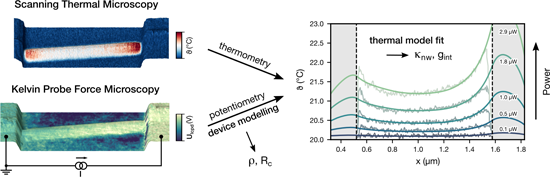
- -thermal effects on nanoscale devices is not matched with an in-depth understanding of the relevant effects and material properties. Not all parameters needed for faithful device modelling are readily available, in particular since many of these are size-dependent quantities. Hence, there is an increasing


Atomic layer deposition and properties of ZrO2/Fe2O3 thin films
Beilstein J. Nanotechnol. 2018, 9, 119–128, doi:10.3762/bjnano.9.14
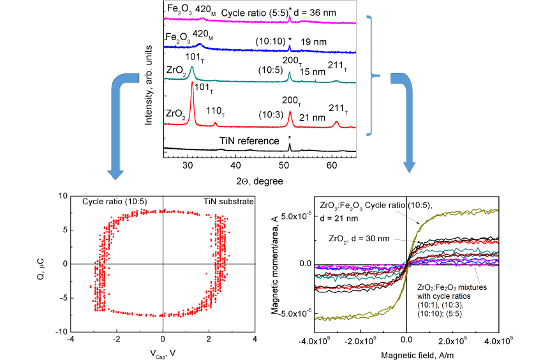
- modelling of samples in the range of 300–1000 nm. An X-ray fluorescence (XRF) spectrometer (Rigaku, ZSX 400) with the software program ZSX (version 5.55) was used to evaluate the elemental composition of the films. The surface morphology of the films and a cross-section of an ALD coated stack were evaluated


Design of photonic microcavities in hexagonal boron nitride
Beilstein J. Nanotechnol. 2018, 9, 102–108, doi:10.3762/bjnano.9.12
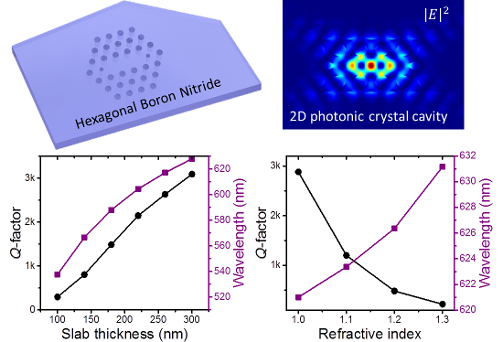
- shown in Figure 1d, the Q-factor of the mode starts to saturate at H ≈ 12 because the Q-factor is limited not only by the in-plane component, but also by radiation loss. Considering both the Q-factor and scaling of the simulation time with domain size, we fixed H at 12 for subsequent modelling
- -standing structure is preferred, as in the case of the 2D photonic crystals presented earlier. We also consider the absorption losses in the cavity. Figure 4a shows the effect of the absorption by the cavity material. Many FDTD modelling studies of semiconductor photonic crystals include only the real part


Correction: Modelling focused electron beam induced deposition beyond Langmuir adsorption
Beilstein J. Nanotechnol. 2017, 8, 2591–2591, doi:10.3762/bjnano.8.259

Involvement of two uptake mechanisms of gold and iron oxide nanoparticles in a co-exposure scenario using mouse macrophages
Beilstein J. Nanotechnol. 2017, 8, 2396–2409, doi:10.3762/bjnano.8.239
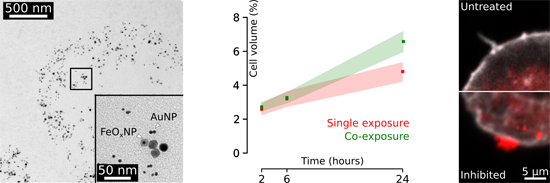
- monitored by dynamic light scattering and the dose deposited onto the cell surface was determined by a modelling approach. The murine macrophage cell line J774A.1 was then used to study uptake and intracellular fate by means of laser scanning microscopy (LSM), environmental scanning electron microscopy



The interplay between spin densities and magnetic superexchange interactions: case studies of mono- and trinuclear bis(oxamato)-type complexes
Beilstein J. Nanotechnol. 2017, 8, 2245–2256, doi:10.3762/bjnano.8.224
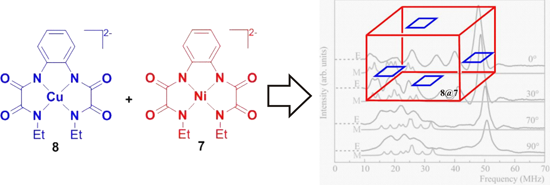
- included for the modelling of continuous wave (CW) ESR spectra. Finally, gN and μN denote the nuclear g-factor and the nuclear magneton, respectively. CW ESR measurements were performed at room temperature with a Bruker EMX spectrometer operating at the X-band (10 GHz) frequency. ESR spectra were processed


![[Graphic 15]](/bjnano/content/inline/2190-4286-8-224-i20.svg?max-width=637&scale=1.18182) molecular plan...
molecular plan...


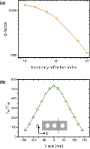
Modelling focused electron beam induced deposition beyond Langmuir adsorption
Beilstein J. Nanotechnol. 2017, 8, 2151–2161, doi:10.3762/bjnano.8.214
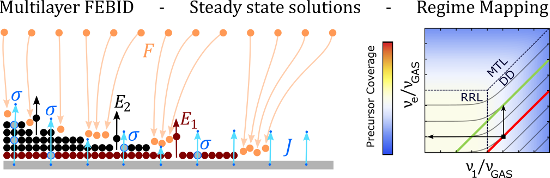
- ], just to cite a few. Moreover, significant effort is now dedicated to enhance the predictability of FEBID processes by means of modelling, which means a shift from a trial-and-error approach, to a quantitative, model-guided 3D nanoprinting method. This progress includes the development of a Monte Carlo
- temperatures and for heterogeneous substrates. It also enables the modelling of FEBID processes occurring on activated deposit surfaces, where both chemisorption and physisorption processes are relevant, opening a new route to interpret results where high purity deposits have been reported. The approximations


Functional materials for environmental sensors and energy systems
Beilstein J. Nanotechnol. 2017, 8, 2015–2016, doi:10.3762/bjnano.8.201
- sensor/gas interaction, modelling of materials, devices, sensor systems and energy systems, and functional applications of environmental sensors and energy systems. Michele Penza, Anita Lloyd Spetz, Albert Romano-Rodriguez and Meyya Meyyappan Brindisi, Linkoping, Barcelona and Moffett Field, May 2017
(Metallo)porphyrins for potential materials science applications
Beilstein J. Nanotechnol. 2017, 8, 1786–1800, doi:10.3762/bjnano.8.180
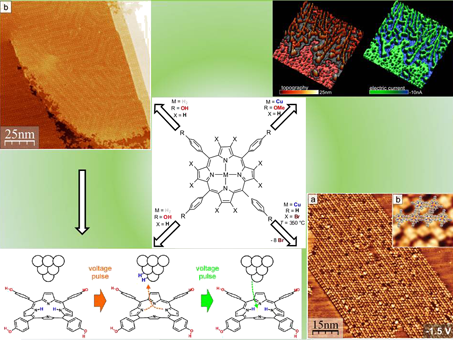
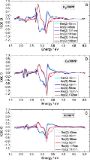
- H2PP (without methoxy groups), the line shape is similar but the amplitude of the bands is reduced, indicating that the methoxy groups thus do not suppress the vibronic coupling. For modelling the Q band of NiTPP(OMe)4 and CuTPP(OMe)4 in the MCD spectra, we employed two A-terms with energy positions
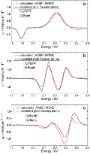
- modelling with Faraday terms. Reproduced with permission from [16], copyright 2014 Elsevier. Notice: Here mentioned H2TMPP, CuTMPP and NiTMPP refer to H2TPP(OMe)4, NiTPP(OMe)4 and CuTPP(OMe)4, repectively, as displayed in Scheme 1. Results of STM measurements: (a,b) Formation of small islands at