


Search results
Search for "molecular dynamics" in Full Text gives 184 result(s) in Beilstein Journal of Nanotechnology.
Graphynes: an alternative lightweight solution for shock protection
Beilstein J. Nanotechnol. 2019, 10, 1588–1595, doi:10.3762/bjnano.10.154
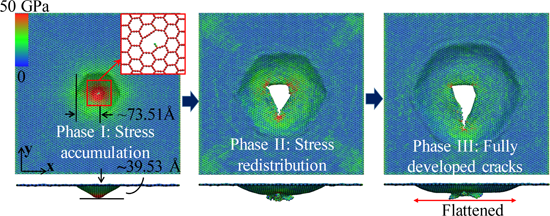
- ][13][14]. Based on in silico molecular dynamics (MD) tensile tests, the recorded failure strength values for different types of GYs range between 32.48 and 63.17 GPa [2][15][16]. According to a first-principle study, the failure strain of GY reaches 20% [17]. A high Young’s modulus of 532.5 GPa is




Green fabrication of lanthanide-doped hydroxide-based phosphors: Y(OH)3:Eu3+ nanoparticles for white light generation
Beilstein J. Nanotechnol. 2019, 10, 1200–1210, doi:10.3762/bjnano.10.119
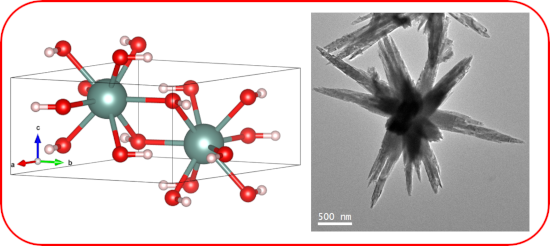
- atoms slightly enlarges (0.5%) the bonds between neighboring atoms belonging to the Y(OH)3 crystal. Regarding the stability or robustness of Eu dopants in the host material, molecular dynamics calculations show that Eu atoms, covalently attached to the host lattice with a binding energy of 2.34 eV



Mo-doped boron nitride monolayer as a promising single-atom electrocatalyst for CO2 conversion
Beilstein J. Nanotechnol. 2019, 10, 540–548, doi:10.3762/bjnano.10.55
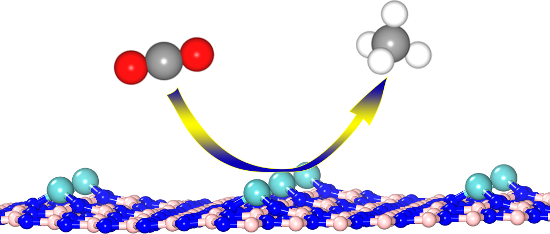
- electrocatalyst for nitrogen fixation with a very small overpotential of only 0.19 V. In addition, through molecular dynamics modeling, they demonstrated that Mo-doped BN synthesized in acidic conditions is stable at high temperature (500 K) [45]. In our previous reports, we have studied BN nanomaterials used as


Choosing a substrate for the ion irradiation of two-dimensional materials
Beilstein J. Nanotechnol. 2019, 10, 531–539, doi:10.3762/bjnano.10.54
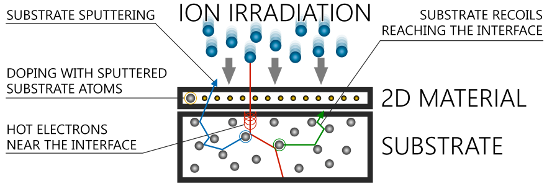
- taking place considering the yield, one should refer to the solid curves for sputtering in Figure 1 within the range specified in Table 1. The results presented in Table 1 are in agreement with molecular dynamics simulations on the subject [1]. It should be noted that the sputtered substrate atoms can
Mechanical and thermodynamic properties of Aβ42, Aβ40, and α-synuclein fibrils: a coarse-grained method to complement experimental studies
Beilstein J. Nanotechnol. 2019, 10, 500–513, doi:10.3762/bjnano.10.51
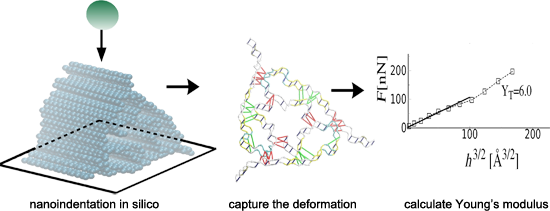
- Academy of Sciences, Al. Lotników 32/46, 02-668 Warsaw, Poland Institute for Computational Science and Technology, Quang Trung Software City, Tan Chanh Hiep Ward, District 12, Ho Chi Minh City, Vietnam 10.3762/bjnano.10.51 Abstract We perform molecular dynamics simulation on several relevant biological
- experimental observations. Keywords: β-amyloid; atomic force microscopy, mechanical deformation; molecular simulation; proteins; α-synuclein; Introduction All-atom molecular dynamics (MD) simulations have been employed to study the physical and chemical behaviour of the fundamental biomolecules of life (e.g
- , Figure 7c presents the RMSF results for all fibrils. We observe that the disordered domains (N- and C-terminus) in α-syn are very flexible in comparison with Aβ fibrils. Conclusion We have carried out molecular dynamics simulations to study the elastic properties of two families of biological fibrils


Sub-wavelength waveguide properties of 1D and surface-functionalized SnO2 nanostructures of various morphologies
Beilstein J. Nanotechnol. 2019, 10, 379–388, doi:10.3762/bjnano.10.37
- section. OTS molecules are more reactive with –OH groups on the metal oxide surfaces [31][32][33]. Molecular dynamics simulations revealed that the OB site of SnO2 was the most preferable site for the formation of –OH groups [34][35]. Thus, OTS binds dominantly at OB sites over the OP sites of SnO2 NPs


Intuitive human interface to a scanning tunnelling microscope: observation of parity oscillations for a single atomic chain
Beilstein J. Nanotechnol. 2019, 10, 337–348, doi:10.3762/bjnano.10.33
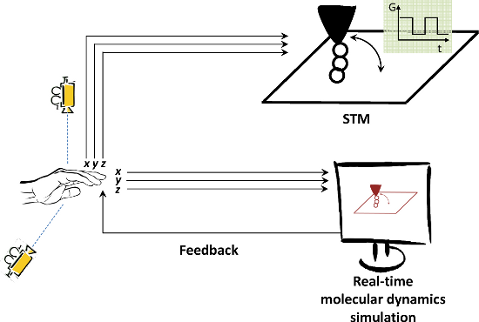
- –machine augmented system in which the operator and the machine are connected by a real-time simulation. Here, a 3D motion control system is integrated with an ultra-high vacuum (UHV) low-temperature scanning tunnelling microscope (STM). Moreover, we coupled a real-time molecular dynamics (MD) simulation
- and combined it with a molecular dynamics (MD) simulator that simulates in real-time the manipulation process going on in the STM. The MD simulation not only provides information about the atomic scale structure of the junction, but also serves as a visual feedback to the operator in real-time who can
- potential energy, forces can be calculated using The force on an atom a is therefore given by (the derivation of this is given in Supporting Information File 1). Implementation The molecular dynamics simulation is written in C++ to guarantee high computational performance. A schematic flowchart of the




Mechanism of silica–lysozyme composite formation unravelled by in situ fast SAXS
Beilstein J. Nanotechnol. 2019, 10, 182–197, doi:10.3762/bjnano.10.17
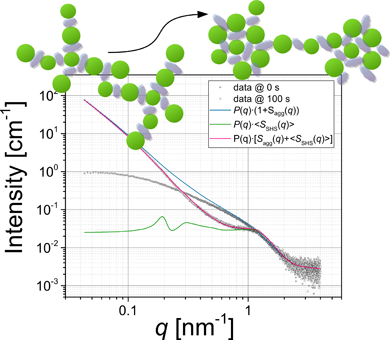
- close to that of the protein molecule [22][53]. Su et al. [54] found that at small surface coverage the lysozyme attaches to silica NPs in a side on orientation, and recently the molecular dynamics simulations by Hildebrand et al. [55] also further confirmed that the side-on orientation of lysozyme with



Sputtering of silicon nanopowders by an argon cluster ion beam
Beilstein J. Nanotechnol. 2019, 10, 135–143, doi:10.3762/bjnano.10.13
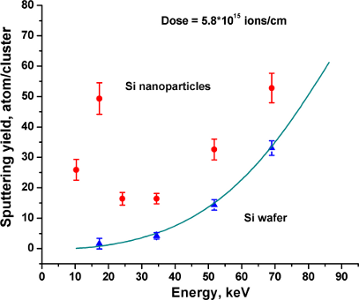
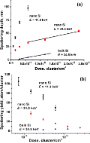
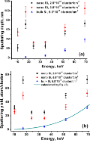
- under-cosine shape, in other words, the atoms are sputtered mostly in the lateral direction [5]. This effect results in another prominent phenomenon called surface smoothing. Using molecular dynamics (MD) and Monte Carlo simulations it has been shown that the effect of the cluster impact depends on the
- nanowires. There are many molecular dynamics simulations using the collision cascade theory and, at the same time, only a few experimental studies on the interaction of monomer and cluster projectiles with nanodimensional systems. Using a MD simulation, Kissel et al. [16] have studied the effect of the





Hydrogen-induced plasticity in nanoporous palladium
Beilstein J. Nanotechnol. 2018, 9, 3013–3024, doi:10.3762/bjnano.9.280
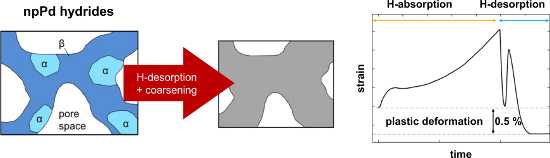
- lower surface areas measured after compression tests [47]. Therefore, in our case of nanoporous palladium under compression a coarsening of the structure can be expected, giving rise to the length contraction. It has been shown using molecular dynamics (MD) simulations that plastic deformation at


Accurate control of the covalent functionalization of single-walled carbon nanotubes for the electro-enzymatically controlled oxidation of biomolecules
Beilstein J. Nanotechnol. 2018, 9, 2750–2762, doi:10.3762/bjnano.9.257
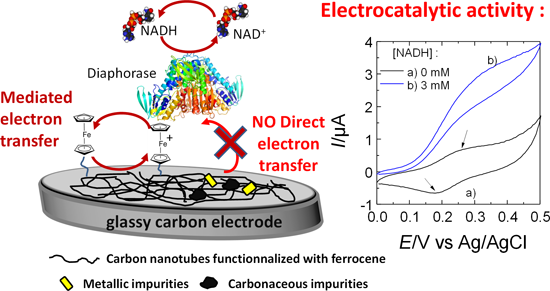
- , the role of the PEG linker in the good electrochemical response was studied by molecular dynamics, which show that favorable interaction between the ETG units and water molecules prevents π-stacking of the ferrocene unit on the surface of the CNTs, therefore allowing for a good electron transfer
- simulation (structure and diameter close to that of (11,5)). The FcETG2 molecule grafted at the surface of the SWCNT model was oriented to simulate a ferrocene group in a π-stacking interaction (see below the molecular dynamics simulation) since the analysis is done in ultra-high vacuum. The distance between
- alkyl linker is completely inefficient for the mediated electron transfer process, while the polyethylene glycol spacers are efficient regardless of their length (in the range examined in this work) was puzzling, so we decided to investigate the role of the linker by molecular dynamics computation. The






Surface energy of nanoparticles – influence of particle size and structure
Beilstein J. Nanotechnol. 2018, 9, 2265–2276, doi:10.3762/bjnano.9.211
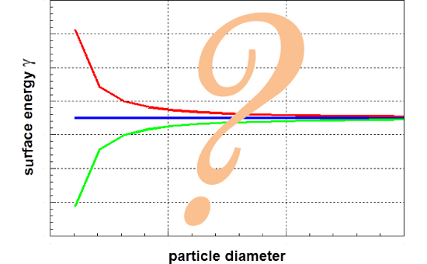
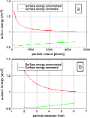
- particle size. Different approaches, such as classical thermodynamics calculations, molecular dynamics simulations, and ab initio calculations, exist to predict this quantity. Generally, considerations based on classical thermodynamics lead to the prediction of decreasing values of the surface energy with
- be expected by the formation of a disordered or quasi-liquid layer at the surface. The atomistic approach, based either on molecular dynamics simulations or ab initio calculations, generally leads to values with an opposite tendency. However, it is shown that this result is based on an insufficient
- particle size is found. The main conclusion of this work is that surface energy values for the equivalent bulk materials should be used if detailed data for nanoparticles are not available. Keywords: ab initio calculations; classical thermodynamics; molecular dynamics simulation; surface energy; surface





Metal-free catalysis based on nitrogen-doped carbon nanomaterials: a photoelectron spectroscopy point of view
Beilstein J. Nanotechnol. 2018, 9, 2015–2031, doi:10.3762/bjnano.9.191
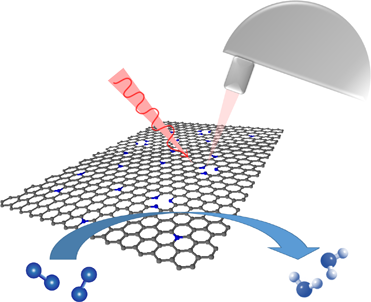
- molecular dynamics combined with analytical potential and density functional theory methods, Lehtinen et al. reported on the influence of the ion kinetic energy and mass on the probability of defect formation during irradiation of suspended graphene sheets and single-walled CNTs [86]. Being proportional to
- . There are many other nonradiative relaxation channels in nanosystems that affect the excitation lifetimes. Reproduced with permission from [83], copyright 2010 American Institute of Physics. (d–i) Production of defects in graphene under ion irradiation as revealed by the analytical potential molecular
- dynamics: (d) simulation setup. (e, h) Probability for the formation of single and double vacancies as a function of the ion energy. The insets show the atomic structures of the reconstructed vacancies. (f) Average area of defects as a function of the ion energy. The areas corresponding to single vacancies




Recent highlights in nanoscale and mesoscale friction
Beilstein J. Nanotechnol. 2018, 9, 1995–2014, doi:10.3762/bjnano.9.190
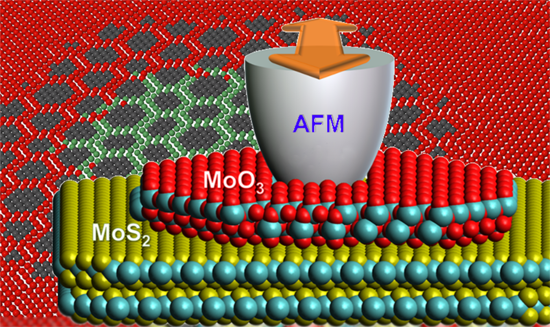
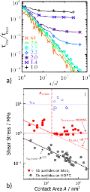
- mechanisms of structural lubricity. This crucial importance of the edge was also demonstrated by molecular dynamics (MD) simulations for Kr islands adsorbed on Pb(111). Here, depending on size and shape of the islands, the edge generates a barrier for the unpinning and successive advancement of the edge


Defect formation in multiwalled carbon nanotubes under low-energy He and Ne ion irradiation
Beilstein J. Nanotechnol. 2018, 9, 1951–1963, doi:10.3762/bjnano.9.186
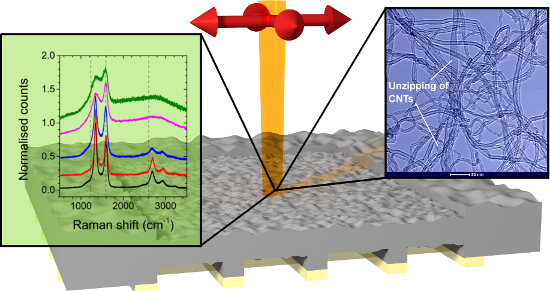
- improved mechanical properties which is similar to the one of collagen found in nature [7]. Vacancy formation and interconnections forming between CNTs have also been observed in molecular dynamics (MD) simulations during the irradiation of SWCNTs supported by silica [8]. MD simulations have been used to
- found in experiments. Molecular dynamics (MD) simulations would be able to provide an atomistic description of the sputter processes, which has already been done for several systems [48], however experimental fluences are beyond their possibilities. BCA-based simulations have already been used for the



The inhibition effect of water on the purification of natural gas with nanoporous graphene membranes
Beilstein J. Nanotechnol. 2018, 9, 1906–1916, doi:10.3762/bjnano.9.182
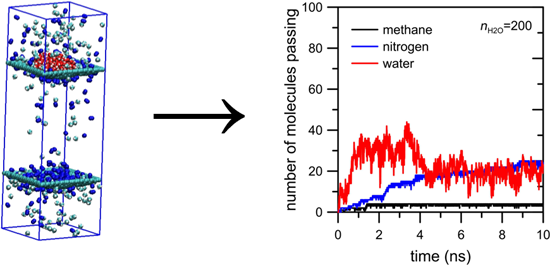
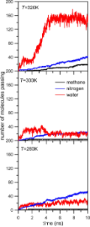
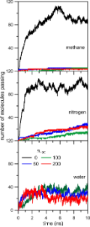
- Department of Analytical Chemistry and Instrumental Analysis, Maria Curie-Sklodowska University, M. C. Sklodowska sq. 3, 20-031 Lublin, Poland 10.3762/bjnano.9.182 Abstract Molecular dynamics simulations are used to investigate the inhibiting effect of water on the natural gas separation with nanoporous
- ; hydrogen bonds; molecular dynamics; separation; Introduction Modern separation techniques require energy-efficient and environmentally friendly solutions. Very promising, but not yet widely considered to be practical, is the utilization of nanochemistry achievements. An example would be the utilization of
- hydrated ions and liquid water with porous graphene [12]. Sun et al. [7] studied the purification of natural gas using nanoporous graphene with the help of classical molecular dynamics. Similarly to most papers that deal with the application of nanoporous graphene, they demonstrated that the efficiency of






Quantitative comparison of wideband low-latency phase-locked loop circuit designs for high-speed frequency modulation atomic force microscopy
Beilstein J. Nanotechnol. 2018, 9, 1844–1855, doi:10.3762/bjnano.9.176
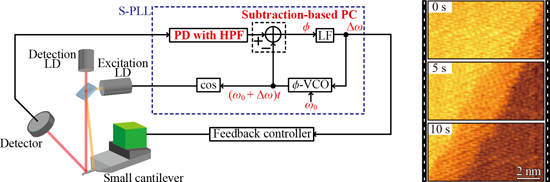
- ], we discussed the origin of this region in detail. By comparing the AFM images with the molecular dynamics simulation results, we proposed that the transition region is most likely to be a Ca(OH)2 layer. In this study, this transition region was newly observed by direct imaging using high-speed FM-AFM



Free-radical gases on two-dimensional transition-metal disulfides (XS2, X = Mo/W): robust half-metallicity for efficient nitrogen oxide sensors
Beilstein J. Nanotechnol. 2018, 9, 1641–1646, doi:10.3762/bjnano.9.156
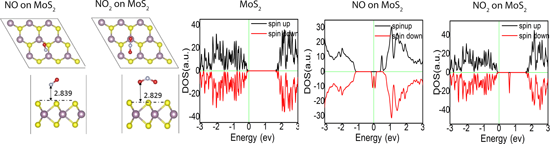
- meV and 3 Å, suggesting that water is physically adsorbed on the surface of the WS2 nanosheet. Monolayer MoS2 [38] and multilayer MoS2 field effect transistors [17] for sensing NO at room temperature have been fabricated experimentally. In this work, the ab initio molecular dynamics simulations at


Atomic-level characterization and cilostazol affinity of poly(lactic acid) nanoparticles conjugated with differentially charged hydrophilic molecules
Beilstein J. Nanotechnol. 2018, 9, 1328–1338, doi:10.3762/bjnano.9.126
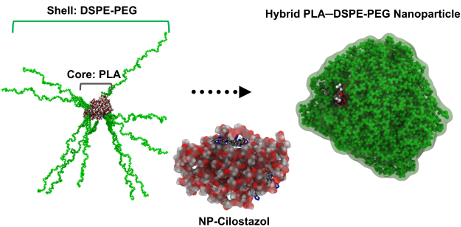
- suggest that the combination of molecular dynamics ReaxFF simulations and blind docking techniques can be used as an explorative tool prior to experiments, which is useful for rational design of new drug delivery systems. Keywords: drug delivery; PEGylated nanoparticle; PLA; polymeric nanoparticle
- , cilostazol [32][33]. PEG chains typically create an interface between the NP core (PLA) and the hydrophilic environment, where the drug encapsulation is largely dependent on the intrinsic affinity between the drug and the PLA core [31]. All-atom molecular dynamics (MD) simulations were performed using the
- determine the spatial distribution of cilostazol in polymeric NPs and to explore its potential use in this kind of drug delivery system. Experimental Characterization of copolymer structures by all-atom molecular dynamics simulations The poly(lactic acid) core PLA polymer chains were built in three


Induced smectic phase in binary mixtures of twist-bend nematogens
Beilstein J. Nanotechnol. 2018, 9, 1297–1307, doi:10.3762/bjnano.9.122
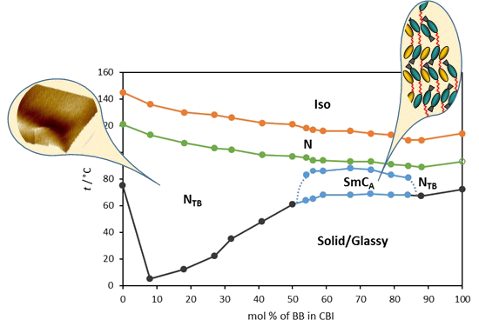
- investigate how conformational disorder of terminal chains might affect induction of the smectic phase we performed a molecular dynamics simulation of BB at 80 K with a time step of 1 fs for a total duration of 10 ps using the Turbomole program package [48] at the PBE/def2-TZVP level of theory using the RI
- molecular dynamics. Snapshots were taken every 0.2 ps from a 10 ps molecular dynamics simulation at 80 K. To illustrate the motion of the alkyl chain separately from the motion of the remainder of the molecule, the snapshots are shown with the benzene ring of each geometry aligned, and only the alkyl chain




Atomistic modeling of tribological properties of Pd and Al nanoparticles on a graphene surface
Beilstein J. Nanotechnol. 2018, 9, 1239–1246, doi:10.3762/bjnano.9.115
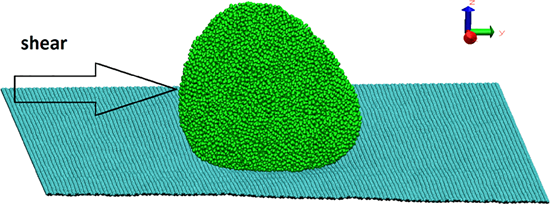
- insight into the fundamental origin of sliding friction. Results: Using molecular dynamics we investigate frictional properties of aluminum and palladium nanoparticles deposited on a graphene layer. We study the time evolution of the total momentum of the system, the total and potential energies, the
- the friction dynamics of metallic nanoparticles [14] makes it virtually impossible to construct a general and reliable analytical theory of the phenomena under consideration. Therefore, computer modeling, in particular molecular dynamics (MD), is a useful tool for the theoretical study of friction and
- coordinates of metal atoms with maximum and minimum values along the x,y,z-axes. The substrate in our model is a graphene sheet that is parallel to the xy-plane with armchair and zigzag fixed edges along the x- and y-directions (Figure 1). Snapshots in this paper were taken by using the Visual Molecular


Fatigue crack growth characteristics of Fe and Ni under cyclic loading using a quasi-continuum method
Beilstein J. Nanotechnol. 2018, 9, 1000–1014, doi:10.3762/bjnano.9.93
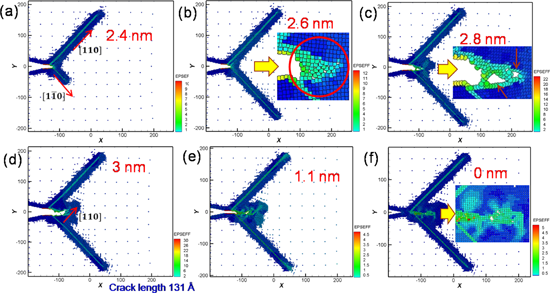
- , strong materials. Considerable attention has been focused on the investigation of the fatigue crack growth behavior in single crystals under cyclic loading using molecular dynamics (MD), which is an effective tool for analyzing the mechanical deformation and mechanical properties of materials at the









Dynamics and fragmentation mechanism of (C5H4CH3)Pt(CH3)3 on SiO2 surfaces
Beilstein J. Nanotechnol. 2018, 9, 711–720, doi:10.3762/bjnano.9.66
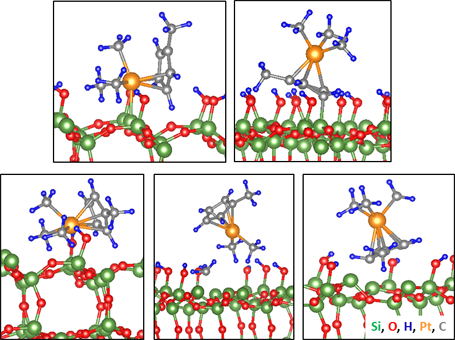
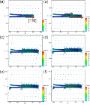
- molecular dynamics simulations. Fully and partially hydroxylated surfaces represent substrates before and after electron beam treatment and this study examines the role of electron beam pretreatment on the substrates in the initial stages of precursor dissociation and formation of Pt deposits. Our
- beam pretreated surfaces. Hence, in order to extend the knowledge on the adsorption and to address the open questions in the deposition process, in this study we use DFT and finite temperature DFT-based molecular dynamics (MD) simulations and investigate the adsorption behavior of (C5H4CH3)Pt(CH3)3 on
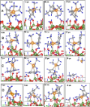
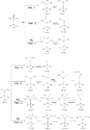
- originally bonded to Pt, fragments and bonds to the adjacent vacant site, as observed in the 3 × 3 × 4 cell (see Figure 2d and Figure 3e). These DFT relaxed structures (as shown in Figure 3b–e) are considered as starting point for molecular dynamics simulations. The trajectory of the MD simulations for the



Review: Electrostatically actuated nanobeam-based nanoelectromechanical switches – materials solutions and operational conditions
Beilstein J. Nanotechnol. 2018, 9, 271–300, doi:10.3762/bjnano.9.29
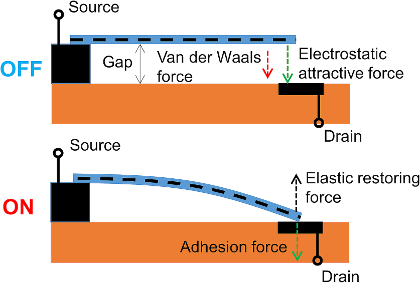
- switches is mostly focused on developing experimental approaches for device prototype fabrication and testing in laboratory environment and theoretical modelling based on continuum mechanics and molecular dynamics, allowing simulations to be performed on the processes occurring in NEM switching devices and
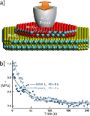
- experiment was carried out with an AFM in amplitude modulation mode complemented with molecular dynamics simulations. An exponential wear rate dependence on the peak force load was found, suggesting that lower contact forces are needed to reduce the wear rate. It should be noted that for soft materials


Patterning of supported gold monolayers via chemical lift-off lithography
Beilstein J. Nanotechnol. 2017, 8, 2648–2661, doi:10.3762/bjnano.8.265
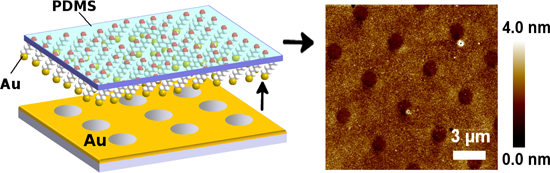
- found to be consistent with molecular dynamics simulations that predicted the removal of no more than 1.5 Au atoms per thiol, thus presenting a monolayer-like structure. Keywords: chemical patterning; hybrid material; monolayer; soft lithography; two-dimensional material; Introduction Chemical lift
- into lift-off lithography removal mechanisms and outcomes of the lift-off process at the atomic scale, we simulated lift-off using molecular dynamics and density functional theory. We determined the energetics of this complex system during lift-off. The simulations were used to predict the
- assumptions made above regarding the structure of Au–alkanethiolate monolayers on PDMS are in agreement with estimates of the stoichiometry of the Au–alkanethiolate monolayer calculated through molecular dynamics simulations. Atomic rearrangement during the CLL process was modeled using density functional





