


Search results
Search for "roughness" in Full Text gives 478 result(s) in Beilstein Journal of Nanotechnology. Showing first 200.
Biomimetic chitosan with biocomposite nanomaterials for bone tissue repair and regeneration
Beilstein J. Nanotechnol. 2022, 13, 1051–1067, doi:10.3762/bjnano.13.92
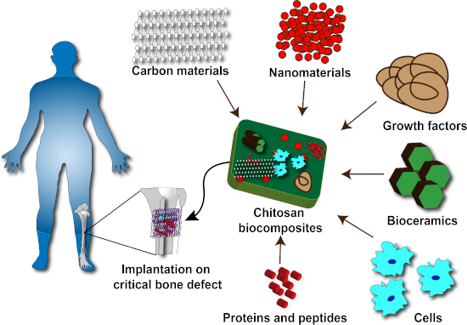
- -hydroxybutyrate) composites generates a hydrophilic environment which promotes cell motility, adhesion, and protein adsorption. Furthermore, the mixture enhances the surface roughness of the composites, stimulating bone cells to attach to the surface [108]. The different characteristics of the 3D porous collagen
Temperature and chemical effects on the interfacial energy between a Ga–In–Sn eutectic liquid alloy and nanoscopic asperities
Beilstein J. Nanotechnol. 2022, 13, 817–827, doi:10.3762/bjnano.13.72
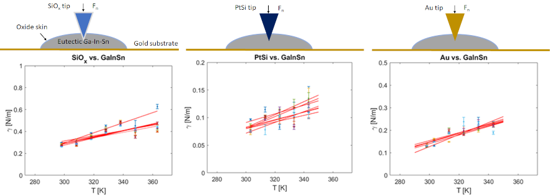
- surface of the eutectic Ga–In–Sn melt with three AFM tips of different chemistries, namely SiOx, PtSi, and Au. Figure 2 also indicates the surface roughness Rq value for each topography image. We recorded the presented topography images in contact mode by setting and controlling the normal force to Fn = 2
- nN and the sliding velocity to vs = 4 µm/s. Depending on the tip chemistry, we determined different roughness values ranging from Rq = 4.48 nm with a gold tip to Rq = 10.13 nm with a platinum silicide tip. This dependence on the tip chemistry likely originates from different capillary interactions



Optimizing PMMA solutions to suppress contamination in the transfer of CVD graphene for batch production
Beilstein J. Nanotechnol. 2022, 13, 796–806, doi:10.3762/bjnano.13.70
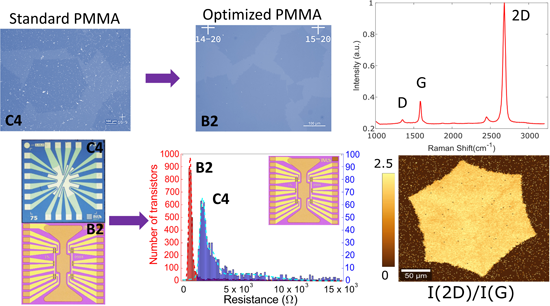
- ) [28][33]. The crystal morphology appears very smooth and free of identifiable impurities, with an average surface roughness (Ra) of ca. 0.2 nm (Supporting Information File 1, Figure S3d). This value is one order of magnitude lower than that of graphene crystals transferred with C4 PMMA, which showed a
- surface roughness of ca. 2.8 nm. The low roughness obtained with B2 PMMA can be also related to a minimal occurrence of nanometer-scale PMMA residues. XPS was employed to analyze the graphene samples transferred using C4 and B2 PMMA (Figure 4). Figure 4a shows the chemical structure of the PMMA molecule




Effects of substrate stiffness on the viscoelasticity and migration of prostate cancer cells examined by atomic force microscopy
Beilstein J. Nanotechnol. 2022, 13, 560–569, doi:10.3762/bjnano.13.47
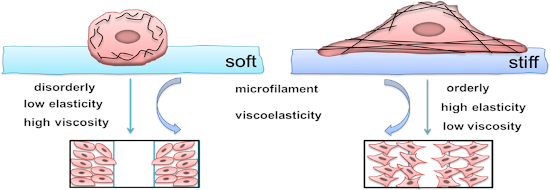
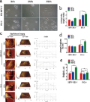
- for cell invasion [25][26]. Our results suggest that stiff substrates promote the protrusion of the leading edge of cancer cell membranes to guide cell motility. The average surface roughness of cells on extracellular environments with different stiffness is shown in Figure 3d. PC-3 cells showed a
- higher average surface roughness (Ra) on stiff substrates than on soft substrates, in contrast to HPV-PZ-7 cells, which did not exhibit this feature. Peak-to-valley ratio roughness (Rt) and root mean square surface roughness (Rq) also showed the same characteristics, see Supporting Information File 1
- , Figure S3c,d. Cell surface roughness is a quantitative measurement of the variability of cellular surface topography and serves as an indicator to assess the state of the cell (i.e., the greater the roughness, the greater the undulation of the cell surface topography [27]). It can be involved in many



Influence of thickness and morphology of MoS2 on the performance of counter electrodes in dye-sensitized solar cells
Beilstein J. Nanotechnol. 2022, 13, 528–537, doi:10.3762/bjnano.13.44
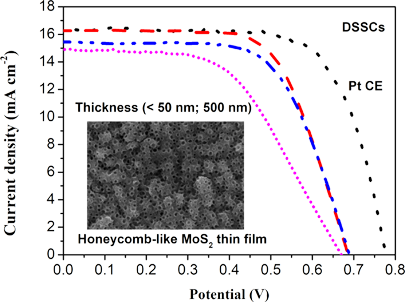
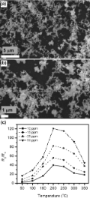
- grids with a diameter of around 50 nm (see Figure 3e, insert). The roughness of the films was further studied by AFM. The film with the honeycomb-like structure showed the highest average roughness (Sa) and root mean square roughness (Sq) of 24.179 and 30.443 nm, respectively (see Supporting Information


Micro- and nanotechnology in biomedical engineering for cartilage tissue regeneration in osteoarthritis
Beilstein J. Nanotechnol. 2022, 13, 363–389, doi:10.3762/bjnano.13.31
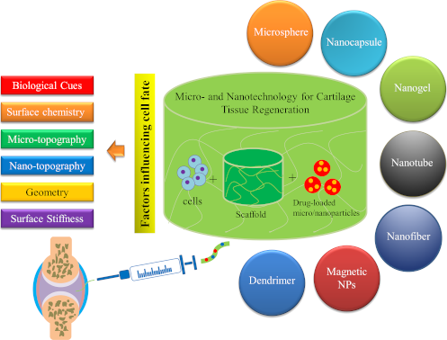
- because they are not biodegradable and provide a more stable matrix in which osteoblasts can proliferate and deposit new ECM. The integration of CNTs into a polymer matrix would increase surface roughness and activate the mitogen-activated protein kinase (MAPK) pathway [128], which is responsible for
- regulating the osteogenic response of cells to surface roughness. In this regard, the fabrication of a CNT-incorporated PLGA nanocomposite has resulted in the enhanced surface roughness and increased attachment and proliferation of MC3T3-E1 osteoblasts [129]. In vitro osteogenesis analysis also showed a
- , and OH) and surface roughness to CNT, Antonioli et al. used oxygen plasma treatment and fabricated novel superhydrophilic VA–CTN films. This treatment could increase the wettability of the nanofilms to acquire appreciable cytocompatibility [134]. The chondrocytes expressed major chondrogenic markers


The effect of metal surface nanomorphology on the output performance of a TENG
Beilstein J. Nanotechnol. 2022, 13, 298–312, doi:10.3762/bjnano.13.25
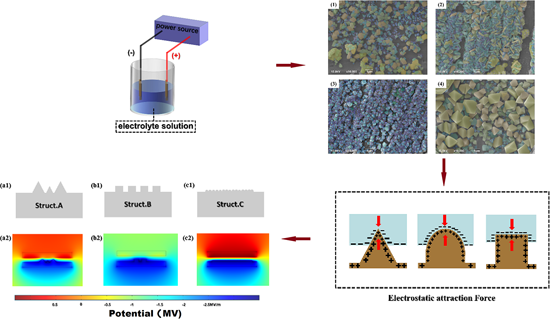
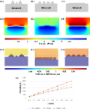
- ], many attempts have been made to enhance the energy harvesting efficiency. There are four ways to enhance the efficiency of energy collection. These are (1) surface treatment of the contact materials, including increasing the surface roughness and physical surface modification to enhance the surface




Systematic studies into uniform synthetic protein nanoparticles
Beilstein J. Nanotechnol. 2022, 13, 274–283, doi:10.3762/bjnano.13.22
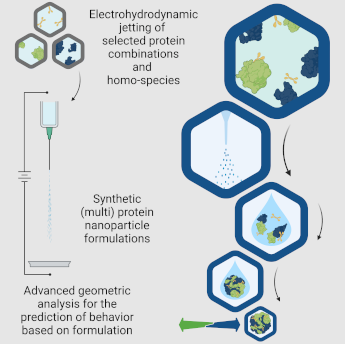
- response at the cellular level. Several studies [28][29][30] have shown that considerations such as aspect ratio, stiffness/deformability, and particle surface roughness (deviation of circularity) can have a comparable impact on cellular uptake and/or endosomal escape. Hence, it is important to incorporate


Relationship between corrosion and nanoscale friction on a metallic glass
Beilstein J. Nanotechnol. 2022, 13, 236–244, doi:10.3762/bjnano.13.18
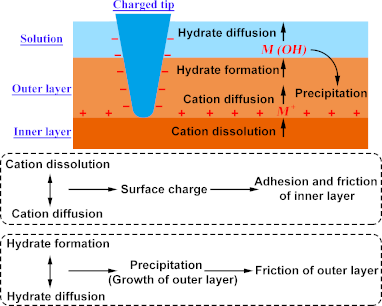
- magnified image of typical corrosion pits. No such pits are found after polarization in phosphate buffer (Figure 1c). The surface is mostly smooth and only some parts exhibit signs of increased roughness (inset in Figure 1c). We conclude that the polarization-induced surface modifications proceed uniformly
- ) and 0.2 M NaCl solution. The original surfaces of the tested ribbons are flat with a surface roughness less than ca. 1 nm. Friction experiments were carried out after immersing a new sample into the solution for 1, 24, or 72 h. The exposed area of the samples was ca. 2.0 cm2 and ca. 1.0 mL of


Engineered titania nanomaterials in advanced clinical applications
Beilstein J. Nanotechnol. 2022, 13, 201–218, doi:10.3762/bjnano.13.15
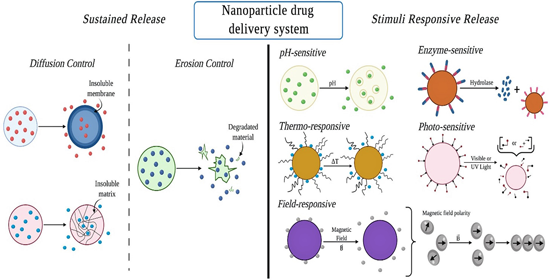
- bacterial accumulation in implants, surface modification is increasingly gaining attention. Dental implants have been modified with drug-releasing TiO2 nanotubes to overcome the infection caused by the presence of persistent oral pathogenic microbial biofilms [57]. Their nanometer-sized roughness and


Thermal oxidation process on Si(113)-(3 × 2) investigated using high-temperature scanning tunneling microscopy
Beilstein J. Nanotechnol. 2022, 13, 172–181, doi:10.3762/bjnano.13.12
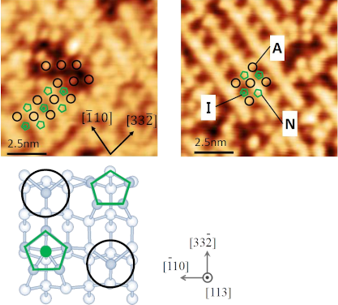
- important because the surface roughness is enhanced in this mode [17]. It is noted that the oxidation and transition modes are classified as passive oxidation, and the etching mode is classified as active oxidation. It has been shown that the oxide-covered surface is smoother on Si(113) than on Si(001
- time of a mobile SiO species is relatively shorter on Si(113), leading to the less effective formation of oxide islands to enhance surface roughness. It is plausible that the narrow feature of the transition region for Si(113) is related to the observed flatness of the oxidized surface on Si(113) [18
- to the transition region are much more restricted for Si(113) compared with those for Si(001) and Si(111). The transition region, in which both oxidation and etching occur simultaneously, is considered to be related to the enhanced roughness of the oxidized silicon surfaces as reported in the


A comprehensive review on electrospun nanohybrid membranes for wastewater treatment
Beilstein J. Nanotechnol. 2022, 13, 137–159, doi:10.3762/bjnano.13.10
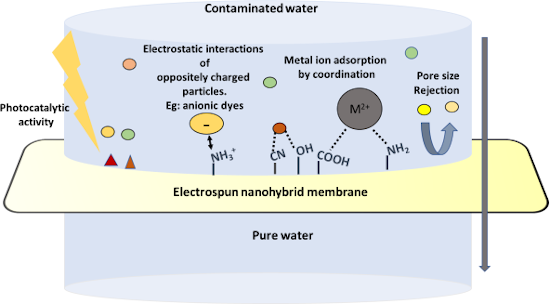
- dissolved in DMF [44]. They have also reported that the humidity had an effect on the surface morphology of the fibers. The increase of surface roughness of the fibers due to pore formation has been observed with the increase of relative humidity. The increase of fiber diameter with relative humidity can
- application as an oil–water separators, owing to the high surface porosity, submicrometer pore sizes, high permeability, and the ability to control the membrane hydrophobicity/hydrophilicity effortlessly. The nanoscale surface roughness of the nanofibers of the membrane has a direct impact on the wetting
- the nanoscale roughness of the surface, which is a factor that enhances the superwettability. The authors investigated the separation capability of both surfactant-stabilized and surfactant-free oil-in-water emulsions. A permeation flux of 6290 ± 50 LMH and 1120 ± 80 LMH for surfactant-free and




Nanoscale friction and wear of a polymer coated with graphene
Beilstein J. Nanotechnol. 2022, 13, 63–73, doi:10.3762/bjnano.13.4
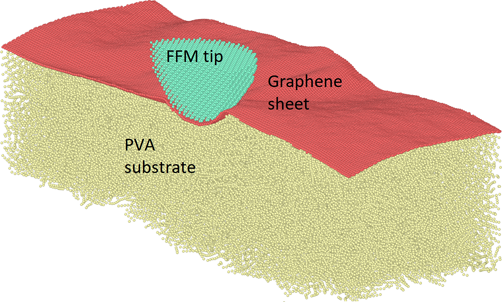
- . During sliding, we bin the individual polymer particles depending on their position in the reference frame of the tip. We then calculate the average of a specific property in each bin. We also compute the surface roughness. We first divide the box into bins of size σ0 in both x- and y-directions. Each
- bin is assigned the height of the monomer with the highest z-position. We compute the surface roughness as the root mean square height, where A is the surface area, and Z is the height of the particles on the surface. Results and Discussion Effect of graphene deposition After the deposition of
- characterise the shape of the polymer surface by the roughness. We computed the roughness of the bare surface, as well as surfaces covered with flat and crumpled graphene sheets just after deposition. Before the deposition of graphene, the roughness of the polymer surface is equal to 0.543 Å. After the


Measurement of polarization effects in dual-phase ceria-based oxygen permeation membranes using Kelvin probe force microscopy
Beilstein J. Nanotechnol. 2021, 12, 1380–1391, doi:10.3762/bjnano.12.102
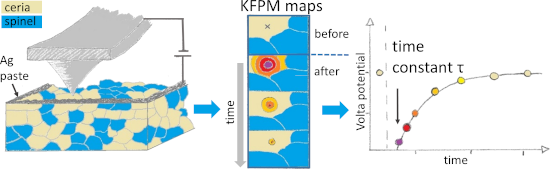
- according to the Fe3−xCoxO4 phase diagram [10]. For electrical conductivity measurements, the samples were burnished using sanding paper (1200 graining). For KFPM measurements, the samples were embedded in epoxy resin and polished to mirror using diamond polishing paste. The roughness of the polished


Alteration of nanomechanical properties of pancreatic cancer cells through anticancer drug treatment revealed by atomic force microscopy
Beilstein J. Nanotechnol. 2021, 12, 1372–1379, doi:10.3762/bjnano.12.101
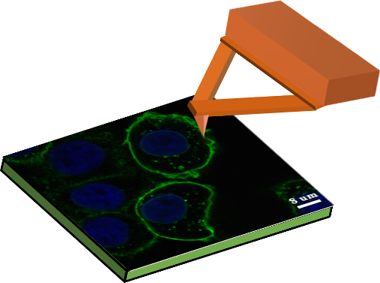
- . The sharp contrast reduced the details of the cell surface microstructure of HDPE6-C7, AsPC-1, and MIA-PaCa-2 cell lines. The corresponding analyses of cell surface roughness is listed in Supporting Information File 1, Table S1, which shows that the surface roughness of MIA-PaCa-2, HDPE6-C7, and AsPC
- ratio, (c) cell spread areas and (d) the corresponding Young's modulus of MIA PaCa-2 cells with/without DOX treatment. Supporting Information Supporting Information File 96: Surface roughness, energy dissipation, point distribution of Young's modulus of AsPC-1, MIA-PaCa-2, BxPC-3, and HDPE6-C7 and


Polarity in cuticular ridge development and insect attachment on leaf surfaces of Schismatoglottis calyptrata (Araceae)
Beilstein J. Nanotechnol. 2021, 12, 1326–1338, doi:10.3762/bjnano.12.98
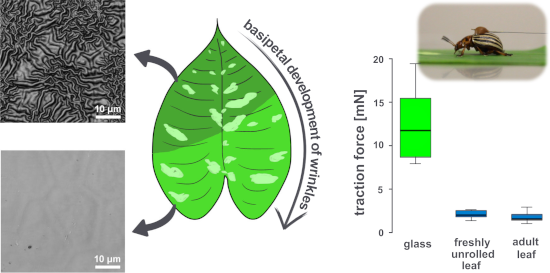
- imaging of young leaf surfaces [7][23]. By means of confocal microscopy experiments, we demonstrate that polarity in ridge development also occurs on leaves of S. calyptrata and that the surface roughness of the leaves increases as the leaves mature. Previous studies have found reduced insect adhesive
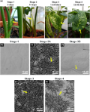
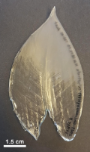
- morphologies is provided in Figure 2. The ontogenetic variations in roughness on the S. calyptrata leaf surfaces are given as the arithmetic average roughness (Ra) versus leaf stage in Figure 3a and as the ridge aspect ratio (AR) versus leaf stage in Figure 3b. The roughness values of the leaf replicas
- spots in the dark green region: Rc = 0.76 µm, Rsm = 3.0 µm, AR = 0.25; in the yellowish green region: Rc = 0.88 µm, Rsm = 3.03 µm, AR = 0.29). The mean values of the roughness parameters are shown in Table 1. These values of mean height (Rc) and spacing (Rsm) of the ridges at the intermediate stages 2A




A review on slip boundary conditions at the nanoscale: recent development and applications
Beilstein J. Nanotechnol. 2021, 12, 1237–1251, doi:10.3762/bjnano.12.91
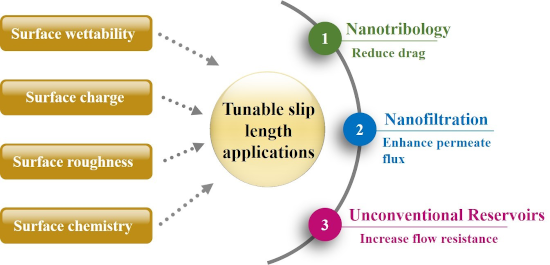
- and varies with the external driving force. In addition, depending on whether there is a true slip length, the amplitude of surface roughness has different influences on the effective slip length. The composition of surface textures, including isotropic and anisotropic textures, can also affect the
- addition, as downsizing can result in an increased surface-to-volume ratio, the solid–liquid interfacial properties, such as wettability and surface roughness, become key factors in the determination of liquid properties near the interface of nanosized systems, and may dramatically affect the slip flow
- boundary conditions [10][11][12][13][14][15]. For example, many studies have shown that on hydrophobic surfaces, roughness may lead to a transition to a superhydrophobic state, significantly lowering the ability of liquid drops to stick. In other words, liquids can easily slip along such solid surfaces and


Two dynamic modes to streamline challenging atomic force microscopy measurements
Beilstein J. Nanotechnol. 2021, 12, 1226–1236, doi:10.3762/bjnano.12.90
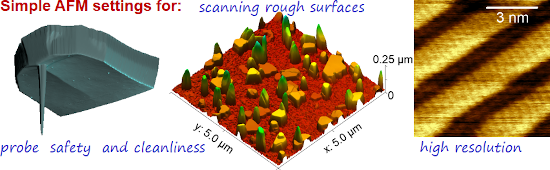
- point (reference) level Asp, we define it as Asp = p × A0/100, that is, the amplitude during scanning will be p percent of the initial amplitude. In addition, we must set the scanning speed V. The problem is that the optimal choice of the values of A0, p, and V depends on the roughness of the surface to
- adjacent points and the roughness of the sample. In many cases, the latter factor will predominantly determine the overall imaging time. There is no need to adjust the feedback and it is possible to scan rough surfaces at small oscillation amplitude. Since feedback is not used in its regular sense, we have
- return pass. The time of vertical movements is not known in advance. It depends on the sample roughness and two parameters, namely the speed Vdown of the probe approaching the surface at the point of measurement and the retraction speed Vup. The time required to obtain a scan, Tscan, will be the sum of


Morphology-driven gas sensing by fabricated fractals: A review
Beilstein J. Nanotechnol. 2021, 12, 1187–1208, doi:10.3762/bjnano.12.88
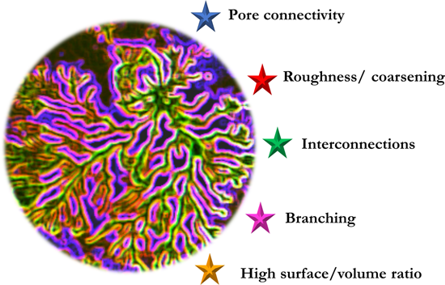
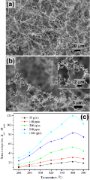
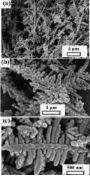
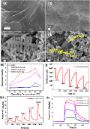
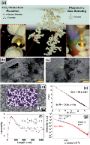
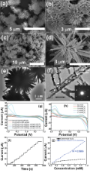
- interconnections of these building blocks with each other result in the formation of 3D porous network structures. This increases coarsening, roughness, and adsorption sites and overall offers a high surface-to-volume ratio [72][82][91]. The crossovers offer additional secondary and tertiary adsorption sites. Thus
- , roughness, porosity, branching, network structure, and fractal dimensions. The fractal dimensions estimated in the present article show that structures with D in the range of 1.3–1.8 exhibit better gas sensing responses. For fractal dimensions greater than 2, gas sensing behavior is not significant, and
- fractals, can aid in better sensing. Connectivity, exposure to gaseous environment, nanoscale 3D coarsening, and roughness generate many secondary and tertiary adsorption sites that result in better sensitivity. If somehow the interconnectivity can be improved with the help of an artificial electrode










Is the Ne operation of the helium ion microscope suitable for electron backscatter diffraction sample preparation?
Beilstein J. Nanotechnol. 2021, 12, 965–983, doi:10.3762/bjnano.12.73
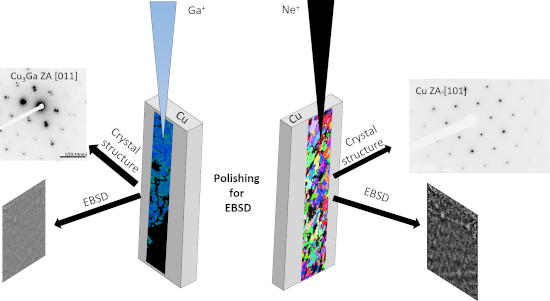
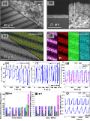
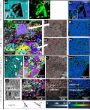
- area. Most areas on the sample returned up to 80% zero solutions under the same conditions due to the roughness of the surface sample (see below Figure 7). The inverse pole figure (IPF X) is shown in Figure 3d. The band contrast and grain boundary map overlay is shown in Figure 3e. A statistical



Self-assembly of Eucalyptus gunnii wax tubules and pure ß-diketone on HOPG and glass
Beilstein J. Nanotechnol. 2021, 12, 939–949, doi:10.3762/bjnano.12.70
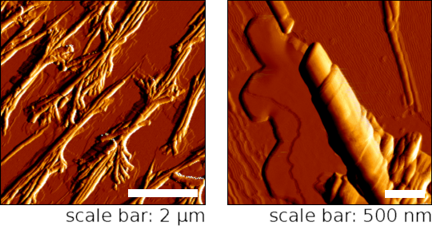
- tubules in nature. On E. gunnii leaves, wax regeneration can be observed by AFM, but the measurement is limited to small areas and short times due to the roughness of the leaf surface [30]. In addition, fresh plant leaves containing water are heated by the laser beam during scanning, which can cause a




The role of convolutional neural networks in scanning probe microscopy: a review
Beilstein J. Nanotechnol. 2021, 12, 878–901, doi:10.3762/bjnano.12.66
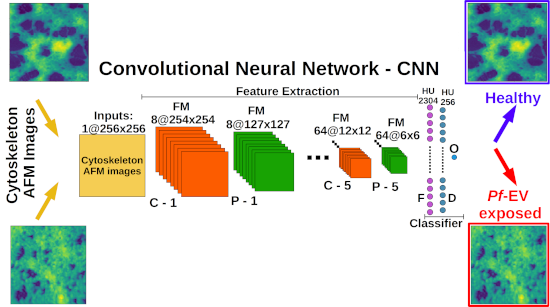
- . Furthermore, the images themselves were not the input to the machine learning, but rather feature engineering was applied to determine relevant global parameters from the image analysis. These included, among others, roughness as average or root mean square (RMS), surface skewness, surface kurtosis, and peak







9.1% efficient zinc oxide/silicon solar cells on a 50 μm thick Si absorber
Beilstein J. Nanotechnol. 2021, 12, 766–774, doi:10.3762/bjnano.12.60
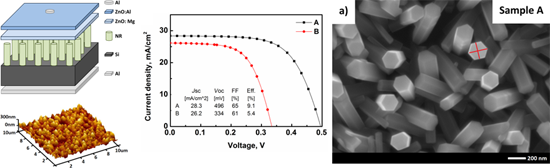
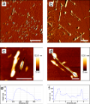
- the tested PV cells, as measured with atomic force microscopy (AFM). The results for the photovoltaic cell modified with zinc oxide nanorods are shown in Figure 4a and Figure 4c. The results for the planar cell are shown in Figure 4b and Figure 4d. There are significant differences in the roughness
- to a non-uniform surface morphology, as intended by us. The average root mean square (RMS) roughness of sample A equals 60 nm. As a result, light reflection is reduced for the cell. This effect was published previously [14] for PV structures prepared on a thicker Si absorber. This feature enhances
- the light-trapping effect. The impact of light-trapping on the operation of solar cells is presented by means of current–voltage curves. In contrast, sample B showed a flat surface morphology. The average RMS roughness value was 9 nm. Therefore, interference peaks in external quantum efficiency (EQE


Physical constraints lead to parallel evolution of micro- and nanostructures of animal adhesive pads: a review
Beilstein J. Nanotechnol. 2021, 12, 725–743, doi:10.3762/bjnano.12.57
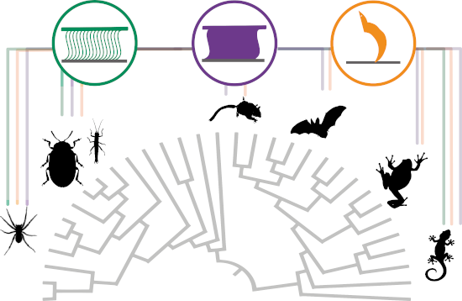
- morphology of attachment devices is affected by physical constraints. This resulted in two main types of attachment devices in animals: hairy and smooth. They differ in morphology and ultrastructure but achieve mechanical adaptation to substrates with different roughness and maximise the actual contact area
- influence of different factors, such as substrate roughness and pad stiffness, on contact forces, and review the chemical composition of pad fluids, which is an important component of an adhesive function. Attachment systems are omnipresent in animals. We show parallel evolution of attachment structures on
- contact with a wide range of microscopically rough substrate profiles (Figure 2). Also, due to the low bending stiffness of their terminal plates, can even adapt to substrates with roughness on a sub-nanometre scale [1][3][4][34]. Smooth pads can also maximise their contact areas with a variety of


Electromigration-induced formation of percolating adsorbate islands during condensation from the gaseous phase: a computational study
Beilstein J. Nanotechnol. 2021, 12, 694–703, doi:10.3762/bjnano.12.55
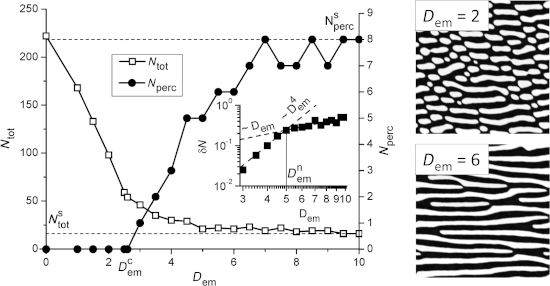
- [42], control of surface roughness [43] and morphology of islands or nanowires [26][44][45][46][47], as well as control of adsorbate transfer to graphene [48]. Thus, the effects of EM induced by the presence of a potential difference on opposite sides of the substrate can significantly affect the


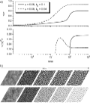


![[Graphic 29]](/bjnano/content/inline/2190-4286-12-55-i36.svg?max-width=637&scale=1.18182) on the adsorption coefficient α ...
on the adsorption coefficient α ...




