


Search results
Search for "scales" in Full Text gives 403 result(s) in Beilstein Journal of Nanotechnology. Showing first 200.
Ultrafast signatures of magnetic inhomogeneity in Pd1−xFex (x ≤ 0.08) epitaxial thin films
Beilstein J. Nanotechnol. 2022, 13, 836–844, doi:10.3762/bjnano.13.74
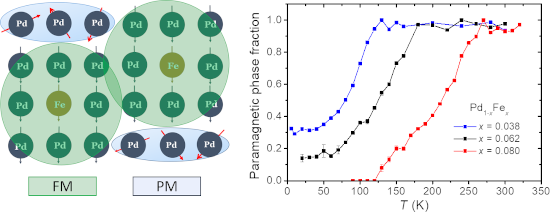
- can be found in [37]. Photoinduced demagnetization and the recovery are observed only at T < TC. One can readily recognize two demagnetization processes that reveal themselves as the rising components and occur at time scales of subpicoseconds and tens of picoseconds. Therefore, the responses in the


Temperature and chemical effects on the interfacial energy between a Ga–In–Sn eutectic liquid alloy and nanoscopic asperities
Beilstein J. Nanotechnol. 2022, 13, 817–827, doi:10.3762/bjnano.13.72
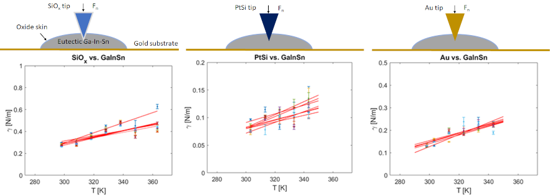
- temperature and, thus, scales with their molar area and thermal expansion coefficient. The surface tension of the eutectic Ga–In–Sn liquid at the melting point has been reported to = 587 mN/m. Since the surface tension originates from the imbalanced bonding of atoms at the liquid–vapor interface [29], it



Direct measurement of surface photovoltage by AC bias Kelvin probe force microscopy
Beilstein J. Nanotechnol. 2022, 13, 712–720, doi:10.3762/bjnano.13.63
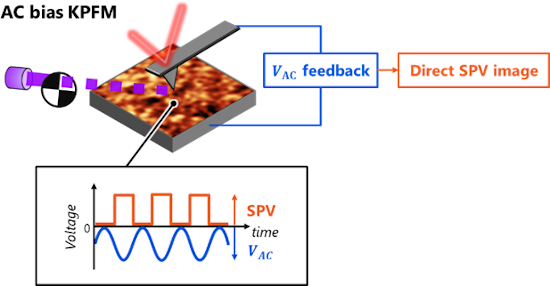
- shown in Figure 3c. The AC-KPFM successfully resolved the inhomogeneous SPV distribution with fluctuations on scales of 10–50 nm and a few millivolts, whereas classical KPFM observed a homogeneous SPV distribution over the TiO2 surface with sub-micrometer resolution [12][51] because of the influence of


Reliable fabrication of transparent conducting films by cascade centrifugation and Langmuir–Blodgett deposition of electrochemically exfoliated graphene
Beilstein J. Nanotechnol. 2022, 13, 666–674, doi:10.3762/bjnano.13.58
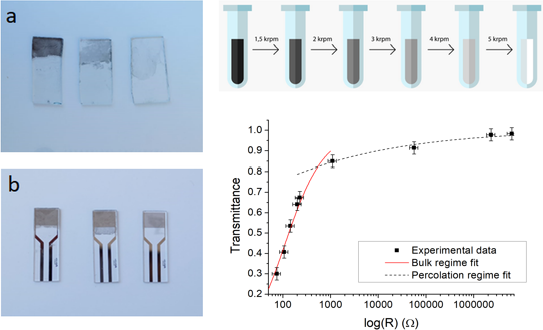
- of the deposited graphene film has a value that scales with the quantity of solvent used. The results thus indicate that dilution of solution-processed graphene can be used as a tool to control graphene film thickness. Also, the centrifugation rate can be controlled to make films of desired thickness


Approaching microwave photon sensitivity with Al Josephson junctions
Beilstein J. Nanotechnol. 2022, 13, 582–589, doi:10.3762/bjnano.13.50
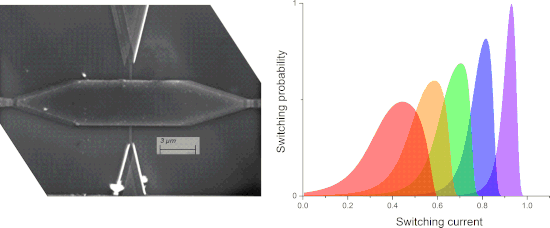
- initial and excited states). There are not many examples in solid-state physics with such energy scales. Another difficulty is that a spontaneous change of the state must be significantly less probable so that the detector could be in a waiting mode for a significant amount of time. Superconductor


Micro- and nanotechnology in biomedical engineering for cartilage tissue regeneration in osteoarthritis
Beilstein J. Nanotechnol. 2022, 13, 363–389, doi:10.3762/bjnano.13.31
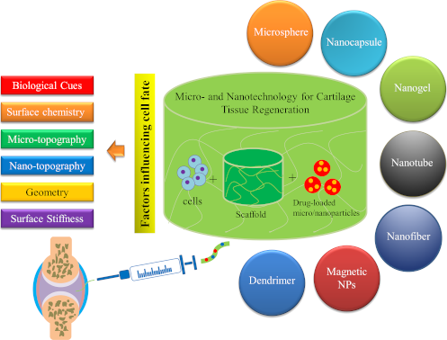
- different characteristics and kinds of behavior of compounds on submicrometer and nanometer scales and resulted in the development of new methods such as electrospinning, self-assembly, phase separation, nano-imprinting, and photolithography for the generation of new biomaterials with improved properties


Influence of magnetic domain walls on all-optical magnetic toggle switching in a ferrimagnetic GdFe film
Beilstein J. Nanotechnol. 2022, 13, 74–81, doi:10.3762/bjnano.13.5
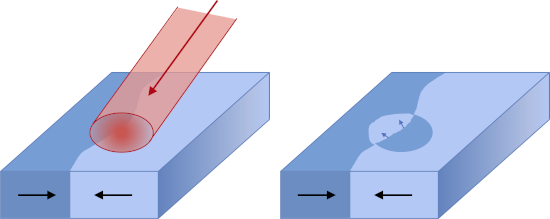
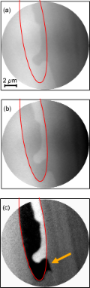
- deterministic toggle switching. Keywords: all-optical magnetic switching; GdFe; laser-induced domain-wall motion; magnetic domain imaging; photoemission electron microscopy; Introduction The reversal of magnetization at the fastest possible time scales and microscopic length scales is one of the most
- -optical toggle switching is the reproducibility of the switching event on microscopic length scales. The presence of magnetic domain walls has been found to limit the repeatability of the switching event, leading to nondeterministic switching in the vicinity of the domain walls [9]. This has been


Sputtering onto liquids: a critical review
Beilstein J. Nanotechnol. 2022, 13, 10–53, doi:10.3762/bjnano.13.2

- increased as compared to a diode glow discharge ignited without inserting magnets. In the case of MS systems, the discharge current I scales exponentially with the applied voltage V, as highlighted by the equation I = k·Vn, where k and n depend on the magnetron cathode and other process parameters as






A review on slip boundary conditions at the nanoscale: recent development and applications
Beilstein J. Nanotechnol. 2021, 12, 1237–1251, doi:10.3762/bjnano.12.91
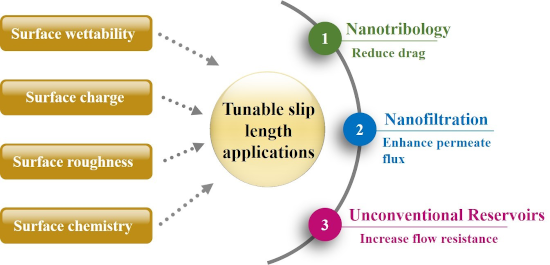
- surface roughness on the flow boundary conditions, since a perfectly smooth surface is an idealized model even at molecular scales. Numerous investigations have demonstrated that the variations of topography on the surface can drastically influence the effective slip length [81][82]. However, the


Impact of electron–phonon coupling on electron transport through T-shaped arrangements of quantum dots in the Kondo regime
Beilstein J. Nanotechnol. 2021, 12, 1209–1225, doi:10.3762/bjnano.12.89
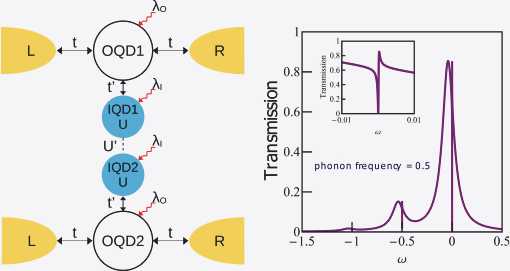
- l = 2, 3 with Results and Discussion Before we present numerical results, let us look at the energy scales we are going to discuss. Typical values of the bandwidths of the metallic organic wires are several hundreds of millielectronvolts [79][80]. The charging energy parametrized by U can be


Morphology-driven gas sensing by fabricated fractals: A review
Beilstein J. Nanotechnol. 2021, 12, 1187–1208, doi:10.3762/bjnano.12.88
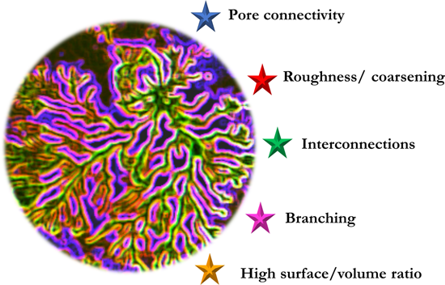
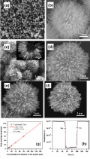
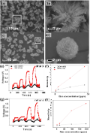
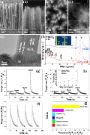
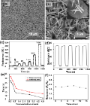
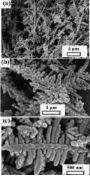
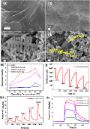
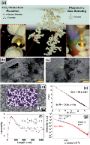
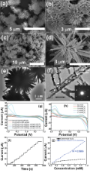
- themselves at various length scales. Interestingly, fractals can also be fabricated artificially in labs under controlled growth environments and be explored for various applications. Such fractals have a repeating unit that spans in length from nano- to millimeter range. Fractals thus can be regarded as
- applications are reviewed. The present article first describes what fractals are and what characteristic length scales are associated with fractal growth, followed by material-wise characterization of fab-frac gas sensors discussing their performance and fractal geometries. Some basic definitions are included
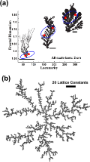
- different length scales are termed as fractals. Few researchers have reported fractal growth under lab environment [40][42][43][44][45], which are artificially made and are referred to as fab-fracs in this work. Fractal length scales and growth models All fractal geometries have characteristic length scales










Irradiation-driven molecular dynamics simulation of the FEBID process for Pt(PF3)4
Beilstein J. Nanotechnol. 2021, 12, 1151–1172, doi:10.3762/bjnano.12.86
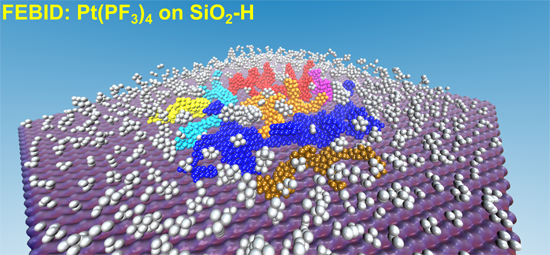
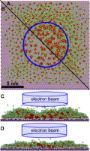
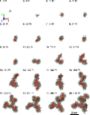
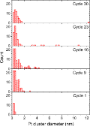
- induces the release of metal-free ligands and the growth of metal-enriched deposits. It involves a complex interplay of phenomena taking place on different temporal and spatial scales: (i) deposition, diffusion, and desorption of precursor molecules on the substrate; (ii) transport of the primary
- replenishment phase is challenging for MD simulations as it would require simulating the slow adsorption and desorption of new precursors and the created molecular fragments from the surface occurring on relatively large time scales. For specific values of pressure and temperature, the duration of the








Self-assembly of amino acids toward functional biomaterials
Beilstein J. Nanotechnol. 2021, 12, 1140–1150, doi:10.3762/bjnano.12.85
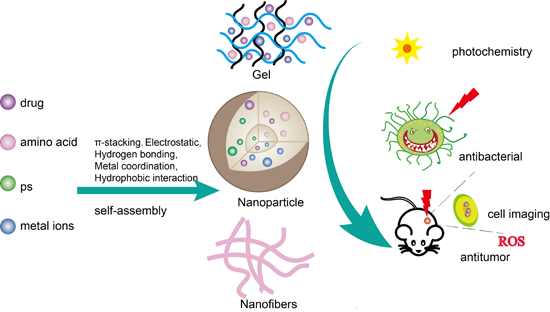
- nanostructures at both microscopic and macroscopic scales. Amino acids, as the smallest constituent of proteins and the smallest constituent in the bottom-up approach, are the smallest building blocks that can be self-assembled. The self-assembly of single amino acids has the advantages of low synthesis cost
- as functional materials it can be difficult to arrange assembled nanostructures at both microscopic and macroscopic scales [10]. Also, fine manipulation of noncovalent interactions and corresponding peptide and protein nanostructures remains a huge challenge [24]. Amino acids are the major components

Open-loop amplitude-modulation Kelvin probe force microscopy operated in single-pass PeakForce tapping mode
Beilstein J. Nanotechnol. 2021, 12, 1115–1126, doi:10.3762/bjnano.12.83
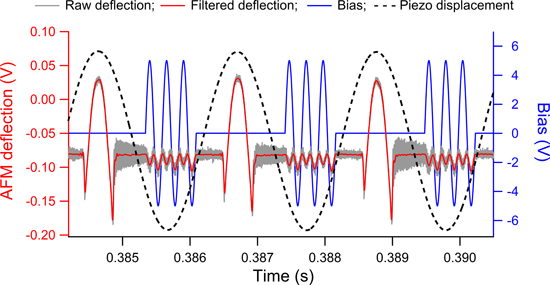
- microscopy [29][30], pump–probe KPFM [31][32], or fast free force recovery KPFM [33] that are capable of observing the dynamics of the optoelectronic response of materials and electric field-induced charge migration at time scales of the order of tens of microseconds. Various OL KPFM implementations with





A new method for obtaining model-free viscoelastic material properties from atomic force microscopy experiments using discrete integral transform techniques
Beilstein J. Nanotechnol. 2021, 12, 1063–1077, doi:10.3762/bjnano.12.79
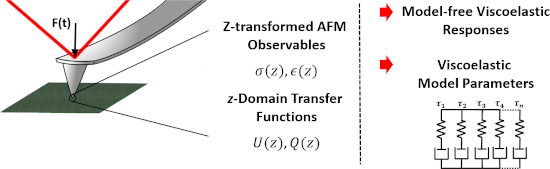
- calculates the z-value’s power −n, where n scales with the number of sample points in the signal. Likewise, while calculating the inverse Z-transform, one raises z to the n-th power. During the calculation of the Z-transform, numbers raised to very large negative powers converge to zero, which although not
- time constants) may be more or less important for different operations with different time scales. Furthermore, the non-unit circles of the z-domain also contain information about the harmonic behavior of the material (although under damped conditions). Thus, the storage and loss of energy by the


Use of nanosystems to improve the anticancer effects of curcumin
Beilstein J. Nanotechnol. 2021, 12, 1047–1062, doi:10.3762/bjnano.12.78
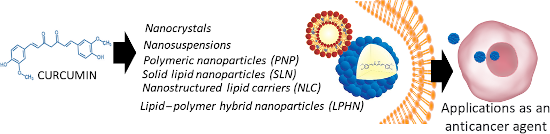
- studies performed on human subjects. Data generated in vitro and in animals should complement the efficacy of a treatment and can be used to determine its mechanisms of action at cellular and molecular scales. However, there is no substitute for human-derived data. Figure 1 summarizes relevant data


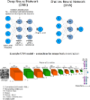
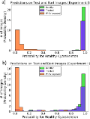
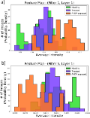
The role of convolutional neural networks in scanning probe microscopy: a review
Beilstein J. Nanotechnol. 2021, 12, 878–901, doi:10.3762/bjnano.12.66







Physical constraints lead to parallel evolution of micro- and nanostructures of animal adhesive pads: a review
Beilstein J. Nanotechnol. 2021, 12, 725–743, doi:10.3762/bjnano.12.57
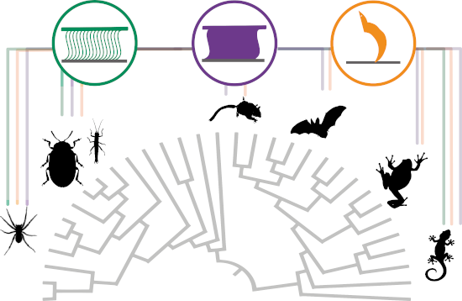
- micro- and nanoscales at different phylogenetic levels, focus on insects as the largest animal group on earth, and subsequently zoom into the attachment pads of the stick and leaf insects (Phasmatodea) to explore convergent evolution of attachment pads at even smaller scales. Since convergent events
- surface irregularities of certain length scales. The range of length scales to which the adaptation is possible depends on the stiffness of the film. Spatulae are able to adapt even to nanoscale roughness [240][241]. Thick films within the smooth pads of the bush cricket Tettigonia viridissima and the


Electromigration-induced formation of percolating adsorbate islands during condensation from the gaseous phase: a computational study
Beilstein J. Nanotechnol. 2021, 12, 694–703, doi:10.3762/bjnano.12.55
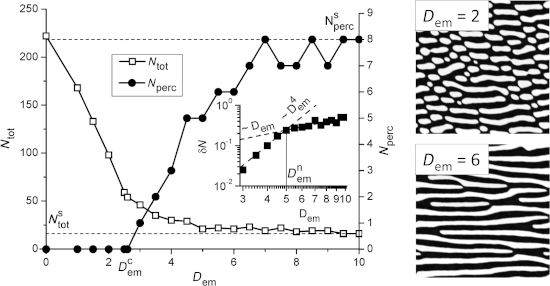
- spatial instability [53][54][55][56][57][58]. The transient patterns realized during system evolution will disappear at large time scales leading to the homogeneous distribution of the coverage field [59]. In order to stabilize these transient patterns the reaction component R(x) can be generalized by
- of vertical motion of adatoms k∥, one can define domains of main system parameters, in which pattern formation is possible. In particular, for the case λ(κ) ≤ 0 κ any spatial instability that can be realized at the initial stages of the system evolution disappears at long time scales leading to a
- snapshots in Figure 3b). These islands diffuse and interact. At large time scales the dispersion attains a constant non-zero value and the surface layer is characterized by stationary surface patterns, that is, separated adsorbate islands on the substrate (top panel in Figure 3b) or separated holes inside


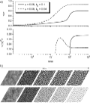


![[Graphic 29]](/bjnano/content/inline/2190-4286-12-55-i36.svg?max-width=637&scale=1.18182) on the adsorption coefficient α ...
on the adsorption coefficient α ...

Colloidal particle aggregation: mechanism of assembly studied via constructal theory modeling
Beilstein J. Nanotechnol. 2021, 12, 413–423, doi:10.3762/bjnano.12.33
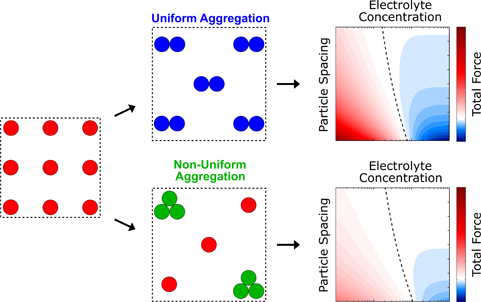
- the magnitude of the DLVO force, which scales linearly with particle radius, that is, larger particles are more attractive/repulsive. Ultimately, only the solvent properties are responsible for determining whether or not aggregation will be favorable. Similar to varying the particle spacing


Determination of elastic moduli of elastic–plastic microspherical materials using nanoindentation simulation without mechanical polishing
Beilstein J. Nanotechnol. 2021, 12, 213–221, doi:10.3762/bjnano.12.17
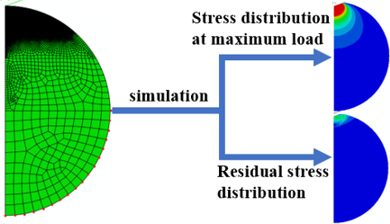
- characterization of the mechanical behavior of filaments [1], thin films [2], microplastics, coatings, powders, small crystals, and other materials at small scales. One of the great advantages of the technique is that many mechanical properties of materials can be determined from the analysis of indentation load


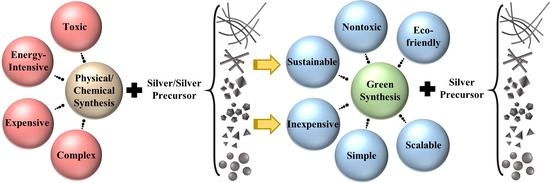
A review on the green and sustainable synthesis of silver nanoparticles and one-dimensional silver nanostructures
Beilstein J. Nanotechnol. 2021, 12, 102–136, doi:10.3762/bjnano.12.9


Bulk chemical composition contrast from attractive forces in AFM force spectroscopy
Beilstein J. Nanotechnol. 2021, 12, 58–71, doi:10.3762/bjnano.12.5
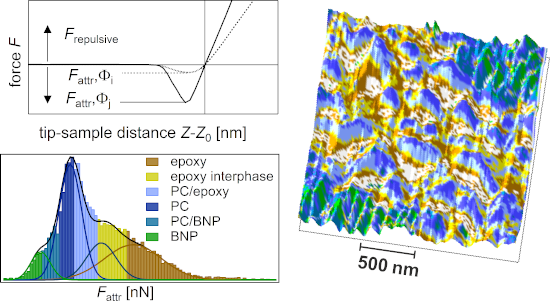
- Fattr, a clear distinction can be made. Note that the measurements shown in Figure 3 were performed with a different AFM probe (tip B) than the measurements shown in Figure 2 (tip A). Hence, the different scales for the Fattr values. Model sample epoxy/polycarbonate Here, we consider a sample that was


Bio-imaging with the helium-ion microscope: A review
Beilstein J. Nanotechnol. 2021, 12, 1–23, doi:10.3762/bjnano.12.1
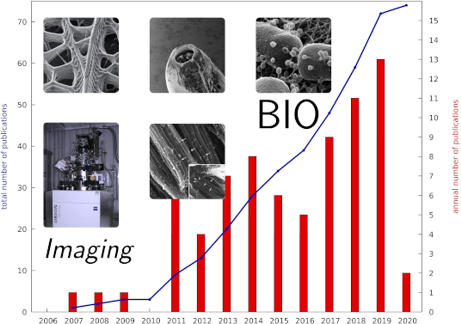
- HIM in the field of medicine came in 2011 when Bazou et al. used the HIM to study tumor cells [9][10] and Arey et al. studied the interaction of nanoparticles with alveolar epithelial cells [11]. In the following two years, reports on HIM imaging of the nanostructures on butterfly scales by Boden et


Fabrication of nano/microstructures for SERS substrates using an electrochemical method
Beilstein J. Nanotechnol. 2020, 11, 1568–1576, doi:10.3762/bjnano.11.139
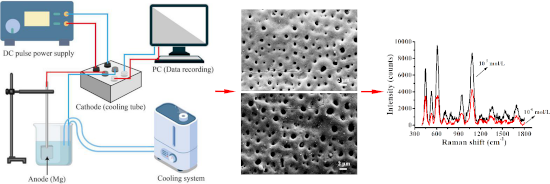
- ] fabricated micro/nanostructures on the surface of Au-coated single crystal silicon. By changing the etching time and current, micro/nanostructures with different size scales and geometric shapes (such as hexagons and pentagons) were obtained. Compared with other geometries, the hexagonal micro/nanostructure





