Search results
Search for "sensor" in Full Text gives 446 result(s) in Beilstein Journal of Nanotechnology. Showing first 200.
Studies of probe tip materials by atomic force microscopy: a review
Beilstein J. Nanotechnol. 2022, 13, 1256–1267, doi:10.3762/bjnano.13.104
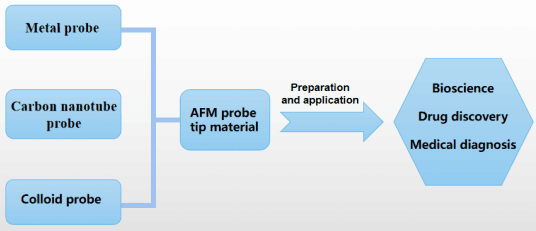
- , providing new opportunities for many fields. In practical applications, due to the surface structure of colloidal fibers, these fibers can be used as SERS sensor detection for trace detection of BPA. Although colloidal probes have many excellent properties, there are some problems in calibrating such probes
Design of surface nanostructures for chirality sensing based on quartz crystal microbalance
Beilstein J. Nanotechnol. 2022, 13, 1201–1219, doi:10.3762/bjnano.13.100
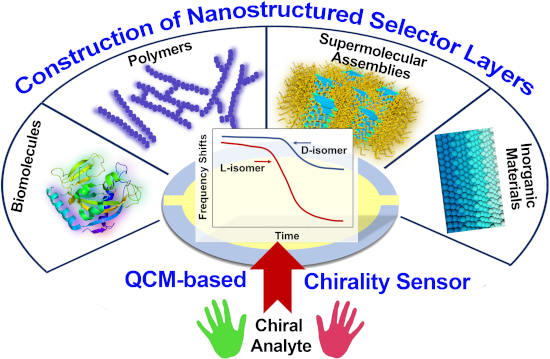
- sensing systems for enantiomers, which still remains challenging. Quartz crystal microbalance (QCM) is a well-known mass-sensor technique capable of recording changes in nanogram or even picogram levels in both gas and liquid phases [20][21]. The sensing of mass changes is based on the oscillation
- induced by external stimulus. As there are almost no limitations for the receptor layers in QCM sensor systems, various materials and nanostructures have been developed for constructing sensing layers on the surface of the electrode. The sensing process may also be implemented in the liquid and gas phases
- in the pharmaceutical industry. It has been taken as a model molecule to verify the “proof-of-principle” concept for chiral recognition [28]. Kim and co-workers fabricated ʟ-phenylalanine (ʟ-Phe)-modified QCM sensor and used vapor diffusion molecular assembly (VDMA) to study the chiral adsorption of


Application of nanoarchitectonics in moist-electric generation
Beilstein J. Nanotechnol. 2022, 13, 1185–1200, doi:10.3762/bjnano.13.99
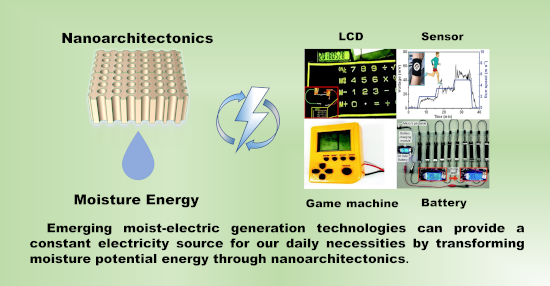
- generate an electrical signal up to 10 mV and successfully applied it to a flow sensor. In 2008, Zhao et al. prepared a single-walled carbon nanotube generator [7], which imparted momentum to the water in the carbon nanotubes by applying a voltage to both ends of the carbon nanotubes, such that the other
- for green energy in the near future. MEGs are also widely used in sensors [54]. For example, a moisture-eletric touch sensor array can provide uniform and sensitive touch feedback (Figure 10e). As shown in Figure 10f, a breath detector can monitor different breathing patterns, including short breaths
- Clearance Center, Inc. This content is not subject to CC BY 4.0. (e) Touch sensor. (f) Breath detection sensor, different breathing modes yield different output voltages. Figure 10e,f were reproduced from [54], Shen, D. et al., “Self-Powered Wearable Electronics Based on Moisture Enabled Electricity


A cantilever-based, ultrahigh-vacuum, low-temperature scanning probe instrument for multidimensional scanning force microscopy
Beilstein J. Nanotechnol. 2022, 13, 1120–1140, doi:10.3762/bjnano.13.95
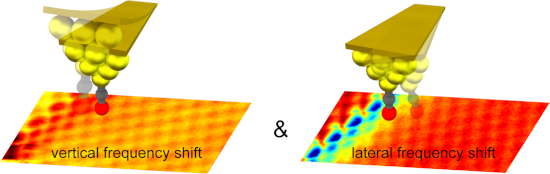
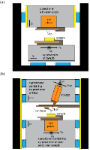
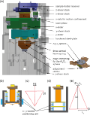
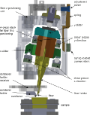
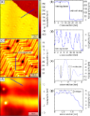
- tuning fork force sensor became increasingly popular. In comparison to microfabricated cantilevers, the more macroscopic tuning forks, however, lack sensitivity, which limits the measurement bandwidth. Moreover, multimodal and multifrequency techniques, such as those available in cantilever-based AFM
- macroscopic wire tip to the free prong. Compared to the typically used microscopic AFM cantilevers, the tuning fork sensor has a rather high stiffness, k ≈ 2 kN/m. This facilitates AFM operation with small oscillation amplitudes (A < 100 pm) because a snap-to-contact or instabilities of the phase-locked loop
- (PLL) driving the tuning fork oscillation do not occur. Furthermore, the tuning fork AFM does not require an extra deflection sensor such as the beam deflection or fiber-optical systems used for cantilever-based AFM, which substantially reduces instrumentation complexity. In fact, every existing





Recent advances in green carbon dots (2015–2022): synthesis, metal ion sensing, and biological applications
Beilstein J. Nanotechnol. 2022, 13, 1068–1107, doi:10.3762/bjnano.13.93
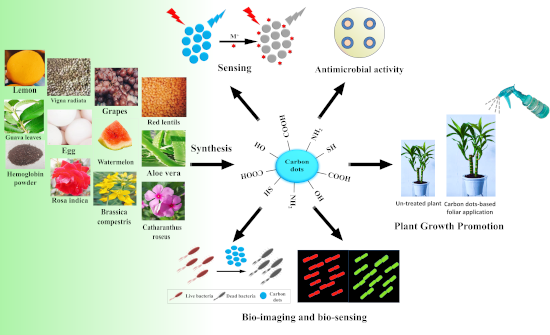
- dual fluorescence sensor for both Hg2+ ions and chemet drugs [23]. An acid oxidation approach was applied to synthesize nanosized fluorescent CDs of various colors by using Ananas comosus without any passivating agent by Gupta et al. The synthesized CDs showed three emission peaks at 438, 516, and 543
- as a dual sensor for tetracycline and ʟ-lysine. The fluorescence of CDs is quenched by adding tetracycline and regained by introducing ʟ-lysine [18]. Palmyra leaves were utilized by Athinarayanan et al. for the production of CDs. The cellular toxicity of the CDs was analyzed, and the CDs were found
- to synthesize CDs via hydrothermal route. The reported CDs showed good selectivity for Cd2+ ions with a wide linear range and limit of detection of 0.01–8 μM and 0.29 nM, respectively [72]. Chaudhary et al. reported CDs using roasted gram as a green precursor, which act as a humidity sensor. Two




Interaction between honeybee mandibles and propolis
Beilstein J. Nanotechnol. 2022, 13, 958–974, doi:10.3762/bjnano.13.84
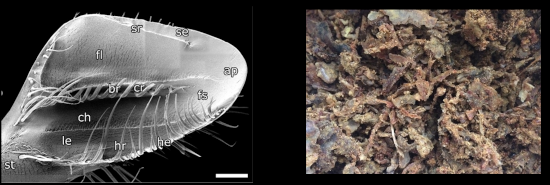
- substrate material, a metal spring (springs with spring constants of 618 N/m and 539 N/m were used) and a fibre-optic sensor (Figure 3A). The piezo drive moves the spring down to load and up to unload the sample. A shortened glass capillary (5 µL micropipet Blaubrand® IntraEND, Brand GmbH & Co. KG, Wertheim
- . BM, bee mandible (optional); FL, fluid; FOS, fibre-optic sensor; GC, glass capillary; GS, glass slide or other substrate material; MM, micro-manipulators; MR, mirror; MS, metal spring; PS, propolis sample. Figure 3A was adapted and Figure 3B, D, and E were reproduced from [1] (© 2021 Saccardi


DNA aptamer selection and construction of an aptasensor based on graphene FETs for Zika virus NS1 protein detection
Beilstein J. Nanotechnol. 2022, 13, 873–881, doi:10.3762/bjnano.13.78
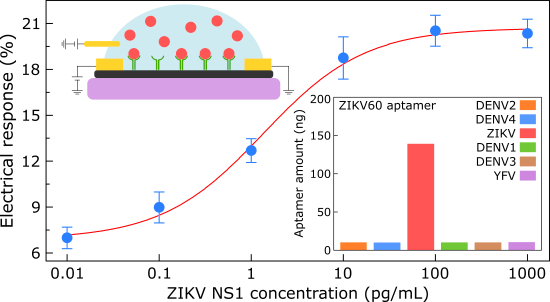
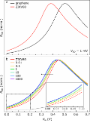
- average behavior of this group of sensing devices with respect to protein addition. We evaluated the sensor responses as percentage changes in graphene resistance (ΔRSD) at VG = 0.2 V caused by aptamer–protein binding. For more details on how the variations in graphene resistances were measured, see Table



Numerical modeling of a multi-frequency receiving system based on an array of dipole antennas for LSPE-SWIPE
Beilstein J. Nanotechnol. 2022, 13, 865–872, doi:10.3762/bjnano.13.77
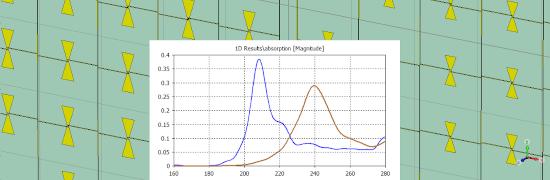
- the working temperature of the 3He cryostat used for the LSPE project. One of main candidates for LSPE-SWIPE is a transition-edge sensor (TES) with a spiderweb antenna [2][3]. For the OLIMPO mission, kinetic inductance detectors (KIDs) were used [4]. We propose to use cold-electron bolometers (CEBs


Optimizing PMMA solutions to suppress contamination in the transfer of CVD graphene for batch production
Beilstein J. Nanotechnol. 2022, 13, 796–806, doi:10.3762/bjnano.13.70
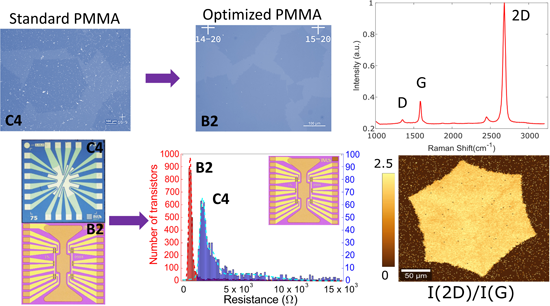
- B2 mixture yields more consistent electric properties of the graphene channel, thanks to a homogenous and reproducible process. Such characteristics ultimately translate into a consistent sensor performance, which is pivotal for industrial fabrication. Conclusion Monolayer graphene films and single




A nonenzymatic reduced graphene oxide-based nanosensor for parathion
Beilstein J. Nanotechnol. 2022, 13, 730–744, doi:10.3762/bjnano.13.65
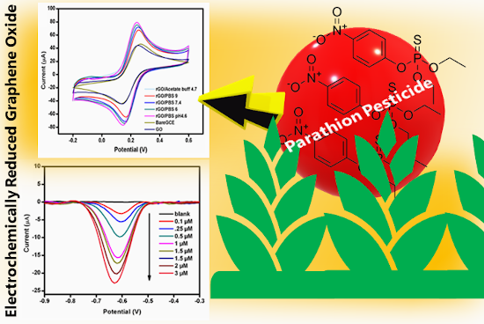
- the fabrication of a robust, nonenzymatic electrochemical-sensing electrode modified with electrochemically reduced graphene oxide (ERGO) to detect PT residues in environmental samples (e.g., soil, water) as well as in vegetables and cereals. The ERGO sensor shows a significantly affected
- and straightforward responsive nature, high sensitivity, and selectivity leading to real-time detection [7]. A combination of a receptor, an analyte, and a transducer is made up to obtain an electrochemical sensor, in which the surface of the electrode induces redox characteristics via selective


Modeling a multiple-chain emeraldine gas sensor for NH3 and NO2 detection
Beilstein J. Nanotechnol. 2022, 13, 721–729, doi:10.3762/bjnano.13.64
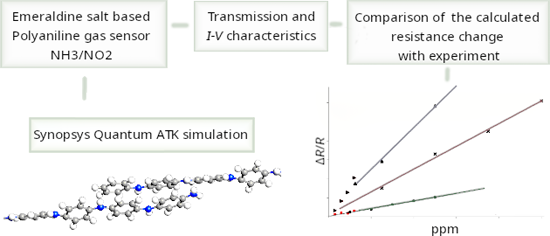
- numerically modeled for several adsorbed gas concentrations, several gas configurations, and different PANI molecule positions, including carrier hopping between them. The results are comparable to the experiment and show good properties for the application as gas sensor device for NH3 detection and rather
- good properties for NO2 detection. Keywords: ammonia; gas sensor; nitrogen dioxide; numerical computation; polyaniline; Introduction Polyaniline is a conducting polymer consisting of benzene rings connected by nitrogen units, which can be used in a wide spectrum of applications, for example, dyes for
- base has to be reduced by electrons (Figure 1). Emeraldine base or leucoemeraldine base salts of green color and with conductivity values of up to 400 S/m can be obtained through synthesis [4]. Recently, the polyaniline emeraldine salt has been studied for sensor applications for various gases because


Direct measurement of surface photovoltage by AC bias Kelvin probe force microscopy
Beilstein J. Nanotechnol. 2022, 13, 712–720, doi:10.3762/bjnano.13.63
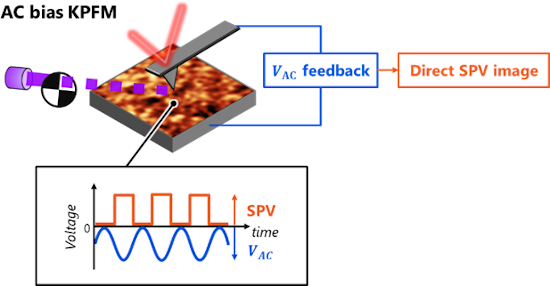
- was arranged in front of a photodetector of the OBD system to suppress the influence of the UV light on the deflection sensor. We used a commercial Ir-coated Si cantilever (NANOSENSORS, SD-T7L100) with a resonant frequency f0 of 913 kHz, a spring constant k of 650 N/m, and a quality factor Q of 7748
- density nFM is described as [74] where ntherm is the thermal noise density, ndetect is the detector noise density, nosc is the oscillator noise density, and nds is the deflection sensor noise density. The frequency noise δf measured with a bandwidth of B at a center of fm is described as When fm ≫ B, δf


Quantitative dynamic force microscopy with inclined tip oscillation
Beilstein J. Nanotechnol. 2022, 13, 610–619, doi:10.3762/bjnano.13.53
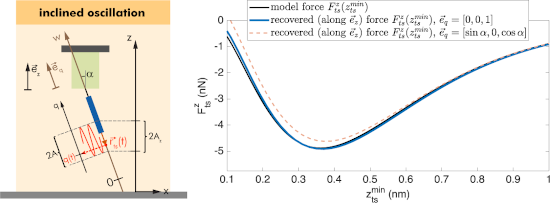
- acquisition with an inclined tip sampling path requires modifications of the experimental procedures and data analysis protocols for force measurements to avoid systematic errors in the interpretation of force curve and imaging data. Results and Discussion Sensor positioning, sensor displacement, and tip
- be strictly parallel to Furthermore, we assume an infinitely stiff sensor in directions perpendicular to as well as a linear sensor response along Then, the static probe response follows Hooke’s law with k being the static sensor force constant [18]. In dynamic mode operation, the sensor is
- excited to periodic displacement q(t) = q(t + 1/fexc) along the q-axis at an excitation frequency fexc. To bring the tip in the desired range of interaction with the surface and to perform the movements required for imaging, force mapping, and taking force curves, the sensor is moved by coarse and fine


![[Graphic 38]](/bjnano/content/inline/2190-4286-13-53-i79.svg?max-width=637&scale=1.18182) and the axis w....
and the axis w....


Detection and imaging of Hg(II) in vivo using glutathione-functionalized gold nanoparticles
Beilstein J. Nanotechnol. 2022, 13, 549–559, doi:10.3762/bjnano.13.46
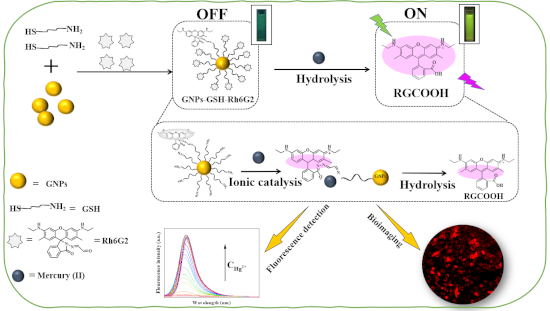
- the fluorescent “ON” form. Keywords: cell imaging; fluorescence probes; glutathione; gold nanoparticles; mercury ions; rhodamine 6G derivatives; Introduction Metal nanoparticles have been widely used in the development and construction of sensor systems and drug carriers due to their excellent


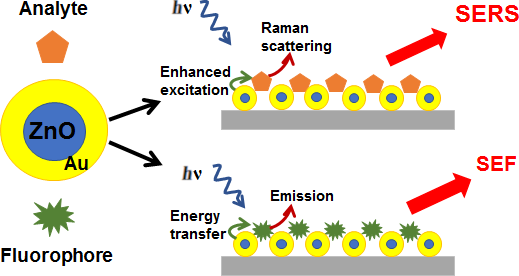
Zinc oxide nanostructures for fluorescence and Raman signal enhancement: a review
Beilstein J. Nanotechnol. 2022, 13, 472–490, doi:10.3762/bjnano.13.40




A non-enzymatic electrochemical hydrogen peroxide sensor based on copper oxide nanostructures
Beilstein J. Nanotechnol. 2022, 13, 424–436, doi:10.3762/bjnano.13.35
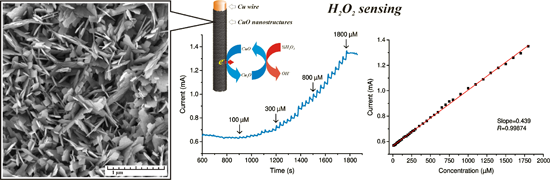
- interfering substances, that is, ascorbic acid, uric acid, dopamine, NaCl, glucose, and acetaminophen, do not affect the electrochemical response. The real milk sample test showed a high recovery rate (more than 95%). According to the obtained results, this sensor is suitable for practical use for the
- qualitative detection of H2O2 in real samples, as well as for the quantitative determination of its concentration. Keywords: copper oxide; electrochemical sensor; hydrogen peroxide; nanostructures; Introduction Hydrogen peroxide, a strong oxidant and an essential intermediate product in many biomedical
- being horseradish peroxidase) [34][35][36], and detection is carried out through physicochemical processes of interaction between H2O2 and the enzyme. This type of sensor has high catalytic activity, sensitivity, and selectivity. However, enzyme sensors have a significant disadvantage, namely enzyme


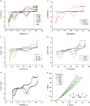


A chemiresistive sensor array based on polyaniline nanocomposites and machine learning classification
Beilstein J. Nanotechnol. 2022, 13, 411–423, doi:10.3762/bjnano.13.34
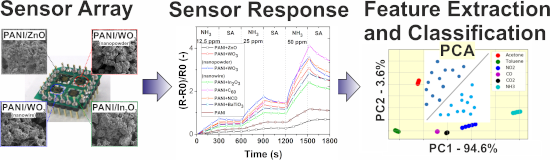
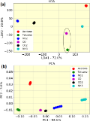
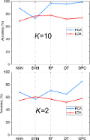
- 1999/2, 182 21 Prague, Czech Republic 10.3762/bjnano.13.34 Abstract The selective detection of ammonia (NH3), nitrogen dioxide (NO2), carbon oxides (CO2 and CO), acetone ((CH3)2CO), and toluene (C6H5CH3) is investigated by means of a gas sensor array based on polyaniline nanocomposites. The array
- data by principal component analysis to be a highly accurate method reach to 99% of the classification of six different gases. Keywords: feature extraction; gas sensor; pattern recognition; sensor array; Introduction The control and monitoring of toxic gaseous substances, such as ammonia, nitrogen
- . In most cases, the cross-sensitivity toward different chemical analytes is unavoidable, regardless of their oxidizing or reducing nature. Many authors have suggested a number of ways to overcome the drawbacks of cross-sensitivity/selectivity and reliability of the sensor arrays [3][4][5]. One




Electrostatic pull-in application in flexible devices: A review
Beilstein J. Nanotechnol. 2022, 13, 390–403, doi:10.3762/bjnano.13.32
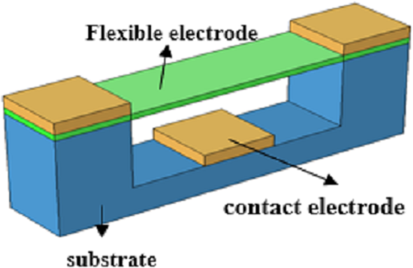
- switch to open. After the circuit conduction or charge disappears, the switch is pulled in again. By analyzing the electric field in the comb structure, He et al. [91] showed that the side electrode would generate a repulsive force without introducing a current. Pallay et al. [85] proposed a sensor
- -1583/aac0a8); © 2018 IOP Publishing. Reproduced with permission. All rights reserved. This content is not subject to CC BY 4.0. The structure of the NEM-PUF device. Figure 10 was redrawn from [79]. The structure of the sensor-switch system. Figure 11 was redrawn from [86]. The structure of the plate


Piezoelectric nanogenerator for bio-mechanical strain measurement
Beilstein J. Nanotechnol. 2022, 13, 192–200, doi:10.3762/bjnano.13.14
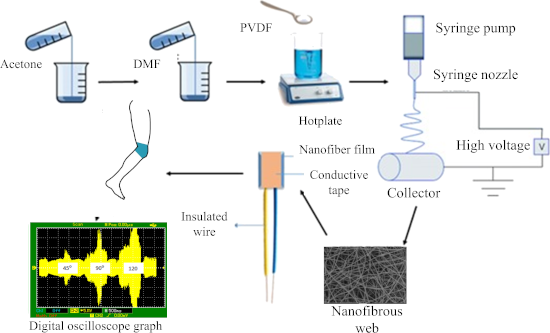
- as well. Under high dynamic strain more output voltage is generated than under low dynamic strain. The maximum current density shown by the device is 172.5 nA/cm2. The developed piezoelectric nanofiber sensor was then integrated into a knitted fabric through stitching to be used for angle measurement
- . With increasing bending angle, the output voltage increased. The promising results show that the textile-based piezoelectric sensor developed in this study has a great potential to be used as an angle measuring wearable device for the human body due to its high current density output and flexibility
- to develop sensors that were a wearable type of a goniometer. These sensors were then tested under static and dynamic conditions. For another application, researchers designed and developed a purely textile-based capacitive pressure sensor to be integrated and embedded into the garments to monitor


A photonic crystal material for the online detection of nonpolar hydrocarbon vapors
Beilstein J. Nanotechnol. 2022, 13, 127–136, doi:10.3762/bjnano.13.9
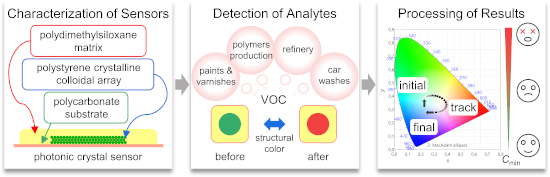
- array with a sensing matrix of polydimethylsiloxane, have been determined by using scanning electron microscopy and by the results of specular reflectance spectroscopy based on the Bragg–Snell law. A new approach has been proposed for the application of this sensor in chemical analysis for the
- qualitative detection of saturated vapors of volatile organic compounds due to configuration changes of the photonic bandgap, recorded by diffuse reflectance spectroscopy. The exposure of the sensor to aromatic (benzene, toluene and p-xylene) and aliphatic (n-pentane, n-heptane, n-octane and n-decane
- ) hydrocarbons has been analyzed. The reconstitution of spectral parameters of the sensor during the periodic detection of saturated vapors of toluene has been evaluated. Keywords: diffuse reflectance spectroscopy; photonic crystal sensor; stimuli-responsive materials; Introduction Photonic crystals (PhCs


Tin dioxide nanomaterial-based photocatalysts for nitrogen oxide oxidation: a review
Beilstein J. Nanotechnol. 2022, 13, 96–113, doi:10.3762/bjnano.13.7
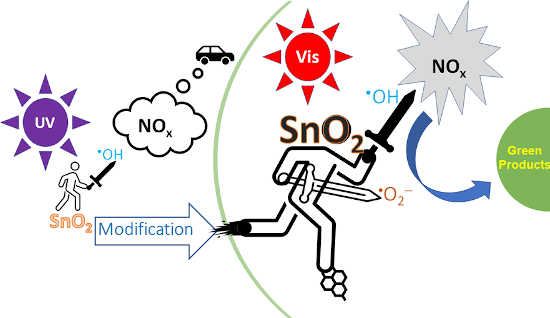
- morphologies will affect the properties of SnO2 regarding gas sensor activity and optical, electrical, and electrochemical properties [60][61][62][63]. The typical properties of SnO2 are significantly affected by the effective surface area of different nanomaterial morphologies [63][64][65]. Wang et al. [66


Topographic signatures and manipulations of Fe atoms, CO molecules and NaCl islands on superconducting Pb(111)
Beilstein J. Nanotechnol. 2022, 13, 1–9, doi:10.3762/bjnano.13.1
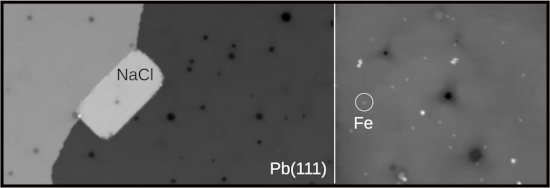
- temperature in the preparation chamber. Low-temperature scanning tunneling microscope The experiments were performed using a low-temperature STM/AFM microscope (T = 4.8 K) from Omicron GmbH in UHV (p ≈ 1 × 10⁻¹⁰ mbar) operated with Nanonis RC5 electronics. The sensor is a tuning fork sensor in a qPlus design
- [47] operated in the frequency-modulation mode (resonance frequency f0 ≈ 25 kHz, spring constant k ≈ 1800 N/m, quality factor Q ≈ 14000, and oscillation amplitude A ≈ 0.5 Å). The tip mounted to the qPlus sensor consists of a 25 μm-thick PtIr wire, shortened and sharpened with a focused ion beam. A


Measurement of polarization effects in dual-phase ceria-based oxygen permeation membranes using Kelvin probe force microscopy
Beilstein J. Nanotechnol. 2021, 12, 1380–1391, doi:10.3762/bjnano.12.102
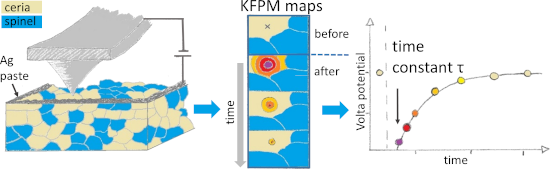
- permeation membrane, as oxygen sensor material, or for the use in solid oxide fuel cell components [1][5][6]. Apart from this, ceria is also widely employed as a catalyst in the middle- to low-temperature regime (20–400 °C) [7][8][9], making ceria-based dual-phase materials with a second electron-conductive


Two dynamic modes to streamline challenging atomic force microscopy measurements
Beilstein J. Nanotechnol. 2021, 12, 1226–1236, doi:10.3762/bjnano.12.90
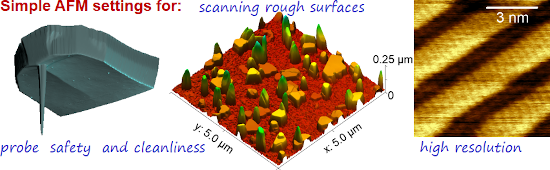
- of scanning samples with high aspect ratio features. In AM-AFM, when scanning such samples at low oscillation amplitude, the lateral displacement velocity V must be kept very low to minimize error. When approaching a steep (high or deep) object, the sensor begins to touch it with the side of the


Morphology-driven gas sensing by fabricated fractals: A review
Beilstein J. Nanotechnol. 2021, 12, 1187–1208, doi:10.3762/bjnano.12.88
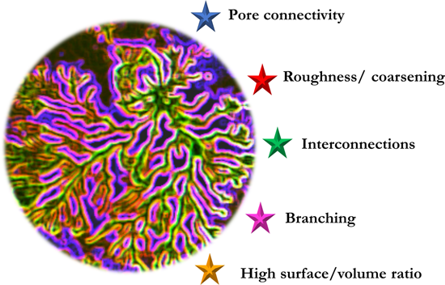
- to be possessing better gas sensing capabilities. Fab-fracs with these salient features will help in designing the commercial gas sensors with better performance. Keywords: adsorption sites; fabricated fractal; fractal dimension; gas sensor; morphology; pore network; recovery time; response time
- usage [5][6][7]. The objectives in gas sensing research are usually set to enhance the sensitivity (how the sensor responds to small changes when the gas environment around it changes), selectivity (if a sensor can still respond to a particular gas when many gases present), stability (how the sensor
- responds in a particular environment with time), the response time (time taken by a sensor to detect no gas to 90% of the gas when exposed to a gas environment), and recovery time (time taken by a sensor to fall to 10% of its baseline resistance value when the gas is removed from the environment