Search results
Search for "signal-to-noise ratio" in Full Text gives 179 result(s) in Beilstein Journal of Nanotechnology.
Quantification and coupling of the electromagnetic and chemical contributions in surface-enhanced Raman scattering
Beilstein J. Nanotechnol. 2019, 10, 549–556, doi:10.3762/bjnano.10.56
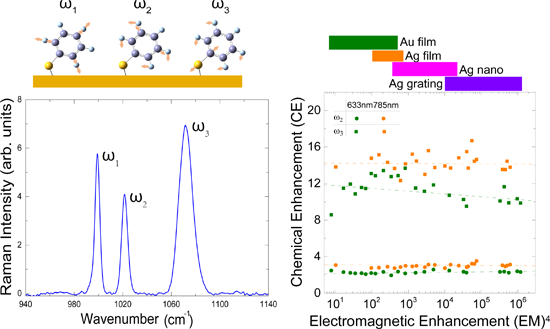
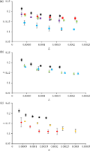
- ). Correspondingly, we observe similar CE values, independent of excitation fluence, within the range of powers investigated, limited by the signal-to-noise-ratio for low powers, and thermal effects at high powers. The dashed lines are linear fits to the data with CE = 1.9 × 10⁻⁹ × (Power)4 + 13 for 785 nm and CE


Site-controlled formation of single Si nanocrystals in a buried SiO2 matrix using ion beam mixing
Beilstein J. Nanotechnol. 2018, 9, 2883–2892, doi:10.3762/bjnano.9.267
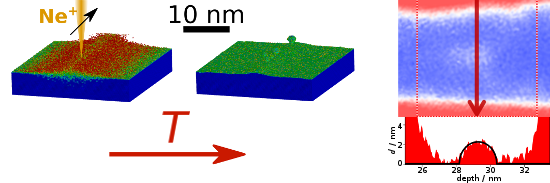
- , compared to the 25 eV SiO2 plasmon-loss peak, due to its better signal-to-noise ratio. The NC diameter was evaluated using Otsu thresholding [38] in Fiji [39]. The calculation of the projected Si thickness d (Equation 7) from the Si plasmon-loss filtered images was performed in the following way. The


Charged particle single nanometre manufacturing
Beilstein J. Nanotechnol. 2018, 9, 2855–2882, doi:10.3762/bjnano.9.266
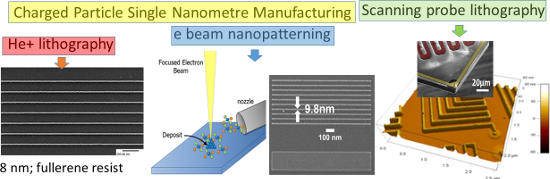
- the lines were broken at a line dose of 0.04 nC·cm−1, which is equivalent to 25 ions per nanometre, i.e., a signal-to-noise ratio of 5:1. The line discontinuity is caused by shot noise producing missing pixels. Thus 6 nm represents the current limit of 1:1 dense features using SHIBL to expose HM-01A


Effective sensor properties and sensitivity considerations of a dynamic co-resonantly coupled cantilever sensor
Beilstein J. Nanotechnol. 2018, 9, 2546–2560, doi:10.3762/bjnano.9.237
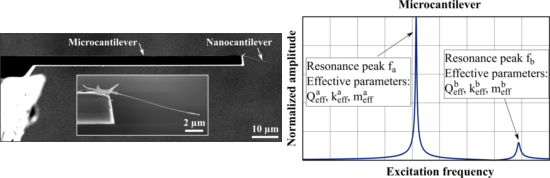
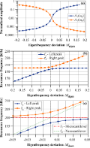
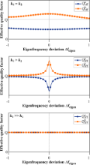
- . However, the co-resonantly coupled system’s frequency shift response to an external interaction is only one aspect. The other equally important aspect is the detectability, i.e., how well the oscillatory state of a dynamic-mode cantilever sensor can be detected. That is limited by the signal-to-noise
- ratio (SNR) for frequency, amplitude and phase measurements. It mainly depends on the cantilever’s quality factor which directly influences the phase noise and resolution of the resonance peak [19]. With decreasing cantilever dimensions, the quality factor usually decreases, hence, detectability
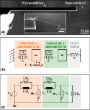


![[Graphic 7]](/bjnano/content/inline/2190-4286-9-237-i43.svg?max-width=637&scale=1.18182) ...
...


Intrinsic ultrasmall nanoscale silicon turns n-/p-type with SiO2/Si3N4-coating
Beilstein J. Nanotechnol. 2018, 9, 2255–2264, doi:10.3762/bjnano.9.210
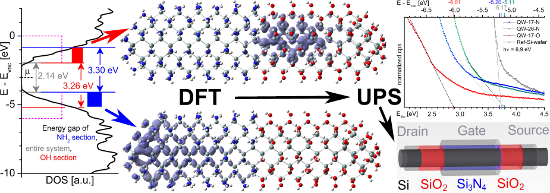
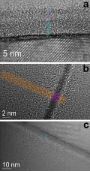
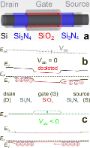
- respective energy values as extracted from the spectra (dashed lines). The light green and cyan lines show the background fit of the amorphous Si3N4-matrix. The lower signal-to-noise ratio for Si-NWells embedded in Si3N4 as compared to SiO2 is comprehensively evaluated and discussed in Supporting Information





Filling nanopipettes with apertures smaller than 50 nm: dynamic microdistillation
Beilstein J. Nanotechnol. 2018, 9, 2181–2187, doi:10.3762/bjnano.9.204
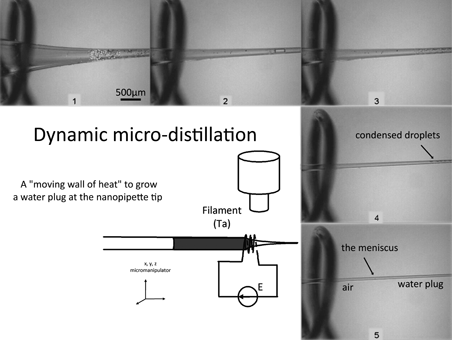
- small and large angles, would therefore be highly desirable. It would help to improve the spatial resolution in scanning conductance experiments, in optimizing the signal-to-noise ratio during single-molecule delivery and in straining long-molecule stretching during translocation. Small nanopipette


Know your full potential: Quantitative Kelvin probe force microscopy on nanoscale electrical devices
Beilstein J. Nanotechnol. 2018, 9, 1809–1819, doi:10.3762/bjnano.9.172
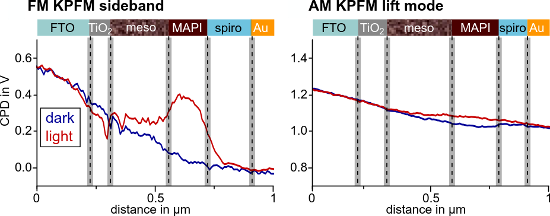
- this mode as AM-KPFM off resonance (AM off res). This mode is implemented on older AFM systems, where the auxiliary lock-ins were limited in terms of the maximum frequency they could measure. The biggest drawback of this method is the lower signal-to-noise ratio (SNR) resulting from the off-resonance


Sulfur-, nitrogen- and platinum-doped titania thin films with high catalytic efficiency under visible-light illumination
Beilstein J. Nanotechnol. 2018, 9, 1629–1640, doi:10.3762/bjnano.9.155
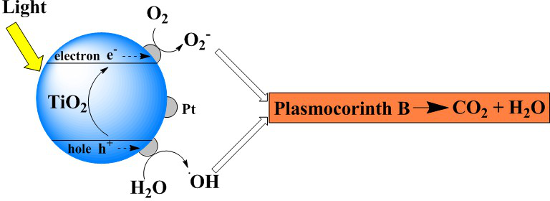
- high signal-to-noise ratio, preventing an unambiguous attribution of the peak tailing at higher/lower energies, which are attributed to the absorption of other nitrogen species [46]. On the other hand, the presence of Ti–N bonds can be clearly ruled out [46][48]. In the sample S3_N0.5+1%Pt, the Pt 4f7


Cathodoluminescence as a probe of the optical properties of resonant apertures in a metallic film
Beilstein J. Nanotechnol. 2018, 9, 1491–1500, doi:10.3762/bjnano.9.140
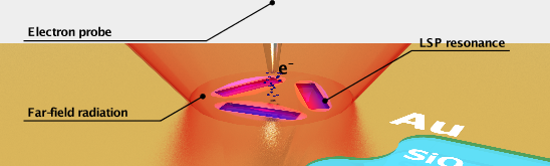
- ] and enhanced coupling to plasmonic cavities by emitters such as quantum dots [36]. One way to enhance the signal-to-noise ratio of transmission measurements is to study the collective optical properties of an array of apertures, choosing the periodicity to minimize both the effects of diffraction and


Excitation of nonradiating magnetic anapole states with azimuthally polarized vector beams
Beilstein J. Nanotechnol. 2018, 9, 1478–1490, doi:10.3762/bjnano.9.139
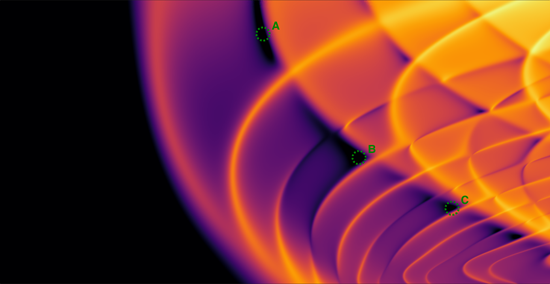
- useful applications in biosensing, i.e., in the detection of molecules that interact strongly once exposed to magnetic field hotspots, which nanoparticles in a magnetic anapole state can offer in their near field. Moreover, the signal-to-noise ratio of an MRI machine, that is defined as the ratio of the


Room-temperature single-photon emitters in titanium dioxide optical defects
Beilstein J. Nanotechnol. 2018, 9, 1085–1094, doi:10.3762/bjnano.9.100
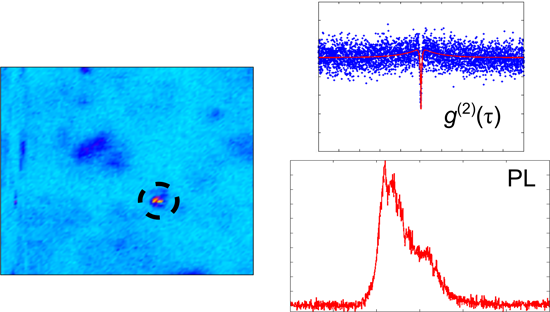
- , this is a unique feature to the nanopowder and is not evident in the other single emitters presented in this study. Figure 6b is the spectrum of the defect, which shows red emission with a peak around 629 nm. The low signal-to-noise ratio was counteracted by increasing the exposure time at each step


Lyapunov estimation for high-speed demodulation in multifrequency atomic force microscopy
Beilstein J. Nanotechnol. 2018, 9, 490–498, doi:10.3762/bjnano.9.47
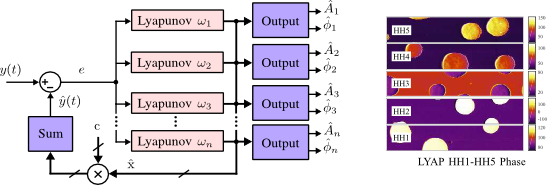
- , they provide an increased signal-to-noise ratio. The MF-LYAP can be seen to perform comparably to the LIA when tuned to similar measurement bandwidth settings. When imaging with higher harmonics, the off-mode rejection of each channel was tuned to suppress the large fundamental frequency. Imaging a PS





The nanofluidic confinement apparatus: studying confinement-dependent nanoparticle behavior and diffusion
Beilstein J. Nanotechnol. 2018, 9, 301–310, doi:10.3762/bjnano.9.30
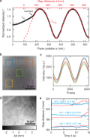
- 35,000 detected positions obtained from 7 immobilized particles. This precision is in agreement with simulated particles [26] with a similar signal-to-noise ratio (SNR) of ≈20. We like to point out that we measure the same SNR using raw images similar to that in Figure 2b, but for moving particles we can



Bombyx mori silk/titania/gold hybrid materials for photocatalytic water splitting: combining renewable raw materials with clean fuels
Beilstein J. Nanotechnol. 2018, 9, 187–204, doi:10.3762/bjnano.9.21
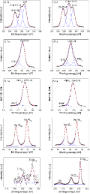
- anatase (004) reflection. Therefore, an unambiguous assignment of the observed reflection is not possible. Measurements for longer times and higher count rates for improvement of the signal to noise ratio were thus done from 35–47° (Figure S5a, Supporting Information File 1). The Au (200) reflection at




Strategy to discover full-length amyloid-beta peptide ligands using high-efficiency microarray technology
Beilstein J. Nanotechnol. 2017, 8, 2446–2453, doi:10.3762/bjnano.8.243
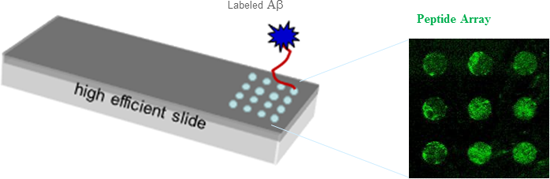
- region [24][25] for a chosen range of frequencies. In addition, a high signal-to-noise ratio due to the low background autofluorescence of the material is obtained [26]. A high purity of the material involved, chemical inertness and stability and atomic flatness of the surface are other important


Substrate and Mg doping effects in GaAs nanowires
Beilstein J. Nanotechnol. 2017, 8, 2126–2138, doi:10.3762/bjnano.8.212
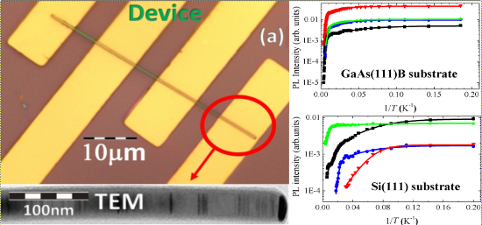
- can be related to contributions from reflections in WZ and ZB segments in the nanowires, but also from the ZB planes in the epilayer underneath the nanowires. The signal-to-noise ratio is lower for sample A in comparison with sample B. In order to quantify the change of the relative intensities of
- higher temperatures. The behavior of C5 can be explained by an increase of the uncertainty of the peak energy estimation in PL spectra having low signal-to-noise ratio. In the case of sample B, C5 follows roughly . Regarding C3, no shift is observed for T 100 K and for T 200 K the behavior is followed


Preparation and characterization of polycarbonate/multiwalled carbon nanotube nanocomposites
Beilstein J. Nanotechnol. 2017, 8, 2026–2031, doi:10.3762/bjnano.8.203
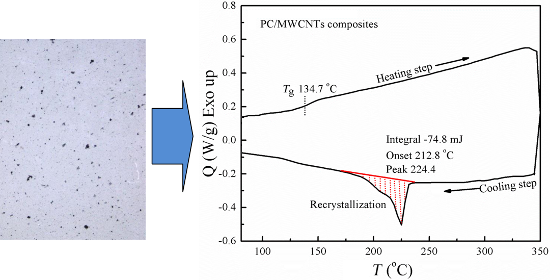
- spectrometer, Bruker, Madison, USA. The samples were analyzed in attenuated total internal reflection absorbance mode, with an aperture diameter of 3 mm and a spectral resolution of 4 cm−1. For an optimal signal-to-noise ratio, 64 scans were averaged per sample spectrum and apodized. All the spectra were


Imidazolium-based ionic liquids used as additives in the nanolubrication of silicon surfaces
Beilstein J. Nanotechnol. 2017, 8, 1961–1971, doi:10.3762/bjnano.8.197
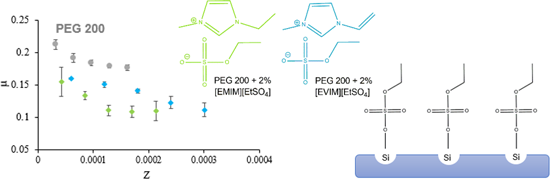
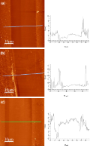
- (S 2p3/2 + S 2p1/2), which is superposed to the Si 2s plasmon loss. Comparison was, therefore, based on the S 2s peaks. In both samples, the signal to noise ratio is very poor (Figure 7b). Anyway, the smoothed data (full black lines) show different S 2s peaks in the sample treated with PEG + [EMIM



Optical techniques for cervical neoplasia detection
Beilstein J. Nanotechnol. 2017, 8, 1844–1862, doi:10.3762/bjnano.8.186

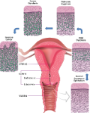
- attention should be paid to the selection of the laser excitation wavelength. The improvement of the signal-to-noise ratio can be achieved by using ultrashort-pulsed laser sources (stimulated Raman scattering (SRS) and coherent anti-Stokes Raman scattering (CARS)) or metal nanoparticles (surface-enhanced



Evaluation of quantum dot conjugated antibodies for immunofluorescent labelling of cellular targets
Beilstein J. Nanotechnol. 2017, 8, 1238–1249, doi:10.3762/bjnano.8.125
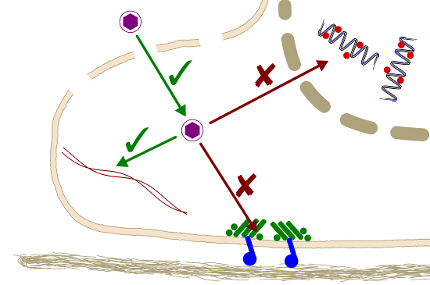
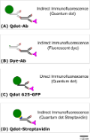
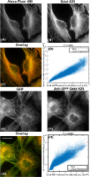
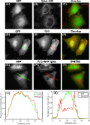
- -Ab. A Qdot 625-Ab concentration of 20 nM was used, as it has been shown that a high concentration of Qdot-Abs improves specific labelling and signal-to-noise ratio [21]. Initially, to assess the labelling efficiency of Qdot-Abs, the extracellular matrix (ECM) protein fibronectin was dual labelled
- fixation gave better signal-to-noise ratio and specific Qdot 625 labelling of β-tubulin (Figure 3B), without the need for further permeabilisation, there was non-specific labelling observed for talin and SC35. Size limiting access to the nucleus: We suspected that the size of the commercial Qdot 625-Ab and




Structural properties and thermal stability of cobalt- and chromium-doped α-MnO2 nanorods
Beilstein J. Nanotechnol. 2017, 8, 1032–1042, doi:10.3762/bjnano.8.104
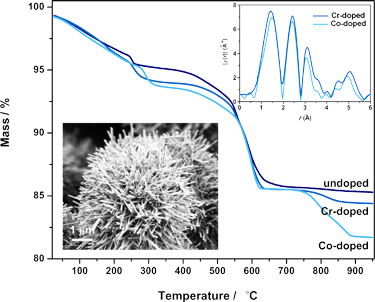
- and thus the signal-to-noise ratio. Energy calibration was established by putting the sample between the first and the second ionization chamber and the corresponding metal foil between the second and the third chambers. At least two repeated spectra were taken for each sample to check stability of


Functional dependence of resonant harmonics on nanomechanical parameters in dynamic mode atomic force microscopy
Beilstein J. Nanotechnol. 2017, 8, 883–891, doi:10.3762/bjnano.8.90
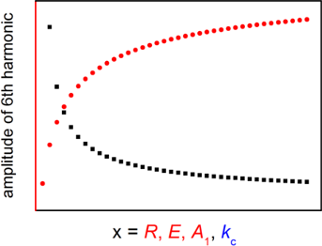
- , which implies a very low signal to noise ratio. To overcome this difficulty, A6 is acquired at each point of the AFM image (256 × 256 points) and then it is calculated by averaging all the values obtained at the image. In this way, the time evolution of the value of A6 is expressed in terms of


Synthesis of coaxial nanotubes of polyaniline and poly(hydroxyethyl methacrylate) by oxidative/initiated chemical vapor deposition
Beilstein J. Nanotechnol. 2017, 8, 872–882, doi:10.3762/bjnano.8.89
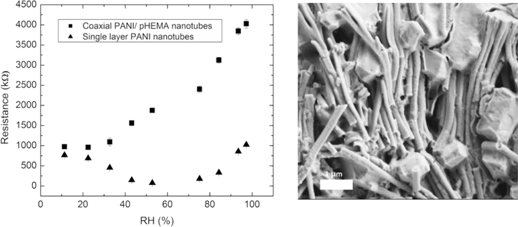
- originating from the Si(100) planes. Each measurement took 4 h for an adequate signal-to-noise ratio. Thickness of the films on Si wafer and glass substrates was measured with a spectroscopic ellipsometer (M-2000, J. A. Woollam) at 65, 70, and 75° within a range of 300–800 nm. For electrical characterization


Relationships between chemical structure, mechanical properties and materials processing in nanopatterned organosilicate fins
Beilstein J. Nanotechnol. 2017, 8, 863–871, doi:10.3762/bjnano.8.88

- kHz. This offers improved sensitivity over the OPO IR laser source used in previous investigations [32] and thus provides a better signal-to-noise ratio for the low thermal expansion of the organosilicate material. The oscillation amplitude of the probe at this frequency was then plotted versus the



Synthesis of graphene–transition metal oxide hybrid nanoparticles and their application in various fields
Beilstein J. Nanotechnol. 2017, 8, 688–714, doi:10.3762/bjnano.8.74
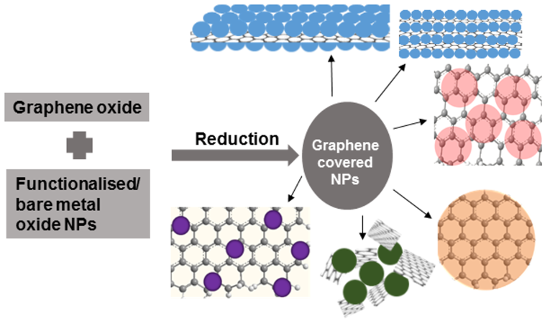
- extremely high carrier mobility, high carrier density, and low intrinsic noise for better detection by virtue of the high signal-to-noise ratio. In the anchored structure, electroactive NPs are anchored on the GS (Figure 1c) [76], and in the mixed structure, the graphene and NPs are synthesised separately