Search results
Search for "surface modification" in Full Text gives 195 result(s) in Beilstein Journal of Nanotechnology.
PEG/PEI-functionalized single-walled carbon nanotubes as delivery carriers for doxorubicin: synthesis, characterization, and in vitro evaluation
Beilstein J. Nanotechnol. 2020, 11, 1728–1741, doi:10.3762/bjnano.11.155
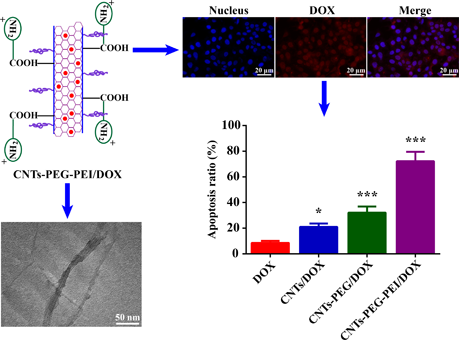
- from PEI make the CNTs much more soluble in aqueous solution and thus improve their biocompatibility [37]. Furthermore, surface modification with PEGylated agents or positively charged groups can protect the nanocarriers by providing a steric barrier from being recognized and captured by the
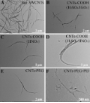
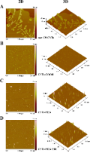
- diffraction patterns of the CNTs remain the same after conjugation with PEG and PEI, which indicate that the surface modification will not change the atomic structure of CNTs. The morphology of the different nanocarriers was observed using AFM after deposition on a mica substrate. The raw SWCNTs exhibit large




Walking energy harvesting and self-powered tracking system based on triboelectric nanogenerators
Beilstein J. Nanotechnol. 2020, 11, 1590–1595, doi:10.3762/bjnano.11.141
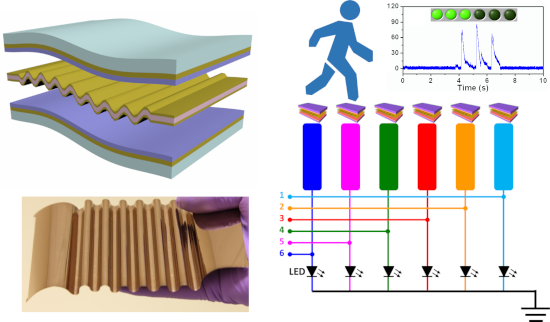
- transportation control, and for environmental monitoring. Experimental Surface modification of a PTFE film The surface modification of a PTFE film was performed in a similar manner as described previously [34]. Deep reactive ion etching was employed to construct PTFE nanowires aligned on the surface. Isopropyl





Antimicrobial metal-based nanoparticles: a review on their synthesis, types and antimicrobial action
Beilstein J. Nanotechnol. 2020, 11, 1450–1469, doi:10.3762/bjnano.11.129

- -based NPs have demonstrated antimicrobial activity over the last years. Several metal and metal oxide NPs, such as silver, copper, zinc oxide, titanium oxide, copper oxide, and nickel oxide NPs, are known to display antimicrobial activity [15][16][17] that depends on their composition, surface
- modification, intrinsic properties and the type of targeted microorganism [18]. A special category of metallic NPs is superparamagnetic iron-oxide nanoparticles (SPIONs) (e.g., magnetite (Fe3O4) and maghemite (γ-Fe2O3) NPs) whose antimicrobial activity increases upon the application of an external magnetic


Growth of a self-assembled monolayer decoupled from the substrate: nucleation on-command using buffer layers
Beilstein J. Nanotechnol. 2020, 11, 1291–1302, doi:10.3762/bjnano.11.113
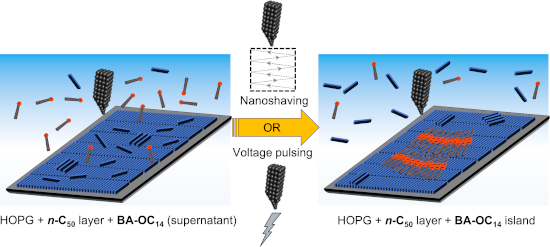
- probe methods, especially scanning tunneling microscopy (STM) [2]. While the formation of structurally diverse crystalline monolayers provides exciting opportunities for surface modification and also for investigating crystal engineering in 2D [5], predicting 2D polymorphism is often nontrivial. The


Ultrasensitive detection of cadmium ions using a microcantilever-based piezoresistive sensor for groundwater
Beilstein J. Nanotechnol. 2020, 11, 1242–1253, doi:10.3762/bjnano.11.108
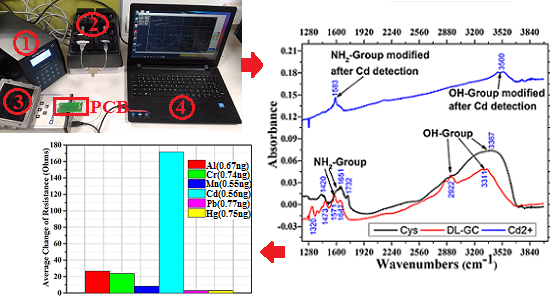
- graphene oxide (RGO)-based sensor and a microfluidic platform fabricated by [25][26][27] can be used with some surface modification for HMIs, but it is mostly capable of detecting in the micromolar range. A polymer-based microcantilever using an encapsulated piezoresistor has been proposed by Kale et al
- structure with thickness, FESEM image, PCB, and the experimental platform is shown in Figure 1. For using the microcantilever device for selectively detecting Cd(II) a surface modification is required. The surface modification of the sensor is basically a selective thiol coating on top of a gold surface






Quantitative determination of the interaction potential between two surfaces using frequency-modulated atomic force microscopy
Beilstein J. Nanotechnol. 2020, 11, 729–739, doi:10.3762/bjnano.11.60
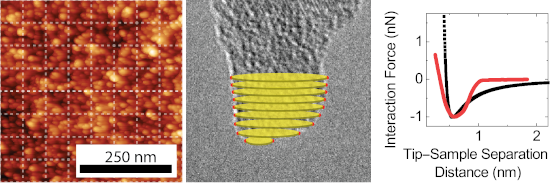
- , require coatings to prevent sticking of the mirrors due to relatively high adhesive forces [3]. Therefore, there has been considerable research into surface modification (e.g., lubricants [7][8][9], surface functionalization [10][11], and surface texturing [12][13][14]) in order to mitigate the impact of
- interactions necessitates characterization methods with angstrom-level precision. Therefore, techniques such as atomic force microscopy (AFM) are often used to evaluate the performance of these surface modification approaches. The interpretation of lubrication and surface modification behavior via AFM


Multilayer capsules made of weak polyelectrolytes: a review on the preparation, functionalization and applications in drug delivery
Beilstein J. Nanotechnol. 2020, 11, 508–532, doi:10.3762/bjnano.11.41

- release of therapeutic agents upon minor variations in the environmental characteristics, surface modification and suppression of inter-chain interaction to the degradation/rearrangement of LbL films under the action of physical factors [19][20]. In spite of the fact that weak PE systems can also offer
- microparticles (10–200 µm) fabricated via stop flow lithography have emerged as useful templates to form custom-shaped and flexible microcapsules of poly-ʟ-lysine (PLL) [36]. The shell was formed by diffusion of PLL into an oppositely charged hydrogel matrix, enabling an easy surface modification that can be


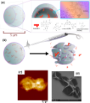

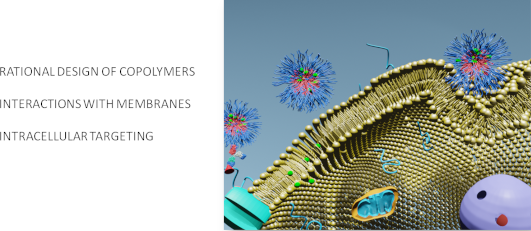
Rational design of block copolymer self-assemblies in photodynamic therapy
Beilstein J. Nanotechnol. 2020, 11, 180–212, doi:10.3762/bjnano.11.15







Label-free highly sensitive probe detection with novel hierarchical SERS substrates fabricated by nanoindentation and chemical reaction methods
Beilstein J. Nanotechnol. 2019, 10, 2483–2496, doi:10.3762/bjnano.10.239
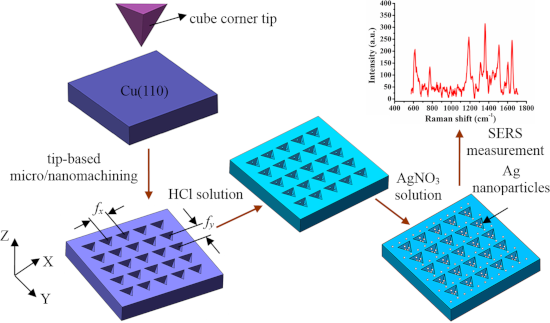
- ) surface, and surface cleaning was carried out further using deionized water to remove any residual AgNO3 reagent and copper nitrate production. A stream of nitrogen was then used to dry the hierarchical substrate as shown in Figure 13. Hydrogen ions play an important role in the surface modification


pH-Controlled fluorescence switching in water-dispersed polymer brushes grafted to modified boron nitride nanotubes for cellular imaging
Beilstein J. Nanotechnol. 2019, 10, 2428–2439, doi:10.3762/bjnano.10.233
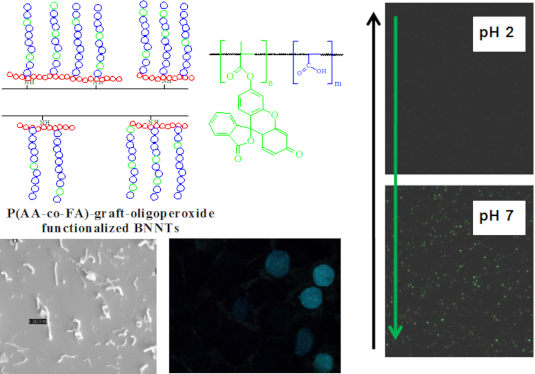
- (DU145) and are suitable for further evaluation in cellular imaging applications. Keywords: boron nitride nanotubes; cellular imaging; fluorescence; pH switching; polymer brushes; surface modification; Introduction In recent years, considerable effort has been devoted to the development of hybrid
- fluorescent probes for a number of bio-responsive applications, ranging from drug delivery to genomics [29][30][31]. Similar to other nanotubes, the pristine BNNTs were not fluorescent, and a fluorophore (e.g., organic molecule or quantum dot) is added via surface modification to make them fluorescent [29][30
- ][31][32][33][34]. In [35], the fluorescent CdSe quantum dots were attached to BNNT surfaces, and in [36] the halloysite nanotubes were modified with carbon dots and used for cellular imaging. Another approach is surface modification with grafted polymers bearing organic fluorophores. One of the most


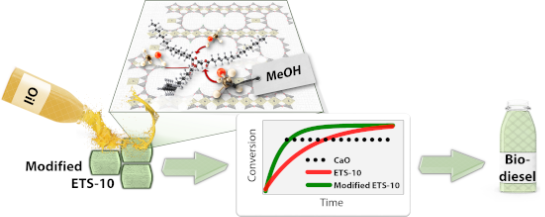
Synthesis of highly active ETS-10-based titanosilicate for heterogeneously catalyzed transesterification of triglycerides
Beilstein J. Nanotechnol. 2019, 10, 2039–2061, doi:10.3762/bjnano.10.200
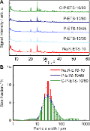
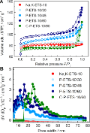
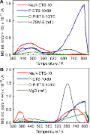
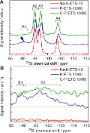
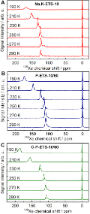
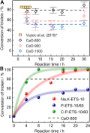
- OH groups on the surface of the created mesopores originating from the partial removal of TiO6 octahedra and SiO4 tetrahedra from the framework and subsequent protonation of the oxygen radicals. The quantitative information of the surface modification was obtained from the 29Si MAS NMR experiments








Gold-coated plant virus as computed tomography imaging contrast agent
Beilstein J. Nanotechnol. 2019, 10, 1983–1993, doi:10.3762/bjnano.10.195
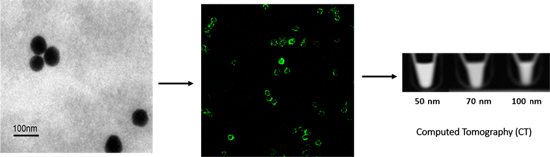
- 28 nm and a surface charge of ca. 13 mV [38]. Surface functionalization and UV–visible studies One of the objectives of the present work was the development of a smart cell-specific contrast agent based on the surface modification of Au-CPMV with specific antibodies to target desired cells
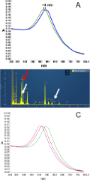
- functionalization of Au-CPMV. The localized surface plasmon resonance (LSPR) spectrum shifted by almost 4 nm (Figure 3A). This shift of the extinction maximum from 534 nm to 538 nm is a result of an increase in the local refractive index at the Au-CPMV surface as reported in the literature following surface
- modification with proteins [40] and indicates that the surface of the Au-CPMV particles is “smooth”. The shift would be greater if the surface had an uneven shape. In addition, the 4 nm red-shift of the LSPR peak suggests that the modification of the Au-CPMV surface with antibodies has been successful. This




Engineered superparamagnetic iron oxide nanoparticles (SPIONs) for dual-modality imaging of intracranial glioblastoma via EGFRvIII targeting
Beilstein J. Nanotechnol. 2019, 10, 1860–1872, doi:10.3762/bjnano.10.181
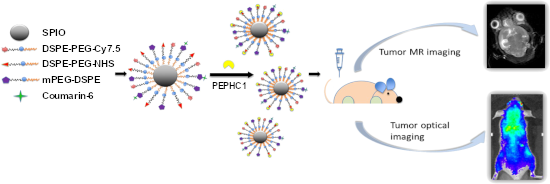
- studied with regard to their long blood half-life [11], easy surface modification and excellent biocompatibility [12]. In the past years, several multifunctional vehicles for glioblastoma imaging have been developed, such as gold nanoparticles [13][14], which were integrated for diagnosis and treatment




Toxicity and safety study of silver and gold nanoparticles functionalized with cysteine and glutathione
Beilstein J. Nanotechnol. 2019, 10, 1802–1817, doi:10.3762/bjnano.10.175
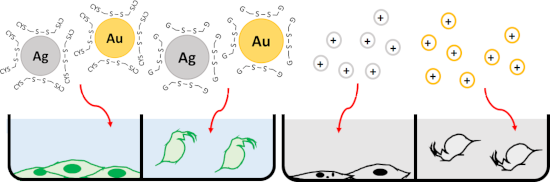
- +). The comparison with data published on polymer-coated nanoparticles evidenced that surface modification with biothiols made them safer for the biological environment. In vitro evaluation on human cells demonstrated that the toxicity of AgNPs and AuNPs prepared in the presence of cysteine was similar to
- vivo assessment of NP toxicity on aquatic organisms evidenced that surface modification of metallic NPs with biothiols made them safer for the environment, while in vitro experiments on mammalian cells demonstrated that AgNPs and AuNPs functionalized with glutathione had a significant biological impact
- , the need emerges for the development of safe, surface-modified nanosystems. For the first time, safety profiling of AgNPs and AuNPs prepared by using cysteine and glutathione as stabilizing agents was performed. A careful and comprehensive evaluation of physico-chemical properties and surface


Scavenging of reactive oxygen species by phenolic compound-modified maghemite nanoparticles
Beilstein J. Nanotechnol. 2019, 10, 1073–1088, doi:10.3762/bjnano.10.108
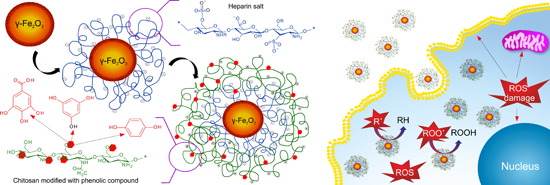
- ), to yield γ-Fe2O3@Hep-CS-G, γ-Fe2O3@Hep-CS-H, and γ-Fe2O3@Hep-CS-P particles, respectively. Surface modification of the particles was analyzed by transmission electron microscopy, dynamic light scattering, attenuated total reflection Fourier transform infrared spectroscopy, and thermogravimetric
- method chosen to attach phenolic compounds on the chitosan rather than by the phenolic compounds themselves. Moreover, the chitosans with low molecular weight were highly soluble in 2 wt % acetic acid; they could also be dissolved in water, which is important for surface modification of the magnetic
- , such as pigs and cattle [28]. Unfractionated and low-molecular-weight heparins are used in medicine as indirect anticoagulants for thrombosis prevention and treatment [29]. The presence of sulfate and carboxyl groups in heparin was critical for surface modification of the positively charged γ-Fe2O3





Ultrathin hydrophobic films based on the metal organic framework UiO-66-COOH(Zr)
Beilstein J. Nanotechnol. 2019, 10, 654–665, doi:10.3762/bjnano.10.65
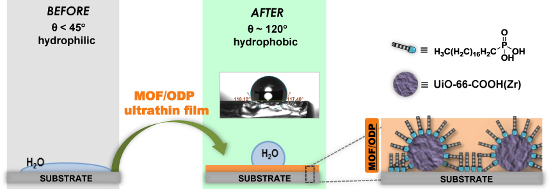
- . Keywords: hydrophobic coating; Langmuir–Blodgett (LB) films; metal organic framework (MOF); surface modification; UiO-66-COOH(Zr); Introduction Metal organic frameworks (MOFs) are well-known, crystalline, porous materials formed by metal ions (or metallic clusters) and organic ligands coordinated in a pre


Hydrophilicity and carbon chain length effects on the gas sensing properties of chemoresistive, self-assembled monolayer carbon nanotube sensors
Beilstein J. Nanotechnol. 2019, 10, 565–577, doi:10.3762/bjnano.10.58
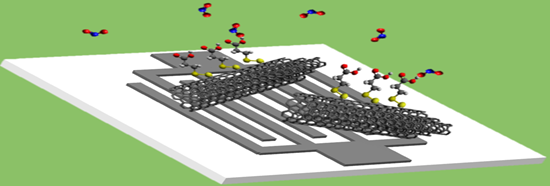
- length of these carbon nanotubes is 1.5 µm and the average diameter is 9.5 nm. The surface of the carbon nanotubes was modified with –COOH groups, with a value of mass greater than 8%. This surface modification was performed by Nanocyl S.A. via an oxygen-plasma treatment. An attempt to decorate pristine


Direct observation of the CVD growth of monolayer MoS2 using in situ optical spectroscopy
Beilstein J. Nanotechnol. 2019, 10, 557–564, doi:10.3762/bjnano.10.57
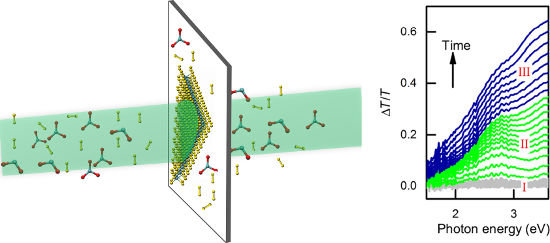
- reflectance spectroscopy (DRS), which measures the normalized difference between the reflectance of the bare surface and the surface covered by thin films, possesses an enhanced sensitivity to the surface modification and ultrathin film growth [25][26]. This technique has been successfully applied to reveal


One-step nonhydrolytic sol–gel synthesis of mesoporous TiO2 phosphonate hybrid materials
Beilstein J. Nanotechnol. 2019, 10, 356–362, doi:10.3762/bjnano.10.35
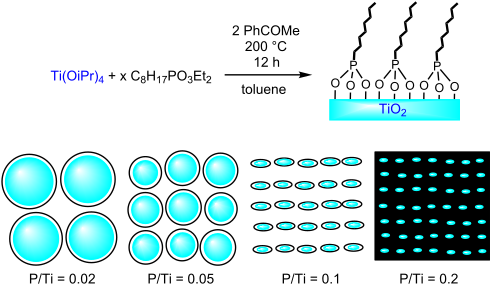
- hybrids are obtained in two steps, by surface modification of a porous metal oxide support [17][18][19]. Nonhydrolytic (or nonaqueous) sol–gel (NHSG) chemistry has provided simple and powerful routes to synthesize oxides or mixed oxides with different morphologies (e.g., nanoparticles) or textures (e.g
- the 10 to 35 ppm range. Similar broad resonances have been reported for TiO2–phenylphosphonate hybrid materials prepared in a two-step sol–gel process from Ti(OiPr)4 and PhPO3H2 [15], whereas the hybrid materials obtained by surface modification of anatase supports usually show narrower resonances [36


Wet chemistry route for the decoration of carbon nanotubes with iron oxide nanoparticles for gas sensing
Beilstein J. Nanotechnol. 2019, 10, 105–118, doi:10.3762/bjnano.10.10
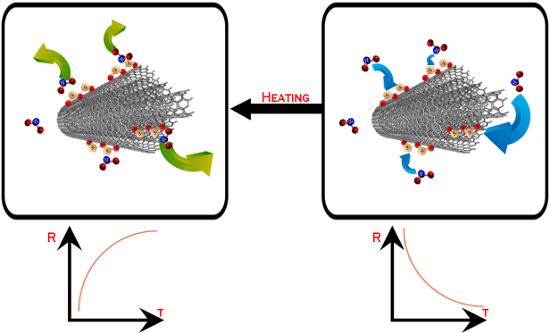
- with iron oxide nanoparticles substantially ameliorated the response towards nitrogen dioxide. Keywords: benzene detection; doping; gas sensor; metal nanoparticle decoration; multiwalled carbon nanotubes; NO2 detection; room temperature gas sensing; surface modification; Introduction Carbon nanotubes




Femtosecond laser-assisted fabrication of chalcopyrite micro-concentrator photovoltaics
Beilstein J. Nanotechnol. 2018, 9, 3025–3038, doi:10.3762/bjnano.9.281
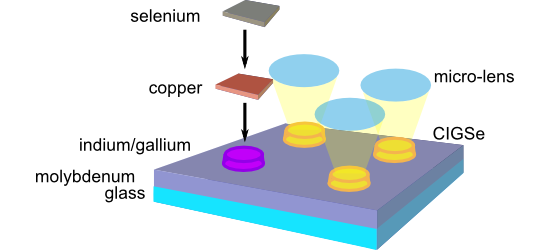
- array. The series of spots at the surface illustrates, that a stronger surface modification or even the formation of a crater can be achieved by increasing the number of laser pulses per spot as well as by increasing the laser fluence (energy density). Selected scanning electron microscopy (SEM) images


Colloidal chemistry with patchy silica nanoparticles
Beilstein J. Nanotechnol. 2018, 9, 2989–2998, doi:10.3762/bjnano.9.278
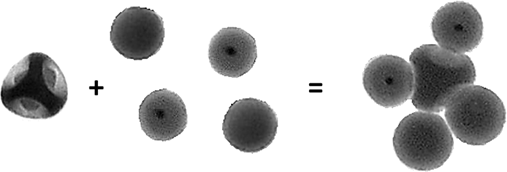
- nanoparticles and the chemical composition of the spherical satellites, we demonstrate that a vast collection of CMs are accessible through assemblies that are analogous to chemical reactions (Figure 1). Results and Discussion Synthesis and surface modification of the precursors The first type of precursors
- . Butyl chloromethyl ether was synthesized according to a recipe already published [27]. Synthesis and surface modification of the spherical satellites Synthesis of the “pre-seeds” In a similar manner as described in [28], 100 mL of L-arginine aqueous solution (6 mM) were added into a 150 mL vial
- by the citrate-reduction method reported by Turkevich [29]. SiO2 coating was carried out after surface functionalization of the gold nanoparticles by using a PEG-SH (Mw = 5000) aqueous solution in a similar manner as described in [23]. The surface modification allowed for the replacement of the


Co-intercalated layered double hydroxides as thermal and photo-oxidation stabilizers for polypropylene
Beilstein J. Nanotechnol. 2018, 9, 2980–2988, doi:10.3762/bjnano.9.277
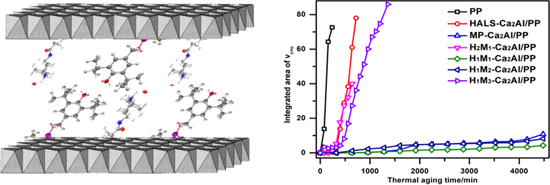
- further washed twice with acetone with surface modification and then was used for the preparation of H1M1-Ca2Al/PP composites. To obtain the H1M1-Ca2Al powder, part of the slurry was dried in an oven at 80 °C for 24 h. Co-intercalated HnMn′-Ca2Al with different molar ratios and MP-Ca2Al were obtained


Layered calcium phenylphosphonate: a hybrid material for a new generation of nanofillers
Beilstein J. Nanotechnol. 2018, 9, 2906–2915, doi:10.3762/bjnano.9.269
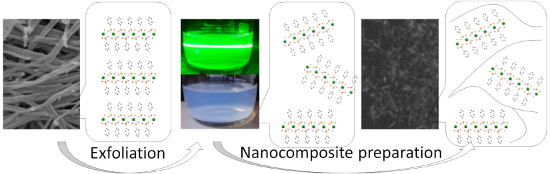
- structure or by a surface modification [3][4] by grafting organophilic functional groups onto the clay surface, leading to the synthesis of hybrid organic–inorganic materials [5]. Layered metal organophosphonates are a class of materials which exhibit a hybrid character by their nature. They are generally


Controlling surface morphology and sensitivity of granular and porous silver films for surface-enhanced Raman scattering, SERS
Beilstein J. Nanotechnol. 2018, 9, 2813–2831, doi:10.3762/bjnano.9.263
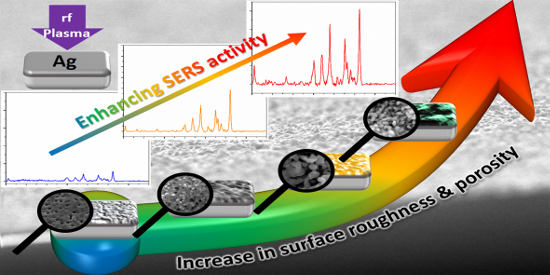
- ][60]. Recently, other methods emerged with the aim of producing SERS substrates at low cost, enabling their large-scale production. These methods include inkjet-printing and pen-on-paper approaches [61][62]. Plasma treatment has been widely used for the last decades for microelectronics and surface
- modification in industry [63][64]. A large variety of plasmas exist depending on the excitation source, the operating pressure and the device geometry [63][65]. Advantages of the use of a radio frequency (rf) plasma for chemical modification is that no hazardous chemicals and solvents are involved. Moreover