


Search results
Search for "thin films" in Full Text gives 477 result(s) in Beilstein Journal of Nanotechnology. Showing first 200.
Role of titanium and organic precursors in molecular layer deposition of “titanicone” hybrid materials
Beilstein J. Nanotechnol. 2022, 13, 1240–1255, doi:10.3762/bjnano.13.103
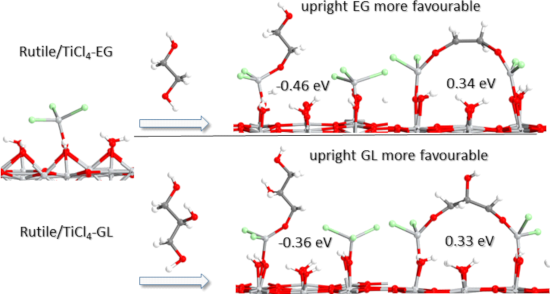
- [43], TiCl4 was coupled with 4-aminophenol (AP) to deposit Ti–(O–C6H4–N=) thin films with an essentially ideal growth rate of 10–11 Å/cycle at a temperature range of 120–160 °C. The deposited films were of high quality and stable in air. The high growth rates are attributed to the rigid structure of
- with 4,4′-oxydianiline (ODA) to deposit the (–Ti–N–C6H4–O–C6H4–N–)n thin films. Films were deposited on an Si surface in two temperature ranges, 160–230 °C and 250–490 °C. The growth rate increases with increasing temperature, from 0.3 Å/cycle at 160 °C to 1.1 Å/cycle at 490 °C. Films deposited at a


Design of surface nanostructures for chirality sensing based on quartz crystal microbalance
Beilstein J. Nanotechnol. 2022, 13, 1201–1219, doi:10.3762/bjnano.13.100
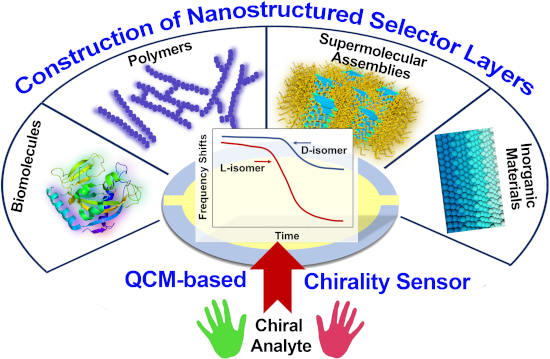
- -alanine was 307.97% more enantioselective than ᴅ-alanine. Similar enantioselectivity could also be achieved by Al/ʟ-Cys MLD films [123]. The methodology is also versatile and promising for the deposition of chiral thin films over any substrates or membranes of interest, which may promote the exploration


Nonlinear features of the superconductor–ferromagnet–superconductor φ0 Josephson junction in the ferromagnetic resonance region
Beilstein J. Nanotechnol. 2022, 13, 1155–1166, doi:10.3762/bjnano.13.97
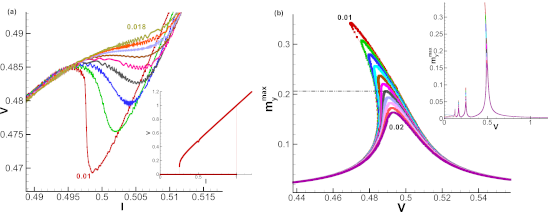
- that describes the magnetodynamics in thin films or heterostructures to form the Landau–Lifshitz–Gilbert–Josephson model (LLGJ) [14][15][16]. It is shown that, for a particular set of parameters, the coupled equations reduce to the dynamics of a Duffing oscillator [14]. The cubic nonlinearity in this


![[Graphic 14]](/bjnano/content/inline/2190-4286-13-97-i38.svg?max-width=637&scale=1.18182) at differ...
at differ...


![[Graphic 18]](/bjnano/content/inline/2190-4286-13-97-i42.svg?max-width=637&scale=1.18182) (V) on α in the damping parameter interval [0.001–0.12]....
(V) on α in the damping parameter interval [0.001–0.12]....

Influence of water contamination on the sputtering of silicon with low-energy argon ions investigated by molecular dynamics simulations
Beilstein J. Nanotechnol. 2022, 13, 986–1003, doi:10.3762/bjnano.13.86
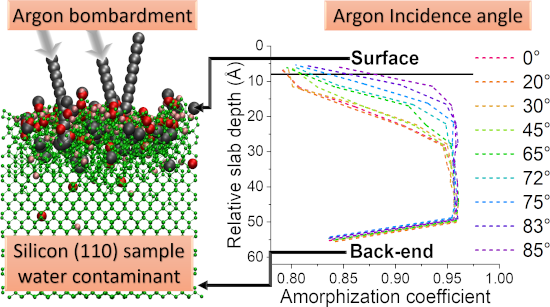
- profiling SIMS to resolve thin films in multilayered samples [14]. Another example is TEM sample preparation, where the achievement of the highest lateral resolutions in the subsequent TEM analysis requires lamellae thicknesses between 10 and 20 nm, but goes along with a typical amorphous layer of 2 to 4 nm




Theoretical investigations of oxygen vacancy effects in nickel-doped zirconia from ab initio XANES spectroscopy at the oxygen K-edge
Beilstein J. Nanotechnol. 2022, 13, 975–985, doi:10.3762/bjnano.13.85
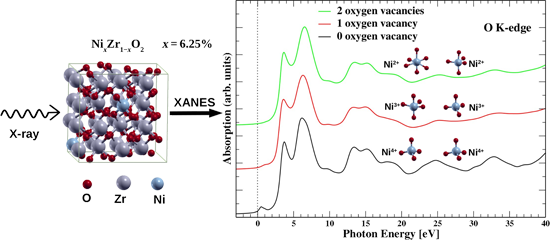
- semiconducting or insulating materials doped randomly or uniformly with magnetic impurities in the oxide matrix. A typical example are thin films of uniformly Fe-doped ZrO2 where dopant concentrations, x, from the diluted regime (i.e., x = 1–5 atom % [2]) to very high concentrations (up to x ≈ 25 atom %) have
- that of the monoclinic structure) [35]. Thus, our structural phase of reference in this work is cubic distorted fluorite zirconia since we are doping it and also due to the fact that actual experiments involving atomic layer deposition of TM-doped zirconia thin films revealed the cubic phase [26]. In


Ultrafast signatures of magnetic inhomogeneity in Pd1−xFex (x ≤ 0.08) epitaxial thin films
Beilstein J. Nanotechnol. 2022, 13, 836–844, doi:10.3762/bjnano.13.74
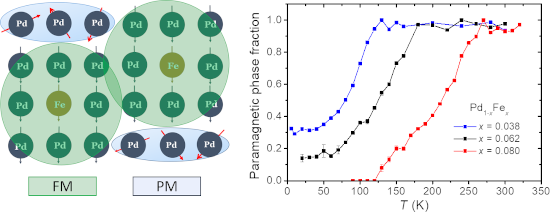
- iron at which the alloy would become magnetically homogeneous. This requires a method for detecting magnetic inhomogeneities, preferably with the possibility of being applied to thin films. We propose the use of ultrafast, time-resolved optical and magneto-optical spectroscopy methods for probing
- magnetic inhomogeneities in thin films. Individual constituents can be characterized by specific relaxation components that can be used to detect magnetic inhomogeneities and track their evolution. In addition, the peculiarities of the magnetization dynamics in magnetically inhomogeneous systems themselves
- magneto-optical Kerr angle transients for the Pd0.962Fe0.038 (a) and Pd0.92Fe0.08 (b) epitaxial thin films at T < TC; red solid lines are the results of fits with Equation 2. Temperature dependences of the amplitudes (a) and the lifetimes (b) of the slow relaxation components of the reflectivity


Experimental and theoretical study of field-dependent spin splitting at ferromagnetic insulator–superconductor interfaces
Beilstein J. Nanotechnol. 2022, 13, 682–688, doi:10.3762/bjnano.13.60
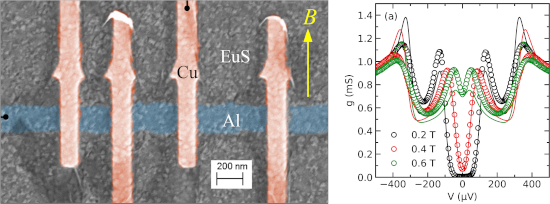
- the inner peak is broadened, and finally becomes a wide and flat band. Besides this, the self-consistency relation for thin films produces the typical step-like first-order phase transition at the critical δφ (here always plotted for the upper branch of Figure 2), while especially in the case ε’ = 1 a



Reliable fabrication of transparent conducting films by cascade centrifugation and Langmuir–Blodgett deposition of electrochemically exfoliated graphene
Beilstein J. Nanotechnol. 2022, 13, 666–674, doi:10.3762/bjnano.13.58
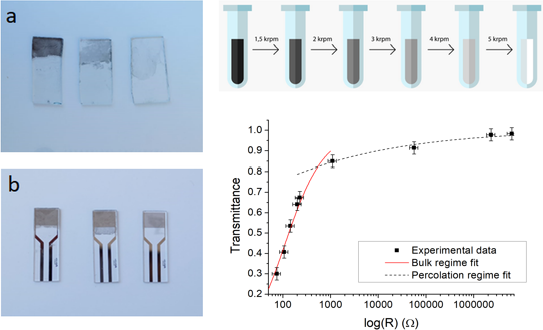
- typically polydisperse, containing particles of various sizes, which is not optimal for applications. We employed cascade centrifugation to select specific particle sizes in solution and prepared thin films from those graphene particles using the Langmuir–Blodgett assembly. Employing centrifugation speeds
- electrochemically exfoliated graphene, nor have thin films made from dispersions following size selection through centrifugation been studied for their optoelectronic properties. Here, we present size selection through cascade centrifugation of commercially obtained electrochemically exfoliated graphene. We follow
- the Langmuir–Blodgett (LB) method to deposit graphene flakes from solution as uniform thin films. LB has proven to be a method that yields reliable graphene films that have been used as transparent conductors [27][32][33][34] and gas sensors [35][36]. By measuring optical transmittance and electrical


Revealing local structural properties of an atomically thin MoSe2 surface using optical microscopy
Beilstein J. Nanotechnol. 2022, 13, 572–581, doi:10.3762/bjnano.13.49
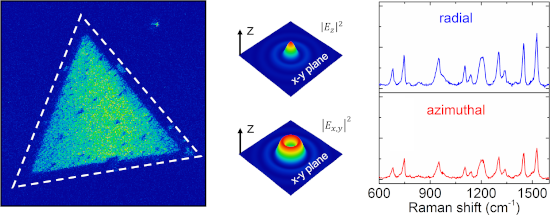
- deposited on a MoS2 crystal surface. Using near-edge X-ray absorption (NEXAFS), it was observed a strong dichroism in FePc thin films thicker than 4.5 nm. The strongest intensity of the N 1s→π* orbital transition at grazing incidence implies that the molecules are predominantly flat-lying with respect to


Influence of thickness and morphology of MoS2 on the performance of counter electrodes in dye-sensitized solar cells
Beilstein J. Nanotechnol. 2022, 13, 528–537, doi:10.3762/bjnano.13.44
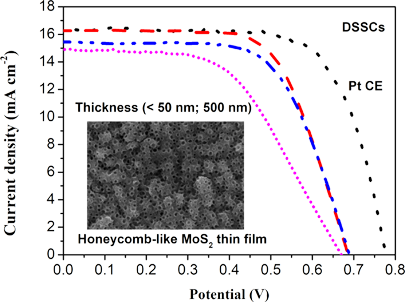
- disulfide (MoS2) was prepared on substrates coated with fluorine-doped tin oxide (FTO) to substitute the platinum counter electrode (CE) for dye-sensitized solar cells (DSSCs). Herein, we synthesized layered and honeycomb-like MoS2 thin films via the cyclic voltammetry (CV) route. Thickness and morphology
- of the MoS2 thin films were controlled via the concentration of precursor solution. The obtained results showed that MoS2 thin films formed at a low precursor concentration had a layered morphology while a honeycomb-like MoS2 thin film was formed at a high precursor concentration. Both types of MoS2
- allows for the direct deposition of MoS2 thin films from liquid precursors onto various conducting substrates with easily controlled thickness and morphology. Several reports have already been published that describe the control of structure and morphology of electrodeposited MoS2 to maximize its


Zinc oxide nanostructures for fluorescence and Raman signal enhancement: a review
Beilstein J. Nanotechnol. 2022, 13, 472–490, doi:10.3762/bjnano.13.40
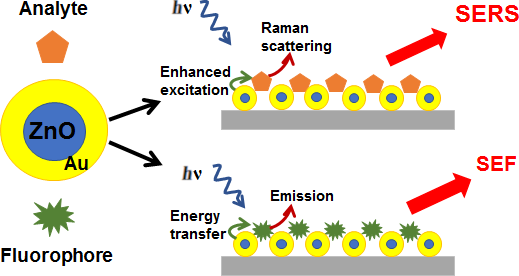
- . Numerous studies have demonstrated the enhancement of both near band edge (NBE) and defect emissions using ZnO decorated with metallic NPs [92][93]. The study in [92] showed a PL enhancement of the Au–ZnO heterojunction system by an order of magnitude when ZnO thin films were incorporated with gold
- [88]. Additionally, the features of ZnO nanostructures photoluminescence spectra were shown to depend on the thicknesses of the Au layer. Viter et al. obtained interesting results studying the variation of photoluminescence spectra with the thickness of the Au layer in Au–ZnO thin films. Using a thin




Selected properties of AlxZnyO thin films prepared by reactive pulsed magnetron sputtering using a two-element Zn/Al target
Beilstein J. Nanotechnol. 2022, 13, 344–354, doi:10.3762/bjnano.13.29
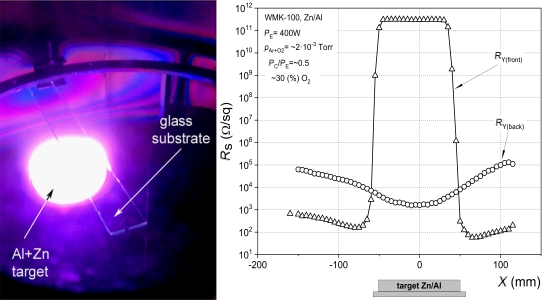
- Witold Posadowski Artur Wiatrowski Jaroslaw Domaradzki Michal Mazur Wroclaw University of Science and Technology, Faculty of Electronics, Photonics and Microsystems, Janiszewskiego 11/17, 50-372 Wrocław, Poland 10.3762/bjnano.13.29 Abstract AlxZnyO thin films were obtained by reactive pulsed
- are strongly desired. Magnetron sputtering is one of the most widely used methods for obtaining thin films with different properties for different purposes and is one of the most commonly used methods for industrial production. However, the manufacturing of AZO thin films is a challenge and requires
- many preliminary experiments to find optimum conditions for the deposition of thin films with desired properties. For the deposition of AZO thin films by magnetron sputtering, the most commonly used targets are made of sintered zinc oxide powders and aluminum oxide (ZnO/Al2O3). The optimal percentage



Interfacial nanoarchitectonics for ZIF-8 membranes with enhanced gas separation
Beilstein J. Nanotechnol. 2022, 13, 313–324, doi:10.3762/bjnano.13.26
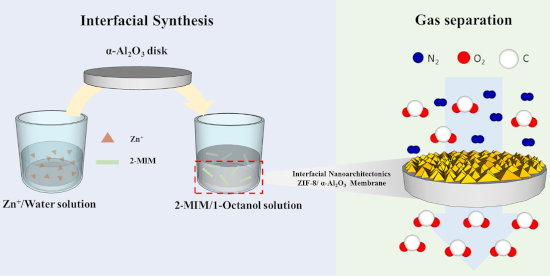
- -ray diffraction were measured on a Rigaku Ultima IV with Cu Kα radiation (λ = 1.5418 Å) to check the crystallinity of the synthesized ZIF-8 thin films. The morphology of the supports, the free-standing thin films, and the supported membranes was observed by FE-SEM (NovaTM NanoSEM 230). The elemental
- calculated permeation reached steady state. Results and Discussion Characterizations of porous α-Al2O3 disks and free-standing ZIF-8 thin films Porous α-Al2O3 disks were chosen as ZIF-8 membrane supports, because they tolerate relatively high temperatures up to 2000 °C and harsh chemical environments (e.g
- and SEM images of the α-Al2O3 disks are given in Supporting Information File 1, Figure S1. Prior to heterogeneous nucleation of ZIF-8 crystals on the porous α-Al2O3 disks, free-standing ZIF-8 thin films were fabricated to verify the feasibility of continuous ZIF-8 crystal growth via an interfacial


Investigation of a memory effect in a Au/(Ti–Cu)Ox-gradient thin film/TiAlV structure
Beilstein J. Nanotechnol. 2022, 13, 265–273, doi:10.3762/bjnano.13.21
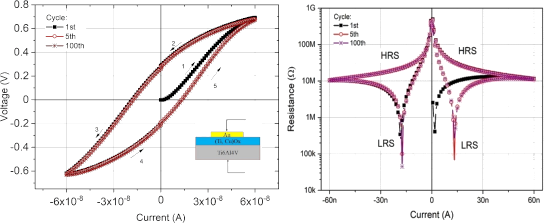
- analysis of resistive switching properties observed in a Au/(Ti–Cu)Ox/TiAlV structure with a gradient distribution of Cu and Ti along the (Ti–Cu)Ox thin film thickness. Thin films were prepared via multisource reactive magnetron co-sputtering. The programmed profile of the pulse width modulation
- resistive switching behavior. Results of optical, X-ray, and ultraviolet photoelectron spectroscopy measurements allowed us to elaborate the scheme of the bandgap alignment of the prepared thin films with respect to the Au and TiAlV electrical contacts. Detailed structure and elemental profile
- previous works [41][42] have shown that an interesting alternative to the well-known conventional structures, with a multilayer stack of thin films with different electrical conducting and nonconducting properties described above, could be a thin film the composition of which changes along its thickness



Low-energy electron interaction and focused electron beam-induced deposition of molybdenum hexacarbonyl (Mo(CO)6)
Beilstein J. Nanotechnol. 2022, 13, 182–191, doi:10.3762/bjnano.13.13
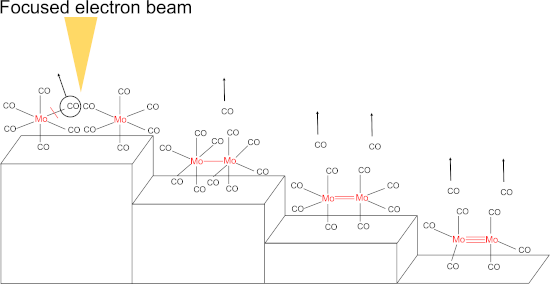
- ; dissociative ionisation; focused electron beam-induced deposition; molybdenum hexacarbonyl; Introduction Studies on Mo-based semiconductor materials for the application as thin films with wafer-scale thickness homogeneity [1] and for solar hydrogen production [2] have attracted interest in the last years. For


Tin dioxide nanomaterial-based photocatalysts for nitrogen oxide oxidation: a review
Beilstein J. Nanotechnol. 2022, 13, 96–113, doi:10.3762/bjnano.13.7
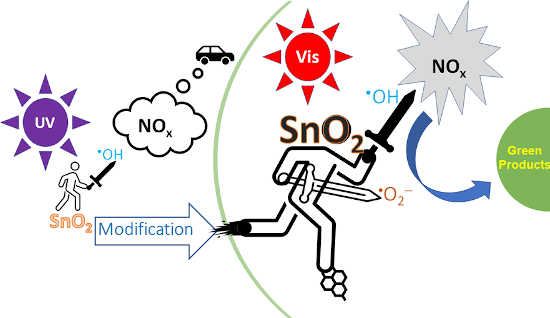
- cell of rutile SnO2, a Sn4+ ion is bonded to six oxygen ions, and every oxygen atom is coordinated by three Sn4+ ions, forming a (6, 3) coordination structure [44]. When SnO2 materials are prepared as thin films with two to eight layers the bandgap is larger than that of bulk SnO2 and decreases with


Sputtering onto liquids: a critical review
Beilstein J. Nanotechnol. 2022, 13, 10–53, doi:10.3762/bjnano.13.2

- SoL is presented including monometallic and alloy NPs, oxide NPs, thin films, and nanocomposites and their promising optical, luminescence, and catalytic properties. Review 1 Theoretical background 1.1 Techniques available for the synthesis of NPs The mass production of NPs with controlled
- metal atoms [69]. The kinetic energy of the film-forming species can thus be controlled by the positive pulse voltage to some extent. The kinetic energy of the film-forming species is critical when depositing thin films deposited on a solid substrate. Most likely, it also plays a critical role when a






Measurement of polarization effects in dual-phase ceria-based oxygen permeation membranes using Kelvin probe force microscopy
Beilstein J. Nanotechnol. 2021, 12, 1380–1391, doi:10.3762/bjnano.12.102
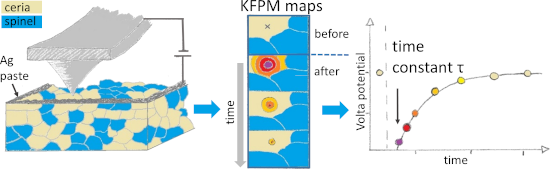
- composite. The KPFM measurements were performed at room temperature and show diffusion coefficients in the range of 3 × 10⁻¹³ cm2·s−1, which is comparable to values measured for single-phase Gd-doped ceria thin films using the same method. Keywords: ceria; diffusion coefficient; Kelvin probe force
- to literature values for single-phase Ce0.9Gd0.1O1.95 thin films from [24] obtained with the same method. The diffusion length L was determined from the average radius of the area affected by polarization, which could be measured in the KPFM map. The error of the chemical diffusion coefficient is in
- the conductivity measurements, where the conductivity was slightly lower and the activation energy slightly higher for experiments with negative polarization. The values obtained for the Sm-doped ceria in the composite in this study show also good agreement to data obtained for Gd-doped ceria thin


Plasmon-enhanced photoluminescence from TiO2 and TeO2 thin films doped by Eu3+ for optoelectronic applications
Beilstein J. Nanotechnol. 2021, 12, 1271–1278, doi:10.3762/bjnano.12.94
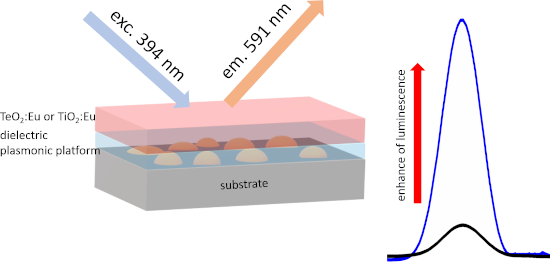
- luminescence properties of europium-doped titanium dioxide and tellurium oxide thin films enhanced by gold plasmonic nanostructures. We propose a new type of plasmon structure with an ultrathin dielectric film between plasmonic platform and luminescent material. Plasmonic platforms were manufactured through
- . Potential new materials can be found through the computation of luminescent thin films and plasmonic platforms. Such a hybrid structure can be formed by thin oxide layers doped with rare-earth ions deposited on metal nanostructures [1][2][3]. Plasmonic resonance can be observed in metallic nanostructures
- , so-called plasmonic platforms, and thin films. Among different plasmonic materials, gold nanostructures exhibit resonance in the visible range and have been extensively studied as a material for light absorption and emission improvement [4][5][6][7][8]. Titanium dioxide seems to be one of the most


Enhancement of the piezoelectric coefficient in PVDF-TrFe/CoFe2O4 nanocomposites through DC magnetic poling
Beilstein J. Nanotechnol. 2021, 12, 1262–1270, doi:10.3762/bjnano.12.93
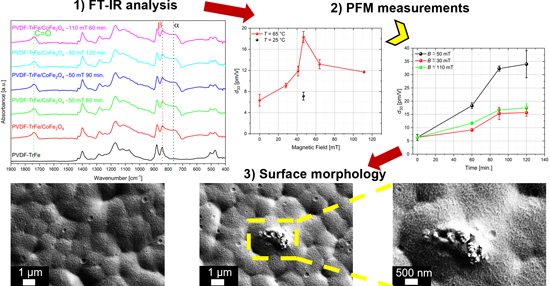
- %. After curing, the spin coated nanocomposite thin films were exposed to a DC magnetic field for 1 h at 65 °C. In Figure 3 the d33 values are reported as function of the applied DC magnetic field strength. As can be seen, the piezoelectric coefficient increases when the magnetic field is increased and
- in the fabrication of energy harvesting devices or wearable sensors for flexible electronics applications. Experimental The PVDF-TrFe/CoFe2O4 nanocomposite thin films were produced through spin coating. The CoFe2O4 nanoparticles (Sigma-Aldrich, 99%) were dispersed in N,N-dimethylformamide (DMF, Sigma
- °C and a DC magnetic field was applied through a ferromagnetic core (Figure 8). The morphology of the PVDF-TrFe/CoFe2O4 nanocomposite thin films was investigated using a field-emission scanning electron microscope (FESEM, Auriga, Carl Zeiss) operated with an accelerating voltage of 5 kV. Chemical


Morphology-driven gas sensing by fabricated fractals: A review
Beilstein J. Nanotechnol. 2021, 12, 1187–1208, doi:10.3762/bjnano.12.88
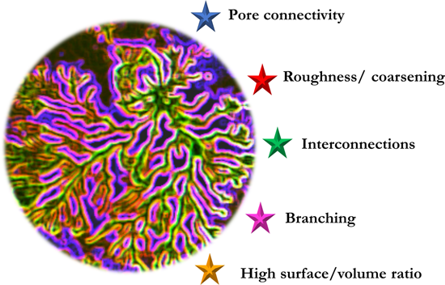
- metal oxide (SMO) sensors are most popular due to their low cost, simplicity, easy fabrication, and wide range of gas detection capabilities [9]. Thin films and nanostructures exhibit better sensing characteristics. Various researchers have reported structures with morphologies such as nanowires (NWs
- a lower value of fractal dimension is more effective in sensing NO2 gas and lowers the optimum operating temperature. Chen et al. used pulsed laser deposition for growing different SnO2 thin films by varying the substrate temperature. The obtained films exhibited fractal features [43]. In another
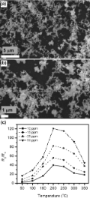
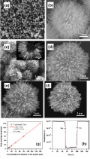
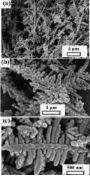
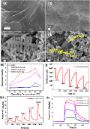
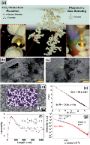
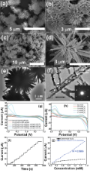
- study, Kante et al. prepared SnO2 films with fractal morphology by an electrochemical method with a subsequent oxidation process [68]. Both groups tested the films for CO gas sensing at different temperatures. Figure 8a–d shows the SEM images of SnO2 thin films on a Si(100) substrate obtained by Chen










Irradiation-driven molecular dynamics simulation of the FEBID process for Pt(PF3)4
Beilstein J. Nanotechnol. 2021, 12, 1151–1172, doi:10.3762/bjnano.12.86
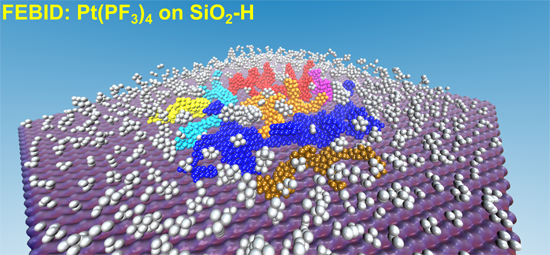
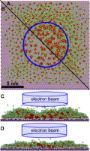
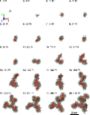
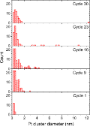
- the whole simulated surface). The latter case is relevant for surface science experiments on irradiation of thin films of adsorbed precursor molecules. The yields of SE and BSE and the corresponding spatial distributions depend on the energy of the PE beam and the material of a substrate. These








First-principles study of the structural, optoelectronic and thermophysical properties of the π-SnSe for thermoelectric applications
Beilstein J. Nanotechnol. 2021, 12, 1101–1114, doi:10.3762/bjnano.12.82
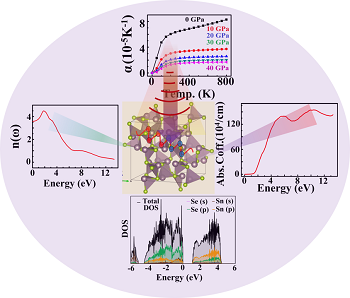
- remarkably high value of ZT ≈ 2.6 at 773 K along the b axis has been reported, which is the world record so far [1][5]. Also, for the SnSe thin films and 2D sheets, the experimental ZT values were relatively low; the maximum value can only reach 0.28 at 675 K [67][68]. One recent study shows that the Gd


Assessment of the optical and electrical properties of light-emitting diodes containing carbon-based nanostructures and plasmonic nanoparticles: a review
Beilstein J. Nanotechnol. 2021, 12, 1078–1092, doi:10.3762/bjnano.12.80
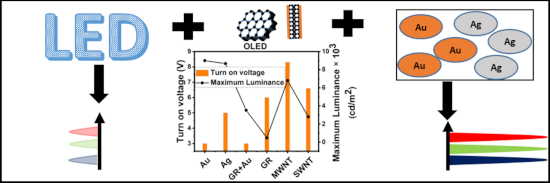
- a wider choice of emission wavelengths compared to conventional lighting systems. Inorganic LED consist of inorganic semiconductor materials in the active region, for example thin films of GaAs that emit in the red to near-infrared (>700 nm) region [4]. Ga-based LED belong to the III–V group of
- leverage over inorganic LED in display applications. Organic light-emitting diodes (OLED) consist of photoactive polymers, such as PPV and MEH-PPV that can be deposited as highly ordered crystalline thin films [15][16]. Despite several advantages, OLED have certain drawbacks, such as lower lifetime, high
- a large scale. For this purpose, transparent conducting oxides (TCO), such as thin films of In2O3, SnO2, ZnO, and their mixtures have been extensively studied [30][31][32][33][34]. The most widely studied TCO is indium tin oxide (ITO), which possesses good physical properties, such as high optical


Molecular assemblies on surfaces: towards physical and electronic decoupling of organic molecules
Beilstein J. Nanotechnol. 2021, 12, 950–956, doi:10.3762/bjnano.12.71

- the substituents of the pyrenes derivatives [87]. Metal oxide thin films on top of metal substrates are another interesting class of ultrathin interfacial layers to decouple organic molecules and to enable the study of their electronic properties without the contribution of the underlying metal
- molecular conformation by planarizing the carbon backbone as well as the self-assembly. Hurdax et al. [89] suggested that work function measurements before and after the adsorption of molecules should give insight into the electronic and physical decoupling. It should be noted that metal oxide thin films
- molecules from a semiconducting substrate is discussed for the example of both insulating CaF2 thin films on Si(111) [91] and hydrogen passivation of Ge(001) surfaces [92]. In the first case, three scenarios were compared: PTCDA on Si, on a thin CaF2, and on a thicker CaF2 layer. While isolated PTCDA



