


Search results
Search for "tunneling" in Full Text gives 317 result(s) in Beilstein Journal of Nanotechnology. Showing first 200.
Growth of a self-assembled monolayer decoupled from the substrate: nucleation on-command using buffer layers
Beilstein J. Nanotechnol. 2020, 11, 1291–1302, doi:10.3762/bjnano.11.113
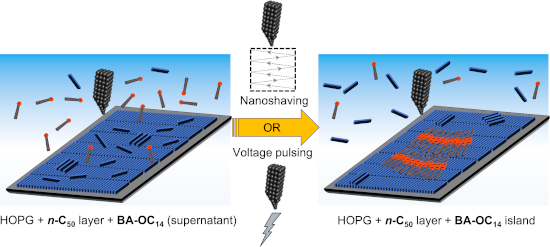
- typical building block, namely 4-tetradecyloxybenzoic acid at the 1-phenyloctane–graphite interface in the presence and in the absence of a buffer layer formed by a long chain alkane, namely n-pentacontane. Using scanning tunneling microscopy (STM), three different structural polymorphs were identified
- probe methods, especially scanning tunneling microscopy (STM) [2]. While the formation of structurally diverse crystalline monolayers provides exciting opportunities for surface modification and also for investigating crystal engineering in 2D [5], predicting 2D polymorphism is often nontrivial. The
- ], NaCl [40], CuN [41] and oxides [32][42] have been used. Typically, the ultrathin films of these wide band gap materials act as insulating layers while still allowing electron tunneling through them. Chemisorbed iodine layers have been used as passivating layers on metals such as Au for achieving


An atomic force microscope integrated with a helium ion microscope for correlative nanoscale characterization
Beilstein J. Nanotechnol. 2020, 11, 1272–1279, doi:10.3762/bjnano.11.111

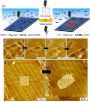
- vacuum. The scanning electron microscope (SEM) was first combined with scanning tunneling microscopy (STM) [2][3], allowing for the visual observation at the tip–sample interaction point with the SEM. Later, Ermakov et al. [4] successfully integrated an AFM into an SEM for the first time, enabling


Role of redox-active axial ligands of metal porphyrins adsorbed at solid–liquid interfaces in a liquid-STM setup
Beilstein J. Nanotechnol. 2020, 11, 1264–1271, doi:10.3762/bjnano.11.110
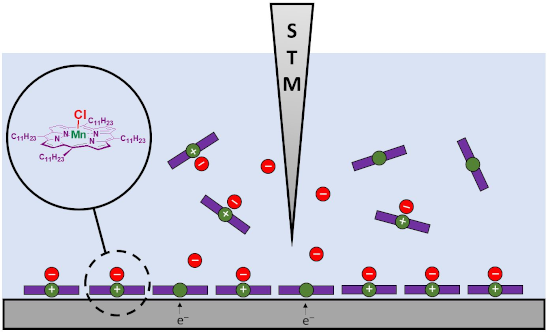
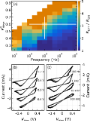
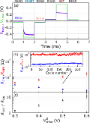
- conductive surface, large and constant additional currents relative to a set tunneling current were observed, which varied with the magnitude of the applied bias voltage. These currents occurred regardless of the type of surface (HOPG or Au(111)) or tip material (PtIr, Au or W). The additional currents were
- active acetate instead of chloride axial ligands, the currents remained absent. Keywords: manganese; porphyrins; redox reactions; scanning tunneling microscopy; solid–liquid interface; Introduction Manganese(III) porphyrins are well-known catalysts for the epoxidation of alkenes [1][2][3][4]. The
- single-molecule level, employing scanning tunneling microscopy (STM) [7][8][9]. Since our aim was to stay as close as possible to the laboratory conditions at which catalysis takes place (typically in an organic solvent under ambient conditions), we carried out our STM studies at a solid–liquid interface


Nonadiabatic superconductivity in a Li-intercalated hexagonal boron nitride bilayer
Beilstein J. Nanotechnol. 2020, 11, 1178–1189, doi:10.3762/bjnano.11.102
- obtained using the tunneling junction. Hence, any experimental results directly relate to the predictions of the Eliashberg formalism taking into account the effect of vertex corrections. Additionally, in Figure 3d–f we plotted the form of the order parameter on the real axis (T = 4 K). The real part of


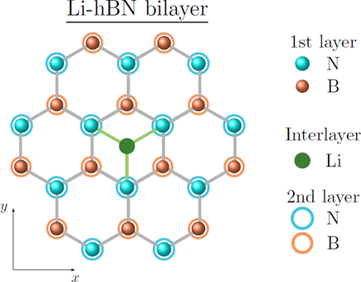
![[Graphic 34]](/bjnano/content/inline/2190-4286-11-102-i54.svg?max-width=637&scale=1.18182) for Li-hBN. The results were obta...
for Li-hBN. The results were obta...
Hybridization vs decoupling: influence of an h-BN interlayer on the physical properties of a lander-type molecule on Ni(111)
Beilstein J. Nanotechnol. 2020, 11, 1168–1177, doi:10.3762/bjnano.11.101
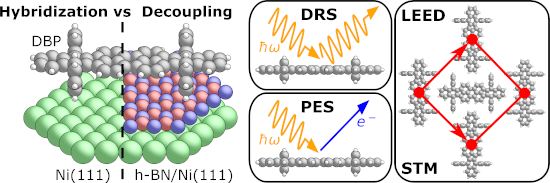
- -temperature scanning tunneling microscopy. Finally, the investigation of the valence band structure by ultraviolet photoelectron spectroscopy shows that the low work function of h-BN/Ni(111) further decreases after the DBP deposition. For this reason, the h-BN-passivated Ni(111) surface may serve as potential
- comprehensive study we utilized differential reflectance spectroscopy (DRS), low-energy electron diffraction (LEED), low-temperature scanning tunneling microscopy (LT-STM), as well as photoelectron spectroscopy (PES). Our results reveal that DBP on h-BN/Ni(111) is well decoupled from the metal substrate Ni(111


Scanning tunneling microscopy and spectroscopy of rubrene on clean and graphene-covered metal surfaces
Beilstein J. Nanotechnol. 2020, 11, 1157–1167, doi:10.3762/bjnano.11.100
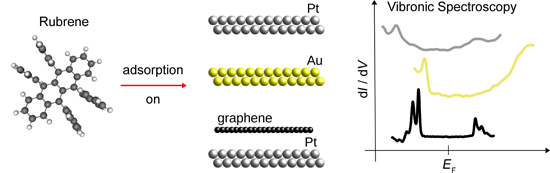
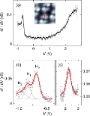
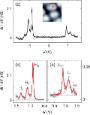
- are due to different molecular vibrational quanta with distinct Huang–Rhys factors. Keywords: graphene; metal surfaces; molecular superstructures; rubrene; scanning tunneling microscopy; scanning tunneling spectroscopy; vibronic states; Introduction Two-dimensional materials are emerging as
- ] and hexagonal boron nitride (h-BN) [3] have been studied in detail. In contrast, vibrational spectroscopy at the single-molecule level is scarce. Scanning tunneling spectroscopy (STS) of vibronic levels of 1,3,5-tris(2,2-dicyanovinyl)benzene on graphene-covered h-BN on SiO2 [4], of cobalt
- -covered Ir(111) [9] have been reported so far. In these studies molecular orbitals, the highest occupied molecular orbital (HOMO) or the lowest unoccupied molecular orbital (LUMO), appear with spectroscopic fine structure in differential conductance (dI/dV, I: tunneling current, V: bias voltage) data



Monolayers of MoS2 on Ag(111) as decoupling layers for organic molecules: resolution of electronic and vibronic states of TCNQ
Beilstein J. Nanotechnol. 2020, 11, 1062–1071, doi:10.3762/bjnano.11.91
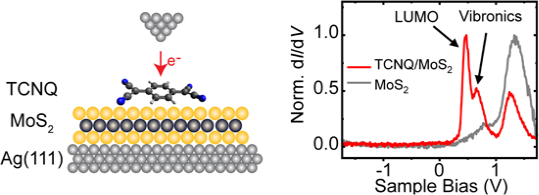
- vibronic states of an almost isolated molecule. Here, we use scanning tunneling microscopy and spectroscopy to show that a single layer of MoS2 on Ag(111) exhibits a semiconducting bandgap, which may prevent molecular states from strong interactions with the metal substrate. We show that the lowest
- the modes with strong electron–phonon coupling. Keywords: decoupling layer; molybdenum disulfide (MoS2); scanning tunneling microscopy, tetracyanoquinodimethane (TCNQ); vibronic states; Introduction When molecules are adsorbed on metal surfaces, their electronic states are strongly perturbed by
- in a scanning tunneling microscope, requires a metal electrode. To (partially) preserve the molecular properties the molecule–electrode coupling has to be properly designed. An elegant way is to clamp the molecule between electrodes via single-atom bonds at opposing sites of the molecule while the


Microwave photon detection by an Al Josephson junction
Beilstein J. Nanotechnol. 2020, 11, 960–965, doi:10.3762/bjnano.11.80
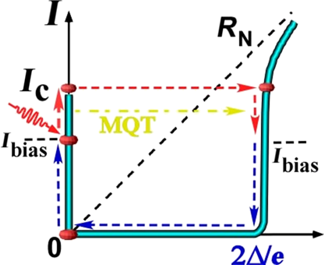
- disadvantages. The first approach relies on a continuous current sweep at a constant repetition rate and the measurements of the switching current distributions, from which the response and sensitivity can be determined [14][15][16]. In particular, in [16] the tunneling properties of a current-biased Josephson
- number of absorbed photons and only above-threshold signals can be detected. Also, special care must be taken to minimize the false switching events of the detector due to thermal fluctuations and macroscopic quantum tunneling. In this article the second approach is applied to a prototype of a single
- change the state of the system by switching it to a resistive state with a finite resistance value. At the same time the detector may be triggered spontaneously due to thermal fluctuations in the classical region of temperatures and tunneling through the barrier in the quantum case [15][34]. Experimental


Adsorption behavior of tin phthalocyanine onto the (110) face of rutile TiO2
Beilstein J. Nanotechnol. 2020, 11, 821–828, doi:10.3762/bjnano.11.67
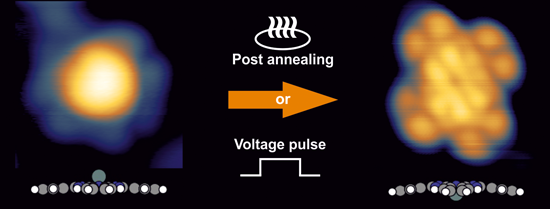
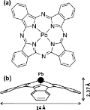
- , Swiss Federal Laboratories for Materials Science and Technology, Überlandstrasse 129, 8600 Dübendorf, Switzerland 10.3762/bjnano.11.67 Abstract The adsorption behavior of tin phthalocyanine (SnPc) molecules on rutile TiO2(110) was studied by scanning tunneling microscopy (STM). Low-temperature STM
- tunneling microscopy (STM); tin phthalocyanine (SnPc); titanium dioxide (TiO2); Introduction Phthalocyanines (Pcs) are aromatic molecules that can form metal complexes with a variety of elements, which can be used to tune molecular properties, such as position or shape of adsorption bands. Therefore, Pcs
- rate (0.25 ML/min) was determined using a quartz crystal microbalance. Scanning tunneling microscopy (STM) experiments were performed with the use of either a low-temperature STM (LT-STM) operating at ca. 78 K or a room-temperature STM (RT-STM) manufactured by Scienta Omicron installed in a separate


Templating effect of single-layer graphene supported by an insulating substrate on the molecular orientation of lead phthalocyanine
Beilstein J. Nanotechnol. 2020, 11, 814–820, doi:10.3762/bjnano.11.66
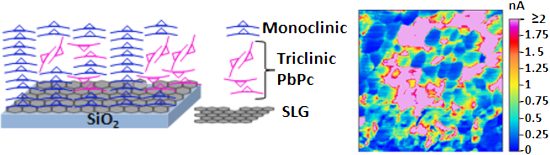
- microscopy shows enhanced vertical conductance with interconnected conducting domains consisting of ordered monoclinic crystallites through which the charge transfer occurs via tunneling. These results show the importance of a templating layer to induce the formation of a required phase of PbPc suitable for
- indicating that the charge transport in a thin PbPc layer is governed by tunneling (Figure 7). A plot of ln(I/V2) as a function of V−1 indicates a logarithmic dependence in the low-bias region showing direct tunneling, which transforms into a linear dependence in the high-bias region, suggesting Fowler
- –Nordheim (F-N) tunneling or injection tunneling. However, it is seen that the transition from direct to F-N tunneling is not a sharp transition. Instead, there is a seemingly linear slope between the two states. A sharp rise in linear current is noticed beyond this region, which corresponds to F-N


Hexagonal boron nitride: a review of the emerging material platform for single-photon sources and the spin–photon interface
Beilstein J. Nanotechnol. 2020, 11, 740–769, doi:10.3762/bjnano.11.61
- atom probe tomography, providing sub-nanometer spatial information of the chemical composition, scanning tunneling electron microscope (STEM) imaging and spectroscopy at low beam energy [65], enabling the characterization of individual defects in h-BN, and atomic electron tomography. However, all these
- of h-BN with triangle shapes. The most commonly formed defects found are boron monovacancies [65] as the dominating zigzag-type edges of the defects are nitrogen terminated. Individual defects with nanoscale resolution were isolated and manipulated by using scanning tunneling microscopy (STM) [95




Effect of substitutional defects on resonant tunneling diodes based on armchair graphene and boron nitride nanoribbons lateral heterojunctions
Beilstein J. Nanotechnol. 2020, 11, 688–694, doi:10.3762/bjnano.11.56
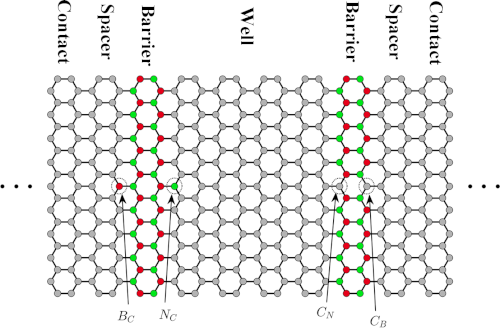
- Majid Sanaeepur Department of Electrical Engineering, Faculty of Engineering, Arak University, Arak, 3815688349, Iran Institute of Nanosciences and Nanotechnology, Arak University, Arak, Iran 10.3762/bjnano.11.56 Abstract A nanometer-scaled resonant tunneling diode based on lateral
- substitutional defects (including BC, NC, CB, and CN) at the interface of graphene and boron nitride nanoribbons on the negative differential resistance behavior of the proposed resonant tunneling diode is investigated. Transport simulations are carried out in the framework of tight-binding Hamiltonians and non
- heterojunction; armchair boron nitride nanoribbon (ABNNR); armchair graphene nanoribbon (AGNR); negative differential resistance (NDR); nonequilibrium Green’s function (NEGF); resonant tunneling diode (RTD); substitutional defects; Introduction 2D materials have gained tremendous research interest due to the



Electromigration-induced directional steps towards the formation of single atomic Ag contacts
Beilstein J. Nanotechnol. 2020, 11, 680–687, doi:10.3762/bjnano.11.55
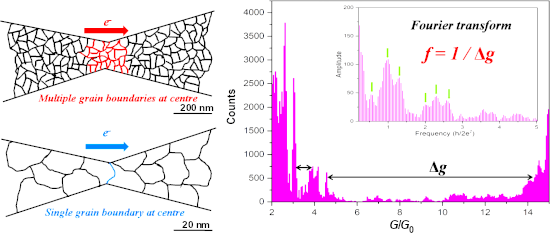
- break junctions (MCBJ), scanning tunneling microscopy (STM) and electromigration (EM). All these techniques rely on conductance histograms as a statistical tool in order to find the configurations of high stability. Conductance histograms provide information about the most probable conductance values


Atomic-resolution imaging of rutile TiO2(110)-(1 × 2) reconstructed surface by non-contact atomic force microscopy
Beilstein J. Nanotechnol. 2020, 11, 443–449, doi:10.3762/bjnano.11.35
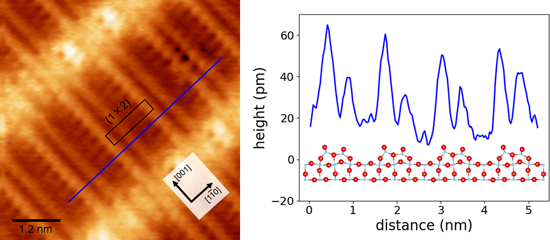
- , because it cannot be clarified whether the (1 × 2) structure is formed over a wide area or only locally using macroscopic analysis methods such as diffraction. We used non-contact atomic force microscopy, scanning tunneling microscopy, and low-energy electron diffraction at room temperature to
- clean surface is relatively easy. A well-known rutile TiO2(110) surface is the (1 × 1) structure [2]. The (1 × 1) surface has been studied using low-energy electron diffraction (LEED) [3][4], surface X-ray diffraction [5], non-contact atomic force microscopy (NC-AFM) [6][7][8][9], scanning tunneling
- -AFM and tunneling current for STM), the surface structure sometimes results in different contrasts in both images. In Figure 3, white squares and circles indicate line defects and protrusions, which are considered to be adsorbates or contamination. A line defect was imaged as a likely vacancy by STM


High dynamic resistance elements based on a Josephson junction array
Beilstein J. Nanotechnol. 2020, 11, 417–420, doi:10.3762/bjnano.11.32
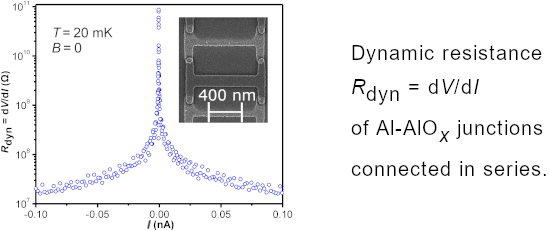
- here the finite electric current is maintained by correlated Cooper pair tunneling at a voltage bias V across the QPSJ exceeding the particular Coulomb blockade threshold, VC [14]. The tunneling happens at the Bloch oscillation rate, fB. The synchronization of this “internal” periodic process with the

Anomalous current–voltage characteristics of SFIFS Josephson junctions with weak ferromagnetic interlayers
Beilstein J. Nanotechnol. 2020, 11, 252–262, doi:10.3762/bjnano.11.19
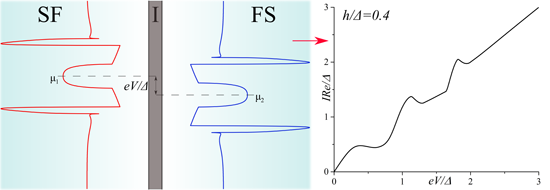
- technique, which has been developed to describe many-body systems in equilibrium at finite temperature [92]. In our model the tunneling barrier is located between two F layers at x = 0 (Figure 1), whereas the other interfaces at x = −df1 and x = df2 are identical and transparent. This case corresponds to


Nonequilibrium Kondo effect in a graphene-coupled quantum dot in the presence of a magnetic field
Beilstein J. Nanotechnol. 2020, 11, 225–239, doi:10.3762/bjnano.11.17
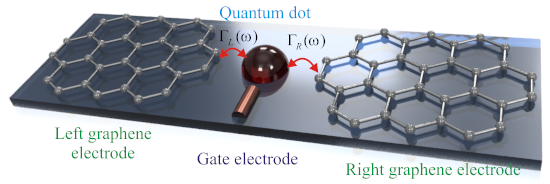
- points the energy dispersion of quasiparticles in graphene is linear in momentum. This linear band structure is called a Dirac cone, and it is at the basis of many interesting physical phenomena such as the ’chiral’ quantum Hall effect [51], the Klein tunneling effect [50] and the Aharonov–Bohm effect
- that the Kondo resonance appears only in a narrow energy range for the impurity level with respect to the chemical potential (μ), and the energy scale is proportional to |μ|. The Kondo effect of an adatom on the surface of graphene and its scanning tunneling microscopy (STM) have been analyzed by
- regimes, the shape of the Kondo resonance is influenced by the Fano resonance. However, the tunneling between the STM tip and graphene does not obviously affect the shape of the Kondo resonance in the vicinity of zero bias. Yanagisawa investigated the Kondo effect induced by the s–d interaction with Dirac


Size effects of graphene nanoplatelets on the properties of high-density polyethylene nanocomposites: morphological, thermal, electrical, and mechanical characterization
Beilstein J. Nanotechnol. 2020, 11, 167–179, doi:10.3762/bjnano.11.14
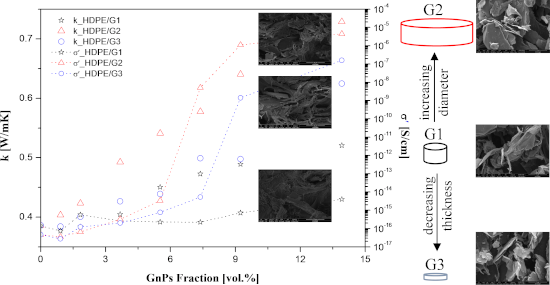
- conductivity was dependent on the frequency. The first part was linked to the transfer of charge carriers by direct contacts between the GnP filler, while the second part reflected the conductivity due to hopping and tunneling of electrons between adjacent particles [26]. It was apparent that the critical


Molecular architectonics of DNA for functional nanoarchitectures
Beilstein J. Nanotechnol. 2020, 11, 124–140, doi:10.3762/bjnano.11.11



Nanosecond resistive switching in Ag/AgI/PtIr nanojunctions
Beilstein J. Nanotechnol. 2020, 11, 92–100, doi:10.3762/bjnano.11.9
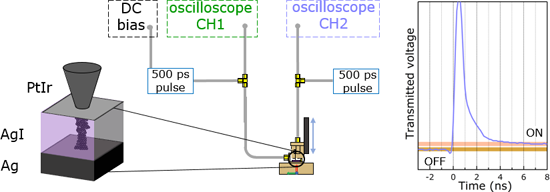
- to fire 500 ps long set/reset voltage pulses and acquire the resulting resistive switching at 1 GHz bandwidth. Results and Discussion Structural and electrical characterization Memristive nanojunctions were created by approaching a mechanically sharpened PtIr tip of a custom-built scanning tunneling
- keep the junction resistance in the targeted metallic resistance range, where the nonlinear tunneling I(V) characteristics, which are unfavorable for neuromorphic operations, are avoided. These characteristics were further investigated as a function of the amplitude and the frequency fdrive of the


Antimony deposition onto Au(111) and insertion of Mg
Beilstein J. Nanotechnol. 2019, 10, 2541–2552, doi:10.3762/bjnano.10.245
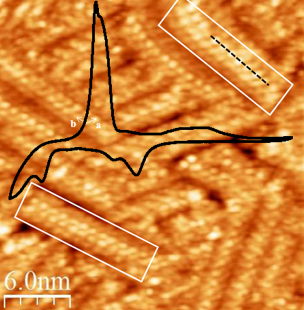
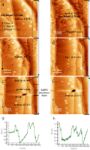
- (CV) and scanning tunneling microscopy (STM). Monolayer deposition results in a characteristic row structure; the monolayer is commensurate in one dimension, but not in the other. The row structure is to some extent maintained after deposition of further layers. After dissolution of the Sb multilayers
- electrochemical scanning tunneling microscopy (EC-STM). A detailed study on the structure of the irreversibly adsorbed oxygenous Sb(III) species and the Sb adlayer on Au(100) was carried out by Hara et al. and Yan et al. [9][10]. Jung investigated the structure of the irreversibly adsorbed oxygenous Sb(III
- LabVIEW software (National Instruments GmbH, Munich, Germany) for recording the cyclic voltammograms (CVs). Electrochemical scanning tunneling microscopy (EC-STM) measurements All EC-STM measurements were performed with an Agilent Technologies 5500 scanning probe microscope (SPM) and a commercially





Mobility of charge carriers in self-assembled monolayers
Beilstein J. Nanotechnol. 2019, 10, 2449–2458, doi:10.3762/bjnano.10.235
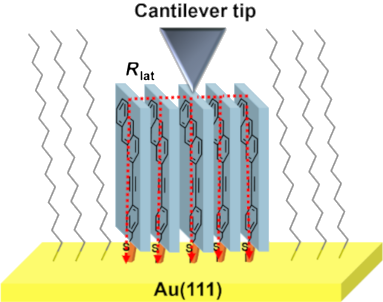
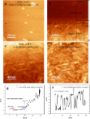
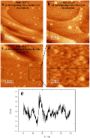
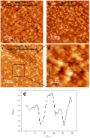
- vertical charge transport through individual molecules of aromatic SAMs by using conductive atomic force microscope (c-AFM) [12][13][14][15] and scanning tunneling microscope (STM) techniques [16][17]. Using these methods, current–voltage (I–V-) curves on the SAM-forming organothiolates has been determined
- (Goodfellow). All data were collected in a constant-current mode with typical tunneling currents of 0.1–0.15 nA and a sample bias of 0.5–0.7 V. NEXAFS spectroscopy measurements were performed at the HE-SGM dipole beamline at synchrotron facility BESSY II, which is a part of the Helmholtz-Zentrum, Berlin. A


Nontoxic pyrite iron sulfide nanocrystals as second electron acceptor in PTB7:PC71BM-based organic photovoltaic cells
Beilstein J. Nanotechnol. 2019, 10, 2238–2250, doi:10.3762/bjnano.10.216
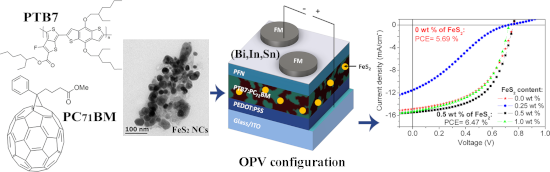
- Committee on Powder Diffraction Standards) card), which is in good agreement with the reported cubic morphology [49]. FeS2 thin films were analyzed using scanning tunneling microscopy (STM) to study their molecular ordering at the nanoscale level. Figure 3a shows the STM image. The scanned area (A), the
- tunneling current (It) and the applied potential (U) are A = 50 nm × 50 nm, It = 500 pA and U = 450 mV. The scanning electron microscopy (SEM) image of agglomerated FeS2 NCs is shown in Figure 3b. The results verify that the sizes of the NCs lie within the nanoscale regime (about 15 to 25 nm). The energy


Kelvin probe force microscopy work function characterization of transition metal oxide crystals under ongoing reduction and oxidation
Beilstein J. Nanotechnol. 2019, 10, 1596–1607, doi:10.3762/bjnano.10.155
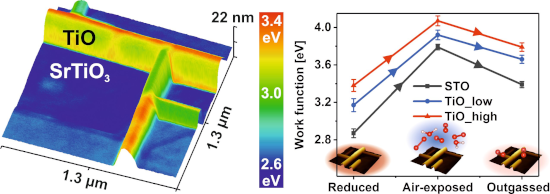
- the present case of thermally reduced SrTiO3(100), the dominant reconstruction is (√5×√5)R26.6°, which forms on the TiO2 termination, as proved by the scanning tunneling microscopy (STM) and low-energy electron diffraction (LEED) investigations (see Figure 5g,h). The surface is composed of two


Kelvin probe force microscopy of the nanoscale electrical surface potential barrier of metal/semiconductor interfaces in ambient atmosphere
Beilstein J. Nanotechnol. 2019, 10, 1401–1411, doi:10.3762/bjnano.10.138
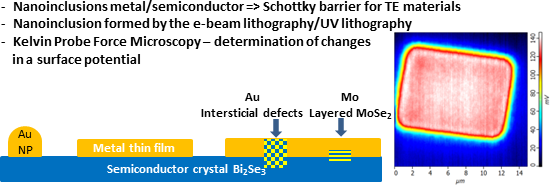
- tunneling microscopy (STM) [27][28] or by using AFM in the semicontact mode. The latter enables a describtion not only of the topography (size and shape) but also a detection of the changes in density, stiffness and adhesion of NPs [20][21][24][29][30]. In the present study we demonstrate that the Schottky





