Search results
Search for "vibration" in Full Text gives 337 result(s) in Beilstein Journal of Nanotechnology. Showing first 200.
Optimizing PMMA solutions to suppress contamination in the transfer of CVD graphene for batch production
Beilstein J. Nanotechnol. 2022, 13, 796–806, doi:10.3762/bjnano.13.70
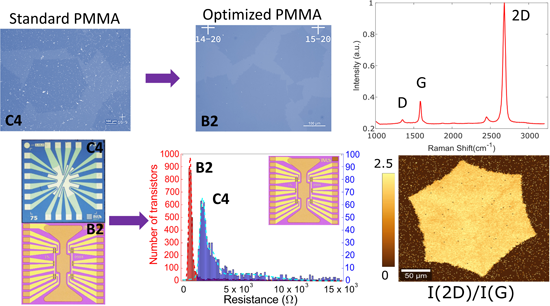
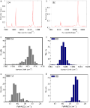
- ± 3.0 cm−1 (Figure 2f,i), implying high-quality monolayer graphene. Together, the data further support uniformity and crystallinity of the sample. The G phonon band arises from double degeneracy of iTO and iLO phonon modes (E2g symmetry) at the Brillouin zone center, which is an in-plane vibration of




Hierarchical Bi2WO6/TiO2-nanotube composites derived from natural cellulose for visible-light photocatalytic treatment of pollutants
Beilstein J. Nanotechnol. 2022, 13, 745–762, doi:10.3762/bjnano.13.66
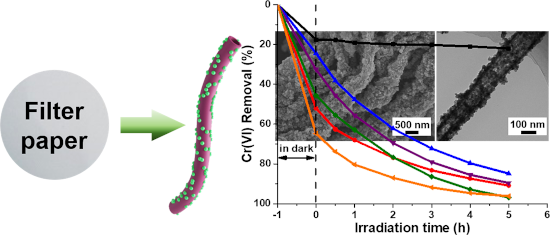
- TiO2-NT, and pure Bi2WO6 powder samples, where all present two similar absorption bands at 1625 and 3420 cm−1 which can be indexed to the stretching vibration of adsorbed H2O and –OH group on the sample surface [37]. Apart from the 30%−Bi2WO6/TiO2-NT nanocomposite, the FTIR spectra of the other Bi2WO6
- /TiO2-NT nanocomposites all exhibit three apparent absorption bands at approx. 555, 736, and 1077 cm−1, which are indexed to the stretching vibrations of Bi−O and W−O covalent bonds and to the bridge stretching vibration of the W−O−W bond in the Bi2WO6 phase, respectively [38]. All the FTIR spectra of
- the Bi2WO6/TiO2-NT nanocomposites display bands centered at approx. 480 cm−1 which are assigned to the Ti−O stretching vibration in the TiO2 phase except for the 90%−Bi2WO6/TiO2-NT nanocomposite [39]. The FTIR spectrum of the pure Bi2WO6 powder exhibits similar absorption bands to those of the 90


A nonenzymatic reduced graphene oxide-based nanosensor for parathion
Beilstein J. Nanotechnol. 2022, 13, 730–744, doi:10.3762/bjnano.13.65
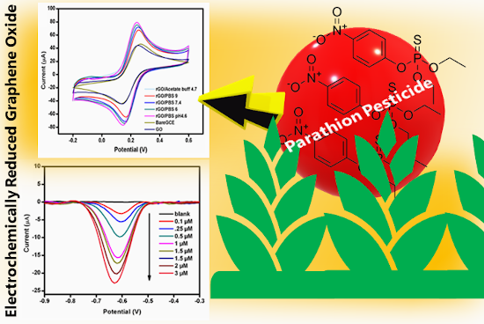
- cm−1 corresponding to the O–H stretching vibration originating from carboxyl groups. Besides, an intense peak at 1641 cm−1 was assigned to the C=O stretching of carboxyl and/or carbonyl groups, a sharp peak at 1387 cm−1 corresponding to a –OH bend, and a strong peak at 1068 cm−1 ascribed to an alkoxy
- and/or epoxy C–O stretching vibration. The significant reduction of the FTIR signal intensity of ERGO for –OH, –C=O, and –C–O suggests the successful formation of ERGO due to the electrochemical deoxygenation of GO, which corroborates the Raman analysis. Figure 1D depicts a characteristic XRD peak of


Revealing local structural properties of an atomically thin MoSe2 surface using optical microscopy
Beilstein J. Nanotechnol. 2022, 13, 572–581, doi:10.3762/bjnano.13.49
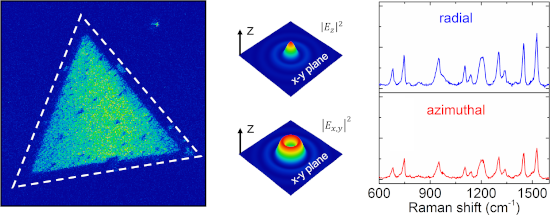
- Raman intensities, respectively. The integrated photoluminescence intensities are plotted in the range of 750 to 850 nm, and the Raman intensities are the integrated peak area from the vibration mode of CuPc at 1527 cm−1. Three regions are marked in Figure 2d and Figure 2e as the border (R1), border to
- 1527 cm−1 are assigned to the C–C and N–C stretching vibrations of the isoindole ring [34][35]. The 746 cm−1 vibrational mode originates from the metal-bound N–M stretching vibration, and the 1138 cm−1 mode is attributed to the deformation of the isoindole ring system [36]. The Raman enhancement factor
- () in Equation 1, which increases the electron transition probability rate (wlk) [21]. In particular, the vibration mode (746 cm−1) that is assigned to the metal-bound N–M stretching vibration shows a larger intrinsic dipole, leading to a dipole–dipole interaction with the Mo–Se bond of MoSe2. Thus, the


Detection and imaging of Hg(II) in vivo using glutathione-functionalized gold nanoparticles
Beilstein J. Nanotechnol. 2022, 13, 549–559, doi:10.3762/bjnano.13.46
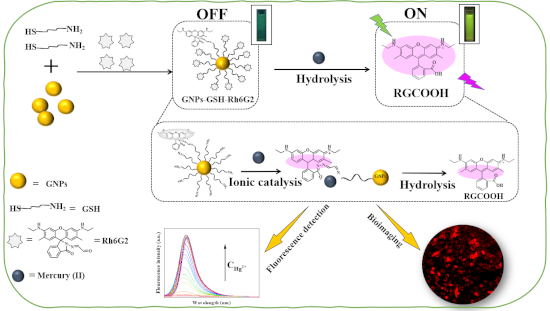
- the GSH and Rh6G2 were successfully bound to the surface of GNPs. FTIR spectra of GNPs, GSH, GNPs-GSH, and GNPs-GSH-Rh6G2 are presented in Figure 2e. As citrate ions are attached on the surface of GNP, C=O, and C–O stretching vibration modes occur at 1655 and 1443 cm−1, respectively. The peaks of GSH
- at 1650 and 1400 cm−1 were found in the IR spectrum of GNPs-GSH, which was attributed to the stretching vibration and the asymmetric stretching vibration of –COO−. The stretching vibration of S–H disappeared in GNPs-GSH due to the formation of Au–S bonds [47]. These results proved that GSH was


Influence of thickness and morphology of MoS2 on the performance of counter electrodes in dye-sensitized solar cells
Beilstein J. Nanotechnol. 2022, 13, 528–537, doi:10.3762/bjnano.13.44
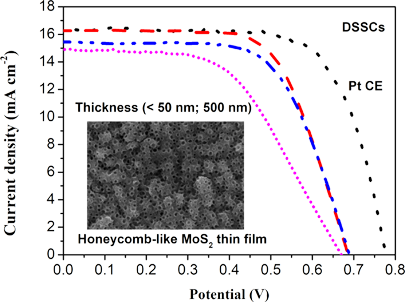
- characterized by Raman spectroscopy. The Raman spectrum of the MoS2/FTO sample showed the characteristic peaks of the 2H and 1T phases of MoS2 (Figure 4b). The appearance of the J1, J2, and J3 peaks around 150, 226, and 326 cm−1 confirmed the presence of the 1T metallic phase. Whereas the two Raman vibration


A chemiresistive sensor array based on polyaniline nanocomposites and machine learning classification
Beilstein J. Nanotechnol. 2022, 13, 411–423, doi:10.3762/bjnano.13.34
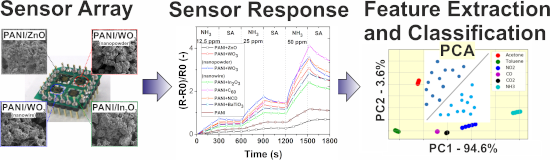
- +, characteristic band of the polaron radical cation); (6) 1412 cm−1 (phenazine structures); (7) 1498 cm−1 (C=N of the quinoid nonprotonated diimine units); (8) 1590 cm−1 (C=C stretching vibration of the quinonoid ring) [16][17]. Current–voltage and temperature analysis Figure 3 shows current–voltage




Effect of sample treatment on the elastic modulus of locust cuticle obtained by nanoindentation
Beilstein J. Nanotechnol. 2022, 13, 404–410, doi:10.3762/bjnano.13.33
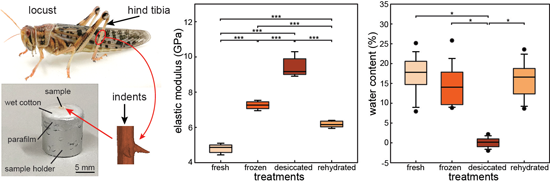
- , strain rate, harmonic displacement, and harmonic frequency were set as 2.0 μm, 0.05 s−1, 1.0 nm, and 75 Hz, respectively. The Poisson’s ratio of the tibia specimens was assumed to be 0.3 [14]. The allowable drift rate was set as 0.10 nm/s to minimize the effect of vibration and thermal drift during


Coordination-assembled myricetin nanoarchitectonics for sustainably scavenging free radicals
Beilstein J. Nanotechnol. 2022, 13, 284–291, doi:10.3762/bjnano.13.23
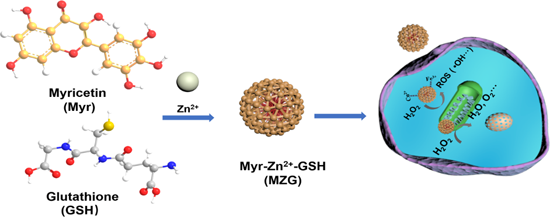
- component co-assembles with Myr and GSH. Fourier-transform infrared (FTIR) spectra were used to further confirm the self-assembly of the MZG nanoparticles. In Figure 2d, the two bands at 2522 cm−1 and 3350 cm−1 were assigned to the mercapto group (–SH) and the stretching vibration of the amino group (–NH2


Cantilever signature of tip detachment during contact resonance AFM
Beilstein J. Nanotechnol. 2021, 12, 1286–1296, doi:10.3762/bjnano.12.96
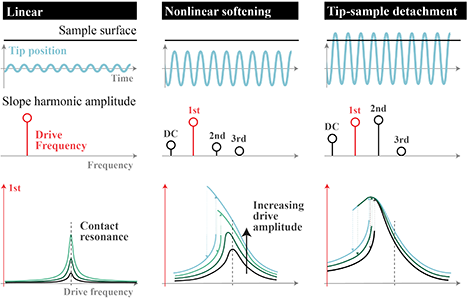
- techniques described by Hurley and co-workers [1]. These are collected for reference in Table 1. First, linear vibration cantilever modes are chosen as an orthogonal basis set upon which to project the PDE, defined as [38]: and normalized by Φi(L1) = 1 i = 1,2,3,…,N, where N is the number of basis functions
- mode. As such, a ratio can be constructed between the first free vibration mode and the first contact vibration mode: This is used to back out L and from the measured frequencies f1, , and as well as the known β1L = 1.875 from free vibration theory of cantilevers [38]. By defining the relative tip
- indentation model of Equation 3 are defined in conjunction with experimental observables. The adhesion force Fadh* and adhesion gap gadh are identified from the retraction force–distance curve taken just before vibration sweeps. While gadh is observed directly, Fadh requires multiplication with kcantilever


Two dynamic modes to streamline challenging atomic force microscopy measurements
Beilstein J. Nanotechnol. 2021, 12, 1226–1236, doi:10.3762/bjnano.12.90
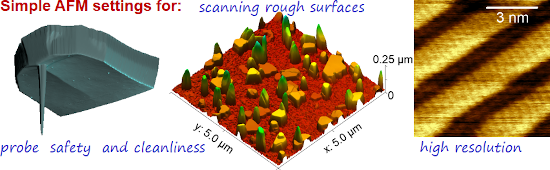
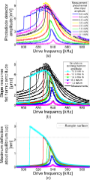
- amplitude of the probe oscillations sharply drops to zero [24]. This phenomenon is usually caused by a combination of small oscillation amplitude, inappropriately low spring constant of the probe (and thus too low energy stored in the vibration), strong attractive forces caused by some surface layers (water


pH-driven enhancement of anti-tubercular drug loading on iron oxide nanoparticles for drug delivery in macrophages
Beilstein J. Nanotechnol. 2021, 12, 1127–1139, doi:10.3762/bjnano.12.84
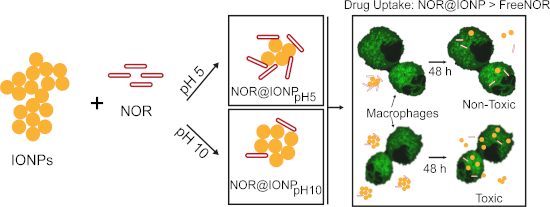
- vibration at 1734.5 (Supporting Information File 1, Figure S1). Such peak shifts are also observed when NOR interacts with metal ions like NiO [41]. The zeta potential of these particles was found to be +29 mV, validating the loading of drug and indicating nanoparticle stability at neutral pH



First-principles study of the structural, optoelectronic and thermophysical properties of the π-SnSe for thermoelectric applications
Beilstein J. Nanotechnol. 2021, 12, 1101–1114, doi:10.3762/bjnano.12.82
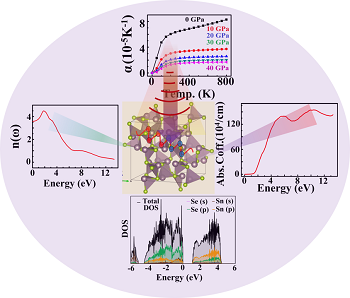
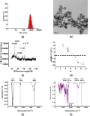
- expansion coefficient is presented in Figure 5a along with the pressure. The thermal expansion coefficient reveals the information about the amplitude regarding atomic lattice vibration which demonstrates how the alloy dimension changes when the external temperature is applied. It can be seen that by
- defined as the highest temperature which can be reached due to individual vibration modes. Thus, these two important quantities (i.e., the Grüneisen parameter (γ) and the Debye temperature (θD)) are calculated as a function of temperature at zero pressure and presented in Figure 8. It can be seen that the


Comprehensive review on ultrasound-responsive theranostic nanomaterials: mechanisms, structures and medical applications
Beilstein J. Nanotechnol. 2021, 12, 808–862, doi:10.3762/bjnano.12.64
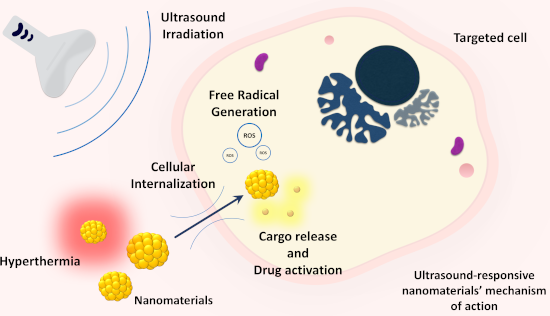
- ]. In other cases, disruption and destabilization of the complex nanostructure subsequent to US vibration leads to drug release [28][29][30]. In addition, the ultrasonication of certain complexes can generate free radicals that can cause cell damage or activation of cellular signaling pathways [31
- frequency is used for therapeutic applications and 2.5 to 15 MHz for diagnostic procedures according to the depth and type of the organ or tissue and the physics of the mechanical wave propagation [60]. Sound is a back-and-forth mechanical motion or vibration of molecules in a medium that transports energy


Reducing molecular simulation time for AFM images based on super-resolution methods
Beilstein J. Nanotechnol. 2021, 12, 775–785, doi:10.3762/bjnano.12.61
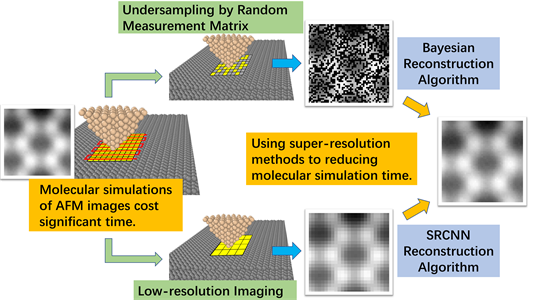
- atoms intermittently interact with the sample in oscillation periods. The size effect of the tip apex is not obvious and the energy map is mainly affected by the height of the sample atoms. In the AM mode, we need 5000 time steps to keep the tip in a stable vibration to, then, calculate the average




Nanogenerator-based self-powered sensors for data collection
Beilstein J. Nanotechnol. 2021, 12, 680–693, doi:10.3762/bjnano.12.54
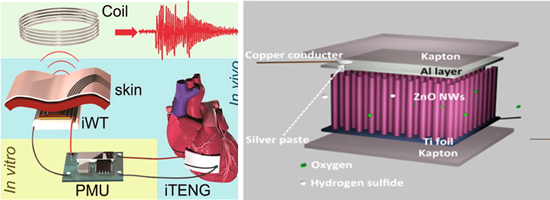
- , and vocal cords [85][86]. Without external power supply, the back-end data processing technology can realize real-time detection and early warning of human health [87]. For example, voice can be recognized by vocal cord vibration, which can be recorded with a biosensor attached to the skin of the
- , vocal cord vibration, heartbeat, and other small physiological activities. Small physiological signals, such as facial activity data, can be used for monitoring the driver status to prevent non-hazardous driving and improve driving safety. In 2018, Meng et al. [10] proposed a TENG-based self-powered
- traffic flow and bridge vibration. Self-powered sensors can be used to collect real-time data of vehicle speed, acceleration and tire status. Self-powered sensors can collect hydrological and meteorological data, providing powerful data tools for ambient intelligence in the future, such as improving



Simulation of gas sensing with a triboelectric nanogenerator
Beilstein J. Nanotechnol. 2021, 12, 507–516, doi:10.3762/bjnano.12.41
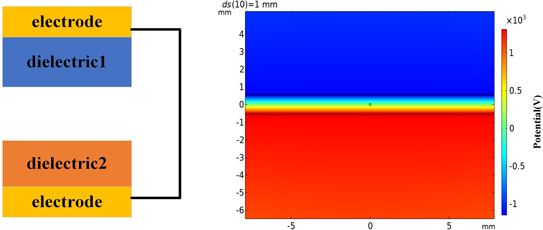
- . Triboelectric nanogenerators (TENGs) can collect and convert different forms of energy (e.g., human motion [8][9][10], vibration [11], rotation [12], wind [13], and water [14]) into electric energy [15][16][17], thus expanding the range of energy production to a more microscopic scale [18] and improving the
- [40]. It is attractive that, in addition to providing power for electronic devices, TENGs can also be used as self-powered sensors for pressure, vibration, speed, chemicals, and body motion. Regarding leaks in gas pipelines or harmful gases in underground coal mines, it is necessary to detect the



Surface-enhanced Raman scattering of water in aqueous dispersions of silver nanoparticles
Beilstein J. Nanotechnol. 2021, 12, 497–506, doi:10.3762/bjnano.12.40
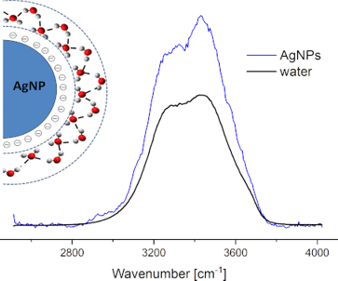
- the OH stretching vibration region can give an idea of the dynamic supramolecular structure of water. There are many models of water structure in the liquid phase. These are generally grouped into two types: models with a continuum of geometric and energetic states (assuming tetrahedral coordination
- usually assigned to strongly hydrogen-bonded water molecules, or the so-called locally structured water, while the band at 3400 cm−1 is attributed to loosely bonded water molecules. Most of the authors distinguish three [15][16] or four [13] components of the band in the OH stretching vibration region
- stretching vibration band related to structured water depends also on the excitation wavelength, due to the resonance Raman effect. The first report of this phenomenon was presented by Pastorczak et al. [20]. It was shown that the 3200 cm−1 band is in resonance with the light in the red range of the spectrum


Boosting of photocatalytic hydrogen evolution via chlorine doping of polymeric carbon nitride
Beilstein J. Nanotechnol. 2021, 12, 473–484, doi:10.3762/bjnano.12.38
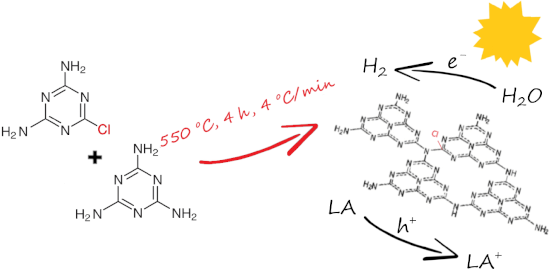
- materials. The FTIR absorption analysis was recorded in the spectral range of 600–3600 cm−1 to examine the surface of the prepared materials (Figure 3a). The FTIR spectra of both samples (before and after doping) reveal that the positions of the vibration peaks are nearly the same, indicating a similar
- vibration of the CN heterocycles [47][48][49]. To be more specific, the peaks at 1241, 1318, and 1425 cm–1 are assigned to the aromatic C–N stretching [50][51] while the peaks at 1572 and 1637 cm−1 correspond to C=N stretching [52]. The broad peaks in the range of 3000–3600 cm−1 correspond to uncondensed
- terminal amino groups (–NH2 or =NH) [53][54]. The spectra do not show Cl-containing functional groups, which can be attributed to their relatively low amount and the signal may be overlapped by the CN vibration. The X-ray diffraction (XRD) patterns (Figure 3b) showed that both samples displayed a similar


Solution combustion synthesis of a nanometer-scale Co3O4 anode material for Li-ion batteries
Beilstein J. Nanotechnol. 2021, 12, 424–431, doi:10.3762/bjnano.12.34
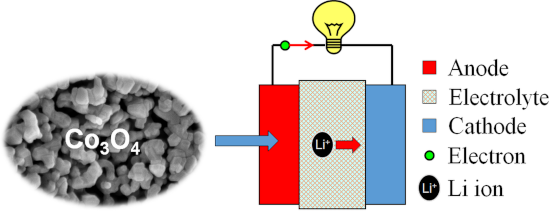
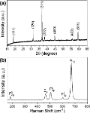
- ][54][55]. The band at 670 cm−1 represents the characteristic symmetric Co–O stretching vibration of the CoO6 octahedra, whereas the band at 184 cm−1 is associated with the tetrahedral sites (CoO4). The other bands correspond to the mixed motions of oxygen at tetrahedral and octahedral sites [56]. It


Paper-based triboelectric nanogenerators and their applications: a review
Beilstein J. Nanotechnol. 2021, 12, 151–171, doi:10.3762/bjnano.12.12
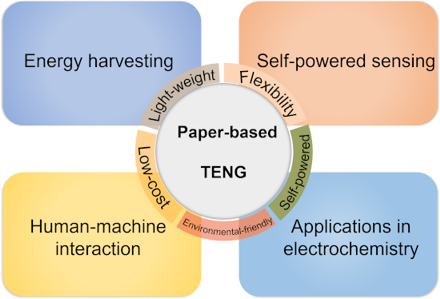
- broadly used as microscale power sources for self-powered systems by harvesting human motion or ambient energy, such as walking, machine vibration, and wave energy. Harvesting low-frequency energy using P-TENGs is of great importance. They have been as used as an acoustic energy harvester and in the field






Fusion of purple membranes triggered by immobilization on carbon nanomembranes
Beilstein J. Nanotechnol. 2021, 12, 93–101, doi:10.3762/bjnano.12.8
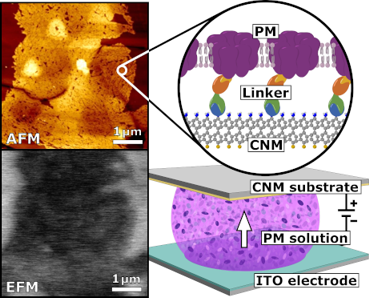
- are reversible. Furthermore, the functionalization was investigated utilizing XPS and IRRAS as seen in Figure 2c,d. The IRRAS spectrum of an NBPT CNM after the first functionalization step reveals a peak at 2106 cm−1 caused by the asymmetrical stretching vibration of the azide moiety, which indicates


Numerical analysis of vibration modes of a qPlus sensor with a long tip
Beilstein J. Nanotechnol. 2021, 12, 82–92, doi:10.3762/bjnano.12.7
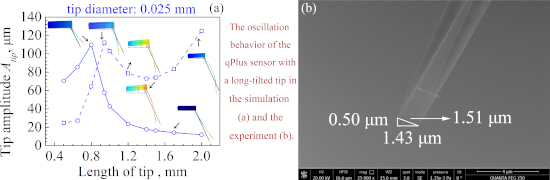
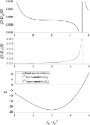
- . The vibration modes of a qPlus sensor with a long tip are quite different from those of a cantilever with a short tip. Flexural vibration of the tungsten tip will occur. The tip can no longer be considered as a rigid body that moves with the prong of the tuning fork. Instead, it oscillates both
- horizontally and vertically. The vibration characteristics of qPlus sensors with different tip sizes were studied. An optimized tip size was derived from obtained values of tip amplitude, ratio between vertical and lateral amplitude components, output current, and quality factor. For high spatial resolution
- can be detected due to the multi-directional vibration of the tip [17]. Furthermore, by using a qPlus sensor with a long tilted tip, vertical incident light can be coupled to the tip apex. This setup has the added benefit of locating the exact target location with high resolution when it is combined






ZnO and MXenes as electrode materials for supercapacitor devices
Beilstein J. Nanotechnol. 2021, 12, 49–57, doi:10.3762/bjnano.12.4
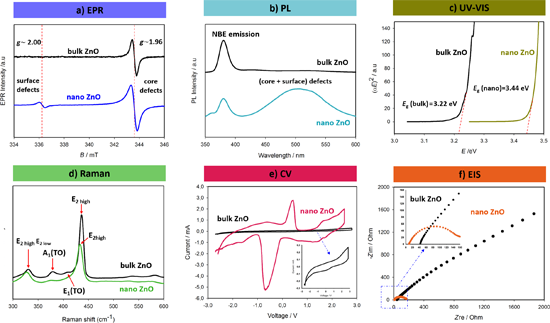
- , which is expected due to the quantum confinement effect [13]. Another crucially important optical characterization technique for the investigation of defects is Raman spectroscopy. The phonon vibration modes are highly sensitive to the existence of point defects, which are reflected in distinct spectral
- mode, which is indicative of a large amount of defect centers. The existence of defect centers affects the vibration mode and eventually causes a blueshift, as shown in Figure 1d. Finally, the electrical properties obtained via CV and EIS can also be correlated with the defect structures when the
- structures with a hexagonal crystal lattice. Because the aluminum was removed, there is no visible Raman vibration. Moreover, CV, chronopotentiometry (CP), and EIS were used to test the electrochemical behavior of the synthesized tantalum carbide MXenes. In 0.1 M sulfuric acid (H2SO4) as electrolyte, a
Application of contact-resonance AFM methods to polymer samples
Beilstein J. Nanotechnol. 2020, 11, 1714–1727, doi:10.3762/bjnano.11.154
- describing the vibration of a cantilever of length L in free space [16][27]: The first two roots of Equation 3 are = 1.8751 and = 4.6941 [28]. Equation 1 has two important features affecting the feasibility of CR measurements. First, it can be used only to calculate the normalized contact stiffness α as a
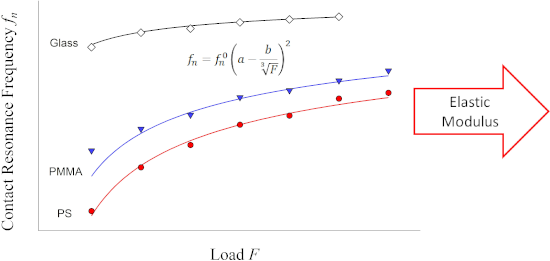
- measurements. In different series of measurements, the static force exerted on the sample by the tip has been varied. A sufficiently small excitation amplitude has been chosen for the frequency sweep, so that the vibration amplitude is always smaller than the static indentation of the sample and the tip always