


Search results
Search for "Ni" in Full Text gives 384 result(s) in Beilstein Journal of Nanotechnology. Showing first 200.
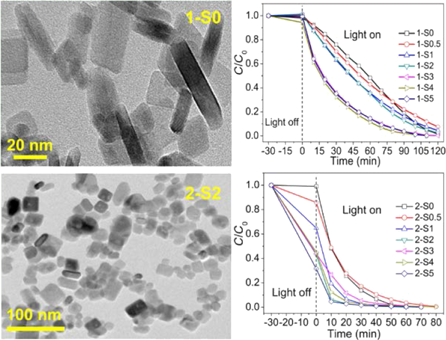
Unravelling the interfacial interaction in mesoporous SiO2@nickel phyllosilicate/TiO2 core–shell nanostructures for photocatalytic activity
Beilstein J. Nanotechnol. 2020, 11, 1834–1846, doi:10.3762/bjnano.11.165
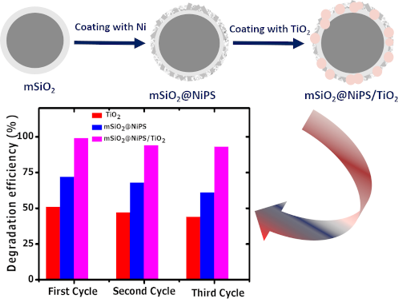
- , the electron–hole recombination can be inhibited by loading metals, such as Ni [12], V, Fe [13], Ag [14], and Cu–Ni [15], on the TiO2 surface, which accelerates the formation of hydroxyl radicals and, consequently, improves the photocatalytic activity of TiO2. In contrast, the doping of TiO2 with
- optical properties The three-step synthesis involved the generation of the SiO2 spheres, the reaction of the surface of SiO2 with Ni to give a NiPS-covered SiO2 spheres, and the addition of TiO2 to create the final product. SEM images show the spherical morphology of the mSiO2 and mSiO2@NiPS
- core and an outer mesoporous shell (Figure 1a and Figure 1d). The inner diameter of the SiO2 spheres was measured to be 415 ± 11 nm with a shell thickness of 80 ± 15 nm. After addition of Ni salt and thermal treatment, the core–shell nanospheres have been maintained but they are now covered with flake


Self-standing heterostructured NiCx-NiFe-NC/biochar as a highly efficient cathode for lithium–oxygen batteries
Beilstein J. Nanotechnol. 2020, 11, 1809–1821, doi:10.3762/bjnano.11.163
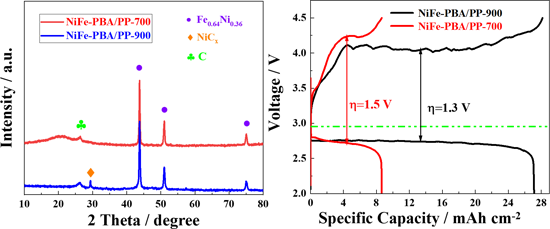
- specific discharge capacity of the best sample was 27.14 mAh·cm−2 at a stable discharge voltage of 2.75 V. The hybridization between the d-orbital of Ni and s and p-orbitals of carbon in NiCx, formed at 900 °C, enhanced the electrocatalytic performance due to the synergistic effect between these components
- +/Li. Results and Discussion The overall process of synthesizing NiFe-PBA/PP-T is schematically illustrated in Figure 1. Initially, the freshly cut pomelo peel was mixed with Na3C6H5O7, Ni(NO3)2, and K3[Fe(CN)6] to form bimetallic Prussian blue analogues with a MOF structure at room temperature. Ni3[Fe
- (CN)6]2 precipitate was formed when Ni(NO3)2 and K3[Fe(CN)6] were mixed. During the formation of Ni3[Fe(CN)6]2, Ni ions and N atoms from the hexacyanoferrate [Fe(CN)6]3− cross-link, which results in the formation of a three-dimensional and cubic framework with abundant Ni, Fe, N, and C within the






Transient coating of γ-Fe2O3 nanoparticles with glutamate for its delivery to and removal from brain nerve terminals
Beilstein J. Nanotechnol. 2020, 11, 1381–1393, doi:10.3762/bjnano.11.122
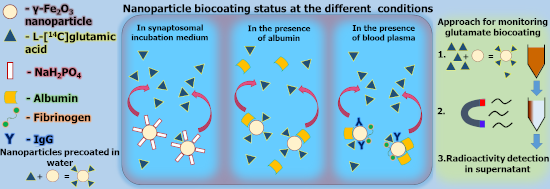
- investigated by transmission electron microscopy (TEM; JEOL JEM 200 CX). The number-average diameter (Dn) was calculated by the measurement of at least 800 particles from different microphotographs of the same sample using the IMAGEJ program. Dn = ΣNiDi/ΣNi, where Ni is the number of particles with the


Effect of localized helium ion irradiation on the performance of synthetic monolayer MoS2 field-effect transistors
Beilstein J. Nanotechnol. 2020, 11, 1329–1335, doi:10.3762/bjnano.11.117
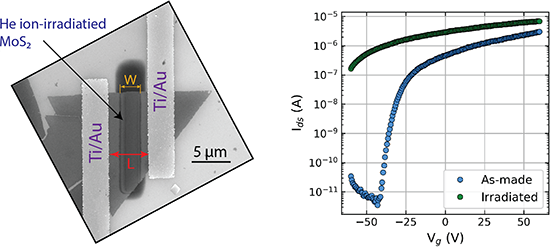
- the deposited metal–semiconductor contact interface. Recent work has shown that irradiation-induced heating of the electrode area can reverse majority carrier polarity in MoTe2 [31], while pre-treatment with a broad-beam argon ion source can decrease the contact resistance of Ni-MoS2 two-fold [32]. In


Ultrasensitive detection of cadmium ions using a microcantilever-based piezoresistive sensor for groundwater
Beilstein J. Nanotechnol. 2020, 11, 1242–1253, doi:10.3762/bjnano.11.108
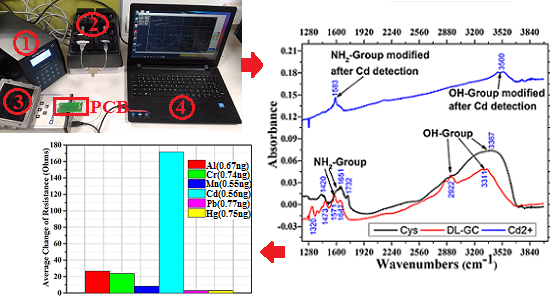
- , cement manufacturing units, electroplating industry, manufacturing units of PVC, Ni–Cd batteries, fertilizers, pesticides, photovoltaic devices, soil, and sediments. Cadmium is a highly toxic heavy metal ion (HMI). Cadmium poisoning may cause fatigue, headaches, nausea, vomiting, abdominal cramps, bone




Nonadiabatic superconductivity in a Li-intercalated hexagonal boron nitride bilayer
Beilstein J. Nanotechnol. 2020, 11, 1178–1189, doi:10.3762/bjnano.11.102
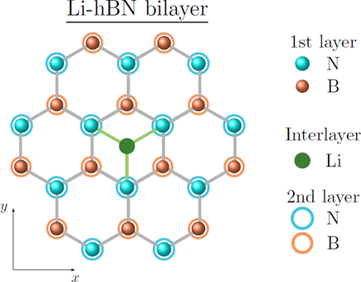
- phosphorene [9][10][11] are mechanically stable only when placed on a substrate [12][13][14]. The substrate should be selected so that it changes the physical properties of the low-dimensional system as little as possible. In the case of graphene, the following substrate materials were used: Co [15], Ni [16


![[Graphic 34]](/bjnano/content/inline/2190-4286-11-102-i54.svg?max-width=637&scale=1.18182) for Li-hBN. The results were obta...
for Li-hBN. The results were obta...
Hybridization vs decoupling: influence of an h-BN interlayer on the physical properties of a lander-type molecule on Ni(111)
Beilstein J. Nanotechnol. 2020, 11, 1168–1177, doi:10.3762/bjnano.11.101
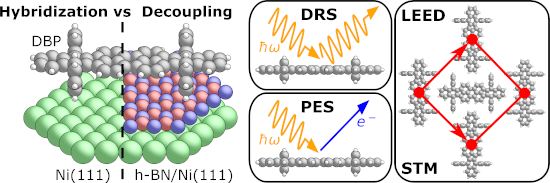
- also indications in the literature for a significant hybridization, which results in a perturbation of the intrinsic molecular properties. In this work we study the electronic and optical properties as well as the lateral structure of tetraphenyldibenzoperiflanthene (DBP) on Ni(111) with and without an
- the DBP molecules are well decoupled from the Ni(111) surface. Furthermore, a highly ordered DBP monolayer is obtained on h-BN/Ni(111) by depositing the molecules at a substrate temperature of 170 °C. The structural results are obtained by quantitative low-energy electron diffraction and low
- -temperature scanning tunneling microscopy. Finally, the investigation of the valence band structure by ultraviolet photoelectron spectroscopy shows that the low work function of h-BN/Ni(111) further decreases after the DBP deposition. For this reason, the h-BN-passivated Ni(111) surface may serve as potential


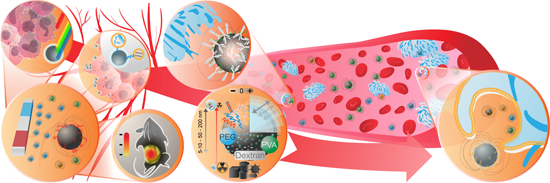
Applications of superparamagnetic iron oxide nanoparticles in drug and therapeutic delivery, and biotechnological advancements
Beilstein J. Nanotechnol. 2020, 11, 1092–1109, doi:10.3762/bjnano.11.94


Microwave-induced electric discharges on metal particles for the synthesis of inorganic nanomaterials under solvent-free conditions
Beilstein J. Nanotechnol. 2020, 11, 1019–1025, doi:10.3762/bjnano.11.86
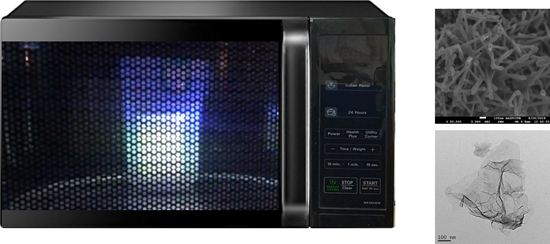
- nanoparticles of Cu and Ni and one-dimensional nanorods of CuS, ZnF2, and NiF2 protected with fluorinated amorphous carbon. We have also synthesized reduced graphene oxide and partially rolled graphene by this method. Keywords: electric discharges; microwave synthesis; nanomaterials; transmission electron
- of Cu, Ni, und Zn nanoparticles from metal particles. Also, we can control the morphology of the nanomaterials, which has not been achieved before. ZnF2, NiF2, and CuS nanorods covered with amorphous fluorinated carbon were synthesized. We have also extended this procedure to synthesize reduced
- with either graphite or graphitic carbon nitride (g-C3N4) yields carbon-coated or nitrogen-doped carbon-coated metallic nanoparticles. When these reactions are conducted in a Teflon reactor, the products are further functionalized with fluorine. Figure 3a shows XRD patterns of Cu and Ni nanoparticles


Microwave photon detection by an Al Josephson junction
Beilstein J. Nanotechnol. 2020, 11, 960–965, doi:10.3762/bjnano.11.80
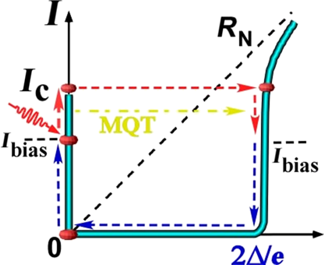
- of the junction was ramped up at a constant rate of . The voltage was measured using a low-noise room-temperature differential amplifier AD745 and was fed to a high-speed NI ADC-card. This signal was used to trigger a fast record of the switching current value. This procedure was repeated at least 5


Band tail state related photoluminescence and photoresponse of ZnMgO solid solution nanostructured films
Beilstein J. Nanotechnol. 2020, 11, 899–910, doi:10.3762/bjnano.11.75
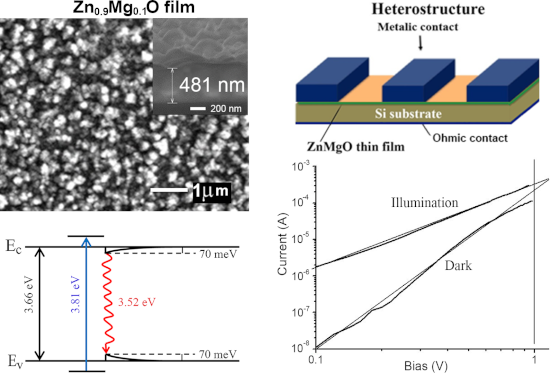
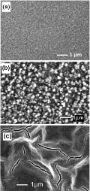
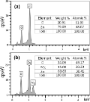
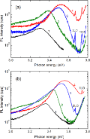
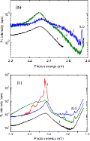
- by spray pyrolysis are due to inhomogeneous distribution of intrinsic defects or unintentional doping impurities, as previously observed in undoped [38][49] or Cu, Ni, Co, or Al doped [46][50] ZnO materials, instead of local composition fluctuations. Usually, the full width at half maximum (FWHM) of

Nickel nanoparticles supported on a covalent triazine framework as electrocatalyst for oxygen evolution reaction and oxygen reduction reactions
Beilstein J. Nanotechnol. 2020, 11, 770–781, doi:10.3762/bjnano.11.62
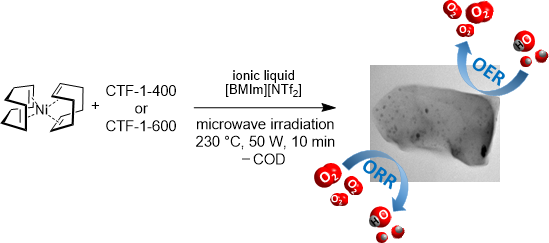
- little investigated, albeit they are promising candidates for electrocatalysis, especially for the oxygen evolution reaction (OER). In this work, nickel nanoparticles (from Ni(COD)2) were supported on CTF-1 materials, which were synthesized from 1,4-dicyanobenzene at 400 °C and 600 °C by the ionothermal
- method. CTF-1-600 and Ni/CTF-1-600 show high catalytic activity towards OER and a clear activity for the electrochemical oxygen reduction reaction (ORR). Ni/CTF-1-600 requires 374 mV overpotential in OER to reach 10 mA/cm2, which outperforms the benchmark RuO2 catalyst, which requires 403 mV under the
- same conditions. Ni/CTF-1-600 displays an OER catalytic activity comparable with many nickel-based electrocatalysts and is a potential candidate for OER. The same Ni/CTF-1-600 material shows a half-wave potential of 0.775 V for ORR, which is slightly lower than that of commercial Pt/C (0.890 V


Stochastic excitation for high-resolution atomic force acoustic microscopy imaging: a system theory approach
Beilstein J. Nanotechnol. 2020, 11, 703–716, doi:10.3762/bjnano.11.58
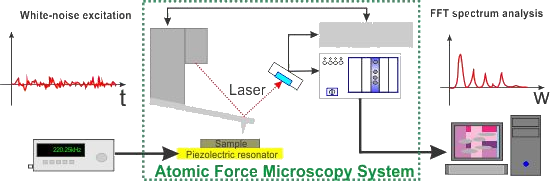
- carried out using a NI PXIe-1073 device, which includes a NI 7961R FPGA, a NI 5762 digitizer at 200MS/s/ch and a PXI 6363DAQ from National Instruments. The white-noise signal is generated by a function waveform generator HP/Agilent 33120A. BudgetSensors diamond-coated silicon probes, 450 µm long with a
- . For this work, a stochastic signal is used for the tip–sample excitation because it can extract all the system dynamics, i.e., persistent excitation in the system theory field [23][24]. A FFT of the deflection signal from the photodiodes is computed by the NI PXIe-1073 device. One FFT is carried out
- us to carry out in-depth analyses of local mechanical properties with a suitable model capable of making a relation between resonance frequency and indentation modulus. Experimental setup for S-AFAM, using a NI PXIe-1073 device and a function waveform generator HP/Agilent 33120A. Contact resonance



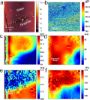
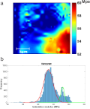
Structural optical and electrical properties of a transparent conductive ITO/Al–Ag/ITO multilayer contact
Beilstein J. Nanotechnol. 2020, 11, 695–702, doi:10.3762/bjnano.11.57
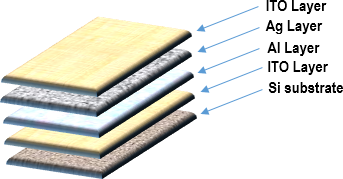
- enhances the photoresponse and the rectification properties of the ITO device. Single or double metal thin films of Ag, Al, Ti, Au, Cr, or Ni have been embedded between ITO layers [4][8][14][15][16][17]. Free electrons in the metal/ITO materials accelerate the separation of charge carriers and hence


Exfoliation in a low boiling point solvent and electrochemical applications of MoO3
Beilstein J. Nanotechnol. 2020, 11, 662–670, doi:10.3762/bjnano.11.52
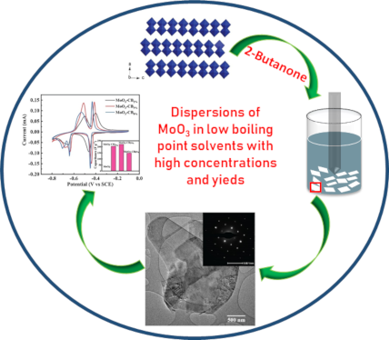
- researchers to look into other layered materials, such as metal dichalcogenides (MoS2, WS2, WSe2), hexagonal boron nitride (h-BN), layered double hydroxides, metal hydroxides (Ni(OH)2, Co(OH)2), metal oxides (MoO3, WO3) and phyllosilicates, for various applications in different fields [2][3][4][5]. Among the

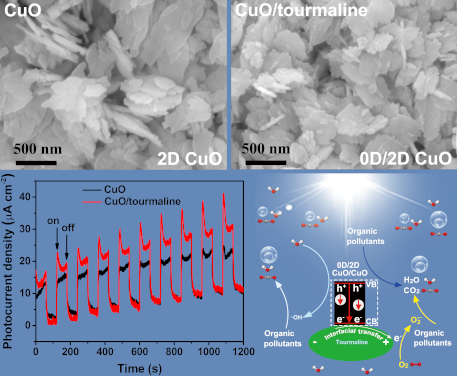
Synthesis and enhanced photocatalytic performance of 0D/2D CuO/tourmaline composite photocatalysts
Beilstein J. Nanotechnol. 2020, 11, 407–416, doi:10.3762/bjnano.11.31
- using step scan mode performed with a DX-2700 diffractometer (Dandong Haoyuan Instrument Co. Ltd., China) with Ni-filtered Cu Kα radiation (λ = 0.1.541 Å), 10–80° 2θ scan. X-ray photoelectron spectra (XPS) were recorded using a K-ALPHA instrument (ThermoFisher Scientific, USA). A MIRA3 field emission


High-performance asymmetric supercapacitor made of NiMoO4 nanorods@Co3O4 on a cellulose-based carbon aerogel
Beilstein J. Nanotechnol. 2020, 11, 240–251, doi:10.3762/bjnano.11.18
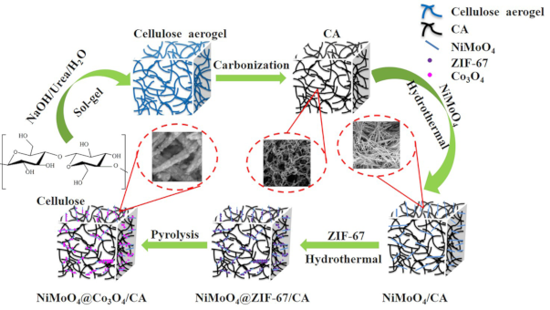
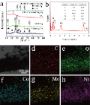
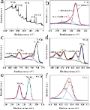
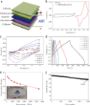
- properties are regarded as very promising materials for pseudocapacitors [15][16]. Particularly, NiMoO4 has been widely applied in high-performance pseudocapacitors due to its enhanced electrochemical properties resulting from the high electrochemical activity of the Ni ion and the superb electrical
- , which exhibited a capacitance of 3.6 F/cm2 at 3 mA/cm2, a capacitance retention of 82% and an increase of the current density from 3 to 15 mA/cm2 [21]. Cai et al. reported a facile two-step hydrothermal method to synthesize unique 3D Co3O4/NiMoO4 core/shell nanowire arrays on Ni foam, and the resulting
- Co3O4/NiMoO4 hybrid electrode exhibited an areal capacitance of 5.7 F/cm2 at a current density of 30 mA/cm2 [22]. Zhang et al. described the fabrication of 3D hierarchical Co3O4/NiMoO4 flower-like hybrid arrays on Ni foam with a high specific capacitance of 636.8 C/g at a current density of 5 mA/cm2 and




An investigation on the drag reduction performance of bioinspired pipeline surfaces with transverse microgrooves
Beilstein J. Nanotechnol. 2020, 11, 24–40, doi:10.3762/bjnano.11.3
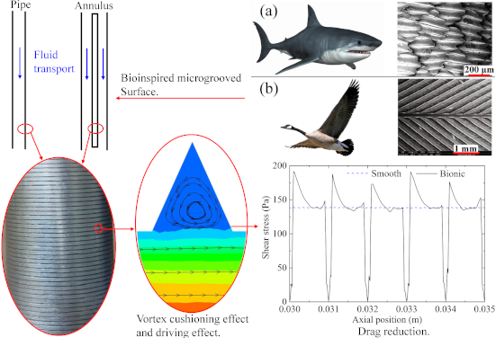
- Weili Liu Hongjian Ni Peng Wang Yi Zhou School of Petroleum Engineering, China University of Petroleum (East China), Qingdao 266580, China Key Laboratory of Unconventional Oil & Gas Development (China University of Petroleum (East China)), Ministry of Education, Qingdao 266580, China Department of


Synthesis and acetone sensing properties of ZnFe2O4/rGO gas sensors
Beilstein J. Nanotechnol. 2019, 10, 2516–2526, doi:10.3762/bjnano.10.242
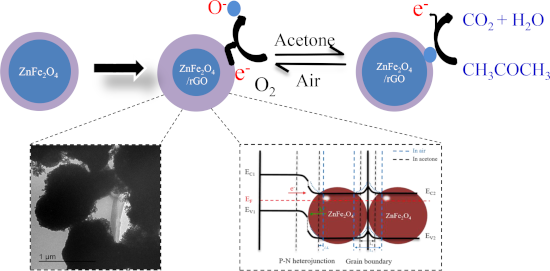
- concentration. Due to their excellent properties and cost efficiency, gas sensors based on metal oxide semiconductors, such as ZnO [5], SnO2 [6], WO3 [7], TiO2 [8], Er-SnO2 [9], Au-In2O3 [10], GO-WO3 [11] and Ni-SnO2/G [12] have been widely studied until now. However, their sensing properties regarding low




Formation of metal/semiconductor Cu–Si composite nanostructures
Beilstein J. Nanotechnol. 2019, 10, 2497–2504, doi:10.3762/bjnano.10.240
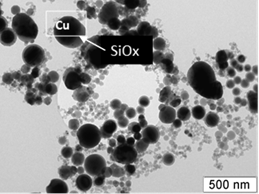
- can be oxides, noble metals, phosphates or polymers [3][4]. Compositions of materials that are immiscible in the bulk state, such as Mo–Cu [5], Ag–Si [6], Ag–Cu [7], Au–Ni [8], are of special interest. Shells can have both a smooth spherical or a polyhedral shape, can have mesopores [9] or dendrites


Deterministic placement of ultra-bright near-infrared color centers in arrays of silicon carbide micropillars
Beilstein J. Nanotechnol. 2019, 10, 2383–2395, doi:10.3762/bjnano.10.229
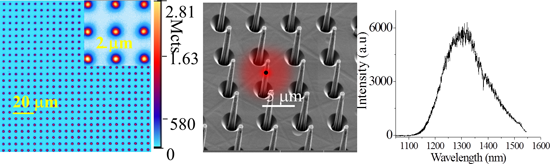
- lithography and a metallic hard mask (Ti/Ni), we have realized micropillar arrays with a height of 4.5 µm, a diameter of 700 nm, and a pitch of 4 µm. The fabrication process (Figure 1a–d) started with coating the samples with photoresist (AZ5214E) and exposing them to a UV laser (λ = 365 nm, Heidelberg µPG101


Targeted therapeutic effect against the breast cancer cell line MCF-7 with a CuFe2O4/silica/cisplatin nanocomposite formulation
Beilstein J. Nanotechnol. 2019, 10, 2217–2228, doi:10.3762/bjnano.10.214
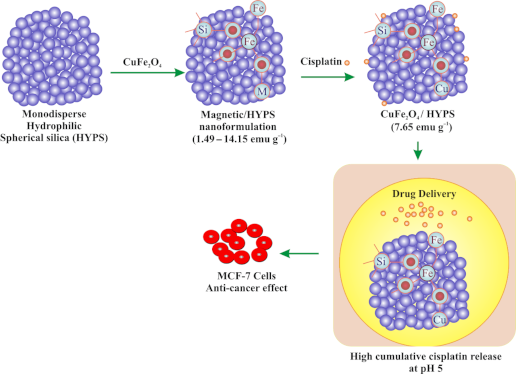
- magnetization can be increased with a high loading of SPIONs, the formation of a mixture of iron oxide species (α-Fe2O4, Fe3O4 and γ-Fe2O4) becomes inevitable. However, the surface of iron oxide can be modified with various transition heteroatoms including Ni, Mn, Co, and Cu, leading to family of spinel
- form aggregates, exert variable oxidation states and result in dose-dependent toxicity. Several supports, including silica and carbon, were used to reduce such aggregation. Notably, different types of nanocomposites were reported based on Co, Ni, Mn and Fe over mesoporous carbon capsules [8]. A carbon


Ultrathin Ni1−xCoxS2 nanoflakes as high energy density electrode materials for asymmetric supercapacitors
Beilstein J. Nanotechnol. 2019, 10, 2207–2216, doi:10.3762/bjnano.10.213
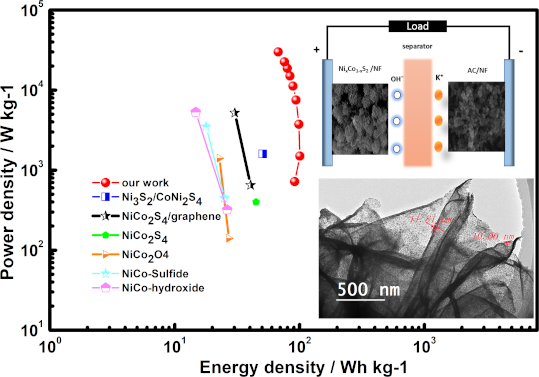
- Engineering, Zhejiang University of Technology, Hangzhou, China 10.3762/bjnano.10.213 Abstract Transition metal compounds such as nickel cobalt sulfides (Ni–Co–S) are promising electrode materials for energy storage devices such as supercapacitors owing to their high electrochemical performance and good
- (TMDs), are attractive as energy-storage electrode materials. This is because the ultrathin structures are fully exposed to the active sites, leading to high electrical conductivity [8][9][10]. In previous reports, Ni–Co chalcogenides have always been combined with carbon-based materials such as
- graphene, graphene oxide (GO) or carbon nanotubes (CNTs) in order to improve the charge–discharge process stability [11][12][13]. There are limited reports regarding a comparison of the intrinsic performance between these Ni–Co chalcogenides materials. Even pure Ni–Co chalcogenide nanomaterials have been


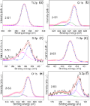
Improved adsorption and degradation performance by S-doping of (001)-TiO2
Beilstein J. Nanotechnol. 2019, 10, 2116–2127, doi:10.3762/bjnano.10.206
- Xiao-Yu Sun Xian Zhang Xiao Sun Ni-Xian Qian Min Wang Yong-Qing Ma Anhui Key Laboratory of Information Materials and Devices, School of Physics and Materials Science, Anhui University, Hefei 230039, China School of Electronic Engineering, Huainan Normal University, Huainan 232038, China Institute




Nanostructured and oriented metal–organic framework films enabling extreme surface wetting properties
Beilstein J. Nanotechnol. 2019, 10, 1994–2003, doi:10.3762/bjnano.10.196
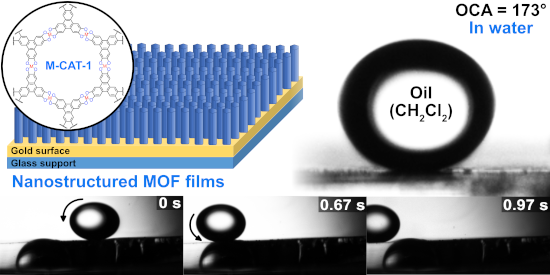
- report on the synthesis of highly oriented and nanostructured metal–organic framework (MOF) films featuring extreme surface wetting properties. The Ni- and Co- derivatives of the metal–catecholate series (M-CAT-1) were synthesized as highly crystalline bulk materials and thin films. Oriented pillar-like
- properties with water and underwater oil-contact angles of 0° and up to 174°, respectively. The self-cleaning capability of the nanostructured, needle-like M-CAT-1 films was illustrated by measuring time-dependent oil droplet rolling-off a tilted surface. The deposition of the nanostructured Ni-CAT-1 film on
- synthesis of highly oriented, nanostructured MOF films that mimic architectures observed in nature, resulting in highly unusual, extreme surface wetting properties. For the synthesis, the Ni- and Co-derivatives of the metal–catecholate series (M-CAT-1) were selected [66]. First, these M-CAT-1 derivatives





