


Search results
Search for "charging" in Full Text gives 217 result(s) in Beilstein Journal of Nanotechnology. Showing first 200.
Lead-free hybrid perovskites for photovoltaics
Beilstein J. Nanotechnol. 2018, 9, 2209–2235, doi:10.3762/bjnano.9.207
- stability [165]. Along with the chemical and photochemical stability, MABI retains perfect integrity during charging/discharging events. In particular, a MABI-based electrochemical capacitor retains around 85% of its initial maximal capacitance after more than ten thousand charge/discharge cycles [158]. A


Interaction-induced zero-energy pinning and quantum dot formation in Majorana nanowires
Beilstein J. Nanotechnol. 2018, 9, 2171–2180, doi:10.3762/bjnano.9.203
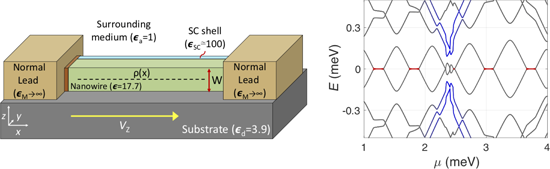
- -length wire posses a finite charge, typically distributed uniformly along the wire [34], which can be susceptible to electrostatic interactions with the surrounding medium. We considered the case of a grounded parent superconductor, thus avoiding the effect of a charging energy associated to the Cooper
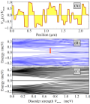
- , the Zeeman energy VZ and the induced potential energy . The magnetic field lowers the band bottom, charging the wire, whereas the induced potential energy, coming from electrostatic repulsion, tends to compensate that trend. In the finite-length wire, the evolution of the induced potential profile



Recent highlights in nanoscale and mesoscale friction
Beilstein J. Nanotechnol. 2018, 9, 1995–2014, doi:10.3762/bjnano.9.190
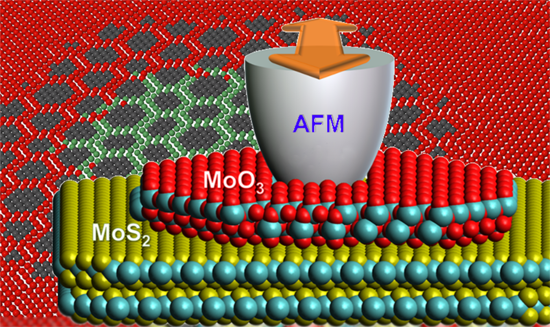
- and charging [120] concluded that friction increases when the applied surface potential changes from negative values to positive values, and that, for negative surface potential, friction depends on the alkyl-chain length of the cation of the RTIL. Assuming well-ordered anchored molecular layers, the


Synthesis of hafnium nanoparticles and hafnium nanoparticle films by gas condensation and energetic deposition
Beilstein J. Nanotechnol. 2018, 9, 1868–1880, doi:10.3762/bjnano.9.179
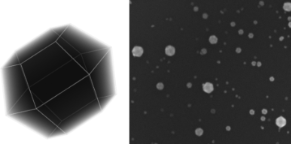
- combining X-ray diffraction and transmission electron microscopy (TEM). To our knowledge this is the first report about the fabrication and characterization of Hf NPs. The fabrication of nanoparticles with IGC leads to the charging of a significant fraction of the as formed NPs and, thus, their kinetic
- -called soft-landing regime [68][69][70]. In general, the particle beam produced contains neutral and charged (positive and negative) NPs. The charging of NPs occurs in the plasma region where the electron and ion densities are high [40]. In our system it seems that the vast majority of Hf NPs is charged






Robust topological phase in proximitized core–shell nanowires coupled to multiple superconductors
Beilstein J. Nanotechnol. 2018, 9, 1512–1526, doi:10.3762/bjnano.9.142

- , = 3,5. We conclude that the presence of disorder induces low-energy localized states than can destroy the topological protection of the Majorana subspace. We note that within a topological quantum computation scheme based on qubits characterized by a finite charging energy [51][52], interaction-mediated


![[Graphic 30]](/bjnano/content/inline/2190-4286-9-142-i36.svg?max-width=637&scale=1.18182) ) = 0 and
) = 0 and ![[Graphic 31]](/bjnano/content/inline/2190-4286-9-142-i37.svg?max-width=637&scale=1.18182) = 0. The white areas are t...
= 0. The white areas are t...


![[Graphic 40]](/bjnano/content/inline/2190-4286-9-142-i46.svg?max-width=637&scale=1.18182) ) ≠ 0 and
) ≠ 0 and ![[Graphic 41]](/bjnano/content/inline/2190-4286-9-142-i47.svg?max-width=637&scale=1.18182) = 0. The white areas are topol...
= 0. The white areas are topol...

![[Graphic 50]](/bjnano/content/inline/2190-4286-9-142-i56.svg?max-width=637&scale=1.18182) ) ≠ 0 and
) ≠ 0 and ![[Graphic 51]](/bjnano/content/inline/2190-4286-9-142-i57.svg?max-width=637&scale=1.18182) 1 = 0,
1 = 0, ![[Graphic 52]](/bjnano/content/inline/2190-4286-9-142-i58.svg?max-width=637&scale=1.18182) 3 = π/2,
3 = π/2, ![[Graphic 53]](/bjnano/content/inline/2190-4286-9-142-i59.svg?max-width=637&scale=1.18182) 5 = −π/2. T...
5 = −π/2. T...

![[Graphic 65]](/bjnano/content/inline/2190-4286-9-142-i71.svg?max-width=637&scale=1.18182) ) ≠ 0 and
) ≠ 0 and ![[Graphic 66]](/bjnano/content/inline/2190-4286-9-142-i72.svg?max-width=637&scale=1.18182) 1 = π/2,
1 = π/2, ![[Graphic 67]](/bjnano/content/inline/2190-4286-9-142-i73.svg?max-width=637&scale=1.18182) 3 = −π/2,
3 = −π/2, ![[Graphic 68]](/bjnano/content/inline/2190-4286-9-142-i74.svg?max-width=637&scale=1.18182) 5 = π/2, and ...
5 = π/2, and ...


![[Graphic 79]](/bjnano/content/inline/2190-4286-9-142-i85.svg?max-width=637&scale=1.18182) = 3 of a triangular wi...
= 3 of a triangular wi...


Electrostatically actuated encased cantilevers
Beilstein J. Nanotechnol. 2018, 9, 1381–1389, doi:10.3762/bjnano.9.130
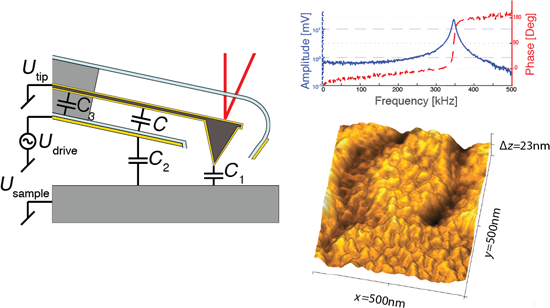
- a slow change of the amplitude with a time constant of several minutes before settling to a new steady state. This phenomenon can be explained by charging or polarizing of the parylene film altering the strength of the electrostatic excitation. Fabricating a gold layer on the inside of the
- charging states in the encasement material, the electrical contact potential or any other static offsets. Not requiring any dc voltage greatly reduces the risk of electrolytic production of gas bubbles. Electrostatic actuation in encased cantilevers provides more gentle imaging and more reliable




Disorder-induced suppression of the zero-bias conductance peak splitting in topological superconducting nanowires
Beilstein J. Nanotechnol. 2018, 9, 1358–1369, doi:10.3762/bjnano.9.128
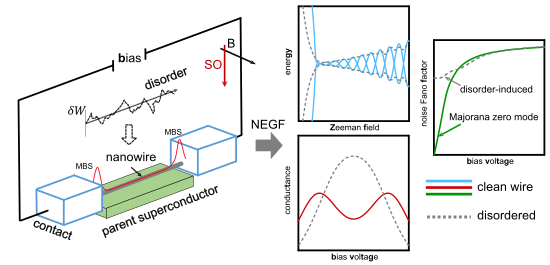
- conductance peak spacings and reformation of the zero-bias peak, which we discuss below, is independent of Coulomb blockade physics. In the presence of a charging energy in the nanowire, it was shown that the zero-bias conductance values are considerably suppressed by the Coulomb energy [75]. The situation of
- interest to us is how intrinsic disorder in the nanowire affect the Majorana energy EM and the splitted zero-bias conductance peak induced by EM. In situations like this, the intrawire charging energy could modulate the actual conductance value, but the main physics induced by the disorder is captured even
- though the charging energy is not taken into account. The generic form of the Hamiltonian that models this Majorana hybrid structure reads as where the term Hnw, HL(R), and HT account for the superconducting nanowire, the left (right) normal metal lead, and the tunnel coupling between the leads and the


![[Graphic 20]](/bjnano/content/inline/2190-4286-9-128-i39.svg?max-width=637&scale=1.18182) (das...
(das...


Cyclodextrin inhibits zinc corrosion by destabilizing point defect formation in the oxide layer
Beilstein J. Nanotechnol. 2018, 9, 936–944, doi:10.3762/bjnano.9.86
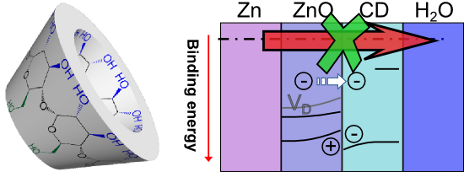
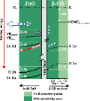
- electrostatic potential [34], the evident difference in the shift slope for the different examined signals (e.g., ZnO and β-CD related components of O 1s, Figure S4c, Supporting Information File 1) shows that charging effects can be ruled out. Charging can also be ruled out as it should cause the same energy
- desiccator in vacuum. ADXPS was carried out on a Physical Electronics PHI Quantera II spectrometer equipped with an Al Kα micro-focused source at 1486.74 eV. Samples for ADXPS were prepared in the same manner as for SEM. In ADXPS, to compensate X-ray source-induced charging effects, a dual-beam charge


Graphene composites with dental and biomedical applicability
Beilstein J. Nanotechnol. 2018, 9, 801–808, doi:10.3762/bjnano.9.73
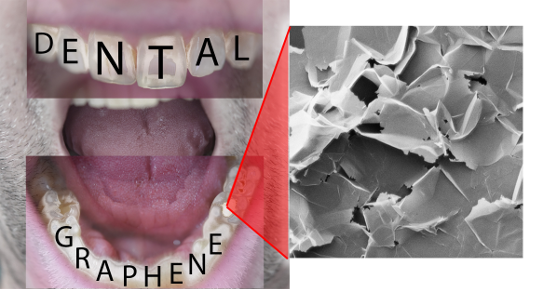
- 0.47 eV). High resolution spectra for the core level C 1s and O 1s were recorded in 0.05 eV steps. An electron flood gun was used during the measurements to prevent sample charging. The FLG material was also characterized by TEM, HRTEM (Jeol ARM at 80 kV) and helium ion microscopy (HeIM, Zeiss Orion at


Combined pulsed laser deposition and non-contact atomic force microscopy system for studies of insulator metal oxide thin films
Beilstein J. Nanotechnol. 2018, 9, 686–692, doi:10.3762/bjnano.9.63
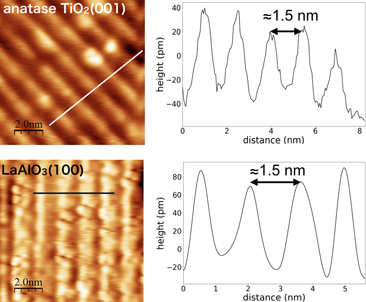
- potential difference (CPD) of the insulator surface synthesized with our PLD system is at most about 3 V. With our system, it is possible to measure without affecting the charging of the sample surface, which often occurs on insulator surfaces. Conclusion We have developed a combined system of NC-AFM and


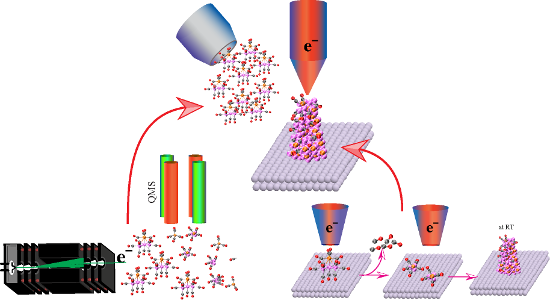
Electron interactions with the heteronuclear carbonyl precursor H2FeRu3(CO)13 and comparison with HFeCo3(CO)12: from fundamental gas phase and surface science studies to focused electron beam induced deposition
Beilstein J. Nanotechnol. 2018, 9, 555–579, doi:10.3762/bjnano.9.53


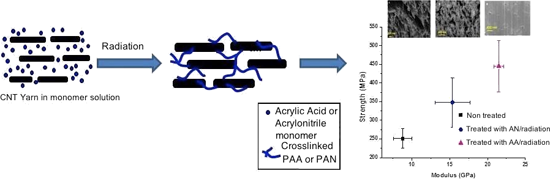
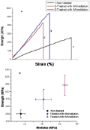
Single-step process to improve the mechanical properties of carbon nanotube yarn
Beilstein J. Nanotechnol. 2018, 9, 545–554, doi:10.3762/bjnano.9.52
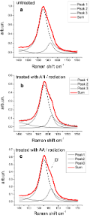
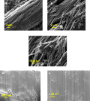
- analyzer with a 128-channel detector. Survey data were collected at 200 eV pass energy and an energy resolution of 1 eV/step, while core level data were collected at 50 eV pass energy and 0.1 eV/step energy resolution. Sample charging was eliminated by using the dual-beam charge compensation source of the




Blister formation during graphite surface oxidation by Hummers’ method
Beilstein J. Nanotechnol. 2018, 9, 407–414, doi:10.3762/bjnano.9.40
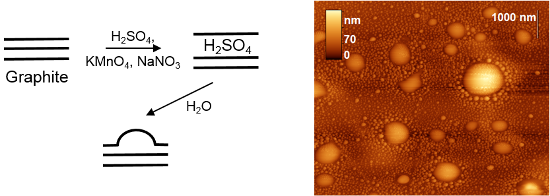
- involves the intercalation of molecules and ions between the carbon layers, the sp2-lattice charging and oxidation [6]. The understanding of these processes is crucial for the reproducible synthesis of GO with desired structure and properties. The larger graphite flakes are used to produce GO, the more


Electron interaction with copper(II) carboxylate compounds
Beilstein J. Nanotechnol. 2018, 9, 384–398, doi:10.3762/bjnano.9.38
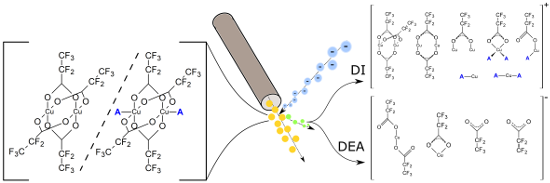
- both [Cu2(EtNH2)2(µ-O2CC2F5)4] (Table 2) and [Cu2(t-BuNH2)2(µ-O2CC2F5)4] (Table 3). However, the appearance energies were measured only for the fragments with highest intensity due to the charging effects of the monochromator electrodes relating to the measured sample. To avoid the total loss of the


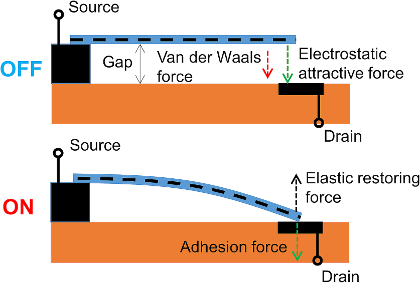
Review: Electrostatically actuated nanobeam-based nanoelectromechanical switches – materials solutions and operational conditions
Beilstein J. Nanotechnol. 2018, 9, 271–300, doi:10.3762/bjnano.9.29


BN/Ag hybrid nanomaterials with petal-like surfaces as catalysts and antibacterial agents
Beilstein J. Nanotechnol. 2018, 9, 250–261, doi:10.3762/bjnano.9.27
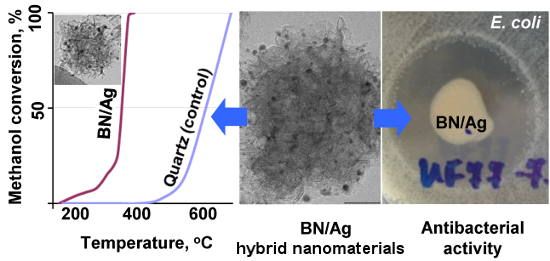
- -ray photoelectron spectroscopy (XPS) using an Axis Supra (Kratos Analytical) spectrometer. The powder samples were attached to the carbon tape covered with glue. The maximum lateral dimension of the analyzed area was 0.7 mm. To avoid differential charging of samples, the spectra were acquired with





Response under low-energy electron irradiation of a thin film of a potential copper precursor for focused electron beam induced deposition (FEBID)
Beilstein J. Nanotechnol. 2018, 9, 57–65, doi:10.3762/bjnano.9.8
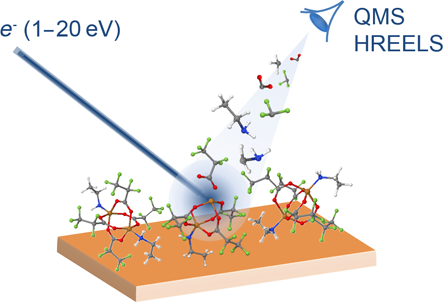
- to avoid partial charging of the system that complicated the HREELS investigation in the present study. ESD measurements have shown that the loss of the amine ligands was not completely achieved under vacuum at room temperature and can then be reinforced by electron bombardment in the low-energy



Hyperthermic intracavitary nanoaerosol therapy (HINAT) as an improved approach for pressurised intraperitoneal aerosol chemotherapy (PIPAC): Technical description, experimental validation and first proof of concept
Beilstein J. Nanotechnol. 2017, 8, 2729–2740, doi:10.3762/bjnano.8.272
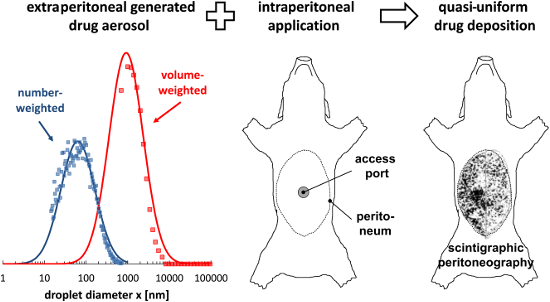
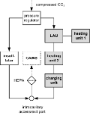
- given in Figure 1. In contrast to PIPAC-MIP, the HINAT approach is based on extracavitary aerosol generation by means of a heatable liquid atomization unit (LAU). After generation, the aerosol passes a secondary heating unit and a charging unit before it is supplied into the abdominal cavity through an
- droplet flux to the peritoneum. Intracavitary aerosol conditioning (optional operation mode) To enable local, accelerated droplet deposition on the peritoneum, aerosol charging can also be performed intraperitoneal (cf. [8]) that requires an additional access into the abdominal cavity. Similar to the
- extracavitary charging, the supplied aerosol droplets are unipolar-charged by means of an approved brush electrode (IonwandTM, Alesi Surgical Ltd, Cardiff, UK). In contrast to extracavitary charging, particle deposition during intracavitary charging is supported by the formation of an electrical field between




One-step chemical vapor deposition synthesis and supercapacitor performance of nitrogen-doped porous carbon–carbon nanotube hybrids
Beilstein J. Nanotechnol. 2017, 8, 2669–2679, doi:10.3762/bjnano.8.267
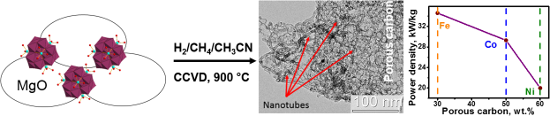
- the Fe/Mo catalyst shows a pronounced peak at ≈630 mV on the charging curve and its couple at ≈345 mV on the discharging curve (Figure 7a). These peaks are likely to be related to the redox activity of iron encapsulated in the MWCNTs [49]. Oxides and hydroxides of Co and Ni are not electrochemically
- active in an acidic environment [50], while redox transformations between Mo(VI) and Mo(IV) may appear at voltages of 90 mV on the charging curve and 220 mV on the discharging curve for Ag/AgCl reference electrode [51]. However, these peaks were not detected in the CV curves of our samples. The lower the


Patterning of supported gold monolayers via chemical lift-off lithography
Beilstein J. Nanotechnol. 2017, 8, 2648–2661, doi:10.3762/bjnano.8.265
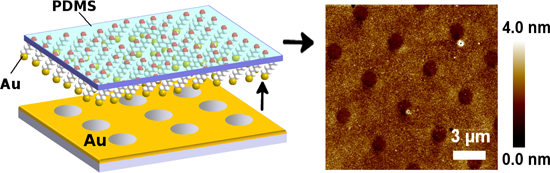
- used to image patterns more efficiently as it provides chemical sensitivity and faster image acquisition over larger areas (up to square millimeters) [5][28][29][30]. The VP-SEM modality accommodates nonconducting samples by injecting water vapor into the sample chamber to offset destructive charging
- vapor in the sample chamber to avoid charging of the insulating PDMS surfaces by the electron beam. Functional DNA patterns on supported Au monolayers As-received DNA (Integrated DNA Technologies, Coralville, IA, USA) was diluted in nuclease-free water (QIAGEN, Valencia, CA, USA) to make 100 µM stock
- insulator, a charge neutralizer (flood gun) was used to offset charging of the samples that otherwise impedes spectral acquisition. Doing so, however, causes the peak to shift to lower energies as compared to their expected energy obtained without using a flood gun. Chan–Vese segmentation In our


Amplified cross-linking efficiency of self-assembled monolayers through targeted dissociative electron attachment for the production of carbon nanomembranes
Beilstein J. Nanotechnol. 2017, 8, 2562–2571, doi:10.3762/bjnano.8.256
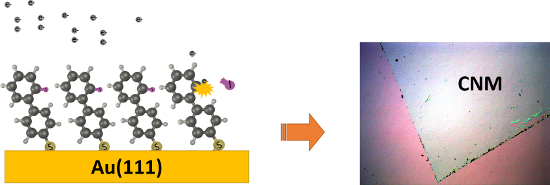
- SF5− formation from SF6. The energy scale was calibrated with respect to the SF6− formation from SF6 at 0 eV. In the current experiment, the inlet system was maintained at room temperature, but to avoid condensation on the electrical lens, the components and resulting charging the monochromator is


Synthesis of metal-fluoride nanoparticles supported on thermally reduced graphite oxide
Beilstein J. Nanotechnol. 2017, 8, 2474–2483, doi:10.3762/bjnano.8.247
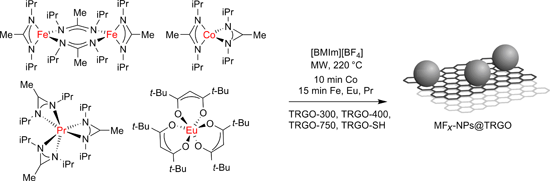
- nanosized materials would yield, for example, short charging time, long lifetime and high capacity [81][82]. Li et al. showed that the use of FeF2 NPs, instead of macroscopic LiFeF3, led to a significant improvement in the performance of the batteries [83]. The IL [BMIm][BF4] was described as the fluoride
- the interfacial charge storage at the interface between nanosized Fe and the electrolyte LiF, analogous to the phenomena in RuO2 proposed by Maier et al. [90]. The capacity is around 800 mAh/g. During the charging process, there are several oxidation processes, which can be ascribed to the reaction of
- Fe0 to Fe2+ (at a potential lower than 3.5 V) and Fe2+ to Fe3+ (at a potential higher than 3.5 V) [88]. The large voltage hysteresis between discharging and charging process can be attributed to sluggish process kinetics, including, for example, phase evolution and the spatial distribution of


Fabrication of CeO2–MOx (M = Cu, Co, Ni) composite yolk–shell nanospheres with enhanced catalytic properties for CO oxidation
Beilstein J. Nanotechnol. 2017, 8, 2425–2437, doi:10.3762/bjnano.8.241
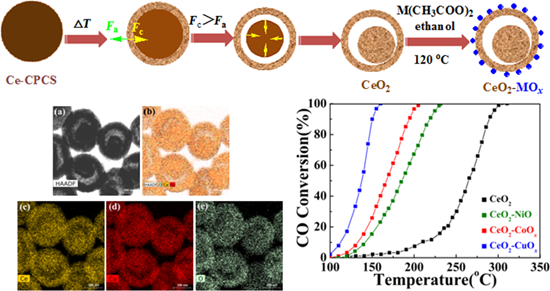
- laser of 532 nm. Surface analysis was obtained by an X-ray photoelectron spectroscopy (XPS, Thermo ESCALAB 250Xi) with Al Kα radiation. All binding energies were corrected for surface charging by use of the C 1s peak (284.8 eV) of adventitious carbon as reference. The M contents in CeO2–MOx samples were





Electron beam induced deposition of silacyclohexane and dichlorosilacyclohexane: the role of dissociative ionization and dissociative electron attachment in the deposition process
Beilstein J. Nanotechnol. 2017, 8, 2376–2388, doi:10.3762/bjnano.8.237
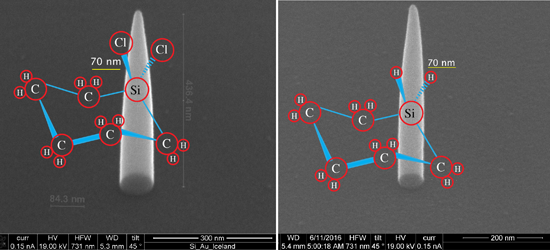
- growth. Charging could play a role in case the deposits are insulating, although it is not straightforward to predict its influence on the volume growth, and no conclusive explanation for the increasing volume growth rate can be offered yet. Comparing the lateral growth of DCSCH and SCH pillars below 180
- induce negative charges in neighbouring pillars. The trajectories of 2 eV electrons having to reach the neighbouring pillars may in turn be heavily influenced by the charging and may be prevented from reaching the pillar. Conclusion Here we have presented the first study on electron beam induced





Adsorbate-driven cooling of carbene-based molecular junctions
Beilstein J. Nanotechnol. 2017, 8, 2060–2068, doi:10.3762/bjnano.8.206
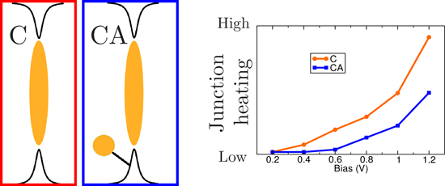
- each electrode. With increasing bias, the left chemical potential approaches the LUMO peak while the right one approaches HOMO. At Vb/2 = 0.3 V the left chemical potential approaches the LUMO and NHC features move up to avoid charging. At Vb/2 = 0.5 V, however, the right chemical potential is close to


![[Graphic 14]](/bjnano/content/inline/2190-4286-8-206-i21.png?max-width=637&scale=1.18182) = 176 meV as a function of applied bias for the C and CA junctions, a...
= 176 meV as a function of applied bias for the C and CA junctions, a...




