Search results
Search for "doping" in Full Text gives 427 result(s) in Beilstein Journal of Nanotechnology. Showing first 200.
Assessment of the optical and electrical properties of light-emitting diodes containing carbon-based nanostructures and plasmonic nanoparticles: a review
Beilstein J. Nanotechnol. 2021, 12, 1078–1092, doi:10.3762/bjnano.12.80
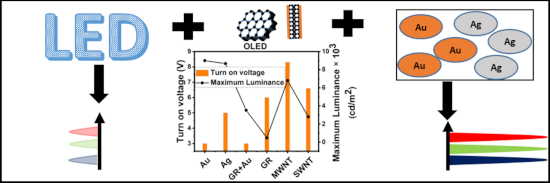
- doping-free and cost-effective, it can be operated using a single bias, and it emanates a narrow EL spectrum of ≈30 meV. Similarly, white light LED can also consist of CQD at the EML along with metal oxides in the charge transport layers [94]. In addition, a maximum EQE of 0.083% has been obtained from
- nanomaterials, such as graphene and SWNT present interesting alternatives to overcome the drawbacks of metal and metal nanocomposite cathodes in OLED. Klain et al. have reported one possibility by doping graphene with n-type Ca [110]. The 1 nm Ca layer deposited by evaporation onto the surface of graphene


Progress and innovation of nanostructured sulfur cathodes and metal-free anodes for room-temperature Na–S batteries
Beilstein J. Nanotechnol. 2021, 12, 995–1020, doi:10.3762/bjnano.12.75
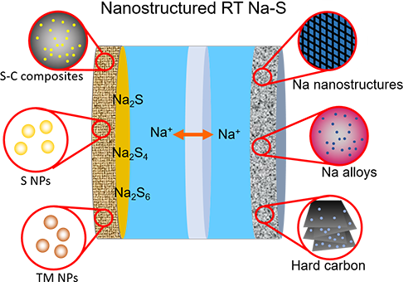
- oxygen doping have proven to enhance the immobilization of sodium polysulfides leading to an advancement in battery performance [31][32]. Adsorption and trapping of polysulfides are achieved through strong interactions between the sodium atoms in sodium polysulfides and the nitrogen and oxygen atoms. The
- result of the nanoporosity of the carbon matrix and the high nitrogen-doping content (ca. 18 atom %). Among all sulfur–carbon composite cathodes, flexible carbon-based skeletons are one of the most promising cathode materials given their ability to accommodate the fast volume changes of sulfur during the




A Au/CuNiCoS4/p-Si photodiode: electrical and morphological characterization
Beilstein J. Nanotechnol. 2021, 12, 984–994, doi:10.3762/bjnano.12.74
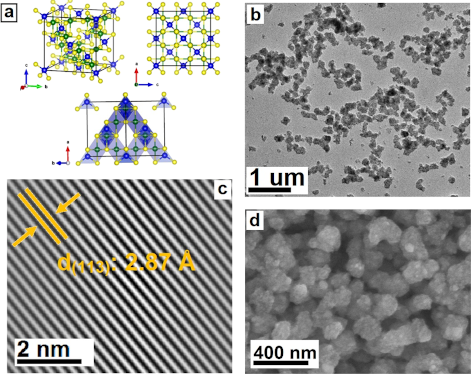
- exhibit sometimes straight lines and sometimes deviations from linearity due to a non-homogenous interfacial layer of CuNiCoS4 [42]. Various electrical parameters, such as Fermi energy level (EF), barrier height (ϕb), maximum electric field (Em), depletion width (Wd), and doping concentration of acceptor



Is the Ne operation of the helium ion microscope suitable for electron backscatter diffraction sample preparation?
Beilstein J. Nanotechnol. 2021, 12, 965–983, doi:10.3762/bjnano.12.73
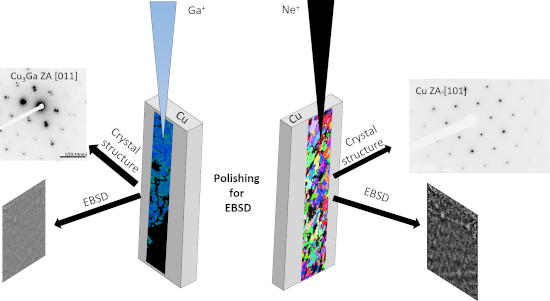
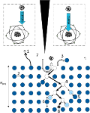
- induces sample alterations and material behavior changes due to doping [22]. Not all nuclear interactions lead to sputtering. If the sample atom cannot be removed from the sample because of insufficient energy transfer or because the sample atom cannot exit the sample due to its sub-surface position




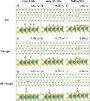
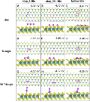
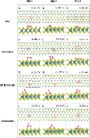
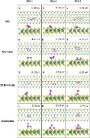
Prediction of Co and Ru nanocluster morphology on 2D MoS2 from interaction energies
Beilstein J. Nanotechnol. 2021, 12, 704–724, doi:10.3762/bjnano.12.56
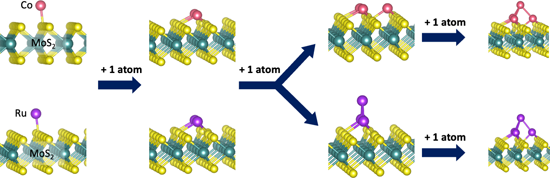
- or doping with transition metals [4][5][18][19][20][21][22], alkali and alkali earth metals [23][24][25], and non-metals [25] on MoS2 and other 2D materials. While experimental studies can be used to probe the performance of the 2D material in a device or some of the interfacial interactions between



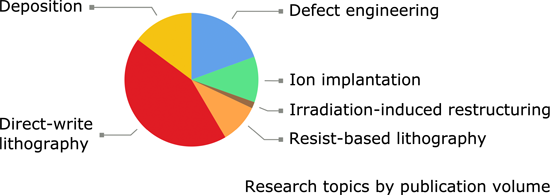
A review of defect engineering, ion implantation, and nanofabrication using the helium ion microscope
Beilstein J. Nanotechnol. 2021, 12, 633–664, doi:10.3762/bjnano.12.52


Nanoporous and nonporous conjugated donor–acceptor polymer semiconductors for photocatalytic hydrogen production
Beilstein J. Nanotechnol. 2021, 12, 607–623, doi:10.3762/bjnano.12.50
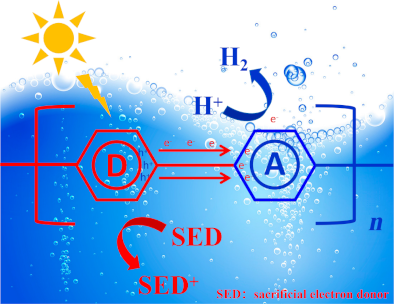
- ], doping with other elements [21][22][23], and the control of end groups [24]. Meanwhile, various types of CPs have been applied for PHP, including conjugated porous polymers (CPPs) [25][26][27], linear conjugated polymers (LCPs) [28][29][30], conjugated triazine frameworks (CTFs) [31][32][33], and




Impact of GaAs(100) surface preparation on EQE of AZO/Al2O3/p-GaAs photovoltaic structures
Beilstein J. Nanotechnol. 2021, 12, 578–592, doi:10.3762/bjnano.12.48
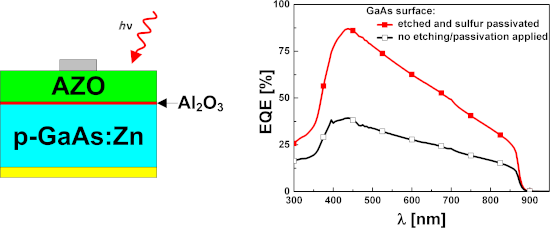
- . Lesker PVD75). It should also be underscored that the utilized structure was quite simplified and not optimized for the best performance in terms of junction properties, absorber and window layers, doping/thickness, or metallization used. Measurement equipment The morphology of the structures was
- the bandgap size of the AZO/Al2O3 layers deposited during the ALD process described in this paper. Knowing the bandgap size of AZO and GaAs, as well as the doping levels and the densities of states in the relevant bands of the semiconductors, we are able to construct the energy diagram of the




Properties of graphene deposited on GaN nanowires: influence of nanowire roughness, self-induced nanogating and defects
Beilstein J. Nanotechnol. 2021, 12, 566–577, doi:10.3762/bjnano.12.47
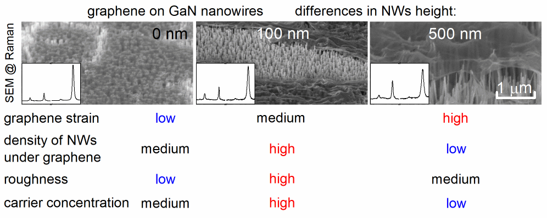
- the disorder is correlated with an increase in the carrier concentration and the sign of charge carriers depends on the defect type [28][29][30]. For example, vacancies and nitrogen dopants in nitrilic and pyridinic positions introduce a p-type doping while nitrogen dopants in the graphitic position
- and hydrogen dopants in the pyridinic position result in n-type doping [48]. Thus, defect origin and density impact graphene strain and carrier concentration as well as the interaction with the substrate. The G band is generated by the scattering on iTO or iLO phonons near the Γ point of the Brillouin




Interface interaction of transition metal phthalocyanines with strontium titanate (100)
Beilstein J. Nanotechnol. 2021, 12, 485–496, doi:10.3762/bjnano.12.39
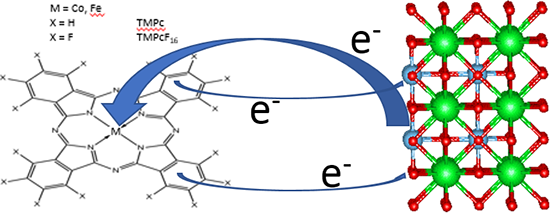
- increased by introducing oxygen vacancies into the crystal structure or by doping (e.g., n-type doping with niobium, Nb5+). Generally, two different terminations of STO(100) are known, that is, the surface can be either TiO2- or SrO-terminated. The TiO2 termination can be achieved by (ex situ) acid
- semiconducting substrates, such a charge transfer would result in an interface doping of the substrate. Depending on the charge carrier concentration, the doping is accompanied by a shift of the Fermi level, visible as rigid energy shifts of all substrate-related core level spectra in photoemission. As an
- bending at the interface (p-type doping). Adsorbate-related core level spectra are shown in Figure 3 for different film thicknesses. For the 0.25 nm and the 0.45 nm film, the Sr 3p1/2 background was subtracted in the C 1s spectra. Original data and the background procedure are shown in Figure S5


Boosting of photocatalytic hydrogen evolution via chlorine doping of polymeric carbon nitride
Beilstein J. Nanotechnol. 2021, 12, 473–484, doi:10.3762/bjnano.12.38
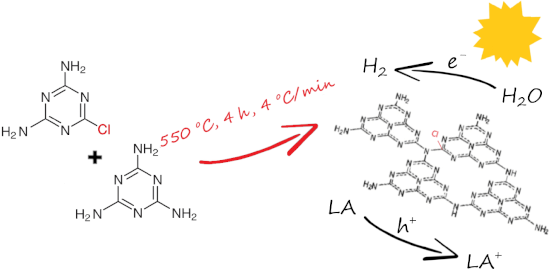
- ; doping; hydrogen evolution reaction; photocatalysis; polymeric carbon nitride; Introduction Currently, the biggest problems of civilization seem to be the global energy crisis and environmental pollution. Both of these problems are directly related to each other. The pollution of our planet is mainly
- . Three of the most popular modifications are: (i) coupling with other semiconductors [22][23], (ii) self-optimization of the crystal structure [24][25], and (iii) doping with heteroatoms [26][27]. Therefore, PCN is called the "holy grail" because it is believed that its modifications will result in
- obtaining a highly efficient HER under visible light conditions [28][29]. One of the most effective methods to modify the electronic structure and improve photocatalytic properties, among so many options, seems to be non-metallic doping [30][31][32][33]. For instance, Ma et al. found that the doping of PCN


Nickel nanoparticle-decorated reduced graphene oxide/WO3 nanocomposite – a promising candidate for gas sensing
Beilstein J. Nanotechnol. 2021, 12, 343–353, doi:10.3762/bjnano.12.28
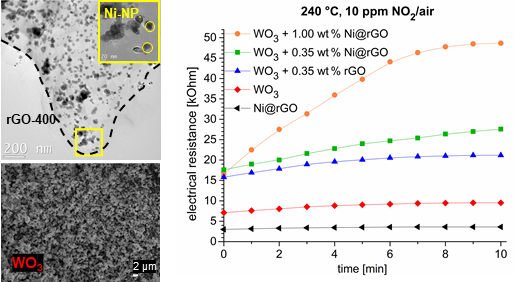
- 200 to 400 °C, which means a high power consumption [4]. WO3 is a wide-bandgap [12][13] n-type semiconductor [14][15] with good sensitivity towards NO2 [16] and CO [17]. Known successful routes to improve the MOS gas sensing performance are doping with transition metals, decoration with noble metals
- , formation of heterojunctions, or size reduction [18][19]. Doping of WO3 with nickel improves the humidity sensing compared to neat WO3. Attributed to a greater number of electrons donated by Ni atoms, higher surface area, and smaller bandgap energy, Ni-doped WO3 has a faster response, higher sensitivity
- -type MOS and an n-type MOS (p–n heterojunctions) [6][18]. The p-type MOS NiO is not a very popular gas sensing material, because p-type MOS have, in general, a lower gas response than n-type MOS, such as WO3, ZnO, or SnO2 [22][23]. But p-type MOS are ideal doping agents [24]. NiO combined with WO3


The role of gold atom concentration in the formation of Cu–Au nanoparticles from the gas phase
Beilstein J. Nanotechnol. 2021, 12, 72–81, doi:10.3762/bjnano.12.6
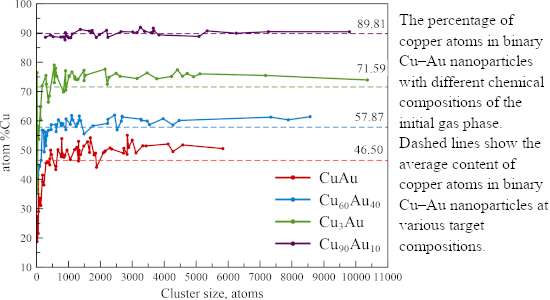
- is an increase in the catalytic activity when compared to the monometallic Au or Cu nanoparticles [3]. In addition to catalysis, Cu–Au nanoalloys are also of great interest in optics, in which the doping of copper into gold nanoparticles causes the appearance of strong surface plasmon resonances. In
- the contribution of the small Cu clusters. Incomplete doping of gold in Cu–Au nanoparticles can be explained based on the chemical reactions that take place in [3]. As shown in [25], the redox potential of (Au3+/Au) is +1.50 V. In the case of Cu, the corresponding potential is only +0.34 V [26


ZnO and MXenes as electrode materials for supercapacitor devices
Beilstein J. Nanotechnol. 2021, 12, 49–57, doi:10.3762/bjnano.12.4
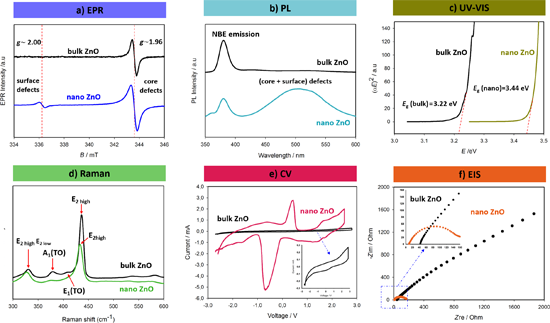
- used as electrode materials in storage devices, for example, supercapacitors, the device performance can be enhanced substantially. This enhancement can be correlated to materials characteristics, such as nanoscale size effects, doping, the synergy between the defective electrode and the counter
- are still too low compared to carbonaceous electrodes. Nanoscale dimensions, the increase of the surface-defect concentration, and metal-ion doping may play a vital role in increasing specific capacitance values as well as cycle life and in mitigating degradation problems. Recently, valuable
- controlling size, bandgap, doping, defect structures, and morphology. Thus, energy density and specific capacitance of metal oxides almost reached the maximum (theoretical) values. Novel types of materials that are an alternative to metal oxides should be studied intensively. One of the most promising
Towards 3D self-assembled rolled multiwall carbon nanotube structures by spontaneous peel off
Beilstein J. Nanotechnol. 2020, 11, 1865–1872, doi:10.3762/bjnano.11.168
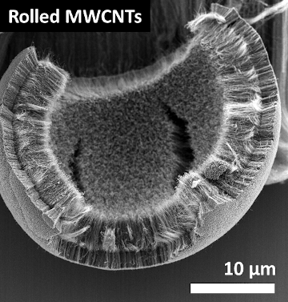
- ; multiwall carbon nanotubes; nitrogen doping; peel off; rolled carbon nanotubes; Introduction Carbon nanotubes (CNTs) are popular materials used in various applications [1]. These tubular hollow carbon nanomaterials have proven to be useful in multiple scientific fields [2][3][4][5][6]. Complex structures
- ][14]). This so-called doping tunes CNT properties for specific applications. A step further to design more complex CNTs is to develop materials with a composition change (e.g., CNT structures displaying both properties of nitrogen-doped and undoped carbon along the same CNT [15]). A structural change
- /N2/C3 structure is shown in Figure 2. The D peak refers to a defect in the MWCNT structure. An intense D peak (relative to the G peak intensity) correlates to higher defects, for instance, induced by nitrogen doping. The G and 2D peaks are related to the graphitization of MWCNTs. An intense G peak



Piezotronic effect in AlGaN/AlN/GaN heterojunction nanowires used as a flexible strain sensor
Beilstein J. Nanotechnol. 2020, 11, 1847–1853, doi:10.3762/bjnano.11.166
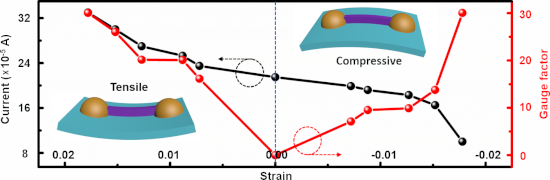
- substrate, followed by a 500 nm layer of Si-doped N-GaN (the doping concentration was 5 × 10¹⁸·cm−3). The thickness of the heavily doped GaN was 1.5 μm and the Si doping concentration was 1.0 × 10¹⁹·cm−3. The thickness of the two thin N++-GaN layers was only 10 nm each with a Si concentration of 4.5 × 10¹⁹


Unravelling the interfacial interaction in mesoporous SiO2@nickel phyllosilicate/TiO2 core–shell nanostructures for photocatalytic activity
Beilstein J. Nanotechnol. 2020, 11, 1834–1846, doi:10.3762/bjnano.11.165
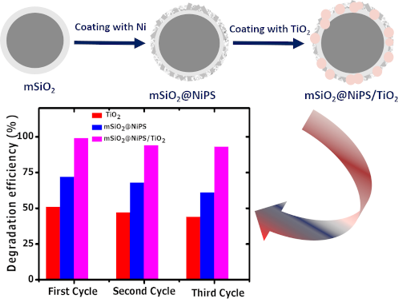
- , the electron–hole recombination can be inhibited by loading metals, such as Ni [12], V, Fe [13], Ag [14], and Cu–Ni [15], on the TiO2 surface, which accelerates the formation of hydroxyl radicals and, consequently, improves the photocatalytic activity of TiO2. In contrast, the doping of TiO2 with
- recombination, leading to faster charge transport and photodegradation. Typically, the photocatalytic degradation efficacy of TiO2 depends on the surface area and metal-ion doping on the surface. Metal-ion doping of TiO2 influences its interfacial charge-transfer properties [51]. Differences in


Mapping of integrated PIN diodes with a 3D architecture by scanning microwave impedance microscopy and dynamic spectroscopy
Beilstein J. Nanotechnol. 2020, 11, 1764–1775, doi:10.3762/bjnano.11.159
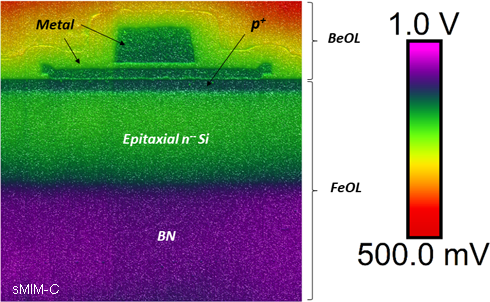
- complete parametric investigation, is performed with a dynamic spectroscopy method. The results emphasize the strong impact, in terms of distinction and location, of the applied bias on the local sMIM measurements for both FEOL and BEOL layers. Keywords: atomic force microscopy (AFM); DataCube; doping
- . The starting material is a p-type Si substrate with relatively high ohmic resistance (1 kΩ·cm), oriented along the ⟨100⟩ direction. The first step in the process consists of forming an n-type doped buried layer (BN) on the top of the wafer (through implantation and diffusion of the doping species). A
- diffusion of electron-acceptor species. Therefore, the intrinsic layer, acting as an insulator due to its low doping concentration, is stacked in between the p-type and n-type layers. The studied sample came from a fully processed wafer, designed for power electronic applications, in which both FEOL and


Imaging and milling resolution of light ion beams from helium ion microscopy and FIBs driven by liquid metal alloy ion sources
Beilstein J. Nanotechnol. 2020, 11, 1742–1749, doi:10.3762/bjnano.11.156
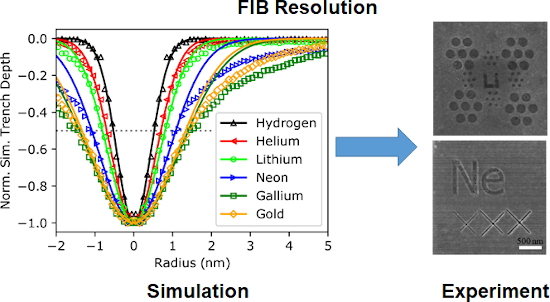
- In modern nanotechnology, focused ion beam (FIB) techniques are well-established for nanoscale structuring, local surface modification, doping, prototyping, as well as for ion beam analysis. One of the main components of such a FIB system is the ion source providing the needed ion species [1


Seebeck coefficient of silicon nanowire forests doped by thermal diffusion
Beilstein J. Nanotechnol. 2020, 11, 1707–1713, doi:10.3762/bjnano.11.153
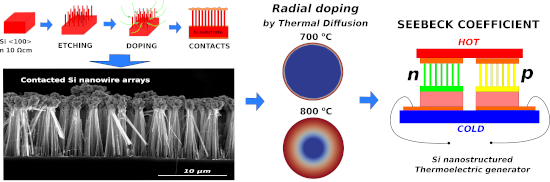
- metal-assisted etching technique. After fabrication, a thermal diffusion process is used for doping the nanowire forest with phosphorous. A suitable experimental technique has been developed for the measurement of the Seebeck coefficient under static conditions, and results are reported for different
- doping parameters. These results are in good agreement with numerical simulations of the doping process applied to silicon nanowires. These devices, based on doped nanowire forests, offer a possible route for the exploitation of the high power factor of silicon, which, combined with the very low thermal
- fabricated on the top of a silicon nanowire forest, which can be achieved by copper electrodeposition [18]. 2) The optimum doping concentration of the nanowires for the exploitation of the maximum power factor of silicon [3] needs to be found. Both the Seebeck coefficient and the electrical conductivity


Piezoelectric sensor based on graphene-doped PVDF nanofibers for sign language translation
Beilstein J. Nanotechnol. 2020, 11, 1655–1662, doi:10.3762/bjnano.11.148
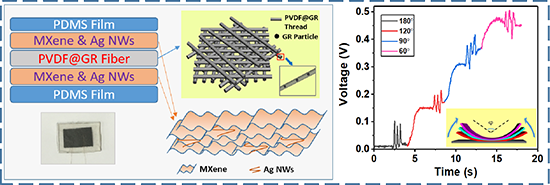
- a high sensitivity to pressing and bending, and there is a stable correlation between bending angle and piezoelectric voltage. The sensitivity can be adjusted by changing the doping concentration of GR. Also, when the PES contacts a source of heat, a pyroelectric signal can be acquired. The positive
- bending could be obtained. The amount of GR doping has an impact on sensitivity. In addition, the sensor will generate a large pyroelectric signal when it is touched with a hot object, which can be used to prevent burns of the hands. When the PES is integrated in a measuring circuit, it can accurately
- both sides, and the PDMS protective layer on the outermost sides. Each PVDF fiber contains GR doping. Figure 1b shows a schematic diagram of a sign language translation system based on a self-powered PES. Sensors are separately integrated into the gloves at the joints of the fingers and the fingertips


Atomic defect classification of the H–Si(100) surface through multi-mode scanning probe microscopy
Beilstein J. Nanotechnol. 2020, 11, 1346–1360, doi:10.3762/bjnano.11.119
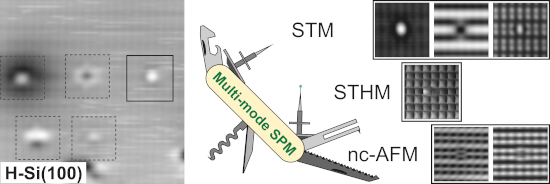
- due to its conductive orbital which extends into vacuum. DBs have been observed to act like quantum dots and have discretized charge states in the bandgap of the material [6]. Due to the degenerate n-type doping of our substrate (see Methods) [6][53], DBs are natively negatively charged when imaging
- vacancy, which localize charge due to the degenerate doping of the crystal (see Methods for sample details). Starting with Figure 4a (labelled I), the defect is centred around a surface lattice site affecting one side of a dimer, with the negative charge bending the bands down locally as evidenced by the



Effect of localized helium ion irradiation on the performance of synthetic monolayer MoS2 field-effect transistors
Beilstein J. Nanotechnol. 2020, 11, 1329–1335, doi:10.3762/bjnano.11.117
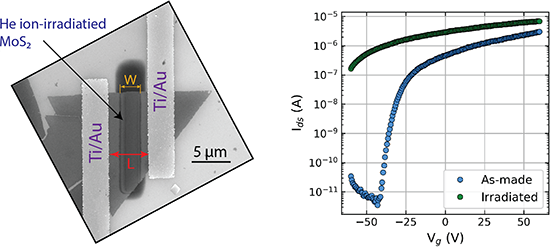
- improvement of both the carrier mobility in the transistor channel and the electrical conductance of the MoS2, due to doping with ion beam-created sulfur vacancies. Larger areal irradiations introduce a higher concentration of scattering centers, hampering the electrical performance of the device. In addition
- , we find that irradiating the electrode–channel interface has a deleterious impact on charge transport when contrasted with irradiations confined only to the transistor channel. Keywords: 2D materials; contacts; defect engineering; helium ion microscope; ion beam doping; vacancies; two-dimensional
- cm−2 [13][14][15][16][17], as well as good electrical conductivity for up to approx. 1018 ions cm−2 [9][10][18]. Sulfur vacancies (SVs) and the formation of a dislocation–divacancy complex can lead to significant n-doping in MoS2 [19], which shifts the threshold voltage (Vth) of the FET to higher


Structural and electronic properties of SnO2 doped with non-metal elements
Beilstein J. Nanotechnol. 2020, 11, 1321–1328, doi:10.3762/bjnano.11.116
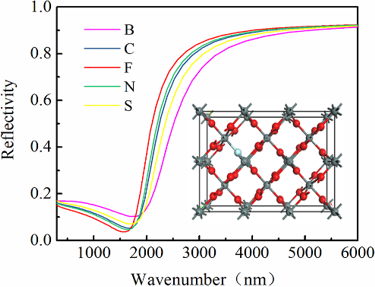
- SnO2 doped with non-metal elements (F, S, C, B, and N) were studied using first-principles calculations. The theoretical results show that doping of non-metal elements cannot change the structure of SnO2 but result in a slight expansion of the lattice volume. The most obvious finding from the analysis
- is that F-doped SnO2 has the lowest defect binding energy. The doping with B and S introduced additional defect energy levels within the forbidden bandgap, which improved the crystal conductivity. The Fermi level shifts up due to the doping with B, F, and S, while the Fermi level of SnO2 doped with C
- SnO2 is not conductive due to the absence of free carriers. However, the bandgap of 3.6 eV of SnO2 makes it a potentially ideal material for transparent electrode films. It had been proved that the doping of heteroatoms to replace Sn or O can lead to more carriers or holes. Therefore, extensive



Ultrasensitive detection of cadmium ions using a microcantilever-based piezoresistive sensor for groundwater
Beilstein J. Nanotechnol. 2020, 11, 1242–1253, doi:10.3762/bjnano.11.108
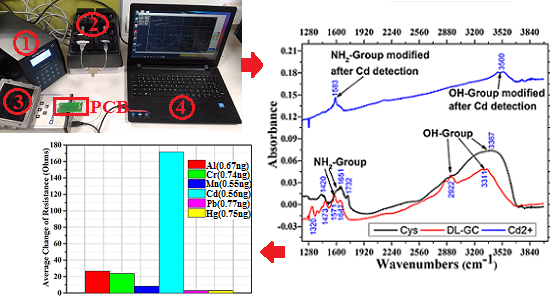
- vapor deposition (LPCVD) furnace at 630 °C and boron doping (1018 per cm3) is carried out using ion implantation at 35 keV. The upper SiO2 layer is formed by re-oxidizing the polysilicon in an oxidation furnace [40]. The stiffness (k) of the fabricated piezoresistive sensor measured using AFM is 131–146