


Search results
Search for "electron transport" in Full Text gives 136 result(s) in Beilstein Journal of Nanotechnology.
Pt- and Pd-decorated MWCNTs for vapour and gas detection at room temperature
Beilstein J. Nanotechnol. 2015, 6, 919–927, doi:10.3762/bjnano.6.95
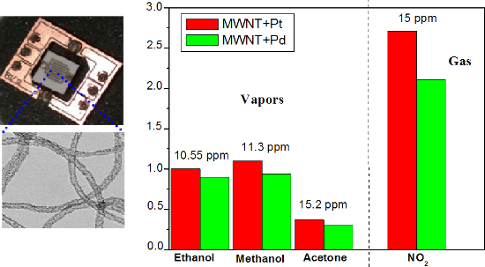
- affects the sensitivity and selectivity of the hybrid carbon nanotube material. The idea is to use nanoparticles that donate or accept charge upon adsorption of vapours or gas molecules, which eventually alters the electron transport in the carbon nanotube [26]. Kumar et al. published the first

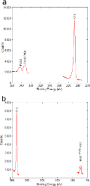


Graphene quantum interference photodetector
Beilstein J. Nanotechnol. 2015, 6, 726–735, doi:10.3762/bjnano.6.74
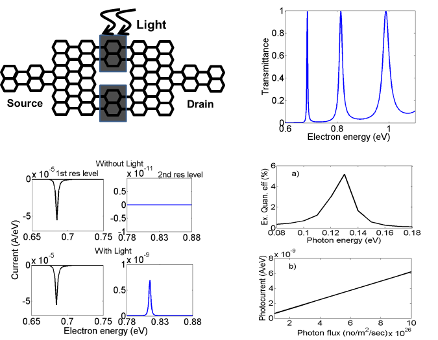
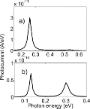
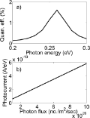
- as high electrical mobility, high thermal conductivity, high mechanical strength, linear energy dispersion around the Dirac point and strong light absorption from near-infrared to visible wavelengths [1][2][3]. Graphene also exhibits ballistic electron transport over unusually long lengths [4][5][6


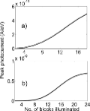


Entropy effects in the collective dynamic behavior of alkyl monolayers tethered to Si(111)
Beilstein J. Nanotechnol. 2015, 6, 583–594, doi:10.3762/bjnano.6.60
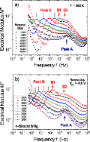
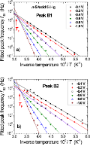
- electron transport [7][25][26][27][28][29][30][31][32] properties. In order to understand the behavior of nanometer-thick 2D assemblies of molecules tethered to metallic or semiconductor surfaces, the concepts developed for bulk organic solids should be revisited by also considering molecular coverage
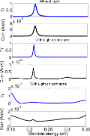
- ] conformational changes on electron transport properties have rarely been explicitly described. In this context, this admittance spectroscopy study emphasizes a collective dynamic behavior of linear saturated (n-alkyl) chains tethered to Si(111). Dynamic properties are very sensitive to structure and conformation
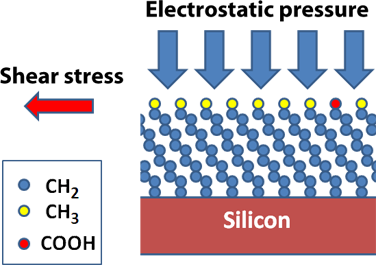
- electrostatic pressure across the nanometer-thick insulating layer. This effect is expected to be stronger with shorter alkyl chains (thinner OML in Equation 2) with possible implications on electron transport through molecular tunnel barriers. Further work is required to investigate its dependence on the OML




Electrical response of liquid crystal cells doped with multi-walled carbon nanotubes
Beilstein J. Nanotechnol. 2015, 6, 396–403, doi:10.3762/bjnano.6.39
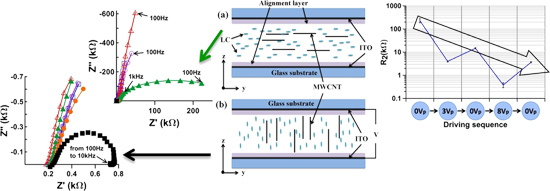
- semiconductive, while in multi-walled CNTs (MWCNT) it is always metallic [10]. The almost one-dimensional structure leads to a long-range ballistic electron transport in metallic CNTs [10][11]. LCs are self-organized anisotropic fluids, whose long-range orientation (called director) can be induced by surface


Liquid-phase exfoliated graphene: functionalization, characterization, and applications
Beilstein J. Nanotechnol. 2014, 5, 2328–2338, doi:10.3762/bjnano.5.242
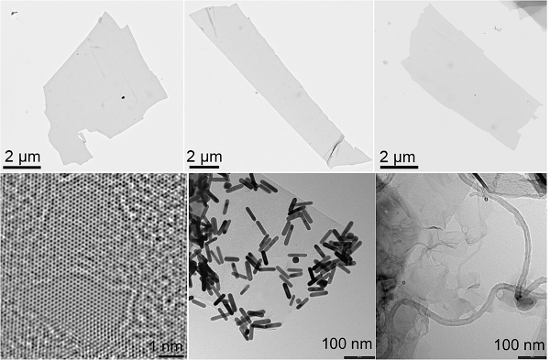
- deposition of the nanohybrid showed better performance when compared with similar substrates produced with functionalized CNTs. Our results support the importance of the rational chemical design of the carbon platform for the preservation of electron transport and accumulation processes associated with




Hybrid spin-crossover nanostructures
Beilstein J. Nanotechnol. 2014, 5, 2230–2239, doi:10.3762/bjnano.5.232
- proposed two mechanisms: first, since the oscillator strength of the charge transfer (CT) bands increases in the LS state, it is possible that the injected electrons transit from the π orbital of the dpp ligand to the d orbital of the iron centers, giving an additional electron transport path from the
- cathode to the anode through the SCO complex. Second, a shift in the energy level of the molecular orbital concerning the electron transport in the SCO complex relative to that of Chl a (Figure 6b) [30] is possible. Thus, at high temperatures (HS state) the injected electrons effectively excite the Chl a
- molecules, leading to EL emission. Conversely, at low temperatures (LS state) the electron transport orbital of the [Fe(dpp)2](BF)4 shifts to a level lower than that of Chl a and as a result, the electrons flow exclusively into the SCO complex, preventing the formation of excited Chl a. Even though the



Advances in NO2 sensing with individual single-walled carbon nanotube transistors
Beilstein J. Nanotechnol. 2014, 5, 2179–2191, doi:10.3762/bjnano.5.227
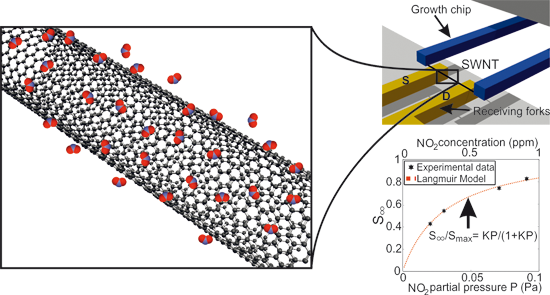
- influence the electron transport in the devices by changing the transfer characteristics. However, the devices also react strongly to charges in their vicinity, which leads to problems such as hysteresis and noise. We will examine these effects in detail in the next sections. Effect of adsorbate gases The
- nature of this interaction. From a theoretical perspective, the effect of NO2 on the electron transport in the SWNT must be explored in more detail, and a hypothesis that consistently explains the observations from several papers must be developed. As it has increasingly grown clear, the cleanliness and


Probing the electronic transport on the reconstructed Au/Ge(001) surface
Beilstein J. Nanotechnol. 2014, 5, 1463–1471, doi:10.3762/bjnano.5.159
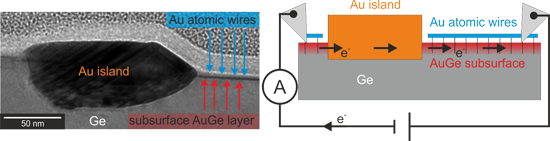
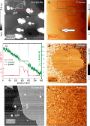
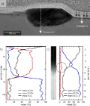
- (001) surface exhibits a two dimensional conductance channel on a micrometre-scale averaging across several Au-reconstructed 1D domains [10]. Scanning tunnelling microscopy (STM) and various STM-based methods are excellent tools to study the topographic structure, the electronic structure, and electron
- transport phenomena of conducting surfaces at the limit of lateral resolution. By performing scanning tunnelling potentiometry (STP) [11] we tried to study the lateral variation of the electrochemical potential µec (called potential in the following) at the boundary between two rotated Au wire-like domains




Sublattice asymmetry of impurity doping in graphene: A review
Beilstein J. Nanotechnol. 2014, 5, 1210–1217, doi:10.3762/bjnano.5.133
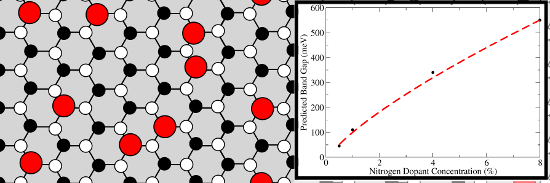
- sublattices, the band gap, although smaller, was shown to still exist. This is promising for scaleability where perfect asymmetric doping may not always be realizable. Beyond the realization of quasi-ballistic electron transport, sublattice segregated systems can also be used to induce magnetism [19][48][49
- ][50] and produce spin-polarized current [51][52]. Much work has been done studying how the placement of dopants affects the properties of nanoribbons. DFT approaches, using a periodic system of dopants [53][54], and a more general Kubo–Greenwood approach [37] have shown that electron transport is


Gas sensing with gold-decorated vertically aligned carbon nanotubes
Beilstein J. Nanotechnol. 2014, 5, 910–918, doi:10.3762/bjnano.5.104
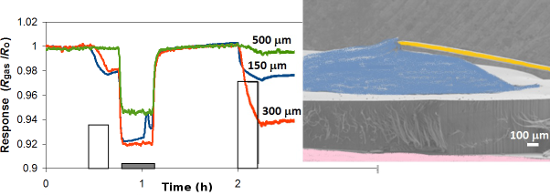
- , it was shown that the sensitivity of the CNT gas sensor depends on nanocluster size and sensor working temperature [13][14][15][16][17]. Indeed, the nanoscale size of the metal cluster is necessary to maximize the effect of the gas adsorption and so to affect the electron transport in the CNTs by


Optical modeling-assisted characterization of dye-sensitized solar cells using TiO2 nanotube arrays as photoanodes
Beilstein J. Nanotechnol. 2014, 5, 895–902, doi:10.3762/bjnano.5.102
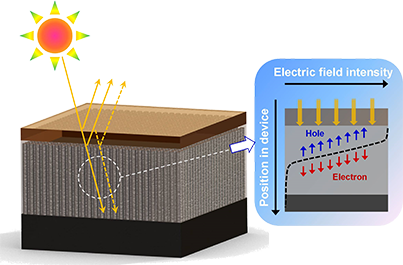
- efficiency by promoting light scattering [3][4][5]. In addition, the electron transport or recombination rate could be influenced by physical properties such as porosity, morphology, crystallinity, and uniformity of the TiO2 structure [6][7][8][9]. TiO2 photoelectrode candidate materials with different
- TiO2 nanoparticles, vertically well-ordered TNT-based DSSCs presented an enhanced electron transport by efficiently reducing the recombination possibility of photogenerated charge carriers through minimizing the trapping sites that normally exist in the grain boundaries of randomly oriented TiO2
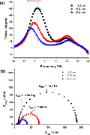
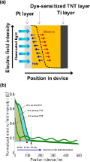
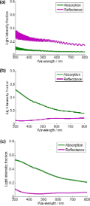
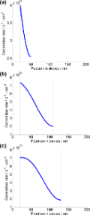
- performances and electron transport properties of the fabricated DSSCs with different thickness of the TNT photoanodes are investigated. The simplified standard structures under the experimental condition are simulated by using a generalized transfer matrix method (GTMM) [15][16]. The comparison of the


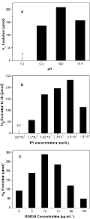
Enhancement of photocatalytic H2 evolution of eosin Y-sensitized reduced graphene oxide through a simple photoreaction
Beilstein J. Nanotechnol. 2014, 5, 801–811, doi:10.3762/bjnano.5.92
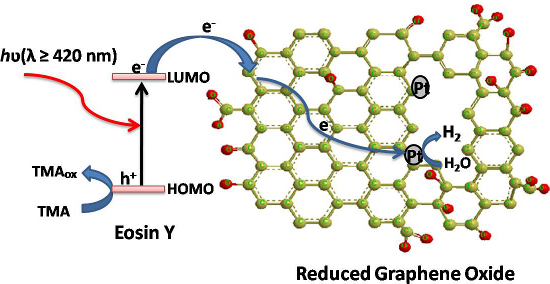
- ) sheet of sp2-hybrized carbon, has received tremendous research interests based on its extraordinary electronic, thermal, optical and excellent electron transport properties [21][22]. Graphene can be easily obtained by reducing graphene oxide (GO), which is a cheap and scalable preparation method [23][24





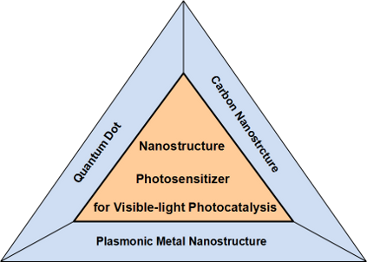
Nanostructure sensitization of transition metal oxides for visible-light photocatalysis
Beilstein J. Nanotechnol. 2014, 5, 696–710, doi:10.3762/bjnano.5.82
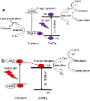
- particulate structure and found a more efficient means of separating electron–hole pairs on the tubular TiO2 architectures, leading to an improved performance of the CdS photosensitized tubular TiO2 architectures [32]. Figure 3 outlines the electron transport in these two different architectures. Kim et al




Analytical development and optimization of a graphene–solution interface capacitance model
Beilstein J. Nanotechnol. 2014, 5, 603–609, doi:10.3762/bjnano.5.71
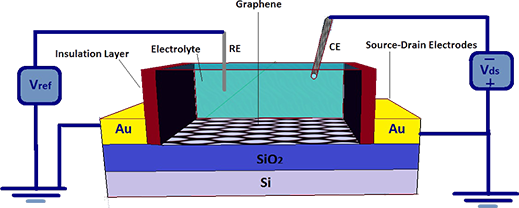
- these days. Geim, in 2004, demonstrated that the six-membered rings are the basis of all carbon materials in electrochemical biosensor research [7]. The remarkable electrical properties of graphene such as fast electron transport, tunable energy bandgap, high thermal conductivity, and ballistic




Dye-sensitized Pt@TiO2 core–shell nanostructures for the efficient photocatalytic generation of hydrogen
Beilstein J. Nanotechnol. 2014, 5, 360–364, doi:10.3762/bjnano.5.41
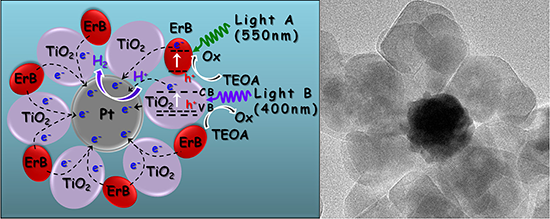
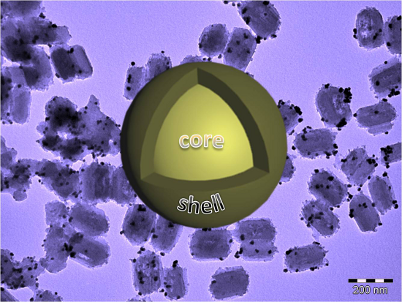
- the excitation of ErB and TiO2, which plays an important role in the photocatalytic hydrogen generation. The observed synergic effect could be attributed to the electron transport in TiO2 particles. Since the dye-sensitization induces an electron transfer from the excited ErB to TiO2, these electrons


Simulation of electron transport during electron-beam-induced deposition of nanostructures
Beilstein J. Nanotechnol. 2013, 4, 781–792, doi:10.3762/bjnano.4.89
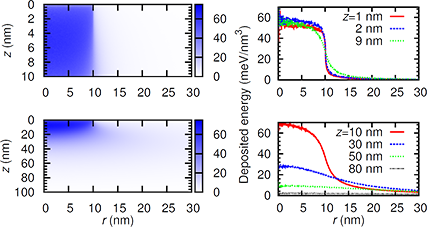
- -induced growth of tungsten nanostructures on SiO2 substrates by using a Monte Carlo simulation of the electron transport. This study gives a quantitative insight into the deposition of energy and charge in the substrate and in the already existing metallic nanostructures in the presence of the electron
- during post-growth electron-beam treatments. Keywords: electron backscattering; electron transport; (F)EBID; Monte Carlo simulation; PENELOPE; Introduction Electron-beam-induced deposition (EBID) [1][2][3] is a suitable method for the template-free fabrication of nanostructures. Molecules of a
- already for energies below a few hundred eV. The same absorption energy is used for the secondary electrons that are generated in the shower. Finally, to obtain our simulation results, we have sampled 108 trajectories. Results To provide a first visual insight into the electron transport process in the



Influence of particle size and fluorination ratio of CFx precursor compounds on the electrochemical performance of C–FeF2 nanocomposites for reversible lithium storage
Beilstein J. Nanotechnol. 2013, 4, 705–713, doi:10.3762/bjnano.4.80
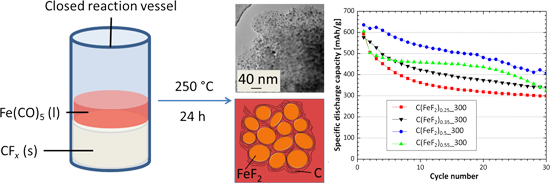
- fluorides, a well conducting nanoscale matrix is required to ensure the electron transport to the active material. Micrometer-sized metal fluoride particles are too big to accommodate the transfer of electric charge, and their capacity fades rapidly with cycling. Hence, a nanoscale dispersion of the


Optimization of solution-processed oligothiophene:fullerene based organic solar cells by using solvent additives
Beilstein J. Nanotechnol. 2013, 4, 680–689, doi:10.3762/bjnano.4.77
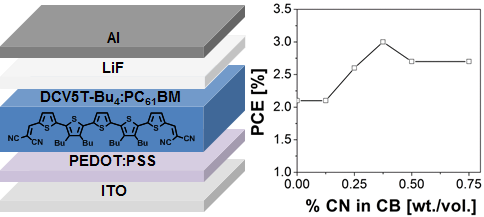
- the higher content of PCBM on the surface could lead to improved electron transport and collection in the photovoltaic device. The observed changes in morphology between Figure 6a and 6b can be rationalized through the different solubility of DCV5T-Bu4 in CN versus CB (6 vs 3 mg/mL). Since CN has a


AFM as an analysis tool for high-capacity sulfur cathodes for Li–S batteries
Beilstein J. Nanotechnol. 2013, 4, 611–624, doi:10.3762/bjnano.4.68
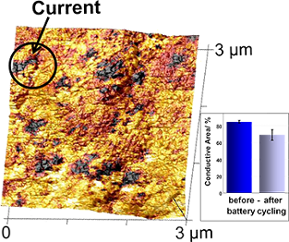
- materials and the current collector and should form a good network between the active material and the conductive carbon. In this way, the electron transport as well as the diffusion of the lithium ions is facilitated [33]. X-Ray diffraction Lithium containing components like the cathodes after cycling in a



Structural and thermoelectric properties of TMGa3 (TM = Fe, Co) thin films
Beilstein J. Nanotechnol. 2013, 4, 461–466, doi:10.3762/bjnano.4.54
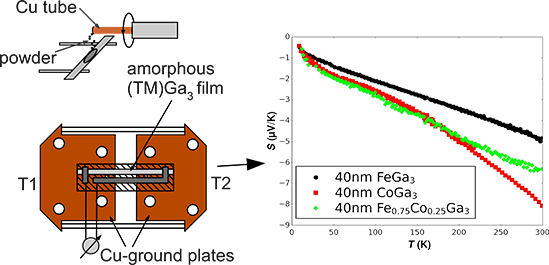
- ) within the observed temperature range of bulk and film samples coincide, indicating a predominant electron transport and 2) according to [20], substituting Fe by a concentration of 5 atom % Co in crystalline bulk samples leads to a transition into a metallic state. Similarly, while 1 atom % Co was found


Photoresponse from single upright-standing ZnO nanorods explored by photoconductive AFM
Beilstein J. Nanotechnol. 2013, 4, 208–217, doi:10.3762/bjnano.4.21
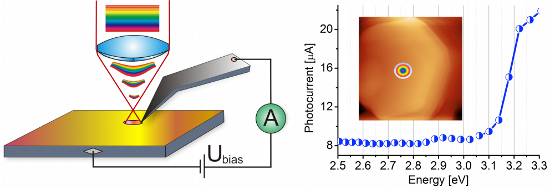
- region near the surface. The presence of adsorbed oxygen introduces a trap surface state within the band gap. The probability of population of this state drops with an increasing amount of oxygen adsorbed on the surface. As a result, the process of electron transport from the bulk to the surface is also



Functionalization of vertically aligned carbon nanotubes
Beilstein J. Nanotechnol. 2013, 4, 129–152, doi:10.3762/bjnano.4.14
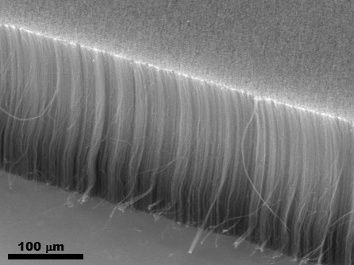

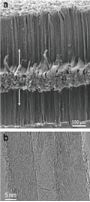


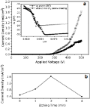

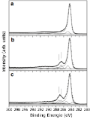


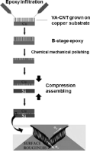


Electronic and transport properties of kinked graphene
Beilstein J. Nanotechnol. 2013, 4, 103–110, doi:10.3762/bjnano.4.12
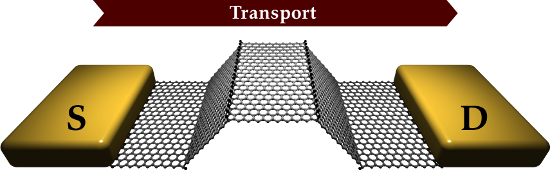
- efficient barriers for electron transport. In particular, two parallel kink lines form a graphene pseudo-nanoribbon structure with a semimetallic/semiconducting electronic structure closely related to the corresponding isolated ribbons; the ribbon band gap translates into a transport gap for electronic


Dimer/tetramer motifs determine amphiphilic hydrazine fibril structures on graphite
Beilstein J. Nanotechnol. 2012, 3, 658–666, doi:10.3762/bjnano.3.75
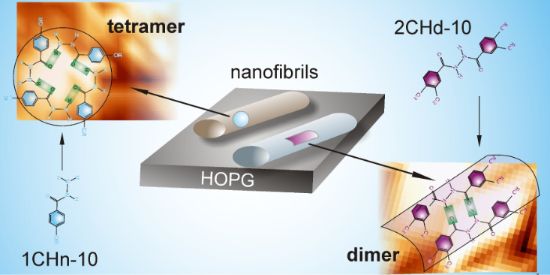
- ; interface; self-assembly; STM; Introduction One-dimensional micro- and nanostructures of organic compounds are important for solution-processable organic electronic devices [1][2][3], and electron transport through organic molecules is also the basis for a large number of biological processes [4




Focused electron beam induced deposition: A perspective
Beilstein J. Nanotechnol. 2012, 3, 597–619, doi:10.3762/bjnano.3.70
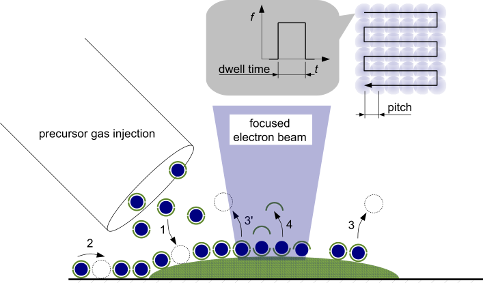
- of the surface-leaving electrons is very important for FEBID, in particular since the dissociation cross sections tend to be larger at low energies, Monte Carlo simulations, describing in detail the electron transport in the substrate and deposit, provide important insights [8][9]. For the purpose of





