


Search results
Search for "encapsulation" in Full Text gives 188 result(s) in Beilstein Journal of Nanotechnology.
Semitransparent Sb2S3 thin film solar cells by ultrasonic spray pyrolysis for use in solar windows
Beilstein J. Nanotechnol. 2019, 10, 2396–2409, doi:10.3762/bjnano.10.230
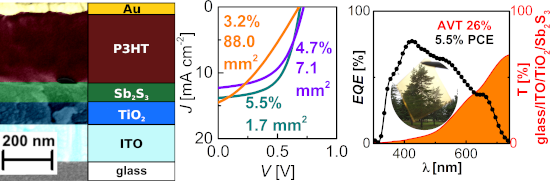
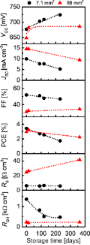
- area solar cells is probably due to moisture-assisted oxidation of P3HT [65]. Thus, to inhibit loss of PCE over time, encapsulation of the solar cell from moisture and oxygen is advised. Deng et al. studied the effect of storage time on the PCE of ITO/TiO2/as-deposited Sb2S3/P3HT/Au, and ITO/TiO2/Sb2S3
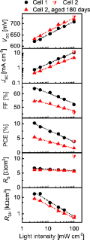
- triangles refer to 88 mm2 cell area. Samples composed of several small cells with P3HT only partially covered by Au were kept without any particular artificial conditions or encapsulation, and between measurements, were exposed to air and cycles of both indoor fluorescent tube irradiation and daylight for



Design of a nanostructured mucoadhesive system containing curcumin for buccal application: from physicochemical to biological aspects
Beilstein J. Nanotechnol. 2019, 10, 2304–2328, doi:10.3762/bjnano.10.222
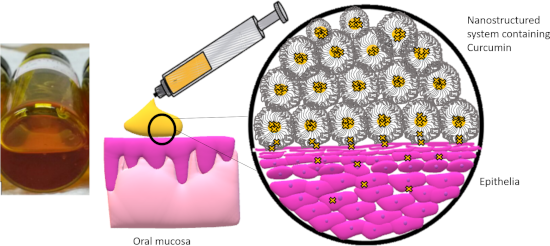
- an emission slit of 5–10 nm. The spectra are displayed in Figure 1. The systems showed a higher emission intensity and larger widths at pH 7, due to the thermal energy employed for CUR encapsulation during the rotary evaporation. Moreover, the emission intensity of the formulations was lower at pH 10


Microfluidics as tool to prepare size-tunable PLGA nanoparticles with high curcumin encapsulation for efficient mucus penetration
Beilstein J. Nanotechnol. 2019, 10, 2280–2293, doi:10.3762/bjnano.10.220
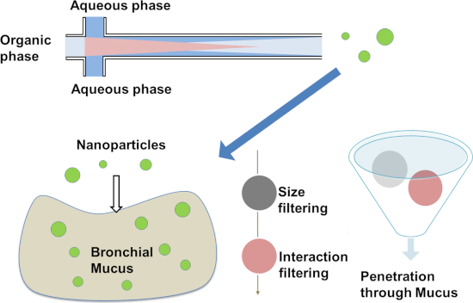
- channel geometry. Additionally, fast mixing (as in microfluidics) has shown a variety of advantages over conventional methods (bench-top) regarding the physicochemical and encapsulation properties of the nanoparticles [36]. A LabSmith system (LabSmith, Inc., Livermore, USA) was used for the manufacture of
- permeation of the particles through mucus, small particles are required. To ensure proper treatment, it is necessary to reach the target dose; therefore, a high drug loading into the NP carrier is necessary to compensate for their small size in order to reach the target dose. In this study, the encapsulation
- growth, thus ensuring that only the nuclei (small NPs) would be collected. Overall, the separation of the three stages could be meaningful to understand their respective influence on the colloidal size. We can conclude that on a length scale of >1 cm, the process is already completed. Encapsulation of


Design and facile synthesis of defect-rich C-MoS2/rGO nanosheets for enhanced lithium–sulfur battery performance
Beilstein J. Nanotechnol. 2019, 10, 2251–2260, doi:10.3762/bjnano.10.217
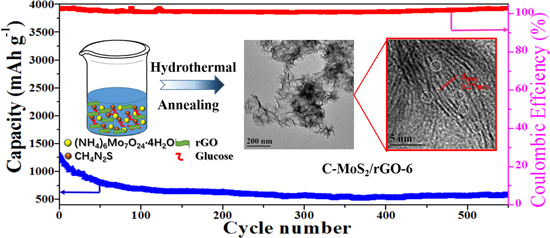
- in the high-frequency range, suggesting a smaller charge transfer resistance than MoS2-S. Since every cathode holds the same amount of sulfur, the distinct charge transfer resistance could be ascribed to the conductivity of the different host materials. Benefiting from the synergistic encapsulation


Incorporation of doxorubicin in different polymer nanoparticles and their anticancer activity
Beilstein J. Nanotechnol. 2019, 10, 2062–2072, doi:10.3762/bjnano.10.201
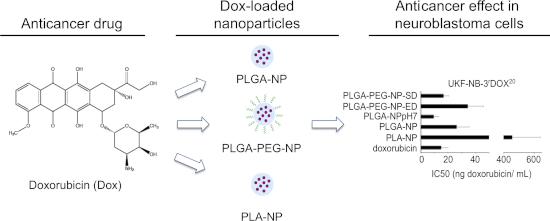
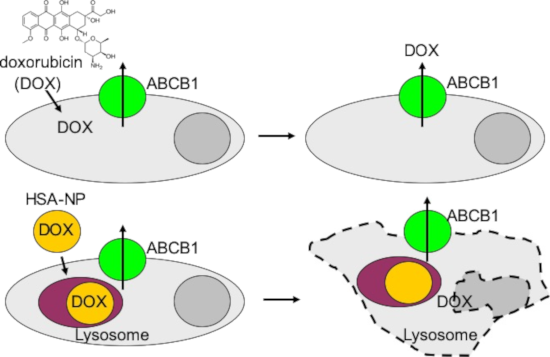
- . The expression of efflux transporters such as the ATP-binding cassette (ABC) transporter ABCB1 is an important resistance mechanism in therapy-refractory cancer cells. Drug encapsulation into nanoparticles has been shown to bypass efflux-mediated drug resistance, but there are also conflicting results
- carrier systems including PLA-, PLGA-, and PEG-based preparations have been reported to bypass the transporter-mediated efflux of anticancer drugs including doxorubicin [20][22][23][24][25][26][27][28][29][30][31]. However, there are also conflicting results from studies in which encapsulation of
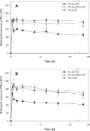
- limited efficacy for the encapsulation of hydrophilic drugs [43][44]. All nanoparticles displayed a similar drug release behaviour characterised by an initial burst release (Figure 3), which is in accordance to previous studies and may be caused by processes including the release of drug adsorbed to the





Optimization and performance of nitrogen-doped carbon dots as a color conversion layer for white-LED applications
Beilstein J. Nanotechnol. 2019, 10, 2004–2013, doi:10.3762/bjnano.10.197
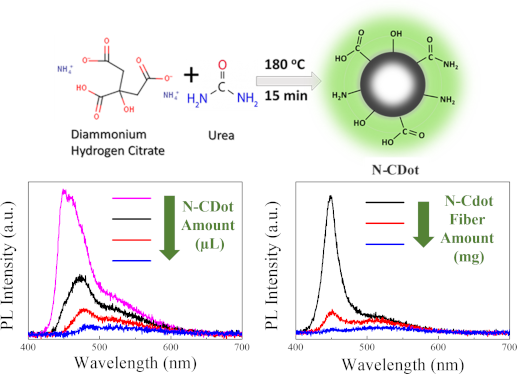
- –549 nm. These Si-CDots were used as the color conversion and encapsulation layers of a commercially available GaN blue LED chip. The authors report that the luminous efficacy of radiation (LER) of the resulting Si-CDot WLED is 70.93 lm/W, the CIE coordinates are (0.28, 0.35), and the CRI is 69. In


Porous silver-coated pNIPAM-co-AAc hydrogel nanocapsules
Beilstein J. Nanotechnol. 2019, 10, 1973–1982, doi:10.3762/bjnano.10.194
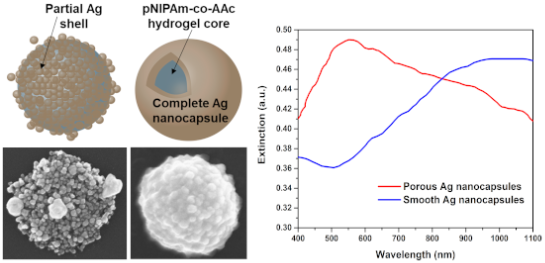
- encapsulation of thermo-responsive pNIPAM-co-AAc hydrogel cores within porous silver nanoshells, and for the purpose of comparison, within a complete nonporous silver nanoshell. We adopt a simple surfactant-free emulsion polymerization (SFEP) technique to grow the initial hydrogel core templates [74][75][76
- ]. Additionally, we use previously established seeded-growth methods to accomplish complete encapsulation of the hydrogel core within the porous and nonporous silver shells [77]. We envision that these types of particles will be technologically important for the future development of "smart" delivery and release


Charge-transfer interactions between fullerenes and a mesoporous tetrathiafulvalene-based metal–organic framework
Beilstein J. Nanotechnol. 2019, 10, 1883–1893, doi:10.3762/bjnano.10.183
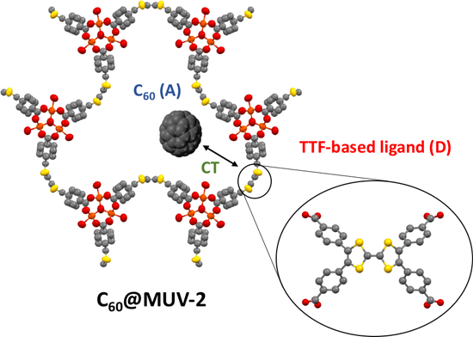
- (CT) process between the framework and the guest molecules is a crucial step towards the design of new electroactive MOFs. Herein, we present the encapsulation of fullerenes (C60) in a mesoporous tetrathiafulvalene (TTF)-based MOF. The CT process between the electron-acceptor C60 guest and the
- electron-donor TTF ligand is studied in detail by means of different spectroscopic techniques and density functional theory (DFT) calculations. Importantly, gas sorption measurements demonstrate that sorption capacity is maintained after encapsulation of fullerenes, whereas the electrical conductivity is
- , understanding the CT processes between the electron-acceptor C60 and the electron-donor molecules is fundamental in order to optimise photovoltaics and develop efficient solar cells [28]. The encapsulation of C60 in MOFs [29] has become a very interesting strategy for the purification of fullerenes [30][31][32




Microfluidic manufacturing of different niosomes nanoparticles for curcumin encapsulation: Physical characteristics, encapsulation efficacy, and drug release
Beilstein J. Nanotechnol. 2019, 10, 1826–1832, doi:10.3762/bjnano.10.177
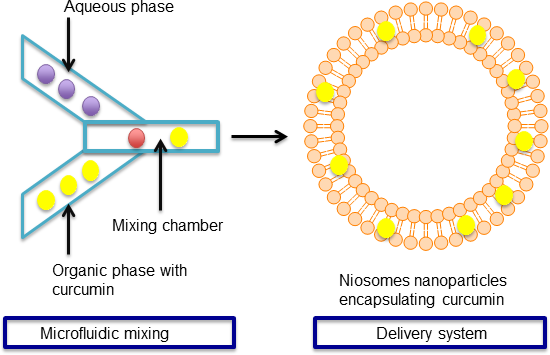
- longa that has been used in antitumor and anti-inflammation applications, exhibits very limited water solubility and rapid in vivo degradation, which limits its clinical application. To overcome these limitations, niosome nanoparticles were prepared by microfluidic mixing for curcumin encapsulation
- electron microscopy. Curcumin was encapsulated with a maximum encapsulation efficiency of around 60% using Tween 85 as the non-ionic surfactant. Niosomes prepared by microfluidic mixing provided a controlled release of curcumin, as indicated by the release profile of curcumin, improving its therapeutic
- preparations [13]. In the present work, niosomes for curcumin encapsulation were prepared by microfluidic mixing. Microfluidic mixing is a fast and reliable method for the preparation of niosomes, which allows for the preparation of small and monodisperse particles within seconds. Different formulations


Lipid nanostructures for antioxidant delivery: a comparative preformulation study
Beilstein J. Nanotechnol. 2019, 10, 1789–1801, doi:10.3762/bjnano.10.174
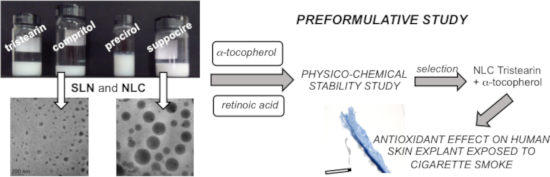
- transmission electron microscopy, small-angle X-ray diffraction, encapsulation efficiency, preliminary stability, in vitro cytotoxicity and protection against cigarette smoke. Nanostructured lipid carriers were found to reduce agglomerate formation and provided better dimensional stability, as compared to
- ]. The choice of the type and concentration of the nanoparticle lipid matrix is crucial since it can affect the physico-chemical aspects of SLNs and NLCs, the encapsulation parameters, as well as the long-term stability of the formulation. Thus, in view of an industrial production, a preliminary
- formulation screening appears imperative [35][36]. The present investigation has been conducted to develop a nanoparticulate approach for counteracting skin pollution. In particular, a preformulation study was performed to select the type and composition of lipid nanoparticles suitable for encapsulation of

Doxorubicin-loaded human serum albumin nanoparticles overcome transporter-mediated drug resistance in drug-adapted cancer cells
Beilstein J. Nanotechnol. 2019, 10, 1707–1715, doi:10.3762/bjnano.10.166
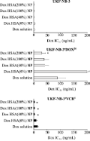
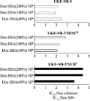
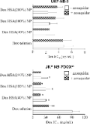
- doxorubicin-loaded HSA (40%) nanoparticles, HSA (100%) nanoparticles, and HSA (200%) nanoparticles and doxorubicin solution reached statistical significance (P < 0.05) (Figure 3). Doxorubicin encapsulation into HSA (40%), HSA (100%), or HSA (200%) nanoparticles reduced the doxorubicin IC50 in UKF-NB-3rVCR1
- doxorubicin encapsulation into HSA nanoparticles reduced the doxorubicin IC50 to the level of parental UKF-NB-3 cells (Figure 3, Supporting Information File 1, Figure S1, Table S1), which do not display detectable ABCB1 activity [20][22][23]. Hence, the increased activity of nanoparticle-bound doxorubicin


Layered double hydroxide/sepiolite hybrid nanoarchitectures for the controlled release of herbicides
Beilstein J. Nanotechnol. 2019, 10, 1679–1690, doi:10.3762/bjnano.10.163
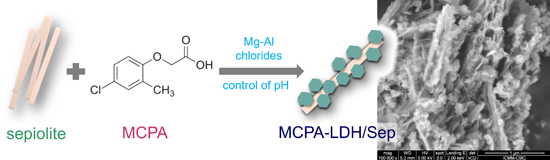
- coprecipitation step by assembling magnesium–aluminum layered double hydroxides (MgAl-LDH) and a sepiolite fibrous clay, with the simultaneous encapsulation of the herbicide 2-methyl-4-chlorophenoxyacetic acid (MCPA) as the MgAl-LDH retains its ion exchange properties. The synthetic procedure was advantageous in
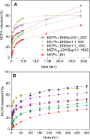
- bidistilled water, a continuous release of MCPA from the bionanocomposite beads was achieved for more than a week, while the non-encapsulated materials released the 100% of MCPA in 48 h. Besides, the encapsulation may allow for better handling and transport of the herbicide. Keywords: controlled release
- interest for agricultural purposes. Given that the amount of initial release of MCPA in all the formulations is quite high, the encapsulation of the hybrid nanoarchitectures in a protective biopolymer matrix was proposed to afford a better control over the release of the herbicide. In a previous study [49


Effects of gold and PCL- or PLLA-coated silica nanoparticles on brain endothelial cells and the blood–brain barrier
Beilstein J. Nanotechnol. 2019, 10, 941–954, doi:10.3762/bjnano.10.95
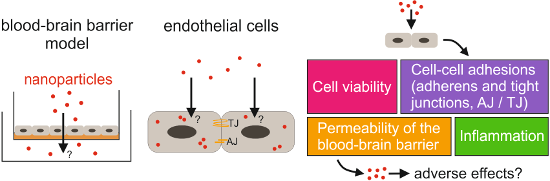
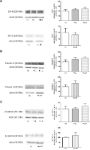
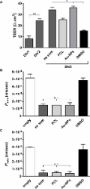
- encapsulation in nanoparticles (NPs), increases precision and success of the procedure. Alternatively, gold NPs (Au-NPs) allow for localized and precise application of LTS [7][8]. Nanomaterials are foreign materials and, hence, might elicit adverse effects when they come in contact with bodily tissue, vessels



Renewable energy conversion using nano- and microstructured materials
Beilstein J. Nanotechnol. 2019, 10, 771–773, doi:10.3762/bjnano.10.76

- cases in which organic or hybrid materials are involved [20]. For example protection against device degradation by advanced encapsulation techniques can help to further develop such technologies [21]. As it is the case for conventional materials, interface engineering is also a major factor for device
Ceria/polymer nanocontainers for high-performance encapsulation of fluorophores
Beilstein J. Nanotechnol. 2019, 10, 522–530, doi:10.3762/bjnano.10.53
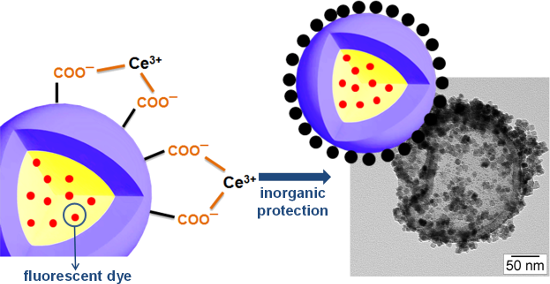
- , the encapsulation process of the dye leads to a drastic reduction of the total dye concentration in the sample and increases the amounts of dissolved molecular oxygen and encapsulated fluorescent dye. A variety of methods have been applied to encapsulate the fluorescent materials into micro- and
- oxygen. In our case, during the encapsulation of TDI molecules the molecular oxygen present in the external environment (e.g., in the water phase) can enter into already formed polymer nanocapsules due to the permeability of the thin polymer shell. Thus, singlet oxygen is created by the process of


Bidirectional biomimetic flow sensing with antiparallel and curved artificial hair sensors
Beilstein J. Nanotechnol. 2019, 10, 32–46, doi:10.3762/bjnano.10.4
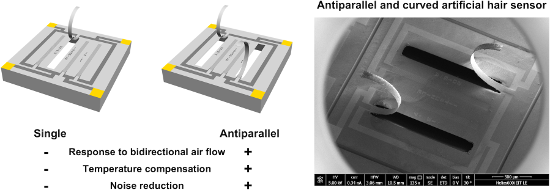
- 2 μm encapsulation layer to all sides of the cantilever beams as well as the flow sensor substrate (including circuitry). This process tunes the mechanical properties (flexural stiffness) of the artificial hair sensor, as described in [46]. Experimental methodology Three different experiments were


Enhanced antineoplastic/therapeutic efficacy using 5-fluorouracil-loaded calcium phosphate nanoparticles
Beilstein J. Nanotechnol. 2018, 9, 2499–2515, doi:10.3762/bjnano.9.233
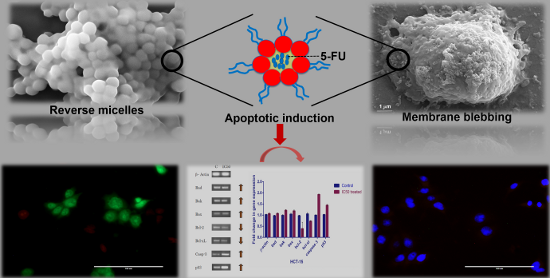
- with 5-FU and resulted in enhanced cellular uptake and efficacy [18]. Furthermore, a chitosan/gold nanocomposite was employed as a load carrier for 5-FU with an encapsulation efficiency of 96% [19]. Interestingly, monomeric self-assembled nucleoside nanoparticles (SNNPs) loaded with 5-FU were shown to
- inhibit the cancer cells of an oral squamous cell carcinoma (OSCC) mouse xenograft model with increased blood retention time [20]. Furthermore, a poly(amidoamine) (PAMAM) dendrimer stabilized with a silver nanoparticle surface for the encapsulation of 5-FU showed synergistic growth inhibition in A549 and
- , while aqueous-dissolved 5-FU comprises a dispersed phase. The calculated drug loading efficiency of 5-FU in CaP nanoparticles was 64%, which represents an improved drug encapsulation efficiency. The final yield of the chemical synthesis was found to be 10 mg/100 mL. UV–visible spectroscopic studies The


Performance analysis of rigorous coupled-wave analysis and its integration in a coupled modeling approach for optical simulation of complete heterojunction silicon solar cells
Beilstein J. Nanotechnol. 2018, 9, 2315–2329, doi:10.3762/bjnano.9.216
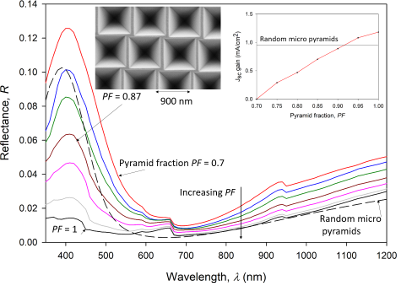
- (EVA) encapsulation (Figure 3). The front of the basic solar cell structure consists of transparent conductive oxide (e.g., indium tin oxide (ITO)), a thin p-doped and intrinsic amorphous silicon (a-Si:H) layer for electrical passivation, a slightly n-doped crystalline Si (c-Si) wafer (absorber), and
- solar cell structure, including the front encapsulation and glass, including nano- and microtextures at the interfaces of the cell. The simulation results showed that optimized nanotextures can outperform currently used microtextures, resulting in a JSC increase of 0.51 mA/cm2 (1.4%). A combined nano


Optimization of the optical coupling in nanowire-based integrated photonic platforms by FDTD simulation
Beilstein J. Nanotechnol. 2018, 9, 2248–2254, doi:10.3762/bjnano.9.209
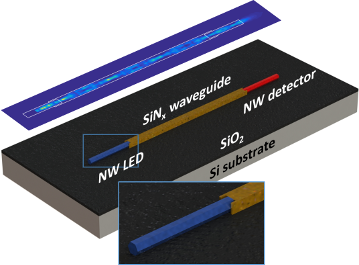
- -glass SiOx layer by removing it. 2D simulations at the horizontal cross-sectional plane in the middle of the waveguide were performed on the system without spin-on glass encapsulation to find the optimal width of the SiNx waveguide. For a final coupling efficiency calculations, 3D simulations were
- ] allowed the origin of the low coupling efficiency to be identified, namely the poor vertical overlap between the NWs and the SiNx waveguide due to the spin-on-glass encapsulation and the poor coupling from the wide SiNx waveguide to the NW photodetector. Therefore, we have focused on the optimization of
- photonic platform was optimized from an initial value of 8.7% up to 65.5%, which is a 7.5-fold increase from the initial structure. The optical losses due to the LED–waveguide and waveguide–photodetector coupling were reduced by removing the spin-on-glass encapsulation layer and reducing the SiNx waveguide


Lead-free hybrid perovskites for photovoltaics
Beilstein J. Nanotechnol. 2018, 9, 2209–2235, doi:10.3762/bjnano.9.207
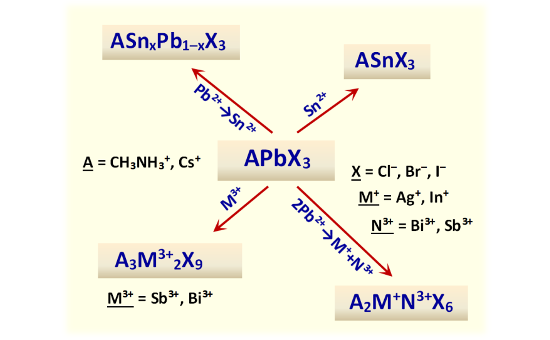
- toxic character of the released Pb2+, which requires the development of special recycling protocols [40][42]. While the first problem seems to be solvable, in particular by the encapsulation and a design of the cationic sublattice, the presence of Pb2+ cannot be avoided. Lead is allowed for usage in the
- -enriched surface layer [103]. The best Ca-substituted CsPbI3 HPs show a PCE of higher than 13% and maintain more than 85% of the initial efficiency for more than two months of testing with encapsulation [103]. A partial substitution of Pb(II) with In(III) yields HPs with a reduced lead content and a
- stability of MASnI3-based cells can also be strongly enhanced by doping with SnF2 [118][123][124]. The doped materials showed a remarkable stability when illuminated under ambient air conditions without additional encapsulation (Figure 4c). Additionally, the SnF2 doping results in a decrease of the HP


Electrospun one-dimensional nanostructures: a new horizon for gas sensing materials
Beilstein J. Nanotechnol. 2018, 9, 2128–2170, doi:10.3762/bjnano.9.202
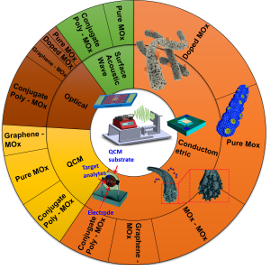
- limited ability to uniformly disperse NPs. A solution could be the encapsulation of NPs in polar proteins that could repel each other resulting in uniform dispersion over the entire surface area. Kim et al. [75][189][190][191] reported protein (apoferritin) encapsulated catalytic/noble metal NP






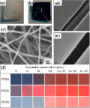
Nanoconjugates of a calixresorcinarene derivative with methoxy poly(ethylene glycol) fragments for drug encapsulation
Beilstein J. Nanotechnol. 2018, 9, 2057–2070, doi:10.3762/bjnano.9.195
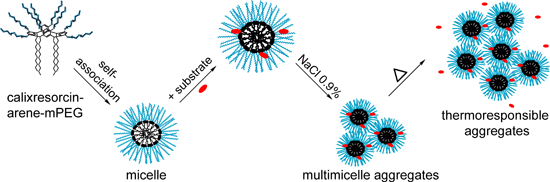
- a non-toxic amphiphilic calixresorcinarene capable to form nanoconjugates for drug encapsulation, tetraundecylcalixresorcinarene functionalized by methoxy poly(ethylene glycol) chains has been synthesized. The macrocycle obtained is characterized by low hemotoxicity. In aqueous solution it forms
- -buffered saline, the micelles of the macrocycle acquire thermoresponsive properties and exhibit a temperature-controlled release of doxorubicin in vitro. The combination of the low toxicity and the encapsulation properties of the obtained calixresorcinarene–mPEG conjugate shows promising potential for the
- use as a supramolecular drug-delivery system. Keywords: calixresorcinarene; drug encapsulation; hemotoxicity; methoxy poly(ethylene glycol); temperature-controlled release; Introduction One of the acute problems of modern medicinal therapy is the development of novel drug-delivery systems with low


A differential Hall effect measurement method with sub-nanometre resolution for active dopant concentration profiling in ultrathin doped Si1−xGex and Si layers
Beilstein J. Nanotechnol. 2018, 9, 1926–1939, doi:10.3762/bjnano.9.184
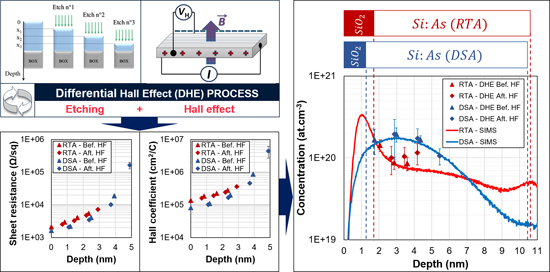
- use an encapsulation cell to protect metallic contacts of the electric test structures during etch (Figure S3, Supporting Information File 1). Due to the funnel-shaped cell designed for this study, the reaction zone is confined, which results in a reduction of the etch rate. By optimising the
- symmetrical shape with peripheral contacts separated from the centre region, in which the current lines converge allowing precise characterization. For this last reason, we were able to design an encapsulation cell (Figure S3, Supporting Information File 1) defining a reaction region in the centre part of the


Closed polymer containers based on phenylboronic esters of resorcinarenes
Beilstein J. Nanotechnol. 2018, 9, 1594–1601, doi:10.3762/bjnano.9.151
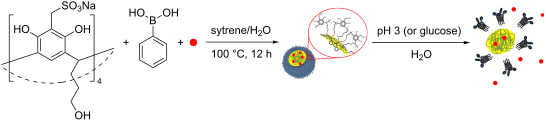
- as p(SRA-B) but using aqueous solutions of the dyes (5 mM) instead of water. After the synthesis, D@p(SRA-B) were dialyzed for three days. The encapsulation efficiency (EE) of p(SRA-B) toward PTS and Fl is 9.3 and 9.6%, respectively (Table 2). Due to the poor solubility of Py in water and the
- value or glucose. The determined pK values of the stepwise deprotonation of SRA (0.1 mM) and p(SRA-B) (0.14 mg/mL, which corresponds to 0.1 mM of SRA) and the dissociation of p(SRA-B) (universal buffer, 25 °C). Encapsulation efficiency of p(SRA-B) toward D (D = Fl and PTS) and release of D from D@p(SRA


Atomic-level characterization and cilostazol affinity of poly(lactic acid) nanoparticles conjugated with differentially charged hydrophilic molecules
Beilstein J. Nanotechnol. 2018, 9, 1328–1338, doi:10.3762/bjnano.9.126
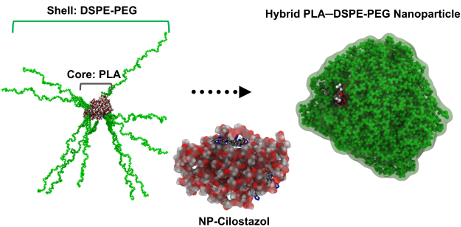
- charged groups must surround the surface region for an optimal functionalization/charge distribution, which is a key factor in determining physicochemical interactions with different biological molecules inside the organism. Another important point that was investigated was the encapsulation of drugs in
- , cilostazol [32][33]. PEG chains typically create an interface between the NP core (PLA) and the hydrophilic environment, where the drug encapsulation is largely dependent on the intrinsic affinity between the drug and the PLA core [31]. All-atom molecular dynamics (MD) simulations were performed using the
- in the experimental results, and all terminal groups were distributed at the surface of the NPs. The combination of MD-ReaxFF and blind docking techniques described in this work allowed the investigation of the antiplatelet drug encapsulation ability of polymeric NPs and can be used as a prior





