Search results
Search for "feedback" in Full Text gives 232 result(s) in Beilstein Journal of Nanotechnology. Showing first 200.
Lyapunov estimation for high-speed demodulation in multifrequency atomic force microscopy
Beilstein J. Nanotechnol. 2018, 9, 490–498, doi:10.3762/bjnano.9.47
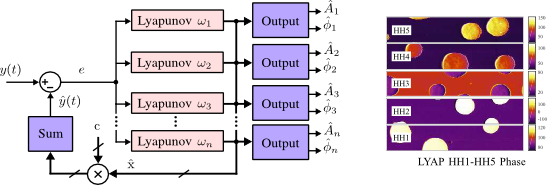
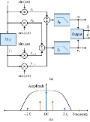
- , enabling both z-axis feedback and phase contrast imaging to be achieved. This article proposes a model-based multifrequency Lyapunov filter implemented on a field-programmable gate array (FPGA) for high-speed MF-AFM demodulation. System descriptions and simulations are verified by experimental results
- interactions [2], atomic scale resolution imaging is achieved, which far exceeds the optical diffraction limit. An image generated by constant-force topography AFM depends entirely on its feedback control loop. The composition of a sample is visualized in three-dimensions by plotting the control signal against
- observables for the characterization of nanomechanical properties. Due to the large bandwidth requirements of tracking high frequencies in MF-AFM, every component of the z-axis feedback loop detailed in Figure 1 needs to be optimized for speed. This includes the lateral and vertical nanopositioner for each





High-contrast and reversible scattering switching via hybrid metal-dielectric metasurfaces
Beilstein J. Nanotechnol. 2018, 9, 460–467, doi:10.3762/bjnano.9.44
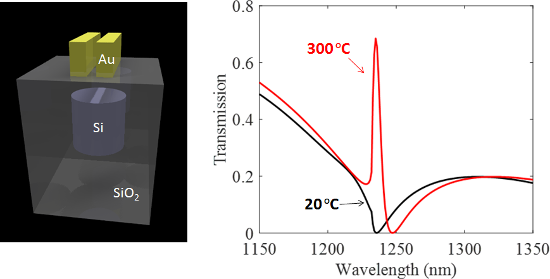
- , respectively. The polarization of the incident beam is along y direction (along the gold bar lengths). A grating resonance in the spectrum occurs around 1235 nm at the grating diffraction edge (λ0 = n × D = 1.45 × 850 nm = 1232.5 nm) due to the constructive diffractive feedback among neighbouring antennas


The nanofluidic confinement apparatus: studying confinement-dependent nanoparticle behavior and diffusion
Beilstein J. Nanotechnol. 2018, 9, 301–310, doi:10.3762/bjnano.9.30
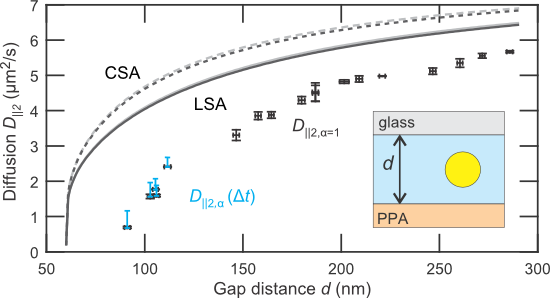
- background interference intensity and adjusts the height of the cover glass to keep the intensity constant. The feedback-loop can also operate during acquisition with a frequency of 20 Hz as illustrated by the red lines in Figure 2e. The blue lines indicate the measured laterally averaged gap distances for
- of the nanofluidic confinement apparatus. We vary the gap distance for different measurements and then use the feedback-control loop to keep it constant (see Figure 2e) while acquiring frames for 15 s. The number of particles in the field of view reduces with decreasing gap distance. In our
- distance by 1 nm every 10th frame. (d) Effective gap distance variation Δd in the nanofluidic slit obtained from the local variation in optical path difference. (e) The height of the cover glass (red) is adjusted by a feedback loop to ensure a constant gap distance (blue) during experiments. (a) Contrast



Anchoring of a dye precursor on NiO(001) studied by non-contact atomic force microscopy
Beilstein J. Nanotechnol. 2018, 9, 242–249, doi:10.3762/bjnano.9.26
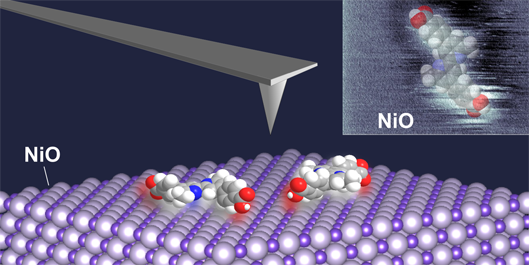
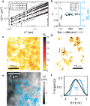
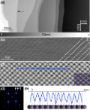
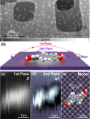
- of recording a first scan line with a closed feedback loop where the tip–sample distance is regulated using a topographic set point Δf1 and then acquiring a second scan in a open feedback loop following the recorded topography but applying an additional constant Z-offset, reducing the tip–sample



Liquid-crystalline nanoarchitectures for tissue engineering
Beilstein J. Nanotechnol. 2018, 9, 205–215, doi:10.3762/bjnano.9.22
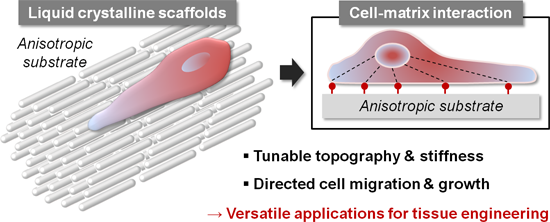
- the cell density estimated in human connective tissues. Additionally, the mechanical feedback from the matrix to the cell body could stimulate the development of myofibroblast phenotype. This implicates that the LC matrix of dense collagen fibrils can be used as a biocompatible and biodegradable 3D
- factors (2D/3D topography and mechanical stiffness) and the biochemical factors (cell binding and molecular stimulation). The mechanical feedback from the scaffold is transmitted to the cell nucleus (N) via actin bundles (stress fibers). The chemical signal is generated by growth factors and then


Combined scanning probe electronic and thermal characterization of an indium arsenide nanowire
Beilstein J. Nanotechnol. 2018, 9, 129–136, doi:10.3762/bjnano.9.15
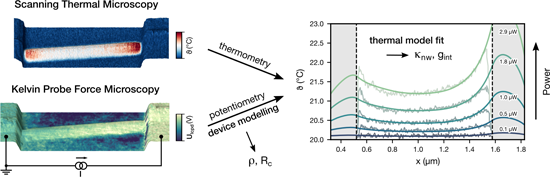
- topography, geometrical artefacts and feedback problems can be minimized by appropriate control schemes [20]. The typical lateral resolution of our SThM and KFM setups is on the order of the tip radius (below 10 nm), at a noise level of 20 μK·Hz−0.5 and 1 mV·Hz−0.5, respectively, depending on operating
- we detect modulations of the force gradient from the sidebands of the drive frequency fd in the deflection signal. The sidebands at fd ± fm are minimized by matching the dc tip bias to Ulcpd using a feedback loop. The sidebands at fd ± 2fm are proportional to the tip–sample capacitance gradient C
- ′′ and the KFM sensitivity. The feedback loop in our setup uses both pairs of sidebands and a Kalman filter to continuously estimate the surface potential and to avoid topographical artefacts [20]. Scanning thermal measurements of the InAs nanowire. (a) Setup for SThM measurements. (b) Topography and


A robust AFM-based method for locally measuring the elasticity of samples
Beilstein J. Nanotechnol. 2018, 9, 1–10, doi:10.3762/bjnano.9.1
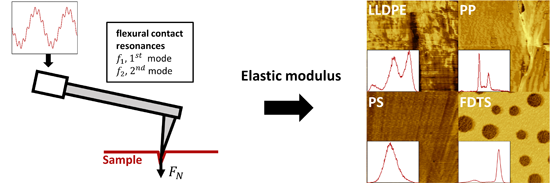
- excitation of two cantilever eigenmodes [17][18][19][20][21], are performed in non-dry air, the instability of the tip–sample distance feedback loop, due to the use of the frequency shift as control parameter, makes the application of the method difficult if not impossible. However, despite these
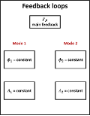
- modulus of the tip Etip is at least two orders of magnitude larger than that of the sample Esample then Feedback controls As introduced by Herruzo et al. [7], five different feedback loops are used as feedback controls, as shown in Figure 1: two feedback loops for keeping the amplitudes A1 and A2 constant
- , two feedback loops for keeping the phase shifts 1 and 2 constant in order to track the contact resonances f1 and f2, and the last feedback loop as main feedback for controlling the applied normal force FN. Experimental Microscope and data acquisition The measurements were performed with a flex AFM


Material discrimination and mixture ratio estimation in nanocomposites via harmonic atomic force microscopy
Beilstein J. Nanotechnol. 2017, 8, 2771–2780, doi:10.3762/bjnano.8.276
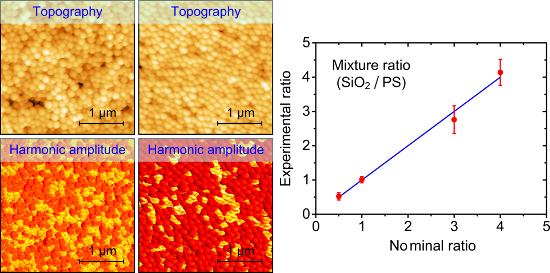
- materials and to estimate the mixture ratio of the constituent components in nanocomposites. The major influencing factors, namely amplitude feedback set-point, drive frequency and laser spot position along the cantilever beam, were systematically investigated. Employing different set-points induces
- signals were investigated systematically on a polymer blend composed of polystyrene (PS) and low-density polyehtylene (LDPE). We focused on the influence of feedback amplitude set-point, drive frequency and laser spot position along the cantilever beam. Based on these fundamental studies, harmonic AFM
- imaging was utilized to distinguish NP mixtures with different elastic properties and mixture ratios. Results and Discussion Effect of amplitude set-point The first investigated factor is the amplitude set-point, which is specified by A/A0 where A is the feedback amplitude and A0 the free amplitude. In




Towards molecular spintronics
Beilstein J. Nanotechnol. 2017, 8, 2464–2466, doi:10.3762/bjnano.8.245

- , taking into account that for device integration, the molecular layers need to obey certain boundary conditions, such as long-term stability, process compatibility, and the ability to integrate with electrode materials. Progress in this respect was only made possible by a continuous feedback from basic
- highly professional support and always very fast feedback. We would also like to thank all referees for their effort and constructive criticism. Georgeta Salvan and Dietrich R. T. Zahn Chemnitz, October 2017
Au nanostructure fabrication by pulsed laser deposition in open air: Influence of the deposition geometry
Beilstein J. Nanotechnol. 2017, 8, 2438–2445, doi:10.3762/bjnano.8.242
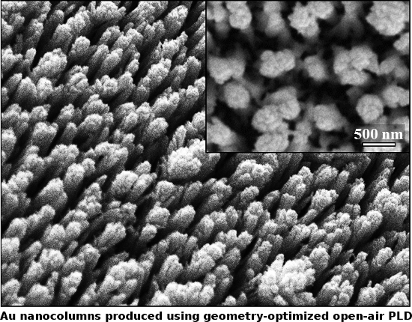
- coverage. It should be mentioned that a feedback between the optical and electrical properties of the nanostructures was observed. Higher optical transmission of the nanostructures was associated with a predominantly discrete morphology, as was discussed above. The conductivity of the samples was found to


Robust procedure for creating and characterizing the atomic structure of scanning tunneling microscope tips
Beilstein J. Nanotechnol. 2017, 8, 2389–2395, doi:10.3762/bjnano.8.238
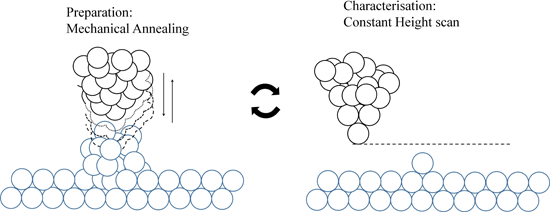
- [1][2], it became possible to image conducting surfaces with atomic resolution. STM operates by bringing the apex of a fine metallic wire into tunneling distance from a surface of interest. By providing feedback in the tunnel current and scanning the tip over the surface one can make topographic maps
- and mechanical drift have been stabilized, we release the current feedback and move the tip towards surface at a rate of 0.5 Å/s using a custom-written program in MATLAB. The motion is stopped once the conductance reaches the quantum of conductance (G0 = 2e2/h, which is what we expect for a single
- a detectable contribution. In order to scan at such high tunnel currents we first switch off the current feedback and bring the tip closer to the flat part of the surface to a fixed tunnel current value. This value is chosen to ensure that the current is as high as 30 nA, when the tip is over the


Magnetic properties of optimized cobalt nanospheres grown by focused electron beam induced deposition (FEBID) on cantilever tips
Beilstein J. Nanotechnol. 2017, 8, 2106–2115, doi:10.3762/bjnano.8.210
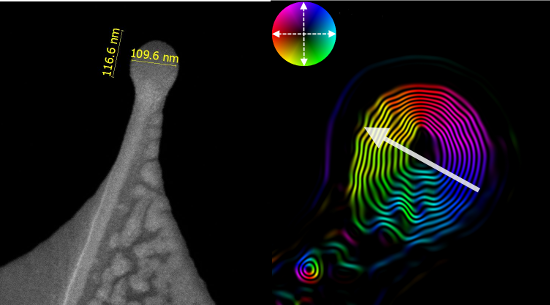
- standard laser deflection technique is used to monitor the displacement of the cantilever. Its resonance frequency is tracked using a piezoelectric bimorph and a feedback electronic circuit based on a phase lock loop. The relative frequency shift due to the force acting on the magnetic moment m of the


High-stress study of bioinspired multifunctional PEDOT:PSS/nanoclay nanocomposites using AFM, SEM and numerical simulation
Beilstein J. Nanotechnol. 2017, 8, 2069–2082, doi:10.3762/bjnano.8.207
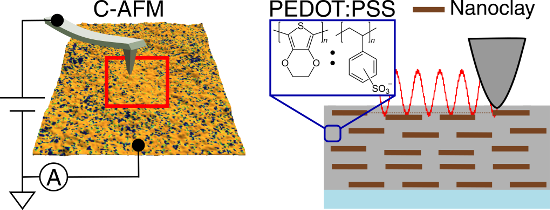
- . The fundamental eigenmode is operated in amplitude modulation, i.e., there is a feedback loop modulating the oscillation amplitude for acquiring the topography of the sample, while the higher eigenmode (in this case the second eigenmode) is operated with constant excitation frequency and amplitude
- , without feedback [61]. CRFM-DART was used as implemented in the Asylum Research software. In general, the cantilever is shaken sinusoidally while in continuous contact with the sample, measuring two parameters: the resonance frequency and quality factor of the tip–sample junction (as shown in Figure 6a


(Metallo)porphyrins for potential materials science applications
Beilstein J. Nanotechnol. 2017, 8, 1786–1800, doi:10.3762/bjnano.8.180
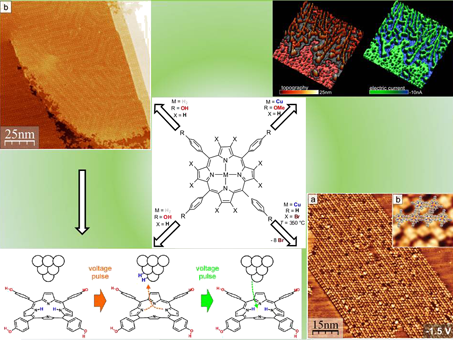
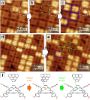
- from [44], copyright 2014 Elsevier. (a–e) Manipulation of the electronic structure by applying a voltage pulse with the STM tip at the position marked with a white circle. Converted molecules are marked with green (1→2) or blue (2→1) rectangles. (a–c) 1→2→1 conversion with 2 V pulses for 3 s (feedback






Transport characteristics of a silicene nanoribbon on Ag(110)
Beilstein J. Nanotechnol. 2017, 8, 1699–1704, doi:10.3762/bjnano.8.170
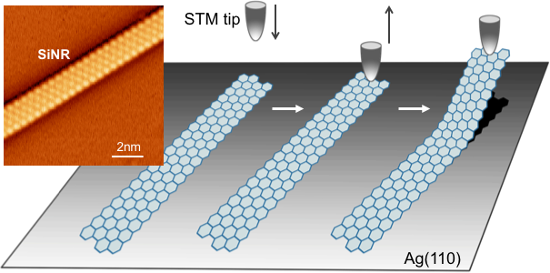
- consisting of an SiNR, the STM tip and the Ag substrate. This method reduces the SiNR–Ag interaction and enables us to reveal the intrinsic features of SiNRs. The measurements were performed by a scheme summarized in Figure 3a. At first, the STM tip is fixed over one end of the SiNR while the STM feedback
- feedback is turned off at VS = 100 mV and It = 20 pA and the conductance is measured at VS = 100 mV. The conductance measured during the tip approach and retraction procedures is plotted with black and blue circles, respectively. The red curve shows the result of the least-squares fitting. In the


Air–water interface of submerged superhydrophobic surfaces imaged by atomic force microscopy
Beilstein J. Nanotechnol. 2017, 8, 1671–1679, doi:10.3762/bjnano.8.167
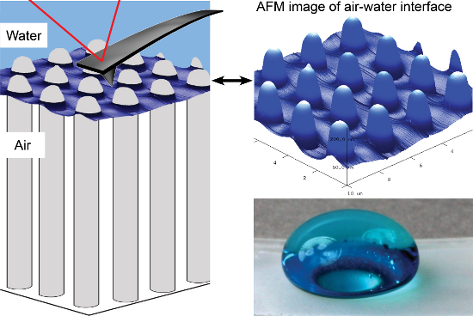
- the data presented in Figure 3. However, the corresponding cross-section (Figure 5b, red line) contains two artifacts: the additional elevation at the pillar top is due to the feedback loop of the AFM system causing an overshoot in the height signal. The slope on the right, which seems to be too flat



High-speed dynamic-mode atomic force microscopy imaging of polymers: an adaptive multiloop-mode approach
Beilstein J. Nanotechnol. 2017, 8, 1563–1570, doi:10.3762/bjnano.8.158
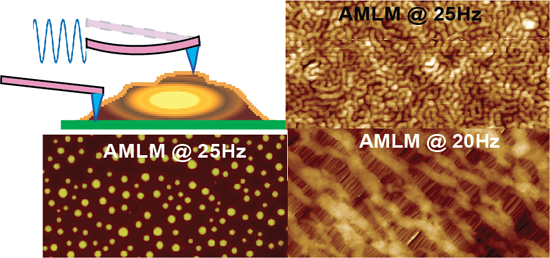
- control mechanism applied [4][6]. Due to the time delay inevitably induced into the feedback loop for maintaining the RMS tapping amplitude during imaging, errors in tracking the sample topography can quickly result in loss of the tip–sample contact and annihilation of the probe tapping when the imaging
- deflection (the TM deflection) – in addition to the transitional RMS amplitude feedback control, along with an online iterative feedforward control to track the sample topography. Although this AMLM technique has been proposed recently [1], imaging results of only one polymer sample at large scanning size
- track the sample topography by the AFM z-axis piezo. AMLM imaging introduces a feedback control of inner–outer loop structure to regulate the mean cantilever deflection per vibration period (called the TM-deflection). Thus the averaged (vertical) position of the cantilever in each tapping period is kept




A review of demodulation techniques for amplitude-modulation atomic force microscopy
Beilstein J. Nanotechnol. 2017, 8, 1407–1426, doi:10.3762/bjnano.8.142
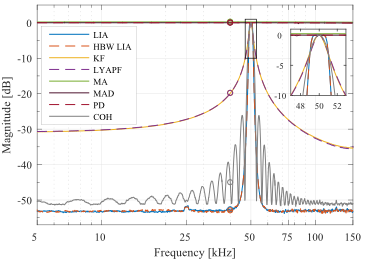
- used digital processing system. As a crucial bandwidth-limiting component in the z-axis feedback loop of an atomic force microscope, the purpose of the demodulator is to obtain estimates of amplitude and phase of the cantilever deflection signal in the presence of sensor noise or additional distinct
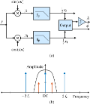
- nonlinear tip–sample forces acting on the cantilever, a feedback loop has to be employed in order to maintain a fixed setpoint with respect to the sample; the controller performs disturbance rejection by commanding a nanopositioner in its vertical direction. As the high-frequency cantilever deflection
- signal cannot be controlled directly, low-frequency measurables such as the change in oscillation amplitude in amplitude-modulation AFM [11] have to be employed. Other feedback variables such as the shift in cantilever resonance frequency in frequency-modulation AFM [13] or the phase shift in phase




Adsorption characteristics of Er3N@C80on W(110) and Au(111) studied via scanning tunneling microscopy and spectroscopy
Beilstein J. Nanotechnol. 2017, 8, 1127–1134, doi:10.3762/bjnano.8.114
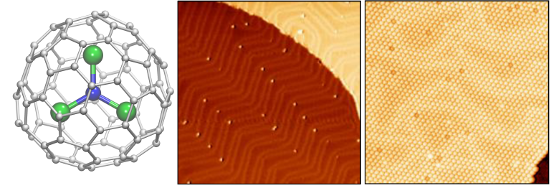
- , with the bias voltage applied to the tip. The generated images were processed using WSxM [13]. The spatially resolved spectroscopy information was taken by I(U) measurements at open feedback loop at every pixel of the corresponding image. In order to obtain dI/dU(U) data a posterior numerical


BTEX detection with composites of ethylenevinyl acetate and nanostructured carbon
Beilstein J. Nanotechnol. 2017, 8, 982–988, doi:10.3762/bjnano.8.100
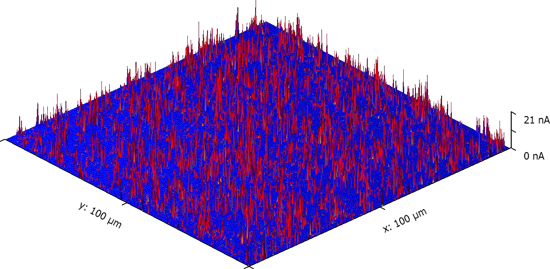
- quantitatively characterizes the degree of dispersion. The investigated area size is 100 × 100 μm, the feedback system gain is 1.0, the probe movement speed is 142 μm/s, the image resolution is 512 pt, the applied voltage is 0.5 V and the set point is +2. From [24] the composite is characterized by acquiring a


Scaling law to determine peak forces in tapping-mode AFM experiments on finite elastic soft matter systems
Beilstein J. Nanotechnol. 2017, 8, 968–974, doi:10.3762/bjnano.8.98
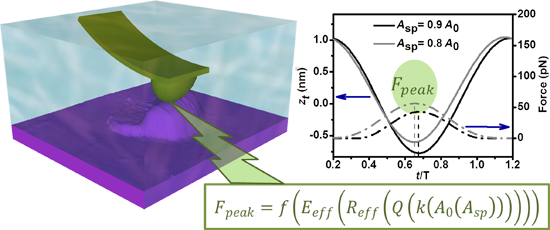
- oscillates at its fundamental flexural resonant frequency while the amplitude is used as the feedback parameter to record the topography while imaging. When the tip is in close proximity to the sample the amplitude and the phase shift of the oscillation change with the strength of the tip–sample interaction
- . Ricardo Garcia, Elena T. Herruzo, Marco Chiesa, and Torsten Stuehn for reading the manuscript and giving his valuable feedback.


Analysis and modification of defective surface aggregates on PCDTBT:PCBM solar cell blends using combined Kelvin probe, conductive and bimodal atomic force microscopy
Beilstein J. Nanotechnol. 2017, 8, 579–589, doi:10.3762/bjnano.8.62
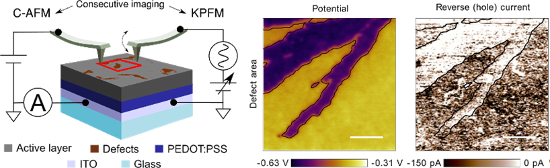
- other hand, the soft cantilever makes it possible to obtain current and potential correlations for the defective areas without severely altering the structure of the aggregates, by applying only a few nanonewtons of feedback force. Although it is in principle possible to use contact-mode AFM for the
- . (a)–(d) Topographies consecutively obtained by tapping-mode bimodal AFM using the first eigenmode of the cantilever for the distance feedback control and the third eigenmode for modulating indentation. (e)–(h) The third eigenmode amplitude signal, corresponding to a free amplitude of about 3 nm


Copper atomic-scale transistors
Beilstein J. Nanotechnol. 2017, 8, 530–538, doi:10.3762/bjnano.8.57
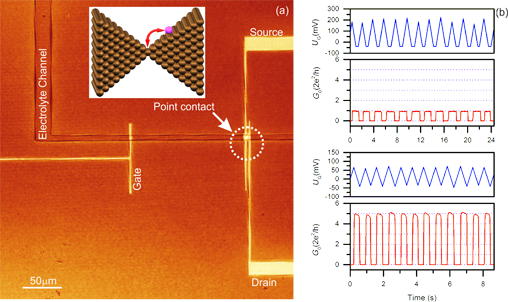
- ) influence the switching rate of the transistor and the copper deposition on the electrodes, and correspondingly shift the electrochemical operation potential. The copper atomic-scale transistors can be switched using a function generator without a computer-controlled feedback switching mechanism. The copper
- developed in “NI LabVIEW” and the conductance was recorded simultaneously with the same program. The electrochemical potential was set using a feedback mechanism, in which the measured conductance was compared with a preset value of quantum conductance of the copper atomic-scale transistor. A transistor
- are operated. With the feedback mechanism the conductance switching is well controlled between “open” and “quantum conductance” (as displayed in Figure 2 and Figure 3), but the duration of each switching cycle varies. Moreover, the maximum/minimum potential values applied on the gate change from one


Multimodal cantilevers with novel piezoelectric layer topology for sensitivity enhancement
Beilstein J. Nanotechnol. 2017, 8, 358–371, doi:10.3762/bjnano.8.38
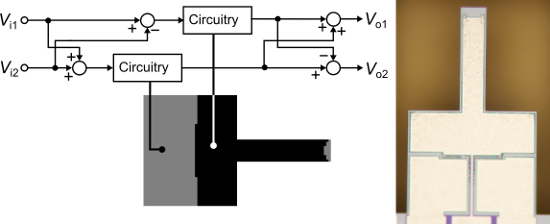
- frequency shift of the cantilever’s motion correlate to properties of the sample [15]. When closing a feedback loop around these observables with the z-axis nanopositioner, the controller output is routinely used to map the surface topography of the sample. Recently, the additional excitation and detection
- structure as in Equation 21, however the resulting transfer function shows flipped poles and zeros (compare Figure 7) as well as slightly differing gains, quality factors and resonance frequencies due to the internal feedback nature in Equation 20 [40]. The transfer function in the neighborhood of the


When the going gets rough – studying the effect of surface roughness on the adhesive abilities of tree frogs
Beilstein J. Nanotechnol. 2016, 7, 2116–2131, doi:10.3762/bjnano.7.201
- on the force plate which could be moved relative to it by a pair of computer-controlled precision manipulating stages (model PD-126M, Physik Instrumente, Karlsruhe, Germany). A force feedback system implemented in LabView was programmed to maintain a constant preload (2 mN) for measurements of