


Search results
Search for "gap" in Full Text gives 760 result(s) in Beilstein Journal of Nanotechnology. Showing first 200.
Measurements of dichroic bow-tie antenna arrays with integrated cold-electron bolometers using YBCO oscillators
Beilstein J. Nanotechnol. 2024, 15, 26–36, doi:10.3762/bjnano.15.3
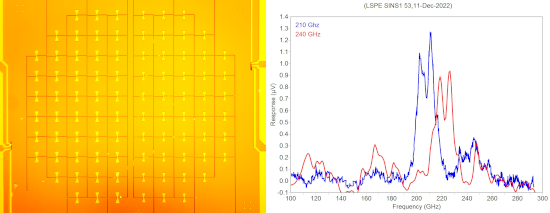
- ] (Figure 1a). The basic element of the receiving matrix is a dipole bow-tie antenna, in the gap of which the CEB is embedded (Figure 1b). This matrix is located on a silicon substrate, which is 260 µm thick. Since the operation of the CEB in the matrix is assumed to be in the voltage bias mode, the


TEM sample preparation of lithographically patterned permalloy nanostructures on silicon nitride membranes
Beilstein J. Nanotechnol. 2024, 15, 1–12, doi:10.3762/bjnano.15.1
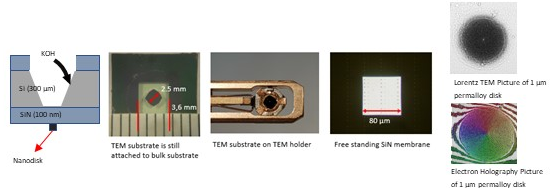
- . Alignment of the stencil mask in a flip-chip configuration with the sample under clean room conditions prior to metal deposition plays an important role as a single dust particle can increase the gap between the mask and the sample up to about 100-fold, thereby increasing the shadowing effect greatly. KOH


A bifunctional superconducting cell as flux qubit and neuron
Beilstein J. Nanotechnol. 2023, 14, 1116–1126, doi:10.3762/bjnano.14.92
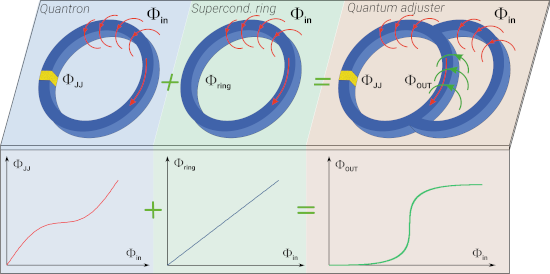
- example, for the parameters l = 2 and D = 0.001, corresponding to the adiabatic control region with symmetric magnetic flux (see Figure 2c), the energy gap between ground and first excited states attains its minimum value equal to during increase and decrease of the external flux (the common form of the



Dual-heterodyne Kelvin probe force microscopy
Beilstein J. Nanotechnol. 2023, 14, 1068–1084, doi:10.3762/bjnano.14.88
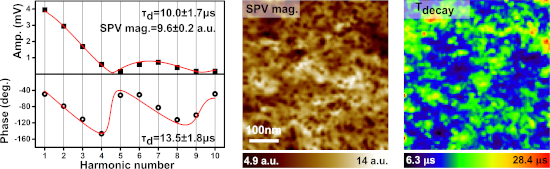
- confinement in the vertical direction and their smooth surfaces with atomic thickness control, very precise control over the optical gap and exciton energy of NSs can be achieved through chemical synthesis, making them very interesting




Isolation of cubic Si3P4 in the form of nanocrystals
Beilstein J. Nanotechnol. 2023, 14, 971–979, doi:10.3762/bjnano.14.80
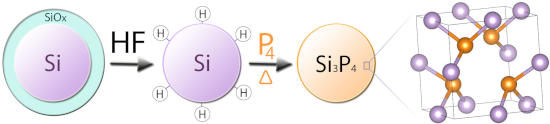
- disordered semiconductor material would be to find the energy at which the attenuation coefficient exceeds 104 cm−1 (the optical gap estimated this way amounts to 2.3 eV). All of these observations disprove earlier theoretical assumptions of defective zinc blende Si3P4 as being a narrow-bandgap semiconductor


Antibody-conjugated nanoparticles for target-specific drug delivery of chemotherapeutics
Beilstein J. Nanotechnol. 2023, 14, 912–926, doi:10.3762/bjnano.14.75
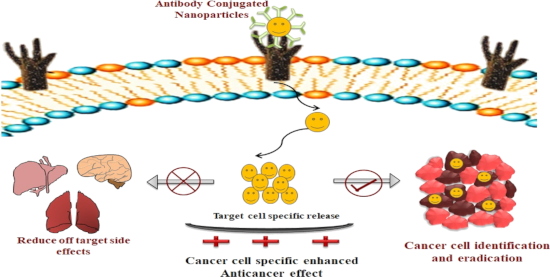
- that 13 targeted NPs had been progressed into clinical trials in 2013; however, their therapeutic efficacy in humans has not been proven yet [123]. The available literature portrays a picture of a potential translational gap between preclinical and clinical studies. So far, no ACNPs have been approved



Industrial perspectives for personalized microneedles
Beilstein J. Nanotechnol. 2023, 14, 857–864, doi:10.3762/bjnano.14.70
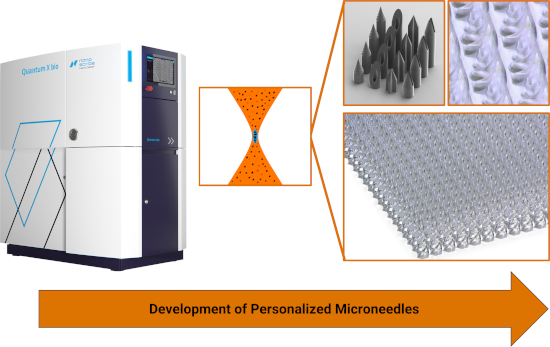
- printers (e.g., Nanoscribe Quantum X platforms) producing polymer masters. The increased scan speed and throughput are the result of new supporting technologies coming to market, such as replacing piezoelectric stages with galvanometric mirrors. These new technologies continue to decrease the gap in


Biomimetics on the micro- and nanoscale – The 25th anniversary of the lotus effect
Beilstein J. Nanotechnol. 2023, 14, 850–856, doi:10.3762/bjnano.14.69

- material through a few steps. In the first step, a molten polypropylene layer is laminated onto a carrier film and run over rollers to cool down. Then the combined laminate is forced through a gap between a hot sandblasted roller and a cold smooth one. The surface roughness and temperature difference
- create the hairy structured surface on the polypropylene side. In the final step, the structured film is separated from the carrier. The authors were able to set the hair length and density with the usual industrial control variables of speed, temperature, and gap width. The obtained result was a very


Control of morphology and crystallinity of CNTs in flame synthesis with one-dimensional reaction zone
Beilstein J. Nanotechnol. 2023, 14, 741–750, doi:10.3762/bjnano.14.61
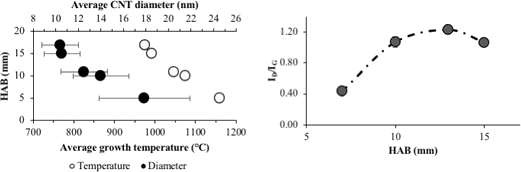
- the size histograms. Figure 3a and Figure 3b show the temperatures and CNT diameter distributions for methane diffusion flame and premixed flame, respectively. For the diffusion flame synthesis, a clear gap in the average temperature of around 100 °C is observed for the CNT growth regions below and


Cross-sectional Kelvin probe force microscopy on III–V epitaxial multilayer stacks: challenges and perspectives
Beilstein J. Nanotechnol. 2023, 14, 725–737, doi:10.3762/bjnano.14.59
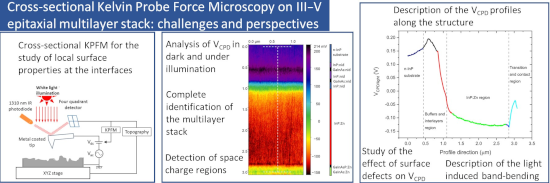
- is set at mid-gap, whereas it is moved towards the valence (conduction) band if the ratio of acceptor to donor DOS is larger (smaller) than 1 [24]. Results KPFM cross-sectional investigation under dark conditions The cross section of the sample was first investigated by KPFM under dark conditions
- growth processes. The InP:nid layers fabricated at III–V Lab usually present an intrinsic n-type doping of the order of 1015 cm−3, which results in shallow donor energy levels within the energy gap. Since the intentional Zn p-type doping concentration is much greater than this residual n-type doping
- reported in Figure 6. In this specific case, the charge neutrality level of surface defects is set at mid-gap. Thus, increasing the surface defect densities will produce a pinning of the Fermi level at the neutrality level of the surface states and the energy of valence and conduction bands will appear


Humidity-dependent electrical performance of CuO nanowire networks studied by electrochemical impedance spectroscopy
Beilstein J. Nanotechnol. 2023, 14, 683–691, doi:10.3762/bjnano.14.54
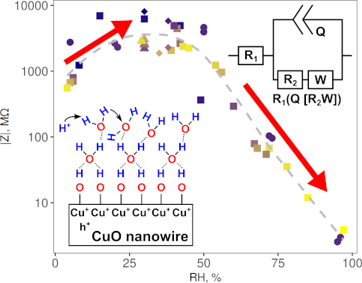
- interconnects, the distance between the metallic microelectrodes was varied from 2 to 8 µm [26]. The arrays of microelectrode pairs with different gap distances were grouped in four rows on a chip (Figure 1b). The dielectrophoretically aligned nanowires connected the gaps between pairs of microelectrodes
- the gap (Figure 1d); however, the electrical signal was assumed to come from the CuO nanowire bundles interconnecting the electrodes. Examples of impedance spectra of the CuO networks interconnecting the metal electrodes are shown in Figure 2. Figure 2a shows Nyquist plots measured for variable
- the nanowire bundle sizes and electrode gap distances, average electrochemical cell widths of 20 µm, cell heights of 1.1 µm and cell lengths of 7.2 µm were estimated. Numerical values for equivalent circuit parameters from fitting the experimental data were calculated per unit area considering the


Metal-organic framework-based nanomaterials as opto-electrochemical sensors for the detection of antibiotics and hormones: A review
Beilstein J. Nanotechnol. 2023, 14, 631–673, doi:10.3762/bjnano.14.52
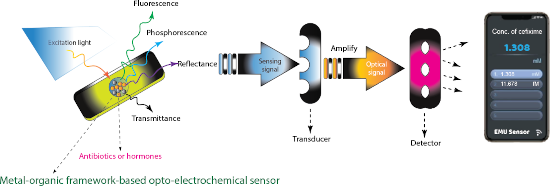
- accessible states of the metal ions in the framework versus the HOMO–LUMO gap of the organic ligand(s), all have an impact on the emission that results from MOFs. Metal-based luminescence: The incorporation of lanthanide elements into the MOF structure results in the most frequent occurrence of metal-based


Thermal transport in kinked nanowires through simulation
Beilstein J. Nanotechnol. 2023, 14, 586–602, doi:10.3762/bjnano.14.49
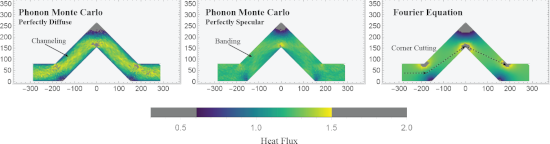
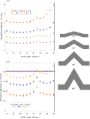
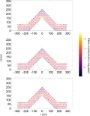
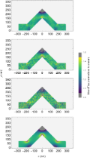
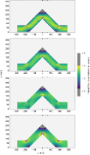
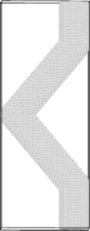
- solutions of the heat equation serves to better bridge the gap between heat transport phenomena at the macro- and the microscale and shows that multiple factors are significant in kinked systems beyond disruption of ballistic paths, including lattice orientation and phonon reflections. Results and




Observation of multiple bulk bound states in the continuum modes in a photonic crystal cavity
Beilstein J. Nanotechnol. 2023, 14, 544–551, doi:10.3762/bjnano.14.45
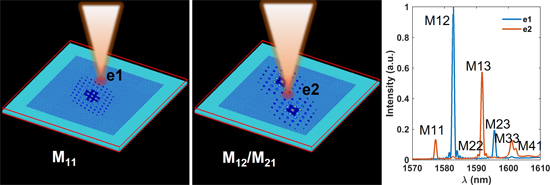
- regions A and B presented in Figure 2b indicate that the energy of the BIC structures in region A is embedded in the bandgap of region B, thus suppressing in-plane leakage. A transition region with a gap (g = 760 nm) between region A and region B is introduced to compensate the momentum mismatch at the


Nanoarchitectonics to entrap living cells in silica-based systems: encapsulations with yolk–shell and sepiolite nanomaterials
Beilstein J. Nanotechnol. 2023, 14, 522–534, doi:10.3762/bjnano.14.43
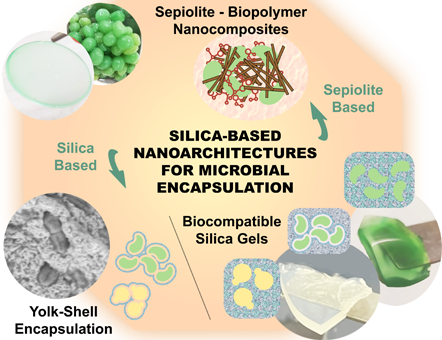
- easily observable. This indicates that the cyanobacteria encapsulated in yolk–shell microstructures, instead of being directly attached to an inorganic surface, are floating separated by a space between cell wall and silica shell. This gap is crucial to alleviate the previously observed stress


Molecular nanoarchitectonics: unification of nanotechnology and molecular/materials science
Beilstein J. Nanotechnol. 2023, 14, 434–453, doi:10.3762/bjnano.14.35
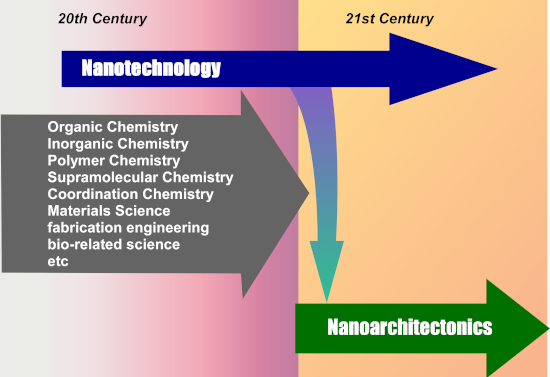
- -surface synthesis; Review Introduction Nanotechnology is a game changer that has innovated the course of scientific research. Nanotechnology innovations have unlocked mysteries at the nanoscale [1][2][3]. These research innovations have bridged the gap between nanoscale basic science and materials
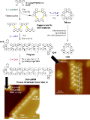
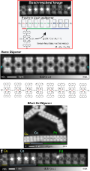
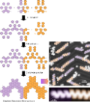
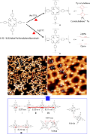
- tip was brought close enough to obtain a single-atom conductance gap, it was retracted and silicon atoms were removed. A perpendicular magnetic field was applied to explore physical phenomena such as Kondo resonance. The nanoarchitectonics of magnetic topological states due to spin polarization in





Polymer nanoparticles from low-energy nanoemulsions for biomedical applications
Beilstein J. Nanotechnol. 2023, 14, 339–350, doi:10.3762/bjnano.14.29
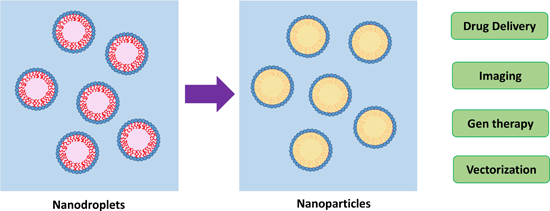
- the treatment of a vast number of diseases including cancer and neurological diseases. Continuous effort in the field of designing novel polymeric nanoparticle-based formulations might contribute to reduce the existing gap between preclinical and clinical models. This extensive research might overcome




Overview of mechanism and consequences of endothelial leakiness caused by metal and polymeric nanoparticles
Beilstein J. Nanotechnol. 2023, 14, 329–338, doi:10.3762/bjnano.14.28
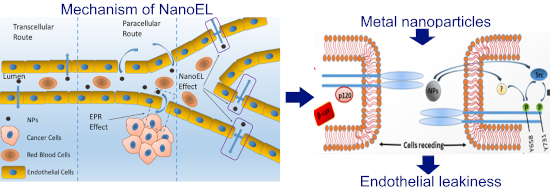
- (CNS), where endothelial cells form the tightest and the most selective blood–brain barrier (BBB) that provides protection against the penetration of harmful substances and pathogens. Other types of connections include adherens junctions, maintained primarily by transmembrane VE-cadherin, and gap
- achievable utilizing NPs less than 100 nm in diameter. In contrast, active targeting strategies involve functionalizing the NP surface with appropriate ligands specific for receptors overexpressed by the cancer cells (e.g., folic acid and transferrin). The combination of the paracellular gap size resulting
- actin remodeling process with Y27632 (10 μM) significantly reduced the gap formation induced by Au NPs (white arrowheads). Green and blue fluorescent signals represent the VE-cadherin and nucleus, respectively. Scale bar: 50 μm. Figure 4 was reprinted with permission from [33], Copyright 2017 American


Bismuth-based nanostructured photocatalysts for the remediation of antibiotics and organic dyes
Beilstein J. Nanotechnol. 2023, 14, 291–321, doi:10.3762/bjnano.14.26
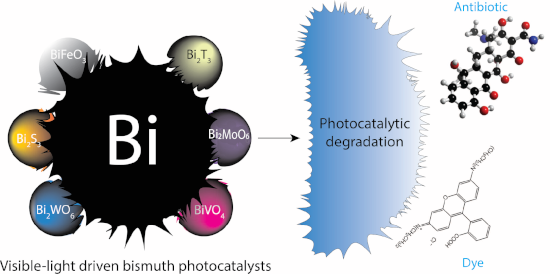
- inactivate pathogens. The term “photocatalysis” refers to chemical reactions that use light and a photocatalyst (basically a semiconductor). A few of the requirements that an effective photocatalyst system should satisfy include high sunlight absorption, an appropriate gap (1.5–2.8 eV), long-term charge
- semiconductors are connected, heterojunctions can be divided into three types, namely type-I staggered gaps, type-II straddling gaps, and type-III broken gaps. In a broken gap, the bands do not overlap whereas in a staggered gap, the bandgaps of two semiconductors overlap and may cause band discontinuity. The
- straddling gap heterojunction system is recognised as the standard heterojunction system where the band edges of one semiconductor are lower than those of the second semiconductor [119][156]. The conduction band position of semiconductor Y is highly negative relative to semiconductor X in type-II


Spin dynamics in superconductor/ferromagnetic insulator hybrid structures with precessing magnetization
Beilstein J. Nanotechnol. 2023, 14, 233–239, doi:10.3762/bjnano.14.22
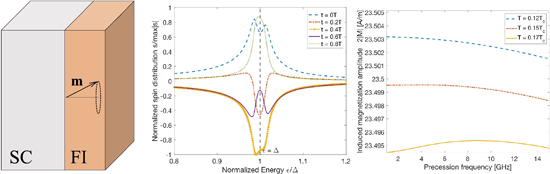
- effect. It gives rise to the spin distribution of quasiparticles with energies close to the spectrum gap near the interface. Both spin current and induced magnetization in the superconductor originate from the singlet–triplet Cooper pair conversion mechanism, which is the main origin of the inverse
- quasiparticle distribution function at magnetization precession frequencies of 1 and 8 GHz. The color maps for quasiparticles with x and y spin component evolution Sx,y(z, ε, t) = Tr[σx,yψel] are presented in Figure 4. The spin distribution function splits into two almost symmetric peaks around the spectrum gap
- noticed that a fraction of the spin distribution is lying inside the gap and should not be taken into account. But in the time-dependent case, there is always an energy shift equal to ±ℏΩ/2. This energy shift appears in every time convolution. The real consequences of these undergap states may be found if


High–low Kelvin probe force spectroscopy for measuring the interface state density
Beilstein J. Nanotechnol. 2023, 14, 175–189, doi:10.3762/bjnano.14.18
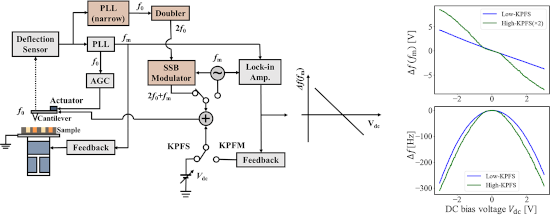
- the sample when high- and low-frequency AC bias voltages are applied. The tip and the sample are assumed to be metallic and semiconducting, respectively, and a metal–insulator–semiconductor (MIS) structure consisting of the metallic tip, a vacuum gap, and the semiconducting sample is considered
- the semiconductor and the gap, the following equation is obtained: where Cg is the capacitance per unit surface area due to the gap between the tip and the surface. The charge Qs due to the surface potential Vs is obtained by numerically solving Equations 4–8. When a positive or negative bias voltage
- is applied to the MIS structure consisting of the metal tip, gap, and semiconductor sample, three cases exist at the semiconductor surface. For an n-type semiconductor, when a positive bias voltage is applied to the metal tip (Vdc > 0), electrons (majority carriers) in the semiconductor are attracted



A distributed active patch antenna model of a Josephson oscillator
Beilstein J. Nanotechnol. 2023, 14, 151–164, doi:10.3762/bjnano.14.16
- JJs, RQP ≫ Rn at sub-gap voltages. I will assume RQP = 25Rn, typical for Nb tunnel JJs [9][11]. This gives RQP = 0.5 Ω and GQP = 2 Ω−1. At f = 400 GHz, ωL* = 8.61 Ω, ωC = 111.2 Ω−1, and ZTL ≃ 0.278 + i0.0015 Ω. It practically coincides with the resistance of an ideal TL, Equation 35. The value of ZTL


Formation of nanoflowers: Au and Ni silicide cores surrounded by SiOx branches
Beilstein J. Nanotechnol. 2023, 14, 133–140, doi:10.3762/bjnano.14.14
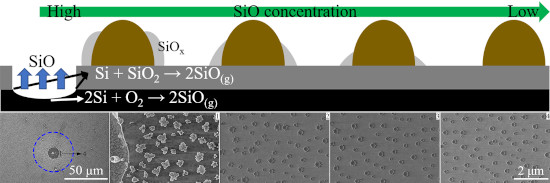
- between the positions of pure Au and Ni since only one main reflex should be observed when the two elements are completely mixed [20][23][25]. The annealing temperatures are above the miscibility gap [23][50]. Thus, the partial mixing comes from the phase separation of Au and Ni during cooling [25


Characterisation of a micrometer-scale active plasmonic element by means of complementary computational and experimental methods
Beilstein J. Nanotechnol. 2023, 14, 110–122, doi:10.3762/bjnano.14.12
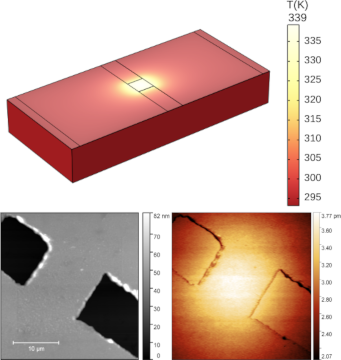
- ] investigated the effects of gap size using a fine tunable mechanical separation as a means to control the intensity of a travelling SPP on silver. In contrast, in the present work, the modulation of the device’s response is obtained through changes in the optical constants via electrical signals. It is well




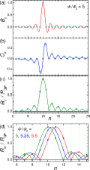
Cooper pair splitting controlled by a temperature gradient
Beilstein J. Nanotechnol. 2023, 14, 61–67, doi:10.3762/bjnano.14.7
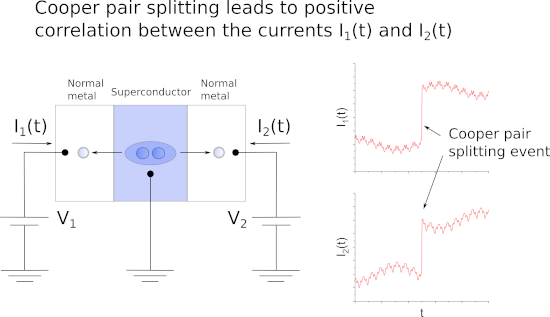
- the energy gap inside the superconductor, see Figure 1b. Unlike CAR, EC does not produce entangled electrons. In the zero-temperature limit, CAR and EC contributions to the low-bias non-local conductance of an NSN device cancel each other in the limit of low-transparency barriers [4]. In contrast, at
- the importance of CAR processes in this limit, see also Figure 4. Yet another important physical limit is realized provided the contact has the form of a short diffusive wire with the corresponding Thouless energy exceeding the superconducting gap Δ. In this diffusive limit the transmission





