


Search results
Search for "graphene" in Full Text gives 563 result(s) in Beilstein Journal of Nanotechnology. Showing first 200.
ZnO-decorated SiC@C hybrids with strong electromagnetic absorption
Beilstein J. Nanotechnol. 2023, 14, 565–573, doi:10.3762/bjnano.14.47
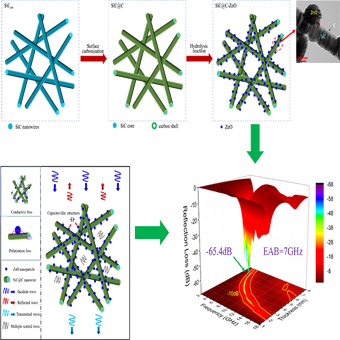
- graphene) may be easier because of the abundance of oxygen functional groups (e.g., carboxyl or hydroxy groups) on the carbon surface [26][31][32], in comparison to pure SiC. The introduction of carbon may help to further adjust the electromagnetic parameters and performance of SiC@ZnO nanocomposites
- could be well controlled by adjusting the fractions of pristine materials and filler load of the absorbers. A comprehensive comparison with materials from our previous works (SiC@C and SiC@C-Fe3O4) and other reported materials (such as ZnO-decorated SiCnw or graphene/SiC) [16][24][34][35] shows that the


Carbon nanotube-cellulose ink for rapid solvent identification
Beilstein J. Nanotechnol. 2023, 14, 535–543, doi:10.3762/bjnano.14.44
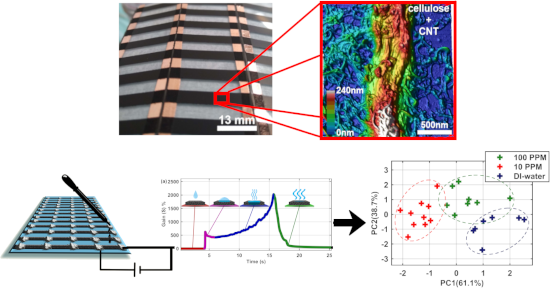
- of lightweight materials comprising a conductive ingredient (e.g., carbon nanotubes (CNTs), graphene, graphene oxide, and metal particles) embedded in a polymer matrix, have been extensively studied as liquid sensors [14][15][16][17][21][22]. The main idea is to combine the responsive electrical
- has resurfaced recently as a smart material because of its excellent thermal-mechanical properties, biocompatibility, biodegradability, and flexibility [22][23][30][31]. Composites based on carbon nanotubes or graphene and cellulose have been reported for, among other things, humidity and vapor
- [39][40]. Besides, graphene films deposited on cellulose paper and a graphene/cellulose composite were also reported as a solvent sensor material [30][33]. However, most of these works rely on cellulose as a paper substrate or as a thick composite film that cannot be readily employed for large-scale


On the use of Raman spectroscopy to characterize mass-produced graphene nanoplatelets
Beilstein J. Nanotechnol. 2023, 14, 509–521, doi:10.3762/bjnano.14.42
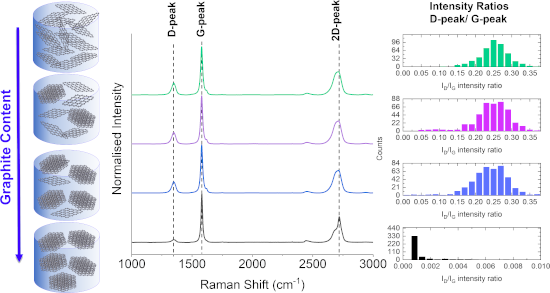
- .14.42 Abstract Raman spectroscopy is one of the most common methods to characterize graphene-related 2D materials, providing information on a wide range of physical and chemical properties. Because of typical sample inhomogeneity, Raman spectra are acquired from several locations across a sample, and
- analysis is carried out on the averaged spectrum from all locations. This is then used to characterize the “quality” of the graphene produced, in particular the level of exfoliation for top-down manufactured materials. However, these have generally been developed using samples prepared with careful
- , although quantification of the amount remains approximate. We therefore recommend this approach as a robust methodology for reliable characterization of mass-produced graphene-related 2D materials using confocal Raman spectroscopy. Keywords: few-layer graphene; graphene; metrology; quality control; Raman


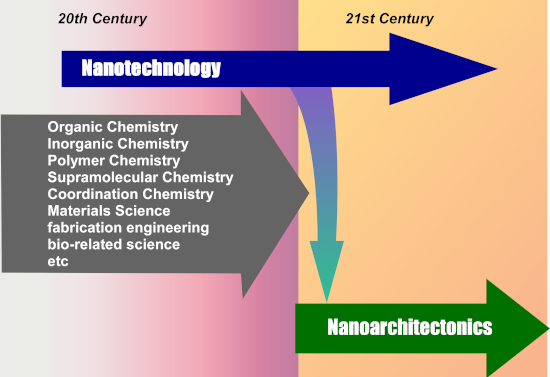
Molecular nanoarchitectonics: unification of nanotechnology and molecular/materials science
Beilstein J. Nanotechnol. 2023, 14, 434–453, doi:10.3762/bjnano.14.35
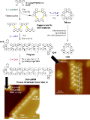
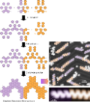
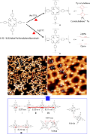
- molecules was also realized. Kawai et al. synthesized three-dimensional graphene nanoribbons by surface chemistry and showed that local probe chemistry can be used to add different molecules by tip manipulation [115]. Specifically, they demonstrated that radicals created by tip-induced debromination can be
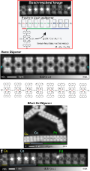
- . Foster, Kawai, and co-workers have investigated the zero-bias peak at the center of an armchair-type graphene nanoribbon on a AuSix/Au(111) surface using a combination of low-temperature scanning tunneling microscopy/spectroscopy and density functional theory calculations [116]. The zero-bias peak at the
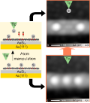
- boron site embedded at the center of the graphene nanoribbon was investigated. Si atoms were removed by vertical manipulation with a tip (Figure 5). In this manipulation, the tip was positioned at a silicon site and then moved closer to the silicon atoms while recording the tunneling current. After the





Evaluation of electrosynthesized reduced graphene oxide–Ni/Fe/Co-based (oxy)hydroxide catalysts towards the oxygen evolution reaction
Beilstein J. Nanotechnol. 2023, 14, 420–433, doi:10.3762/bjnano.14.34
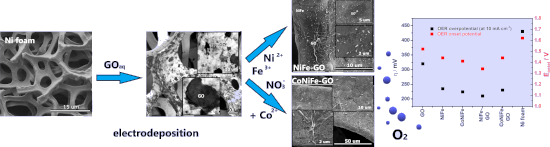
- Cracow, Poland 10.3762/bjnano.14.34 Abstract In this work, the specific role of the addition of graphene oxide (GO) to state-of-the-art nickel–iron (NiFe) and cobalt–nickel–iron (CoNiFe) mixed oxides/hydroxides towards the oxygen evolution reaction (OER) is investigated. Morphology, structure, and OER
- different kinds of conductive carbon materials [14][15][16][17][18]. Recently, graphene (Gr)/graphene oxide (GO) has attracted the attention of many researchers due to its high surface area, significant chemical stability, high electrical conductivity, and high mechanical strength [12][19]. Combining a
- graphene material with Ni-, Fe- and/or Co-based oxides/hydroxides with high chemical reactivity provides both an effective electron pathway through the catalyst [20] and high specific surface area [21], which is desirable for the OER process [13]. The overall electrocatalytic performance of the hybrid




Plasmonic nanotechnology for photothermal applications – an evaluation
Beilstein J. Nanotechnol. 2023, 14, 380–419, doi:10.3762/bjnano.14.33
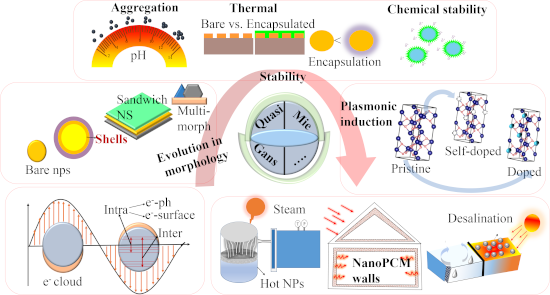
- cause little damage to adjacent healthy tissues due to extremely localized heating [3]. Generally, the reduction of material dimensions to the nanoscale, such as in graphene, carbon nanotubes (CNT) and polymers, leads to an enhancement of the PT effect due to factors such as improved thermal




Bismuth-based nanostructured photocatalysts for the remediation of antibiotics and organic dyes
Beilstein J. Nanotechnol. 2023, 14, 291–321, doi:10.3762/bjnano.14.26
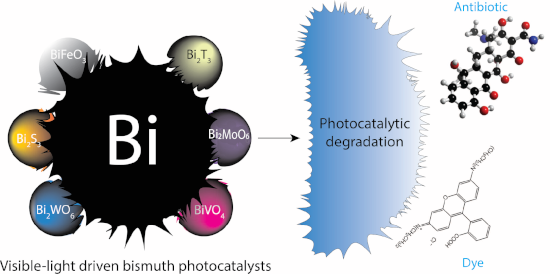
- . BiFeO3-graphene nanocomposites were made using a hydrothermal process by Lam and co-workers [177]. Under visible-light photocatalysis, the nanocomposite efficiently degraded Congo red dye. The improved performance was attributed to the altered bandgap between graphene oxide and BiFeO3. Table 9 provides a


Cyclodextrins as eminent constituents in nanoarchitectonics for drug delivery systems
Beilstein J. Nanotechnol. 2023, 14, 218–232, doi:10.3762/bjnano.14.21
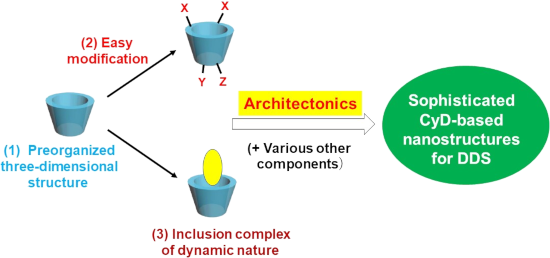
- , this method is less affected by drug resistance and side-effects. A hydrogel was prepared by using both the electrostatic self-assembly between graphene oxide and a quaternized polymer and the formation of a pseudopolyrotaxane between α-CyD and poly(ethylene glycol) monomethyl ether (many α-CyD
- molecules were threaded into the polymer chains) [87]. NIR light (808 nm) was absorbed by graphene oxide and converted into heat for photothermal therapy. At the same time, the heat induces the gel–sol transition of the hydrogel to release the encapsulated drug which add to the photothermal effect for
- temperature elevation by the photothermal effect induces gel–sol transition of the nanomedicine, which the release of encapsulated cisplatin from the hydrogel. Mitochondria-targeting photothermal therapy was accomplished by two-dimensional nanoassemblies, prepared from β-CyD-grafted graphene oxide and




Structural, optical, and bioimaging characterization of carbon quantum dots solvothermally synthesized from o-phenylenediamine
Beilstein J. Nanotechnol. 2023, 14, 165–174, doi:10.3762/bjnano.14.17
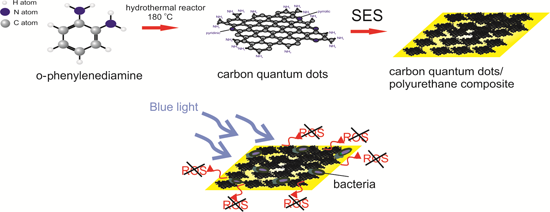
- shows that the absorption of DPBF solution in both vials is nearly identical. This means that the CQDs/PU sample does not produce singlet oxygen, which confirms the previous results obtained by EPR and luminescence at 1270 nm. Ge et al. reported earlier that graphene quantum dots generate singlet oxygen
- through energy transfer to molecular oxygen [21]. Chong et al. claimed that superoxide anions are involved in the generation of singlet oxygen, implying that electron transfer is an intermediate step for the generation of singlet oxygen by photoexcited graphene quantum dots [20]. In nitrogen-doped
- graphene, depending on the doping procedure, the nitrogen moieties include graphitic N together with pyrrolic and pyridinic nitrogen and amino groups [37][38][39]. Bianco et al. reported recently that pyridine nitrogen can be a reactive center and activates other reactive centers at the adjacent carbon


Liquid phase exfoliation of talc: effect of the medium on flake size and shape
Beilstein J. Nanotechnol. 2023, 14, 68–78, doi:10.3762/bjnano.14.8
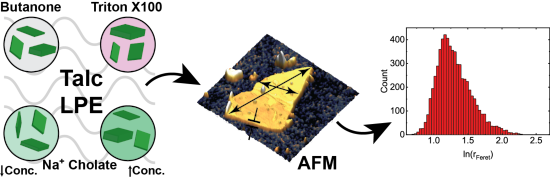
- allows it to be employed to obtain nanoflakes of a collection of materials such as graphene [3][7], hexagonal boron nitride [8], transition metal dichalcogenides [9], and others [10][11]. Although the experimental setup is generally designed as described before [6], numerous parameters must be adjusted
- pharmaceutical and cosmetics uses [17]. It was shown that monolayer talc has outstanding mechanical properties of the same order of magnitude as graphene [12]. The breaking strength for uniaxial deformations ranges from 29 to 33 N·m−1, and the two-dimensional elasticity modulus is E = 181 N·m−1. Also, talc’s
- flexural rigidity is about three times that of graphene but it can be bent to small curvatures without fracturing. These properties make nanoscale talc a promising candidate for the application [14][15][18] as reinforcement for polymers and other composites, including biocompatible materials, and van der



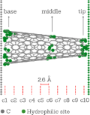
Atmospheric water harvesting using functionalized carbon nanocones
Beilstein J. Nanotechnol. 2023, 14, 1–10, doi:10.3762/bjnano.14.1
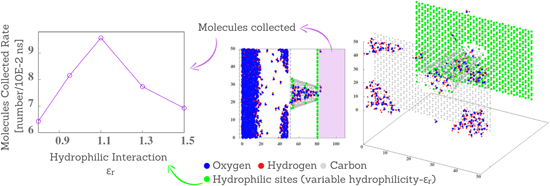
- monolayers of graphene and MoS2 [43][44]. Another advantage of the cone format is the possibility of capturing more water at the larger diameter entrance, without losing the high flow at the reduced diameter in other parts of the cone. As the example of the Namibian desert beetle shows, the introduction of




Single-step extraction of small-diameter single-walled carbon nanotubes in the presence of riboflavin
Beilstein J. Nanotechnol. 2022, 13, 1564–1571, doi:10.3762/bjnano.13.130
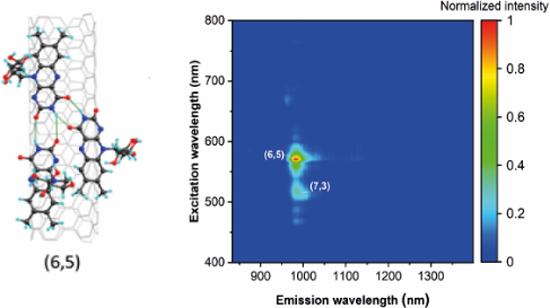
- isoalloxazine rings and a sidewall of SWCNTs [17][18]. Flavin derivatives compounds are known to extract specific (n,m) SWCNTs from dispersions in organic solvents [19][20]. Moreover, flavin mononucleotide phosphate could be used as a stabilizer for graphene aqueous dispersions [21]. Although proven to


A TiO2@MWCNTs nanocomposite photoanode for solar-driven water splitting
Beilstein J. Nanotechnol. 2022, 13, 1520–1530, doi:10.3762/bjnano.13.125
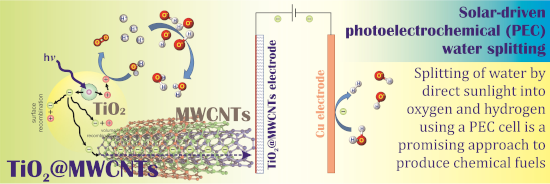
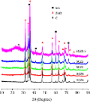
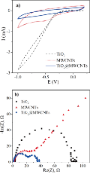
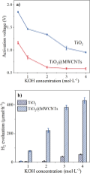
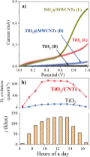
- 42.6° correspond to the d-spacing between graphene sheets and the lateral correlation of graphite layers, which is presentative for MWCNTs [27]. Additionally, the XRD pattern of TiO2 exhibits peaks at 25.4° and 48.2°, ascribed to the anatase phase, while the other peaks at 27.6° and 36.2° are
- electrodes [38]. The results reveal a significant improvement in the electrical conductivity for the TiO2@MWCNTs electrode. The result agrees well with a previous study on TiO2@graphene composite electrodes [37]. Among the electrodes, the EDL capacitance (C2) at the TiO2 electrode surface is the lowest (1.32



Rapid and sensitive detection of box turtles using an electrochemical DNA biosensor based on a gold/graphene nanocomposite
Beilstein J. Nanotechnol. 2022, 13, 1458–1472, doi:10.3762/bjnano.13.120
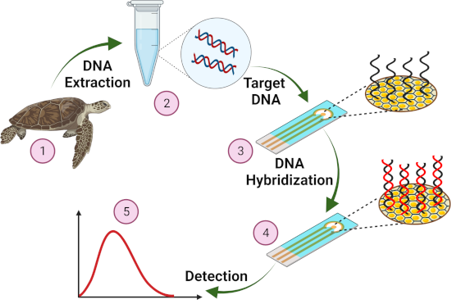
- probe using bioinformatics tools, and it was also validated in wet-lab experiments. As a detection platform, a screen-printed carbon electrode (SPCE) enhanced with a nanocomposite containing gold nanoparticles and graphene was used. The morphology of the nanoparticles was analysed by field-emission
- the applications of impedance DNA hybridisation biosensors for the detection of a number of analytes [31][32][33][34]. Nanomaterials may significantly enhance biosensor performance, stability, repeatability, and sensitivity [35][36][37][38][39]. Among various nanomaterials, graphene (Gr) [40] and gold
- nanoparticles (AuNPs) [32] based nanocomposites are well established [41] due to their excellent performance. In particular, self-decorated AuNPs in the honeycomb-structured graphene lattice could facilitate the accommodation of a greater number of recognition probes. In addition, Gr is a nanomaterial with a

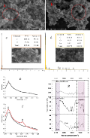


LED-light-activated photocatalytic performance of metal-free carbon-modified hexagonal boron nitride towards degradation of methylene blue and phenol
Beilstein J. Nanotechnol. 2022, 13, 1380–1392, doi:10.3762/bjnano.13.114
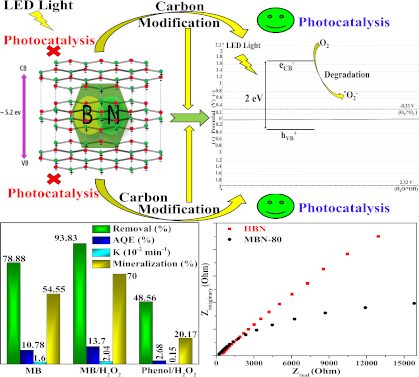
- shows zero activity in the visible region. Keywords: carbon modification; hexagonal boron nitride (HBN); LED light; phenol; photocatalysis; Introduction Hexagonal boron nitride (HBN) commonly known as white graphene belongs to a class of two-dimensional layered crystalline materials. It comprises
- boron (B) and nitrogen (N) atoms in equal stoichiometry in a honeycomb-like arrangement comparable to that of graphene [1][2][3]. Its interlayer stacking consists of a sandwich-type arrangement of B and N atoms. The N atom is more electronegative than the B atom, leading to polarization and localization


Recent trends in Bi-based nanomaterials: challenges, fabrication, enhancement techniques, and environmental applications
Beilstein J. Nanotechnol. 2022, 13, 1316–1336, doi:10.3762/bjnano.13.109
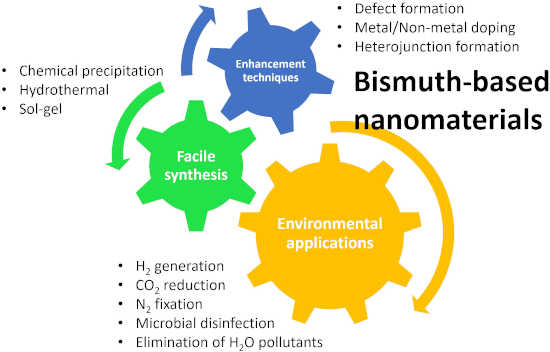
- -type Bi2O3 CB. In the Bi2O3/Bi2S3 photocatalytic system, electrons and holes participate directly in the redox process. In another reported work, a BiOI/Bi2O2CO3/graphene ternary composite was fabricated via a facile and economic hydrothermal technique [98]. In order to assess the newly constructed




Studies of probe tip materials by atomic force microscopy: a review
Beilstein J. Nanotechnol. 2022, 13, 1256–1267, doi:10.3762/bjnano.13.104
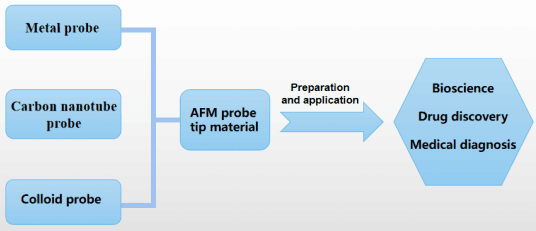
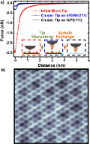
- ][24]. Jiménez-Sánchez et al. [25] studied the extraction of Ir clusters from graphene (by indentation) on the surface of Rh(111) to fabricate AFM sharp nano-tips, i.e., with weak van der Waals interactions. Experiments were performed under ultrahigh pressure and low temperature (5 K) conditions using
- average diameter of the tip generated under this method is 10 ± 5 nm. Transmission electron microscopy confirmed that this tip type is a multi-walled nanotube (MWNT) formed by ordered graphene walls. In any case, however, the pore growth method does not allow the growth of a single carbon nanotube at the
Design of surface nanostructures for chirality sensing based on quartz crystal microbalance
Beilstein J. Nanotechnol. 2022, 13, 1201–1219, doi:10.3762/bjnano.13.100
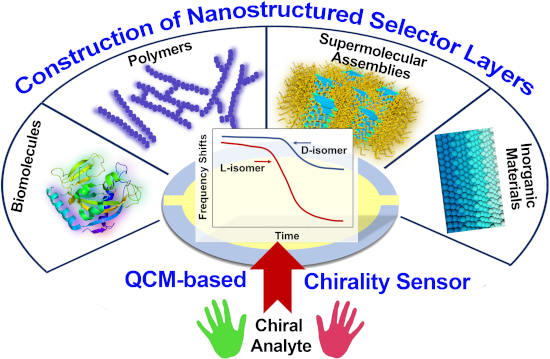
- , is the main cause of neurodegenerative diseases. Qing et al. used a chiral cysteine- (L/R-Cys) modified graphene oxide (GO) to study the chirality of the aggregation process of the chiral amyloid β-protein(1-40) (Aβ(1-40)) [152]. The adsorption behaviors of Aβ(1–40) monomers and oligomers by QCM


Application of nanoarchitectonics in moist-electric generation
Beilstein J. Nanotechnol. 2022, 13, 1185–1200, doi:10.3762/bjnano.13.99
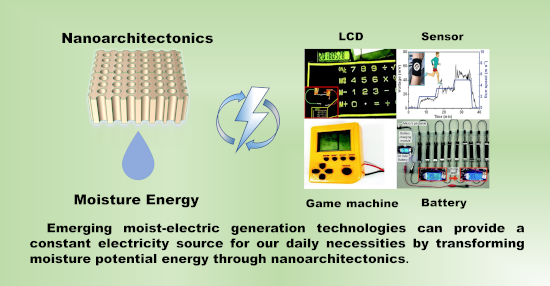
- discussed in detail. 2 Inorganic nanomaterials for MEG 2.1 Carbon nanotubes and carbon nanoparticles Among inorganic nanomaterials, carbon nanoparticles, carbon nanotubes, graphene, graphene oxide, metal oxides, and transition metal chalcogenides (TMDs) have been reported so far regarding applications in
- exploiting the flow potential in nanochannels [34][39][40][41][42][43][44]. In 2014, Jun Yin et al. harvested wave energy using a single-layer graphene sheet [8][45]. The device produced a detectable electrical signal between the upper and lower electrodes when the graphene sheet was not fully immersed in
- the solution and was moved vertically. The electrical output signal was about 60 mV and 4 μA (Figure 2a,b). Yin’s research group also studied the voltage response of graphene layers to moving droplets [34], and the variables in the experiment included the number of graphene layers, droplet size, and


Recent advances in green carbon dots (2015–2022): synthesis, metal ion sensing, and biological applications
Beilstein J. Nanotechnol. 2022, 13, 1068–1107, doi:10.3762/bjnano.13.93
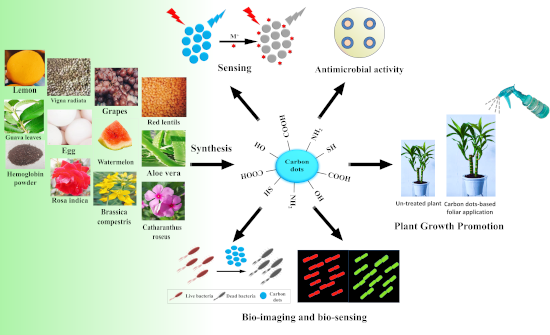
- materials, are summarized in Table 4. Natural polymer-based CDs Numerous natural polymers, including proteins and polysaccharides, have been used to obtain CDs (Table 5). Chen and co-workers used starch as a source to synthesize graphene quantum dots (CDs) via a one-pot hydrothermal method. They also
- the recombination of trapped excitons causes the redshifted emission. Liu et al. reported the synthesis of highly photoluminescent CDs, which were then further separated into yellow emitting crystalline graphene quantum dots and green emitting amorphous carbon nanodots using a silica gel column. Even




Biomimetic chitosan with biocomposite nanomaterials for bone tissue repair and regeneration
Beilstein J. Nanotechnol. 2022, 13, 1051–1067, doi:10.3762/bjnano.13.92
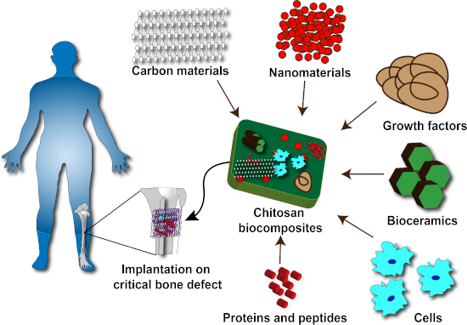
- , researchers have tried several ways to develop different materials using chitosan-based nanocomposites of silver, copper, gold, zinc oxide, titanium oxide, carbon nanotubes, graphene oxide, and biosilica. The combination of materials helps in the expression of ideal bone formation genes of alkaline
- oxide, zinc oxide, carbon nanotubes, graphene oxide, and biosilica was developed to improve bone scaffolds for better bone tissue repair and regeneration [11]. In tissue engineering applications, nanoscale topological characteristics influence cell adhesion, survival, proliferation, and differentiation
- and regeneration [14]. Nanomaterials such as silver [15], gold [16][17], titanium oxide [18], zinc oxide [19][20], carbon nanotubes [21][22], graphene [23] and biosilica have been studied in terms of their osteogenic potential in stem cell differentiation. Chitosan materials are often combined with
Spindle-like MIL101(Fe) decorated with Bi2O3 nanoparticles for enhanced degradation of chlortetracycline under visible-light irradiation
Beilstein J. Nanotechnol. 2022, 13, 1038–1050, doi:10.3762/bjnano.13.91
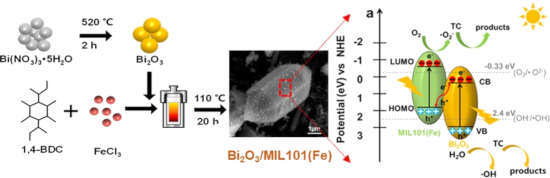
- an octahedron shape, and its size increases compared with that of pristine MIL101(Fe). In previous reports, graphene quantum dots changed the balance of organic ligands, which led to the change of MIL101(Fe) size [38]. In addition, Liao et al. reported that morphology or size of MOFs are dependent on


Electrocatalytic oxygen reduction activity of AgCoCu oxides on reduced graphene oxide in alkaline media
Beilstein J. Nanotechnol. 2022, 13, 1020–1029, doi:10.3762/bjnano.13.89
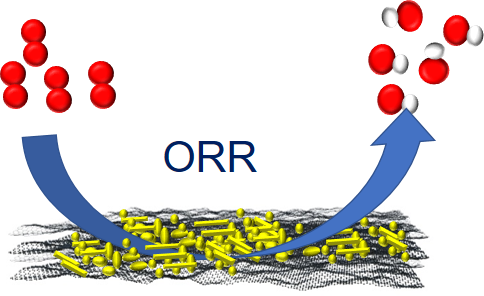
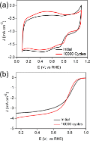
- AgCuCo (0.6:1.5:1.5, 2:1:1, and 6:1:1) oxide NPs supported on a reduced graphene oxide (rGO) matrix. Morphology, composition, and functional groups were methodically analysed using various microscopic and spectroscopic techniques. The as-prepared electrocatalysts were employed as cathode substrates for
- ; microwave synthesis; oxygen electroreduction; reduced graphene oxide; silver NPs; Introduction Fuel cells and rechargeable metal–air batteries have become an integral part of the renewable energy system because of their superior efficiency, high power density, and reliability. Also, they are
- electrocatalyst. Results and Discussion The microwave-assisted one-pot synthesis connecting graphene oxide (GO) nanosheets with bi- and trimetallic precursors under alkaline conditions is presented in Figure 1. GO serves as functional network and conducting matrix, while PVP acts as structure-directing agent


Influence of water contamination on the sputtering of silicon with low-energy argon ions investigated by molecular dynamics simulations
Beilstein J. Nanotechnol. 2022, 13, 986–1003, doi:10.3762/bjnano.13.86
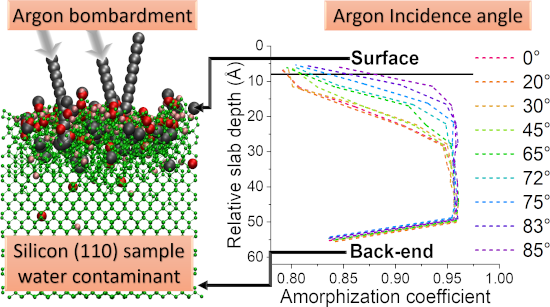
- MD/binary collision approximation (BCA) simulations. ReaxFF simulations can cover a broad range of applications: from DNA molecule bombardments with heavy atoms [31] to graphene layer deposition on copper surfaces [32]. Numerous simulations using the ReaxFF potential have been conducted in the past




Efficiency of electron cooling in cold-electron bolometers with traps
Beilstein J. Nanotechnol. 2022, 13, 896–901, doi:10.3762/bjnano.13.80
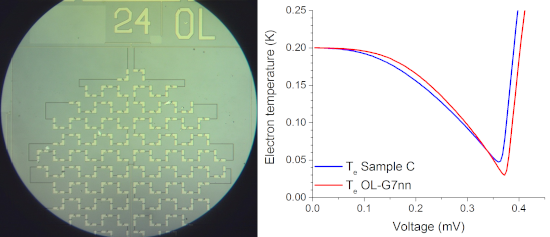
- hybrid structures with graphene [13]. However, all these experiments were made without useful power load and could not be used for real experiments with detectors. The only experiments with optical power load, demonstrating background-limited operation, were carried out in [5][6][14]. Typical electron





