Search results
Search for "high resolution" in Full Text gives 781 result(s) in Beilstein Journal of Nanotechnology. Showing first 200.
unDrift: A versatile software for fast offline SPM image drift correction
Beilstein J. Nanotechnol. 2023, 14, 1225–1237, doi:10.3762/bjnano.14.101
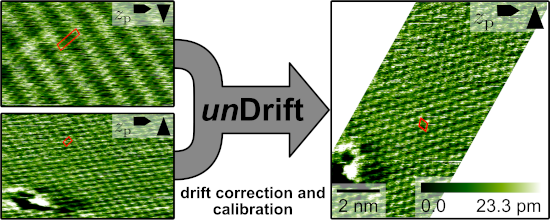
- series After discussing the performance of unDrift under different experimental conditions, we now demonstrate the applicability to long image series spanning several hundred SPM images with an example shown in Figure 5. The presented series comprises 530 high-resolution AFM images recorded at the
- directions. Extraction of lattice vectors from images exhibiting periodic structures. (a, d) High-resolution AFM images showing atomic resolution at the calcite (10.4)–water interface. (b, e) Fourier transform images of the real-space images shown in (a) and (d). The maxima in the Fourier transforms are
- optimized lattices as found by unDrift are shown as red lines. Only the centers of the autocorrelations are shown. (a, b) Two consecutive up images recorded with high-resolution AFM on calcite(10.4) in ultrahigh vacuum. The images show several defects, whose positions are marked with colored crosses in both


Fluorescent bioinspired albumin/polydopamine nanoparticles and their interactions with Escherichia coli cells
Beilstein J. Nanotechnol. 2023, 14, 1208–1224, doi:10.3762/bjnano.14.100
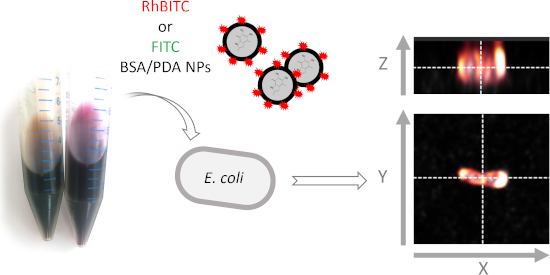
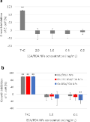
- high-resolution fluorescence imaging (high-resolution confocal microscopy). Also, the capacity of the pristine and fluorescent NPs to inhibit the growth of bacterial cells was evaluated through minimal inhibitory concentration (MIC) tests. The MIC value was also determined for Staphylococcus aureus (S
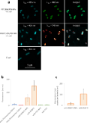
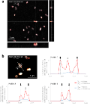
- inversely related to NP size [36]. The accumulation of pristine and fluorescent BSA/PDA NPs was evaluated by standard and high-resolution fluorescence confocal microscopy after 24 h of contact of NPs with E. coli cells. Obviously, bacteria without NPs and bacteria with pristine BSA/PDA NPs were not detected
- ), a low fluorescence signal was detected in the 460–541 nm and 415–482 nm ranges with the standard and the high-resolution microscope, respectively (Supporting Information File 1, Figure S7a). In part, it may result from the fluorescence of Ox-BSA/PDA NPs at λexc = 405 nm; however, it is more probably



A multi-resistance wide-range calibration sample for conductive probe atomic force microscopy measurements
Beilstein J. Nanotechnol. 2023, 14, 1141–1148, doi:10.3762/bjnano.14.94
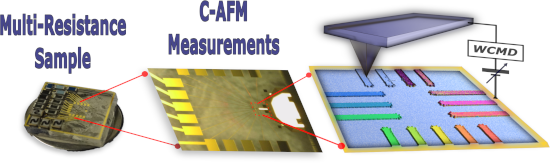
- versatility and high resolution in probing the local conductivity of materials, C-AFM has been extensively used in studying semiconductors [6][7], two-dimensional materials [8][9][10], memristive devices [11][12][13][14][15], photoelectric systems [16][17][18], dielectric films [19][20][21][22][23], molecular


Density functional theory study of Au-fcc/Ge and Au-hcp/Ge interfaces
Beilstein J. Nanotechnol. 2023, 14, 1093–1105, doi:10.3762/bjnano.14.90
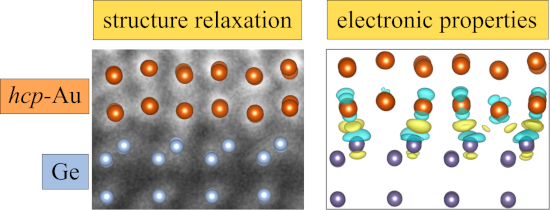
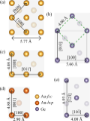
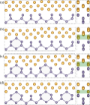
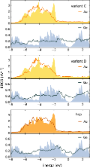
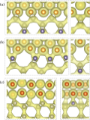
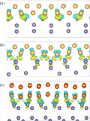
- crystalline phases on a specific substrate [2][3]. The structure of a heterophase can be studied using advanced atomic-resolution experiments, such as high-resolution electron microscopy [4], high-resolution secondary-electron microscopy [5], scanning transmission electron microscopy [6][7] or scanning





Spatial mapping of photovoltage and light-induced displacement of on-chip coupled piezo/photodiodes by Kelvin probe force microscopy under modulated illumination
Beilstein J. Nanotechnol. 2023, 14, 1059–1067, doi:10.3762/bjnano.14.87
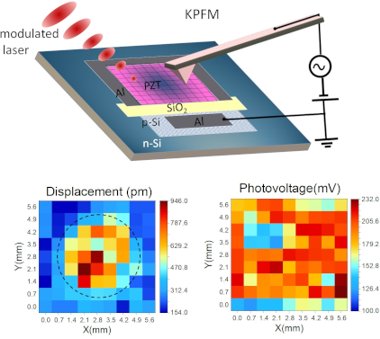
- precise motion with high resolution. This offers promising possibilities for biomedical, environmental, and micro/nanoengineering applications [5][6]. Various types of design and actuation mechanisms have been developed in recent years [7][8]. A primary requirement to unlock the better performance of
- these micro/nano devices is to scrutinize their structure and the interaction between their different components. This can be done by high-resolution characterization techniques that simultaneously probe dynamic properties of different parts of the device. This enables the decoupling of the roles of


Exploring internal structures and properties of terpolymer fibers via real-space characterizations
Beilstein J. Nanotechnol. 2023, 14, 1004–1017, doi:10.3762/bjnano.14.83
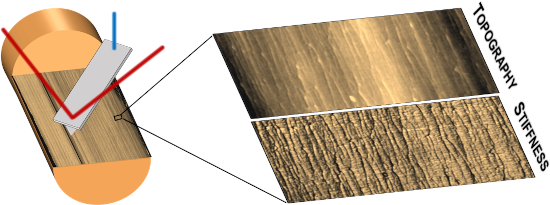
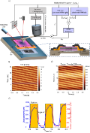
- through real-space mapping. Complementing these full-fiber scans, high-resolution topography and stiffness maps on smaller fiber subdomains were also obtained to study the nanostructure of Technora®. From detailed topography maps, we found that the well-aligned surface features observed on the full






Isolation of cubic Si3P4 in the form of nanocrystals
Beilstein J. Nanotechnol. 2023, 14, 971–979, doi:10.3762/bjnano.14.80
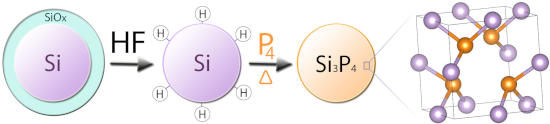
- determination; thus, the linear dimensions of the particles could only be estimated to be in the range of 10–50 nm. The particles are polycrystalline and highly defective as evident from the high-resolution image (Figure 7a). The size of the crystalline domains does not exceed 10 nm in its longest dimension
- . (a) Bright-field TEM image and (b) electron diffraction of the sample SP550. TEM studies of the sample SP550. (a) High-resolution TEM image; (b) HAADF-STEM image; EDX elemental maps for (c) Si Kα, (d) P Kα, and (e) O Kα. The scale bar in images (b–e) is 30 nm. Synthesis conditions and results of X


Upscaling the urea method synthesis of CoAl layered double hydroxides
Beilstein J. Nanotechnol. 2023, 14, 927–938, doi:10.3762/bjnano.14.76
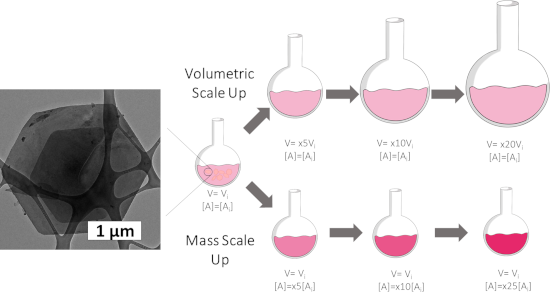
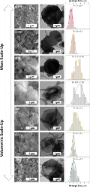
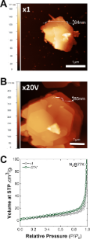
- aperture selecting the unscattered electrons. To record the images, an AMT RX80 8MP CCD camera (JEOL JEM-1010) and a Gatan CCD 1k × 1k device were used. (A) PXRD patterns exhibit the layered nature of the obtained samples. Indexation according to [13]. (B) ATR-FTIR spectra. (C) High-resolution XPS spectra


Two-dimensional molecular networks at the solid/liquid interface and the role of alkyl chains in their building blocks
Beilstein J. Nanotechnol. 2023, 14, 872–892, doi:10.3762/bjnano.14.72
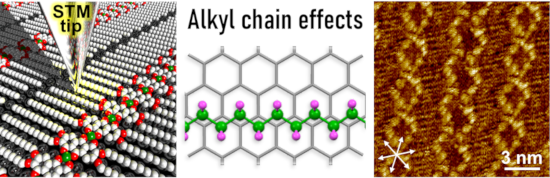
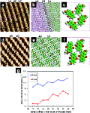
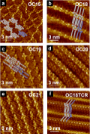
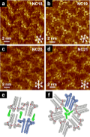
- flat conducting substrates, such as metal surfaces and highly oriented pyrolytic graphite (HOPG), under ultrahigh vacuum (UHV) conditions, at solid/air or solid/liquid interfaces [23][24][25][26][27][28]. Although UHV-STM offers high-resolution imaging, it requires large, complex, and expensive
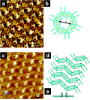
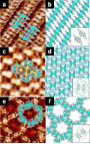
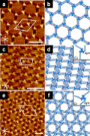
- monolayers can be prepared by simply placing the sample solution on a freshly cleaved HOPG surface. The self-assembly at the solid/liquid interface is characterized by the following properties: (i) The correlation between the molecular structure and resultant 2D arrangements can be revealed by STM with high
- resolution. (ii) Post-reaction is available by external stimuli such as the addition of metal ions for metal coordination, light irradiation for photoreaction, and post-blending of other molecules. (iii) The dynamic process of the 2D structural change (caused by the external stimuli) can be followed in situ









In situ magnesiothermic reduction synthesis of a Ge@C composite for high-performance lithium-ion batterie anodes
Beilstein J. Nanotechnol. 2023, 14, 751–761, doi:10.3762/bjnano.14.62
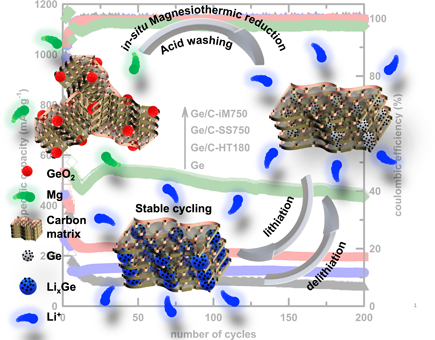
- carried out for structural and phase information. Infrared (IR, Shimadzu IRAffinity-1S) and Raman (LabRAM HR evolution confocal Raman microscope) spectra were measured for bond analysis. Field-emission scanning electron microscopy (FE-SEM, Hitachi S-4800) and high-resolution transmission electron


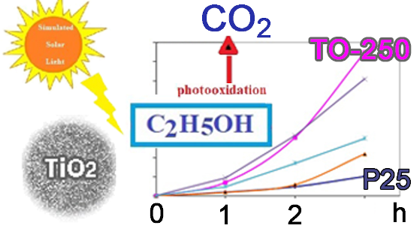
Titania nanoparticles for photocatalytic degradation of ethanol under simulated solar light
Beilstein J. Nanotechnol. 2023, 14, 616–630, doi:10.3762/bjnano.14.51
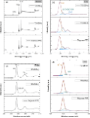
- spectral alignment of the binding energy (BE) scale was referenced to adventitious carbon at 284.8 eV [40][41]. Figure 4a shows the full survey scans of TO-250-a, TO-850-b, and commercial TiO2 (Degussa P25) samples, indicating the presence of the expected elements Ti, O, and C. The high-resolution XPS
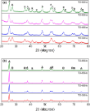
- diffraction (XRD) patterns, measured by an X-ray diffractometer Panalytical X’Pert MPD theta–theta, and the morphological properties were determined by transmission electron microscopy (TEM), high-resolution transmission electron microscopy (HRTEM), and selected-area electron diffraction (SAED) measurements
- , and P25 samples: (a) survey spectra; (b–d) high-resolution XPS spectra of (b) C 1s, (c) Ti 2p, and (d) O 1s core lines. Absorbance of the TiO2 samples at room temperature. Example of the calculated (a) indirect and (b) direct transitions from sample series “b”. Photoluminescence of the TiO2 powders




Suspension feeding in Copepoda (Crustacea) – a numerical model of setae acting in concert
Beilstein J. Nanotechnol. 2023, 14, 603–615, doi:10.3762/bjnano.14.50
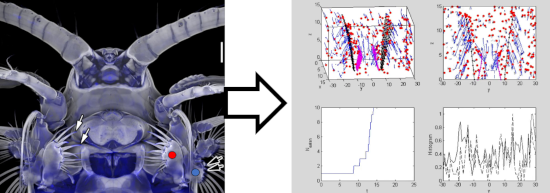
- detail and performed multiple experiments (Figure 4 and Figure 5). From these experiments, it becomes obvious that there is an optimal degree of adhesion for the long setae, which supports the system. Whether adhesion is present in real structures should be investigated in the future by using either high
- -resolution CLSM imaging or atomic force microscopy. As it was visualized by CLSM [55][56][57], the basal parts of some short and long setae appear to be relatively soft and seem to contain resilin or other proteins. This should influence the mobility of the rotating setae. To account for this in the


Nanoarchitectonics to entrap living cells in silica-based systems: encapsulations with yolk–shell and sepiolite nanomaterials
Beilstein J. Nanotechnol. 2023, 14, 522–534, doi:10.3762/bjnano.14.43
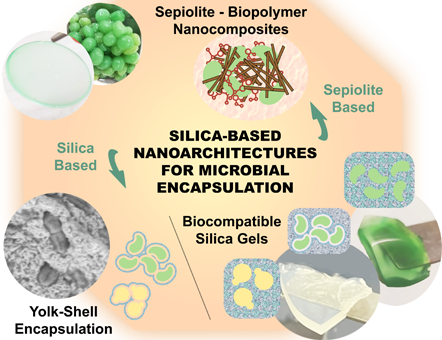
- without staining. Electron microscopy imaging was conducted using a field-emission scanning electron microscope FEI-NOVA NanoSEM 230 equipped with an Apollo XL silicon drift detector from EDAX-Ametek or using a high-resolution JEOL IT500HR/LA microscope equipped with an energy dispersive X-ray


Molecular nanoarchitectonics: unification of nanotechnology and molecular/materials science
Beilstein J. Nanotechnol. 2023, 14, 434–453, doi:10.3762/bjnano.14.35
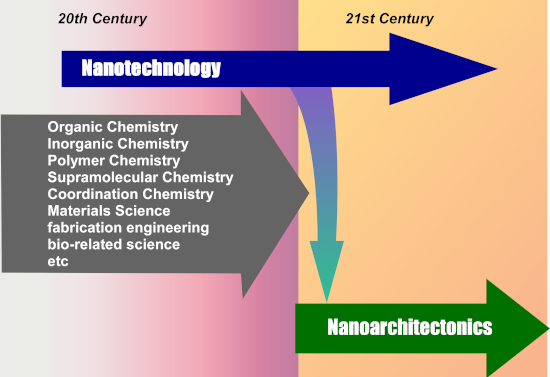
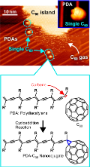
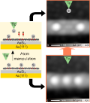
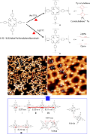
- include the direct observation of organic synthesis processes at the molecular level with high resolution, and the control of organic syntheses with probe microscope tips. These can also be considered as starting points for nanoarchitectonics. In this review, these examples of molecular nanoarchitectonics
- organic synthesis process at the molecular level with high resolution, and the control of organic synthesis with probe microscope tips. These examples are the fusion fields of nanotechnology and organic synthesis. This can also be considered as a starting point for nanoarchitectonics. In this review
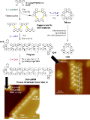
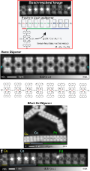
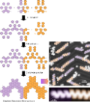
- oligomeric chains were significantly elongated. High-resolution scanning tunneling microscope (STM) topography shows alternating bright twin spots, which correspond to phenylene and tetrafluorophenylene, respectively. A high-resolution atomic force microscope (AFM) image of an entirely elongated fine





Evaluation of electrosynthesized reduced graphene oxide–Ni/Fe/Co-based (oxy)hydroxide catalysts towards the oxygen evolution reaction
Beilstein J. Nanotechnol. 2023, 14, 420–433, doi:10.3762/bjnano.14.34
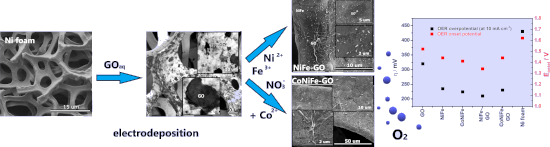
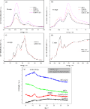
- calculations were determined based on the survey spectra collected in a wide range of binding energies, while valence state calculations were based on the high-resolution spectra. The C 1s peak (285.0 eV) was used to correct the results. Analysis of XPS spectra was performed with the Casa-XPS software using a
- ) deposited on nickel foam. SEM images and corresponding EDX maps of NiFe (a), NiFe-GO (b), CoNiFe (c), and CoNiFe-GO (d) deposited on nickel foam (error ≤ 0.5 atom %). Normalized XAS spectra (a–d) and XRD patterns (e) of NiFe, CoNiFe, NiFe-GO, and CoNiFe-GO. XPS high-resolution spectra of Ni 2p (a), Fe 2p (b




The steep road to nonviral nanomedicines: Frequent challenges and culprits in designing nanoparticles for gene therapy
Beilstein J. Nanotechnol. 2023, 14, 351–361, doi:10.3762/bjnano.14.30
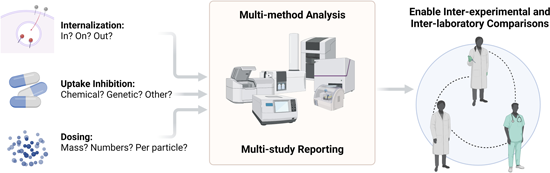
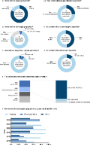
- intracellular trafficking [23]. In the absence of imaging flow cytometry, a two-pronged approach (high-resolution imaging plus a separate high-throughput analysis) is recommended to ensure the highest confidence in the result. Our literature assessment also revealed an increasing preference among the community
- , in the case of large molecules (such as plasmids) in smaller particles, significant deviations from this trend can be observed. To better understand the per-particle variations in payload, high-resolution microscopy, such as total internal reflection fluorescence spectroscopy, near-field scanning
- comparison within different batches, formulations, particle types, and standards. For particle systems that do not exist in a solid state, cryo-TEM or submersion AFM can offer alternative routes. These measurements will provide high-resolution particle distributions for in-solvent particles, though they may

A novel approach to pulsed laser deposition of platinum catalyst on carbon particles for use in polymer electrolyte membrane fuel cells
Beilstein J. Nanotechnol. 2023, 14, 190–204, doi:10.3762/bjnano.14.19
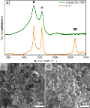
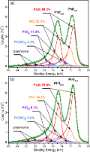
- particles, which also correlates well with the TEM results (Figure 3). It also shows that the Pt-to-C ratio determined based on XPS measurements is inconsistent with the number of laser pulses used for Pt deposition on various carbon supports. The high-resolution spectra of the Pt 4f band of material A and
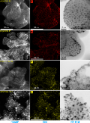
- the three columns, the results of HAADF, EDX, and HRTEM measurements are shown. Statistical analysis of Pt nanoparticle area distribution is shown in Supporting Information File 1, Figure S1. High-resolution XPS spectra of the Pt 4f band for (a) reference catalyst 20% Pt XC-72R and (b) sample A



High–low Kelvin probe force spectroscopy for measuring the interface state density
Beilstein J. Nanotechnol. 2023, 14, 175–189, doi:10.3762/bjnano.14.18
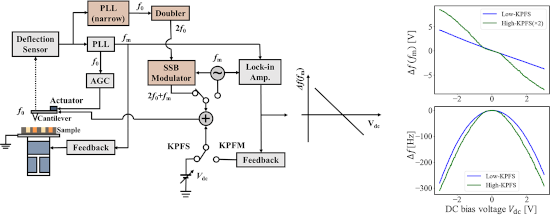
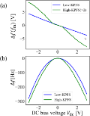
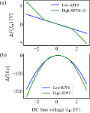
- high-resolution nanoscale measurements of impurity concentration and defect level distributions at the surfaces and interfaces of various semiconductor materials and devices. (a) Schematic of the metal tip–gap–semiconductor sample. (b) Energy band diagram of the metal–gap–semiconductor sample. Emission



Formation of nanoflowers: Au and Ni silicide cores surrounded by SiOx branches
Beilstein J. Nanotechnol. 2023, 14, 133–140, doi:10.3762/bjnano.14.14
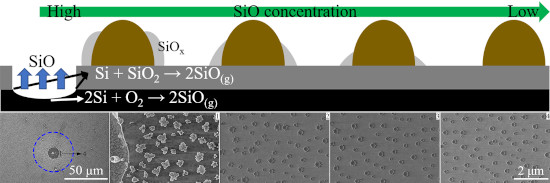
- annealed at 1050 °C was named 15Au5Ni. The morphology was imaged by optical microscopy (OM, Zeiss Axiotech) and high-resolution scanning electron microscopy (HR-SEM, Hitachi S-4800) equipped with energy-dispersive X-ray spectroscopy (EDS, Thermo Scientific). The SEM images were recorded by using mixed


Combining physical vapor deposition structuration with dealloying for the creation of a highly efficient SERS platform
Beilstein J. Nanotechnol. 2023, 14, 83–94, doi:10.3762/bjnano.14.10
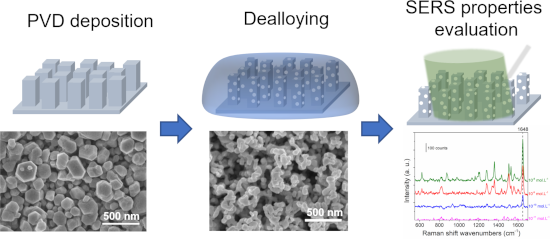
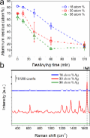
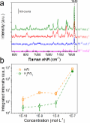
- a sample and on two samples made in the same conditions. To evaluate the surface composition and oxidation state, XPS was used. The XPS measurements were carried out on a PHI 5000 VersaProbe using a monochromatic Al Kα X-ray source (1486.6 eV). The high-resolution spectra were recorded with a pass




Gap-directed chemical lift-off lithographic nanoarchitectonics for arbitrary sub-micrometer patterning
Beilstein J. Nanotechnol. 2023, 14, 34–44, doi:10.3762/bjnano.14.4
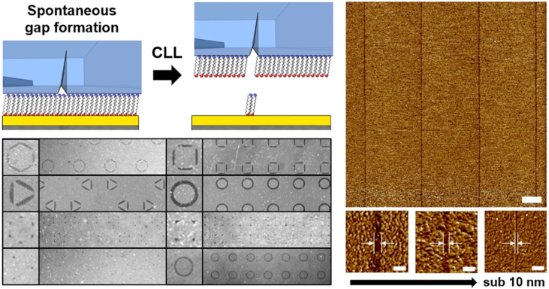
- to allow high-resolution patterning over a large area. In addition to standard lithographic operations using this approach, the CLL process can also be applied to create functional molecular patterns by backfilling post lift-off regions with various molecules [20][21][22]. Interestingly, the CLL
- can be exploited to achieve nanoscale patterns using microscale features on a stamp. Importantly, the lateral diffusion-free CLL process should maintain tiny gap features without hassles of random molecular movements and high resolution patterns are expected after this operation. We anticipate two
- transferred to the underlying Au substrate for metallic structure creation. Relying on the integration of delicate stamp collapsing controls and the lateral diffusion-free CLL operation, this strategy produces unique necklace-like structures rendering high resolution and sharp edges. They can be transferred


From a free electron gas to confined states: A mixed island of PTCDA and copper phthalocyanine on Ag(111)
Beilstein J. Nanotechnol. 2022, 13, 1572–1577, doi:10.3762/bjnano.13.131
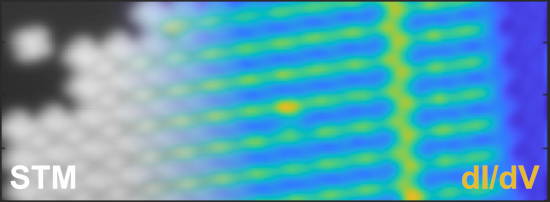
- stacked configuration [19]. When CuPc is on top of PTCDA, the interface state can still be observed [19], and CuPc has a strong bond to the underlying PTCDA layer [20]. In this paper, we present STM and AFM data of P2C and PC phases on Ag(111), concentrating on the PC phase. The high-resolution AFM allows


Single-step extraction of small-diameter single-walled carbon nanotubes in the presence of riboflavin
Beilstein J. Nanotechnol. 2022, 13, 1564–1571, doi:10.3762/bjnano.13.130
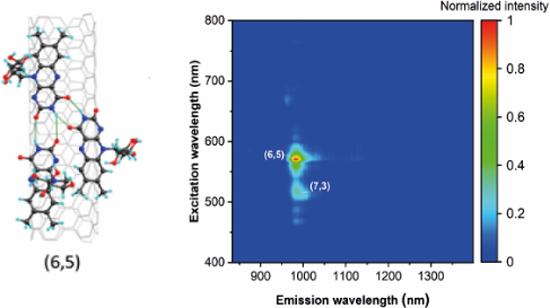
- received from Sigma-Aldrich and OCSiAl, respectively, and used without further purification. Riboflavin (98%) was purchased from Alfa Aesar and used as received. Sephacryl S-200 High Resolution was supplied by Sigma-Aldrich. Preparation of dispersion of riboflavin-wrapped SWCNTs 40 mg of SWCNT powder was
- such as melanoma, luminal 45 A breast cancer, and squamous cell carcinoma. Riboflavin-covered SWCNTs have immense potential in detecting tumors since riboflavin is selectively attached to the riboflavin carrier protein in the tumor cells while the photoluminescence increased by SWCNTs allows for high
- -resolution imaging of specific tissues [29]. Notably, single-step extraction of carbon nanotubes in an aqueous media without surfactants or organic additives can significantly shorten the path from industrial or laboratory reactors to in vitro and in vivo biomedical research and further. Conclusion We


Induced electric conductivity in organic polymers
Beilstein J. Nanotechnol. 2022, 13, 1551–1557, doi:10.3762/bjnano.13.128
- polymer film thickness, which is just 3 nm. After electric measurements, a number of heterostructures was sent for analysis by high resolution transmission electron microscopy and/or scanning electron microscopy. None of the studied samples showed a systematic ‘sticking’ of lead electrodes through the
- side view microphotographs made by high-resolution transmission electron microscopy occasionally reveal some macroscopic features such as lead electrode shortcuts through the polymer film (Figure 2c). These defects are episodic, and their character does not resemble the ‘melting through’ of the PDP



LED-light-activated photocatalytic performance of metal-free carbon-modified hexagonal boron nitride towards degradation of methylene blue and phenol
Beilstein J. Nanotechnol. 2022, 13, 1380–1392, doi:10.3762/bjnano.13.114
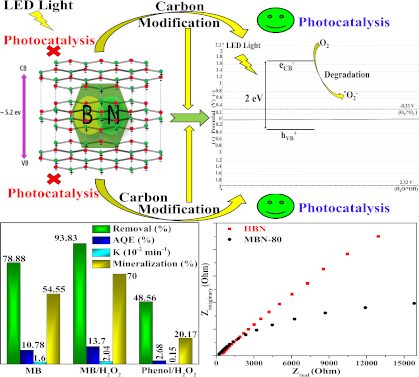
- times with DI water, and dried overnight at 60 °C. The commercially available HBN was used as a control sample. Characterization techniques A Rigaku Smart Lab high-resolution X-ray diffractometer (HR-XRD) equipped with a HyPix-3000 detector and Cu anode emitting Kα radiation was employed to obtain the
- crystallographic characterization. The morphology of the obtained nanostructures was captured by high-resolution transmission electron microscopy (HRTEM, Talos F200X G2, Thermo Scientific). The optical properties were characterized with a Shimadzu UV 2600 UV–vis spectrophotometer with an integrating sphere
- attachment using BaSO4 as the standard. The electronic arrangement of the studied materials was revealed through a PHI 5000 versa probe III high-resolution X-ray photoelectron spectroscope (HR-XPS). The mineralization efficiency was estimated through the variation in the total organic carbon content by using