


Search results
Search for "hysteresis" in Full Text gives 294 result(s) in Beilstein Journal of Nanotechnology. Showing first 200.
Scavenging of reactive oxygen species by phenolic compound-modified maghemite nanoparticles
Beilstein J. Nanotechnol. 2019, 10, 1073–1088, doi:10.3762/bjnano.10.108
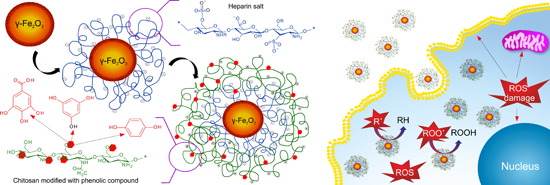
- . The superparamagnetism of the γ-Fe2O3 colloid was confirmed by SQUID magnetometry through the absence of remanence and coercivity in the magnetic hysteresis curve (Figure 3c,d). The saturation magnetization of the γ-Fe2O3 colloid (4.4 mg/mL was 0.307 A·m2·kg−1 at 260 K. The critical parameter for the
- stretching vibrations of the amine groups and polysaccharides, respectively. The similarity between the magnetic hysteresis of neat and heparin-modified nanoparticles indicated that the polymer-coated nanoparticles retained the same superparamagnetic behavior. However, a small decrease in the saturation
- temperature and magnetic field showed a typical superparamagnetic behavior of the γ-Fe2O3 nanoparticles with a saturation magnetization of 0.307 A∙m2·kg−1 at 260 K. The similarity of the magnetic hysteresis and ZF-C/F-C curves of the neat and modified nanoparticles indicated that the coatings did not affect





Periodic Co/Nb pseudo spin valve for cryogenic memory
Beilstein J. Nanotechnol. 2019, 10, 833–839, doi:10.3762/bjnano.10.83
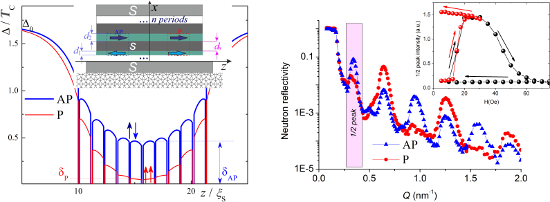
- shown by solid lines in Figure 3a. (b) Hysteresis loop measured by SQUID magnetometry (solid line). The black dot indicates the magnetic moment of the sample which is obtained by the integration of the depth profiles depicted in (a). The red dot shows the magnetic moment at H = 30 Oe expected if one P


Tungsten disulfide-based nanocomposites for photothermal therapy
Beilstein J. Nanotechnol. 2019, 10, 811–822, doi:10.3762/bjnano.10.81
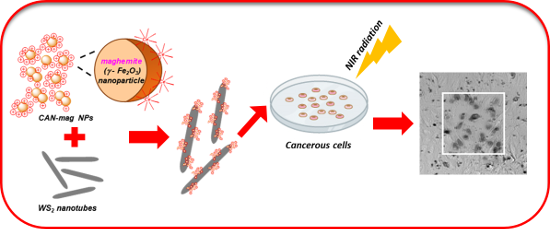
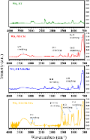
- magnetic field until it approaches saturation, and there is no hysteresis loop. Superparamagnetism is typical for iron-oxide nanoparticles [67]. The nanocomposite WS2-NT-CM (blue curve) maintains superparamagnetism, with a saturation value of about ±13 emu/g, which is a sixth of the saturation value for






An efficient electrode material for high performance solid-state hybrid supercapacitors based on a Cu/CuO/porous carbon nanofiber/TiO2 hybrid composite
Beilstein J. Nanotechnol. 2019, 10, 781–793, doi:10.3762/bjnano.10.78
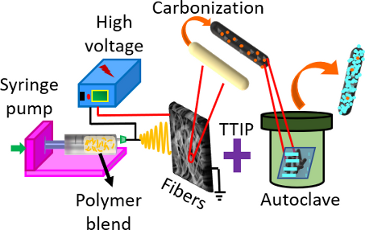
- good access of electrolyte to the electrode surface. Figure 7a shows the N2 adsorption–desorption isotherm with hysteresis loop from 0.3 to 1 P/P0 for the Cu/CuO/PCNF/TiO2 composite. The BET specific surface area of the Cu/CuO/PCNF/TiO2 composite was found to be 71.879 m2 g−1. Pores with a mean


On the transformation of “zincone”-like into porous ZnO thin films from sub-saturated plasma enhanced atomic layer deposition
Beilstein J. Nanotechnol. 2019, 10, 746–759, doi:10.3762/bjnano.10.74
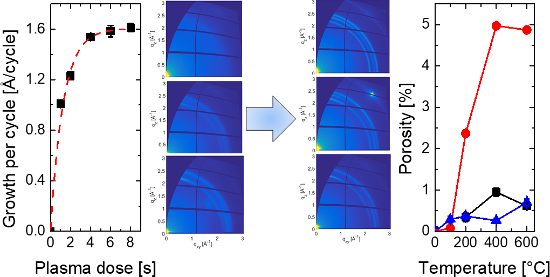
- a type-II isotherm is associated with nonporous materials. Mesoporous materials are instead characterized by a type-IV isotherm, in which a hysteresis arises in the desorption step, due to the condensation of water in the pores. The adsorptive uptake was expressed as adsorptive volume obtained from
- stated, burning of the organic functionalities reduces the amount of carbon in the layers and, in turn, the swelling upon water exposure. In the literature, mesoporous materials showed hysteresis in the adsorption and desorption branches [78]. For the zincone-like layers, despite the increase in the
- refractive index at 60% and 80% relatice humidity, no or limited hysteresis was witnessed. Under these conditions, the pores are generally on the edge between microporosity and mesoporosity, that is, of the order of 1–3 nm in pore diameter. The amount of porosity measured in the layers is reported in Figure


Polymorphic self-assembly of pyrazine-based tectons at the solution–solid interface
Beilstein J. Nanotechnol. 2019, 10, 494–499, doi:10.3762/bjnano.10.50
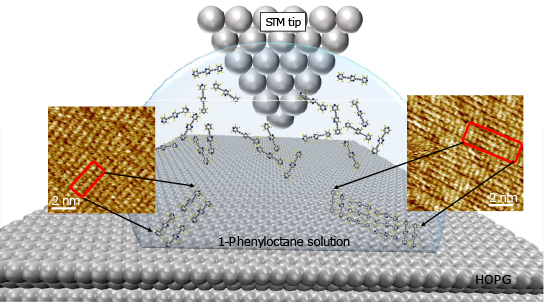
- lattice parameters as well as the number, type, and orientation of molecules within a unit cell. In general, the STM experiments conducted under ambient conditions are prone to thermal drift and suffer from piezo creep and hysteresis. To overcome this limitation, the acquired STM images were corrected by


Wearable, stable, highly sensitive hydrogel–graphene strain sensors
Beilstein J. Nanotechnol. 2019, 10, 475–480, doi:10.3762/bjnano.10.47
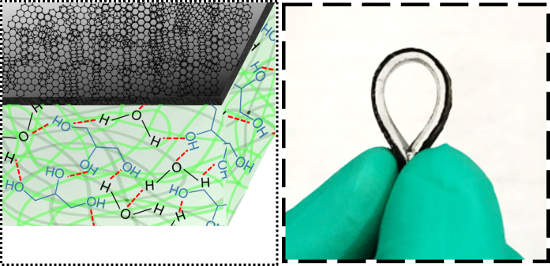
- -hydrogel and the electron conduction change of the graphene film under different contact conditions [15] (spacing variations and contact area under stretching). The ionic conductivity is responsible for the electrical conductivity of the bare WG-hydrogel. The hysteresis curve for graphene/WG-hydrogel
- strain sensor is illustrated in Supporting Information File 1, Figure S3. The stretching and releasing curve is almost symmetric, indicating that hysteresis is not obvious. Supporting Information File 1, Figure S4 shows optical images of the graphene/hydrogel composite before and after 10 times 25
- showing the real life application of the strain sensor to sense the movement of the proximal interphalangeal joint (c) and the metacarpophalangeal joint (d). Supporting Information Yield strain stress curve of the hydrogels; Cross-section SEM image of the graphene/hydrogel composite; Hysteresis curve for


Nanocomposite–parylene C thin films with high dielectric constant and low losses for future organic electronic devices
Beilstein J. Nanotechnol. 2019, 10, 428–441, doi:10.3762/bjnano.10.42
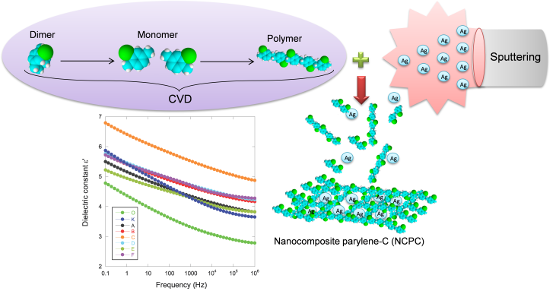
- of samples B and C, the dose of which is higher than expected, is not completely clear, but it is thought to lie mainly in the very peculiar nature of the parylene deposition process, which is controlled by setting the pressure inside the chamber. This control method gives rise to hysteresis loops in




Improving control of carbide-derived carbon microstructure by immobilization of a transition-metal catalyst within the shell of carbide/carbon core–shell structures
Beilstein J. Nanotechnol. 2019, 10, 419–427, doi:10.3762/bjnano.10.41
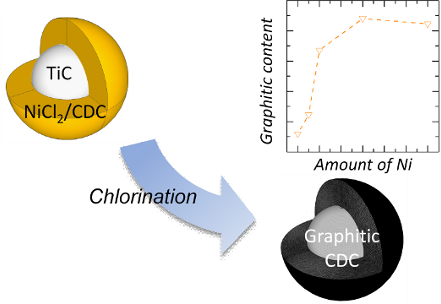
- type I and type II with a pronounced H3 hysteresis loop. It suggests that a larger pore exists in CDC-Ni5, which is likely induced by the graphitizing effect of the nickel catalyst, as described in [18][31]. Increasing the nickel loading from 5 to 30 mg·g−1 carbide, leads to similar isotherm shapes but


One-step nonhydrolytic sol–gel synthesis of mesoporous TiO2 phosphonate hybrid materials
Beilstein J. Nanotechnol. 2019, 10, 356–362, doi:10.3762/bjnano.10.35
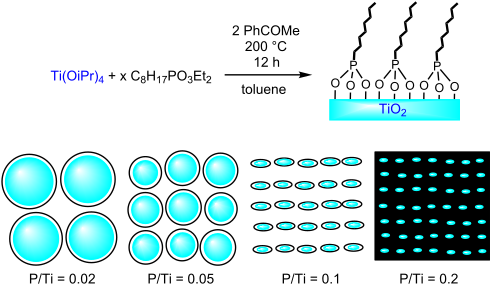
- isotherms of TiO2 and of the hybrid samples are mainly of type IVa, characteristic of mesoporous adsorbents, with an H2 hysteresis loop indicating complex pore structures [38]. The TiP0.02 and TiP0.05 isotherms also showed Type II features (lack of plateau at high relative pressure) suggesting the presence


Heating ability of magnetic nanoparticles with cubic and combined anisotropy
Beilstein J. Nanotechnol. 2019, 10, 305–314, doi:10.3762/bjnano.10.29
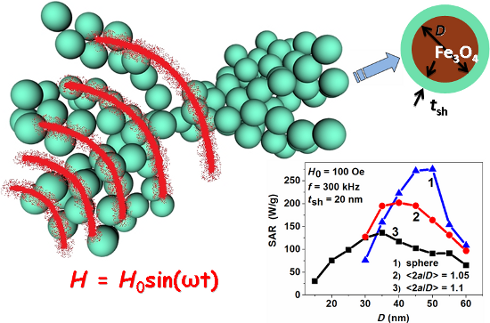
- , Moscow, Russia National Research Nuclear University “MEPhI”, 115409, Moscow, Russia 10.3762/bjnano.10.29 Abstract The low frequency hysteresis loops and specific absorption rate (SAR) of assemblies of magnetite nanoparticles with cubic anisotropy are calculated in the diameter range of D = 20–60 nm
- appreciable contribution to the total particle energy. As a result, the nanoparticles having shape perturbation possess combined magnetic anisotropy [23]. In this paper the low frequency hysteresis loops and the SAR of magnetite nanoparticles with cubic and combined magnetic anisotropy have been calculated
- /2. The nanoparticle elongations are supposed to be small, ξmax ≤ 1.2, so that various spheroids are close to a sphere. The calculations show that in the limit Np >> 1 the averaged hysteresis loop of cluster assembly has a rather small dispersion being averaged over 30–40 independent realizations of


Nanoporous water oxidation electrodes with a low loading of laser-deposited Ru/C exhibit enhanced corrosion stability
Beilstein J. Nanotechnol. 2019, 10, 157–167, doi:10.3762/bjnano.10.15
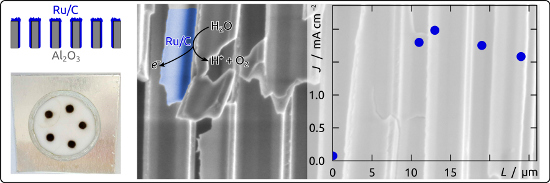
- ruthenium catalyst as prepared is present as oxidized Ru(IV). This observation is consistent with the XPS analyses presented above. The consecutive cycles yield a rather constant hysteresis area, which indicates a low loss of material in electrochemical conditions. This relative stability of our nanoporous
- H2O to O2 visible at >0.9 V within 10 cycles is much more significant with the planar surface than with its porous counterpart. The area of the voltammetric hysteresis decreases concomitantly. These observations point to the rapid loss of noble metal catalyst from planar Ru/C surfaces. The contrasting




pH-mediated control over the mesostructure of ordered mesoporous materials templated by polyion complex micelles
Beilstein J. Nanotechnol. 2019, 10, 144–156, doi:10.3762/bjnano.10.14
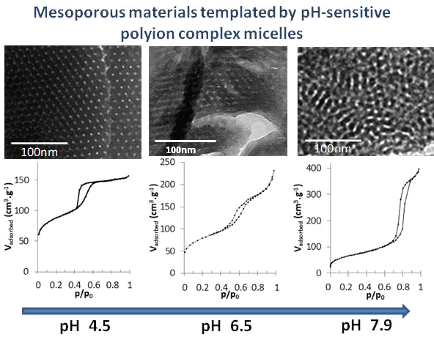
- with H1-like hysteresis loop (IUPAC classification [34]) showing capillary condensation at a relative pressure p/p0 ranging from 0.42 to 0.70. This indicates that the structural mesoporosity presents a cylindrical pore geometry with a high degree of pore size uniformity. This is confirmed by the narrow
- the hexagonal materials becomes less pronounced, and the hysteresis loop extends on a wider partial pressure range, in agreement with the presence of lamellar domains coexisting with wormhole pore morphologies. The increase of pH from 5.5 to 6.9 resulted in a size pore increase with broadening PSD
- image of Figure 4a. The N2 sorption isotherm (Figure 4b) exhibited the classical H3-like hysteresis loop expected for such a mesostructure, with a mesoporous volume of 0.17 cm3·g−1. A pore thickness of 3 nm was calculated using the Broekhof and De Boer method from the relative pressure at which complete


New micro/mesoporous nanocomposite material from low-cost sources for the efficient removal of aromatic and pathogenic pollutants from water
Beilstein J. Nanotechnol. 2019, 10, 119–131, doi:10.3762/bjnano.10.11
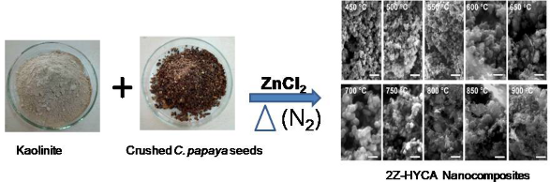
- interstitial voids among the particles. A very modest hysteresis is observed, which closes at approximately p/p0 = 0.45. This result is indicative of a few mesopores with restricted access within the material, which are emptied by cavitation [27]. Furthermore, analysis of 2Z-HYCA vs the synthesis temperature




Disorder in H+-irradiated HOPG: effect of impinging energy and dose on Raman D-band splitting and surface topography
Beilstein J. Nanotechnol. 2018, 9, 2708–2717, doi:10.3762/bjnano.9.253
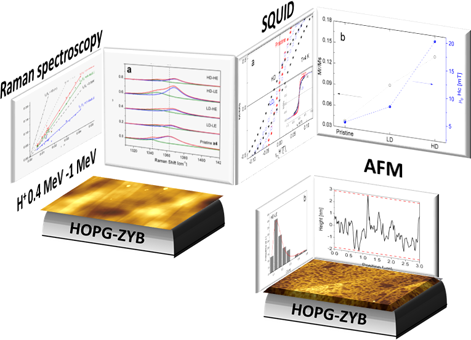
- for the increase of the D band in the Raman spectra are related to magnetic changes in HOPG samples [37], magnetization measurements were conducted in order to attempt a more complete characterization of our samples. Hysteresis loops of pristine HOPG and the irradiated samples were measured at 4 K
- work, while the dashed, dashed-dotted and dotted lines are taken from Eckmann and co-workers [35]. The symbols +, * and # refer to sp3-hybridized bonds, vacancies, and boundary defects, respectively. a) Hysteresis loops of pristine HOPG and irradiated samples with low (LD) and high (HD) H+ doses, in


Size-selected Fe3O4–Au hybrid nanoparticles for improved magnetism-based theranostics
Beilstein J. Nanotechnol. 2018, 9, 2684–2699, doi:10.3762/bjnano.9.251
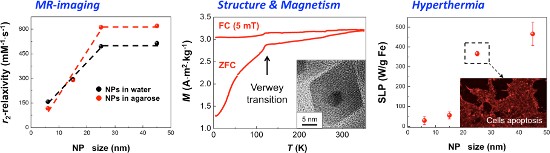
- properties are presented in this section. We measure zero-field cooling and field cooling (ZFC/FC) at an applied field of µ0H = 5 mT and hysteresis loops in the field range µ0H = ±9 T in the temperature interval 5–350 K for MNP-15 and MNP-25 and 5–390 K for samples MNP-6 and MNP-44. Figure 4A presents the
- the TEM diameter of 44 nm. In contrast, the diameter of Fe3O4 in sample MNP-25, as determined by TEM and XRD, is the same within the error bar. Figure 4B shows the magnetic hysteresis loops at T = 5 K and T = 300 K. All samples have an open hysteresis at T = 5 K while at ambient temperature only the
- the higher blocking temperature. Thus, all NPs in MNP-44 contribute to the temperature rise via Néel losses. Hysteresis losses prevail and stabilize the SLP values for MNP-25 and MNP-44 at 3.6 mg·mL−1 Fe concentration (Figure 6C). As a reference, the heating rate and corresponding SLP are also


Exploring the photoleakage current and photoinduced negative bias instability in amorphous InGaZnO thin-film transistors with various active layer thicknesses
Beilstein J. Nanotechnol. 2018, 9, 2573–2580, doi:10.3762/bjnano.9.239
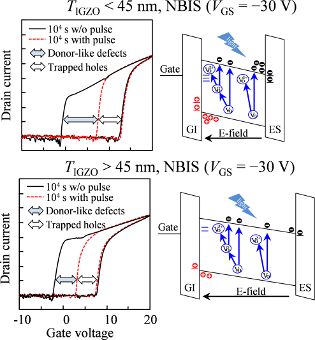
- visible light irradiation exceeded ≈2.7 eV. Furthermore, the influence of the TIGZO on NBIS-induced instability in a-IGZO TFTs was explored by the combination of current–voltage measurements in double-sweeping VGS mode and capacitance–voltage measurements. The NBIS-induced hysteresis was quantitatively
- to device instability and restricts the development of oxide TFTs for commercial products. In our previous study, a double-sweeping VGS mode was proposed to investigate the origin of NBIS-induced hysteresis of a-IGZO TFTs [17]. A promising method to suppress NBIS degradation was also considered by
- explored by combining the current–voltage (I–V) measurements in double-sweeping VGS mode and capacitance–voltage (C–V) measurements. The NBIS-induced hysteresis was quantitatively analyzed using a positive gate pulse mode. The I–V and C–V results revealed that the trapped holes at the etch-stopper/IGZO


High-temperature magnetism and microstructure of a semiconducting ferromagnetic (GaSb)1−x(MnSb)x alloy
Beilstein J. Nanotechnol. 2018, 9, 2457–2465, doi:10.3762/bjnano.9.230
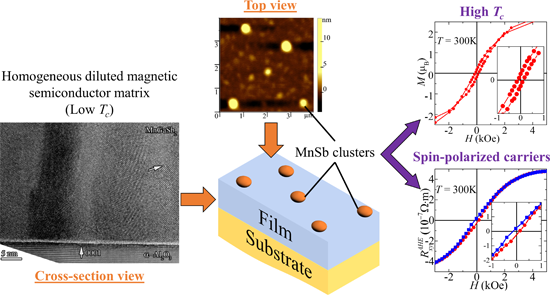
- magnetization as function of the magnetic field for the sample GM3 (see Table 1) for magnetic field orientations parallel to the sample plane and perpendicularly to it. The presence of a well-pronounced hysteresis suggests that ferromagnetic ordering in these materials appears at T > 300 K. This is more evident
- , the Rxy(H) should reproduce the field dependence of the magnetization. As shown in Figure 3a, Rs·M(H) (the Hall resistivity after subtraction of the linear contribution) demonstrates hysteresis behavior (see inset) with Hc ≈ 140 Oe and a saturation field value of Hsat ≈ 3.8 kOe. This is in a good
- hysteresis at room temperature perfectly fits the idea of a dominant contribution of MnSb inclusions with Tc > 400 K interacting with holes. This is confirmed by the appearance of a substantial anomalous Hall effect even at room temperature that signifies the presence of spin-polarized charge carriers. The



Hydrothermal-derived carbon as a stabilizing matrix for improved cycling performance of silicon-based anodes for lithium-ion full cells
Beilstein J. Nanotechnol. 2018, 9, 2381–2395, doi:10.3762/bjnano.9.223
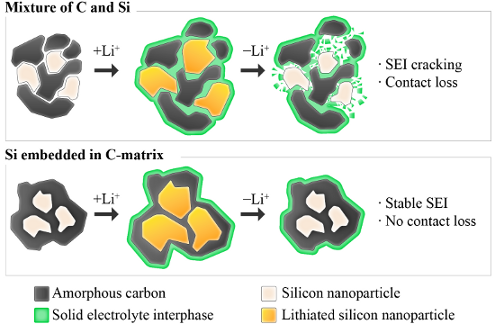
- . For example, they maintain a high specific capacity (372 mAh g−1) compared to cathode materials, high electrochemical stability in suitable electrolytes, a low operation potential (0.2 V vs Li/Li+), low voltage hysteresis, low cost, and are environmentally friendly [7][8]. Nonetheless, alternative
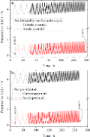
- , the VE is lower than before and stabilizes at ≈94% in both cases. The decrease compared to the formation cycles is most likely due to stronger polarization effects of the electrodes at higher currents [8][70]. A high VE indicates a small voltage hysteresis between charge and discharge of the cell


Pinning of a ferroelectric Bloch wall at a paraelectric layer
Beilstein J. Nanotechnol. 2018, 9, 2356–2360, doi:10.3762/bjnano.9.220
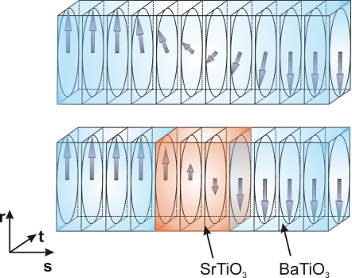
- layer could be easily switched with a 0.5 kV/mm electric field, as is apparent from the quasistatic hysteresis loop shown in Figure 8 (see below). In fact, the thickness of the SrTiO3 layer can be tuned in a way that the wall passing through there is effectively in the state just below the phase
- the walls in the simulation box, but there were no real constrains introduced there, only the natural limitations resulting from the standard protocol of simulated annealing procedure, governed by the time-dependent Ginzburg–Landau equation. The hysteresis loop shown in Figure 8 has been calculated
- and (b) with the thickness of the SrTiO3 layer. Landau part of the domain wall energy density as a function of the position of the ferroelectric domain wall, estimated by sliding a rigid polarization profile across the potential relief of the superlattice described in the text. Calculated hysteresis

![[Graphic 2]](/bjnano/content/inline/2190-4286-9-220-i2.svg?max-width=637&scale=1.18182) -oriented 180-degree domain walls in a) pure BaTiO3, b) BaTiO3–SrTiO3 superla...
-oriented 180-degree domain walls in a) pure BaTiO3, b) BaTiO3–SrTiO3 superla...


Magnetism and magnetoresistance of single Ni–Cu alloy nanowires
Beilstein J. Nanotechnol. 2018, 9, 2345–2355, doi:10.3762/bjnano.9.219
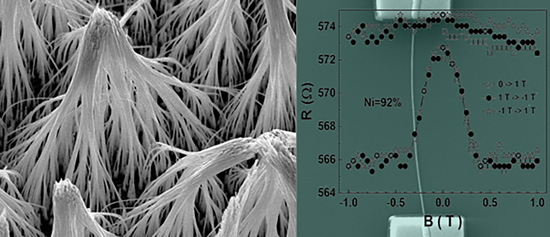
- measurements made on single Ni–Cu alloy nanowires of different compositions have been reported and discussed in detail. A direct methodology for transforming the magnetoresistance data into the corresponding magnetic hysteresis loops was proposed, opening new possibilities for an easy magnetic investigation of
- single magnetic nanowires in the peculiar cases of Stoner–Wohlfarth-like magnetization reversal mechanisms. The magnetic parameters of single Ni–Cu nanowires of different Ni content have been estimated and discussed by the interpretation of the as derived magnetic hysteresis loops via micromagnetic
- -resistance data in corresponding magnetic hysteresis loops can be applied, opening the way for an easier experimental investigation of magnetization reversal in ferromagnetic single nanowires. Information about magnetic parameters and phase segregation in single nanowires has been obtained by exploiting the


Lead-free hybrid perovskites for photovoltaics
Beilstein J. Nanotechnol. 2018, 9, 2209–2235, doi:10.3762/bjnano.9.207
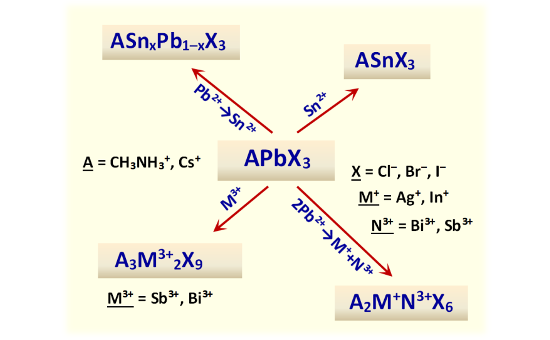
- carrier lifetime [126]. The solar cells produced from these highly uniform HP layers revealed a negligible hysteresis and no light soaking effect, indicating a largely suppressed recombination. The best PCE was 9%, which is by 50% higher than for similar cells with the HP layer modified by SnF2 [76]. A
- cell comprised on a MABI layer sandwiched between an FTO/TiO2 scaffold and a Spiro-MeOTAD/Au layer showed a PCE of 0.164% and very good stability of photovoltaic parameters even when stored in the open humid air [157]. The cell also showed almost no hysteresis over a broad range of scan rates (150–1500
- mV/s). A hysteresis-free cell was also constructed by combining the single-crystalline MABI with a P3HT HTL [85]. A layer of CsBi3I10 perovskite deposited by a conventional spin-coating/drying method on top of gold electrodes demonstrated a high photoresponse in the range of λ < 700 nm [169]. The


Influence of the thickness of an antiferromagnetic IrMn layer on the static and dynamic magnetization of weakly coupled CoFeB/IrMn/CoFeB trilayers
Beilstein J. Nanotechnol. 2018, 9, 2198–2208, doi:10.3762/bjnano.9.206
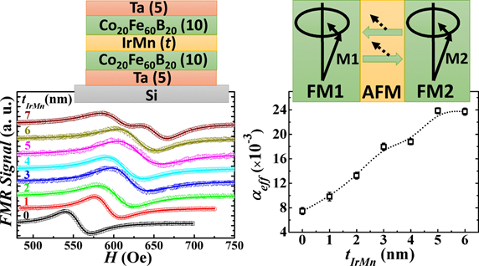
- of the antiferromagnetic (AF) IrMn layer is investigated using magnetization hysteresis (M–H) and ferromagnetic resonance (FMR) measurements. The study shows that the two CoFeB layers are coupled via a long-range dynamic exchange effect through the IrMn layer up to a thickness of 6 nm. It is found
- . The asymmetric hysteresis loop and training effect observed at low temperature is related to the presence of a metastable AF domain state. We show that both the static and dynamic magnetic properties of trilayer films can be adjusted over a wide range by changing the thickness of the IrMn spacer layer
- magnetization hysteresis (M–H) measurements. We find compelling evidence that the two CoFeB layers are dynamically exchange-coupled through the IrMn spacer layer up to a thickness tIrMn = 6 nm. The dynamic exchange coupling is discussed in terms of interaction between two CoFeB layers mediated by the IrMn layer


Electrospun one-dimensional nanostructures: a new horizon for gas sensing materials
Beilstein J. Nanotechnol. 2018, 9, 2128–2170, doi:10.3762/bjnano.9.202






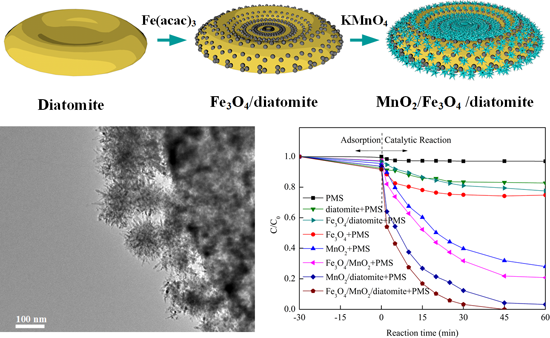
Synthesis of a MnO2/Fe3O4/diatomite nanocomposite as an efficient heterogeneous Fenton-like catalyst for methylene blue degradation
Beilstein J. Nanotechnol. 2018, 9, 1940–1950, doi:10.3762/bjnano.9.185
- distributions of the samples. All three samples show a type-IV isotherm with type-H3 hysteresis loops (at about 0.50–0.99), which demonstrates a mesoporous structure of diatomite and as-prepared composites [35]. The detailed BET values calculated by the Barret–Joyner–Halenda (BJH) method are listed in Table 1
- elemental mapping images (g) of MnO2/Fe3O4/diatomite. TEM images of (a) Fe3O4/diatomite, (b, c) MnO2/Fe3O4/diatomite and (d) HRTEM image of MnO2/Fe3O4/diatomite. Magnetic hysteresis loops of Fe3O4/diatomite and MnO2/Fe3O4/diatomite. The inset image illustrates the magnetic separation of the dispersed MnO2





