


Search results
Search for "infrared spectroscopy" in Full Text gives 187 result(s) in Beilstein Journal of Nanotechnology.
Nanoscale characterization of the temporary adhesive of the sea urchin Paracentrotus lividus
Beilstein J. Nanotechnol. 2018, 9, 2277–2286, doi:10.3762/bjnano.9.212
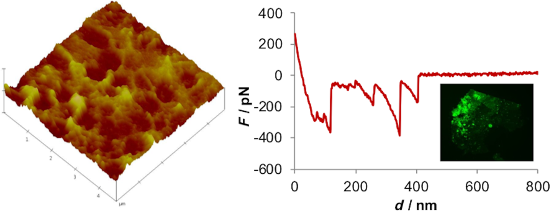
- to obtain more representative results and indicate that sea urchin adhesives might contain amyloid quaternary protein structures or β-sheet-rich proteins, but this should be further confirmed by complementary methods such as circular dichroism spectroscopy, TEM or Fourier transform infrared
- spectroscopy. As previously discussed by other authors, this mechanism of sacrificial bonds and hidden length is not necessarily associated to adhesion per se but instead influences the cohesive strength of marine adhesives [1], being thus advantageous for sea urchins because of the extra energy required to


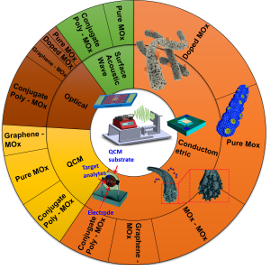
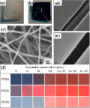
Electrospun one-dimensional nanostructures: a new horizon for gas sensing materials
Beilstein J. Nanotechnol. 2018, 9, 2128–2170, doi:10.3762/bjnano.9.202






Metal-free catalysis based on nitrogen-doped carbon nanomaterials: a photoelectron spectroscopy point of view
Beilstein J. Nanotechnol. 2018, 9, 2015–2031, doi:10.3762/bjnano.9.191
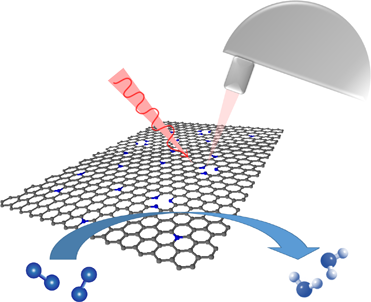
- determination is not possible by using only XPS and other techniques need to be used, e.g., infrared spectroscopy and electron microscopy. Content and configuration of nitrogen in graphene and carbon nanotubes can be tuned by thermal annealing or by the interaction with different substrates. Temperature




Synthesis of a MnO2/Fe3O4/diatomite nanocomposite as an efficient heterogeneous Fenton-like catalyst for methylene blue degradation
Beilstein J. Nanotechnol. 2018, 9, 1940–1950, doi:10.3762/bjnano.9.185
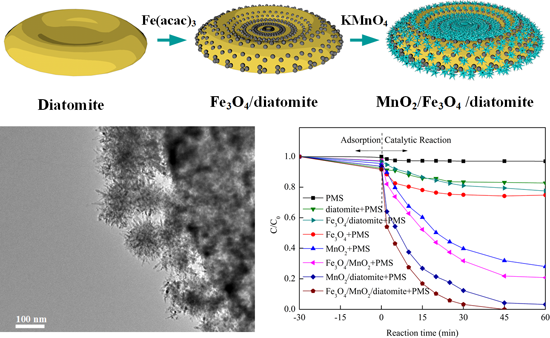
- Fourier transform infrared spectroscopy (FTIR) using a Nicolet Nexus 670 spectrometer. The morphology of samples was observed with a TESCAN MIRA3 LMU scanning electron microscope (SEM) and a JEOL JEM-1200EX transmission electron microscope (TEM). The X-ray photoelectron spectroscopy (XPS) measurements


Formation and development of nanometer-sized cybotactic clusters in bent-core nematic liquid crystalline compounds
Beilstein J. Nanotechnol. 2018, 9, 1288–1296, doi:10.3762/bjnano.9.121
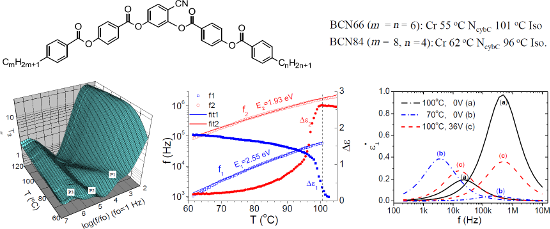
- molecules were aligned by surface treatment and one of the short axes was also aligned by the electric field. In more recent studies, the biaxiality of the sample studied was confirmed [3][4][5] by electro-optical switching [23], polarizing infrared spectroscopy (PIR) [24], polarizing optical microscopy


Electrodeposition of reduced graphene oxide with chitosan based on the coordination deposition method
Beilstein J. Nanotechnol. 2018, 9, 1200–1210, doi:10.3762/bjnano.9.111
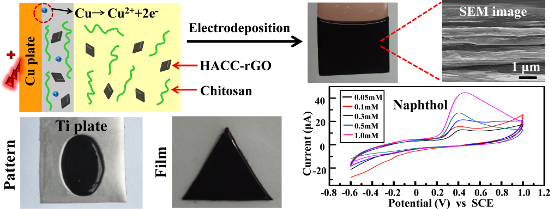
- -GO was reduced by hydrazine hydrate to obtain the HACC-rGO. In our previous work, the structure and morphology of the resulting HACC-rGO have been characterized by infrared spectroscopy, X-ray diffraction (XRD) and field emission scanning electron microscopy (FE-SEM) [29]. As shown in Figure 1b, the


Review on nanoparticles and nanostructured materials: history, sources, toxicity and regulations
Beilstein J. Nanotechnol. 2018, 9, 1050–1074, doi:10.3762/bjnano.9.98

- storms and cosmic dust: The Eagle Nebula stars are 6500 light years away from Earth and are born with a disk-like cloud and the ability to form solar systems accompanied by dust and gas (mostly hydrogen) [44]. Astronomical observations (especially infrared spectroscopy) and direct “stardust” analysis


Heavy-metal detectors based on modified ferrite nanoparticles
Beilstein J. Nanotechnol. 2018, 9, 762–770, doi:10.3762/bjnano.9.69
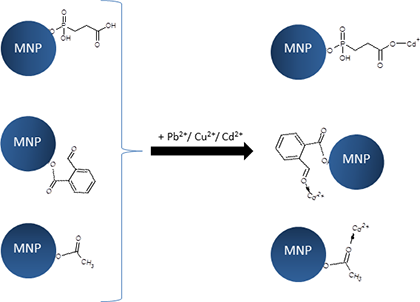
- metals Cd, Cu and Pb. The obtained nanoparticles were structurally characterized by transmission electron microscopy (TEM), X-ray diffraction (XRD), Fourier transform infrared spectroscopy (FTIR) and Mössbauer spectroscopy. The amounts of Cd, Cu and Pb were measured out by atomic absorption spectroscopy
- agreement, which also confirms the successful fabrication of requested structures. Infrared spectroscopy All samples were measured by IR spectroscopy to see if the surface of nanoparticles changes after core modification and surface functionalization. This method was also expected to serve as a reference


A review of carbon-based and non-carbon-based catalyst supports for the selective catalytic reduction of nitric oxide
Beilstein J. Nanotechnol. 2018, 9, 740–761, doi:10.3762/bjnano.9.68
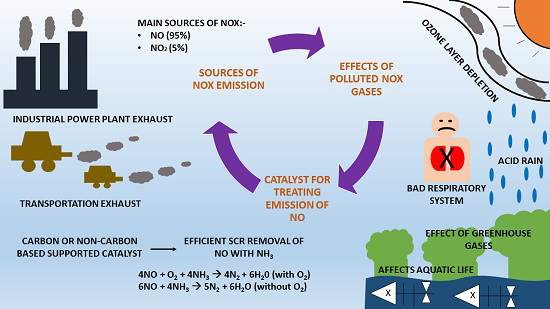
- ACFN produced higher activity than those on ACFP. This is because the surface of CeO2/ACFN is more acidic as it was treated with nitric acid and the reaction between NO and the catalyst surface became more active. Using several characterisation techniques, such as Fourier transform infrared
- spectroscopy (FTIR), X-ray photoelectron spectroscopy (XPS), and temperature-programmed desorption (TPD), the comparison of the properties for both ACFP and ACFN was clarified. Chuang et al. [18] considered three different methods, i.e., impregnation, polyol, and microwave-heated polyol methods for the
Ultralight super-hydrophobic carbon aerogels based on cellulose nanofibers/poly(vinyl alcohol)/graphene oxide (CNFs/PVA/GO) for highly effective oil–water separation
Beilstein J. Nanotechnol. 2018, 9, 508–519, doi:10.3762/bjnano.9.49
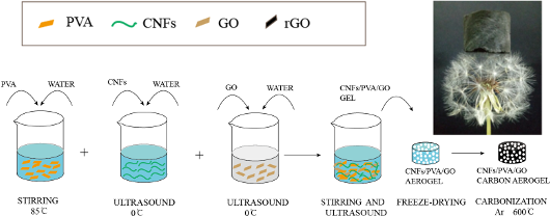
- , USA) equipped with an energy disperse spectroscopy (EDS) device was used to investigate the surface morphology of the carbon aerogels. The FTIR profiles were obtained using a Fourier transform infrared spectroscopy spectrometer (Nicolet iS10, Thermo Electron Corp., USA). The water contact angle (CA


Engineering of oriented carbon nanotubes in composite materials
Beilstein J. Nanotechnol. 2018, 9, 415–435, doi:10.3762/bjnano.9.41
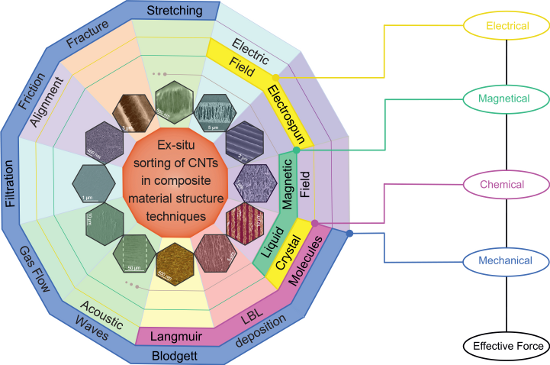
- ]) effects on the application and quality of composites. For this aim, many techniques have been developed such as Raman spectroscopy, Fourier-transforms infrared spectroscopy (FTIR) and X-ray photoelectron spectroscopy (XPS). Raman spectroscopy: Raman spectroscopy is a powerful tool to identify and quantify
- signals that mask the signals of other organic components. In such cases, tunable UV Raman spectroscopy may be used, although this technique is rarely used. Fourier-transform infrared spectroscopy: FTIR is often used to characterize molecular bonding on the CNT surface and to determine the modification of








Photocatalytic and adsorption properties of TiO2-pillared montmorillonite obtained by hydrothermally activated intercalation of titanium polyhydroxo complexes
Beilstein J. Nanotechnol. 2018, 9, 364–378, doi:10.3762/bjnano.9.36
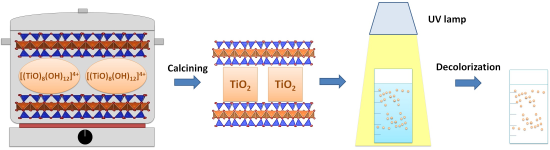
- close to the sol formation limit. The materials, produced at various annealing temperatures from the intercalated samples, were characterized by infrared spectroscopy, differential scanning calorimetry (DSC)/thermogravimetric analysis (TGA), X-ray diffraction, dynamic light scattering (DLS) measurements






Sugarcane juice derived carbon dot–graphitic carbon nitride composites for bisphenol A degradation under sunlight irradiation
Beilstein J. Nanotechnol. 2018, 9, 353–363, doi:10.3762/bjnano.9.35
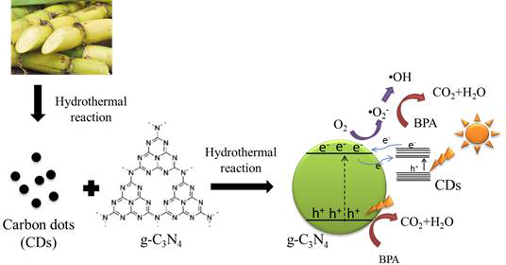
- degradation of endocrine disrupting chemicals (EDCs). Bisphenol A (BPA) was chosen as a model pollutant under natural sunlight irradiation. Herein, the structural and optical properties of samples were characterized by X-ray diffraction (XRD), Fourier transform infrared spectroscopy (FTIR), photoluminescence
- lattice fringes of the CDs were found to be about 0.24 nm (Figure 1f), which correlated with the (100) in-plane lattice spacing of graphene [45]. X-ray diffraction (XRD) and Fourier-transform infrared spectroscopy (FTIR) Figure 2a shows the XRD patterns of all CD/g-C3N4 composites. A major diffraction


Synthesis and characterization of electrospun molybdenum dioxide–carbon nanofibers as sulfur matrix additives for rechargeable lithium–sulfur battery applications
Beilstein J. Nanotechnol. 2018, 9, 262–270, doi:10.3762/bjnano.9.28
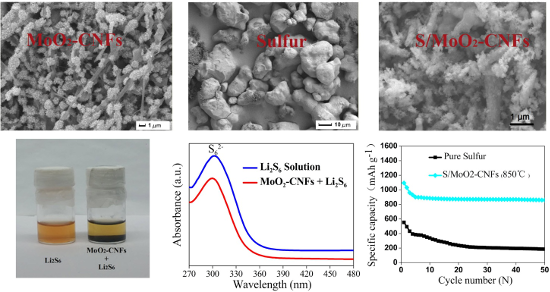
- using an electrospinning technique followed by calcination, using sol–gel precursors and polyacrylonitrile (PAN) as a processing aid. The resulting samples were characterized by X-ray diffraction (XRD), Fourier transform infrared spectroscopy (FTIR), Raman spectroscopy, Brunauer–Emmet–Teller (BET
- MoO2–CNF was successfully prepared through electrospinning. The Fourier transform infrared spectroscopy (FTIR) spectra of PAN fibers, as-prepared composite PAN/PMA fibers, and composite fibers calcined at different temperatures are illustrated in Figure 2. The FTIR spectra of PAN fibers and as-prepared


BN/Ag hybrid nanomaterials with petal-like surfaces as catalysts and antibacterial agents
Beilstein J. Nanotechnol. 2018, 9, 250–261, doi:10.3762/bjnano.9.27
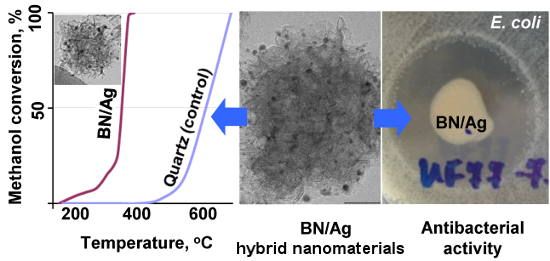
- spectroscopy (XPS), and infrared spectroscopy (FTIR). They were also characterized in terms of thermal stability, Ag+ ion release, catalytic and antibacterial activities. The materials synthesized via UV decomposition of AgNO3 demonstrated a much better catalytic activity in comparison to those prepared using





Bombyx mori silk/titania/gold hybrid materials for photocatalytic water splitting: combining renewable raw materials with clean fuels
Beilstein J. Nanotechnol. 2018, 9, 187–204, doi:10.3762/bjnano.9.21
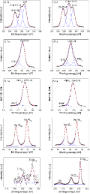
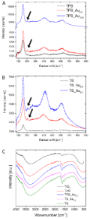
- infrared spectroscopy (FT-ATR-IR) was done from 4000–500 cm−1 with a resolution of 2 cm−1 on an FT-IR NEXUS spectrometer with a ThermoNicolet SmartOrbit ATR attachment with a diamond crystal. Samples were directly deposited on the crystal und fixed in the measurement position via the SmartOrbit attachment




Co-reductive fabrication of carbon nanodots with high quantum yield for bioimaging of bacteria
Beilstein J. Nanotechnol. 2018, 9, 137–145, doi:10.3762/bjnano.9.16
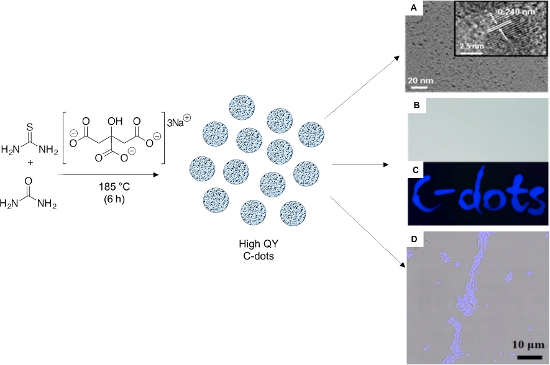
- , leading to high quantum yield C-dots. The obtained C-dots are well-dispersed with a uniform size and a graphite-like structure. A synergistic reduction mechanism was investigated using Fourier transform infrared spectroscopy and X-ray photoelectron spectroscopy. The findings show that using both thiourea


Response under low-energy electron irradiation of a thin film of a potential copper precursor for focused electron beam induced deposition (FEBID)
Beilstein J. Nanotechnol. 2018, 9, 57–65, doi:10.3762/bjnano.9.8
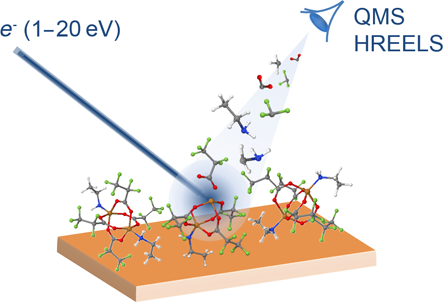
- ligands that are solid and stable under ambient conditions. They are directly deposited on the surface for studying the fragmentation with surface science tools. Results: Infrared spectroscopy and high-resolution electron energy loss spectroscopy (HREELS) are combined to show that the precursor is able to
- has already been studied by variable temperature infrared spectroscopy (VT-IR) [8]. The effect of vacuum exposure is detailed hereafter. Amine ligand stability under ambient conditions The IR spectra of the pristine compounds A and B are recorded in Poland (Figure 2, respectively, spectrum a and c



Tailoring the nanoscale morphology of HKUST-1 thin films via codeposition and seeded growth
Beilstein J. Nanotechnol. 2017, 8, 2307–2314, doi:10.3762/bjnano.8.230
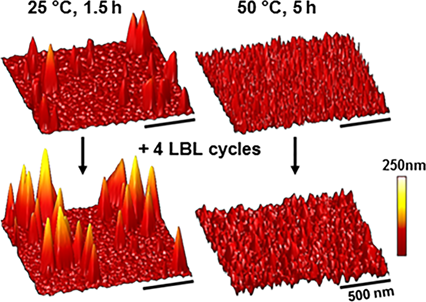
- ). In addition, characterization by infrared spectroscopy was conducted to confirm composition, and representative data is presented in Supporting Information File 1 (Figure S2) [13][14]. Atomic force microscopy: Multiple images (512 × 512 pixels) were obtained for each sample at 5 μm × 5 μm and 500 nm


Comprehensive investigation of the electronic excitation of W(CO)6 by photoabsorption and theoretical analysis in the energy region from 3.9 to 10.8 eV
Beilstein J. Nanotechnol. 2017, 8, 2208–2218, doi:10.3762/bjnano.8.220
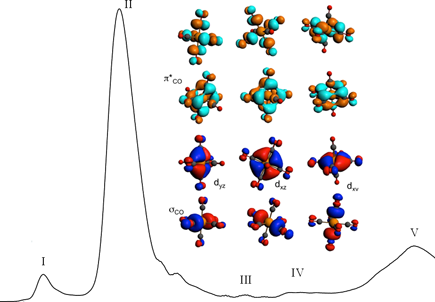
- -dependent density functional theory (TDDFT) calculations [15], and electron momentum spectroscopy calculations [16] have been carried out. Other relevant studies include DFT calculations on the structure of W(CO)6 and its behaviour in infrared spectroscopy [17], as well as Raman [18] and infrared [18][19
- ]. Nanometre-thick films of surface-adsorbed W(CO)6 irradiated at 500 eV electron impact energy were analysed in situ by X-ray photoelectron spectroscopy (XPS), mass spectrometry and reflective absorption infrared spectroscopy (RAIRS) measurements [23]. These studies on electron-stimulated reactions of surface


Preparation and characterization of polycarbonate/multiwalled carbon nanotube nanocomposites
Beilstein J. Nanotechnol. 2017, 8, 2026–2031, doi:10.3762/bjnano.8.203
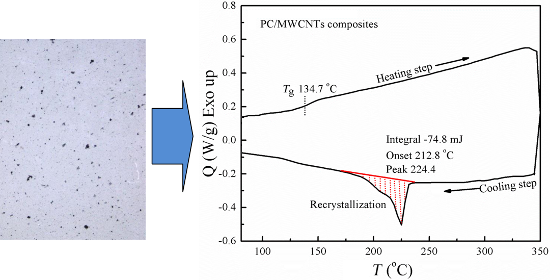
- characterized by UV–vis spectrometry using a Cary 6000i spectrometer by Varian, UK, in double beam configuration with empty reference sample position. Fourier-transform infrared spectroscopy (FTIR) of PC/MWCNT composites with different loadings was carried out in the range of 600–4000 cm−1 on a Bruker Vertex 70


Fluorination of vertically aligned carbon nanotubes: from CF4 plasma chemistry to surface functionalization
Beilstein J. Nanotechnol. 2017, 8, 1723–1733, doi:10.3762/bjnano.8.173
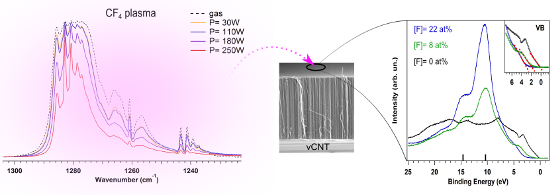
- carbon nanotubes (vCNT) exposed to the fluorine-rich glow discharge. In situ residual gas analysis (RGA) mass spectrometry is performed to probe the chemistry of the plasma phase and to individuate the plasma products that are simultaneously explored by Fourier transform infrared spectroscopy (FTIR). The
- infrared spectroscopy (FTIR) analysis are used for the plasma phase study, while the fluorinated vCNT surfaces are investigated using X-ray photoelectron (XPS) and Raman spectroscopies. For plasma power higher than P = 80 W, a considerable fragmentation of the parent CF4 molecule is observed, while the
- by Fourier transform infrared spectroscopy (FTIR). The spectra are recorded using a Varian FTIR-670 spectrometer. The multipass cell consists of a cylindrical section of 120 cm length and 25 cm in diameter, crossing the chamber. One side of the section is connected to the FTIR spectrometer through a




Surface functionalization of 3D-printed plastics via initiated chemical vapor deposition
Beilstein J. Nanotechnol. 2017, 8, 1629–1636, doi:10.3762/bjnano.8.162
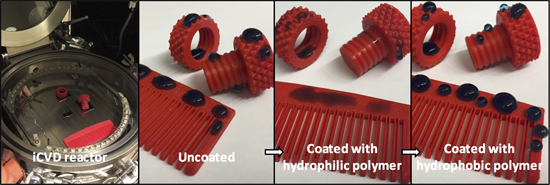
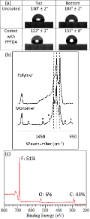
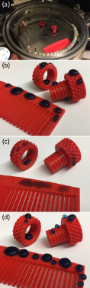
- PLA and flat PPFDA due to surface roughness [34]. Penetration of polymer through the lattice was also confirmed by deposition on the silicon wafer piece underneath the lattice. We used Fourier transform infrared spectroscopy (FTIR) (Figure 2b) to compare the spectra of the PPFDA film deposited on the



Oxidative stabilization of polyacrylonitrile nanofibers and carbon nanofibers containing graphene oxide (GO): a spectroscopic and electrochemical study
Beilstein J. Nanotechnol. 2017, 8, 1616–1628, doi:10.3762/bjnano.8.161
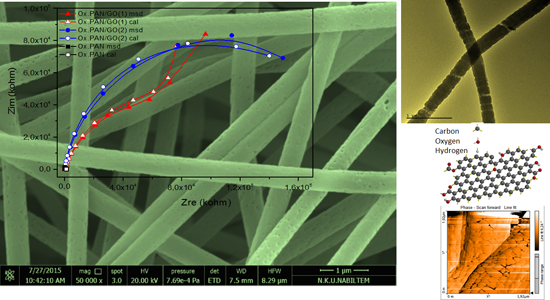
- morphological characterizations of the webs are carried out by using attenuated total reflectance Fourier transform infrared spectroscopy and Raman spectroscopy, scanning electron microscopy, atomic force microscopy and transmission electron microscopy. Mechanical tests are performed with a dynamic mechanical
- carbonization was performed at 900 °C for 1 h under nitrogen atmosphere. Characterization Attenuated total reflectance Fourier transform infrared spectroscopy (ATR-FTIR) and Raman spectroscopy were used to record the characteristic peaks of the oxidized and carbonized nanofibers. Mechanical properties of
- reflectance Fourier transform infrared spectroscopy (ATR-FTIR) (Perkin Elmer, Spectrum One, with a Universal ATR attachment with a diamond and ZnSe crystal). The microstructure of the carbonized nanofiber webs was investigated by Raman spectroscopy (DXR Raman spectrometer, Thermo Scientific, at 532 nm). The


Deposition of exchange-coupled dinickel complexes on gold substrates utilizing ambidentate mercapto-carboxylato ligands
Beilstein J. Nanotechnol. 2017, 8, 1375–1387, doi:10.3762/bjnano.8.139
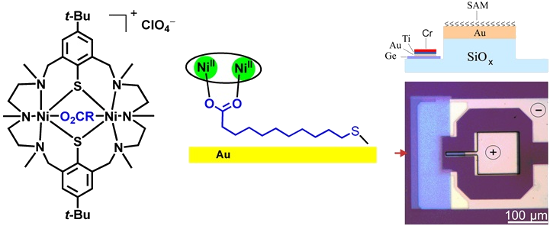
- , typical for an octahedral NiN3S2O carboxylate chromophore (assigned as ν2(3A2g→3T2g) and ν1(3A2g→3T1g), respectively, in pure Oh symmetry). Infrared spectroscopy (IR) is also a powerful method to examine carboxylate coordination modes [47][48]. As can be seen (Table 1), the present complexes reveal two





