Search results
Search for "melting" in Full Text gives 247 result(s) in Beilstein Journal of Nanotechnology. Showing first 200.
Enhanced inhibition of influenza virus infection by peptide–noble-metal nanoparticle conjugates
Beilstein J. Nanotechnol. 2019, 10, 1038–1047, doi:10.3762/bjnano.10.104
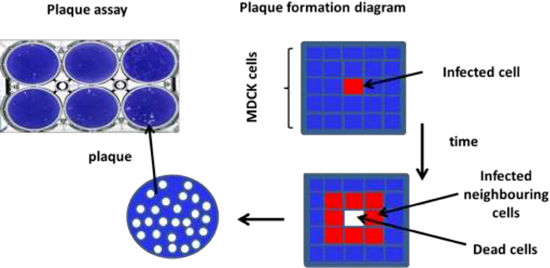
- agarose overlay was prepared by mixing equal volumes of 2% (w/v) of pre-warmed (55 °C) low-melting agarose (Melford Laboratories Ltd, Blideston Road, Ipswich, UK) and the overlay solution (14 mL 10× MEM, 3.7 mL 7.5% (w/v) bovine serum albumin (fraction V, Sigma-Aldrich, UK), 1.4 mL L-glutamine, 2.6 mL 7.5




Outstanding chain-extension effect and high UV resistance of polybutylene succinate containing amino-acid-modified layered double hydroxides
Beilstein J. Nanotechnol. 2019, 10, 684–695, doi:10.3762/bjnano.10.68
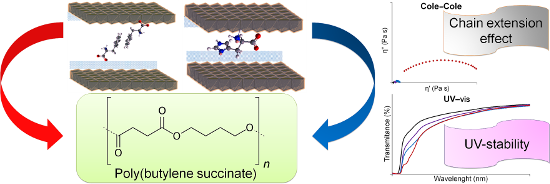
- was deleted and a second scan profile was performed by heating from −60 °C to 150 °C at 10 °C min−1. The glass transition temperature (Tg), the melting temperature (Tm) and the enthalpy of fusion (∆Hm) were measured from the second scan. Tg was taken as the midpoint of the heat capacity increment
- layers. The calculated residual masses correspond with the filler loading. The addition of LDHs does not affect the melting temperature Tm which is quite constant at 115–114 °C. A slight decrease can be observed in the crystallization temperature Tc for nanocomposites with LDH/amino acids, from 85 °C


Enhancement in thermoelectric properties due to Ag nanoparticles incorporated in Bi2Te3 matrix
Beilstein J. Nanotechnol. 2019, 10, 634–643, doi:10.3762/bjnano.10.63
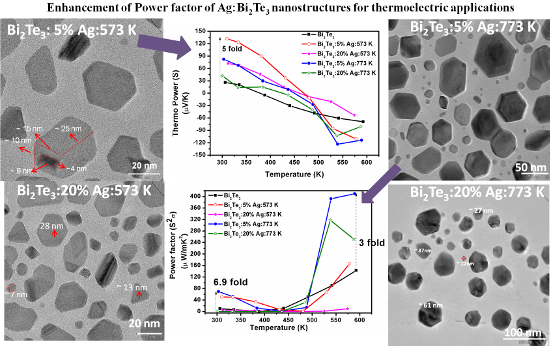
- powder mixtures were well grinded and pressed to pellets. These pellets were then annealed at 573 or 773 K for 1 h under Ar atmosphere. Annealing temperatures were chosen to be below the melting point of Bi2Te3 (586 °C) and above the melting points of Bi (271 °C) and Te (449 °C). These samples were



Topochemical engineering of composite hybrid fibers using layered double hydroxides and abietic acid
Beilstein J. Nanotechnol. 2019, 10, 589–605, doi:10.3762/bjnano.10.60
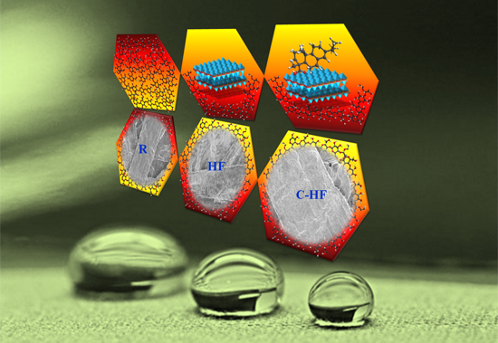
- high melting temperature. These properties can yield improved hydrophobicity and mechanical strength to the fibers. Layered double hydroxides are hydroxylated mixed metal salts (clay minerals) that have unique fascinating three-dimensional structures in which positively and negatively charged ions are




Mechanical and thermodynamic properties of Aβ42, Aβ40, and α-synuclein fibrils: a coarse-grained method to complement experimental studies
Beilstein J. Nanotechnol. 2019, 10, 500–513, doi:10.3762/bjnano.10.51
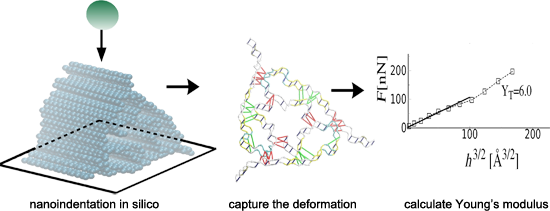
- preparation of samples with well-ordered Aβ40 or Aβ42 fibrils. In this regard, our CG simulation is an ideal protocol as it enables the calculation of the melting temperatures for well-ordered Aβ fibrils. To assess the thermal stability of the fibril, we compute the probability of finding the protein in the


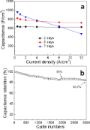
A Ni(OH)2 nanopetals network for high-performance supercapacitors synthesized by immersing Ni nanofoam in water
Beilstein J. Nanotechnol. 2019, 10, 281–293, doi:10.3762/bjnano.10.27
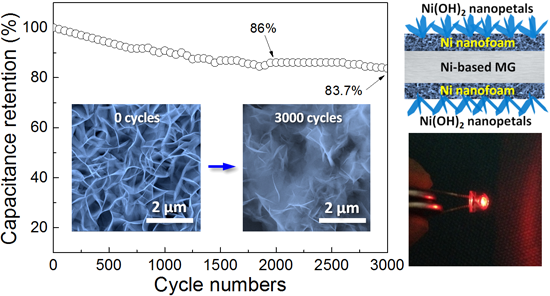
- 20–30 µm thick) are fabricated by arc melting of the pure metals (99.99 wt %) followed by melt spinning [27][28]. Subsequently the dealloying process, as reported in our previous work [29][30], is carried out in 0.05 M HF solution for 4 h open to air at 298 K to form a Ni nanofoam layer on the MG




Study of silica-based intrinsically emitting nanoparticles produced by an excimer laser
Beilstein J. Nanotechnol. 2019, 10, 211–221, doi:10.3762/bjnano.10.19
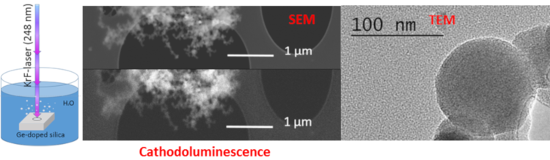
- avalanche ionization [14][20]. The feasibility of ablating pure silica has been demonstrated using lasers of different wavelengths and pulse durations ranging from tens of nanoseconds down to hundreds of femtoseconds [15]. It was also proposed that the damage is related to melting, boiling or fracture of
- absorption can induce melting of part of the sample, the quenching is sufficiently fast to avoid the formation of large crystalline regions. The obtained nanoparticles differ in size and are in general larger than a few tens of nanometers. Such dimensions do not represent a relevant issue for some


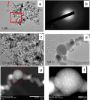

New micro/mesoporous nanocomposite material from low-cost sources for the efficient removal of aromatic and pathogenic pollutants from water
Beilstein J. Nanotechnol. 2019, 10, 119–131, doi:10.3762/bjnano.10.11
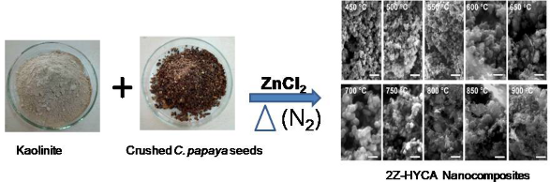
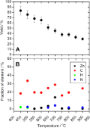
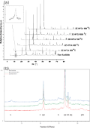
- the form of water, rather than as hydrocarbons or as oxygenated organic compounds [29]. The hydrogen loss could have led to aromatization of the carbon skeleton, and the formation of pores. Some authors suggest that ZnCl2 is very mobile above its melting point (283 °C) which inhibits the formation of




Femtosecond laser-assisted fabrication of chalcopyrite micro-concentrator photovoltaics
Beilstein J. Nanotechnol. 2018, 9, 3025–3038, doi:10.3762/bjnano.9.281
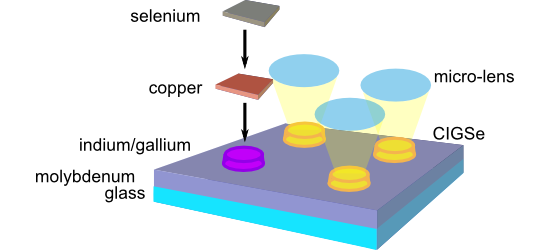
- -induced periodic surface structures (LIPSS [19]) and round melting features form on the glass surface (Figure 5b). The LIPSS with periods in the sub-micrometer range are generated via intra-pulse scattering and interference of the fs-laser radiation at the roughened glass surface, leading to the spatially
- modulated deposition of energy in a shallow near-surface layer and, finally, to periodic material removal [20]. The micrometer-sized melting features supposedly arise from heterogeneities of the glass composition affecting the local optical and thermo-physical properties during the multi-pulse irradiation
- set to 150 µm. Single layers of copper (10–100 nm thickness) or indium (150–1000 nm thickness) as well as combined copper–indium layer stacks (210–1010 nm) were used as donor materials. Copper was first applied by PVD in all layer stacks because it has a significantly higher melting point than indium


Hydrogen-induced plasticity in nanoporous palladium
Beilstein J. Nanotechnol. 2018, 9, 3013–3024, doi:10.3762/bjnano.9.280
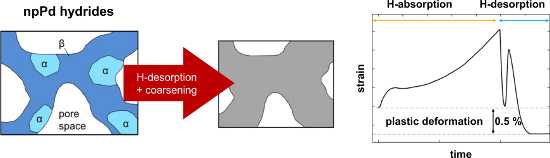
- vs Ag/AgCl in 1 M KOH) was determined. Experimental Alloy fabrication A Co75Pd25 master alloy was prepared from Pd granules (AlfaAesar, 99.95%) and Co slug (AlfaAesar, 99.95%) via electron-beam melting. The sample was melted multiple times to ensure complete intermixing in the liquid state and


Co-intercalated layered double hydroxides as thermal and photo-oxidation stabilizers for polypropylene
Beilstein J. Nanotechnol. 2018, 9, 2980–2988, doi:10.3762/bjnano.9.277
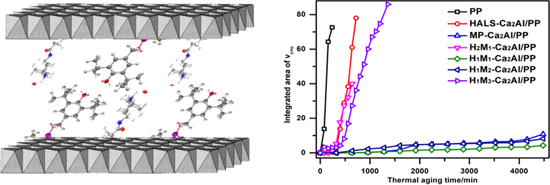
- , NaOH, C2H5OH, CH3COCH3, xylene and hexane were directly used as received from Beijing Chemical Co. Limited. Deionized water was employed in all experiments. Polypropylene (PP1300, melting index: 1.5 g/10 min; melting point: 164–170 °C; density: 0.91 g·cm−3), and Irganox 1425 were supplied from Beijing


Variation of the photoluminescence spectrum of InAs/GaAs heterostructures grown by ion-beam deposition
Beilstein J. Nanotechnol. 2018, 9, 2794–2801, doi:10.3762/bjnano.9.261
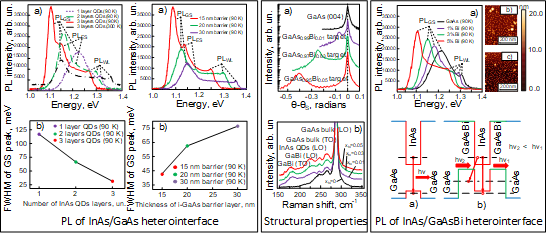
- container with the batch was carried out by a resistive heater to a temperature above the melting point of GaAs (1250 °C), which is the highest-melting compound. The melt was kept for 10 min under such conditions, then rapid shutdown of the heating elements was followed by crystallization of the initial


Au–Si plasmonic platforms: synthesis, structure and FDTD simulations
Beilstein J. Nanotechnol. 2018, 9, 2599–2608, doi:10.3762/bjnano.9.241
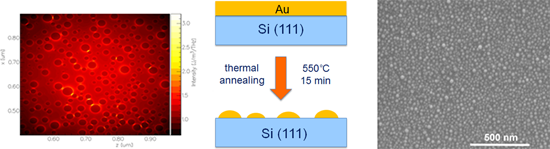
- grow, depending on the phase equilibrium system. The formation of various geometries during eutectic solidification is also possible. In addition, the existence of a eutectic between the substrate, to which a metal in the form of a thin layer is applied, and the metal, significantly reduces the melting
- point of the metal. This is clearly visible in the case of the Au–Si eutectic, which has a melting temperature of ca. 363 °C [1][2][3][4]. It seems that in the case of directional solidification of eutectics as a method of manufacturing of nanostructures, the platforms are homogeneous. Unfortunately, as
- thin films are most often metastable and can dewet or agglomerate with increase of temperature. During annealing of thin films, small fluctuations of the film thickness appear leading to the creation of voids in the film and their subsequent growth. This can happen well below melting temperature of the



Non-agglomerated silicon–organic nanoparticles and their nanocomplexes with oligonucleotides: synthesis and properties
Beilstein J. Nanotechnol. 2018, 9, 2516–2525, doi:10.3762/bjnano.9.234
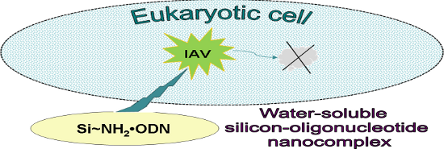
- size. The melting temperature values for the ODN(2)/ODN(3) duplex in the melting buffer (PBS) in the absence and in the presence of Si–NH2 nanoparticles (Tm = 57.5 ± 0.1 °C and 57.5 ± 0.3 °C, respectively) are equal, i.e., the presence of the nanoparticles does not prevent the duplex formation. At the
- spectrophotometer equipped with a TMSPC-8 instrument (Shimadzu, Japan) for analyzing the melting temperature of the samples. The mixtures of ODN(2) and ODN(3) (10 μL, 30 μM, each) in a PBS buffer (80 μL), pH 7.4, or in water (80 μL) was annealed and gradually heated from 5 °C up to 90 °C and cooled from 90 °C to 5


Surface energy of nanoparticles – influence of particle size and structure
Beilstein J. Nanotechnol. 2018, 9, 2265–2276, doi:10.3762/bjnano.9.211
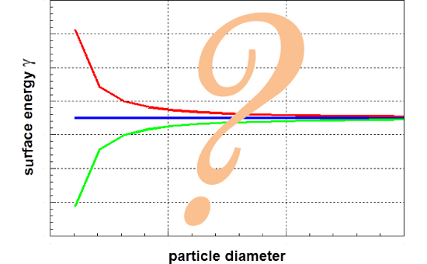
- glass phase with very different properties. A typical example is demonstrated in Figure 1, which depicts the course of the melting temperature of gold particles on the inverse particle size [11]. Besides the well-known inverse linear dependence according to Pawlow [12] (Range I), Tmelt–bulk − Tmelt–nano
- γ/d, a range where the melting temperature is independent of the particle size (Range II) can also be observed. The experimental error bar also covers the results of other authors. In this range, the particles are glassy, indicating a structure more stable than a crystalline one [13][14]. The
- Fermi–Dirac statistics (e.g., melting, ferromagnetism, diffusion, etc.) and s = 1 for properties related to quasi-particles following the Bose–Einstein statistics (e.g., superconductivity or vibration) [30][31][32]. Karasevskii [33] started with a different approach based on size dependent quantization





Filling nanopipettes with apertures smaller than 50 nm: dynamic microdistillation
Beilstein J. Nanotechnol. 2018, 9, 2181–2187, doi:10.3762/bjnano.9.204
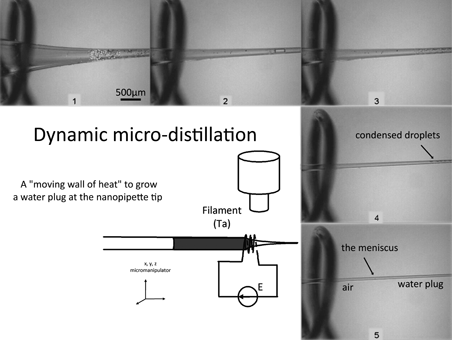
- nanopipette reliably usable in any experimental application. Experimental Nanopipette fabrication The capillaries used are pure silica tubes (quartz tubes) from Sutter (HERAEUS HSQ300) with 1 mm outer diameter and inner diameters of 300, 500 or 700 µm. Due to their high melting temperature, they are pulled
- large-field optical microscope. The filament of 250 µm tantalum wire is 5 mm long and its loop diameter is also about 5 mm. Tantalum was chosen because of its high melting point and its resistance to oxidation. The filament is heated by using the Joule effect at V = 3 V, which means at roughly I = 3.5 A


A differential Hall effect measurement method with sub-nanometre resolution for active dopant concentration profiling in ultrathin doped Si1−xGex and Si layers
Beilstein J. Nanotechnol. 2018, 9, 1926–1939, doi:10.3762/bjnano.9.184
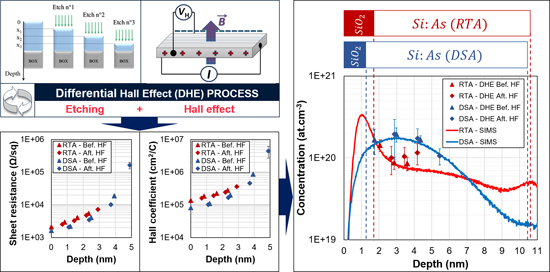
- sheet resistance values observed for high laser energies was due to the formation of a poly-Si layer as a consequence of the full melt of the entire top-Si layer during LTA. For LTA energies below the melting threshold of 0.74 J·cm−2, some dopant activation occurs. However, the Hall effect measurements


Optical near-field mapping of plasmonic nanostructures prepared by nanosphere lithography
Beilstein J. Nanotechnol. 2018, 9, 1536–1543, doi:10.3762/bjnano.9.144
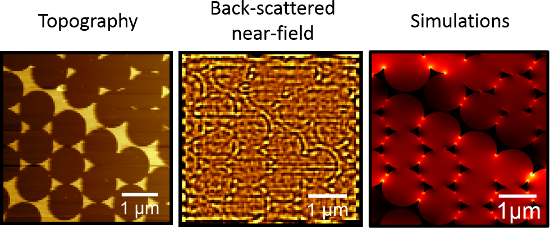
- [23]. The resulting local melting reveals the hot spots, but at the cost of the sample destruction. Other methods use surface enhanced Raman spectroscopy (SERS) [28][29]. In these cases, a Raman active molecule is deposited on the surface of the sample. Its Raman signal is only visible on the hot


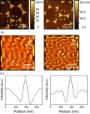


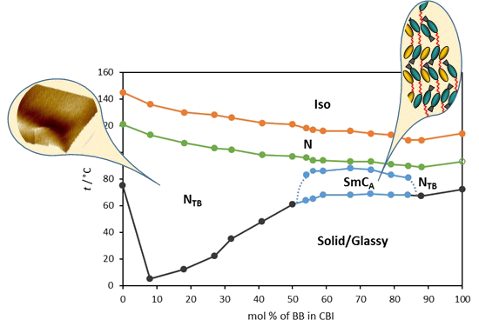
Induced smectic phase in binary mixtures of twist-bend nematogens
Beilstein J. Nanotechnol. 2018, 9, 1297–1307, doi:10.3762/bjnano.9.122
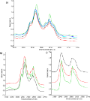
- considered to be mostly trans-planar [44]. The increase in hydrocarbon chain conformational disorder has also been intensively studied by FTIR on phospholipid bilayers and is used for monitoring of lipid hydrocarbon chain melting phase transitions [39][45][46][47]. The temperature dependent IR spectra of




Atomistic modeling of tribological properties of Pd and Al nanoparticles on a graphene surface
Beilstein J. Nanotechnol. 2018, 9, 1239–1246, doi:10.3762/bjnano.9.115
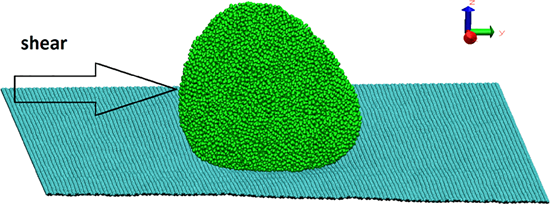
- temperature, which we explore, corresponds to the room temperature at standard atmosphere pressure and processes such as melting do not occur. The friction force in both cases first increases, and then reaches a maximum at T ≈ 170 K. Note that the Pd particles exhibit larger friction than the Al particles


Understanding the performance and mechanism of Mg-containing oxides as support catalysts in the thermal dry reforming of methane
Beilstein J. Nanotechnol. 2018, 9, 1162–1183, doi:10.3762/bjnano.9.108
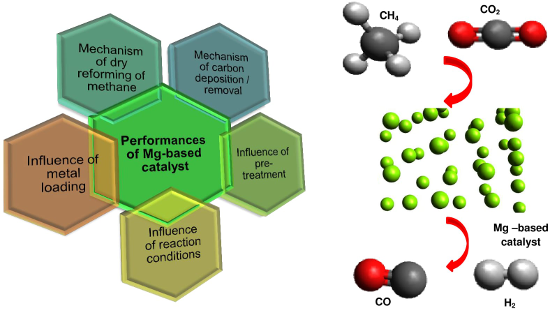
- ]. Furthermore, its characteristics such as high thermal stability, high melting point, and low cost make MgO a promising component in endothermic reactions, especially in the DRM process [18][34][49]. Therefore, this review discusses the research regarding the DRM reaction over Mg-containing oxide catalysts as






P3HT:PCBM blend films phase diagram on the base of variable-temperature spectroscopic ellipsometry
Beilstein J. Nanotechnol. 2018, 9, 1108–1115, doi:10.3762/bjnano.9.102
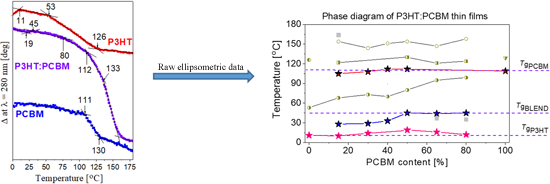
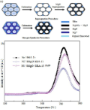
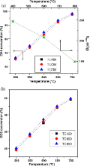
- transitions and to determine the glass transition temperatures and melting crystallization points of the P3HT:PCBM blend films. By analyzing the influence of the temperature T on the raw ellipsometric data, we have identified a high sensitivity of the ellipsometric angle Δ at a wavelength of 280 nm to
- is a very sensitive optical technique to investigate the phase transitions and to determine the glass temperatures and melting crystallization points for the P3HT:PCBM blend films. By analyzing the influence of the temperature on the raw ellipsometric data, we have identified the high sensitivity of
- characteristic temperatures have been detected in Figure 5. Regarding P3HT, Tg is located at 10.30 °C and the beginning of the melting endotherm at around 215 °C is also visible. The temperature scan for the P3HT:PCBM sample, heated from −50 to 250 °C, reveals only the glass transition at 48.39 °C. The results


Review on nanoparticles and nanostructured materials: history, sources, toxicity and regulations
Beilstein J. Nanotechnol. 2018, 9, 1050–1074, doi:10.3762/bjnano.9.98

- Nanoparticles (NPs) and nanostructured materials (NSMs) represent an active area of research and a techno-economic sector with full expansion in many application domains. NPs and NSMs have gained prominence in technological advancements due to their tunable physicochemical characteristics such as melting point
- . Therefore, the classical inner size effects, such as melting point reduction and diffusion enhancement, will be enhanced by grain boundary engineering. The classification by Pokropivny and Skorokhod proposed that the characteristics of NMs are attributed to the particle shape and dimensionality, as per the
- . These deposited particles are the primary reason for increased absorption of the sun’s heat and accelerate the glacial melting process [76][77]. Figure 3 is an example of nanoparticulates present in the smoke. Many forest fire cases have been reported to transport micro- and nanosized particles through


Single-crystalline FeCo nanoparticle-filled carbon nanotubes: synthesis, structural characterization and magnetic properties
Beilstein J. Nanotechnol. 2018, 9, 1024–1034, doi:10.3762/bjnano.9.95
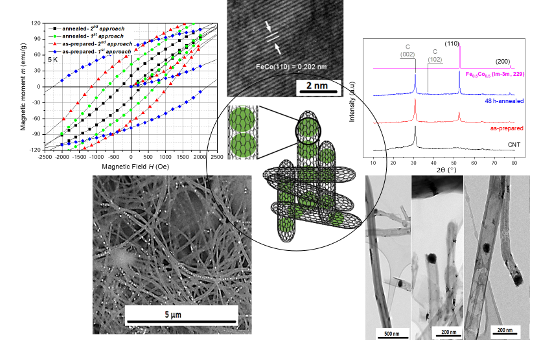
- which the saturation magnetization at room temperature for equiatomic Fe–Co alloys prepared by arc melting equals to 233.5 emu/g. This finding implies that the relatively high saturation magnetization (known for the bulk material) is preserved even for the Fe50Co50 nanoparticles. Further, the


Comparative study of sculptured metallic thin films deposited by oblique angle deposition at different temperatures
Beilstein J. Nanotechnol. 2018, 9, 954–962, doi:10.3762/bjnano.9.89
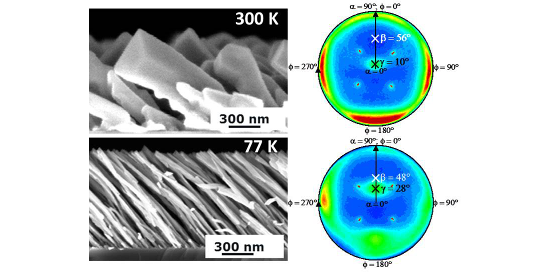
- Susann Liedtke Christoph Gruner Jurgen W. Gerlach Bernd Rauschenbach Leibniz Institute of Surface Engineering (IOM), Permoserstraße 15, D-04318 Leipzig, Germany 10.3762/bjnano.9.89 Abstract Metals with a wide range of melting points are deposited by electron beam evaporation under oblique
- comparison of the images reveals that all deposited metals grow as high aspect ratio columns and therefore show overall similar morphologies. To understand why metals with different melting points show comparable morphologies if deposited at 77 K, the homologous temperature TH is used as has also been done
- in previous research [16]. The homologous temperature TH expresses the actual substrate temperature Tsub as a fraction of the melting point Tmelt of the metal: TH = Tsub(K)/Tmelt(K). Due to the substrate temperature of 77 K, all deposited metals have a homologous temperature TH between 0.02 (Ta) and