Search results
Search for "photocatalysts" in Full Text gives 129 result(s) in Beilstein Journal of Nanotechnology.
Palladium nanoparticles anchored to anatase TiO2 for enhanced surface plasmon resonance-stimulated, visible-light-driven photocatalytic activity
Beilstein J. Nanotechnol. 2015, 6, 428–437, doi:10.3762/bjnano.6.43
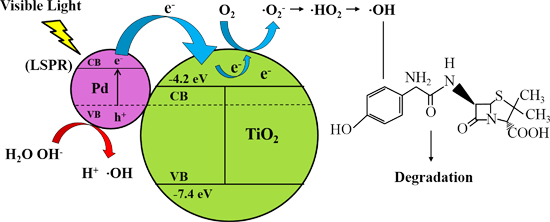
- Lumpur, Malaysia 10.3762/bjnano.6.43 Abstract Freely assembled palladium nanoparticles (Pd NPs) on titania (TiO2) nano photocatalysts were successfully synthesized through a photodeposition method using natural sunlight. This synthesized heterogeneous photocatalyst (Pd/TiO2) was characterized through
- with controlled Pd NPs size ranging between 17 and 29 nm onto the surface of TiO2. Thus, it gives the characteristic for Pd NPs to absorb light in the visible region obtained through localized surface plasmon resonance (LSPRs). Apparently, the photocatalytic activity of the prepared photocatalysts was
- reusability trend proved the photostability of the prepared photocatalysts. Hence, the study provides a new insight about the modification of TiO2 with noble metals in order to enhance the absorption in the visible-light region for superior photocatalytic performance. Keywords: endocrine disrupting compound


Inorganic Janus particles for biomedical applications
Beilstein J. Nanotechnol. 2014, 5, 2346–2362, doi:10.3762/bjnano.5.244

- conjugation to Ag nanoparticles when combined to form Ag@Fe3O4 dumbbell-like hetero-nanoparticles [47]. Moreover, plasmonic photocatalysts combine two prominent features: a Schottky junction enhancing charge separation and surface plasmon resonance, which is responsible for strong absorption of visible light
- nanoparticles is shifted to more negative potentials, thus, enabling the engineering of the Fermi level of photocatalysts dependent on the size of the conjugated metal domain [49]. Recently, Au@TiO2 Janus particles were proven useful for visible-light hydrogen generation due to the strong coupling of plasmons







Microstructural and plasmonic modifications in Ag–TiO2 and Au–TiO2 nanocomposites through ion beam irradiation
Beilstein J. Nanotechnol. 2014, 5, 1419–1431, doi:10.3762/bjnano.5.154
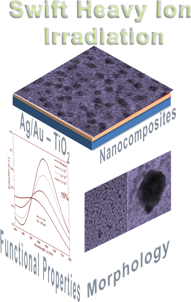
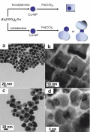
- , antibacterial coatings, photocatalysts, and implants [13][14][15][16][17][18]. The different properties of metal–TiO2 nanocomposites mainly depend on the metal volume filling fraction and the stoichiometry of the matrix. Generally, once the nanocomposites are prepared their properties are fixed. It is therefore


Characterization and photocatalytic study of tantalum oxide nanoparticles prepared by the hydrolysis of tantalum oxo-ethoxide Ta8(μ3-O)2(μ-O)8(μ-OEt)6(OEt)14
Beilstein J. Nanotechnol. 2014, 5, 1082–1090, doi:10.3762/bjnano.5.121
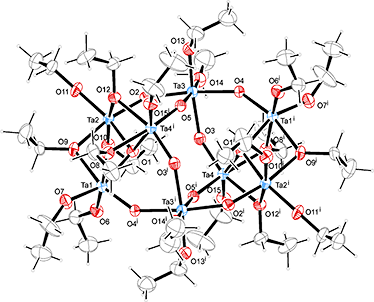
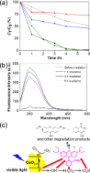
- , 0.8 mg/mL and 1.1 mg/mL) of Ta2O5 nanoparticles as photocatalysts were taken in 50 mL of distilled water and sonicated for 5 min. Then 12.5 ppm of rhodamine B was added to it. To attain an adsorption–desorption equilibrium between the dye molecules and the catalyst surface, the solution was stirred


Photocatalysis
Beilstein J. Nanotechnol. 2014, 5, 1071–1072, doi:10.3762/bjnano.5.119

- its early stage, and many technological challenges must be solved before it can be applied to large-scale. It has been widely recognized that it is necessary to develop advanced materials and new molecules assembled preferably from earth abundant elements as efficient photocatalysts to accomplish the
- , two review articles present an excellent overview of the significance of nanostructures in visible light photocatalysis in a timely manner. Many materials aspects of photocatalysts influence the photocatalytic performance, such as the electronic, structural, and morphological features of the
- dots integrated with TiO2 nanotube arrays, and carbon nitride, have been explored to construct photocatalysts with enhanced performances. On the other hand, molecular catalysts have an advantage in design flexibility and structural tunability. A contribution based on the investigation of molecular
Functionalized nanostructures for enhanced photocatalytic performance under solar light
Beilstein J. Nanotechnol. 2014, 5, 994–1004, doi:10.3762/bjnano.5.113
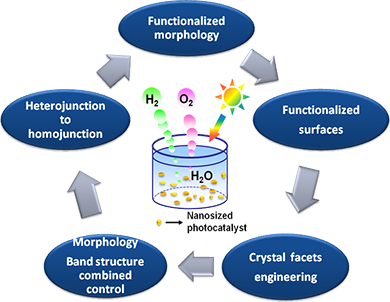
- : visible-light activity, chemical stability, appropriate band-edge characteristics, and potential for low-cost fabrication. Our aim is to present a short review of our recent attempts that center on the above requirements. We begin with a brief introduction of photocatalysts coupling two or more
- the semiconductors [8]. The band gap of semiconductor photocatalysts must be larger than the potential of water electrolysis to meet the energetic requirement for overall water splitting (1.23 eV, corresponding to an absorption threshold of 1000 nm). In particular, the bottom level of the conduction
- band (CB) must be more negative than the reduction potential of water, while the top level of the valance band (VB) should be more positive than the oxidation potential of water. In order to utilize the abundant visible light from the sun, the band gap of photocatalysts has to be less than 3.0 eV


Enhancement of photocatalytic H2 evolution of eosin Y-sensitized reduced graphene oxide through a simple photoreaction
Beilstein J. Nanotechnol. 2014, 5, 801–811, doi:10.3762/bjnano.5.92
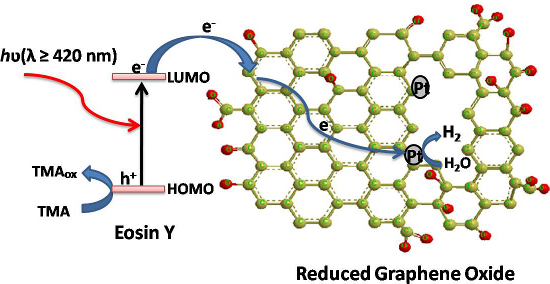
- ; graphene oxide; H2 evolution; photocatalysis; photoreduction; sp2 conjugated domains; Introduction Hydrogen is an efficient and green energy carrier. Photocatalytic water splitting into hydrogen by means of solar energy and semiconductor photocatalysts is a environmentally friendly way to produce storable
- energy [1][2][3][4]. In order to enhance the activity of photocatalysts for hydrogen evolution, various graphene-based composite photocatalysts, such as graphene/TiO2 composite and graphene/ZnO composite, have recently been reported [5][6][7][8]. Kim et al. [8] have reported that two graphene/TiO2
- under visible light irradiation. Eosin Y (EY), a xanthene dye, is a very good sensitizer [13][14][15][16][17][18]. EY has been used to sensitize various matrixes such as TiO2 [13], Na2Ti2O4(OH)2 nanotubes [14], g-C3N4 [15], and α-[AlSiW11(H2O)O39]5− [18], and the sensitized photocatalysts are

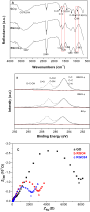


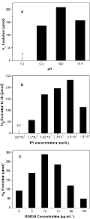


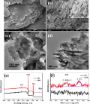
Biomolecule-assisted synthesis of carbon nitride and sulfur-doped carbon nitride heterojunction nanosheets: An efficient heterojunction photocatalyst for photoelectrochemical applications
Beilstein J. Nanotechnol. 2014, 5, 770–777, doi:10.3762/bjnano.5.89
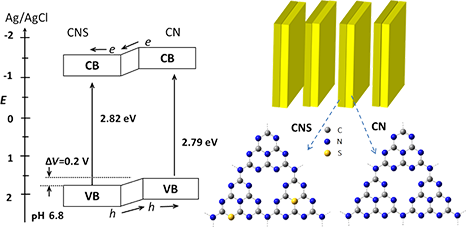
- ascribed to the efficient separation of photoexcited charge carriers across the heterojunction interface. The strategy of designing and preparing CN/CNS heterojunction photocatalysts in this work can open up new directions for the construction of all CN-based heterojunction photocatalysts. Keywords
- [11]. Numerous CN-based heterojunctions have been constructed by coupling CN with various types of photocatalysts, e.g., oxides and chalcogenides, which have shown improved photocatalytic performances [12][13][14][15][16][17][18]. However, the formation of interfacial defects at the CN/photocatalyst
- photoelectrochemical performance, which is attributed to the efficient separation of photoexcited charge carriers across the heterojunction interface. The strategy of designing and preparing CN/CNS heterojunction photocatalysts in this work can open up new directions for the construction of all CN-based heterojunction


Visible light photooxidative performance of a high-nuclearity molecular bismuth vanadium oxide cluster
Beilstein J. Nanotechnol. 2014, 5, 711–716, doi:10.3762/bjnano.5.83

- photocatalysts is a well-established method which gives access to materials for which light absorption, catalytic activity and selectivity can be tuned by structural and chemical modifications [1][2][3][4][5][6]. Prime examples for this approach are molecular metal oxides, so-called polyoxometalates (POMs) [7][8
- previous work with direct relevance to this report, we showed that POM chemistry can be inspired by solid-state photocatalysts when the first molecular analogue of bismuth vanadate (BiVO4) photocatalysts was obtained [33][34][35][36]. Bismuth vanadate is one of the best-known solid-state visible light
- photocatalysts and is employed in photochemical and photoelectrochemical visible-light-driven water splitting systems [37][38][39][40][41]. At the start of our studies, no molecular bismuth vanadium oxides were known in the literature. We thus developed a synthetic approach to bismuth vanadate clusters based on


Nanostructure sensitization of transition metal oxides for visible-light photocatalysis
Beilstein J. Nanotechnol. 2014, 5, 696–710, doi:10.3762/bjnano.5.82
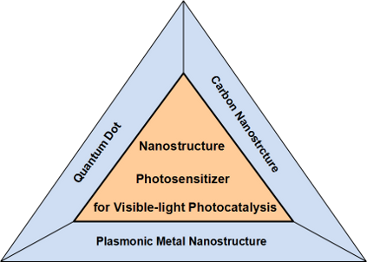
- photocatalysts has recently attracted a lot of interest. The photosensitization of transition metal oxides is a promising approach for achieving effective visible-light photocatalysis. This review article primarily discusses the recent progress in the realm of a variety of nanostructured photosensitizers such as
- quantum dots, plasmonic metal nanostructures, and carbon nanostructures for coupling with wide-bandgap transition metal oxides to design better visible-light active photocatalysts. The underlying mechanisms of the composite photocatalysts, e.g., the light-induced charge separation and the subsequent
- semiconductor photocatalysts have received significant attention. Up to now, more than 100 photocatalysts have been developed [5][6]. However, most of the photocatalysts under investigation are wide-bandgap transition metal oxides and only active under ultraviolet (UV) light. To be of practical use for




A visible-light-driven composite photocatalyst of TiO2 nanotube arrays and graphene quantum dots
Beilstein J. Nanotechnol. 2014, 5, 689–695, doi:10.3762/bjnano.5.81
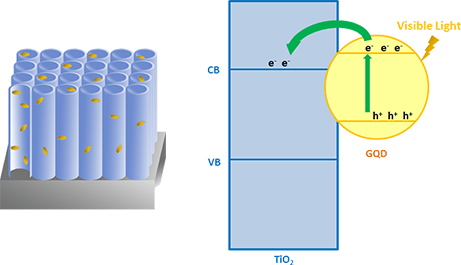
- Donald K. L. Chan Po Ling Cheung Jimmy C. Yu Department of Chemistry and Shenzhen Research Institute, The Chinese University of Hong Kong, Shatin, New Territories, Hong Kong, China 10.3762/bjnano.5.81 Abstract TiO2 nanotube arrays are well-known efficient UV-driven photocatalysts. The
- ][2]. Among various photocatalysts, nanostructured titanium dioxide (TiO2) is the most widely used because of its high activity, long-term stability and low production cost [3][4]. However, pure TiO2 is not efficient for solar-driven applications because it requires UV excitation [5]. Belonging to one
- attention due to its large specific area, high intrinsic electron mobility and good electrical conductivity [3]. As an excellent electron acceptor, graphene has been combined with semiconductor photocatalysts such as TiO2 [25], ZnO [26] and CdS [27] to enhance their photocatalytic activities. However


Effects of the preparation method on the structure and the visible-light photocatalytic activity of Ag2CrO4
Beilstein J. Nanotechnol. 2014, 5, 658–666, doi:10.3762/bjnano.5.77
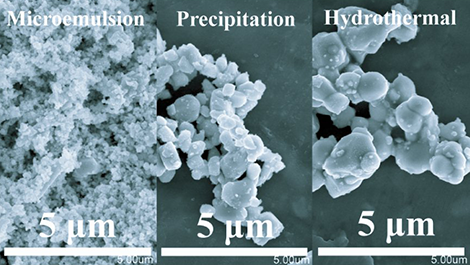
- 10.3762/bjnano.5.77 Abstract Silver chromate (Ag2CrO4) photocatalysts are prepared by microemulsion, precipitation, and hydrothermal methods, in order to investigate the effect of preparation methods on the structure and the visible-light photocatalytic activity. It is found that the photocatalytic
- photocatalysts during the past decades. TiO2 is most widely studied because of its low cost, non-toxicity, high efficiency and long-time photostability [6][7][8][9][10][11]. However, due to its large band gap of about 3.2 eV, TiO2 is only active in the ultraviolet (UV) region that corresponds to 3–4% of the
- solar light. Therefore, the development of visible-light-driven photocatalysts has received considerable attention as visible light (400–800 nm) is abundant in the solar spectrum [12][13][14][15][16]. Some semiconductors such as BiVO4 [17][18][19], Bi2O3 [20][21], Fe2O3 [22][23][24][25], and Cu2O [26


Enhanced photocatalytic activity of Ag–ZnO hybrid plasmonic nanostructures prepared by a facile wet chemical method
Beilstein J. Nanotechnol. 2014, 5, 639–650, doi:10.3762/bjnano.5.75
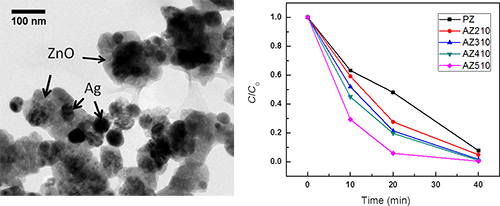
- including UV lasers [1], field effect transistors [2], dye sensitized solar cells [3][4], surface enhanced Raman spectroscopy (SERS) [5] and biomedical applications [6][7][8][9][10]. ZnO nanostructures are promising photocatalysts because of their high quantum efficiency, high redox potential, superior
- on the effects of trisodium citrate on the shape evolution of ZnO nanostructures will be reported elsewhere. Photocatalytic studies Figure 7 shows the UV–visible absorption spectra of 10 μM MB aqueous solutions with different photocatalysts AZ210, AZ310, AZ410 and AZ510 following the irradiation with
- photocatalysts under sun-light exposure. Figure 9a,b show the kinetics of MB degradation for photocatalysts with different Ag nanoparticles loading by using different [Ag+]/[citrate] ratios 1:1 and 1:10. It can be seen that pristine ZnO nanostructures degraded only 52% of MB following 20 min of sun-light


High activity of Ag-doped Cd0.1Zn0.9S photocatalyst prepared by the hydrothermal method for hydrogen production under visible-light irradiation
Beilstein J. Nanotechnol. 2014, 5, 587–595, doi:10.3762/bjnano.5.69
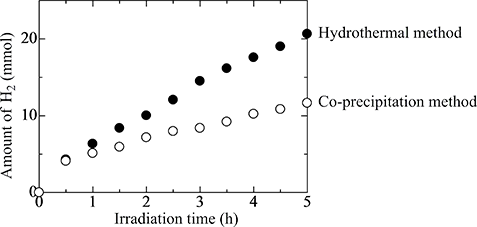
- -University Studies, Universiti Malaysia Sarawak, 94300 Kota Samarahan, Sarawak, Malaysia 10.3762/bjnano.5.69 Abstract Background: The hydrothermal method was used as a new approach to prepare a series of Ag-doped Cd0.1Zn0.9S photocatalysts. The effect of Ag doping on the properties and photocatalytic
- the most abundant energy. The conversion of solar energy to chemical energy by photocatalytic processes, such as photocatalytic water reduction in the presence of semiconductor photocatalysts, would be an opportunity to produce clean hydrogen energy. Recently, special attention has been paid to the
- use of visible light-driven photocatalysts [1][2][3][4]. One of the promising photocatalysts is Cd1−xZnxS solid solution [5][6][7][8]. The successful formation of a solid solution of ZnS and CdS resulted in an absorption shift of ZnS to the visible-light range, while maintaining the high conduction


Artificial sunlight and ultraviolet light induced photo-epoxidation of propylene over V-Ti/MCM-41 photocatalyst
Beilstein J. Nanotechnol. 2014, 5, 566–576, doi:10.3762/bjnano.5.67
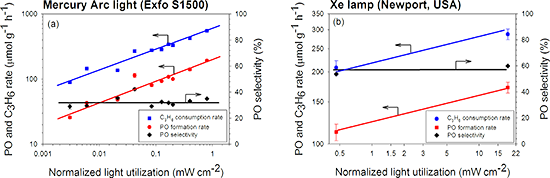
- mild conditions attracts much attention. Differently designed photocatalysts were examined [17][18][19][20][21][22][23][24], and the reaction conditions such as reaction temperature [18], light irradiation [25][26] and oxygen/propylene ratio [23][27] were also tested. Yoshida and co-workers reported
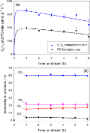
- K·min−1. Due to the small amount of catalyst used for the reaction, the spent is a mixture of all the photocatalysts after reaction. Photocatalytic epoxidation of propylene The apparatus for carrying out the photocatalytic epoxidation of propylene with a reactant gas mixture of C3H6/O2/N2 = 1:1:16 at




Mesoporous cerium oxide nanospheres for the visible-light driven photocatalytic degradation of dyes
Beilstein J. Nanotechnol. 2014, 5, 517–523, doi:10.3762/bjnano.5.60
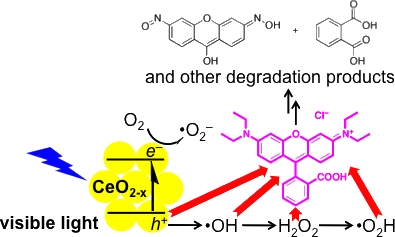
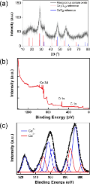
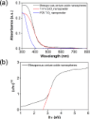
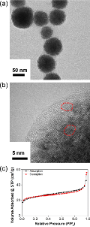
- , and solar thermal dissociation of water and CO2 [14][15][16][17][18]. Cerium oxides with oxygen vacancies represent an underexplored area of nanotechnology with the potential to provide visible-light absorbing photocatalysts [13][19][20][21]. Cerium is relatively earth-abundant and the oxides

Applicability and costs of nanofiltration in combination with photocatalysis for the treatment of dye house effluents
Beilstein J. Nanotechnol. 2014, 5, 476–484, doi:10.3762/bjnano.5.55
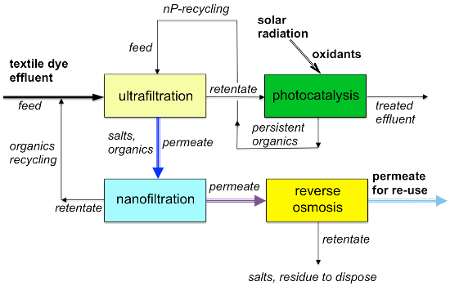
- generated by UV irradiation of photocatalysts in the reaction system. Commonly applied photocatalysts include TiO2, ZnO, Fe2O3, CdS, GaP and ZnS. Among these, titanium dioxide (TiO2) has attracted great interest in research and development because of its mechanical properties, chemical and thermal stability
- and resistance to chemical breakdown, which promote its application in photocatalytic water treatment [7][9][12][13]. Photocatalysts can be used in the form of suspended fine particles or immobilized on various supports. Obviously, photoreactors with a suspended catalysts (or slurry type) are
- considered to offer greater contacting surfaces between the photocatalysts and the pollutant molecules than reactors working with immobilized photocatalysts. Immobilized catalysts have a defined specific surface area, which is connected with the supporting surface. Photoreactors with suspended catalysts


Dye-sensitized Pt@TiO2 core–shell nanostructures for the efficient photocatalytic generation of hydrogen
Beilstein J. Nanotechnol. 2014, 5, 360–364, doi:10.3762/bjnano.5.41
- ], TiO2 has received extensive attention as one of the promising semiconductor photocatalysts, because of its high chemical stability, low cost and non-toxicity [2][3][4][5]. However, it suffers from the wide band gap (3.2–3.4 eV), which restricts the utilization of visible light, and the high
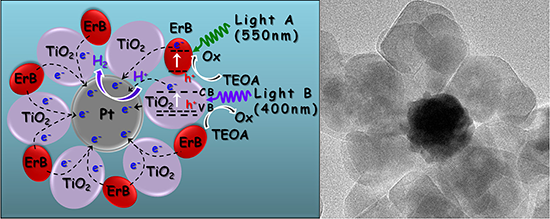
- simultaneously, the dye-sensitization-driven H2 evolution showed a much higher efficiency as compared to the situation with no excitation of TiO2. This kind of synergic effect reveals a new direction for improving the efficiency of composite photocatalysts by using selective excitation wavelengths. Results and
- have prepared Pt@TiO2 core–shell nanostructures through a one-step hydrothermal method. Upon ErB sensitization, the Pt@TiO2 core–shell photocatalysts exhibit high visible-light activity for the generation of H2 from proton reduction. Significantly, we observed a synergic effect that allows for a


Preparation of NiS/ZnIn2S4 as a superior photocatalyst for hydrogen evolution under visible light irradiation
Beilstein J. Nanotechnol. 2013, 4, 949–955, doi:10.3762/bjnano.4.107
- electrodes for water splitting by Fujishima and Honda in 1972, great efforts have been devoted to the development of highly efficient semiconductor photocatalysts for hydrogen production [4]. So far, a variety of active photocatalysts for hydrogen production, including metal oxides [5][6][7][8], sulfides [9
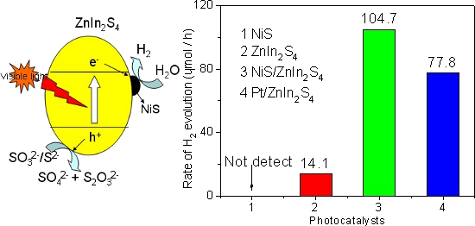
- ] or RGO [23] into ZnIn2S4 nanostructures, the photocatalytic performance for hydrogen evolution over ZnIn2S4 have been enhanced to a certain degree. Studies on semiconductor-based photocatalysts revealed that the deposition of a suitable co-catalyst on the semiconductor photocatalysts can play
- water electrolysis [36]. Although Ni and NiO have already been used as co-catalysts for hydrogen evolution over oxide semiconductor photocatalysts, the application of NiS as co-catalyst for photocatalytic hydrogen evolution is less studied [37][38]. Only until recently, Xu et al. reported that NiS can


Structural, optical and photocatalytic properties of flower-like ZnO nanostructures prepared by a facile wet chemical method
Beilstein J. Nanotechnol. 2013, 4, 763–770, doi:10.3762/bjnano.4.87
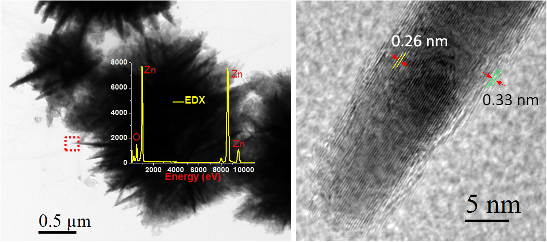
- photocatalysts such as ZnO and TiO2 have attracted significant attention in recent years because of their wide-spread application in environmental remediation [1][2]. These photocatalysts have a high efficiency for the degradation of toxic organic pollutants that originate from the effluents of textile and
- synthesized by Umar et al. [31] for an efficient photocatalysis and the fabrication of efficient dye sensitized solar cells. Shi et al. [33] fabricated flower-like ZnO on ZnO nanorods without use of any surfactant. Self-supported ZnO photocatalysts in the form of plates were prepared by Yassitepe et al. [24
- ] by the tape casting method. These ZnO plates showed a good photocatalytic activity for azo dyes that depended on their surface area. Shen et al. [34] have shown that depositing ZnO on silica nanoparticles is a simple and effective method to prepare photocatalysts that could degrade 90% methylene blue


Modulation of defect-mediated energy transfer from ZnO nanoparticles for the photocatalytic degradation of bilirubin
Beilstein J. Nanotechnol. 2013, 4, 714–725, doi:10.3762/bjnano.4.81
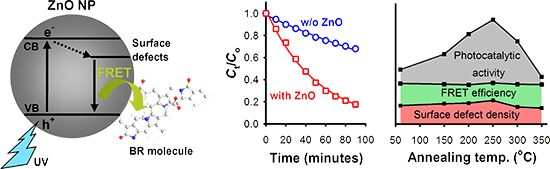
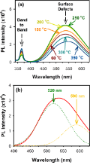
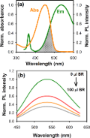
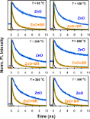
- vacancies exist in three charged states: singly charged (VO+), doubly charged (VO++) and neutral (VOx). The presence of the oxygen vacancies and other native defects in the ZnO lattice reduces the direct e−/h+ recombination process and thus increases the quantum yield of ZnO nanocrystalline photocatalysts
- an about 70% faster photocatalytic reduction of BR compared to the degradation of BR in 40 minutes when no catalyst was used. The reduction in the BR concentration increased further when annealed ZnO nanoparticles (up to 250 °C) were used as the photocatalysts because of their higher concentrations


Photocatalytic antibacterial performance of TiO2 and Ag-doped TiO2 against S. aureus. P. aeruginosa and E. coli
Beilstein J. Nanotechnol. 2013, 4, 345–351, doi:10.3762/bjnano.4.40
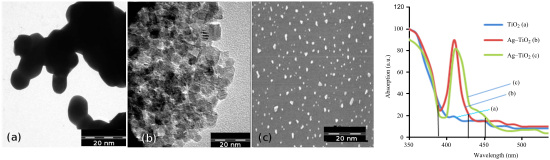
- bacterial strains under visible-light irradiation. The TiO2 and Ag-doped TiO2 photocatalysts were synthesized by acid catalyzed sol–gel technique and characterized by X-ray diffraction (XRD), transmission electron microscopy (TEM), UV–vis spectroscopy and photoluminescence (PL). The XRD pattern revealed


Nanostructure-directed chemical sensing: The IHSAB principle and the dynamics of acid/base-interface interaction
Beilstein J. Nanotechnol. 2013, 4, 20–31, doi:10.3762/bjnano.4.3
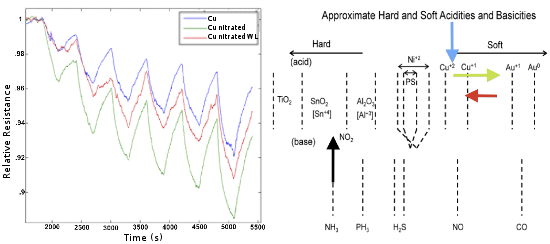
- components are separable, they can be combined to provide an enhanced versatility versus a single or mixed metal-oxide surface coating. In concert with the IHSAB principle, this approach leads to an optimized and simpler interface. Treatment of the semiconductors with nanostructured photocatalysts can be
- typical metal-oxide devices. In addition, the appropriate installation of heat sinks allows operation at several hundred degrees centigrade. A developed interface, thus, can operate under conditions that are not amenable to typical metal oxide systems. When the nanoparticles are photocatalysts, the
- the molecular structure and interaction, consistent with the IHSAB principle. This means that the sensitivity of the weaker metal oxides is enhanced by nitridation. Further, this process can be applied to create several potential visible-light-absorbing photocatalysts similar to TiO2−xNx [9][10]. We


Towards atomic resolution in sodium titanate nanotubes using near-edge X-ray-absorption fine-structure spectromicroscopy combined with multichannel multiple-scattering calculations
Beilstein J. Nanotechnol. 2012, 3, 789–797, doi:10.3762/bjnano.3.88
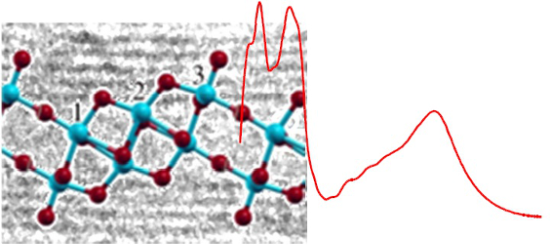
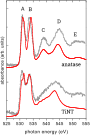
- that the structure of the layered titanate H2TinO2n+1 better describes the (Na,H)TiNTs [17][18]. Potential applications in lithium-ion batteries, catalyst supports, photocatalysts, and dye-synthesized solar cells have effectively resulted in an increasing interest in titanate nanostuctures [19][20][21



The oriented and patterned growth of fluorescent metal–organic frameworks onto functionalized surfaces
Beilstein J. Nanotechnol. 2012, 3, 570–578, doi:10.3762/bjnano.3.66
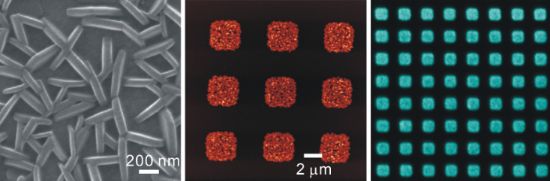
- deposition of MOF films, but also determine the crystallographic orientation within the films [25][29][31]. MOFs based on large π-conjugated molecules are expected to be useful optical materials, e.g., as sensors, photocatalysts, or electroluminescent devices [36][37]. In this paper, we describe a rapid