


Search results
Search for "physical properties" in Full Text gives 318 result(s) in Beilstein Journal of Nanotechnology. Showing first 200.
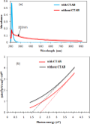
Absorption and photoconductivity spectra of amorphous multilayer structures
Beilstein J. Nanotechnol. 2020, 11, 1757–1763, doi:10.3762/bjnano.11.158
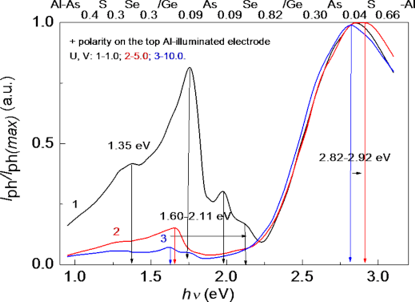
- ]. The physical properties of covalently bonded glasses are determined by the mean coordination number Z (average number of covalent bonds per atom) [4]. It is well known that the functionality of many photonic and optoelectronic devices is based on the intrinsic photoelectric effect. The photocurrent


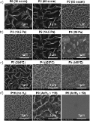
Out-of-plane surface patterning by subsurface processing of polymer substrates with focused ion beams
Beilstein J. Nanotechnol. 2020, 11, 1693–1703, doi:10.3762/bjnano.11.151
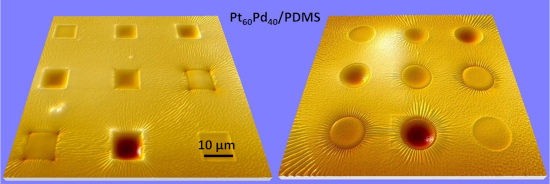
- high transparency, biocompatibility, and low cost, enable the broad use of PDMS for the fabrication of microfluidic, microelectromechanical, and microoptical devices [20]. The effects of ion irradiation on chemical and physical properties and on the surface morphology of PDMS have been extensively


The influence of an interfacial hBN layer on the fluorescence of an organic molecule
Beilstein J. Nanotechnol. 2020, 11, 1663–1684, doi:10.3762/bjnano.11.149
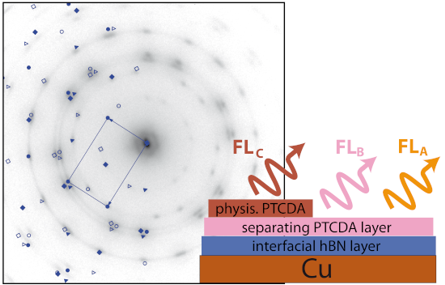
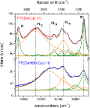
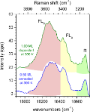
- -perylene tetracarboxylic dianhydride (PTCDA); Raman spectroscopy; Introduction In recent years, two-dimensional materials (2DMs) have been established as a highly interesting field of studies, both in regard to their fundamental physical properties as well as their potential for technical applications [1






High-responsivity hybrid α-Ag2S/Si photodetector prepared by pulsed laser ablation in liquid
Beilstein J. Nanotechnol. 2020, 11, 1596–1607, doi:10.3762/bjnano.11.142
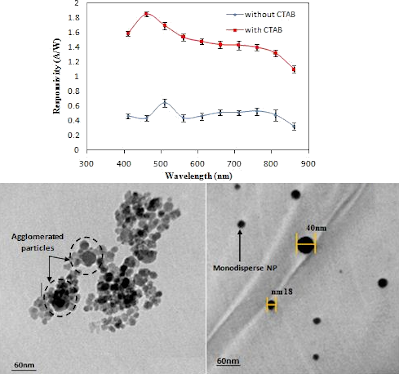
- . Keywords: cetyltrimethylammonium bromide (CTAB); laser ablation; monodisperse; photodetector; silver(I) sulfide (Ag2S); thiourea; Introduction Nanomaterials have attracted considerable attention due to their superior chemical and physical properties. The size-dependent properties of nanomaterials have




Antimicrobial metal-based nanoparticles: a review on their synthesis, types and antimicrobial action
Beilstein J. Nanotechnol. 2020, 11, 1450–1469, doi:10.3762/bjnano.11.129

- conditions, the size, length, and diameter of the nanostructures can be adjusted in order to control the physical properties of the NPs. Chemical methods A few examples of chemical methods that have been used to synthesize nanoparticles are the atomic layer deposition method, chemical reduction method


One-step synthesis of carbon-supported electrocatalysts
Beilstein J. Nanotechnol. 2020, 11, 1419–1431, doi:10.3762/bjnano.11.126

- indicates 100% sp²-hybridization [31]. No peaks are found for the Pt-NPs in the investigated wavenumber region, which is supported by a study of Kimata et al. [32]. A more detailed evaluation of the Raman data can be found in Supporting Information File 1. Controlling the physical properties of the active
- the aforementioned embedding. Therefore, Pt/CNW samples with different physical properties were studied concerning their ECSA, ORR mass activity and long-term stability, and the results were compared to those obtained with a commercially available Pt/C electrocatalyst. In Figure 7, the calculated ECSA
- , these details were systematically studied. A table summarizing the process parameters for every sample shown in this work can be found in Supporting Information File 1, Table S1. It is worth noting that under identical synthesis parameters, the results are reproducible. Controlling the physical




An atomic force microscope integrated with a helium ion microscope for correlative nanoscale characterization
Beilstein J. Nanotechnol. 2020, 11, 1272–1279, doi:10.3762/bjnano.11.111
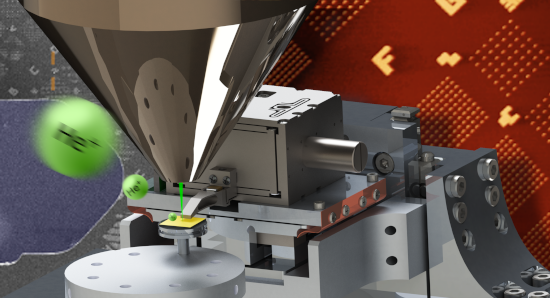
- of vertical and lateral resolution, nanoscale machining, and measurement of physical properties of the sample will allow for a multi-physics investigation in many areas of materials science and technology, such as energy materials, magnetic nanostructures, and (bio-)composites. Experimental All AFM


Nonadiabatic superconductivity in a Li-intercalated hexagonal boron nitride bilayer
Beilstein J. Nanotechnol. 2020, 11, 1178–1189, doi:10.3762/bjnano.11.102
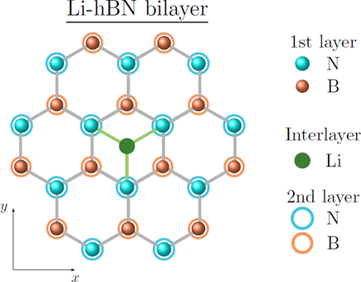
- phosphorene [9][10][11] are mechanically stable only when placed on a substrate [12][13][14]. The substrate should be selected so that it changes the physical properties of the low-dimensional system as little as possible. In the case of graphene, the following substrate materials were used: Co [15], Ni [16


![[Graphic 34]](/bjnano/content/inline/2190-4286-11-102-i54.svg?max-width=637&scale=1.18182) for Li-hBN. The results were obta...
for Li-hBN. The results were obta...
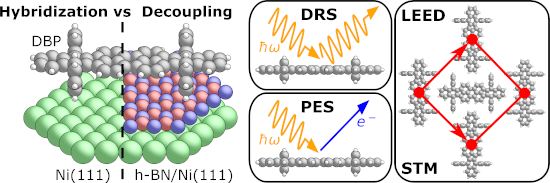
Hybridization vs decoupling: influence of an h-BN interlayer on the physical properties of a lander-type molecule on Ni(111)
Beilstein J. Nanotechnol. 2020, 11, 1168–1177, doi:10.3762/bjnano.11.101


Gas-sensing features of nanostructured tellurium thin films
Beilstein J. Nanotechnol. 2020, 11, 1010–1018, doi:10.3762/bjnano.11.85
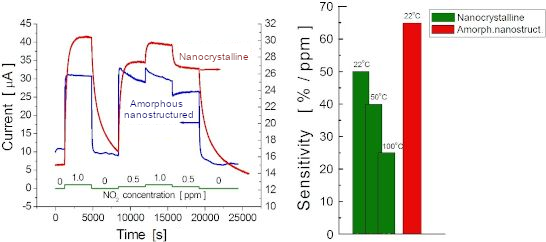
- a study regarding two different types of nanostructured Te films physically built either in the form of nanocrystals, grown onto flat substrates, or vitreous Te, deposited onto nanostructured (porous) dielectric templates. It was expected that the physical properties, including the adsorptive ones


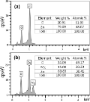
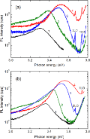
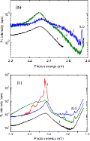
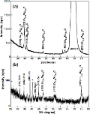
Band tail state related photoluminescence and photoresponse of ZnMgO solid solution nanostructured films
Beilstein J. Nanotechnol. 2020, 11, 899–910, doi:10.3762/bjnano.11.75
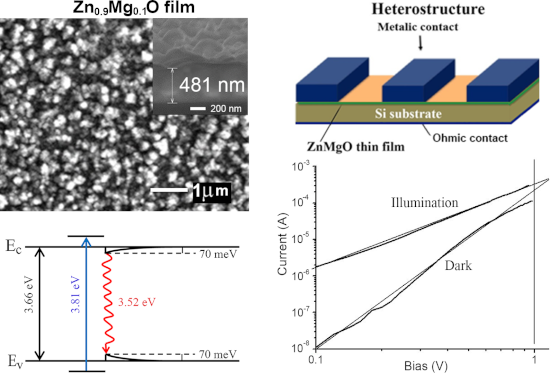
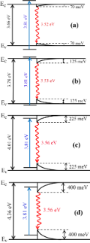
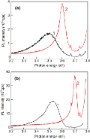
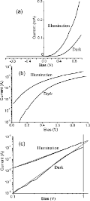
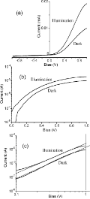
- ; photoluminescence; photosensitivity; spin coating; thin films; ZnMgO semiconductor alloy; Introduction The ZnMgO solid solution system is of interest due to the possibility to tailor many important physical properties by varying their composition. This alloy system covers a wide ultraviolet (UV) spectral range

Light–matter interactions in two-dimensional layered WSe2 for gauging evolution of phonon dynamics
Beilstein J. Nanotechnol. 2020, 11, 782–797, doi:10.3762/bjnano.11.63
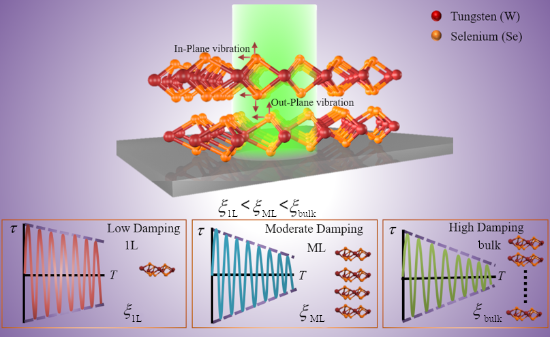
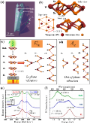
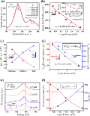
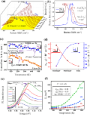
- drawn intense attention due to their unique physical properties [1][2]. Two-dimensional (2D) layered materials beyond graphene, such as transitional metal dichalcogenides (TMDCs) [3], black phosphorus (BP) [4], and other families of layered materials [5], can be mechanically exfoliated or, in some cases
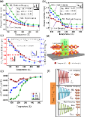
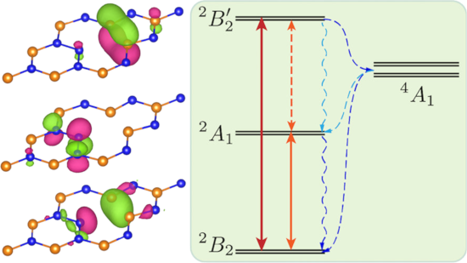
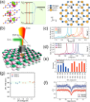
Hexagonal boron nitride: a review of the emerging material platform for single-photon sources and the spin–photon interface
Beilstein J. Nanotechnol. 2020, 11, 740–769, doi:10.3762/bjnano.11.61




Adsorptive removal of bulky dye molecules from water with mesoporous polyaniline-derived carbon
Beilstein J. Nanotechnol. 2020, 11, 597–605, doi:10.3762/bjnano.11.47
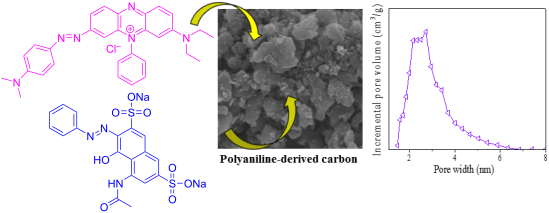
- adsorptive performance of the PDC for small dye molecules, such as MO and MB, was not very impressive, albeit quite competitive against similar reported results. The adsorption mechanisms could be suggested based on the physical properties (including hydrophobicity) of PDC materials and adsorption of AR1 and


Identification of physicochemical properties that modulate nanoparticle aggregation in blood
Beilstein J. Nanotechnol. 2020, 11, 550–567, doi:10.3762/bjnano.11.44
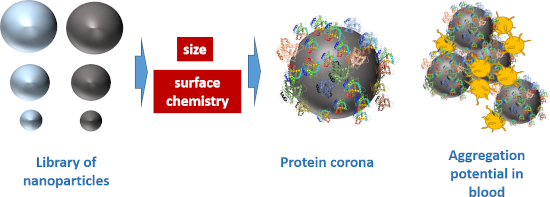
- necessary. This is not always straightforward due to the interdependence between the various chemical and physical properties. In the present study, two sets of nanoparticles were prepared with the aim to specifically investigate the effect of the surface curvature and surface chemistry on platelet




Multilayer capsules made of weak polyelectrolytes: a review on the preparation, functionalization and applications in drug delivery
Beilstein J. Nanotechnol. 2020, 11, 508–532, doi:10.3762/bjnano.11.41




Using gold nanoparticles to detect single-nucleotide polymorphisms: toward liquid biopsy
Beilstein J. Nanotechnol. 2020, 11, 263–284, doi:10.3762/bjnano.11.20
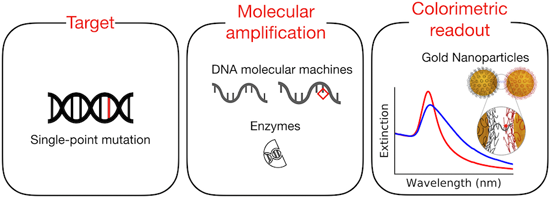
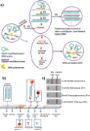
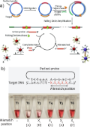
- possibility of detecting genetic mutations rapidly in physiological media through liquid biopsy has attracted the attention within the materials science community. The physical properties of nanoparticles combined with robust transduction methods ensure an improved sensitivity and specificity of a given assay




Nonequilibrium Kondo effect in a graphene-coupled quantum dot in the presence of a magnetic field
Beilstein J. Nanotechnol. 2020, 11, 225–239, doi:10.3762/bjnano.11.17
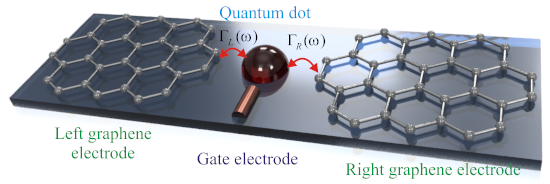
- ; Introduction The discovery of graphene [1][2] has opened new research directions and led to novel graphene-based electronic devices [3][4][5][6], which employ its unusual physical properties [7][8][9]. From theoretical considerations, such an electronic device can be considered as a mesoscopic system that can
- moment can be engineered by electrically controlling the properties of a transition metal adatom on graphene providing the possibility to develop graphene-based spintronic devices [56]. Therefore, the physical properties of a graphene monolayer with one of its carbon atoms substituted with a magnetic


Size effects of graphene nanoplatelets on the properties of high-density polyethylene nanocomposites: morphological, thermal, electrical, and mechanical characterization
Beilstein J. Nanotechnol. 2020, 11, 167–179, doi:10.3762/bjnano.11.14
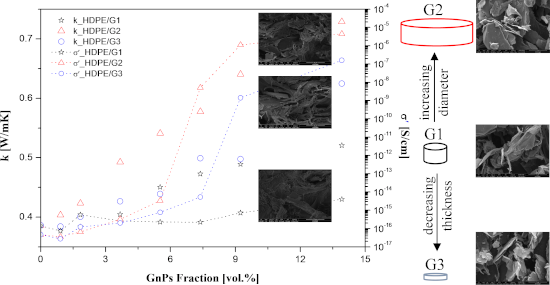
- trademark iGP (D ≈ 5 μm), iGP (D ≈ 44 μm), and iGP2 (D ≈ 5 μm) were labelled G1, G2, and G3. All GNPs were used as supplied by the producer without any purification or functionalization process. The physical properties of the GNPs are shown in Table 4. Preparation of polymer nanocomposites HDPE/GnP



A novel method to remove impulse noise from atomic force microscopy images based on Bayesian compressed sensing
Beilstein J. Nanotechnol. 2019, 10, 2346–2356, doi:10.3762/bjnano.10.225
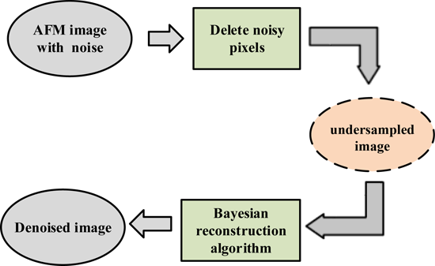
- nanoscience and nanotechnology, because it can be used to acquire high-resolution images of all kinds of samples in various environments. Nowadays, AFM is also used to acquire information about the physical properties of the samples [1]. The quality of the images is of fundamental importance for acquiring


The importance of design in nanoarchitectonics: multifractality in MACE silicon nanowires
Beilstein J. Nanotechnol. 2019, 10, 2094–2102, doi:10.3762/bjnano.10.204
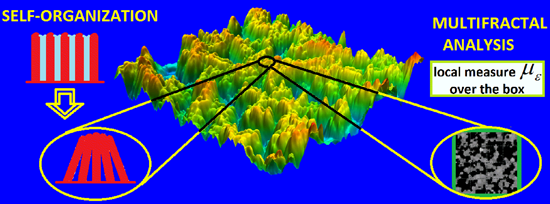
- -generated morphologies, in order to be able to discriminate among them and possibly to relate them to growth procedures from one side and to physical properties from another side. In this regard, fractal analysis [20] is an analytical framework fit for the purpose. Indeed, self-assembled patterns derived




Fabrication and characterization of Si1−xGex nanocrystals in as-grown and annealed structures: a comparative study
Beilstein J. Nanotechnol. 2019, 10, 1873–1882, doi:10.3762/bjnano.10.182
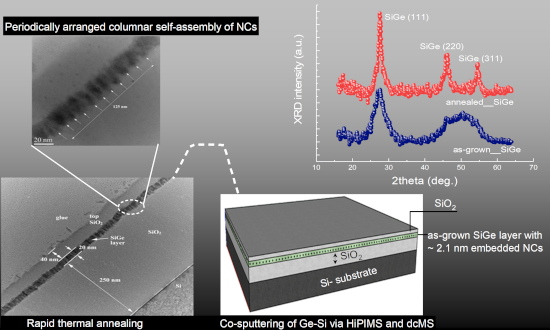
- confinement. These NCs present unique and interesting size-dependent physical properties for a wide range of application including lighting, non-volatile memories, and electronic and photovoltaic applications [1][2][3]. SiGe nanostructures exhibit a stronger quantum confinement effect than Si NCs [4] and have


Remarkable electronic and optical anisotropy of layered 1T’-WTe2 2D materials
Beilstein J. Nanotechnol. 2019, 10, 1745–1753, doi:10.3762/bjnano.10.170
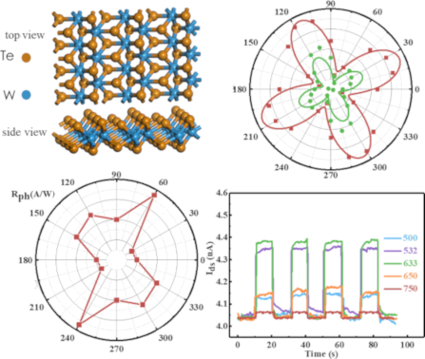
- , quantitative research on 1T’-WTe2 has been reported, revealing its fascinating physical properties such as non-saturating magnetoresistance, highly anisotropic crystalline structure and anisotropic optical/electrical response. Especially for its anisotropic properties, surging research interest devoted solely


Development of a new hybrid approach combining AFM and SEM for the nanoparticle dimensional metrology
Beilstein J. Nanotechnol. 2019, 10, 1523–1536, doi:10.3762/bjnano.10.150
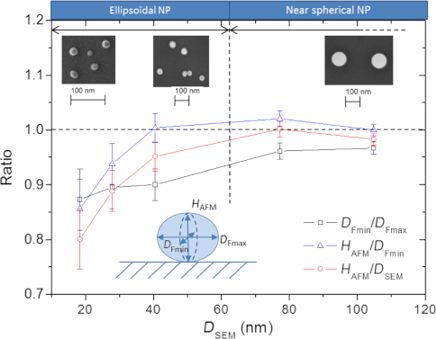
- measurands defined for both techniques are distinct. AFM is a technique used for mapping physical properties at the nanoscale. The measuring principle is based on the detection of the interaction (attractive or repulsive forces) between a sharp tip attached to the end of a flexible cantilever and a sample




Magnetic segregation effect in liquid crystals doped with carbon nanotubes
Beilstein J. Nanotechnol. 2019, 10, 1464–1474, doi:10.3762/bjnano.10.145
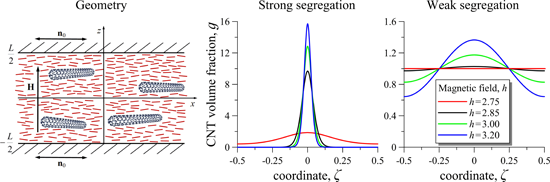
- , their shape, size, and concentration. Anisometric particles are oriented in the LC matrix, which leads to significant changes in the electro- and magneto-optical response of the composite material. Nanoparticles placed in an LC enhance many physical properties, such as susceptibility to external fields
- ratio the physical properties of this carbon nanomaterial vary greatly in different directions. In this sense, the anisotropic properties of CNTs (for example, thermal and electrical conductivities) are attractive for a wide range of applications, including nanoelectronics and optics [2]. A distinctive





