Search results
Search for "pore size" in Full Text gives 216 result(s) in Beilstein Journal of Nanotechnology. Showing first 200.
Controlling surface morphology and sensitivity of granular and porous silver films for surface-enhanced Raman scattering, SERS
Beilstein J. Nanotechnol. 2018, 9, 2813–2831, doi:10.3762/bjnano.9.263
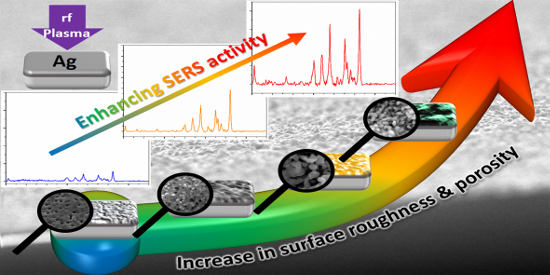
- of argon and oxygen gas (8 sccm argon, 4 sccm oxygen gas flow at a power of 200 W for 15 min). Treatment of the so obtained oxidized silver film with pure argon rf plasma (argon flow rate 16.7 sccm, power 200 W, 15 min) results in a complex network of interconnected silver particles with large pore
- size (Figure 8a). This difference in morphology is already observed in the silver film oxidized by the argon/oxygen mixture when compared to the silver film oxidized by oxygen plasma alone (Figure S16a,d, Supporting Information File 1). The difference in the obtained morphologies can eventually be





Block copolymers for designing nanostructured porous coatings
Beilstein J. Nanotechnol. 2018, 9, 2332–2344, doi:10.3762/bjnano.9.218
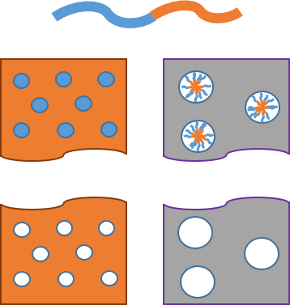
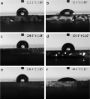
- and physical modifications of the PS nanostructures, since the complete removal of PMMA phase produces a hydrophobic PS surface whereas an irradiation at a pressure of 103 Pa caused the partial decomposition of the PS matrix with the modification of the material pore size and structure. By focusing on
- analogous PS-b-P4VP membranes, the results obtained for PS-b-PEO membranes evidenced that the pore dimensions of the PS-b-PEO membranes are not affected by the pH change (in contrary to PS-b-P4VP). Additionally, since the membranes with PEO moieties present hydroxy end groups, the pore size can be tailored
- ), where 2-propanol was determined to be the best solvent. As reported in Figure 4, the nanoporous thin membrane (i.e., pore size ≈20 nm) adheres to the macroporous substrate without any discontinuities. As reported in Figure 4d, the desired vertical alignment of the nanoporous system is maintained, even


Electrospun one-dimensional nanostructures: a new horizon for gas sensing materials
Beilstein J. Nanotechnol. 2018, 9, 2128–2170, doi:10.3762/bjnano.9.202






Nanoconjugates of a calixresorcinarene derivative with methoxy poly(ethylene glycol) fragments for drug encapsulation
Beilstein J. Nanotechnol. 2018, 9, 2057–2070, doi:10.3762/bjnano.9.195
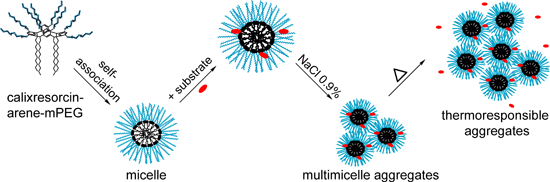
- filtrated through Millipore filter (pore size: 0.2 μm). The series of solutions was obtained through dilution. Preparation of substrate-loaded micelles of 3 Two basic methods were used to produce 3 + substrate micelles. Thin-film hydration Appropriate amounts of 3 and substrate (Dox, Orange OT, QC, RhB, see
- residual suspensions were filtered through Millipore filter (pore size: 0.2 μm) to remove free hydrophobic substrates (Dox, Orange OT, QC) or dialysed against water (molecular weight cutoff 1000 Da) for 1 h (hydrophilic RhB). The concentrations of Dox, Orange OT, QC, RhB in the obtained 3 + substrate


Synthesis of a MnO2/Fe3O4/diatomite nanocomposite as an efficient heterogeneous Fenton-like catalyst for methylene blue degradation
Beilstein J. Nanotechnol. 2018, 9, 1940–1950, doi:10.3762/bjnano.9.185
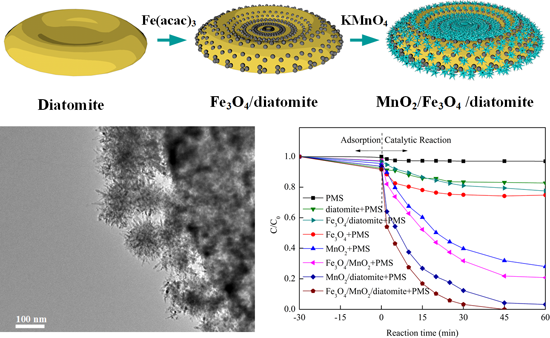
- surface chemical composition results obtained from the XPS analysis ensure the formation of Fe3O4 and MnO2, which further confirms the observation from the previous structural and morphological characterization. Figure 7 shows the N2 adsorption–desorption isotherms and corresponding pore-size
- /Fe3O4/diatomite. XPS spectra of as-synthesized MnO2/Fe3O4/diatomite: (a) full survey spectrum, high-resolution scans of (b) Fe 2p, (c) Mn 2p and (d) O 1s. (a) N2 adsorption–desorption isotherms and (b) the corresponding pore-size distribution curves of diatomite, Fe3O4/diatomite and MnO2/Fe3O4/diatomite


The inhibition effect of water on the purification of natural gas with nanoporous graphene membranes
Beilstein J. Nanotechnol. 2018, 9, 1906–1916, doi:10.3762/bjnano.9.182
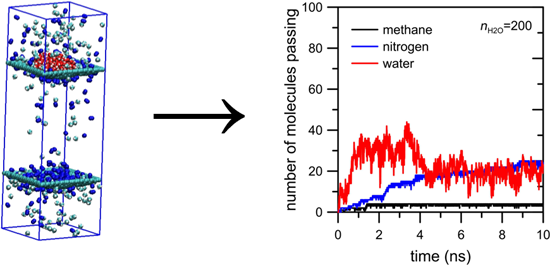
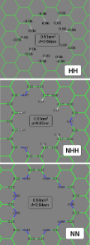
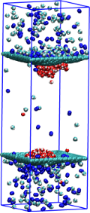
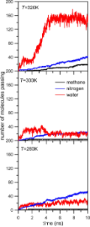
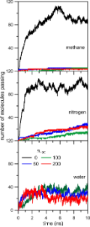
- separation relies strongly on the pore size and geometry. The presence of a strongly electronegative atom in the way of separated components may cause additional, probably undesirable effects. For example, during natural gas separation, the water molecules, which are present in the mixture, can lower the






Uniform cobalt nanoparticles embedded in hexagonal mesoporous nanoplates as a magnetically separable, recyclable adsorbent
Beilstein J. Nanotechnol. 2018, 9, 1770–1781, doi:10.3762/bjnano.9.168
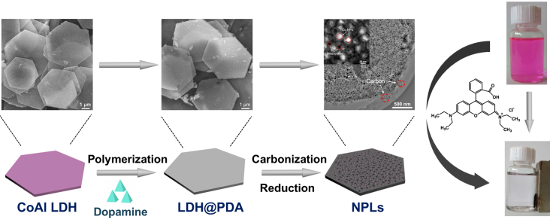
- calculated at a relative pressure range of 0.05–0.2. The pore size distribution was determined using nonlocal density functional theory (NLDFT) with the slit pore model using the adsorption branch of the nitrogen isotherm. The magnetic properties of the NPLs were investigated by a vibrating sample
- average pore size of all samples calculated from the adsorption branch using the NLDFT method is less than 25 nm, as shown in Figure 4C, which is in good agreement with the STEM observation (Figure 3D). After heat treatment at 800 °C, the BET surface area for the samples prepared at the initial dopamine
- hydrochloride concentrations of 1.0, 2.0, and 2.5 g/L is calculated to be 59, 70, and 124 m2/g, respectively (Table S2, Supporting Information File 1). When the initial concentration of dopamine hydrochloride is decreased, the average pore size increases from 9.5 nm to 18.6 nm (Figure 4C and Table S2


Controllable one-pot synthesis of uniform colloidal TiO2 particles in a mixed solvent solution for photocatalysis
Beilstein J. Nanotechnol. 2018, 9, 1715–1727, doi:10.3762/bjnano.9.163
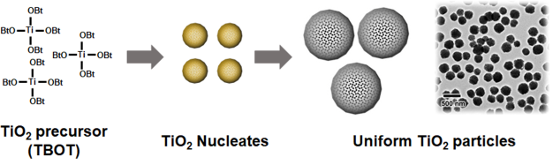
- adsorption/desorption isotherm and corresponding Barrett–Joyner–Halenda (BJH) pore size distributions of the TiO2 samples. The TiO2 sample calcined at 400 °C (TiO2-400) displayed a typical type IV isotherm with a well-developed hysteresis loop that indicated mesoscale porosity (Figure 5a). The TiO2 sample
- ). The measured surface area for the TiO2 samples calcined at 400, 500, 650, 800 °C were 123, 62, 5 and 5 m2/g respectively. Figure 5b provides the pore size distribution of the TiO2 sample calcined at different temperatures as calculated by the BJH method using the adsorption branch of the N2 adsorption
- were no sharp peaks in the BJH pore size distribution curves. However, once the TiO2 sample was calcined at high temperatures, e.g. more than 650 °C, they did not show any obvious peaks in the range related to mesopores, which indicated an almost non-porous characteristic. It is well-known that the




Sulfur-, nitrogen- and platinum-doped titania thin films with high catalytic efficiency under visible-light illumination
Beilstein J. Nanotechnol. 2018, 9, 1629–1640, doi:10.3762/bjnano.9.155
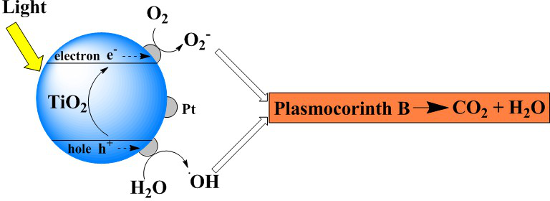
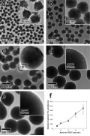
- observed decrease in crystallite size, which is typical for samples synthesized with H2SO4 (≈10 nm) compared to samples synthesized with HCl (≈50 nm) [19]. Figure 3 shows the pore size distribution for a sample synthesized with HCl (REF) and H2SO4 (S3). Sample REF has a well-defined uniform pore size
- distribution (≈10 nm), whereas S3 has a multimodal pore size distribution. The distributions of pores in other samples synthesized with HCl (Urea_15, Thiourea_15) and H2SO4 (S3_N0.5, S3_N0.5+1% Pt) are similar to the distributions shown in Figure 3. Band gap measurements The diffuse reflectance, R, of the
- placed into Pt crucibles and heated from 25 to 800 °C at a heating rate of 10 °C/min. XRD patterns were measured with a Siemens D5000 instrument in the 2θ range of 23–32°. The average crystallite sizes were calculated using Scherrer’s equation. The BET specific surface area and pore size distribution of


Closed polymer containers based on phenylboronic esters of resorcinarenes
Beilstein J. Nanotechnol. 2018, 9, 1594–1601, doi:10.3762/bjnano.9.151
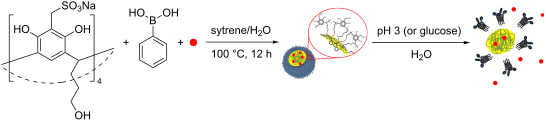
- -encapsulated dyes by dialysis. Dialysis of 2 mL of the suspension was carried out in 50 mL of distilled water for three days using a dialysis bag with a pore size of 2000 Da. The UV spectrum of the dialysate was determined in the range of 200–600 nm. Determination of pKdiss and pKa values 0.3 mL of SRA (1 mM
- spectrophotometer. To study the kinetics of the pH-controlled dye release, dialysis of D@p(SRA-B) (3 mL, 0.27 mg/mL) in 50 mL of universal buffer solution (pH 3) was carried out using a dialysis bag with a pore size of 2000 Da. UV spectra of the dialysate were measured every 30 min over a time span of three hours
- -controlled dye release, dialysis of the D@p(SRA-B) solution (3 mL, 0.27 mg/mL) in 50 mL of the 0.4 mM glucose solution was carried out using a dialysis bag with a pore size of 2000 Da. UV spectra of dialysate were determined every 30 min over a time of three hours. AFM images of p(SRA-B). UV–vis and


Cr(VI) remediation from aqueous environment through modified-TiO2-mediated photocatalytic reduction
Beilstein J. Nanotechnol. 2018, 9, 1448–1470, doi:10.3762/bjnano.9.137
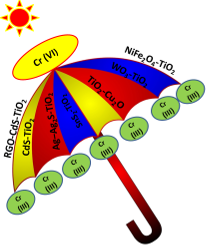
- hydrogel (rGH). The 3D macrostructures of rGH enhanced the accessible surface area and possessed highly porous structures with a pore size distribution of several micrometers, which enabled the use of the composite for the fast adsorption of Cr(VI) through π–π interactions and a nonporous surface


Preparation and morphology-dependent wettability of porous alumina membranes
Beilstein J. Nanotechnol. 2018, 9, 1423–1436, doi:10.3762/bjnano.9.135
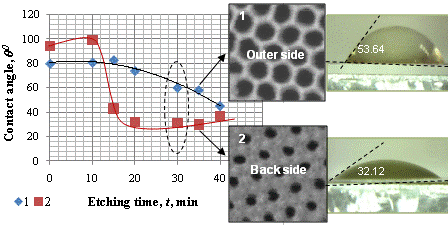
- -monodisperse cylindrical pores [23][24]. Membranes obtained by traditional methods have a three-dimensional pore structure that has a large pore size distribution, which does not allow high permeability values to be obtained [9][25][26]. Therefore, the optimization of parameters such as the diameter and length
- aluminum layer beforehand is removed, as described previously. In the inset of Figure 2D, the split surface formation scheme is shown [34]. This explains why the pore diameter in the SEM surface photo does not coincide with the pore size obtained in the SEM cross-sectional view of the same sample. In
- homogeneity and pore size, Figure 7 shows the surface profiles of the experimental samples before and after barrier layer etching. Figure 7A,B shows the variation in pore diameter, and Figure 7C shows the distance between pores (cell diameter). The pore diameter increased from 50 ± 5 nm to 80 ± 5 nm after 30


Nanoporous silicon nitride-based membranes of controlled pore size, shape and areal density: Fabrication as well as electrophoretic and molecular filtering characterization
Beilstein J. Nanotechnol. 2018, 9, 1390–1398, doi:10.3762/bjnano.9.131
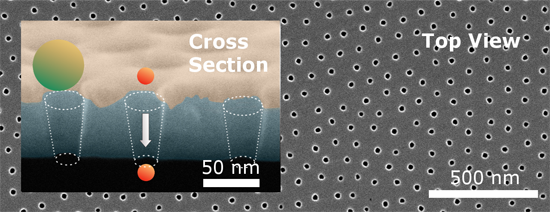
- silicon dioxide layers during rapid thermal annealing [13]. This fabrication offers the advantage of full compatibility to semiconductor fabrication techniques. While pore distance and pore size can be controlled within acceptable limits, the generated pores are random in position and the membrane
- ]. Selectivity and molecular cut-off depend strongly on pore size and the narrowness of its distribution. Studies of the molecular filtering properties were conducted by real-time fluorescence microscopy. Thus, the diffusion of fluorescent molecules or fluorescent-labeled macromolecules could be observed time


Facile chemical routes to mesoporous silver substrates for SERS analysis
Beilstein J. Nanotechnol. 2018, 9, 880–889, doi:10.3762/bjnano.9.82
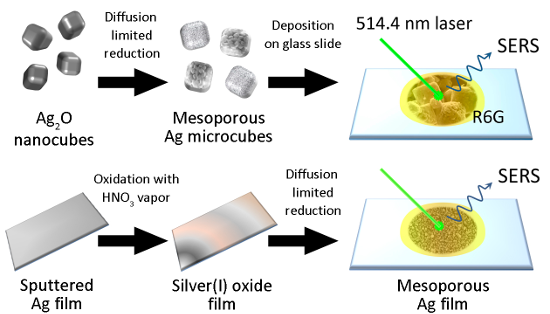
- silver prepared at a double excess of NaBH4 is of 230 ± 90 nm (Figure 1c) and the related pore size is about 100 nm. A ten-fold excess of NaBH4 led to full conversion of polycrystalline Ag2O to ≈1 μm sponge-like Ag grains (Figure 1d), which also contained numerous mesopores. As it was discussed elsewhere
- . According to the Brunauer–Emmett–Teller (BET) surface area analysis and the Barrett–Joyner–Halenda (BJH) (BET-BJH) nitrogen capillary adsorption analysis, the specific surface area of the mesoporous silver particles (mp-Ag) reached 42 ± 5 m2/g and the pore size distribution analysis demonstrated a broad


A review of carbon-based and non-carbon-based catalyst supports for the selective catalytic reduction of nitric oxide
Beilstein J. Nanotechnol. 2018, 9, 740–761, doi:10.3762/bjnano.9.68

- pore size distribution can be altered to suit the requirements of a specific type of reaction. The surface chemistry of a carbon-based catalyst also plays a significant role, as it influences catalytic performance especially during the synthesis stage. In terms of interactions, carbon-based materials
Synthesis and characterization of two new TiO2-containing benzothiazole-based imine composites for organic device applications
Beilstein J. Nanotechnol. 2018, 9, 721–739, doi:10.3762/bjnano.9.67
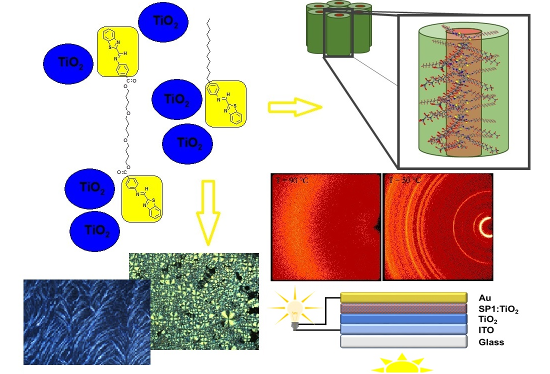
- , indicating the complete pore filling (according to the type IV isotherm model). However, this effect was not observed in the case of TiO2 since the material isotherm is a combination of both II and IV types. The shape of the hysteresis loop is correlated with pore size distribution and pore geometry
- the width range of 2–50 nm) and macropores (above 50 nm). Figure 1b shows the pore size distribution of TiO2. Based on the BJH method the average pore width of 6.2 nm and cumulative volume of pores of 0.117 m3/g were calculated. The obtained results indicate that the mesoporous structure of TiO2
- was achieved by argon bubbling through the solution for about 10 min before measurement. All electrochemical experiments were carried out under ambient conditions. (a) Adsorption and desorption N2 isotherms of TiO2 at liquid nitrogen temperature. (b) Pore size distribution of TiO2 using Gaussian






Cyclodextrin-assisted synthesis of tailored mesoporous silica nanoparticles
Beilstein J. Nanotechnol. 2018, 9, 693–703, doi:10.3762/bjnano.9.64
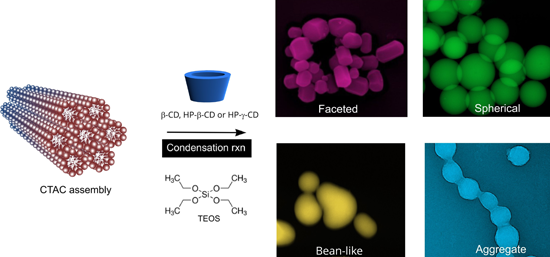
- . Interestingly, at low CD concentrations, the resultant particles exhibited smooth faces. The mean particle size increased from 139 to 207 nm with the HP-γ-CD content increasing from 0.1 to 0.6% (w/v), while the mean pore size of the respective particles remained nearly stable at 3.20 ± 0.10 nm. Similarly
- the alterations in the pore architecture, which was directed by the self-assembly of β-CD during the particle formation. The pore size and volume of the particles were measured using the Brunauer–Emmett–Teller (BET) method. Figure S6 (Supporting Information File 1) shows the nitrogen adsorption
- –desorption isotherms and the pore size diagrams of MSNs. The pristine MSN sample, which does not have any CD moieties, has a mean pore size of 2.64 nm and a surface area of 1374.25 m2/g. BET analysis of the multifaceted silica particles synthesized with 0.25% (w/v) HP-γ-CD revealed a microporous structure


Anchoring Fe3O4 nanoparticles in a reduced graphene oxide aerogel matrix via polydopamine coating
Beilstein J. Nanotechnol. 2018, 9, 591–601, doi:10.3762/bjnano.9.55
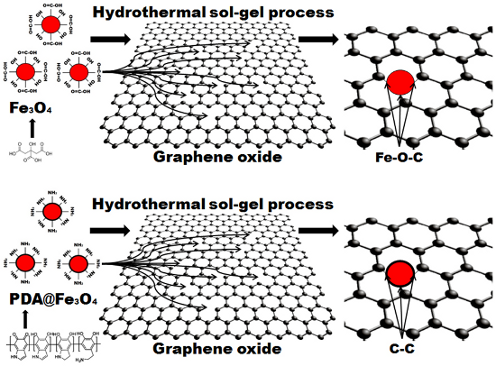
- micrographs of rGO, rGO-Fe3O4 and rGO-PDA@Fe3O4 aerogels. From the low magnification images one can determine the pore size distribution and observe interconnected 3D network of aerogel-forming rGO structures (Figure 1a–c). At higher magnification, the agglomerates of MNPs are clearly visible (Figure 1e,f
- ). From this figure it can be deduced that the distribution of agglomerated MNPs is homogeneous on both sides of the rGO sheets. Figure 2 presents selected SEM micrographs with marked pore size distribution (Figure 2a) and diameter of MNPs (Figure 2b) in rGO-PDA@Fe3O4 aerogel, as well as TEM micrographs


Ultralight super-hydrophobic carbon aerogels based on cellulose nanofibers/poly(vinyl alcohol)/graphene oxide (CNFs/PVA/GO) for highly effective oil–water separation
Beilstein J. Nanotechnol. 2018, 9, 508–519, doi:10.3762/bjnano.9.49
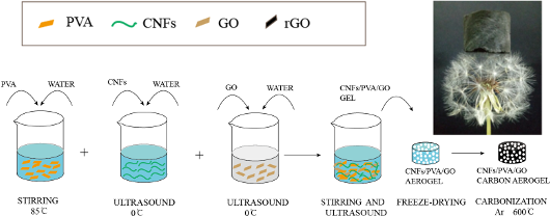
- (Figure 1d), indicating its low density. The microstructure of the CNF/PVA/GO carbon aerogel was observed by SEM (Figure 2a, 2b, and 2d). As shown in Figure 2a, the CNF/PVA/GO carbon aerogel showed porous and interconnected 3D structures with pore size ranging from 50–75 μm. The carbon skeleton originated


Engineering of oriented carbon nanotubes in composite materials
Beilstein J. Nanotechnol. 2018, 9, 415–435, doi:10.3762/bjnano.9.41
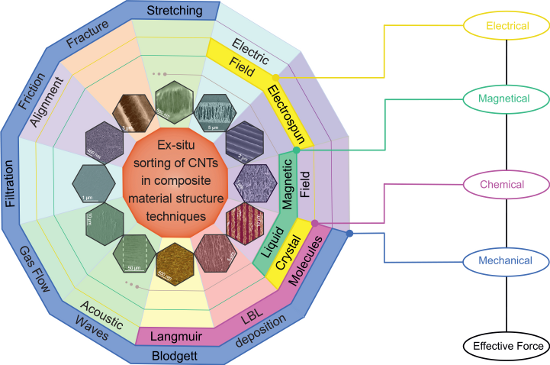
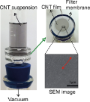
- more on the quality of the CNTs than the ability to control the interactions of the CNT and LC [84]. Filtration method Filtering a well-dispersed and dilute solution of CNTs through a porous membrane may lead to the arrangement of the CNTs [99]. A very narrow pore size distribution (a thousand








Photocatalytic and adsorption properties of TiO2-pillared montmorillonite obtained by hydrothermally activated intercalation of titanium polyhydroxo complexes
Beilstein J. Nanotechnol. 2018, 9, 364–378, doi:10.3762/bjnano.9.36
- also observed in [42] and related to the growth of TiO2 anatase crystals. The pore size distribution curves are shown in Figure 6b. The distribution pattern for the TiO2-PMMx samples is narrow and unimodal. The samples prepared using hydrothermal treatment feature a shift of the distribution curve to
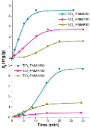
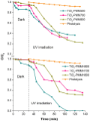
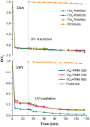
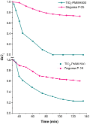
- analysis (TGA)/differential scanning calorimetry (DSC) curves of the raw MM, Ti-MM, and Ti-MMH. SEM images and EDS spectra of the surface of (a) TiO2-PMM500, and (b) TiO2-PMMH500. Nitrogen adsorption/desorption isotherms (а) and pore size distribution (b) of the raw MM, TiO2-PMMx, and TiO2-PMMHx. Kinetic






Bombyx mori silk/titania/gold hybrid materials for photocatalytic water splitting: combining renewable raw materials with clean fuels
Beilstein J. Nanotechnol. 2018, 9, 187–204, doi:10.3762/bjnano.9.21
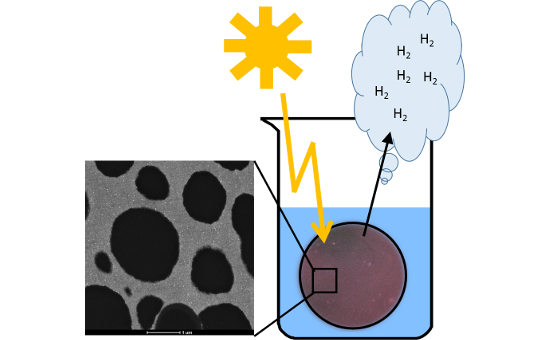
- of 5 and 7–18 nm, respectively. Addition of poly(ethylene oxide) to the reaction mixture enables pore size tuning, thus providing access to different materials with different photocatalytic activities. Water splitting experiments using a sunlight simulator and a Xe lamp show that the new hybrid
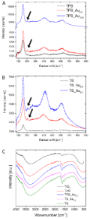
- very broad pore diameter distribution. The cumulative pore volume indicates a very undefined porosity with pore sizes mainly in the range of 200 nm and 50 µm. In contrast, in the case of monolithic TPS samples (i.e., samples that were not ground prior to analysis), the pore size distribution is
- narrower pore size distribution than the TPS samples. In the powdered sample, the pores are mainly on the order of 500 nm to 30 µm whereas the monolithic sample shows pores below 10 nm and from 500 nm to 5 µm with a rather pronounced main pore diameter at 1 µm. As the purpose of the materials presented




One-step chemical vapor deposition synthesis and supercapacitor performance of nitrogen-doped porous carbon–carbon nanotube hybrids
Beilstein J. Nanotechnol. 2017, 8, 2669–2679, doi:10.3762/bjnano.8.267
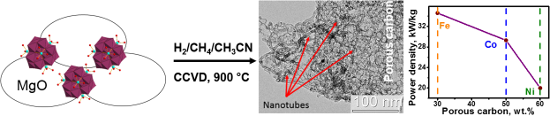
- -existence of CNTs and nontubular carbon (Figure S1 in Supporting Information File 1). TEM images revealed that the nontubular carbon is highly porous with a pore size between 8–20 nm (Figure 2). High-resolution TEM images demonstrated the layered structure of these carbons (Figure S2 in Supporting
- Information File 1). Since the average pore size determined from the N2 sorption measurements was ≈12 nm for all samples, we conclude that this carbon material was templated by MgO nanoparticles. The nanotubes permeate the porous carbon (Figure 2a,c,f) and connect the flakes (Figure 2b). The supported metals


Enhanced photoelectrochemical water splitting performance using morphology-controlled BiVO4 with W doping
Beilstein J. Nanotechnol. 2017, 8, 2640–2647, doi:10.3762/bjnano.8.264
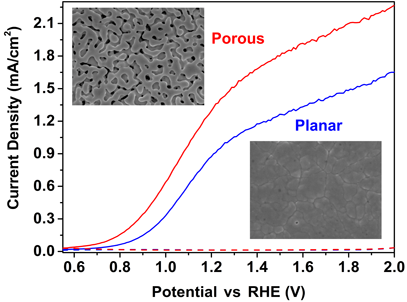
- , the pore size decreases. The film prepared from the water-based solution with the smallest amount of EG (0.5-EG) exhibits cracks in the film (Figure S2, Supporting Information File 1) and has poor adhesion to the substrate. The sol–gel method allows reagents to be mixed at the atomic/molecular level


Fabrication of carbon nanospheres by the pyrolysis of polyacrylonitrile–poly(methyl methacrylate) core–shell composite nanoparticles
Beilstein J. Nanotechnol. 2017, 8, 1897–1908, doi:10.3762/bjnano.8.190

- point of nitrogen using a surface area and porosity analyzer (ASAP2020, Micromeritics). The specific surface area of the samples was calculated according to BET theory. The pore size of carbon nanospheres was calculated from the desorption branch of nitrogen isotherms using the Barret–Joyner–Halenda
- adsorption isotherm with H3 hysteresis, indicating the presence of mesopores. This was consistent with the result of the pore size distribution displayed in Figure 8b. The pore size of CP6 ranged from 1.75 nm to 125 nm, with majority of them lying in the range of mesopores. The calculated BET specific
- SiO2 (178.49 mg/g) [54], manganese-impregnated zinc sulphide nanoparticles deposited on activated carbon (191.57 mg/g) [55] and γ-Fe2O3 loaded active carbon (195.55 mg/g) [56]. We believe the efficient removal of MB is mainly attributed to the small pore size and the high specific surface area of CP6