Search results
Search for "quantification" in Full Text gives 262 result(s) in Beilstein Journal of Nanotechnology. Showing first 200.
Uniform Fe3O4/Gd2O3-DHCA nanocubes for dual-mode magnetic resonance imaging
Beilstein J. Nanotechnol. 2020, 11, 1000–1009, doi:10.3762/bjnano.11.84
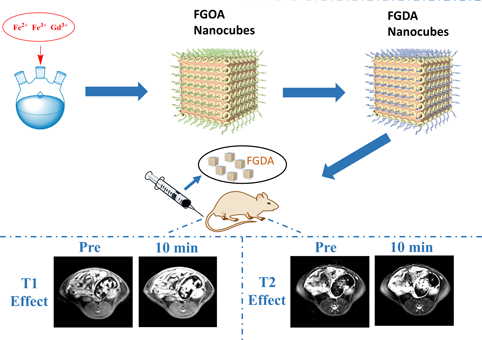
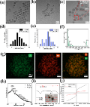
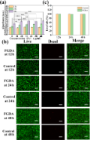
- -treated groups (Fe concentration: 60 μg/mL) after 12, 24, and 48 h of incubation. (c) Quantification of live cells shown in (b). Scale bar: 100 μm. ** and *** represent P < 0.01 and P < 0.001, respectively. (a) T1WI and T2WI in vivo images of SD rats before and after intravenous injection of FGDA



Atomic layer deposition for efficient oxygen evolution reaction at Pt/Ir catalyst layers
Beilstein J. Nanotechnol. 2020, 11, 952–959, doi:10.3762/bjnano.11.79
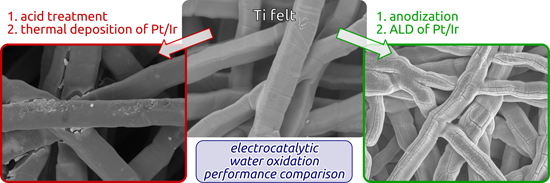
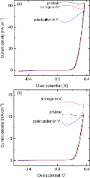
- , Figure 1d), although the Pt and Ir lines overlap too much for distinct quantification by EDX. Apart from the prominent Ti peak, the presence of an oxide layer is demonstrated by a significant O signal. Figure 2 presents the linear sweep voltammograms obtained in the OER region for catalyst-coated samples


Extracting viscoelastic material parameters using an atomic force microscope and static force spectroscopy
Beilstein J. Nanotechnol. 2020, 11, 922–937, doi:10.3762/bjnano.11.77
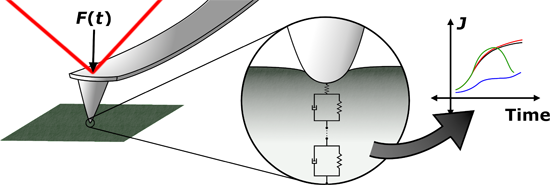
- accurate models specifically designed for AFM experimentation and simulation. The AFM community has pursued the precise quantification and extraction of rate-dependent material properties, in particular, for a significant period of time, attempting to describe the standard viscoelastic response of


Identification of physicochemical properties that modulate nanoparticle aggregation in blood
Beilstein J. Nanotechnol. 2020, 11, 550–567, doi:10.3762/bjnano.11.44
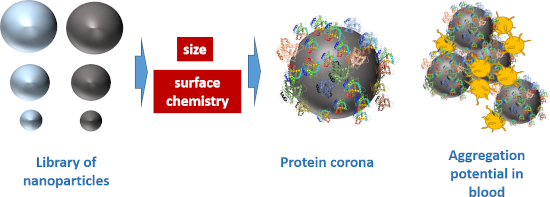
- concentrations, while a minor overlap occurred at 10%. However, a pronounced difference was observed when we compared the protein abundance by means of the label-free quantification (LFQ) across all conditions (Table 4 and Figure 6). Protein grouping (Figure 7) confirmed that the coagulation factors are highly




Luminescent gold nanoclusters for bioimaging applications
Beilstein J. Nanotechnol. 2020, 11, 533–546, doi:10.3762/bjnano.11.42
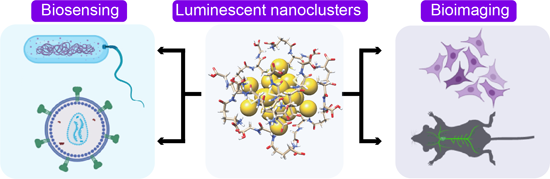
- complexes primarily rely on chelation of metal ions with carboxylic groups, therefore the diversity of ligand design is limited. The discovery of green fluorescent protein (GFP) led to remarkable progress in bioimaging including protein quantification, tracking, sensing as well as imaging various


Interfacial charge transfer processes in 2D and 3D semiconducting hybrid perovskites: azobenzene as photoswitchable ligand
Beilstein J. Nanotechnol. 2020, 11, 466–479, doi:10.3762/bjnano.11.38
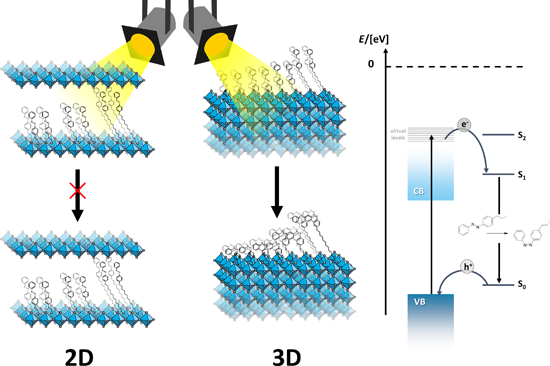
- . Therefore, an exact quantification of the photo-initiated back reaction is not possible, because precipitated particles could not be irradiated with blue light (438 nm) and this would falsify the determination of the DOI value. The enhancement of the conformational change from trans to cis may originate




Electrochemically derived functionalized graphene for bulk production of hydrogen peroxide
Beilstein J. Nanotechnol. 2020, 11, 432–442, doi:10.3762/bjnano.11.34
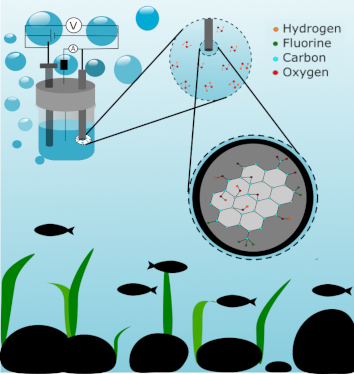
- details of the calculation for the number of electrons transferred are given in Supporting Information File 1. The quantification of the H2O2 produced was carried out using a UV–vis spectrometer [37][61]. A calibration curve was made using 1 mM Ce(SO4)2 (25 mL) solution, 1% H2O2 solution (30% H2O2
- collected and used for the quantification of the H2O2. The details of the quantification are given in Supporting Information File 1. (a) High resolution O 1s XPS spectra of different EEG samples. (b) BET isotherms of different EEG samples. The CV profiles of different EEG samples in (a) acidic (0.5 M H2SO4
- at 0.358 V (vs RHE, from Figure 4a). Supporting Information The supporting information includes additional TEM images, a detailed description of the quantification of H2O2, deconvoluted XPS spectra of O 1s, AFM analysis, FTIR spectra, ECSA calculations, and RRDE analysis for all EEG samples


Brome mosaic virus-like particles as siRNA nanocarriers for biomedical purposes
Beilstein J. Nanotechnol. 2020, 11, 372–382, doi:10.3762/bjnano.11.28
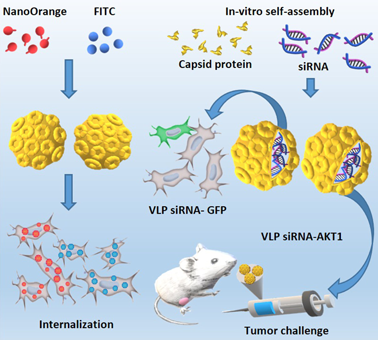
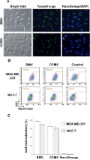
- RiboGreen RNA assay (ThermoFisher Scientific) and NanoOrange protein quantification kit (ThermoFisher Scientific), respectively. Knockdown of gene expression by VLP-siGFP MDA-MB-231/GFP cells were seeded in a 12-well plate when the cells reached 70% confluence; they were synchronized in basal media


Poly(1-vinylimidazole) polyplexes as novel therapeutic gene carriers for lung cancer therapy
Beilstein J. Nanotechnol. 2020, 11, 354–369, doi:10.3762/bjnano.11.26
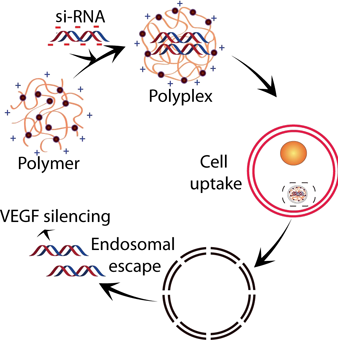
- violet for 20 min and washed with DPBS. The chambers were air-dried and observed using phase contrast microscopy and imaged. The numbers of cells were counted at ten different fields for quantification. Microarray analysis For performing microarray analysis, the quality of the total isolated RNA was


An advanced structural characterization of templated meso-macroporous carbon monoliths by small- and wide-angle scattering techniques
Beilstein J. Nanotechnol. 2020, 11, 310–322, doi:10.3762/bjnano.11.23
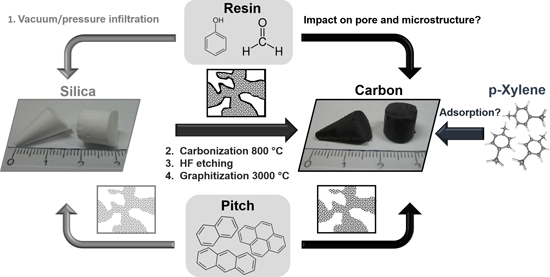
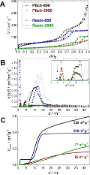
- matching fluid allowed for the quantification of the volume of accessible and inaccessible micro- and mesopores in relation to the carbon precursor and the heat treatment. Interestingly, a thorough analysis of the SANS data using the chord-length distribution (CLD) concept reveals a subtle picture of these




Synthesis of amorphous and graphitized porous nitrogen-doped carbon spheres as oxygen reduction reaction catalysts
Beilstein J. Nanotechnol. 2020, 11, 1–15, doi:10.3762/bjnano.11.1
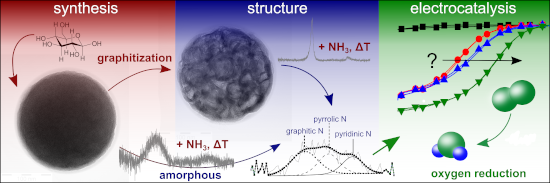
- if it were dominated only by the carbon core. Therefore, a simple quantification of the effect of the shell on the ORR performance is not possible. Nevertheless, it is clear from this comparison that the oxynitride shell does not lead to a general improvement of the ORR performance of the nitrided

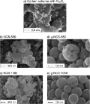
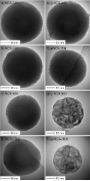



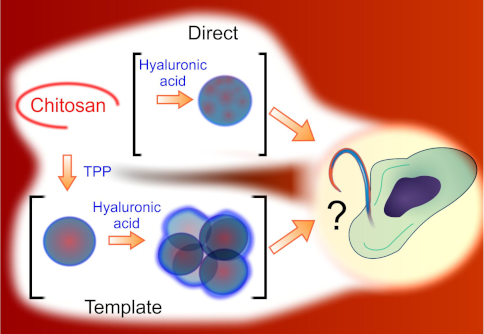
The different ways to chitosan/hyaluronic acid nanoparticles: templated vs direct complexation. Influence of particle preparation on morphology, cell uptake and silencing efficiency
Beilstein J. Nanotechnol. 2019, 10, 2594–2608, doi:10.3762/bjnano.10.250
- ). Please note that any influence of phenol-red was ruled out by using medium as blank and subtracting its absorbance to all wells before calculating metabolic activity. Quantification of cell uptake. HCT-116 (20,000 cells/cm2) and RAW 264.7 (30,000 cells/cm2) were seeded in 12-well plates and left to
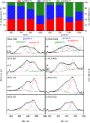
- direct (solid lines) complexation in the absence (left) or presence (right) of siRNA (25 wt % in relation to chitosan). In this and later figures Chit35 and Chit650 are, respectively, referred to as low-MW and high-MW chitosan to avoid the use of subscripts for a better readability. B) Quantification of



Bombesin receptor-targeted liposomes for enhanced delivery to lung cancer cells
Beilstein J. Nanotechnol. 2019, 10, 2553–2562, doi:10.3762/bjnano.10.246
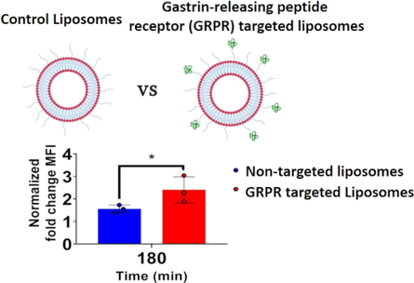
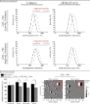
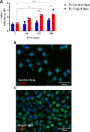
- , quantification of cell-uptake was judged by flow cytometry analysis of A549-GRPR cells exposed to fluorescently tagged target-lipo (FL-Target-lipo) or tagged control-lipo (FL-Control-lipo) formulations. Preliminary studies using FL-Target-lipo including 1 mol % targeting lipid showed marginal increases in
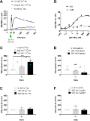
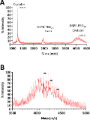
- quantification by MTS assay. Similarly, (E, F) show MTS growth data for H82 cells in the presence of Tyr4-Bn (E) or cystabn (F). Error bars are SD. Mass spectrometry characterisation of cystabn-lipid conjugate. MALDI–TOF mass spectra of crude DSPE-PEG2000-cystabn conjugate (A) and purified, post-dialysis, DSPE

Self-assembly of a terbium(III) 1D coordination polymer on mica
Beilstein J. Nanotechnol. 2019, 10, 2440–2448, doi:10.3762/bjnano.10.234
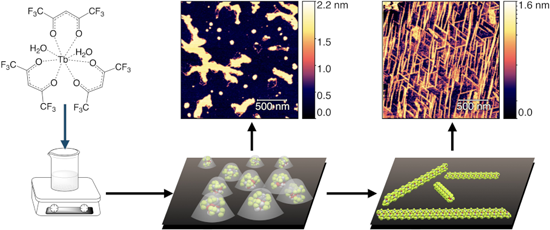
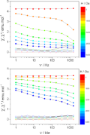
- quenching [30] and by the decrease of the lifetime from 375 µs for [Tb(hfac)3·2H2O] to 132 µs for [Tb(hfac)3·2H2O]n@mica (Table 1). Furthermore, the very small amount of luminescent material present on the mica substrate reduces the luminescence intensity (see magnetic quantification). The quantum yields




Nonlinear absorption and scattering of a single plasmonic nanostructure characterized by x-scan technique
Beilstein J. Nanotechnol. 2019, 10, 2182–2191, doi:10.3762/bjnano.10.211
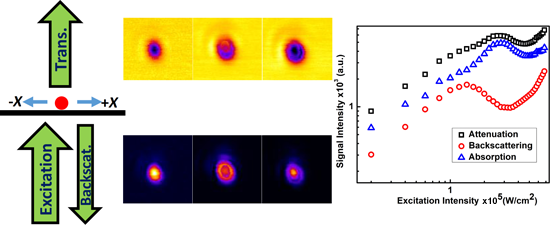
- simultaneous quantification for the nonlinear behavior of scattering, absorption and total attenuation by a single nanostructure. At low excitation intensities, both scattering and absorption responses are linear, thus confirming the linearity of the detection system. At high excitation intensities, we found


Use of data processing for rapid detection of the prostate-specific antigen biomarker using immunomagnetic sandwich-type sensors
Beilstein J. Nanotechnol. 2019, 10, 2171–2181, doi:10.3762/bjnano.10.210
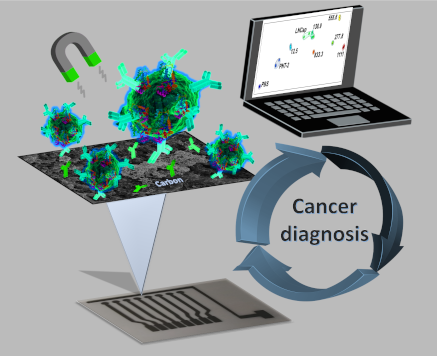
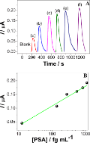
- quantification with the immunosensor is lower than the threshold established for the serum level found in patients with prostate cancer (above 3.6 ng·mL−1 stage A1) [56]. The samples were diluted in PBS for reaching the linear range, providing a response within the stipulated standards for the samples. Using the
- performed in a microfluidic system with a flow rate of 100 µL·min−1. The complex was injected with a syringe and the flow was stopped for 30 min. In the amperometric detection step, the biomarker quantification was performed by an indirect method through the electrochemical response of the marker in the


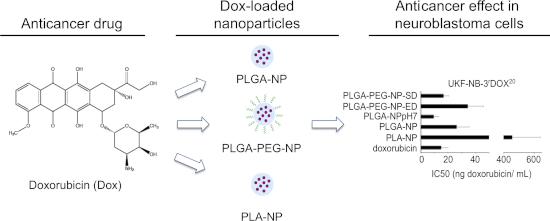
Incorporation of doxorubicin in different polymer nanoparticles and their anticancer activity
Beilstein J. Nanotechnol. 2019, 10, 2062–2072, doi:10.3762/bjnano.10.201
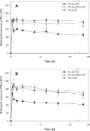
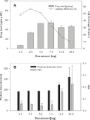
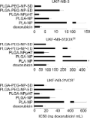
- pictures were received at an accelerating voltage of 10,000 V and a working distance of 10 mm (CamScan CS4, Cambridge Scanning Company, Cambridge, UK). Doxorubicin quantification via HPLC-UV The amount of doxorubicin that had been incorporated into the nanoparticles was determined by HPLC-UV (HPLC 1200





Synthesis of highly active ETS-10-based titanosilicate for heterogeneously catalyzed transesterification of triglycerides
Beilstein J. Nanotechnol. 2019, 10, 2039–2061, doi:10.3762/bjnano.10.200
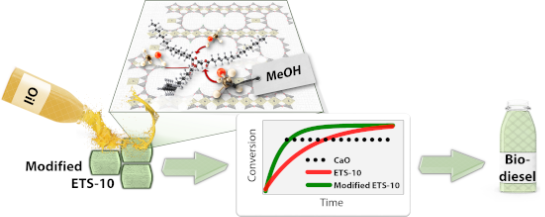
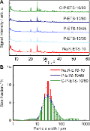
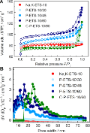
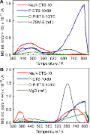
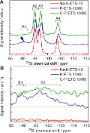
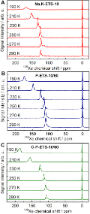
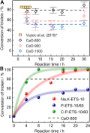
- ETS-4, AM-1 and quartz were detected (see also SEM data in Figure 3). The corresponding reflections at angles of 2θ are seen at, for example, 29.9° and 7.6° from ETS-4, 35.6° and 49.2° from AM-1, and 13.1° and 30.4° from quartz. The quantification of the presence of each phase in the prepared batch








Gold-coated plant virus as computed tomography imaging contrast agent
Beilstein J. Nanotechnol. 2019, 10, 1983–1993, doi:10.3762/bjnano.10.195
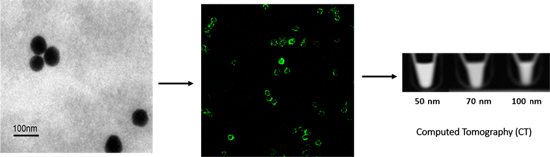
- . Quantification of the amount of antibody attached to the VCAM1-PEG5000Au-CPMV was determined spectrophotometrically at λ = 565 nm using BCA reagent and found to be 1.95 ± 0.18 mg/mL gold. Further, the hydrodynamic radius of the VCAM1-PEG5000Au-CPMV increases from 50.2 ± 3.2 nm to 56.1 ± 2.4 nm after rigorous
- negative control following the same procedure. Antibody quantification Bicinchoninic acid (BCA) protein assay kit from ThermoFisher Scientific was used according to the manufacturer’s instructions [49]. VCAM1-PEG5000Au-CPMV and IgG-PEG5000Au-CPMV (200 μL of 0.1 mg Au) and BCA reagent (200 μL) were mixed




Long-term entrapment and temperature-controlled-release of SF6 gas in metal–organic frameworks (MOFs)
Beilstein J. Nanotechnol. 2019, 10, 1851–1859, doi:10.3762/bjnano.10.180
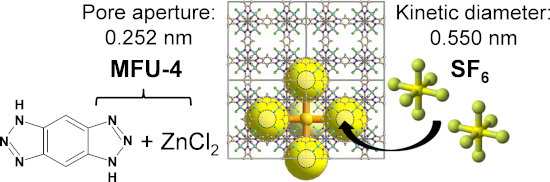
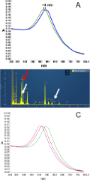
- phase by mass spectrometry (Figure S12 in Supporting Information File 1). As expected, upon adding the acid to the reaction vessel, the framework decomposed and an immediate evolution of gas bubbles was observed. The SF6 release could be followed by mass spectrometry; however, a precise quantification


Toxicity and safety study of silver and gold nanoparticles functionalized with cysteine and glutathione
Beilstein J. Nanotechnol. 2019, 10, 1802–1817, doi:10.3762/bjnano.10.175
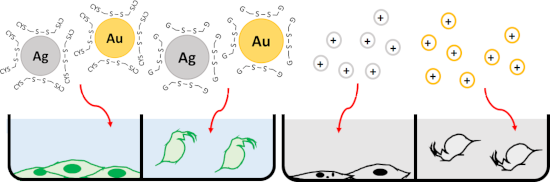
- ). The dissolution behavior of AuNPs and AgNPs was tested by ultrafiltration followed by quantification of released free gold or silver ions. The test media were UPW, cell culture medium EMEM with the addition of 10% FBS, and standard culture media for Daphnia magna cultivation (SCM). Freshly prepared
- [87]. The reflection contrast mode of CLSM, as excellent non-invasive imaging strategy for label-free real-time tracking and quantification of non-fluorescent NPs [88], was used to visualize cellular uptake of NPs. In brief, the cells were grown in a 12-well chamber with glass slides (Eppendorf


Lipid nanostructures for antioxidant delivery: a comparative preformulation study
Beilstein J. Nanotechnol. 2019, 10, 1789–1801, doi:10.3762/bjnano.10.174
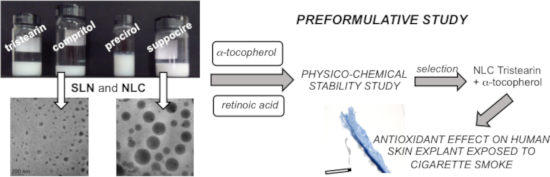
- spectrophotometric quantification of the LDH released in culture medium, using a commercial kit (Sigma-Aldrich, Merck, Darmstadt, Germany), as previously described [43]. Human skin explant (HSE) culture Skin explants were prepared from the superfluous skin of healthy adult donors (18–60 years old). Breast or

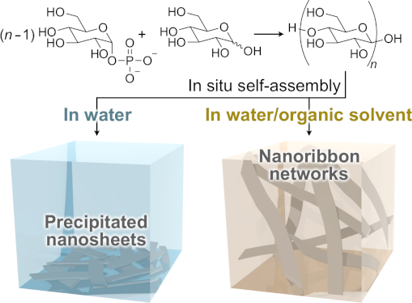
Biocatalytic oligomerization-induced self-assembly of crystalline cellulose oligomers into nanoribbon networks assisted by organic solvents
Beilstein J. Nanotechnol. 2019, 10, 1778–1788, doi:10.3762/bjnano.10.173
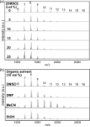
- centrifugation (20,400g)/redispersion cycles to remove more than 99.999% of the soluble fraction of the reaction mixtures. For MALDI–TOF mass spectrometry, the purified product dispersions were stored at 4 °C until use. For the quantification of the insoluble products, a volume of the purified product





Synthesis of nickel/gallium nanoalloys using a dual-source approach in 1-alkyl-3-methylimidazole ionic liquids
Beilstein J. Nanotechnol. 2019, 10, 1754–1767, doi:10.3762/bjnano.10.171
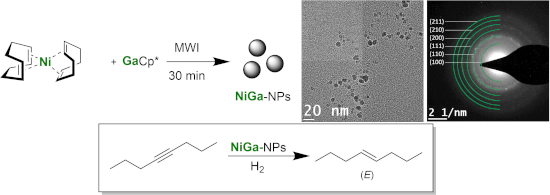
- selected-area energy diffraction (SAED) are required. Presumably, due to the small size of the nanoparticles, these measurements yielded no diffractograms. Therefore, the nanoparticles can only be described as non-crystalline or amorphous. Quantification of EDX spectra from three different spots on the TEM
- size distribution of 2.5 ± 0.5 nm ([BMIm][BF4], Supporting Information File 1, Figure S2 and Figure S3) and 5 ± 1 nm (PC, Supporting Information File 1, Figure S4). EDX quantification over different spots on the TEM grid also shows equimolar ratios of nickel to gallium (Supporting Information File 1
- the microwave reactor. Subsequently, the TEM images show spherical and crystalline nanoparticles with a small size distribution of 5 ± 1 nm (Figure 3). Through the increased decomposition time the particles were grown slightly larger. The metal composition quantification by EDX spectra from three




Doxorubicin-loaded human serum albumin nanoparticles overcome transporter-mediated drug resistance in drug-adapted cancer cells
Beilstein J. Nanotechnol. 2019, 10, 1707–1715, doi:10.3762/bjnano.10.166
- , United Kingdom) and the sample was visualised with an accelerating voltage of 10 kV, a working distance of 10 mm, and 10,000-fold magnification. Doxorubicin quantification via HPLC-UV The amount of doxorubicin that was incorporated into the nanoparticles was determined by HPLC-UV (HPLC 1200 series