Search results
Search for "resonance" in Full Text gives 843 result(s) in Beilstein Journal of Nanotechnology. Showing first 200.
Design, fabrication, and characterization of kinetic-inductive force sensors for scanning probe applications
Beilstein J. Nanotechnol. 2024, 15, 242–255, doi:10.3762/bjnano.15.23
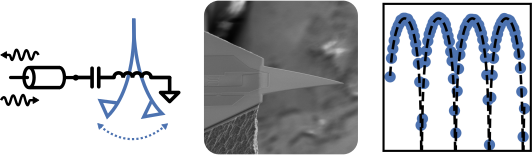
- the coupling to the transmission line used to measure the microwave resonance. A detailed description of our fabrication is presented, including information about the process parameters used for each layer. We also discuss the fabrication of sharp tips on the cantilever using focused electron beam
- -induced deposition of platinum. Finally, we present measurements that characterize the spread of mechanical resonant frequency, the temperature dependence of the microwave resonance, and the sensor’s operation as an electromechanical transducer of force. Keywords: atomic force microscopy; force sensing
- (KIMEC) sensors. A force sensor designed specifically for scanning probe microscopy must have a sharp tip that is readily positioned and scanned over a surface. We operate the sensor near a mechanical resonance with a high quality factor Q for enhanced responsivity to force. The mechanical resonator is a



Graphene removal by water-assisted focused electron-beam-induced etching – unveiling the dose and dwell time impact on the etch profile and topographical changes in SiO2 substrates
Beilstein J. Nanotechnol. 2024, 15, 190–198, doi:10.3762/bjnano.15.18
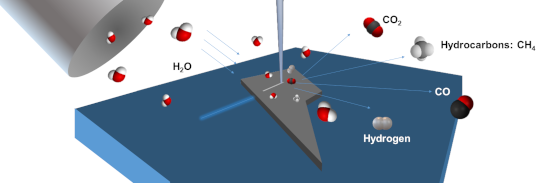
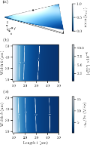
- 20 µm × 20 µm, and image resolution of 512 × 512 pixels. The resonance frequency of the particular AFM probe was 43 kHz. The acquired data were post-processed using the Gwyddion software from the Czech Metrology Institute. The ex situ measured AFM profiles of SiO2 substrate after the processing with


Nanocarrier systems loaded with IR780, iron oxide nanoparticles and chlorambucil for cancer theragnostics
Beilstein J. Nanotechnol. 2024, 15, 180–189, doi:10.3762/bjnano.15.17
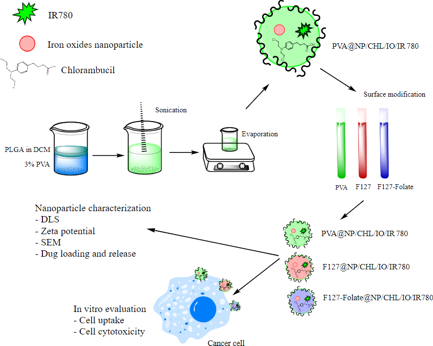
- nanocarrier that can be loaded with the chemotherapeutic medication chlorambucil and magnetic resonance imaging agents (e.g., iron oxide nanoparticles and near-infrared fluorophore IR780) for theragnostics. Poly(lactic-co-glycolic acid) was combined with the aforementioned ingredients to generate poly(vinyl
- . Clinical use of superparamagnetic oxide nanoparticles (SPIONs) has been authorized [9]. SPIONs have been utilized in magnetic particle imaging (MPI), magnetic resonance imaging (MRI), computer tomography (CT), and additional imaging models [9][10][11]. SPIONs have been modified to be applicable to a


Ferromagnetic resonance spectra of linear magnetosome chains
Beilstein J. Nanotechnol. 2024, 15, 157–167, doi:10.3762/bjnano.15.15
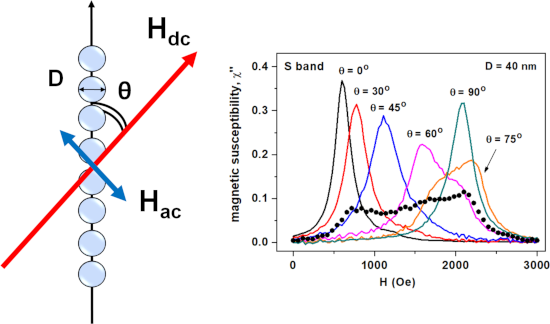
- ferromagnetic resonance (FMR) spectra of oriented and non-oriented assemblies of linear magnetosome chains are calculated by solving the stochastic Landau–Lifshitz equation. The dependence of the shape of the FMR spectrum of a dilute assembly of chains on the particle diameter, the number of particles in a
- that of random clusters of interacting spherical magnetite nanoparticles. The shape of FMR spectra of both assemblies is shown to differ appreciably even at sufficiently large values of filling density of random clusters. Keywords: chains of magnetosomes; ferromagnetic resonance spectra; magnetite
- of magnetic nanoparticle assemblies are often characterized by measuring ferromagnetic resonance (FMR) spectra [14][15]. The analysis of FMR spectra makes it possible to determine the effective magnetic field in the sample under study, which depends on the particle saturation magnetization, the type


Enhanced feedback performance in off-resonance AFM modes through pulse train sampling
Beilstein J. Nanotechnol. 2024, 15, 134–143, doi:10.3762/bjnano.15.13
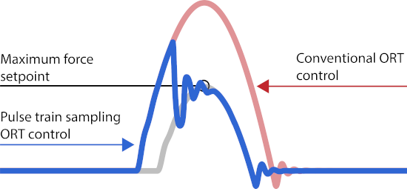
- at frequencies far away from the resonance frequency of the cantilever (off-resonance tapping (ORT) modes) can provide high-resolution imaging of a wide range of sample types, including biological samples, soft polymers, and hard materials. These modes offer precise and stable control of vertical
- rate and therefore enables higher scan rates while refining the mechanical property mapping. Keywords: atomic force microscopy (AFM); feedback control; off-resonance tapping (ORT); pulsed-force mode; Introduction Constant force mode, a widely used AFM imaging mode, utilizes a feedback controller that
- the application of this AFM method when gentle and non-damaging imaging is required, for instance on soft biological materials [1]. In order to make the instrument technique suitable for imaging fragile samples, several dynamic modes that rely on the resonance characteristics of the cantilever have


In situ optical sub-wavelength thickness control of porous anodic aluminum oxide
Beilstein J. Nanotechnol. 2024, 15, 126–133, doi:10.3762/bjnano.15.12
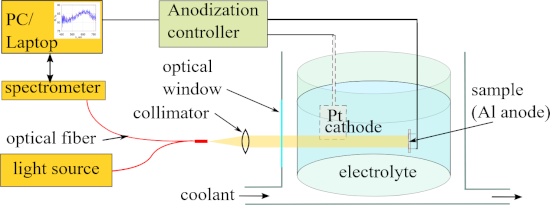
- zinc oxide nanorods embedded within the PAAO template [13]. Recently, it was demonstrated that the PAAO thickness tuning can increase the signal intensity and refractometric sensitivity of localized surface plasmon resonance (LSPR) sensors constructed using gold nanoparticles, which are deposited on


Josephson dynamics and Shapiro steps at high transmissions: current bias regime
Beilstein J. Nanotechnol. 2024, 15, 51–56, doi:10.3762/bjnano.15.5
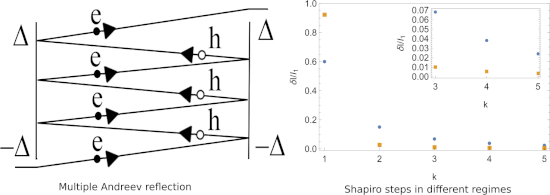
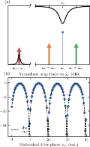
- known as Shapiro steps [1]. The presence of such steps is the result of a resonance between Josephson oscillations and the external microwave signal. In tunnel junctions, the primary resonance occurs under the condition ω = ωJ. In a more general case, the corresponding condition takes the form or


Dual-heterodyne Kelvin probe force microscopy
Beilstein J. Nanotechnol. 2023, 14, 1068–1084, doi:10.3762/bjnano.14.88
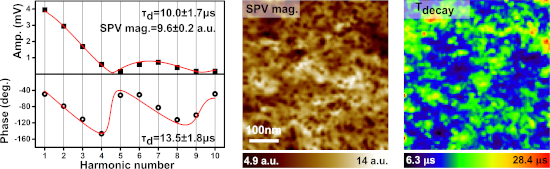
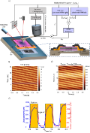
- that the modulation frequency of the light source is set high enough, it becomes possible to “stabilize” the static bending in a steady state, and photothermal cantilever excitation can be avoided (by setting the optical modulation at a frequency that differs from the cantilever resonance eigenmodes
- reference signals. Dual-heterodyne KPFM (DHe-KPFM) dramatically enhances the sensitivity to “weak” (i.e., a few mV) surface photovoltage signals, thanks to the amplification by the second resonance mode. Time-resolved measurements can be performed in data-cube mode, by recording spectra of the SPV Fourier
- ] further improves this approach. The idea is to set the modulated bias angular frequency so that the first right sideband (ω0 + ωac) is “rejected” at the second mechanical resonance eigenmode (frequency ω1) of the cantilever. Implementing this modulation/demodulation scheme is nowadays greatly facilitated




Spatial mapping of photovoltage and light-induced displacement of on-chip coupled piezo/photodiodes by Kelvin probe force microscopy under modulated illumination
Beilstein J. Nanotechnol. 2023, 14, 1059–1067, doi:10.3762/bjnano.14.87
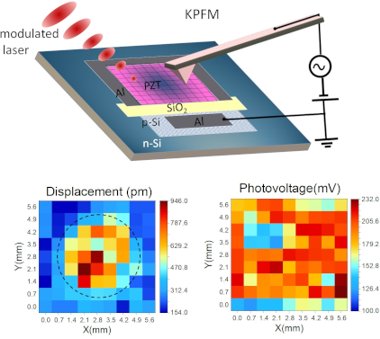
- mechanical resonance frequency (f0) executed by the lock-in amplifier 1 and the generated topography signal is controlled by the Z feedback. A sinusoidal AC bias (VAC) with drive of 1 V and frequency (fAC) of 5 kHz is applied to the tip through lock-in 2, generating a signal with a frequency of f0 ± fAC near
- the cantilever resonance. Modulating the tip with VAC while the cantilever is oscillating near its resonance frequency leads to frequency mixing and intermodulation of the two frequencies (f0 ± fAC) [34]. The lock-in amplifiers 2 and 3 are fed with the vertical deflection signal of the cantilever to
- measure the sideband signals at f0 + fAC and f0 − fAC. Then, their average is used for the KPFM feedback to adjust the DC bias. If fAC is chosen to be small enough, such that the sideband peaks are close to f0, the amplitude of these peaks will be enhanced by the mechanical resonance of the cantilever


Exploring internal structures and properties of terpolymer fibers via real-space characterizations
Beilstein J. Nanotechnol. 2023, 14, 1004–1017, doi:10.3762/bjnano.14.83
- , this distinction in fundamental chemistry has significant implications for the structures and properties of the resulting fibers. To date, structure–property characterizations of Technora® in the literature have primarily focused on (i) X-ray diffraction (XRD), (ii) nuclear magnetic resonance (NMR
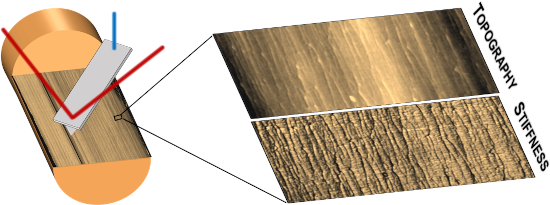
- N/m (nominal), k = 12–21 N/m (measured)) were used for AFM scans. By simultaneously exciting the AFM cantilever to its first and second resonance (f1 = 160–190 kHz and f2 = 900–1150 kHz, Figure 1c) and applying two distinct control conditions (amplitude modulation (AM) and frequency modulation (FM
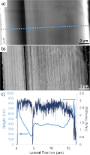
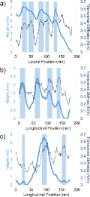
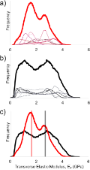
- resonance frequencies (f1 and f2). The response of the cantilever as it scans across the exposed internal fiber surface provides information about the local fiber internal morphology and mechanical response (stiffness and transverse elastic modulus (ET)). Fiber-wide Technora® AFM maps. (a) Topography map






Nanoarchitectonics of photothermal materials to enhance the sensitivity of lateral flow assays
Beilstein J. Nanotechnol. 2023, 14, 988–1003, doi:10.3762/bjnano.14.82
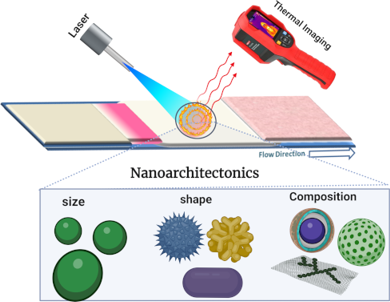
- assays (LFAs) are currently the most widely used point-of-care testing technique with remarkable advantages such as simple operation, rapid analysis, portability, and low cost. Traditionally, gold nanoparticles are employed as tracer element in LFAs due to their strong localised surface plasmon resonance
- , before being captured by immobilized biomolecules on a test line in the nitrocellulose membrane [6][7]. In conventional LFAs, most commonly gold nanoparticles and coloured cellulose nanobeads have been used as tracer elements because of strong light absorption and surface plasmon resonance, which yield
- nanoparticles are exposed to light of a specific wavelength, they undergo coherent oscillation of surface electrons, leading to the production of thermal energy and enhanced electromagnetic signals. This phenomenon is known as localized surface plasmon resonance (LSPR), which has been recognized as a reliable


Fragmentation of metal(II) bis(acetylacetonate) complexes induced by slow electrons
Beilstein J. Nanotechnol. 2023, 14, 980–987, doi:10.3762/bjnano.14.81
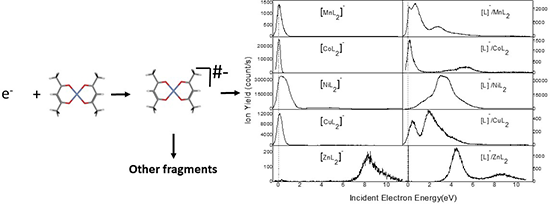
- trapped into a usually unfilled molecular valence orbital (i.e., shape resonance) [20]. Such a process usually arises typically at electron energies below 4 eV. The molecular orbitals into which the excess electron may be trapped are reported in [15][16][17][18][19] for the investigated organometallic
- . However, for molecules that contain metal atoms, this energy can be as low as 1.3–1.4 eV [17]. The formation of the [ML2]− anion via the core-excited resonance occurs in NiL2 and ZnL2 at around 5 and 8 eV, respectively (Figure 1). Such “high”-energy resonances are unusual; however, they have been observed
- 7.0% of the TNI decomposition. As the resonance energy provides information on the electron capture process, the branching ratio provides information on the dynamics of the decay channels of the TNI. Conclusion The interaction of low-energy electrons with metal(II) bis(acetylacetonate) complexes


Green SPIONs as a novel highly selective treatment for leishmaniasis: an in vitro study against Leishmania amazonensis intracellular amastigotes
Beilstein J. Nanotechnol. 2023, 14, 893–903, doi:10.3762/bjnano.14.73
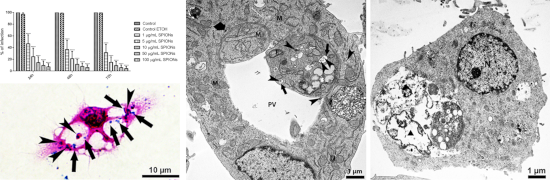
- , the ability for magnetic manipulation, the possibility of being used in magnetic resonance imaging, and the ability to generate controlled heat non-invasively when exposed to an alternating magnetic field [7][8]. In 2019, our group published an article describing a low-cost green synthesis of SPIONs


N-Heterocyclic carbene-based gold etchants
Beilstein J. Nanotechnol. 2023, 14, 865–871, doi:10.3762/bjnano.14.71
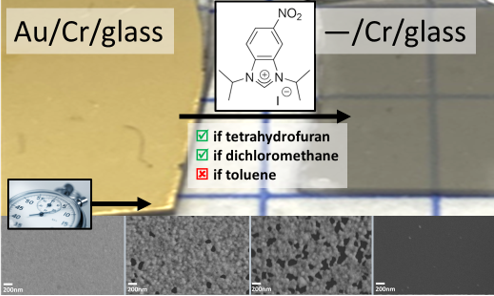
- resonance in solution-phase samples [15][18][19][20][21][22]. In these works, the NHC monolayer films were formed using several different approaches and preparations [16]. Indeed, a recent feature article highlights four methods to prepare NHC films [16]. For example, Crudden and co-workers have presented



Silver-based SERS substrates fabricated using a 3D printed microfluidic device
Beilstein J. Nanotechnol. 2023, 14, 793–803, doi:10.3762/bjnano.14.65
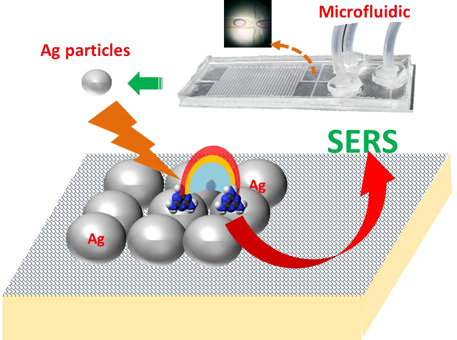
- , resulting in Ag nanoparticles of uniform shape and size. The study investigates the effects of various synthesis conditions on the size distribution, dispersity, and localized surface plasmon resonance wavelength of the Ag nanoparticles. To create the SERS substrate, the as-synthesized Ag nanoparticles were
- 1974 [5]. Electromagnetic and chemical mechanisms are attributed to the SERS enhancement. In electromagnetic theory, the excitation of metal particles through light leads to localized surface plasmon resonance due to the collective oscillation of free electrons in the confined space of the metal
- catalytic chemistry, where they have been used to develop localized surface plasmon resonance (LSPR) and SERS substrates [8]. For example, Ag NPs yield a strong SERS effect at relatively low cost. However, an issue often encountered in synthetic approaches is the non-uniformity of the Ag NPs. Homogeneous Ag

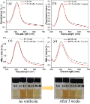


Silver nanoparticles loaded on lactose/alginate: in situ synthesis, catalytic degradation, and pH-dependent antibacterial activity
Beilstein J. Nanotechnol. 2023, 14, 781–792, doi:10.3762/bjnano.14.64
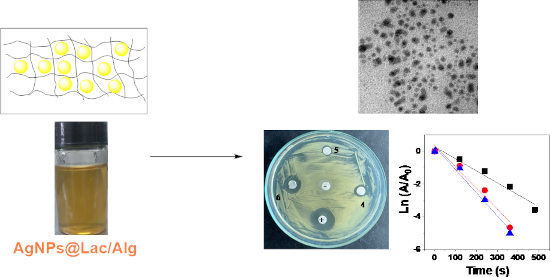
- . Subsequently, AgNPs@Lac/Alg was characterized using various analytical techniques and applied for the catalytic degradation of contaminants and in bacterial activity assays. Absorption spectra were analyzed to monitor changes in physicochemical properties at the maximum peak region of surface plasmon resonance


Cross-sectional Kelvin probe force microscopy on III–V epitaxial multilayer stacks: challenges and perspectives
Beilstein J. Nanotechnol. 2023, 14, 725–737, doi:10.3762/bjnano.14.59
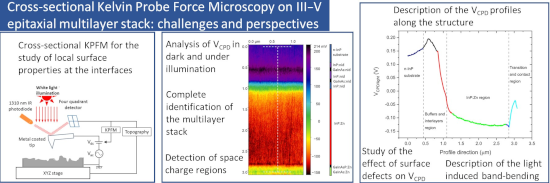
- (radius < 25 nm) with a conductive Pt/Ir coating at a resonance frequency of 75 kHz were used. During KPFM measurements under ambient conditions, tip contamination is likely to occur because of pollutants that may be present on the sample surface causing a variation of ϕtip [18]. Hence, ϕtip was evaluated
- + dc potential is applied, the KPFM tip scans across a surface. The ac signal is sinusoidal with a frequency that equals the mechanical resonance of the cantilever. The four-quadrant detector gives feedback in order to minimize cantilever oscillation modifying the dc signal providing the sample surface


Investigations on the optical forces from three mainstream optical resonances in all-dielectric nanostructure arrays
Beilstein J. Nanotechnol. 2023, 14, 674–682, doi:10.3762/bjnano.14.53
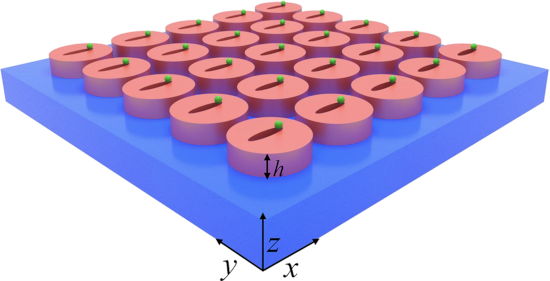
- supported, which are verified by the multipole decomposition analysis of the scattering power spectrum. Our numerical results show that the quasi-BIC resonance can produce a larger optical gradient force, which is about three orders of magnitude higher than those generated from the other two resonances. The
- large contrast in the optical forces generated with these resonances is attributed to a higher electromagnetic field enhancement provided by the quasi-BIC. These results suggest that the quasi-BIC resonance is preferred when one employs all-dielectric nanostructure arrays for the trapping and
- continuum (BIC)) which are current in focus nanophotonics research topics, all-dielectric nanostructures have proved themselves to be a good platform for light–matter interactions and an advantageous alternative to their plasmonic counterparts. A TD resonance is produced by the flow of electric currents on


Metal-organic framework-based nanomaterials as opto-electrochemical sensors for the detection of antibiotics and hormones: A review
Beilstein J. Nanotechnol. 2023, 14, 631–673, doi:10.3762/bjnano.14.52
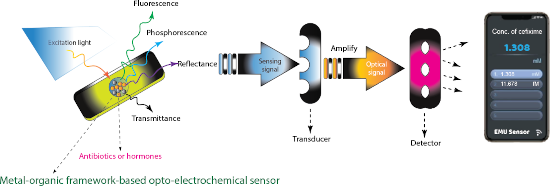
- ). Biorecognition elements and signal transducers (chemiluminescence, interferometry, surface plasmon resonance, luminescence, colourimetry, or surface-enhanced Raman spectroscopy), are the key components of an optical sensor. Analyte concentration, existence, and other relevant physical attributes are determined
- resonance, this review will exclusively concentrate on the luminescence (particularly fluorescence) sensing mechanism. The basis for optical sensing is the luminescence mechanism, which is the spontaneous emission in the optical range of ultraviolet, visible, or infrared light by a substance without being
- ] constructed a fluorescent aptasensor to detect the hormone 17-estradiol in urine, water, and milk samples. They were able to detect at a limit of 0.35 nM and determined that the detection process relied on turn-on Förster resonance energy transfer. The principles of fluorescence quenching (“turn-off”) [37][38


SERS performance of GaN/Ag substrates fabricated by Ag coating of GaN platforms
Beilstein J. Nanotechnol. 2023, 14, 552–564, doi:10.3762/bjnano.14.46
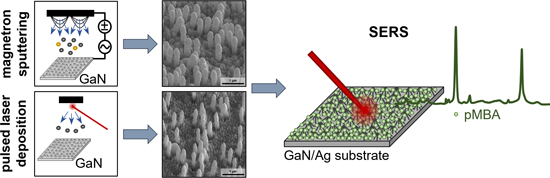
- substrates show a strong absorption of light in the visible range, which is related to the phenomenon of surface plasmon resonance (SPR). The strongly nanoscale-rough surface causes a significant extension of the spectral range of SPR in comparison to thin silver layers. Based on the comparison of the light


Observation of multiple bulk bound states in the continuum modes in a photonic crystal cavity
Beilstein J. Nanotechnol. 2023, 14, 544–551, doi:10.3762/bjnano.14.45
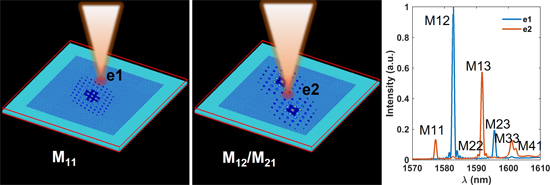
- in the continuum (BICs) in photonic crystals gives rise to the realization of resonances with high quality factors for lasing and nonlinear applications. For BIC cavities in finite-size photonic crystals, the bulk resonance band turns into discrete modes with different mode profiles and radiation
- simulation and experiment. After exciting the BIC cavity at different positions, different resonance peaks are observed. The physical origin of the dependence between the resonance peak and the illuminating position is explained by analyzing the mode profile distribution and further verified by numerical
- cavity. To further verify the multiple modes in the designed cavity, a series of samples is fabricated and tested. Multiple resonances could be observed by translating the excitation spot on the device. Finally, the physical origin of the dependence between the spectral resonance and the illumination


A mid-infrared focusing grating coupler with a single circular arc element based on germanium on silicon
Beilstein J. Nanotechnol. 2023, 14, 478–484, doi:10.3762/bjnano.14.38
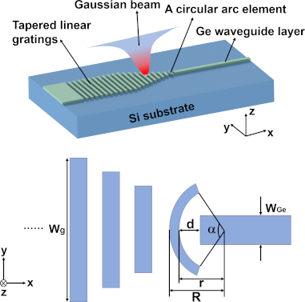
- resonance platform will further contribute to the field of biomedical sensors. We also studied the sensing performance of our proposed MIR FGC when it worked as a sensor rather than a coupler, as shown in Figure 6. When RI increases from 1 to 1.04, the peak of coupling efficiency shows a redshift from


Conjugated photothermal materials and structure design for solar steam generation
Beilstein J. Nanotechnol. 2023, 14, 454–466, doi:10.3762/bjnano.14.36
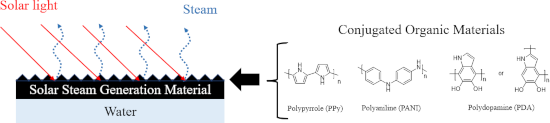
- . The free electrons of metallic nanomaterials absorb light. This is followed by specific oscillations that give the photothermal effect. This effect originates from the surface plasmon resonance (SPR) of electrons. The SPR-based thermal energy is then transferred to lattice phonons (Figure 3a). In


Molecular nanoarchitectonics: unification of nanotechnology and molecular/materials science
Beilstein J. Nanotechnol. 2023, 14, 434–453, doi:10.3762/bjnano.14.35
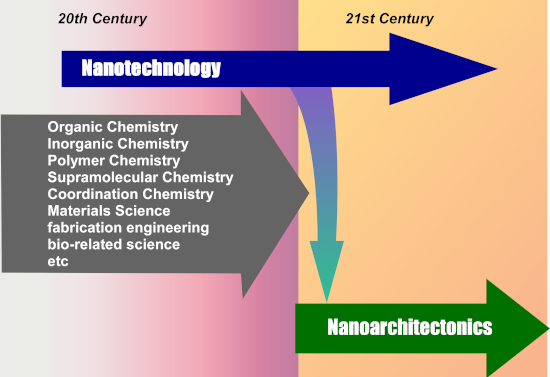
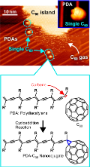
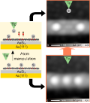
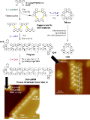
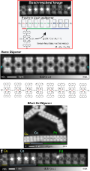
- tip was brought close enough to obtain a single-atom conductance gap, it was retracted and silicon atoms were removed. A perpendicular magnetic field was applied to explore physical phenomena such as Kondo resonance. The nanoarchitectonics of magnetic topological states due to spin polarization in





Plasmonic nanotechnology for photothermal applications – an evaluation
Beilstein J. Nanotechnol. 2023, 14, 380–419, doi:10.3762/bjnano.14.33
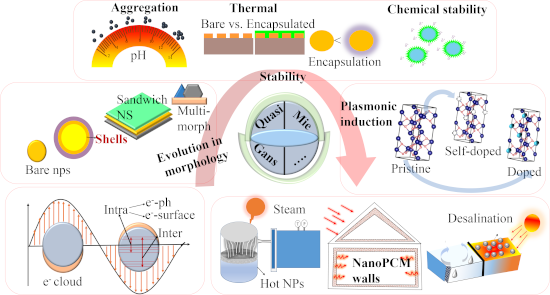
- A. R. Indhu L. Keerthana Gnanaprakash Dharmalingam Plasmonic Nanomaterials Laboratory, PSG Institute of Advanced Studies, Coimbatore-641004, India 10.3762/bjnano.14.33 Abstract The application of plasmonic nanoparticles is motivated by the phenomenon of surface plasmon resonance. Owing to the
- pondered on in the final section of the article, taking into account the specific requirements from different applications. Keywords: nanoparticle heating; phonons; photothermal; plasmonic; stability; surface plasmon resonance; Review 1 Introduction With an ever-increasing demand for energy and the
- phenomenon of surface plasmon resonance results from the interaction between electromagnetic radiation and typically high-valence materials, leading to oscillations of the free electrons in it. The decay of these collective oscillations into heat is the plasmonic photothermal (PPT) effect. The absorption