


Search results
Search for "surface morphology" in Full Text gives 273 result(s) in Beilstein Journal of Nanotechnology. Showing first 200.
CuInSe2 quantum dots grown by molecular beam epitaxy on amorphous SiO2 surfaces
Beilstein J. Nanotechnol. 2019, 10, 1103–1111, doi:10.3762/bjnano.10.110
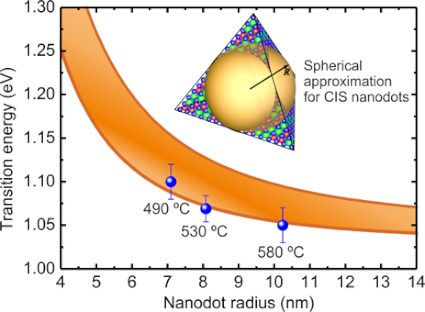
- this work we present samples prepared at substrate temperatures of 490, 530, and 580 °C; they will be referred to by their growth temperature. Characterization The surface morphology was determined by scanning electron microscopy (SEM) in a FEI Quanta 650 FEG SEM microscope. Scanning transmission


Concurrent nanoscale surface etching and SnO2 loading of carbon fibers for vanadium ion redox enhancement
Beilstein J. Nanotechnol. 2019, 10, 985–992, doi:10.3762/bjnano.10.99
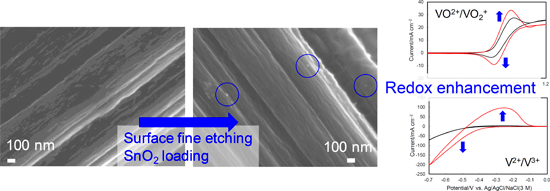
- performed without CSnPc for comparison. The treatment conditions and the obtained samples are summarized in Table 1. Surface morphology The FESEM images of TGP, TGP-CSnPc, and TGP-CSnPc-550Air are shown in Figure 1 and Figure S1 (Supporting Information File 1). The surface morphology of the carbon fiber



In situ AFM visualization of Li–O2 battery discharge products during redox cycling in an atmospherically controlled sample cell
Beilstein J. Nanotechnol. 2019, 10, 930–940, doi:10.3762/bjnano.10.94
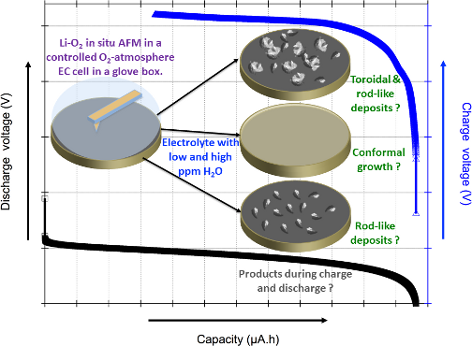
- surface morphology over long scanning periods, we employed a spiral image collection scheme, which was designed to minimize the effect of scanning on the structures generated during the Li/O2 electrochemistry (Figure 1). The spiral scheme was composed of nine images of 3 × 3 μm each, collected from center


Novel reversibly switchable wettability of superhydrophobic–superhydrophilic surfaces induced by charge injection and heating
Beilstein J. Nanotechnol. 2019, 10, 840–847, doi:10.3762/bjnano.10.84
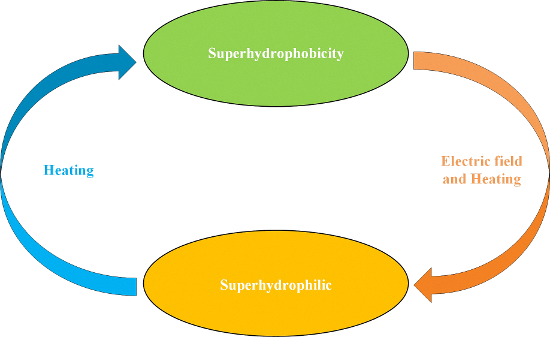
- (compared to Figure 2b). Therefore, we conclude that the change in coating wettability was not induced by the surface morphology. To establish the reason for the wettability change, Kelvin probe force microscopy was used to detect the surface potential of the electrode contact area and the electrode non


An efficient electrode material for high performance solid-state hybrid supercapacitors based on a Cu/CuO/porous carbon nanofiber/TiO2 hybrid composite
Beilstein J. Nanotechnol. 2019, 10, 781–793, doi:10.3762/bjnano.10.78
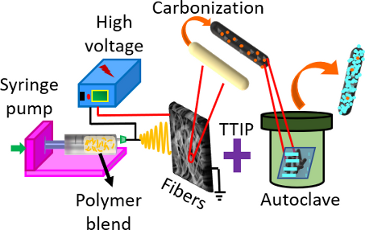
- formation of the composite from as-spun fiber during different steps of the synthesis is shown in Figure 1. Physical characterization The surface morphology and elemental composition of the samples was investigated with an Inspect F50 field emission scanning electron microscope (FESEM) operating at 20 kV


Features and advantages of flexible silicon nanowires for SERS applications
Beilstein J. Nanotechnol. 2019, 10, 725–734, doi:10.3762/bjnano.10.72
- fabrication temperature and metal-plating duration significantly influence the flexibility of the SiNWs and, consequently, determine the SERS enhancement. Second, it is demonstrated how the immersion in a liquid followed by drying results in the formation of SiNWs bundles influencing the surface morphology
- thickness of the SiNWs [34]. Geometry, density and the changes in surface morphology of the SiNWs influence the variations in SERS intensity. The second observation can be explained in two ways. Firstly, 4-MPBA interacts with water; and secondly, EtOH or H2O capillary forces influence the surface morphology
- . The first image shows the dry sample while the second and the third image show the same sample after immersion in ethanol and water. From these Figures, it can be concluded that the liquid immersion strongly influences the surface morphology of the SiNWs. Figure S10 in Supporting Information File 1


Self-assembly and wetting properties of gold nanorod–CTAB molecules on HOPG
Beilstein J. Nanotechnol. 2019, 10, 696–705, doi:10.3762/bjnano.10.69
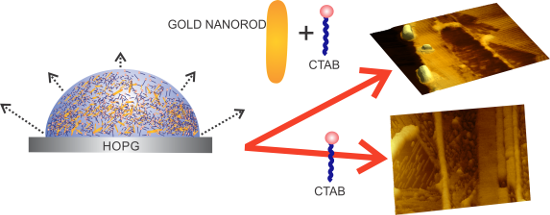
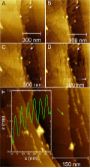
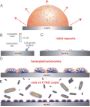
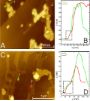
- . As indicated, the CTAB stripes seem to disappear with time in the regions where the surface morphology is probed using AFM. From all these images, however, we cannot conclusively determine the origin of the removal rate of the stripes. Zooming out does not reveal molecules piling up at the edges of


Commercial polycarbonate track-etched membranes as substrates for low-cost optical sensors
Beilstein J. Nanotechnol. 2019, 10, 677–683, doi:10.3762/bjnano.10.67
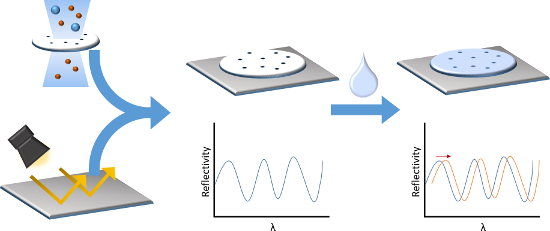
- and reagents were purchased from Sigma-Aldrich (St. Louis, MO, USA), unless otherwise noted. Firstly, the surface morphology of Whatman® 800307 PCTE membranes (19 mm diameter with pores of 30 nm diameter, 11 µm thickness and a refractive index of 1.5551 at 2400 nm (obtained using the dispersion


Ultrasonication-assisted synthesis of CsPbBr3 and Cs4PbBr6 perovskite nanocrystals and their reversible transformation
Beilstein J. Nanotechnol. 2019, 10, 666–676, doi:10.3762/bjnano.10.66
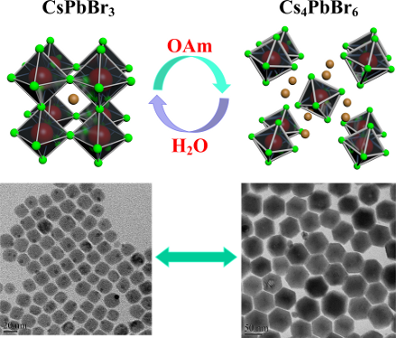
- 50–250 μL of water was added to 5.0 mL of the pre-synthesized Cs4PbBr6 PNCs solution and shaken slightly, which is a modification of the work reported by Wu and co-workers [20]. Characterizations The crystal surface morphology of the PNCs was characterized by transmission electron microscopy (TEM
- source (λ = 0.15418 nm) at a counting rate of 2° per minute in the scanning angle (2θ) range from 5° to 50°. The surface morphology of Cs4PbBr6 PNCs was characterized by using a field-emission scanning electron microscope (SEM, Merlin). The UV–vis absorption spectra of the samples were measured using a



Topochemical engineering of composite hybrid fibers using layered double hydroxides and abietic acid
Beilstein J. Nanotechnol. 2019, 10, 589–605, doi:10.3762/bjnano.10.60
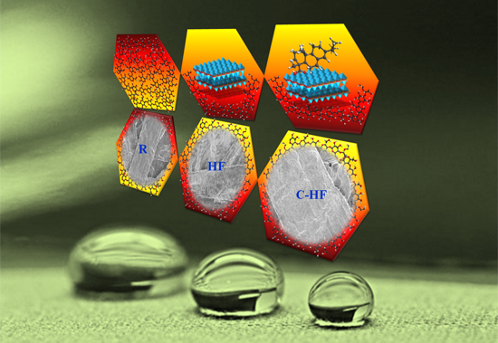
- LDH-hybridized fibers (HF). The results revealed a variety of correlations between materials and their properties due to characteristic surface morphology, functional groups, hydrogen bonding and natural co-materials such as lignin and hemicelluloses. Attractive and repulsive van der Waals forces




Nanocomposite–parylene C thin films with high dielectric constant and low losses for future organic electronic devices
Beilstein J. Nanotechnol. 2019, 10, 428–441, doi:10.3762/bjnano.10.42
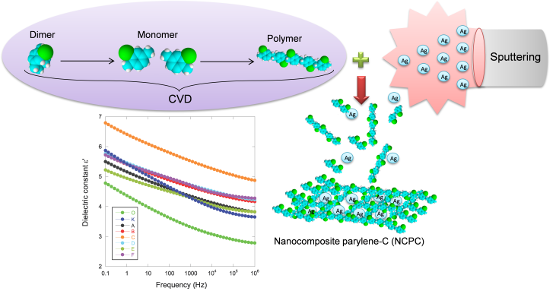
- to probe deeper the film structure. The surface morphology was analyzed using a non-contact mode AFM model C-21 (Danish Micro Engineering), mounting a DualScope Probe Scanner 95-50. Capacitance areas were defined in the top NCPC resulting in square 2 × 2 mm2 contacts. In order to assure a homogeneous




Integration of LaMnO3+δ films on platinized silicon substrates for resistive switching applications by PI-MOCVD
Beilstein J. Nanotechnol. 2019, 10, 389–398, doi:10.3762/bjnano.10.38
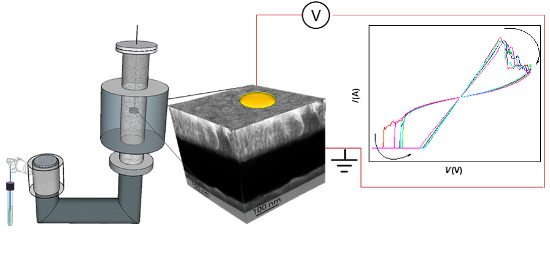
- ). Structural and electrical characterization Scanning electron microscopy (SEM) was performed in a Quanta250 environmental SEM FEG from FEI, and SEM FEG ZEISS GeminiSEM 500 to study the surface morphology and determine the LMO thickness using the cross section of the films. The cationic film composition was




A Ni(OH)2 nanopetals network for high-performance supercapacitors synthesized by immersing Ni nanofoam in water
Beilstein J. Nanotechnol. 2019, 10, 281–293, doi:10.3762/bjnano.10.27
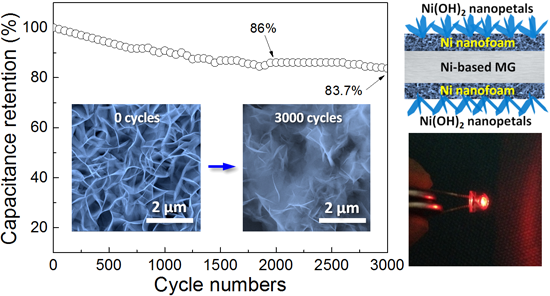
- , Bruker D8) with Cu Kα radiation. Chemical composition and valence state of the products were studied using X-ray photoelectron spectroscopy (XPS, Thermo Fisher Scientific). The surface morphology of the samples was characterized using a scanning electron microscope (SEM, Nova nanoSEM 450) equipped with




Site-specific growth of oriented ZnO nanocrystal arrays
Beilstein J. Nanotechnol. 2019, 10, 274–280, doi:10.3762/bjnano.10.26
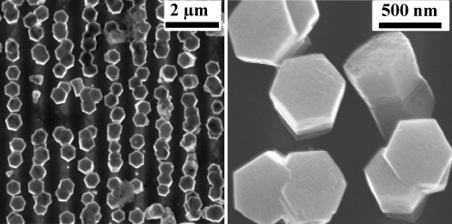
- detector in scanning line mode. The surface morphology of the prepared samples was investigated by using a field emission scanning electron microscopy (FESEM) using a Zeiss Supra 40 device. A JEOL 2200FS transmission electron microscope (TEM) was used to investigate the crystallinity of the NCs. Results


Relation between thickness, crystallite size and magnetoresistance of nanostructured La1−xSrxMnyO3±δ films for magnetic field sensors
Beilstein J. Nanotechnol. 2019, 10, 256–261, doi:10.3762/bjnano.10.24
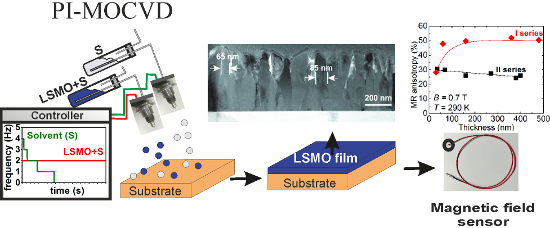
- electron microscopy (TEM) analysis (Figure 1a,b) shows the column-like growth with larger dimensions and more dense, close packing of the crystallites for the II series. Film composition, structure and surface morphology Figure 2a–c presents scanning electron microscopy (SEM) images of the films with


Raman study of flash-lamp annealed aqueous Cu2ZnSnS4 nanocrystals
Beilstein J. Nanotechnol. 2019, 10, 222–227, doi:10.3762/bjnano.10.20
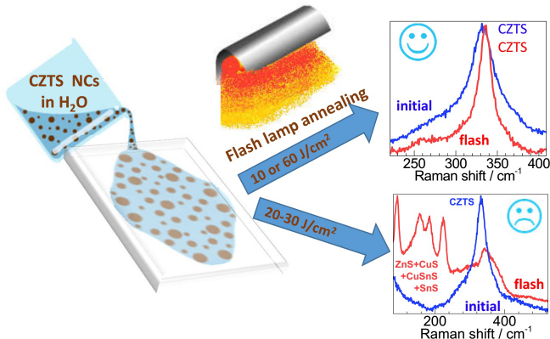
- –15 J/cm2, and above 15 J/cm2 the difference between the annealing atmospheres was observed only in a slightly different surface morphology for ink1-derived films. At 5–10 J/cm2, crystallization of the initial NC film occurred, as can be inferred from a shift of the main Raman peak towards higher


Uniform Sb2S3 optical coatings by chemical spray method
Beilstein J. Nanotechnol. 2019, 10, 198–210, doi:10.3762/bjnano.10.18
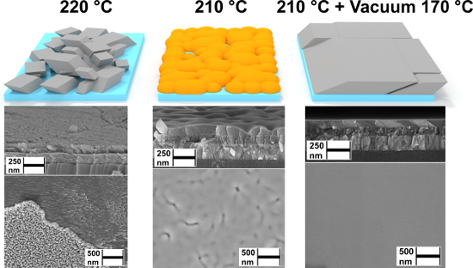
- substrate (lower left, Figure 3E). Increasing the deposition temperature from 210 to 220 °C significantly transforms the surface morphology in Sb/S 1:3 layers, as instead of the planar grains (3-210-As-dep., Figure 3G,H) domains of elongated rod-shaped grains (length ≈ 100 nm) appear either upright or
- in size. These agglomerates, consisting of smaller grains separated by ridges, resemble the surface morphology of 300 nm thick polycrystalline Sb2S3 films grown via thermal evaporation and annealed for 10 min at 300 °C in N2 [35], and that of metal halide perovskites obtained by Volmer–Weber growth




Sputtering of silicon nanopowders by an argon cluster ion beam
Beilstein J. Nanotechnol. 2019, 10, 135–143, doi:10.3762/bjnano.10.13
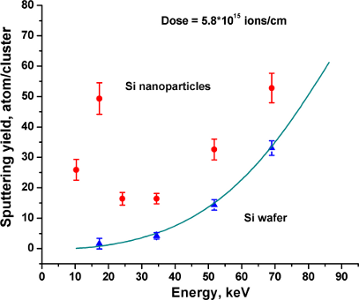
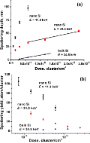
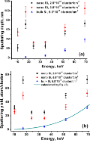
- surface morphology, with preferable erosion of hills as compared with valleys [6], which also results in the smoothing of the surface [7]. Sputtering by an argon cluster beam has been studied for many pure metals (Cu, Ag, Au, W, Pt, Ni) and their alloys, semiconductors (Si and SiC), and insulators (SiO2





A novel polyhedral oligomeric silsesquioxane-modified layered double hydroxide: preparation, characterization and properties
Beilstein J. Nanotechnol. 2018, 9, 3053–3068, doi:10.3762/bjnano.9.284
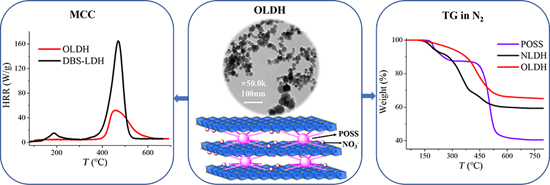
- dimensions of NLDH are roughly in accordance with the results obtained from TEM. However, as the thickness of the platinum coating layer is about 15 nm, close to the size of OLDH primary particles, the surface morphology of OLDH is not easily verified and seems to remind of stacked nuggets. Elemental







Co-intercalated layered double hydroxides as thermal and photo-oxidation stabilizers for polypropylene
Beilstein J. Nanotechnol. 2018, 9, 2980–2988, doi:10.3762/bjnano.9.277
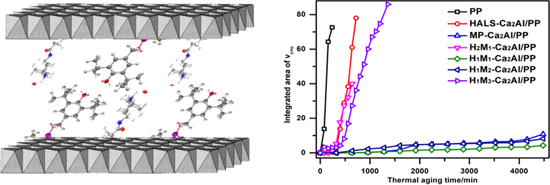
- visible-light transmission. Figure 7c,d displays the surface morphology and element distribution of H1M1-Ca2Al/PP composites from SEM and element mapping. Consistent with PP free of filler, a spherical structure is observed for Ca2Al/PP composites and Al (left) and Ca (right) elements are homogenously


Controlling surface morphology and sensitivity of granular and porous silver films for surface-enhanced Raman scattering, SERS
Beilstein J. Nanotechnol. 2018, 9, 2813–2831, doi:10.3762/bjnano.9.263
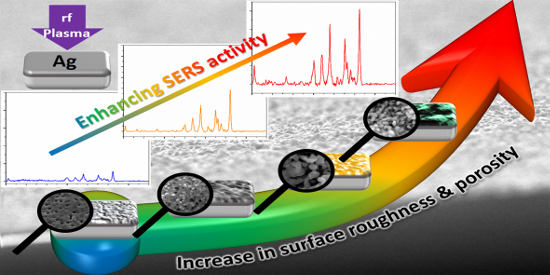
- plasmas on the surface morphology of thin silver films. It was found that different surface structures and different degrees of surface roughness could be obtained by a systematic variation of the plasma type and condition as well as plasma power and treatment time. The differently roughened silver
- plasma. Other samples treated with hydrogen plasma using different plasma gas flow conditions and plasma power show the ability of this process for tuning the surface morphology and roughness further (Figure S3, Supporting Information File 1). Formation of nitrogen plasma treated silver films Treatment





Biomimetic surface structures in steel fabricated with femtosecond laser pulses: influence of laser rescanning on morphology and wettability
Beilstein J. Nanotechnol. 2018, 9, 2802–2812, doi:10.3762/bjnano.9.262
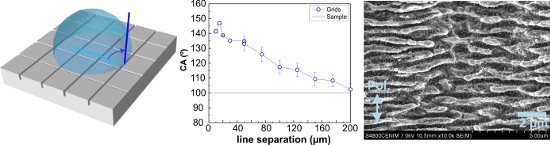
- surface morphology. We present experimental results of complex self-organized structures produced in commercial steel that resemble the morphology of the skin of certain reptiles and insects, which are of great interest due to their exceptional fluid transport and friction reduction properties. Surface



Variation of the photoluminescence spectrum of InAs/GaAs heterostructures grown by ion-beam deposition
Beilstein J. Nanotechnol. 2018, 9, 2794–2801, doi:10.3762/bjnano.9.261
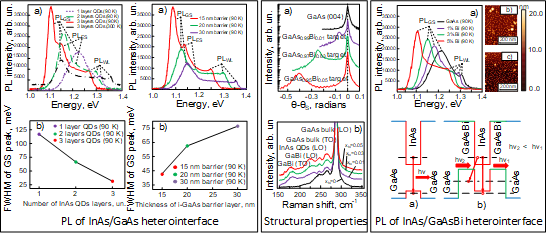
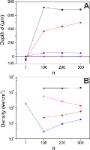
- monochromator entrance slit from the reflected harmonics of the exciting laser radiation was carried out by means a Y-1.4 optical filter (light yellow color). A study of the surface morphology of the grown heterostructures was carried out using a Solver HV atomic force microscope. The structural properties of
- the red-shift of 23 meV obtained in [56] at room temperature. The reason for this is that InAs QDs in our work have larger sizes and lower density. The results of the investigation of the surface morphology with InAs QDs in samples with GaAs and GaAs1−xBix potential barriers are shown in Figure 4b,c


Low cost tips for tip-enhanced Raman spectroscopy fabricated by two-step electrochemical etching of 125 µm diameter gold wires
Beilstein J. Nanotechnol. 2018, 9, 2718–2729, doi:10.3762/bjnano.9.254
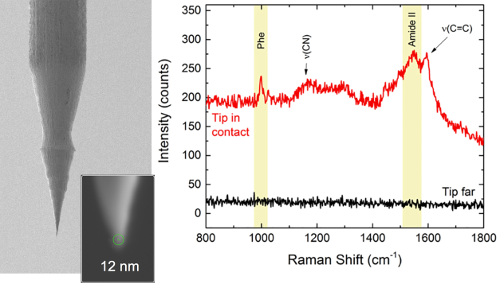
- require sample pretreatment, (ii) it can be operated in ambient conditions, liquid environments, as well as in UHV and at low temperatures, (iii) it combines the surface morphology information with the chemical information, (iv) optical excitation powers are virtually unlimited, and (v) it can attain


Optimization of Mo/Cr bilayer back contacts for thin-film solar cells
Beilstein J. Nanotechnol. 2018, 9, 2700–2707, doi:10.3762/bjnano.9.252
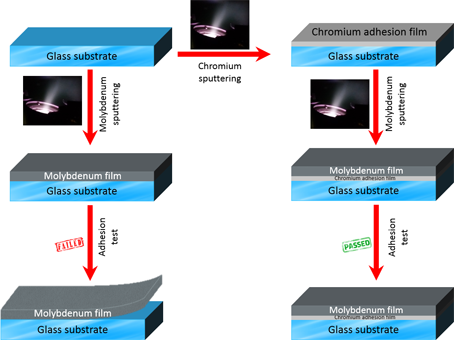
- chromium (Cr) adhesion layer is used as the back contact for a copper zinc tin sulfide (CZTS) thin-film solar cell on a SLG substrate. DC magnetron sputtering is used for deposition of Mo and Cr films. The conductivity of Mo/Cr bilayer films, their microstructure and surface morphology are studied at
- with those films deposited at 5 mTorr. Blister-shaped features appeared on the samples deposited at 5 mTorr possibly due to micro-bubbles of Ar gas trapped in the Mo layer [34]. The appearance of blisters on the sample surface decreases when the sputtering power is increased. The differences in surface
- morphology are also confirmed by AFM images (see Supporting Information File 1). AFM roughness analysis (Figure 4) reveals an increase of the surface roughness with the sputtering power. Surface roughness is also directly proportional to the working pressure. The average roughness increases from 1.61 to 3.06





