Search results
Search for "Au" in Full Text gives 746 result(s) in Beilstein Journal of Nanotechnology. Showing first 200.
Recent trends in Bi-based nanomaterials: challenges, fabrication, enhancement techniques, and environmental applications
Beilstein J. Nanotechnol. 2022, 13, 1316–1336, doi:10.3762/bjnano.13.109
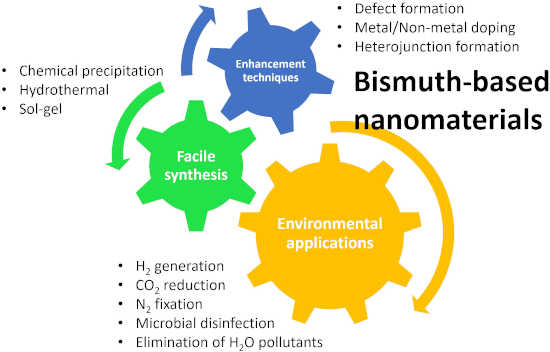
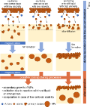
- semiconductor surface. SPRs can potentially boost quantum yield by broadening the spectral response range of semiconductors. Fe, Au, Co, Ag, Ni, Bi, Al, and other metallic elements are often deposited and doped. For example, a nanostructure composite based on plasmonic Ag metal nanoclusters and monoclinic BiVO4
- , efficiently contributing to enhanced photocatalytic performance. Another research group reported that photoreduction and hydrothermal techniques were used to successfully synthesize a new 2D/2D Bi2MoO6/g-C3N4 S-scheme composite including Au as a co-catalyzer [107]. Bi2MoO6/g-C3N4/Au had a photocatalytic
- activity in RhB degradation that was 9.7 times and 13.1 times higher than that of Bi2MoO6 and g-C3N4, respectively. In the Bi2MoO6/g-C3N4/Au system, the higher photocatalytic activity can be attributed to the abundance of active sites and the enhanced separation efficiency of photogenerated carriers. The




Enhanced electronic transport properties of Te roll-like nanostructures
Beilstein J. Nanotechnol. 2022, 13, 1284–1291, doi:10.3762/bjnano.13.106
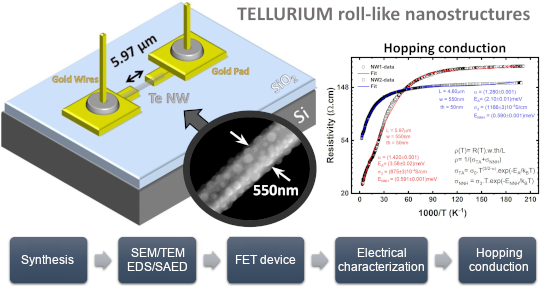
- writing optical lithography on 1 × 1 cm2 degenerate Si(100) substrates covered by a 300 nm thick high-quality SiO2 layer. A Cr(10 nm)/Au(100 nm) bilayer was thermally evaporated on the sample to produce good ohmic contacts (see Supporting Information File 1). This procedure follows the methodology




Studies of probe tip materials by atomic force microscopy: a review
Beilstein J. Nanotechnol. 2022, 13, 1256–1267, doi:10.3762/bjnano.13.104
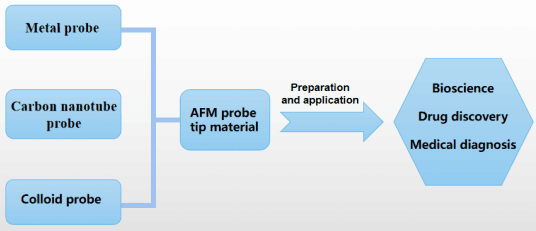
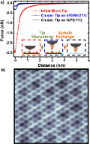
- attractive platform, offering more possibilities for sharpening tips in a controlled manner. These metal clusters can be easily generated with various metals (e.g., Ir, Au, Ni, Co, Pb, or Sn), allowing the generation of nano-tips with different functionalities. The good point is that these clusters were
- -cdse/ZnS quantum dots. This type of tracer has a significant signal amplification effect. Vesicle composite probes were generated using aptamer-labeled SSB/L-QD and nanogold (Au-Apt). Since Au-aptas receptors burst the signal of SSB/L-QD, this type of probe cannot fluoresce "off". To solve this problem
Design of surface nanostructures for chirality sensing based on quartz crystal microbalance
Beilstein J. Nanotechnol. 2022, 13, 1201–1219, doi:10.3762/bjnano.13.100
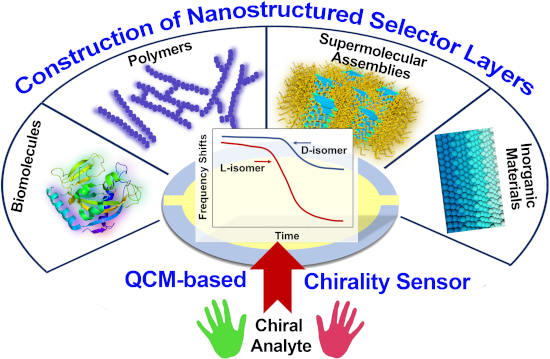
- MA (Figure 1) [26]. The immobilization of ʟ-Phe on QCM sensors was through a two-step assembling process. A 4-aminothiophenol (ATP) monolayer was firstly adsorbed on the QCM surface by chemical Au–S bonding. Then, 4-NH2-ʟ-Phe was bound by a diazo-coupling reaction to form a monolayer with ʟ-Phe. The
- [{Zn2((+)cam)2(dabco)}n] oriented in the (110) or (001) direction, were obtained and showed significant enantioselectivity. Duan et al. fabricated 3D chiral porous Zn-organic frameworks (Zn2(bdc)(ʟ-lac)(dmf)-DMF) (ʟ-lac = ʟ-lactic acid, bdc = 4-benzenedicarboxylic acid) on the Au electrode surface of
- deposited CuO film onto highly symmetrical Au(111) surfaces was shown to have mirror-symmetric chirality. The enantiospecificity of the films was studied using QCM and evaluated according to the changes by the selective oxidation of chiral tartaric acid. The films etched in ʟ-(+)-tartaric acid were shown to


A cantilever-based, ultrahigh-vacuum, low-temperature scanning probe instrument for multidimensional scanning force microscopy
Beilstein J. Nanotechnol. 2022, 13, 1120–1140, doi:10.3762/bjnano.13.95
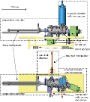
- nitrogen (LN2) container and an additional heat shield, which is passively cooled by the evaporating He gases of the LHe tank (Figure 2a). The microscope is surrounded by two shields (a Au-plated oxygen-free high thermal conductivity (OFHC) copper LHe shield and an Al LN2 shield) of which there is an inner
- system is depicted in Figure 8a. A similar interferometer system has been developed by Miyahara and co-workers [53]. To perform the interferometry, we use a Sony SLD201 V3 laser diode with a wavelength of 785 nm coupled via an optical insulator to a Au-coated monomode optical fiber having a core diameter
- . Clearly, the deflection sensor noise does no longer limit the minimally detectable force derivative for bandwidths up to and beyond 1 kHz. Such high measurement bandwidths can for example, be used to measure with high speed a large-scale image showing atomic steps of the Au(111) surface with thin NaCl







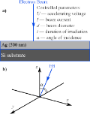
Effects of focused electron beam irradiation parameters on direct nanostructure formation on Ag surfaces
Beilstein J. Nanotechnol. 2022, 13, 1004–1010, doi:10.3762/bjnano.13.87
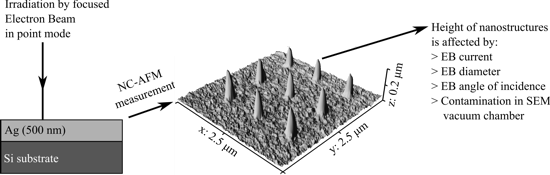
- . However, some studies suggest that this process may not always be so simple. Ueda and Yoshimura [27] reported the fabrication of free-standing nanowires on various metal surfaces (Al, Ag, Au, Cu, Pt, Ta, Ti, and W) via EBID with pump oil (hydrocarbons) as a precursor. It was observed that the substrate




DNA aptamer selection and construction of an aptasensor based on graphene FETs for Zika virus NS1 protein detection
Beilstein J. Nanotechnol. 2022, 13, 873–881, doi:10.3762/bjnano.13.78
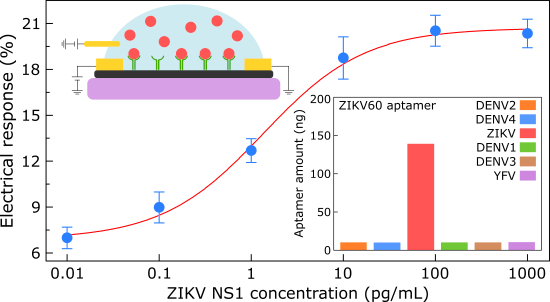
- previously described by our group elsewhere [24]. The dimensions of the sensing region (100 μm × 100 μm) were defined by O2 plasma etching. The source and drain electrodes were fabricated by electron-beam evaporation of 2 nm/100 nm of Ti/Au, and we covered the metal contacts with a 10 μm thick passivation



Temperature and chemical effects on the interfacial energy between a Ga–In–Sn eutectic liquid alloy and nanoscopic asperities
Beilstein J. Nanotechnol. 2022, 13, 817–827, doi:10.3762/bjnano.13.72
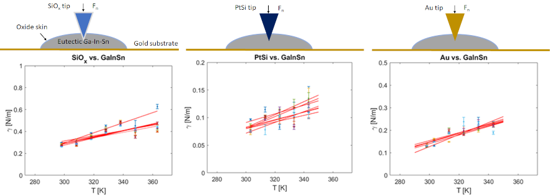
- interfacial energies between a eutectic Ga–In–Sn liquid alloy and single nanoscopic asperities of SiOx, Au, and PtSi have been determined in the temperature range between room temperature and 90 °C by atomic force spectroscopy. For all asperities used here, we find that the interfacial tension of the eutectic
- spectroscopy to determine the interfacial energy between eutectic Ga–In–Sn liquid alloy and single nanoscopic asperities of SiOx, Au, and PtSi in the temperature range between room temperature and 90 °C. The choice of the asperity materials was motivated by their relevance in electronics and micro
- (PtSi-cont, manufactured from NanoSensors, Switzerland), SiOx cantilevers (Contsc, manufactured from NanoSensors, Switzerland), and Au-coated Si cantilevers (ContscAu, manufactured from NanoSensors, Switzerland). Before measurements, the sensitivity of the AFM photodiode was calibrated by recording a



Optimizing PMMA solutions to suppress contamination in the transfer of CVD graphene for batch production
Beilstein J. Nanotechnol. 2022, 13, 796–806, doi:10.3762/bjnano.13.70
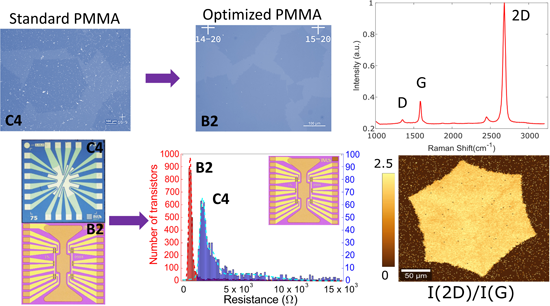
- : C4 PMMA; Wafer 2: B2 PMMA). Both wafers started with the patterning of Cr/Au contacts (deposited by magnetron sputtering) using direct-write laser lithography and ion milling. The fabrication of the two wafers followed slightly different steps, as described below. Wafer 1: A stopping layer (Al2O3
- the Au layer as protection. After that, the two wafers followed different fabrication processes. A residue-free transfer process was used, using a sacrificial metallic mask (TiWN, AlSiCu, TiWN) patterned by lift-off to protect the entire wafer except for the areas around the channel, source, and drain




Detection and imaging of Hg(II) in vivo using glutathione-functionalized gold nanoparticles
Beilstein J. Nanotechnol. 2022, 13, 549–559, doi:10.3762/bjnano.13.46
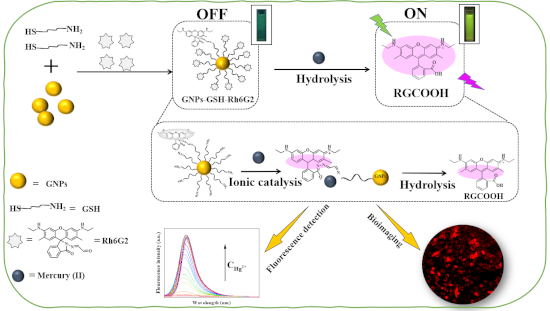
- through the interaction between covalent and non-covalent bonds due to the smaller steric hindrance [23][24][25]. The surface of GNPs can be modified by Au–S bonds with molecules containing thiol groups, such as cysteine [26][27][28], 3-mercaptopropionic acid [29], and homocysteine [30]. Also, they easily
- at 1650 and 1400 cm−1 were found in the IR spectrum of GNPs-GSH, which was attributed to the stretching vibration and the asymmetric stretching vibration of –COO−. The stretching vibration of S–H disappeared in GNPs-GSH due to the formation of Au–S bonds [47]. These results proved that GSH was


Zinc oxide nanostructures for fluorescence and Raman signal enhancement: a review
Beilstein J. Nanotechnol. 2022, 13, 472–490, doi:10.3762/bjnano.13.40
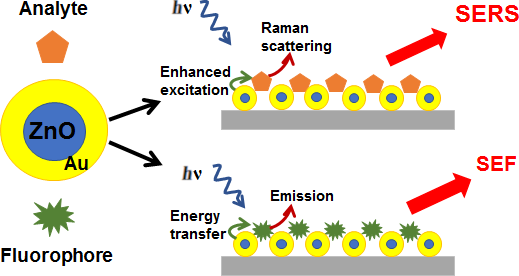
- combined with metal nanoparticles, resulting in enhanced photoactivity of Au-decorated ZnO nanocrystals for photoelectrochemical water splitting [9], improved photodetection performance of ZnO nanofibers decorated with Au NPs [10], or enhanced photocatalytic activity of ZnO doped with Au NPs [11]. Moreover
- , enhanced Raman scattering for periodic ZnO-elevated Au dimer nanostructures [12] and enhanced fluorescence emission signals from Al-doped ZnO films [13] were obtained. The development of hybrid nanocomposites based on ZnO and noble metals for fluorescence and Raman signal enhancement has recently attracted
- allowed for the decoration of vertically aligned cone-shaped ZnO nanorods with Ag NPs on their sides and their top ends [35], and magnetron sputtering [7][36]. Electron beam evaporation of, for example, a 30 nm Au layer on ZnO nanopillars arrays [37] or of ZnO-elevated Au dimer nanostructures (Figure 2a,b




Investigation of electron-induced cross-linking of self-assembled monolayers by scanning tunneling microscopy
Beilstein J. Nanotechnol. 2022, 13, 462–471, doi:10.3762/bjnano.13.39
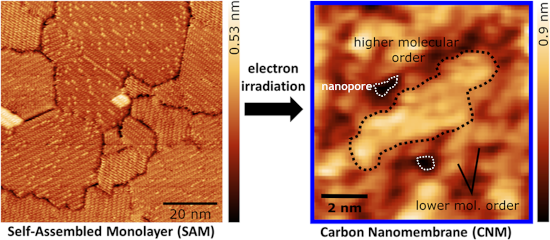
- Abstract Ultrathin membranes with subnanometer pores enabling molecular size-selective separation were generated on surfaces via electron-induced cross-linking of self-assembled monolayers (SAMs). The evolution of p-terphenylthiol (TPT) SAMs on Au(111) surfaces into cross-linked monolayers was observed
- structural changes is still lacking. In this work, we investigated the structural changes occurring upon irradiation of SAMs of p-terphenylthiol (TPT) on Au(111) using a combination of scanning electron microscopy (SEM) and scanning tunneling microscopy in ultrahigh vacuum (UHV) at room temperature. To study
- general concept of self-assembly allows for the preparation of SAMs from the liquid or gas phase. Highly ordered TPT SAMs spontaneously form on Au(111) due to the formation of bonds between sulfur and gold atoms, which is accompanied by van der Waals interactions between the aromatic rings. The TPT SAMs


Electrostatic pull-in application in flexible devices: A review
Beilstein J. Nanotechnol. 2022, 13, 390–403, doi:10.3762/bjnano.13.32
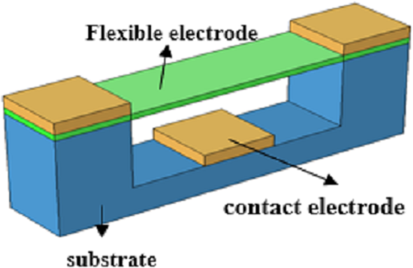
- common electrode materials are GR-Au and GR-GR. By adjusting the size of the graphene sheets, the number of layers and the gap, different pull-in voltages can be obtained. GR-Au: A typical GR-Au structure is shown in Figure 3a. As the structure requires a sacrificial layer to keep GR suspended and avoid
- et al. [33] used molecular dynamics to compare the adsorption energies of GR-Au and GR-GR structures. The GR-GR structure has a higher adsorption energy of 307 mJ/m2. Mizuta et al. [7][35] assumed that the use of a GR-GR electrode structure could avoid the uncontrollable microscale interactions
- redrawn from [11]. Structures of CNT switches. (a) Bridge model, (b) cantilever model, and (c) vertical model. Figure 2a,b,c were redrawn from [21], [22], and [18], respectively. Structures of GR NEM switches. (a) GR-Au model and (b) GR-GR model. Figure 3a,b were redrawn from [7][29], respectively. All


Investigation of a memory effect in a Au/(Ti–Cu)Ox-gradient thin film/TiAlV structure
Beilstein J. Nanotechnol. 2022, 13, 265–273, doi:10.3762/bjnano.13.21
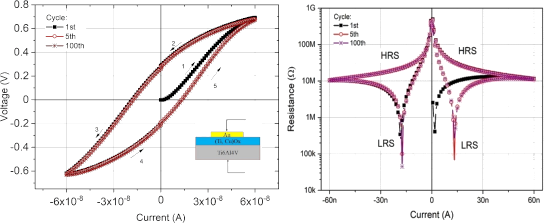
- analysis of resistive switching properties observed in a Au/(Ti–Cu)Ox/TiAlV structure with a gradient distribution of Cu and Ti along the (Ti–Cu)Ox thin film thickness. Thin films were prepared via multisource reactive magnetron co-sputtering. The programmed profile of the pulse width modulation
- coefficient during sputtering of the Cu target allowed us to obtain the designed gradient U-shape profile of the Cu concentration in the deposited thin film. Electrical measurements of the Au/(Ti–Cu)Ox/TiAlV structure showed the presence of nonpinched hysteresis loops in the voltage–current plane testifying a
- resistive switching behavior. Results of optical, X-ray, and ultraviolet photoelectron spectroscopy measurements allowed us to elaborate the scheme of the bandgap alignment of the prepared thin films with respect to the Au and TiAlV electrical contacts. Detailed structure and elemental profile



Relationship between corrosion and nanoscale friction on a metallic glass
Beilstein J. Nanotechnol. 2022, 13, 236–244, doi:10.3762/bjnano.13.18
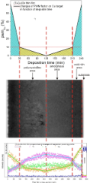
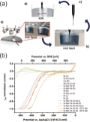
- ribbon, a miniature Ag/AgCl electrode, and a Au wire served as working, reference, and counter electrode, respectively. The polarization test was a separate experiment and subsequent friction experiments were performed using new samples, which were immersed without applying a potential. (a


Impact of device design on the electronic and optoelectronic properties of integrated Ru-terpyridine complexes
Beilstein J. Nanotechnol. 2022, 13, 219–229, doi:10.3762/bjnano.13.16
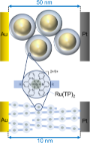
- -SAc)–AuNPs, with an average size of 12.9 ± 1.6 nm (Supporting Information File 1, Figure S2). Ru(TP)2-complex wire growth For the tracking of the Ru(TP)2-complex wire formation via XPS measurements mica substrates of 8 × 4 mm2 covered by a 200 nm Au(111) layer were used. In a first step the substrates
- , and Au 4f were recorded. Data analysis was conducted using CasaXPS (Casa Software, Ltd.) after subtraction of a Shirley background. The binding energies (BE) were calibrated to give the signal for metallic gold Au 4f7/2 at 84.0 eV. Scanning electron microscopy (SEM) was performed with a Hitachi SU8000
- lithography according to the recently developed routine that enables the assembly of the molecular building blocks on solid surfaces at room-temperature under mild conditions and, thus, represents an on-chip preparation method [19]. In parallel, the first steps of the consecutive wire growth on Au substrates


Low-energy electron interaction and focused electron beam-induced deposition of molybdenum hexacarbonyl (Mo(CO)6)
Beilstein J. Nanotechnol. 2022, 13, 182–191, doi:10.3762/bjnano.13.13
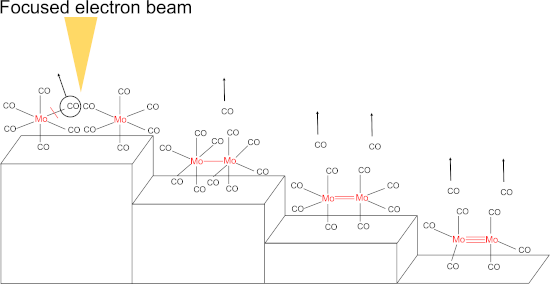
- ®. Energy-dispersive X-ray analyses was done with a ZEISS Crossbeam system with an integrated Oxford EDX detector. Deposits for EDX analysis were prepared on a 100 nm thick polycrystalline gold substrate on a 4 inch silicon wafer, purchased from Georg Albert PVD. The Au-based substrate was chosen because of
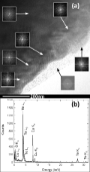
- with an integrated Oxford EDX detector. The elemental composition of Mo(CO)6 FEBID deposits obtained by EDX measurement is shown in Table 3. Figure 4 shows the corresponding EDX spectrum along with the SEM image of the deposit. Traces of the EDX signal are discernable from the Au and Si components of


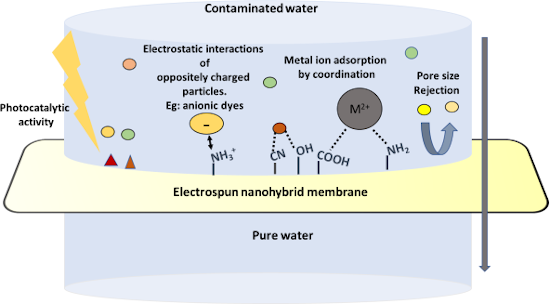
A comprehensive review on electrospun nanohybrid membranes for wastewater treatment
Beilstein J. Nanotechnol. 2022, 13, 137–159, doi:10.3762/bjnano.13.10




Tin dioxide nanomaterial-based photocatalysts for nitrogen oxide oxidation: a review
Beilstein J. Nanotechnol. 2022, 13, 96–113, doi:10.3762/bjnano.13.7
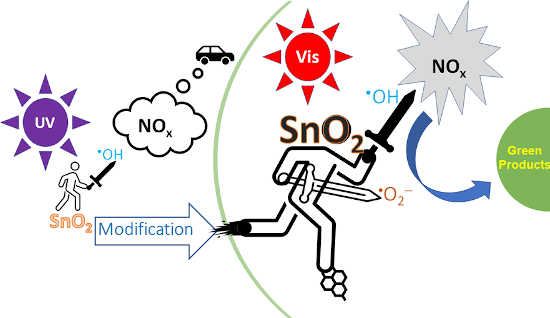
- photocatalysts and a cost-effective, environmentally benign way through heat treatment in different atmospheres [39]. Combining noble metals with SnO2, such as in Au/SnO2 [78] or Pd/SnO2 [79], is an advanced approach yielding an effective performance for gas sensing. However, There is only one report by Bui et


Sputtering onto liquids: a critical review
Beilstein J. Nanotechnol. 2022, 13, 10–53, doi:10.3762/bjnano.13.2

- [11]. Afterward, Torimoto et al. used a sputter coater for the synthesis of small gold (Au) NPs by sputtering an Au target onto a thin layer of an ionic liquid (IL) [12]. This paper [12] published in 2006 initiated a series of similar works in several labs which, were focused on the deposition of
- gas phase and subsequent film growth can be computed using, for example, SIMTRA [37] and NASCAM [38] codes, respectively. The evolution of the sputtering yield calculated by SRIM for carbon (C), titanium (Ti), and Au targets as a function of the kinetic energy of the bombarding argon ions is presented
- publications, besides Ti+, molecules such as TiN+ or TiO+ and TiO2+ but also reactive gas molecules, atoms, and ions (N2, N2+, N+) were detected in the gas phase. Interestingly, AuO molecules were observed when sputtering Au in an Ar/O2 mixture [65], highlighting the rich gas-phase chemistry of sputtering






Topographic signatures and manipulations of Fe atoms, CO molecules and NaCl islands on superconducting Pb(111)
Beilstein J. Nanotechnol. 2022, 13, 1–9, doi:10.3762/bjnano.13.1
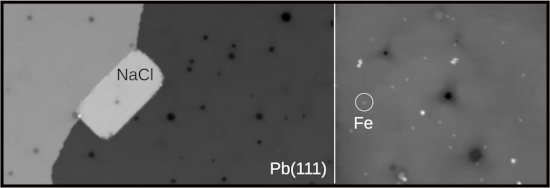
- minute. This leads to a surface coverage of about 0.1–0.3 monolayers, as we readily observed on noble metals such as Cu, Ag or Au [45][46]. Iron adatoms were evaporated in the microscope head on the substrate at a temperature below 15 K. NaCl was evaporated from a quartz crucible on samples kept at room


Design aspects of Bi2Sr2CaCu2O8+δ THz sources: optimization of thermal and radiative properties
Beilstein J. Nanotechnol. 2021, 12, 1392–1403, doi:10.3762/bjnano.12.103
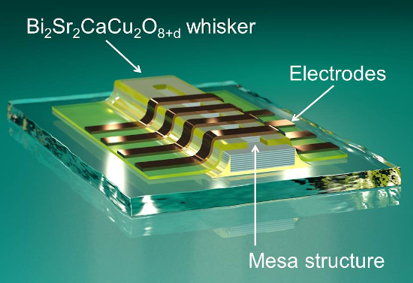
- on a flat portion of Bi-2212 surface, followed by argon-ion etching of the unprotected parts of Au and Bi-2212, the deposition of insulating SiO2 or CaF2 layers and a lift-off of the photoresist at the line. The depth of Bi-2212 etching at this stage (dm ≈ 200–400 nm) defines the height of mesas and
- the number of IJJ in the device, N = dm/s, where s ≃ 1.5 nm is the interlayer spacing between double CuO2 layers in Bi-2212. After that a top Ti/Au layer with a total thickness of approx. 200 nm is deposited. Finally, several electrodes, crossing the line in a perpendicular direction, are made by
- = 85.2 K. Figure 3f–h show simulations for the same device in exchange 4He gas. Clearly, it helps to cool down the device, although self-heating still remains substantial, Tmax = 56.7 K. Figure 4 shows simulations for the whisker-based device with a top Au electrode. Outside the whisker the electrode is


Chemical vapor deposition of germanium-rich CrGex nanowires
Beilstein J. Nanotechnol. 2021, 12, 1365–1371, doi:10.3762/bjnano.12.100
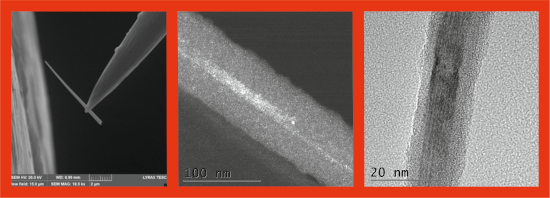
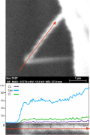
- (SAED) patterns were evaluated using the ProcessDiffraction software package. The samples were prepared on holey carbon-coated Au/Mo grids by brushing the grids against the substrate containing the deposit. Electrical measurements of the NWs were carried out in the SEM apparatus (Tescan Lyra 3) equipped



Plasmon-enhanced photoluminescence from TiO2 and TeO2 thin films doped by Eu3+ for optoelectronic applications
Beilstein J. Nanotechnol. 2021, 12, 1271–1278, doi:10.3762/bjnano.12.94
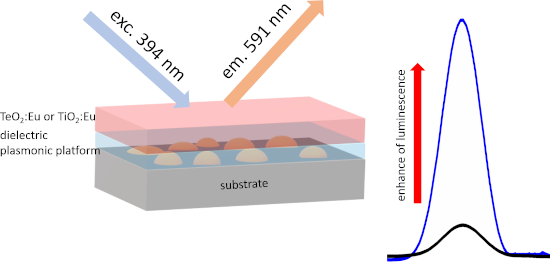
- ethanol and dried at 50 °C. Plasmonic nanostructures were prepared by thermal dewetting of gold thin films. Thin Au films with a thickness of 2.8 nm were deposited using a tabletop DC magnetron sputtering coater (EM SCD 500, Leica) in pure Ar plasma (argon, Air Products, 99.999%) at a pressure of 0.2 Pa
- . The round Au target with 99.99% purity was sputtered by 30 W of incident power. The rate of Au layer deposition was about 4 Å/s. Thickness was controlled by a built-in quartz crystal microbalance. As prepared films were subsequently put in a hot furnace for the formation of nanostructures. Samples
- examined by SEM and TEM. The SEM image presented in Figure 2a shows a good uniformity of the prepared Au nanostructures. Nanoislands cover the whole substrate surface. Additionally, the HRTEM image of a cross section of a single nanoisland is shown in Figure 2b [25][26]. It can be seen, that the


Morphology-driven gas sensing by fabricated fractals: A review
Beilstein J. Nanotechnol. 2021, 12, 1187–1208, doi:10.3762/bjnano.12.88
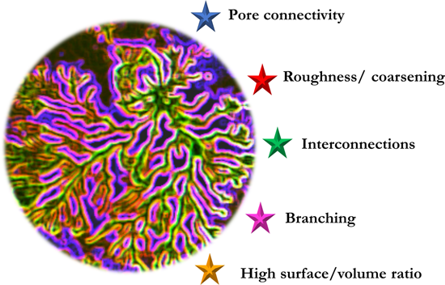
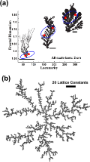
- plasmonic gold (Au) metasurface for sensing volatile organic compounds (VOCs) [49]. This modification enhanced the plasmonic field and local surface plasmonic resonance (LSPR). The influence of the gold nanodisk diameter and the average thickness of the TiO2 fractal on LSPR sensing of VOCs, specifically
- a higher probability of volatile gases condensing, and the enhancement of the electrodynamic field above the Au surface. These factors were vital only up to certain thickness above which it was believed that the volatile gases penetrate into the fractal volume followed by diffusion to active sensing
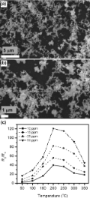
- temperature of 260 °C, while Figure 21l and Figure 21m show the response towards 50 ppm of N2H4 at 260 °C. Other oxide-based fractals In 2020, Tran-Phu et al. demonstrated the formation of three-dimensional fractals of Au–Bi2O3, having D ≈ 1.80, on a substrate by hot-aerosol synthesis [45]. The fabricated Au