


Search results
Search for "SiO2" in Full Text gives 488 result(s) in Beilstein Journal of Nanotechnology. Showing first 200.
Hexagonal boron nitride: a review of the emerging material platform for single-photon sources and the spin–photon interface
Beilstein J. Nanotechnol. 2020, 11, 740–769, doi:10.3762/bjnano.11.61
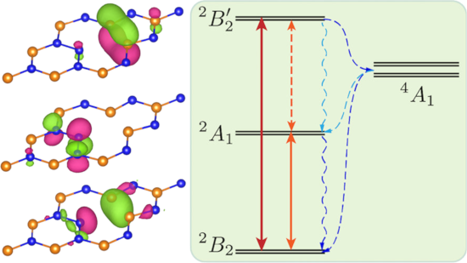
- plasma etching and subsequent annealing in Ar, yielding a considerable increase in the concentration of emitters in h-BN [122]; laser irradiation [123] even if the formation origin, in this case, is unclear; substrate strain-induced where a 20 nm-thick h-BN film grown via CVD is transferred into SiO2




A novel dry-blending method to reduce the coefficient of thermal expansion of polymer templates for OTFT electrodes
Beilstein J. Nanotechnol. 2020, 11, 671–677, doi:10.3762/bjnano.11.53
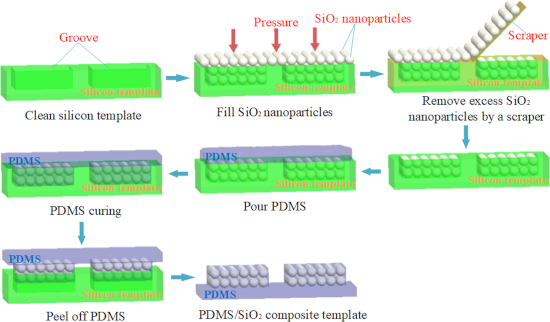
- thermal expansion (CTE) of the polymer template is much higher than the CTE of the dielectric layer. Here, a novel dry-blending method is described in which SiO2 nanoparticles are filled into a grooved silicon template, followed by permeation of polydimethylsiloxane (PDMS) into the SiO2 nanoparticle gaps
- . The SiO2 nanoparticles in the groove are extracted by curing and peeling off PDMS to prepare a PDMS/SiO2 composite template with a nanoparticle content of 83.8 wt %. The composite template has a CTE of 96 ppm/°C, which is a reduction by 69.23% compared with the original PDMS template. Finally, we
- achieved the alignment of OTFT electrodes using the composite template. Keywords: coefficient of thermal expansion; dry blending; organic thin-film transistors (OTFTs); OTFT electrodes; PDMS/SiO2 composite template; Introduction Organic thin-film transistors (OTFTs) provide a platform to construct next


Exfoliation in a low boiling point solvent and electrochemical applications of MoO3
Beilstein J. Nanotechnol. 2020, 11, 662–670, doi:10.3762/bjnano.11.52
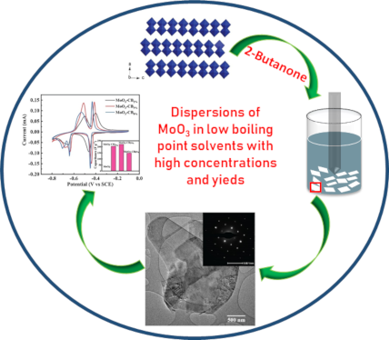
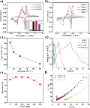
- (AFM; Agilent 5500). Samples for FESEM and AFM were prepared by dripping 10 µL of MoO3 dispersion (diluted 100 times) onto a Si/SiO2 (300 nm) substrate while samples for TEM were prepared by dripping 10 µL of the diluted dispersion on a 300 mesh lacey carbon grid. Raman spectra (Horiba LABRam HR) of

Multilayer capsules made of weak polyelectrolytes: a review on the preparation, functionalization and applications in drug delivery
Beilstein J. Nanotechnol. 2020, 11, 508–532, doi:10.3762/bjnano.11.41

- template removal, which also affected the shell structure limiting their biological applications [25]. The use of silicon oxide (SiO2) templates is quite common, however, dissolution using hazardous hydrofluoric acid (HF) limits its application. It is mostly used with strong PE systems but has also been
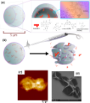
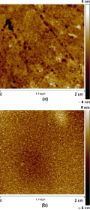
- extended to weak PE assemblies [26]. The dissolution of a SiO2 core in a poly(allylamine hydrochloride) (PAH)/poly(methacrylic acid) (PMA) assembly with ammonium fluoride (NH4F) at a suitable pH contributed to both multilayer stability and colloidal stability as shown in the AFM images in Figure 2a–d [24
- phenol formaldehyde resin (MPR) multilayered hollow nanocapsules were obtained using SiO2 as a sacrificial template [47]. Notably, the excess charges induced into the multilayer films by the deprotonation of carboxylic acid groups at pH > 5 played a key role in destabilizing the hydrogen bonded films [48



Evolution of Ag nanostructures created from thin films: UV–vis absorption and its theoretical predictions
Beilstein J. Nanotechnol. 2020, 11, 494–507, doi:10.3762/bjnano.11.40
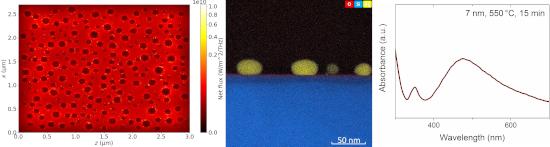
- keep this error reasonably small. Also, the thin SiO2 layer has been neglected, because it is thinner that the computational grid and cannot be correctly modelled. We have performed complementary short simulations with a very limited sample size and with a 2 nm grid, which showed that errors coming
- from the SiO2 layer do not exceed 2%. A light source of 460 nm wavelength has been used, propagating along the y axis direction. Two independent simulations were performed, one with a transverse-electric (TE) polarized beam and the second one with a transverse-magnetic (TM) polarized beam. These
- ), they consist of Ag. Detailed EDS analysis of a cross section of a nanoisland is presented in Figure 8c. As can be seen, a thin layer of natural SiO2, about 2 nm thick, is present on the silicon surface. Interestingly, there is no oxide layer around the Ag nanostructures. The quality of the




Formation of nanoripples on ZnO flat substrates and nanorods by gas cluster ion bombardment
Beilstein J. Nanotechnol. 2020, 11, 383–390, doi:10.3762/bjnano.11.29
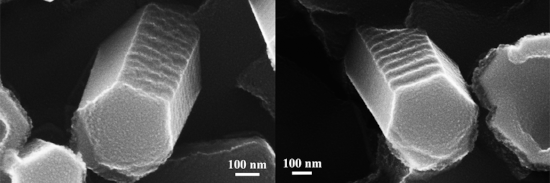
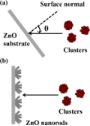
- substrates have been employed, such as Si wafers, bulk Au samples or SiO2 films. There are very few papers on the ripple formation on the surface of confined nanostructures both by monoatomic and cluster ion irradiation. Therefore, in this research we study features of nanoripple formation on the facets of
- developed and wavelength and height of the ripples calculated from the bottom drift line surface increase (Figure 4b and Table 1). This behavior is in agreement with data obtained for SiO2 films and gold surfaces bombarded with Ar clusters [19][22]. The process of ripple formation is triggered by the



An advanced structural characterization of templated meso-macroporous carbon monoliths by small- and wide-angle scattering techniques
Beilstein J. Nanotechnol. 2020, 11, 310–322, doi:10.3762/bjnano.11.23
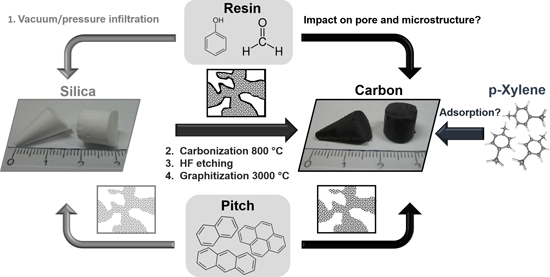
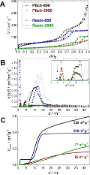
- , prepared by hard-templating of meso-macroporous SiO2 monoliths, to the corresponding nanoscale polyaromatic microstructure using two different carbon precursors wthat generally exhibit markedly different carbonization properties, i.e., a graphitizable pitch and a non-graphitizable resin. The micro- and
- meso-macroporous SiO2 monoliths, and to a linkage of these parameters to the corresponding nanoscale polyaromatic microstructure. Usually, temperature treatment at elevated temperatures needs to be applied to carbonize molecular organic substances, but the commonly applied temperatures of 800–3000 °C
- create meso- or macropores into the carbon system templating approaches have become a routine strategy. One prominent attempt is hard-templating based on silica monoliths with a bimodal pore size distribution (meso- and macropores) and a hierarchical pore network [35][36][37][38]. The SiO2 solid is




Nanosecond resistive switching in Ag/AgI/PtIr nanojunctions
Beilstein J. Nanotechnol. 2020, 11, 92–100, doi:10.3762/bjnano.11.9
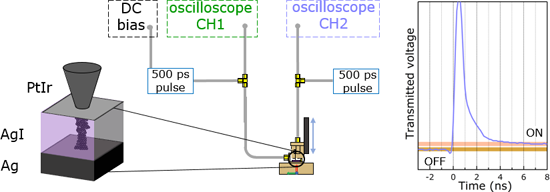
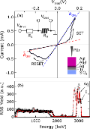
- following the method of Kumar and co-workers [36]. The Ag films were evaporated on standard Si/SiO2 wafers using a 12 nm thick Ti sticking layer. The structural characterization of the thin film samples was carried out by Rutherford backscattering spectrometry (RBS) using an ion beam of 3500 keV 4He
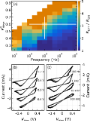
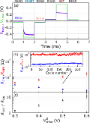
- structure (top to bottom) of 200 nm AgI, 22.5 nm Ag3I and 43 nm Ag after iodine exposure on the Ti/SiO2/Si substrate. Nanometer-scale Ag/AgI/PtIr nanojunctions were created by bringing the PtIr tip into direct contact with the thin-film surface while a constant bias voltage of 100 mV was applied on the


The effect of heat treatment on the morphology and mobility of Au nanoparticles
Beilstein J. Nanotechnol. 2020, 11, 61–67, doi:10.3762/bjnano.11.6
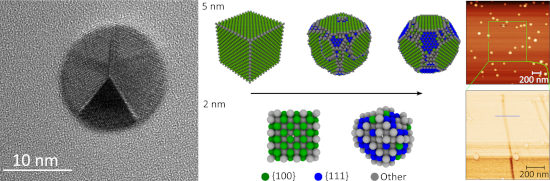
- particles became immovable again. This effect was attributed to the diffusion of Au into the Si substrate and to the growth of the SiO2 layer. Keywords: annealing; atomic force microscopy (AFM); Au nanoparticles; manipulation; melting; nanotribology; Introduction Gold is one of the most prominent
- transmission electron microscopy (TEM). Characterization The morphology of the NPs annealed at different temperatures was studied by TEM (ARM200, JEOL). A null ellipsometer (Multiskop, Optrel, Germany) equipped with a 532 nm Nd:YAG laser was used for measuring the thickness of the SiO2 layers. AFM setup The
- interstitial diffusion [27]. The process is highly temperature-dependent, and diffusion at 800 °C is four orders of magnitude faster than at 400 °C (see Table 7 in Fisher [28]). Another reason may be the temperature-sensitive growth of the SiO2 layer [29], which escalates rapidly above 600 °C, as can be seen


Label-free highly sensitive probe detection with novel hierarchical SERS substrates fabricated by nanoindentation and chemical reaction methods
Beilstein J. Nanotechnol. 2019, 10, 2483–2496, doi:10.3762/bjnano.10.239
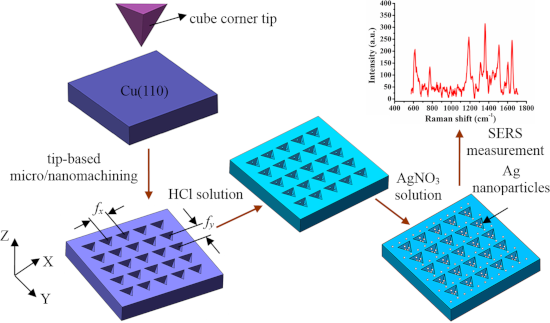
- detected using the AuNPs/PMMA film SERS substrates. Zhang et al. [12] fabricated core–shell structures comprised of SiO2 and gold with a sub-10 nm shell thickness by adding HAuCl4 and the reducing agent K2CO3 on the SiO2 surface and found that the SERS enhancement becomes weaker with increasing shell


Coating of upconversion nanoparticles with silica nanoshells of 5–250 nm thickness
Beilstein J. Nanotechnol. 2019, 10, 2410–2421, doi:10.3762/bjnano.10.231
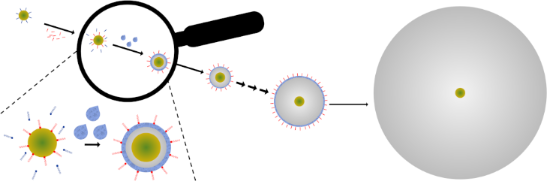
- of the UCNP@SiO2 core–shell particles was obtained from these STEM images, and the corresponding hydrodynamic diameters were measured by dynamic light scattering (DLS, see below in Table 1). Although large, core-free silica particles can easily be obtained by Stöber-like growth processes [28], and
- for the further steps of the silica shell growth is discussed. For a second silica shell with the thickness t2, the volume of TEOS (VT) was calculated for a given mass mUCNP of uncoated UCNP cores with diameter dU according to Equation 1 assuming 100% conversion of TEOS to SiO2 and the absence of any
- secondary nucleation: where t1 is the thickness of the first silica shell, ρS is the density of colloidal silica (2 g/cm3), ρU is the density of the UCNP cores (4.21 g/cm3), MT is the molar mass of TEOS (208.32 g/mol), MS is the molar mass of SiO2 (60.08 g/mol) and ρT is the density of TEOS (0.94 g/cm3


Liquid crystal tunable claddings for polymer integrated optical waveguides
Beilstein J. Nanotechnol. 2019, 10, 2163–2170, doi:10.3762/bjnano.10.209
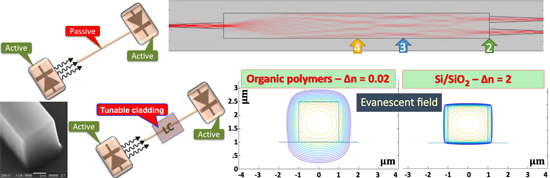
- integrating electronic and photonic components in the same circuit. The main drawback for silicon waveguides to become tunable devices is the big difference in refractive indices between the core (Si, n > 3.0) and the cladding (SiO2, n < 1.50). This difference confines the propagating wave inside the core
- coated with approx. 4µm SiO2 (n ≈ 1.470) to avoid light leakage through the silicon for its refractive index is higher than the indices of the polymer. The LC layer thickness was 6 µm, controlled using a frame of Mylar spacers between the chip and the glass cover. The inner glass plate surfaces were
- . The substrate is SiO2 on an Si wafer; the LC cladding is not deposited yet. Upper inset: MMI configured for a 100:0 coupling. Lower inset: outputs (about 95:5). An MMI with inorganic Si3N4 core and high-birefringence LC cladding does not show variations in characteristic length, unless the waveguide


Synthesis of highly active ETS-10-based titanosilicate for heterogeneously catalyzed transesterification of triglycerides
Beilstein J. Nanotechnol. 2019, 10, 2039–2061, doi:10.3762/bjnano.10.200
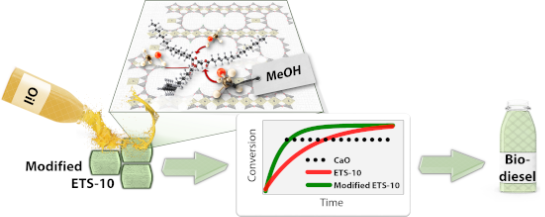
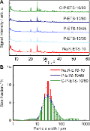
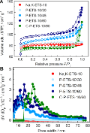
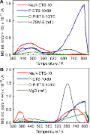
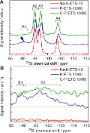
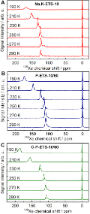
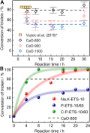
- of ETS-10, sodium silicate (Na2SiO3, 34.5–36.0 wt % SiO2, 17–19 wt % Na2O, donated by PQ corporation), titanium isopropoxide (TIP, 97 wt %, Sigma-Aldrich), hydrochloric acid (HCl, 35–37 wt %, VWR Chemicals), sodium chloride (high-purity grade, VWR Chemicals), and potassium fluoride (KF, ≥99 wt
- solution was further added into 87.5 mL of the titania/silica-containing solution. The resulting molar composition of the obtained 90 mL solution is the following SiO2/TiO2/HCl/Na2O/NaCl/KF/H2O = 5.56:1:1.94:2.64:3.22:0.09:216. The solution was then further aged for 16 h in a flask at room temperature for








Fabrication and characterization of Si1−xGex nanocrystals in as-grown and annealed structures: a comparative study
Beilstein J. Nanotechnol. 2019, 10, 1873–1882, doi:10.3762/bjnano.10.182
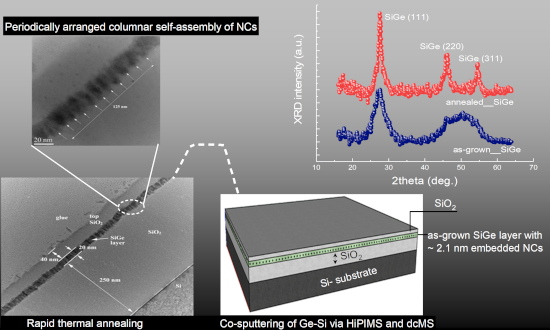
- , 050094 Bucharest, Romania 10.3762/bjnano.10.182 Abstract Multilayer structures comprising of SiO2/SiGe/SiO2 and containing SiGe nanoparticles were obtained by depositing SiO2 layers using reactive direct current magnetron sputtering (dcMS), whereas, Si and Ge were co-sputtered using dcMS and high-power
- consequential interface characteristics and its effect on the photocurrent spectra. Keywords: grazing incidence XRD (GIXRD); high-power impulse magnetron sputtering (HiPIMS); HRTEM; magnetron sputtering; photocurrent spectra; SiGe nanocrystals in SiO2/SiGe/SiO2 multilayers; STEM-HAADF; TEM; Introduction
- obtain NCs embedded in an oxide matrix is by thermal annealing of multilayer structures. Several oxide matrices have been studied already [12][13][14][15][16][17][18], of which SiO2 is the most extensively studied as it remains amorphous up to high temperatures and due to its compatibility with Si-based


Nanoarchitectonics meets cell surface engineering: shape recognition of human cells by halloysite-doped silica cell imprints
Beilstein J. Nanotechnol. 2019, 10, 1818–1825, doi:10.3762/bjnano.10.176
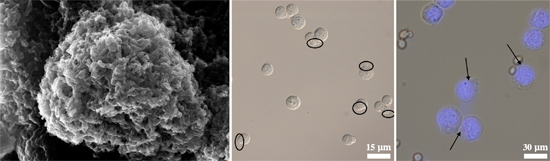
- of various functional composite materials [26]. The anisotropic shape (hollow tubules having lengths from 300 nm to 1–2 µm, 50–70 nm diameter, and 20 nm lumen) and surface chemistry (outer surface of SiO2, inner surface of Al2O3) make these nanotubes ideal carriers for novel catalysts, polymer
- were mixed with the cells in serum-free medium (1:50 v/v) for 10 min on a rotator. The cells@SiO2-HNTs were washed five times with Milli-Q water, and the sediment was dried for 12 h at 105 °C. Dried cells@-SiO2-HNTs were re-suspended in Milli-Q water and crushed using an ultrasonic bath for 6–8 min. To
- remove the cell debris from the silica-halloysite imprints the cells@-SiO2-HNTs fragments were centrifuged at 4500 rpm, the supernatant was removed, and 10 mL of a HNO3 and HCl mixture (3:1) was added to the precipitate. After 30 min the silica-halloysite imprints were separated, washed three times with


Synthesis of nickel/gallium nanoalloys using a dual-source approach in 1-alkyl-3-methylimidazole ionic liquids
Beilstein J. Nanotechnol. 2019, 10, 1754–1767, doi:10.3762/bjnano.10.171
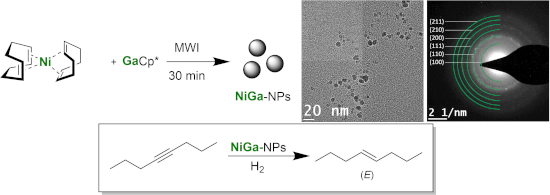
- ] derivates are equally known [66]. When metal nanoparticles like the Lindlar catalyst PdPb@CaCO3 are used, the formation of (Z)-alkenes [67][68][69][70][71] is favored. For the formation of (E)-alkenes the use of a tandem catalytic system Pd3Pb@SiO2 + RhSb@SiO2 [72] is needed. Catalytic semihydrogenation of




Remarkable electronic and optical anisotropy of layered 1T’-WTe2 2D materials
Beilstein J. Nanotechnol. 2019, 10, 1745–1753, doi:10.3762/bjnano.10.170
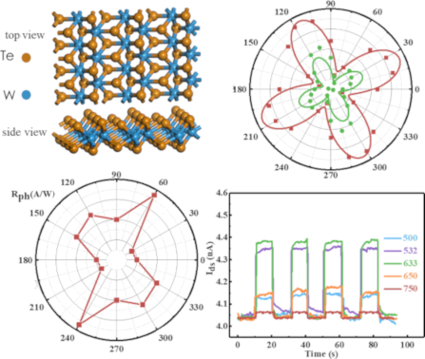
- following way: where R2 and R1 are the reflectance coefficients associated with the natural orthorhombic crystal. To characterize the optical anisotropy, a few layered 1T’-WTe2 flake was mechanically exfoliated and transferred onto a pre-cleaned Si/SiO2 wafer, and atomic force microscopy (AFM) was used to
- ’-WTe2 flake. In detail, first we mechanically exfoliated a few-layer hexagonal boron nitride (h-BN) flake onto a cleaned Si/SiO2 (400 μm/285 nm) substrate with pre-fabricated metal pads (20 nm Gr/180nm Au), then the same process was conducted to transfer a 1T’-WTe2 flake onto a h-BN film under an
- covered with 285 nm of SiO2 for Raman spectroscopy, ADRDM and electrical characterization. The substrate had pre-patterned alignment grids and 12 electrodes (20 nm Gr/180 nm Au). XPS analysis was performed on a VG Scientific ESCALAB 250 device. The TEM images and SAED patterns were performed with on a FEI


Materials nanoarchitectonics at two-dimensional liquid interfaces
Beilstein J. Nanotechnol. 2019, 10, 1559–1587, doi:10.3762/bjnano.10.153
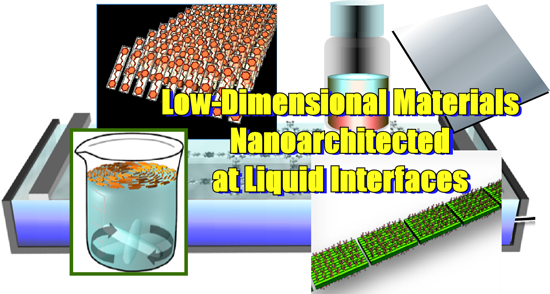
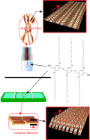
- [216]. The diameters of the used nanowires are less than 2 nm and their aspect ratios exceed 100. The synthesized nanowires are dispersible in organic solvents and can be fabricated in large-area aligned arrays at the air–water interface. The films were transferred onto Si/SiO2 substrates patterned













High-temperature resistive gas sensors based on ZnO/SiC nanocomposites
Beilstein J. Nanotechnol. 2019, 10, 1537–1547, doi:10.3762/bjnano.10.151
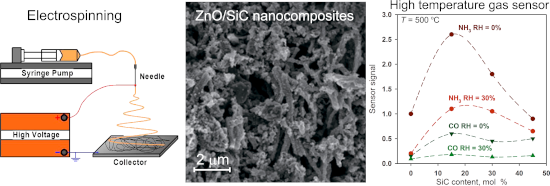
- −1 and 1067 cm−1, corresponding to the stretching vibrations of the Si–C and Si–O bonds, respectively [23]. This indicates the formation of an amorphous SiO2 shell on the surface of SiC nanoparticles, which does not appear on the diffraction patterns of the samples. In addition to these absorption



Development of a new hybrid approach combining AFM and SEM for the nanoparticle dimensional metrology
Beilstein J. Nanotechnol. 2019, 10, 1523–1536, doi:10.3762/bjnano.10.150
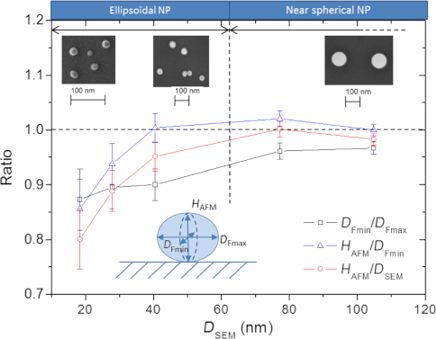
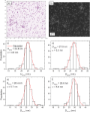
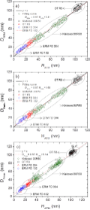
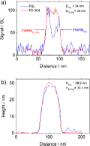
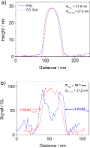
- population of spherical NPs is performed. We used silica (SiO2) nanoparticles that are supposed to have a spherical shape [13][14]. Indeed, the sphericity requires that the NP height is equal to the diameter measured in XY-plane (lateral diameters). In this manner, height measurements performed by AFM can be
- (a) DFmin, (b) DFmax on the same sets of PSL and SiO2 NPs. Profiles obtained by (a) SEM and (b) AFM, on a single NP of FD304 or PSL with the same diameter measured by SEM. Profiles obtained by (a) AFM and (b) SEM, on a single NP of FD304 or PSL with the same height measured by AFM. (a) Comparison of




Growth of lithium hydride thin films from solutions: Towards solution atomic layer deposition of lithiated films
Beilstein J. Nanotechnol. 2019, 10, 1443–1451, doi:10.3762/bjnano.10.142
- calibration routine and the internal Au, Ag and Cu standards supplied with the K-Alpha system. Argon etching was done with ion gun (1.4 µA of 2 keV Ar+ ions over 8 mm2). The samples indented to be used in XPS and Auger were coated with an additional layer of SiO2 inside of the deposition chamber. This


BiOCl/TiO2/diatomite composites with enhanced visible-light photocatalytic activity for the degradation of rhodamine B
Beilstein J. Nanotechnol. 2019, 10, 1412–1422, doi:10.3762/bjnano.10.139
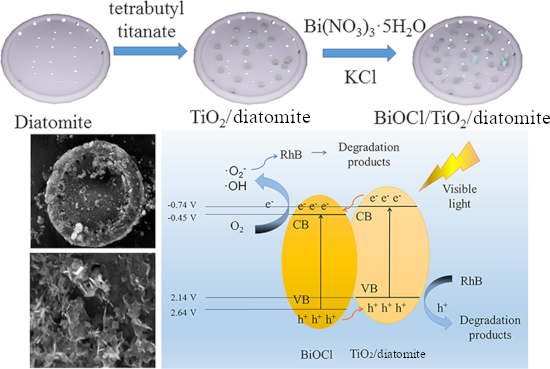
- at 530.05, 530.35, 532.36 and 533.14 eV, corresponding to [Bi2O2]2−, Ti–O–Ti, surface OH and Si–O–Si [29], respectively. This confirms that BiOCl, TiO2 and SiO2 exist on the surface of BTD. In addition, the two peaks at 458.25 and 464 eV in the Ti 2p spectrum (Figure 3f) belong to Ti 2p3/2 and Ti 2p1


Kelvin probe force microscopy of the nanoscale electrical surface potential barrier of metal/semiconductor interfaces in ambient atmosphere
Beilstein J. Nanotechnol. 2019, 10, 1401–1411, doi:10.3762/bjnano.10.138
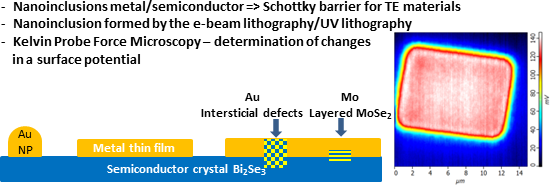
- the second resonance frequency of the AFM tip [35][36]. It also has to be noted that all measurements were carried out at room temperature. Photodiffusion of the metal into Bi2Se3 was enabled by means of a Ronchi ruling (non-transparent Cr lines on the SiO2 substrate) with a density of 2000 lines per
- nanometers for SiO2 on Si [51][52]). In our case it is increased by the electric field and good oxygen mobility in BiOx due to the formation of charged Bi vacancies [59][60]. This assumption is in good agreement with the observed increase of the cut-in potential barrier upon thinning of the Au layer (see


Porous N- and S-doped carbon–carbon composite electrodes by soft-templating for redox flow batteries
Beilstein J. Nanotechnol. 2019, 10, 1131–1139, doi:10.3762/bjnano.10.113
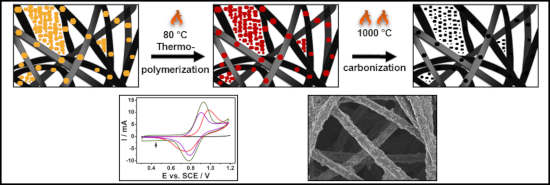
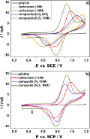
- electrocatalytic activity. A disadvantage of the hard-templating approach is the requirement of harsh conditions that are needed to remove, e.g., SiO2 spheres used as templates [20]. In this respect, the soft-templating approach is a good alternative. The procedure is facile, with just two steps needed, and it is



CuInSe2 quantum dots grown by molecular beam epitaxy on amorphous SiO2 surfaces
Beilstein J. Nanotechnol. 2019, 10, 1103–1111, doi:10.3762/bjnano.10.110
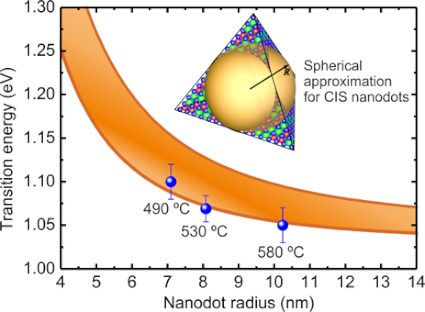
- preparation The samples presented in this work were grown in a molecular beam epitaxy system (Omicron EVO 50) by evaporating high-purity solid precursors. Nanodots were grown on Si(100) with an approximately 1.6 nm thick layer of native SiO2. The substrates were outgassed at 600 °C for 10 min before the
- typically produces films with a thickness of 50–70 nm. Results and Discussion We prepared three samples grown on Si(100) substrates with a ca. 1.6 nm layer of native SiO2 using exactly the same evaporation fluxes but at different substrate growth temperatures (TG) of 490, 530, and 580 °C. Figure 1 shows
- study. The approximately 1.6 ± 0.3 nm thick amorphous SiO2 layer is also observed, isolating the nanodot from the Si substrate. A power spectrum (PS) generated from the HAADF image is presented in Figure 2b. Figure 2c presents the simulated diffraction patterns along the [110] zone axis for Si and





