Search results
Search for "bandgap" in Full Text gives 289 result(s) in Beilstein Journal of Nanotechnology. Showing first 200.
Local stiffness and work function variations of hexagonal boron nitride on Cu(111)
Beilstein J. Nanotechnol. 2021, 12, 559–565, doi:10.3762/bjnano.12.46
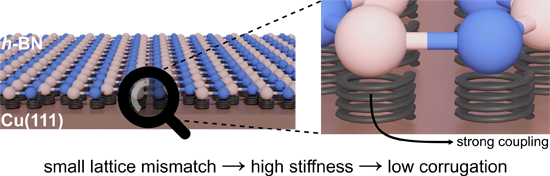
- materials at the nanoscale. In this work, we study hexagonal boron nitride (h-BN), an atomically thin 2D layer, that is van der Waals-coupled to a Cu(111) surface. The system is of interest as a decoupling layer for functional 2D heterostructures due to the preservation of the h-BN bandgap and as a template
- for graphene and MoS2-based electronics utilising the small lattice mismatch, the large optical phonon modes, and particularly the large bandgap [3][4][5][6][7][8][9][10]. Furthermore, when grown on metal substrates h-BN can be used as a nanoscale template for atoms, molecules, and nanostructures with
- ]. Recently, however, Zhang et al. used STM in combination with DFT simulations to study the variation of the local work function and bandgap within the Moiré superlattice and found that the variation depends on the angle of the Moiré with respect to the substrate lattice, but inferred only marginal structure


Influence of electrospray deposition on C60 molecular assemblies
Beilstein J. Nanotechnol. 2021, 12, 552–558, doi:10.3762/bjnano.12.45
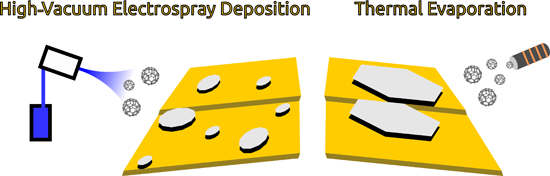
- used as model surface in nc-AFM measurements [31][32][33][34], and, finally, NiO(001), a p-type wide-bandgap metal oxide with potential applications in photovoltaics [35][36][37]. For all cases, we show the typical C60 structures formed by TE and compare these with the results from HV-ESD. This allows
- molecular trapping and their creation is therefore studied for those reasons [32][43][45][46]. In HV-ESD deposition, their presence can be reduced but not inhibited without annealing of the surface [44]. C60 on NiO(001) surface NiO is a wide-bandgap metal oxide with potential applications in organic


Boosting of photocatalytic hydrogen evolution via chlorine doping of polymeric carbon nitride
Beilstein J. Nanotechnol. 2021, 12, 473–484, doi:10.3762/bjnano.12.38
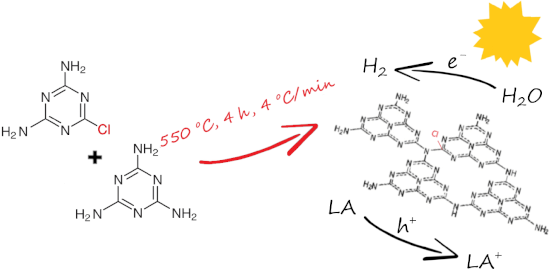
- the hydrogen evolution reaction. The following aspects were found to enhance the photocatalytic efficiency of Cl-PCN: (i) unique location of Cl atoms at the interlayers of PCN instead of on its π-conjugated planes, (ii) slight bandgap narrowing, (iii) lower recombination rate of the electron–hole
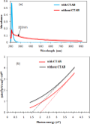
- -PCN were investigated via UV–vis diffuse reflectance spectroscopy (DRS) and photoluminescence (PL) emission spectroscopy. Figure 8a shows the Kubelka–Munk function curves of the fabricated materials. The bandgap is 2.78 and 2.77 eV for PCN and Cl-PCN, respectively, indicating that the Cl-doping had no
- significant effect on the bandgap shift. This might be attributed to the low content of chlorine atoms in the material. The PL spectra of PCN and Cl-PCN are presented in Figure 8b. The emission peak of PCN is located at approx. 440 nm, which is in accordance with the optical bandgap defined by the DRS


Structural and optical characteristics determined by the sputtering deposition conditions of oxide thin films
Beilstein J. Nanotechnol. 2021, 12, 354–365, doi:10.3762/bjnano.12.29
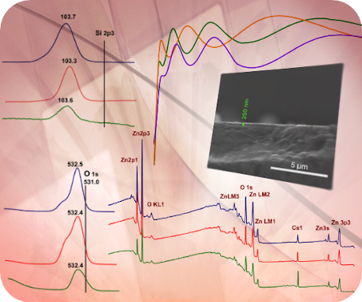
- thickness. The optical constants (i.e., the refractive index n, the extinction coefficient k, and the absorption coefficient α) of the SiO2 and ZnO oxide films were determined from the transmission spectra recorded in the range of 190–2500 nm by using the Swanepoel method, while the energy bandgap was
- as SiO2 and ZnO, are used to build devices with metasurface structures whose properties can be observed in the visible spectrum. They are intensely investigated due to their versatile properties, such as high transmission in the visible range [12][13] and broad energy bandgap [14][15][16], among
- ZnO thin films, between the extinction coefficient, k, (Figure 9) and the absorption coefficient, α, there is this following relation: where λ is the wavelength. We determined the optical bandgap, corresponding to the direct optical transitions, by extrapolating the linear portion of the dependency


Nickel nanoparticle-decorated reduced graphene oxide/WO3 nanocomposite – a promising candidate for gas sensing
Beilstein J. Nanotechnol. 2021, 12, 343–353, doi:10.3762/bjnano.12.28
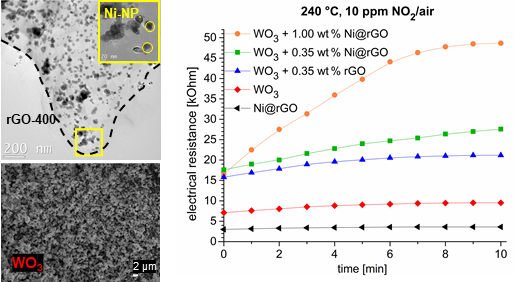
- 200 to 400 °C, which means a high power consumption [4]. WO3 is a wide-bandgap [12][13] n-type semiconductor [14][15] with good sensitivity towards NO2 [16] and CO [17]. Known successful routes to improve the MOS gas sensing performance are doping with transition metals, decoration with noble metals
- , formation of heterojunctions, or size reduction [18][19]. Doping of WO3 with nickel improves the humidity sensing compared to neat WO3. Attributed to a greater number of electrons donated by Ni atoms, higher surface area, and smaller bandgap energy, Ni-doped WO3 has a faster response, higher sensitivity


Extended iron phthalocyanine islands self-assembled on a Ge(001):H surface
Beilstein J. Nanotechnol. 2021, 12, 232–241, doi:10.3762/bjnano.12.19
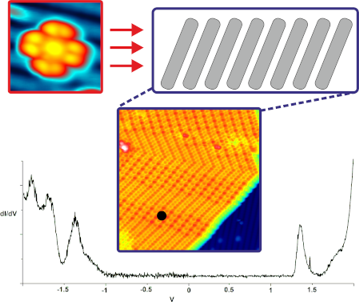
- associated with the bandgap of the FePc island. The gap reaches approximately 2.7 eV, which correlates well with the recently reported data for FePc on graphene where the molecules were decoupled from the substrate [17]. Therefore, our results suggest that the FePc islands are well isolated electronically
ZnO and MXenes as electrode materials for supercapacitor devices
Beilstein J. Nanotechnol. 2021, 12, 49–57, doi:10.3762/bjnano.12.4
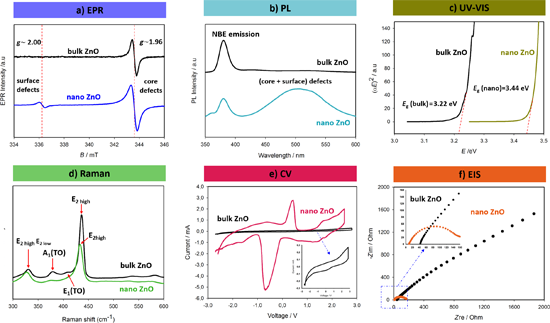
- in semiconductors is fundamentally the same, regardless of composition. Defects generate bandgap states that either generate electrons in the conduction band or holes in the valence band. Therefore, we believe that the discussion, based on experimental results, of the magnitude of this effect for 2D
- and 3D materials will be of utmost benefit to the interested community. Review ZnO as electrode material for supercapacitors Zinc oxide (ZnO) is a highly defective semiconductor material, regardless of its synthesis route, that has a large bandgap energy (Eg) at room temperature. However, defect types
- environment of the lattice atoms and defects. With the aid of advanced characterization techniques one may get valuable information on site symmetry, atomic bonding, and, in particular, on the bandgap energy of semiconductors. Raman, photoluminescence (PL), UV–vis, and electron paramagnetic resonance (EPR
Kondo effects in small-bandgap carbon nanotube quantum dots
Beilstein J. Nanotechnol. 2020, 11, 1873–1890, doi:10.3762/bjnano.11.169
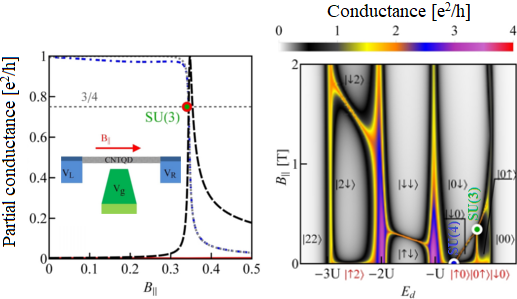
- Patryk Florkow Damian Krychowski Stanislaw Lipinski Department of Theory of Nanostructures, Institute of Molecular Physics, Polish Academy of Sciences, M. Smoluchowskiego 17,60-179 Poznań, Poland 10.3762/bjnano.11.169 Abstract We study the magnetoconductance of small-bandgap carbon nanotube
- periodic conditions along the circumference. When the closest quantization line misses the K point, a bandgap appears. The bandgap depends on the minimum separation of the circular quantization lines from the Dirac points. The semiconducting gaps are of the order of a few hundred millielectronvolts [9
- ][46][47], other perturbations such as axial strain or twists can shift the dispersion cones in CNTs and open the bandgap [44][48][49][50]. Unlike the quantization bandgaps, which depend on the inverse of the diameter, these narrow perturbation gaps are inversely proportional to the square of the

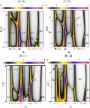
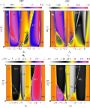


![[Graphic 37]](/bjnano/content/inline/2190-4286-11-169-i52.svg?max-width=637&scale=1.18182) as a functio...
as a functio...


Unravelling the interfacial interaction in mesoporous SiO2@nickel phyllosilicate/TiO2 core–shell nanostructures for photocatalytic activity
Beilstein J. Nanotechnol. 2020, 11, 1834–1846, doi:10.3762/bjnano.11.165
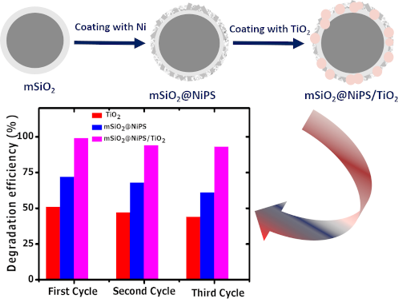
- yielded the mSiO2@NiPS/TiO2 composite. The bandgap energy of mSiO2@NiPS and of mSiO2@NiPS/TiO2 were estimated to be 2.05 and 2.68 eV, respectively, indicating the role of titania in tuning the optoelectronic properties of the SiO2@nickel phyllosilicate. As a proof of concept, the core–shell nanostructures
- the core–shell nanostructure and yielded superior photocatalytic properties. Keywords: bandgap energy; core–shell; dye degradation; nickel phyllosilicate; photocatalysts; Introduction Textile dyes and organic compounds are major water pollutants, which create an environmental hazard to aquatic
- brookite phases, the anatase phase has been extensively used for photocatalysis owing to its enhanced surface properties [7][8][9][10]. In a typical photocatalytic process, photons of energy greater than the bandgap energy of TiO2 excite electrons to the conduction band leaving holes in the valence band


Nanocasting synthesis of BiFeO3 nanoparticles with enhanced visible-light photocatalytic activity
Beilstein J. Nanotechnol. 2020, 11, 1822–1833, doi:10.3762/bjnano.11.164
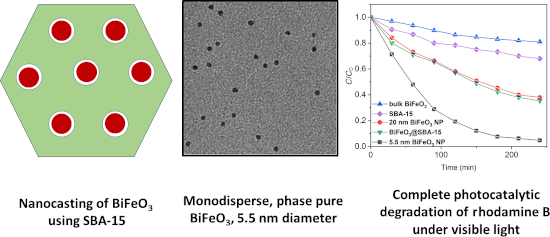
- photocatalysts with narrow bandgaps in the visible-light region in combination with a slow electron–hole recombination has attracted a great deal of interest [18]. Bismuth ferrite (BiFeO3) is one of those photocatalysts and has been intensively researched in the past few years due to its narrow bandgap in the
- the particle size. The smaller the particle, the greater the specific surface area is and, thus, the more active sites are available for photodegradation [15][18]. In addition, it was shown that size and shape of BiFeO3 particles have a direct influence on the bandgap of the material. Smaller BiFeO3
- electron microscope (TEM). Fourier-transform infrared (FTIR) spectra of the nanoscale materials were recorded using a Jasco FT IR-4700 spectrometer. Bandgap information was obtained using the spectra recorded in a Perkin Elmer UV–vis spectrometer with an integrating sphere. Spectra were suitably




Absorption and photoconductivity spectra of amorphous multilayer structures
Beilstein J. Nanotechnol. 2020, 11, 1757–1763, doi:10.3762/bjnano.11.158
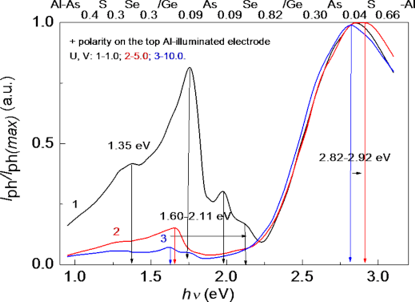
- of the photocurrent spectra is attributed to the different values of the optical bandgap of the involved amorphous layers (Eg ≈ 2.0 eV for As0.40S0.30Se0.30 and Ge0.09As0.09Se0.82 and Eg ≈ 3.0 eV for Ge0.30As0.04S0.66). The obtained experimental results are discussed taking into account the light
- mono- and bimolecular and that the transport is controlled through multiple trapping processes with exponential distribution of the localized states in the bandgap. Regarding the physics and applications of chalcogenide materials, multilayered amorphous thin-film structures are especially interesting
- ), Ge0.09As0.09Se0.82 (2), As0.40S0.30Se0.30 (3), and the HS As0.40S0.30Se0.30/Ge0.09As0.09Se0.82/Ge0.30As0.04S0.66 (4). The thin film layer Ge0.30As0.04S0.66 with the largest bandgap energy, Eg ≈ 3.0 eV [11], which was placed on the top of the multilayer structure, has a thickness of d ≈ 200 nm and was transparent to


The influence of an interfacial hBN layer on the fluorescence of an organic molecule
Beilstein J. Nanotechnol. 2020, 11, 1663–1684, doi:10.3762/bjnano.11.149
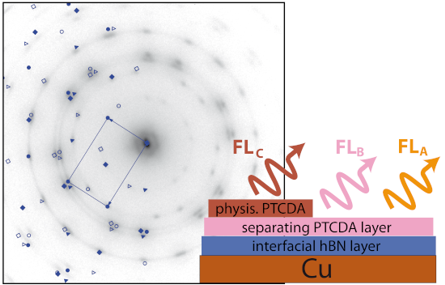
- order to support tunneling [11][12][13]. A single layer or films of hBN are attractive for decoupling a molecule from an underlying metal substrate as hBN exhibits a wide bandgap of 5.9 eV [14]. Perspectively, it could also provide a substrate for STM-LE experiments. Furthermore, it is of interest due
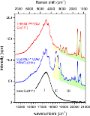
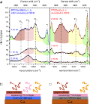
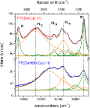
- bandgap of hBN, as indicated in Figure 1b. This is in agreement with the findings by Martínez-Galera et al. for PTCDA/hBN/Rh(110) [34]. From scanning tunneling spectroscopy (STS) experiments, the authors concluded that the coupling is only weak. They deduced further that the CT (in the ground state





A self-powered, flexible ultra-thin Si/ZnO nanowire photodetector as full-spectrum optical sensor and pyroelectric nanogenerator
Beilstein J. Nanotechnol. 2020, 11, 1623–1630, doi:10.3762/bjnano.11.145
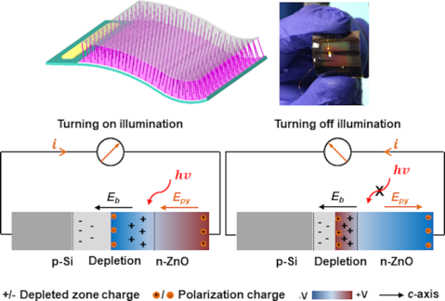
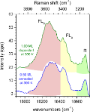
- wide bandgap (3.2 eV), which absorbs UV light and can be easily prepared [11][12]. A pyroelectric potential will be generated in ZnO when the temperature changes upon illumination. The internal electric field can effectively drive the flow of electrons through an external circuit, yielding a short
- -powered PDs yields full-spectrum (UV–visible–NIR) detection. The broad spectral photoresponse from UV to NIR is related to two different bandgap materials (wide bandgap = 3.2 eV and narrow bandgap = 1.1 eV). Remarkably, the photoresponse current is significantly enhanced by introducing the pyroelectric


High-responsivity hybrid α-Ag2S/Si photodetector prepared by pulsed laser ablation in liquid
Beilstein J. Nanotechnol. 2020, 11, 1596–1607, doi:10.3762/bjnano.11.142
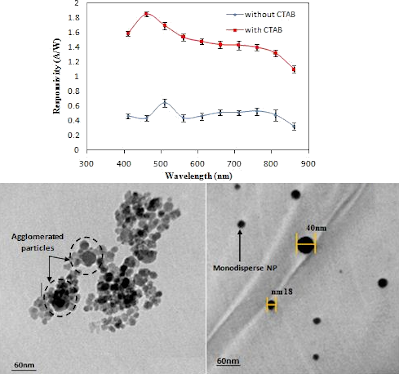
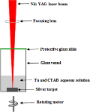
- fabricated by a chemical method. They show that the Ag2S quantum dots (QDs) planted on the surface of Si create impurity states in the Si bandgap. In pulsed laser ablation, the interaction between laser and material particles leads to severe particle aggregation and broad particle size distributions via




Controlling the electronic and physical coupling on dielectric thin films
Beilstein J. Nanotechnol. 2020, 11, 1492–1503, doi:10.3762/bjnano.11.132
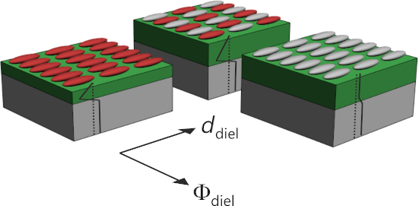
- performed [1], the concept of decoupling molecules from metal substrates with large bandgap dielectric films has become widely accepted. Although such systems have become a rich field of research, particularly in the scanning probe microscopy community, it is often forgotten that the wide bandgap insulating
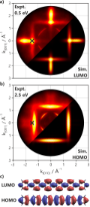
- results. On some preparations, no molecular emissions were observed in the MgO bandgap, whereas on others, distinctive features appeared in the gap at 0.5 and 2.5 eV below the Fermi level. The momentum maps of these molecular emissions (Figure 3) can be unambiguously assigned to the orbitals and the
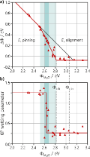
- is observed. The increase of the work function indicates a charge transfer to 6P. The charge transfer is observed directly by the presence of a LUMO emission seen at high emission angles in Figure 4a. Magnified scans of the MgO bandgap region in the geometry of maximum LUMO emission intensity




Atomic defect classification of the H–Si(100) surface through multi-mode scanning probe microscopy
Beilstein J. Nanotechnol. 2020, 11, 1346–1360, doi:10.3762/bjnano.11.119
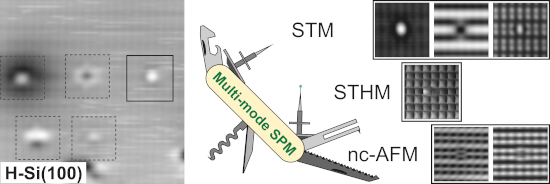
- due to its conductive orbital which extends into vacuum. DBs have been observed to act like quantum dots and have discretized charge states in the bandgap of the material [6]. Due to the degenerate n-type doping of our substrate (see Methods) [6][53], DBs are natively negatively charged when imaging



Structural and electronic properties of SnO2 doped with non-metal elements
Beilstein J. Nanotechnol. 2020, 11, 1321–1328, doi:10.3762/bjnano.11.116
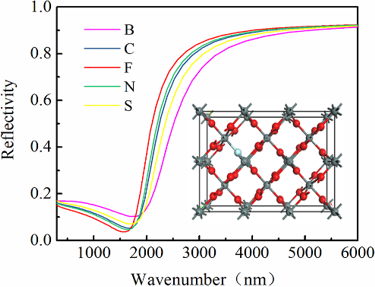
- is that F-doped SnO2 has the lowest defect binding energy. The doping with B and S introduced additional defect energy levels within the forbidden bandgap, which improved the crystal conductivity. The Fermi level shifts up due to the doping with B, F, and S, while the Fermi level of SnO2 doped with C
- SnO2 is not conductive due to the absence of free carriers. However, the bandgap of 3.6 eV of SnO2 makes it a potentially ideal material for transparent electrode films. It had been proved that the doping of heteroatoms to replace Sn or O can lead to more carriers or holes. Therefore, extensive
- After doping not only the crystal structure is distorted, but also the electronic structure of the SnO2 crystal is changed. The doping atoms introduce impurity levels in the bandgap of SnO2. The SnO2 crystal shows metallicity when the introduction of non-metal atoms causes the Fermi level to enter the



Nonadiabatic superconductivity in a Li-intercalated hexagonal boron nitride bilayer
Beilstein J. Nanotechnol. 2020, 11, 1178–1189, doi:10.3762/bjnano.11.102
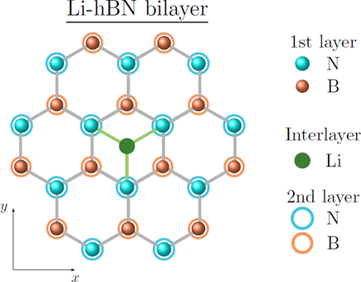
- graphene/hBN heterojunction devices allowed for the detection of the Hofstadter’s butterfly phenomenon [39][40]. In both layer and bulk form, hBN has a large bandgap energy, which makes it an insulator [13][41]. Therefore, for a long time this material was not associated with superconductivity. The


![[Graphic 34]](/bjnano/content/inline/2190-4286-11-102-i54.svg?max-width=637&scale=1.18182) for Li-hBN. The results were obta...
for Li-hBN. The results were obta...
Monolayers of MoS2 on Ag(111) as decoupling layers for organic molecules: resolution of electronic and vibronic states of TCNQ
Beilstein J. Nanotechnol. 2020, 11, 1062–1071, doi:10.3762/bjnano.11.91
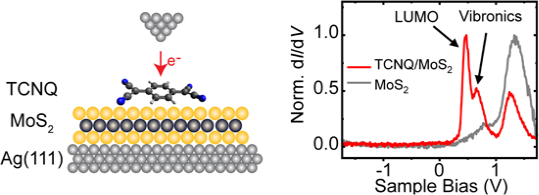
- vibronic states of an almost isolated molecule. Here, we use scanning tunneling microscopy and spectroscopy to show that a single layer of MoS2 on Ag(111) exhibits a semiconducting bandgap, which may prevent molecular states from strong interactions with the metal substrate. We show that the lowest
- ascribed to a combination of its rather large thickness of three atomic layers, its electronic bandgap, and its non-ionic nature. Together, these properties prohibited fast electronic relaxations into the metal and coupling to phonons, which otherwise led to lifetime broadening [27][28]. The electronic
- properties of MoS2 on a metal surface are not the same as those of a free-standing monolayer. Both theory and experiment have found considerable hybridization of electronic states at the interface [29]. As a consequence, the bandgap is narrowed. Instead of the predicted bandgap of 2.8 eV of the free-standing


Excitonic and electronic transitions in Me–Sb2Se3 structures
Beilstein J. Nanotechnol. 2020, 11, 1045–1053, doi:10.3762/bjnano.11.89
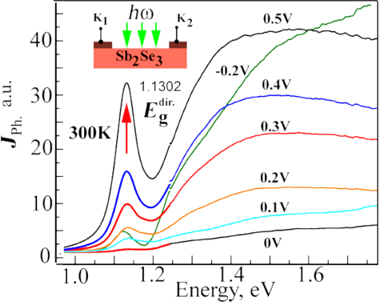
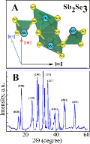
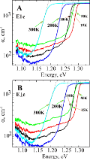
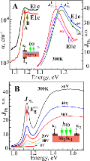
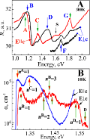
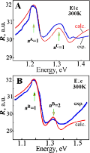
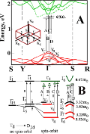
- ][15]. In order to use Sb2Se3 to build high-performance devices it is necessary to study its crystalline nanostructure in terms of band structure and optical and optoelectronic properties, especially in the bandgap region in which ambiguous and contradictory results have been obtained. For example, the
- energy range of the bandgap was found to be 1.2 eV [15][16], 1.1–1.3 eV [17][18] and 1.25–1.46 eV [19] and these discrepancies have been pointed out in a different study [20]. There are also discrepancies in terms of which type of electronic transitions are responsible for determining the minimal bandgap
- . Several studies have shown that the bandgap is established due to allowed transitions that happen within 1.0 and 1.9 eV [6][8][10], whereas other studies show that the bandgap is determined by forbidden transitions [21][22][23]. In addition, the energy band structure and the theoretical calculations in


A new photodetector structure based on graphene nanomeshes: an ab initio study
Beilstein J. Nanotechnol. 2020, 11, 1036–1044, doi:10.3762/bjnano.11.88
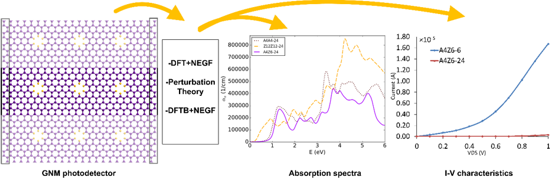
- integer). This form of classification is based on the relation between the magnitude of the energy gap and the width of the AGNRs. The quantum confinement effect alters the bandgap energy in these nanostructures, which decreases with the increase of AGNR width (within each group). A comparison of the
- bandgap of the two structures, i.e., 7-AGNR and 8-AGNR with bandgap energies of 1.47 eV and 0.22 eV, respectively, shows that the bandgap depends on the dimer number or width of the nanoribbons. In other words, the addition of only one row of carbon atoms alters the energy gap about by 1.25 eV. We also
- of the supercell have the same bandgap energy. The neck width is another factor determining the GNMs properties. The atoms at the edge of the holes in these materials have been passivated with hydrogen atoms. The results for the gap size with nitrogen passivation are almost the same. In practice


Band tail state related photoluminescence and photoresponse of ZnMgO solid solution nanostructured films
Beilstein J. Nanotechnol. 2020, 11, 899–910, doi:10.3762/bjnano.11.75
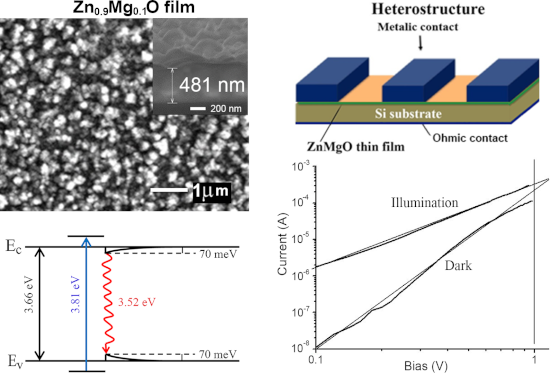
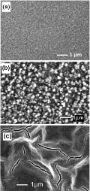
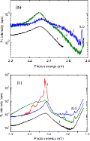
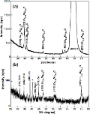
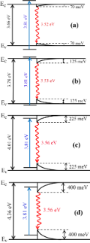
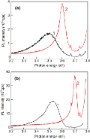
- morphology, or in the formation of ZnO particles embedded into the ZnMgO matrix, respectively. Local compositional fluctuations leading to the formation of deep band tails in the gap were deduced from photoluminescence spectra. A model for the band tail distribution in the bandgap is proposed as a function
- . Towards this goal, the present study explores the PL characteristics of Zn1−xMgxO films in the composition range x = 0.00–0.40, under excitation with sub-bandgap photon energies from the 325 nm line of a He–Cd laser. Some possible applications of these films as UV photodetectors are also discussed
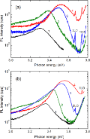
- increasing Mg content in the alloy. However, the position of the PL band does not follow the increase of the alloy bandgap with increasing x value. The higher the x value, the larger the difference between the bandgap and the PL band maximum. Table 1 compares the position of the PL band with the bandgap of

Templating effect of single-layer graphene supported by an insulating substrate on the molecular orientation of lead phthalocyanine
Beilstein J. Nanotechnol. 2020, 11, 814–820, doi:10.3762/bjnano.11.66
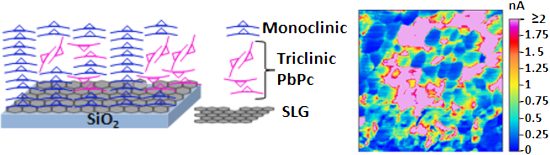
- ). The conducting domains may arise as a result of face-on monoclinic fractions that are vertically stacked. Such stacked molecules can give rise to more energy states near the bandgap aiding charge transport [9]. The less conductive regions may have triclinic moieties or other crystallite arrangements


Light–matter interactions in two-dimensional layered WSe2 for gauging evolution of phonon dynamics
Beilstein J. Nanotechnol. 2020, 11, 782–797, doi:10.3762/bjnano.11.63
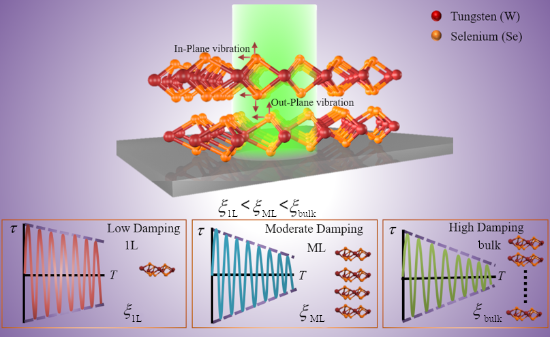
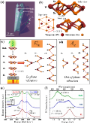
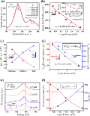
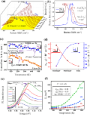
- found from the data in Figure 1e that the Δω was 7.5 cm−1, 8.4 cm−1 and 9.1 cm−1 for 1L, ML and bulk WSe2, respectively. Thus, the Raman peaks exhibit a larger separation as thickness increases. Monolayer WSe2 undergoes a transition from direct to indirect bandgap (Eg) as the number of layers increases
Hexagonal boron nitride: a review of the emerging material platform for single-photon sources and the spin–photon interface
Beilstein J. Nanotechnol. 2020, 11, 740–769, doi:10.3762/bjnano.11.61
- at an even more emerging stage of development that can serve as alternative material platforms. These are generally the wide-bandgap group II–VI and III–V materials, such GaN [32][33][34] and ZnO [35][36][37], and low-dimensional van der Waals materials, including the transition metal dichalcogenide
- et al. [5] took the first step in this direction, showing how basic considerations of host properties (e.g., nuclear spin isotopes, bandgap, and spin–orbit coupling) can guide the identification of quantum point defects analogous to the diamond NV center, elevating SiC as such a host, with now many
- indirect bandgaps. Bandgap energy values largely varying from 3.6 eV to 7.1 eV have been reported in the literature [84][85][86]. Theoretical calculations for the h-BN band structure also show significant differences in the eV values. Some density functional theory (DFT) in the local-density-approximation