Search results
Search for "crystallinity" in Full Text gives 347 result(s) in Beilstein Journal of Nanotechnology. Showing first 200.
Air oxidation of sulfur mustard gas simulants using a pyrene-based metal–organic framework photocatalyst
Beilstein J. Nanotechnol. 2019, 10, 2422–2427, doi:10.3762/bjnano.10.232
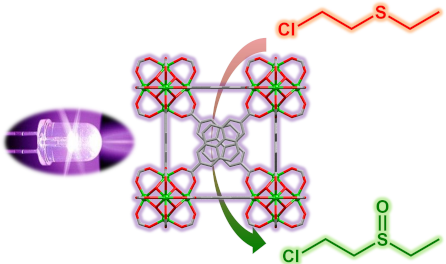
- injection (Figure 4). The photocatalytic oxidation reaction takes place without noticeable degradation of NU-400, as evidenced by PXRD analysis following four cycles of CEES to CEESO oxidation, which reveals a high degree of crystallinity (see Figure S7, Supporting Information File 1). At the same time, no




Coating of upconversion nanoparticles with silica nanoshells of 5–250 nm thickness
Beilstein J. Nanotechnol. 2019, 10, 2410–2421, doi:10.3762/bjnano.10.231
- (XRD) measurements of the oleate-coated UCNP cores C1 and the same particles after the growth of two, three, four and five additional silica shells (samples C1_2S, C1_3S, C1_4S, and C1_5S). These data exclude a possible influence of the silica shell on the crystallinity of the UCNP core. The cores have


Design and facile synthesis of defect-rich C-MoS2/rGO nanosheets for enhanced lithium–sulfur battery performance
Beilstein J. Nanotechnol. 2019, 10, 2251–2260, doi:10.3762/bjnano.10.217
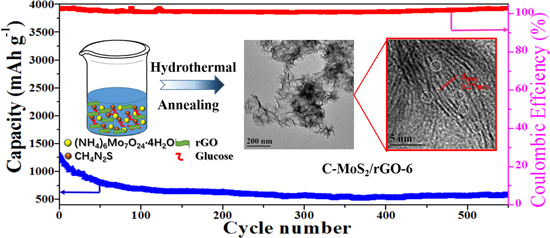
- composites at different temperatures has also been investigated. The annealing can improve crystallinity and increase the binding energy, and also improve the stability while maintaining high specific capacity. The defect-rich C-MoS2/rGO prepared in this work can not only kinetically accelerate the sulfur
- 60 °C in vacuum. For comparison, the pristine MoS2 were synthesized using an identical process without GO or glucose. After that, the obtained composites were annealed at 400, 600 and 800 °C for 6 h in 10% H2/Ar atmosphere to improve the crystallinity. After thermal annealing, the samples were
- indicates that the annealing treatment improves the crystallinity of the composites. Figure 4b and Figure S2 (Supporting Information File 1) show the Raman spectra of pristine MoS2, and C-MoS2/rGO, C-MoS2/rGO-6, C-MoS2/rGO-4 and C-MoS2/rGO-8 composites. Two clear peaks at about 378 cm−1 and 404 cm−1 show in


Targeted therapeutic effect against the breast cancer cell line MCF-7 with a CuFe2O4/silica/cisplatin nanocomposite formulation
Beilstein J. Nanotechnol. 2019, 10, 2217–2228, doi:10.3762/bjnano.10.214
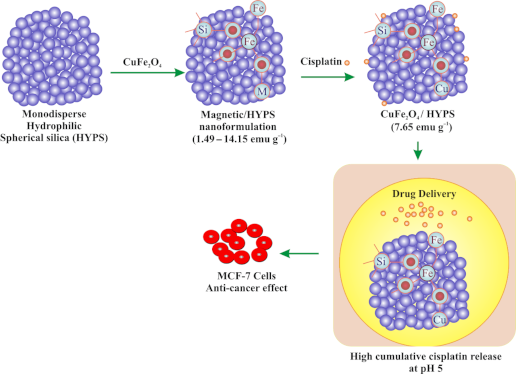
- materials have been reported to be effective for cancer therapeutics [3][4]. However, due to the poor crystallinity of SPIONs on silica supports, a low saturation value of magnetization occurs in the silica bound nanocomposites. For instance, the magnetometer (superconducting quantum interference device
- improve the crystallinity. Such stabilization of the cubic phase of CuFe2O4 inside the pore channels of silica have been reported due to suppression of John–Teller distortion [16]. The surface area and pore size distribution of HYPS and CuFe2O4/HYPS were analyzed using BET theory and the nitrogen


Synthesis of highly active ETS-10-based titanosilicate for heterogeneously catalyzed transesterification of triglycerides
Beilstein J. Nanotechnol. 2019, 10, 2039–2061, doi:10.3762/bjnano.10.200
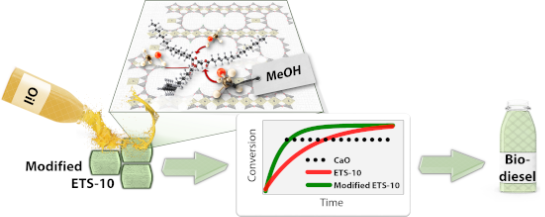
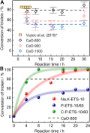
- way, for example, by using different concentrations of the H2O2 solution and treatment times (Figure 1B). Herewith, the crystallinity and mechanical stability of the materials were well-preserved despite the experienced desilication and detitanation. This approach was followed in the present study to
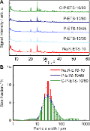
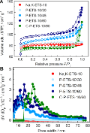
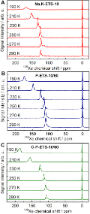
- peak at 24.63°) reflects the high crystallinity of the prepared ETS-10 material. Data of the textural analysis by N2 sorption into the Na,K-ETS-10 sample is presented in Figure 4. The isotherms exhibit the Type I shape [37] (revealing the presence of solely micropores) and have a specific surface area
- high crystallinity of Na,K-ETS-10 is further confirmed by TEM (Figure 6) demonstrating high order of the titanosilicate framework with parallel Ti nanowires showing no visible defects on the length scale of hundreds of nanometers. The spacing between adjacent nanowires showed good agreement with








Nanostructured and oriented metal–organic framework films enabling extreme surface wetting properties
Beilstein J. Nanotechnol. 2019, 10, 1994–2003, doi:10.3762/bjnano.10.196
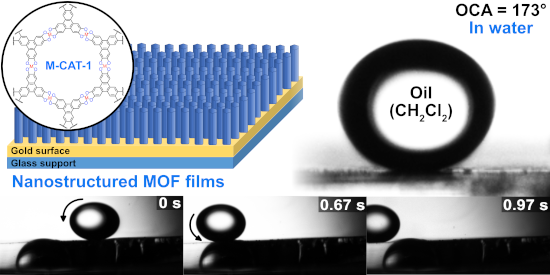
- due to the required growth conditions for maintaining key features such as homogeneity, crystallinity and crystal orientation on the surface. In our previous reports, we have demonstrated that the use of a modulator in combination with the choice of a substrate play a crucial role in VAC synthesis and
- the formation of a crystalline MOF film [71]. In the present study, we introduce the use of a crystallization promoter in the VAC process, solely for inducing distinct film morphology while maintaining crystallinity and crystal orientation on a preselected substrate. Accordingly, we employed VAC
- , 12 h), and mechanical impact (sonication in water, 20 min). GIWAXS analysis in addition to WCA and OCA measurements after the respective treatment confirmed that the crystallinity, crystal orientation and extreme wetting properties were preserved (see Figures S8.1, S8.2, Supporting Information File 1


The influence of porosity on nanoparticle formation in hierarchical aluminophosphates
Beilstein J. Nanotechnol. 2019, 10, 1952–1957, doi:10.3762/bjnano.10.191
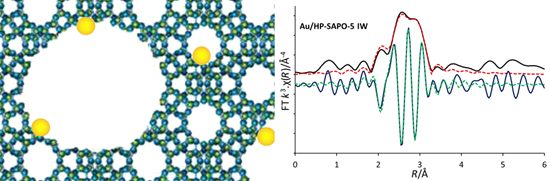
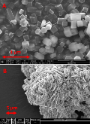
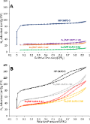
- , with the powder XRD patterns showing no significant variation in crystallinity or signal width (Figure 2 and Figure S4 and Figure S5, Supporting Information File 1). Nanoparticle deposition was found to greatly reduce the porosity of both the hierarchical and microporous supports. For MP-SAPO-5 the
Charge-transfer interactions between fullerenes and a mesoporous tetrathiafulvalene-based metal–organic framework
Beilstein J. Nanotechnol. 2019, 10, 1883–1893, doi:10.3762/bjnano.10.183
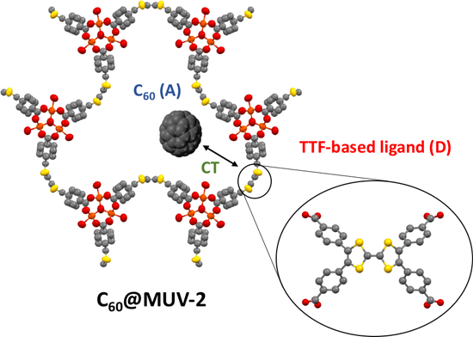
- ° confirming that crystallinity is maintained after encapsulation of C60 and removal of the solvent (Figure 2). It is important to note that the principal peak is slightly shifted when comparing the experimental and simulated PXRD patterns. This can be explained by the breathing behaviour of MUV-2 [53]. The




Fabrication and characterization of Si1−xGex nanocrystals in as-grown and annealed structures: a comparative study
Beilstein J. Nanotechnol. 2019, 10, 1873–1882, doi:10.3762/bjnano.10.182
- target is pulsed with short unipolar voltage pulses at low frequency and short duty cycle, achieving high discharge current densities leading to a high ionization fraction of the sputtered material [27][28]. This approach gives denser films [29] of higher crystallinity [30] than conventional direct
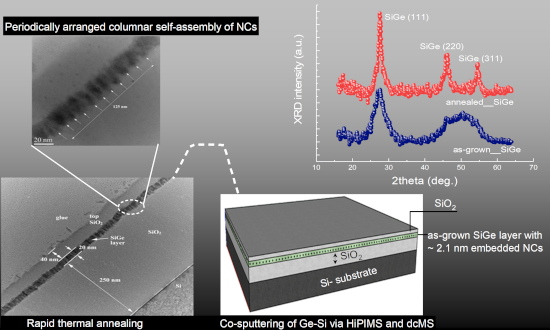
- , three separate and distinctive peaks are evident (Figure 1a). An increase in the XRD peak intensity was observed along with a decrease in full width at half maximum (FWHM), indicating an increased crystallinity. The size of the NCs was determined, using the (111) peak using the multiple peak feature of
- amorphous but with crystalline regions (nanoparticles) (as seen in TEM images later in Figure 5a and Figure 5c). With increased annealing temperature, peaks corresponding to the (111), (220) and (311) planes get sharper and narrower as a sign of increased crystallinity of the SiGe layer. Moreover, a small


Long-term entrapment and temperature-controlled-release of SF6 gas in metal–organic frameworks (MOFs)
Beilstein J. Nanotechnol. 2019, 10, 1851–1859, doi:10.3762/bjnano.10.180
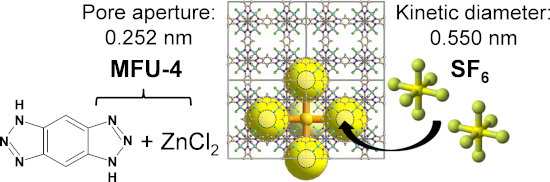
- ) vibrational modes in SF6 [32]. To check that the sample crystallinity was preserved, we measured powder XRD patterns before and after the loading (Figure 3). The recorded powder XRD patterns did not reveal any changes in the diffraction peak positions, but there were differences in the peak intensities


Biocatalytic oligomerization-induced self-assembly of crystalline cellulose oligomers into nanoribbon networks assisted by organic solvents
Beilstein J. Nanotechnol. 2019, 10, 1778–1788, doi:10.3762/bjnano.10.173
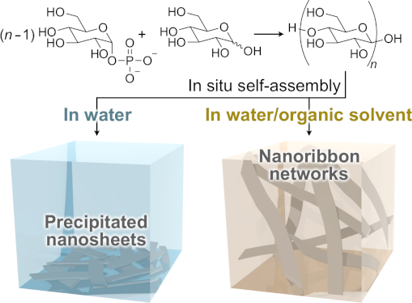
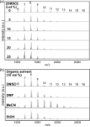
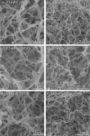
- cm−1 (Figure 8). The cellulose II allomorph is the most stable allomorph of cellulose [19] and is typical of the cellulose oligomer assemblies formed in aqueous solution [31][42]. The degree of crystallinity (χc) values of the gelled products were calculated from the XRD profiles and found to be
- higher than those of the products in aqueous solution [42] (Table 1). The higher crystallinity with the organic solvents was attributed to the lower polydispersity in the DP, which would decrease the amount of the amorphous-like assembled structures of the terminal residues of relatively long oligomer





Synthesis of nickel/gallium nanoalloys using a dual-source approach in 1-alkyl-3-methylimidazole ionic liquids
Beilstein J. Nanotechnol. 2019, 10, 1754–1767, doi:10.3762/bjnano.10.171
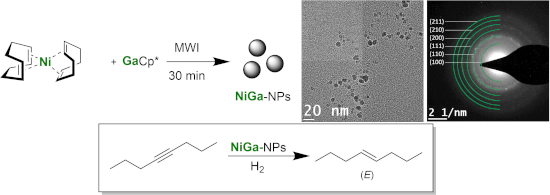
- different dispersion times before microwave-induced decomposition of the precursors on the phase purity, as well as the influence of the time of microwave-induced decomposition on the crystallinity of the NiGa nanoparticles. Microwave-induced co-decomposition of all-hydrocarbon precursors [Ni(COD)2] (COD
- , Figure S2 and Figure S3). Annealing of nanoparticle samples is known to improve the crystallinity of the nanoparticles [47][48]. The decomposition of Ni(COD)2 and GaCp* in [BMIm][NTf2] was repeated under the same conditions, but with a longer decomposition time of 30 min, in order to induce annealing in




TiO2/GO-coated functional separator to suppress polysulfide migration in lithium–sulfur batteries
Beilstein J. Nanotechnol. 2019, 10, 1726–1736, doi:10.3762/bjnano.10.168
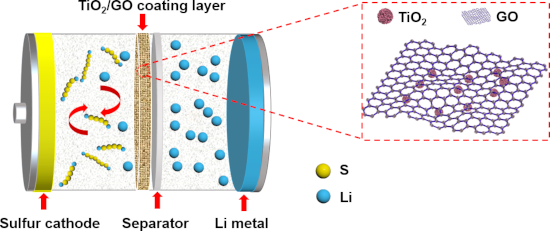
- crystallized with a low degree of crystallinity after spray drying. Thermogravimetric analysis (TGA) of the TiO2/GO composite is presented in Figure 2c. When the temperature was increased from room temperature to 120 °C, a weight decrease of 8.8% was noticed due to the elimination of a small amount of adsorbed
- nanoporous TiO2 has been completely wrapped by wrinkled GO nanosheets (Figure 3d and 3e). As displayed in the high-resolution TEM (HRTEM) images (Figure 3f and 3g), the TiO2/GO composite reveals no clear lattice fringe for TiO2, indicating poor crystallinity. It is clear that the GO sheets have a flake-like


Nanoporous smartPearls for dermal application – Identification of optimal silica types and a scalable production process as prerequisites for marketed products
Beilstein J. Nanotechnol. 2019, 10, 1666–1678, doi:10.3762/bjnano.10.162
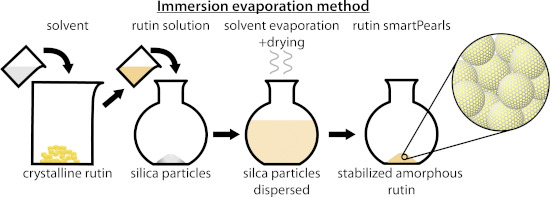
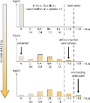
- (20% loading), and the curve with peaks are plotted (system overloaded, 25%). For AL-1 FP samples (the silica with the smallest pore size of 3 nm) only the overloaded curves are shown (12% and 15%). The comparison between DSC and XRD reveals that XRD was more sensitive to detecting crystallinity. In
- with completely filled pores (filled volume 1.8 mL), which additionally have rutin on the surface. This implies that the rutin volume per gram of particles for these samples is >1.8 mL/g (Figure 7, middle). This surface material is amorphous, since no evidence of crystallinity was detected. If too much
- samples with a certain crystallinity is remarkable. This could explain the higher recovery rate at higher loadings of 28–30%. The silica sample with the smaller pores (3 nm, AL-1 FP) showed at low maximum loading (12%) and a recovery rate of only about 35%. The recovery rate was also analyzed by HPLC, and




Kelvin probe force microscopy work function characterization of transition metal oxide crystals under ongoing reduction and oxidation
Beilstein J. Nanotechnol. 2019, 10, 1596–1607, doi:10.3762/bjnano.10.155
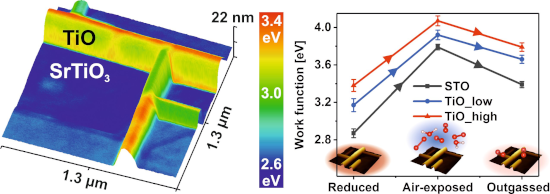
- ]. The high level of crystallinity of these nanowires is the result of the formation mechanism, which comprises incongruent strontium effusion from SrTiO3 and then a TiO structure growth via crystallographic shearing and diffusion (more details can be found in [12]). The abrupt TiO/SrTiO3 interface and


Materials nanoarchitectonics at two-dimensional liquid interfaces
Beilstein J. Nanotechnol. 2019, 10, 1559–1587, doi:10.3762/bjnano.10.153
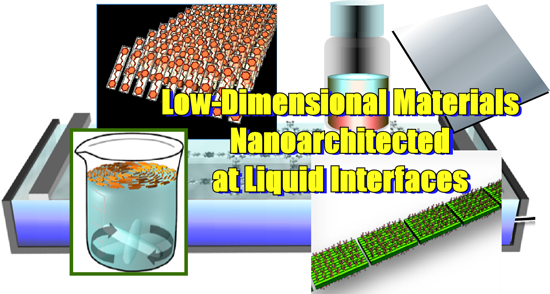
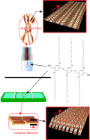
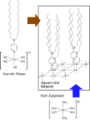
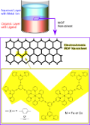
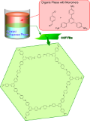
- ., crystallinity controlled two-dimensional patterns based on guanidinium/carboxylate molecular recognition [196] and the two-dimensional assembly of one-dimensional supramolecular polymers formed between alkylated melamine and aqueous barbiturate [197] have been also accomplished. Oishi and co-workers utilized
- ]. Interfacial polymerization at liquid interfaces is an already industrialized technique to produce conventional cross-linked polymer films/membranes. Interfacial polymerization of 2DCP films still remains in its infant stage in terms of controlling crystallinity, domain sizes, and generalities. However, the













Rapid thermal annealing for high-quality ITO thin films deposited by radio-frequency magnetron sputtering
Beilstein J. Nanotechnol. 2019, 10, 1511–1522, doi:10.3762/bjnano.10.149
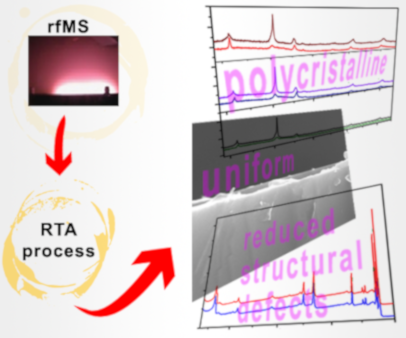
- impurities from degassing of the deposition chamber takes place. At the same time, the improvement of surface crystallinity (Figure 2), annealing of surface structural defects and achievement of uniform films on the entire deposited surface (Figure 1) are obtained [33]. Using these structural and
- size and the improvement of crystallinity led to the decrease in defects in the films, thus resulting in higher conductivity. Adding oxygen leads to improved transmission and conductivity in the ITO thin films. The conductive ITO thin films (ρ = 8.4 × 10⁻⁵ Ω cm to ρ = 7.4 × 10⁻⁵ Ω cm) were obtained by
- crystallinity by increasing the crystallite size (from 12.7 nm to 34.3 nm). Also, it was found from SEM investigations (cross-sections) that films subjected to such a thermal treatment show good adhesion to the substrate. Based on XPS investigations, it was evidenced that stoichiometric thin films were obtained


BiOCl/TiO2/diatomite composites with enhanced visible-light photocatalytic activity for the degradation of rhodamine B
Beilstein J. Nanotechnol. 2019, 10, 1412–1422, doi:10.3762/bjnano.10.139
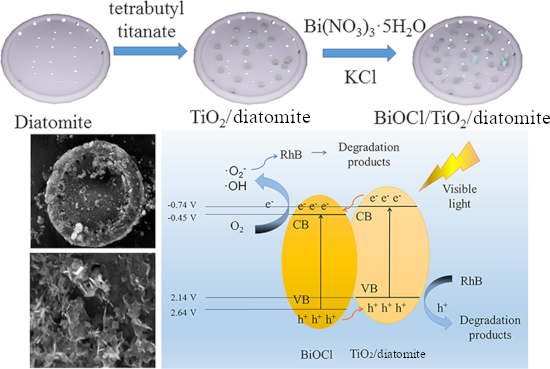
- with the SEM results. The obvious lattice fringes can be observed in Figure 6b, indicating that the crystallinity of the composites is improved. The lattice fringes of 0.352 nm and 0.281 nm are matched with anatase TiO2 (101) and BiOCl (110) planes, respectively. The results show that diatomite in BTD
- that BTD has obvious advantages over pure BiOCl and other complexes. As shown in Figure 7b, the sample with a BiOCl to TiO2 molar ratio of 1:1 shows the best visible-light photocatalytic activity, and at the same time, the highest crystallinity and the most active sites were found. Figure 7c shows the


Gas sensing properties of individual SnO2 nanowires and SnO2 sol–gel nanocomposites
Beilstein J. Nanotechnol. 2019, 10, 1380–1390, doi:10.3762/bjnano.10.136
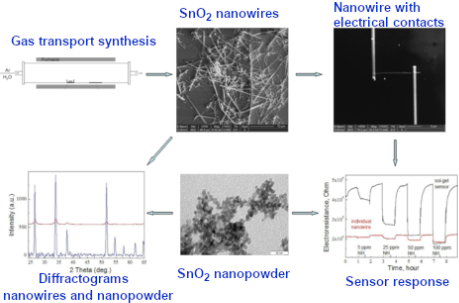
- of the coherence area, which is determined by the crystallinity of the structure. Nanowires formed by the vapor–liquid–solid mechanism have high and narrow peaks, confirming their monocrystalline structure. In contrast, the nanopowders exhibit low and wide peaks, demonstrating their disordered




Tailoring the magnetic properties of cobalt ferrite nanoparticles using the polyol process
Beilstein J. Nanotechnol. 2019, 10, 1166–1176, doi:10.3762/bjnano.10.116
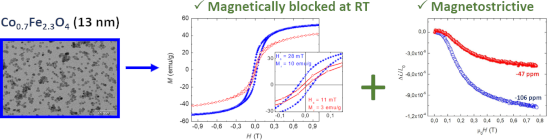
- crystallinity, with NPs acting as nucleating points. Also, as established by Costa et al., the presence of these NPs promotes the crystallization of PVDF in its β-phase, the most electroactive one, instead of its other allotropic forms [10]. Finally, another improvement consists in making the size of the
- the samples was found to be between 141 K (smallest NPs) and 315 K (biggest NPs). Moreover, the biggest NPs exhibited a saturation magnetization very close to that of the bulk (85 emu·g−1 vs 90–95 emu·g−1) indicating a very high crystallinity despite the small size of the NPs. Baldi et al. prepared


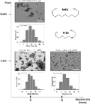


A highly efficient porous rod-like Ce-doped ZnO photocatalyst for the degradation of dye contaminants in water
Beilstein J. Nanotechnol. 2019, 10, 1157–1165, doi:10.3762/bjnano.10.115
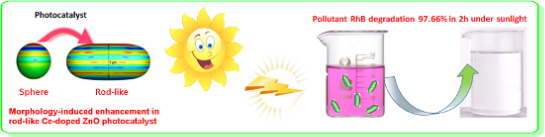
- 3 h. Characterization The XRD patterns of pure ZnO and CZO-4 are given in Figure 3. It can be found that the sharp peaks of ZnO, which indicates a high degree of crystallinity, are located at 2θ values of 31.5, 34.05, 35.9, 47.2, 56.3, 62.6, 66.08, 67.64, 68.84 finely corresponding to the (100


Photoactive nanoarchitectures based on clays incorporating TiO2 and ZnO nanoparticles
Beilstein J. Nanotechnol. 2019, 10, 1140–1156, doi:10.3762/bjnano.10.114
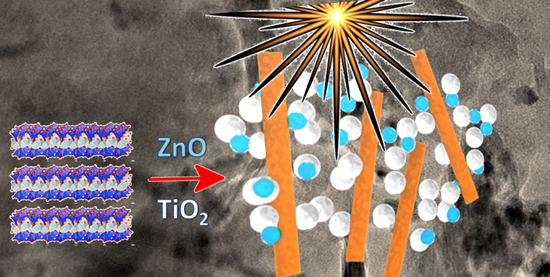
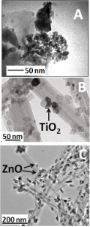
- . Synthesis strategies of hierarchically designed TiO2 and ZnO nanoarchitectures with controlled morphology, crystallinity, anisotropic shape, and composition have been investigated recently. The aim was to obtain accessible and interconnected porous networks with increased specific surface area for the



CuInSe2 quantum dots grown by molecular beam epitaxy on amorphous SiO2 surfaces
Beilstein J. Nanotechnol. 2019, 10, 1103–1111, doi:10.3762/bjnano.10.110
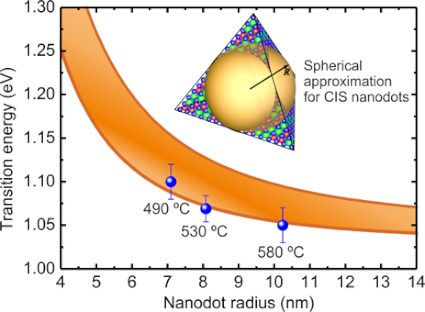
- confirmed the crystallinity of the nanodots as well as chemical composition and structure compatible with tetragonal CuInSe2. Photoluminescence measurements of CdS-passivated nanodots showed that the nanodots are optoelectronically active with a broad emission extending to energies above the CuInSe2 bulk


Co-doped MnFe2O4 nanoparticles: magnetic anisotropy and interparticle interactions
Beilstein J. Nanotechnol. 2019, 10, 856–865, doi:10.3762/bjnano.10.86
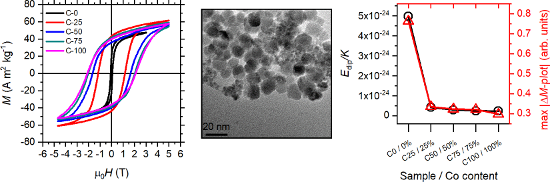
- low temperature, not higher than 350 °C) allows nanoparticles to be produced with good control of size and crystallinity in large scale (i.e., tens of grams), much more than can be provided by conventional chemical approaches (usually limited to 100–300 mg). Therefore this method can be easily


Synthesis of MnO2–CuO–Fe2O3/CNTs catalysts: low-temperature SCR activity and formation mechanism
Beilstein J. Nanotechnol. 2019, 10, 848–855, doi:10.3762/bjnano.10.85
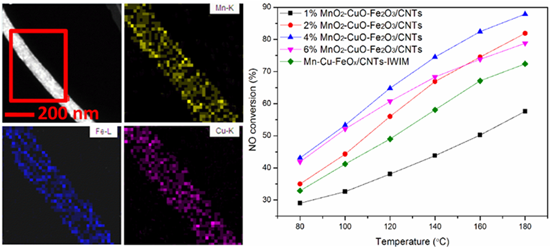
- shown in the results of NO conversion (Figure 1) and our previous studies [6][16][17]. In the case of Mn–Cu–FeOx/CNTs-IWIM, a series of peaks corresponding to Mn3O4 (PDF#18-0803) can be seen. Metal oxide catalysts with higher crystallinity show a smaller catalytic activity [20]. This is corroborated by