


Search results
Search for "detection" in Full Text gives 834 result(s) in Beilstein Journal of Nanotechnology. Showing first 200.
Ultrasensitive and ultrastretchable metal crack strain sensor based on helical polydimethylsiloxane
Beilstein J. Nanotechnol. 2024, 15, 270–278, doi:10.3762/bjnano.15.25
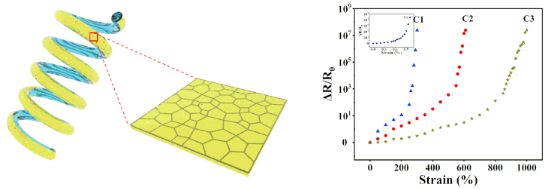
- ; ultrahigh stretchability; Introduction In recent years, there has been significant advancement in the field of stretchable and soft electronic devices due to the increasing demand for their applications in various domains [1][2]. These applications include the detection of human motion [3][4][5


Design, fabrication, and characterization of kinetic-inductive force sensors for scanning probe applications
Beilstein J. Nanotechnol. 2024, 15, 242–255, doi:10.3762/bjnano.15.23
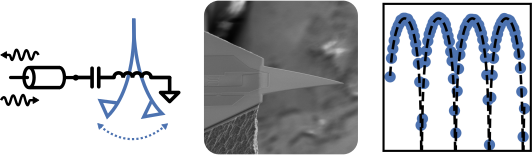
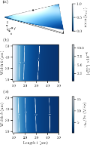
- ; kinetic inductance; optomechanics; superconductivity; Introduction Cavity optomechanics [1] deals with the detection and manipulation of massive “test objects” at the fundamental limits imposed by quantum physics [2]. By detecting the motion of the test object, we can sense an external force, for example
- point where motion detection becomes the limiting source of noise. In this context, the principles of cavity optomechanics may improve the sensitivity of AFM force sensors. Cryogenic AFM further enables the use of superconducting microwave resonators in a cavity optomechanical detection scheme [4][5][6
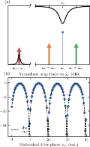
- amplitude modulation AFM (AM-AFM) and frequency modulation AFM (FM-AFM). Both modes, and their many variants, rely on lock-in detection of the motion signal, and in most cases, this signal is at the same frequency as the excitation. Cavity optomechanical detection principles can be used for both AM-AFM and



Quantitative wear evaluation of tips based on sharp structures
Beilstein J. Nanotechnol. 2024, 15, 230–241, doi:10.3762/bjnano.15.22
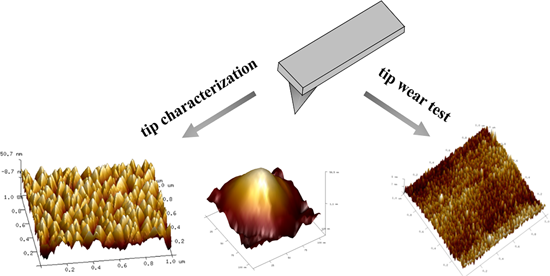
- assessed using the AFM imaging mode. This offers a compelling alternative to the conventional SEM detection method. Considering the potential of this technique, it stands on the brink of becoming a standard approach for AFM tip topography detection. The study further examines the impact of various scanning




Development and characterization of potential larvicidal nanoemulsions against Aedes aegypti
Beilstein J. Nanotechnol. 2024, 15, 104–114, doi:10.3762/bjnano.15.10
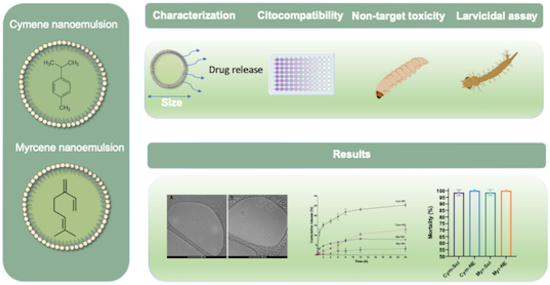
- were evaluated over a period of 60 days using dynamic light scattering, and the zeta potential was determined via electrophoretic mobility in a Zetasizer 3000 HSA (Malvern Instruments) device, using a 10 mW HeNe laser operated at 633 nm with a detection angle of incidence of 173° at 25 °C. Data


New application of bimetallic Ag/Pt nanoplates in a colorimetric biosensor for specific detection of E. coli in water
Beilstein J. Nanotechnol. 2024, 15, 95–103, doi:10.3762/bjnano.15.9
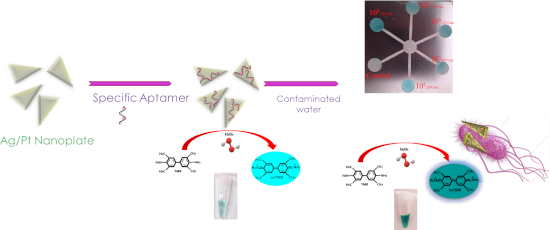
- detection is described using a silver/platinum nanoplate (Ag/Pt NPL) that interacts with an oligonucleotide aptamer as a bioreceptor. The size of the Ag/Pt NPLs was about 42 nm according to the FE-SEM images. The EDS result indicates that a thin layer of Pt ions was coated on the surface of the Ag NPLs
- can be completed in 30 min and the presence of E. coli levels can be distinguished with the naked eye. The absorbance at 652 nm is proportional to pathogen concentration from 10 to 108 CFU·mL−1, with a detection limit of 10 CFU·mL−1. The percent recovery for the water samples spiked with E. coli is 95
- %. The developed assay should serve as a general platform for detecting other pathogenic bacteria which affect water and food quality. The proposed E. coli detection strategy has appealing characteristics such as high sensitivity, simple operation, short testing time, and low cost. Keywords: aptamer


Study of the reusability and stability of nylon nanofibres as an antibody immobilisation surface
Beilstein J. Nanotechnol. 2024, 15, 83–94, doi:10.3762/bjnano.15.8
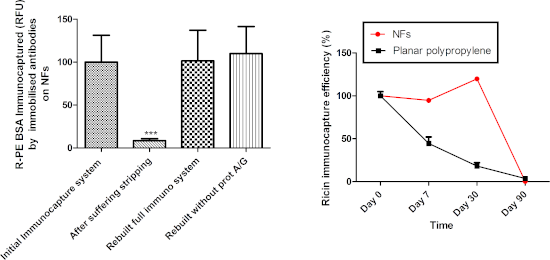
- , Ctra. M-301, Km 10, 28330, San Martín de la Vega, Madrid, Spain 10.3762/bjnano.15.8 Abstract In the case of a biological threat, early, rapid, and specific detection is critical. In addition, ease of handling, use in the field, and low-cost production are important considerations. Immunological
- investments in health and safety) [2]. For this reason, early, rapid, and specific detection of biological threats becomes a very important objective to react as early as possible. Many efforts have been made in this direction. When designing a new sensor device, not only the rapid and specific identification
- has to be taken into account, but also ease of handling, on-site use, and low production cost. Thus, several authors, such as Janik-Karpinska and colleagues in 2022 [3], have pointed out that rapid detection of pathogens and toxins in food, water, and the environment is a paramount health and safety


Curcumin-loaded nanostructured systems for treatment of leishmaniasis: a review
Beilstein J. Nanotechnol. 2024, 15, 37–50, doi:10.3762/bjnano.15.4

- . donovani and L. infantum complex. This is due to advances in the molecular detection of these species worldwide [29][30][31]. The Leishmania spp. life cycle is mainly divided into two evolutionary stages: (i) extracellular promastigote, which is the flagellate form and is in the intestine of the


Measurements of dichroic bow-tie antenna arrays with integrated cold-electron bolometers using YBCO oscillators
Beilstein J. Nanotechnol. 2024, 15, 26–36, doi:10.3762/bjnano.15.3
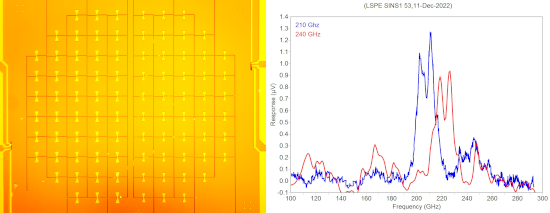
- ) Array [2], Large Scale Polarization Explorer (LSPE) [3], Lite (Light) satellite for the study of B mode polarization and Inflation from cosmic background Radiation Detection (LiteBIRD) [4], Q & U Bolometric Interferometer for Cosmology (QUBIC) [5], Simons Observatory [6], and Ali CMB Polarization
- dichroic receiving systems, one should overcome the limitation of a silicon substrate, whose thickness affects the efficiency of detection as a refractive medium. In the case of close frequencies, however, one can find a compromise of matching the average frequency of both arrays with reasonable detection


A combined gas-phase dissociative ionization, dissociative electron attachment and deposition study on the potential FEBID precursor [Au(CH3)2Cl]2
Beilstein J. Nanotechnol. 2023, 14, 1178–1199, doi:10.3762/bjnano.14.98



Dual-heterodyne Kelvin probe force microscopy
Beilstein J. Nanotechnol. 2023, 14, 1068–1084, doi:10.3762/bjnano.14.88
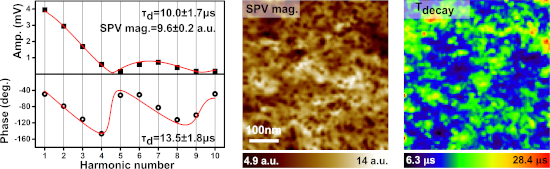
- mode (DHe-KPFM spectroscopy), and 2D dynamic images can be acquired in data cube mode. The capabilities of DHe-KPFM in terms of time-resolved measurements, surface photovoltage (SPV) imaging, and detection of weak SPV signals are demonstrated through a series of experiments on difference surfaces: a
- optoelectronic interfaces formed between caesium lead bromide perovskite nanosheets and highly oriented pyrolytic graphite. Kelvin Probe Force Microscopy Background, Amplitude-Modulated Heterodyne KPFM Many KPFM modes rely on the detection of a modulated component of the electrostatic force proportional to the




Recognition mechanisms of hemoglobin particles by monocytes – CD163 may just be one
Beilstein J. Nanotechnol. 2023, 14, 1028–1040, doi:10.3762/bjnano.14.85
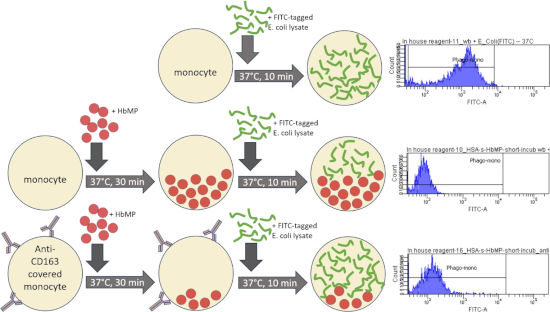
- the case of our HbMPs containing human serum albumin, we assume that a conformational change within HSA might occur when the molecules are cross-linked by glutaraldehyde. Detection of this denatured protein by receptors of phagocytic cells would also be conceivable in this case to explain CD204’s part




A visible-light photodetector based on heterojunctions between CuO nanoparticles and ZnO nanorods
Beilstein J. Nanotechnol. 2023, 14, 1018–1027, doi:10.3762/bjnano.14.84
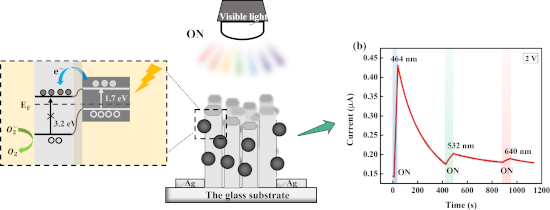
- ]) to extend the light absorption towards the visible region. Copper oxide (CuO) is a candidate because of its narrow bandgap (ca. 1.35 eV), which is suitable for visible-light detection. Hence, CuO can be a potential material for solving the problem of limited light absorption of ZnO. Conduction and
- ) characteristics and current–time (I–t) curves (Keithley 2400). Visible detection measurements were performed using LEDs with different wavelengths (395, 464, 532, and 640 nm). FESEM images of (a) pure ZnO NRs and (b) CuO NPs/ZnO NRs; (c) EDS spectrum of CuO NPs/ ZnO NRs. (a) XRD patterns and (b) UV–vis absorption


Nanoarchitectonics of photothermal materials to enhance the sensitivity of lateral flow assays
Beilstein J. Nanotechnol. 2023, 14, 988–1003, doi:10.3762/bjnano.14.82
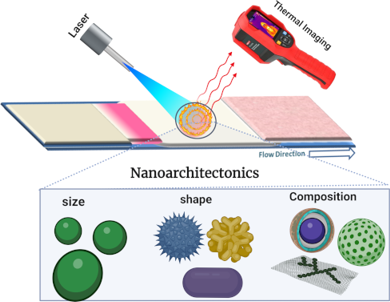
- . Thus, the test results from LFAs are not comparable with standard centralized laboratory techniques such as enzyme-linked immunosorbent assay, real-time polymerase chain reaction, and high-pressure liquid chromatography, which have a detection limit from nanomolar to attomolar concentrations, whereas
- the detection limit of LFAs is only between millimolar and micromolar concentrations [10]. To overcome this, various modifications of LFAs have been explored [11][12]. For example, Petrakova et al. used different architectures of gold nanoparticles in LFAs to improve the sensitivity of the assays [11
- additional peroxidase substrates in LFAs increased the detection limit from the nanogram to the picogram level [16][17]. Various tracer elements have been developed to increase the sensitivity of an assay, including noble metal nanomaterials, metal oxides, plasmonic nanostructures, carbon-based materials


Fragmentation of metal(II) bis(acetylacetonate) complexes induced by slow electrons
Beilstein J. Nanotechnol. 2023, 14, 980–987, doi:10.3762/bjnano.14.81
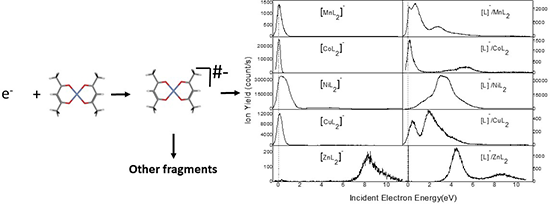
- representing the ratio of the density of neutral precursors, must then be weighted with the (yet unknown) electron attachment cross sections to compare the experimentally measured ratio between CoL2− anions and MnL2− anions, via Nion = ε·Ne·Nneutral·σion·L, where ε is the ion detection efficiency, Ne and


Antibody-conjugated nanoparticles for target-specific drug delivery of chemotherapeutics
Beilstein J. Nanotechnol. 2023, 14, 912–926, doi:10.3762/bjnano.14.75

- higher binding affinity and specificity, mAbs have received a lot of attention for the detection of selective cancer biomarkers and also for the treatment of various types of cancer. Antibody-conjugated nanoparticles (ACNPs) are an effective targeted therapy for the efficient delivery of
- identify new molecular markers for the rapid detection and treatment of various types of cancers. NPs enhance the drug accumulation at the target site due to their advantages, including higher surface-to-volume ratio, ease of surface modification and functionalization, precise control of structure and size
- , detection, and eradication of cancer cells and biomarkers, with great potential in theranostic applications. Despite these advantages, the design and fabrication of targeted NPs for cancer therapy is still very challenging regarding biocompatibility, pharmacokinetics, in vivo targeting efficacy, and cost



A wearable nanoscale heart sound sensor based on P(VDF-TrFE)/ZnO/GR and its application in cardiac disease detection
Beilstein J. Nanotechnol. 2023, 14, 819–833, doi:10.3762/bjnano.14.67
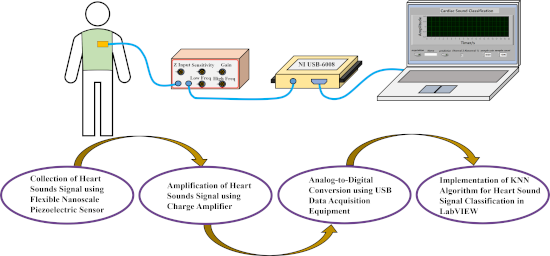
- sensor, and a visual heart sound acquisition and classification system was designed using LabVIEW. A heart sound classification model was trained based on a fine K-nearest neighbor classification algorithm to predict whether the collected heart sounds are normal or abnormal. The heart sound detection
- energy harvesting [15]. Applying machine learning classification algorithms in the domain of human physiological signal detection is presently a prominent area of research. A notable study by R. Guo et al. [16] successfully integrated deep learning techniques with frictional hydrogel sensors to achieve
- neural network, and hidden Markov model-based and clustering-based methods. For example, Zheng et al. successfully implemented computer-aided diagnosis of chronic heart failure using a least squares SVM [17]. In this paper, to enable real-time monitoring and early detection of cardiovascular diseases, a


Nanostructured lipid carriers containing benznidazole: physicochemical, biopharmaceutical and cellular in vitro studies
Beilstein J. Nanotechnol. 2023, 14, 804–818, doi:10.3762/bjnano.14.66
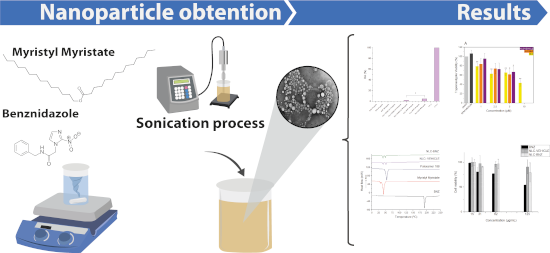
- the filtrate (i.e., the free drug concentration) in μg/mL, and Vf is the volume after ultrasonication (mL). The theoretical drug loading (DL%) was calculated as follows: HPLC analysis of benznidazole Chromatographic separation was achieved by HPLC (Gilson SAS, Villiers-Le-Bel, France) via UV detection
- . A Platinum EPS C8 (150 mm × 4.6 mm, 5 μm, GraceTM, Columbia, MD, USA) column was used; the mobile phase consisted of a mixture of methanol and 0.02% phosphoric acid solution (60:40) for a final pH of 2.5. The system was operated isocratically at a 1.0 mL/min flow rate and the detection was performed


Silver-based SERS substrates fabricated using a 3D printed microfluidic device
Beilstein J. Nanotechnol. 2023, 14, 793–803, doi:10.3762/bjnano.14.65

- detection of harmful chemicals in the environment and for food safety is a crucial requirement. While traditional techniques such as GC–MS and HPLC provide high sensitivity, they are expensive, time-consuming, and require skilled labor. Surface-enhanced Raman spectroscopy (SERS) is a powerful analytical
- and 8.21 × 10³, respectively, were obtained. The detection limits for rhodamine B and melamine were estimated to be 1.94 × 10⁻¹⁰ M and 2.8 × 10⁻⁸ M with relative standard deviation values of 3.4% and 4.6%, respectively. The developed SERS substrate exhibits exceptional analytical performance and has
- the potential to be a valuable analytical tool for monitoring environmental contaminants. Keywords: 3D printing; microfluidic droplet; SERS substrate; silver nanoparticle; smartphone detection; Introduction Surface-enhanced Raman spectroscopy (SERS) has emerged as a powerful optical trace detection



Cross-sectional Kelvin probe force microscopy on III–V epitaxial multilayer stacks: challenges and perspectives
Beilstein J. Nanotechnol. 2023, 14, 725–737, doi:10.3762/bjnano.14.59
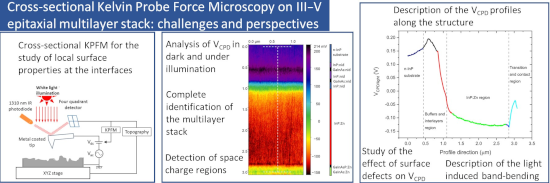
- technique for the analysis of an InP/GaInAs(P) multilayer stack. KPFM reveals a strong dependence on the local doping concentration, allowing for the detection of the surface potential of layers with a resolution as low as 20 nm. The analysis of the surface potential allowed for the identification of space
- tip can sense multiple layers with different properties simultaneously, resulting in the detection of an averaged VCPD at the interfaces [27]. During KPFM measurements, the tip scans the cross section from the n-InP substrate to the end of the sample; consequently, it will sense the surface potential
- experimental conditions, and the presence of surface defects. All these aspects have an impact on the surface potential, as we will see in the Discussion section (“KPFM experimental conditions and sample preparation”). Regarding the other slopes pointed out above, their detection is attributable to the


A graphene quantum dots–glassy carbon electrode-based electrochemical sensor for monitoring malathion
Beilstein J. Nanotechnol. 2023, 14, 701–710, doi:10.3762/bjnano.14.56
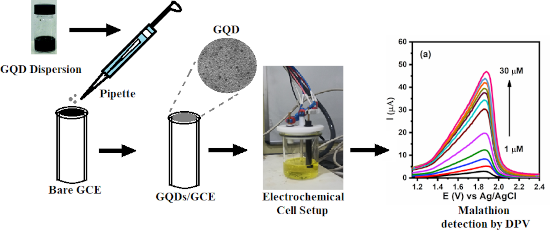
- between 1 to 30 µM using differential pulse voltammetry, which resulted in a limit of detection of 0.62 nM. GQDs can thus be used to develop electrochemical sensors for the detection of pesticides in water. Keywords: cyclic voltammetry; differential pulse voltammetry; electrochemical impedance
- expertise. It is therefore necessary to develop a technology that can detect pesticides quickly, easily, and economically. With electrochemical detection techniques, a wide range of pesticides can be detected by the fabrication of simple, cost-effective, rapid, and high-throughput portable devices [8]. The
- application of electrochemical methods in detection of pesticides has already been extensively studied [9][10][11][12][13]. Nanomaterials are ideal for electrochemical sensing because of their unique properties such as high chemical stability, thermal conductivity, electrical conductivity, and large surface


Humidity-dependent electrical performance of CuO nanowire networks studied by electrochemical impedance spectroscopy
Beilstein J. Nanotechnol. 2023, 14, 683–691, doi:10.3762/bjnano.14.54
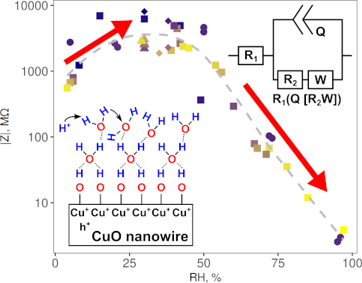
- sensitive and fast responding nanowire-based gas sensors for the detection of CO, C2H5OH, H2S, and NO2 [10][11][12][13][14]. Unusually strong space-charge-limited currents observed in individual CuO nanowires [15] in combination with the mechanical strength [9][16] motivate their application as durable


Metal-organic framework-based nanomaterials as opto-electrochemical sensors for the detection of antibiotics and hormones: A review
Beilstein J. Nanotechnol. 2023, 14, 631–673, doi:10.3762/bjnano.14.52
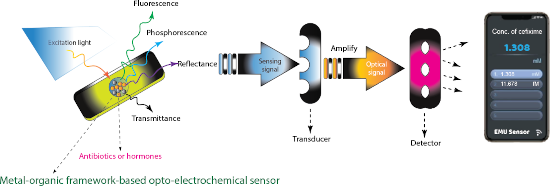
- and luminescent MOF sensors for detection and monitoring of antibiotics and hormones from various samples are critically reviewed. The detailed sensing mechanisms and detection limits of MOF sensors are addressed. The challenges, recent advances, and future directions for the development of stable
- , high-performance MOFs as commercially viable next-generation opto-electrochemical sensor materials for the detection and monitoring of diverse analytes are discussed. Keywords: antibiotics sensing; endocrinal disorders; fluorescent sensor; hormones sensors; luminescent sensor; MOF nanohybrids
- detection (LOD), and are selective in many cases. However, they have a number of shortcomings. For example, in order to increase the sensitivity of the established immunoassays, Mitchell and Lowe [20] and Wu et al. [21] used the ELISA technique for the analysis of testosterone and progesterone, respectively


Titania nanoparticles for photocatalytic degradation of ethanol under simulated solar light
Beilstein J. Nanotechnol. 2023, 14, 616–630, doi:10.3762/bjnano.14.51
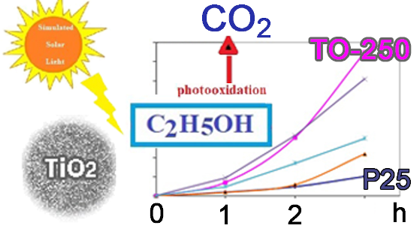
- exclude the possibility that these defects are located on the TiO2 surface and that the concentration of defects is below the detection limit of XPS [52][53]. Another explanation would be this: The surface depth sensitivity of XPS is known to be 5–10 nm compared to 1 μm in PL. Hence, this technique




Suspension feeding in Copepoda (Crustacea) – a numerical model of setae acting in concert
Beilstein J. Nanotechnol. 2023, 14, 603–615, doi:10.3762/bjnano.14.50
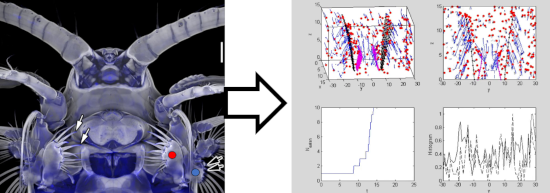
- during suspension feeding. In the past, numerical simulations were used to study the detection of prey, mates, or predators and the feeding current generation by limb motion [28][39][40][41]. However, mechanical property gradients and adhesion of setae were previously not addressed. As model organism we


SERS performance of GaN/Ag substrates fabricated by Ag coating of GaN platforms
Beilstein J. Nanotechnol. 2023, 14, 552–564, doi:10.3762/bjnano.14.46
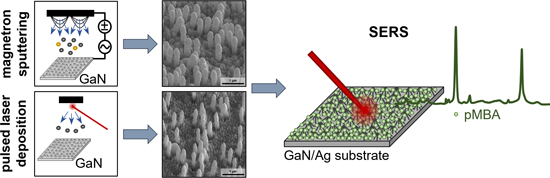
- use in various applications, including biosensing and bioanalysis [4][5][6][7], and many defense and homeland security applications [8][9][10], such as forensic science [11] or detection of hazardous materials [12][13][14][15][16]. Any SERS technique application requires efficient, reproducible, and
- GaN platforms can then be coated with Au [26][28], Ag [25], AuCu, or AuAg alloys [24][29][30][31][32] to produce highly reproducible and efficient SERS substrates. GaN-based SERS substrates have been used so far for trace detection of explosive materials [33], fentanyl and bacterial spores’ analysis





