Search results
Search for "dielectric" in Full Text gives 463 result(s) in Beilstein Journal of Nanotechnology. Showing first 200.
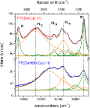
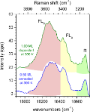
The influence of an interfacial hBN layer on the fluorescence of an organic molecule
Beilstein J. Nanotechnol. 2020, 11, 1663–1684, doi:10.3762/bjnano.11.149
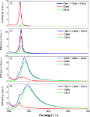
- that the energy of the SPP of Cu(111), which is calculated from the condition [51] using the dielectric functions given in [52], is obtained at a value of = 2.3 eV. Our excitation energy was 2.698 eV. From our experiment we have indeed evidence that SERS is related to surface defects. This will be
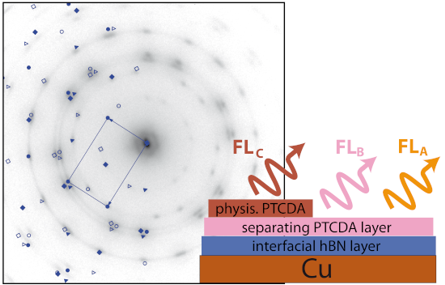
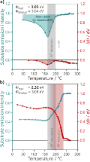
- a dominant role of the dielectric properties of the metal substrates for the transition energies. The peak FLC (cf. Figure 4b) shows the same behavior as FLB at a coverage of 1.55 ML. It is as broad as FLB and appears after annealing at 200 K. However, it is not present at a coverage of 0.60 ML





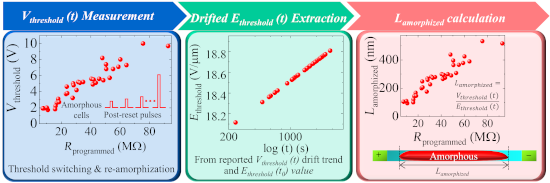
Amorphized length and variability in phase-change memory line cells
Beilstein J. Nanotechnol. 2020, 11, 1644–1654, doi:10.3762/bjnano.11.147
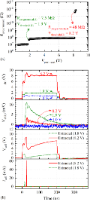
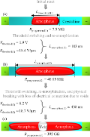
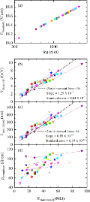
- -switching process and not to the permanent and detrimental electrical breakdown failure that occurs in any dielectric material. Experimental The patterned GST-225 line cells used for this study were deposited on silicon dioxide (SiO2), had bottom metal contact pads (tungsten with Ti/TiN liner), and were




Fabrication of nano/microstructures for SERS substrates using an electrochemical method
Beilstein J. Nanotechnol. 2020, 11, 1568–1576, doi:10.3762/bjnano.11.139
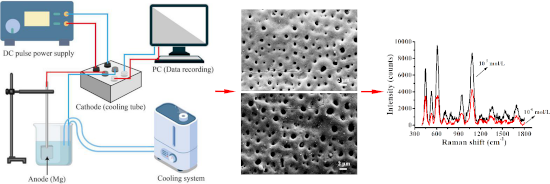
- , all PEO-treated Mg specimens demonstrate the typical surface morphology, which comprises of micrometer and sub-micrometer-sized quasi-circular pores and cracks. This porous and uneven surface is a result of the consecutive dielectric breakdown of the passivation layer and the heat generated during


Electrokinetic characterization of synthetic protein nanoparticles
Beilstein J. Nanotechnol. 2020, 11, 1556–1567, doi:10.3762/bjnano.11.138
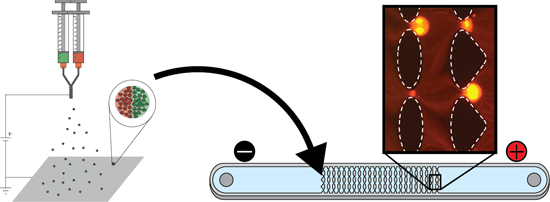
- can also exploit differences in both electrical charge and dielectric properties of the particles, making them uniquely suited methods to process and purify SPNPs. EK techniques can also be used to differentiate between SPNPs and ASPNPs, since the anisotropic particles, the polar ends of which have
- dielectric properties of particles can be exploited for the design of EK-based separation processes. These results demonstrate that EK microfluidics is a promising technique to be used for the characterization and separation of synthetic protein nanoparticles. Theoretical Approach Depending on the magnitude



Optically and electrically driven nanoantennas
Beilstein J. Nanotechnol. 2020, 11, 1542–1545, doi:10.3762/bjnano.11.136

- . However, owing to the polarization and far-field interference, a silencing of the SHG is observed for decreasing gap sizes [53]. This effect is further studied in [54] using the surface integral equation method. On the other hand, the generation of higher harmonics by a dielectric nanostructure can be
Controlling the electronic and physical coupling on dielectric thin films
Beilstein J. Nanotechnol. 2020, 11, 1492–1503, doi:10.3762/bjnano.11.132
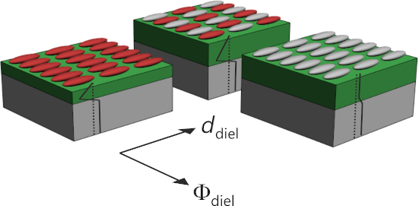
- ), 10587 Berlin, Germany 10.3762/bjnano.11.132 Abstract Ultrathin dielectric/insulating films on metals are often used as decoupling layers to allow for the study of the electronic properties of adsorbed molecules without electronic interference from the underlying metal substrate. However, the presence
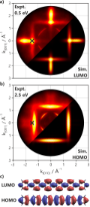
- : decoupling; integer charge transfer; organic films; para-sexiphenyl; thin dielectric film; Introduction Since the first scanning tunneling microscope (STM) imaging of the highest occupied molecular orbital (HOMO) and the lowest unoccupied molecular orbital (LUMO) of pentacene (5A) on NaCl/Cu(111) was
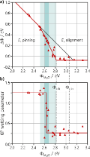
- performed [1], the concept of decoupling molecules from metal substrates with large bandgap dielectric films has become widely accepted. Although such systems have become a rich field of research, particularly in the scanning probe microscopy community, it is often forgotten that the wide bandgap insulating




A wideband cryogenic microwave low-noise amplifier
Beilstein J. Nanotechnol. 2020, 11, 1484–1491, doi:10.3762/bjnano.11.131
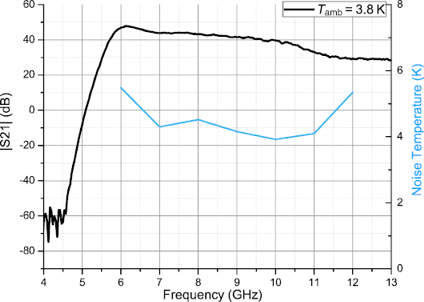
- than 36 dB at 300 K in the frequency range from 6 to 12 GHz was obtained. For the next step we used the real S-parameters of passive circuit components placed on a dielectric substrate. High-frequency edged trimmed block resistors with a 0402 package size from Vishay company were used in drain and gate
- the amplifier. For increasing the circuit stability around 10 GHz and better matching, 10 Ω gate resistors were used for the second and the fourth stage. Multilayer ceramic capacitors with C0G dielectric material in a 0402 package were used. Murata ceramic core coils with 0201 SMD package size and a




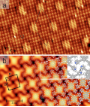
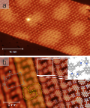
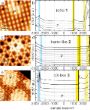
Self-assembly and spectroscopic fingerprints of photoactive pyrenyl tectons on hBN/Cu(111)
Beilstein J. Nanotechnol. 2020, 11, 1470–1483, doi:10.3762/bjnano.11.130
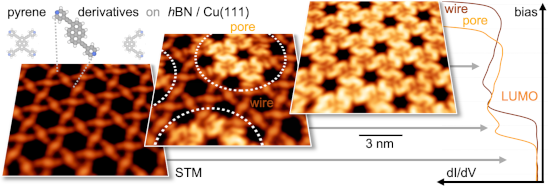
- properties in organic layers relied on bulk insulator supports [14][15][16]. As a promising alternative to bulk insulators, ultrathin dielectric films can act as decoupling layers but maintain the possibility to perform STM and STS measurements [17]. Atomically-thin hBN sheets attracted considerable interest
- (see Figure 6). Dissimilar responses of distinct MOs to work function variations were previously discussed, e.g., for pentacene on dielectric decoupling layers [23]. The assignment of the dI/dV signature to the MOs was corroborated by resolving the submolecular features in high-resolution STM images at




Effect of localized helium ion irradiation on the performance of synthetic monolayer MoS2 field-effect transistors
Beilstein J. Nanotechnol. 2020, 11, 1329–1335, doi:10.3762/bjnano.11.117
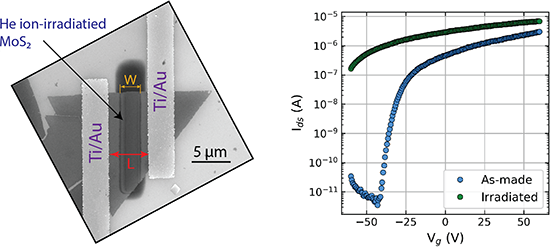
- characteristics of on-dielectric MoS2 FETs can be well-controlled in the monolayer limit. Post-metallization irradiations need to be finely controlled to ensure that the hybridized metal–semiconductor interface is not disturbed, otherwise the drive current in ion beam-treated 2D FETs will be limited for certain


Structural and electronic properties of SnO2 doped with non-metal elements
Beilstein J. Nanotechnol. 2020, 11, 1321–1328, doi:10.3762/bjnano.11.116
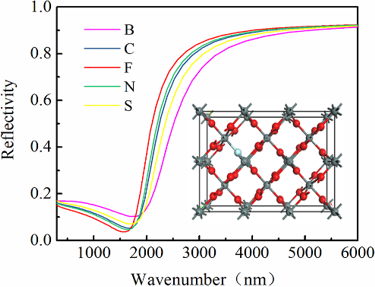
- dielectric constant is εr = 0, the concentration of positive and negative charges is the same, and positive and negative charges are free to move. When the probability of collision of free electrons in a solid is 0, the dielectric function is where ωp is the plasma frequency. ωp is the intrinsic



Cryogenic low-noise amplifiers for measurements with superconducting detectors
Beilstein J. Nanotechnol. 2020, 11, 1316–1320, doi:10.3762/bjnano.11.115
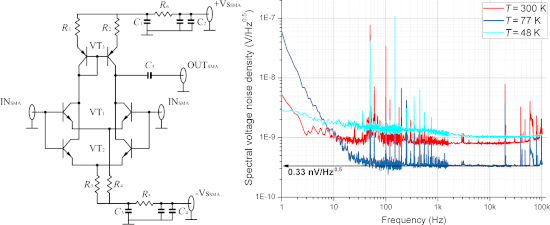
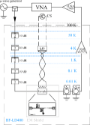
- and the capacitors have a C0G-type of dielectric. All the components were mounted on the designed layout of the printed circuit board (PCB) from FR4 material. We did not solder the electrodes of the capacitors directly to the PCB in order to reduce the mechanical stress during the cooldown cycles


Role of redox-active axial ligands of metal porphyrins adsorbed at solid–liquid interfaces in a liquid-STM setup
Beilstein J. Nanotechnol. 2020, 11, 1264–1271, doi:10.3762/bjnano.11.110
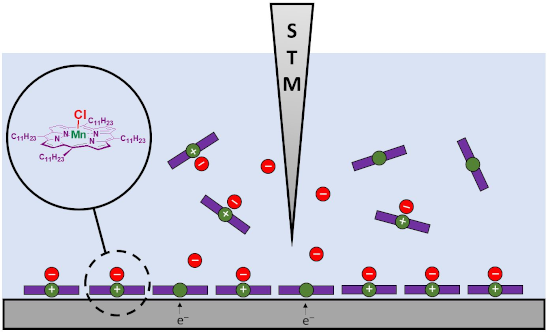
- cause the difference in observed current between solutions of MnTUPCl in 1-phenyloctane and n-tetradecane are: (i) a better solubility of chloride ions and/or Mn(II)TUP species in 1-phenyloctane compared to n-tetradecane, and (ii) a difference in dielectric constants of the used solvents, which are 2.26
- and 2.03, respectively. A different dielectric constant may lead to a different potential decay at the interfaces, which in turn may influence the reaction rates. However, since the difference in dielectric constant between the two solvents is small, we propose the first explanation as being more


Gas sorption porosimetry for the evaluation of hard carbons as anodes for Li- and Na-ion batteries
Beilstein J. Nanotechnol. 2020, 11, 1217–1229, doi:10.3762/bjnano.11.106
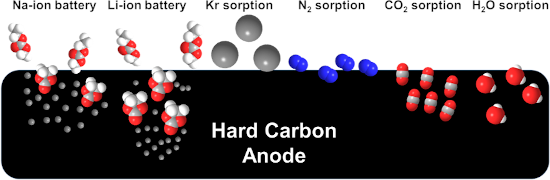
- decomposition at potentials below the stability window of the electrolyte (for LIBs typically around 0.8 VLi) [21]. Since the dielectric SEI passivates the electrode, an irreversible capacity proportional to the electrochemical active surface area is expected. Accordingly, the reduction of the specific surface


High permittivity, breakdown strength, and energy storage density of polythiophene-encapsulated BaTiO3 nanoparticles
Beilstein J. Nanotechnol. 2020, 11, 1190–1197, doi:10.3762/bjnano.11.103
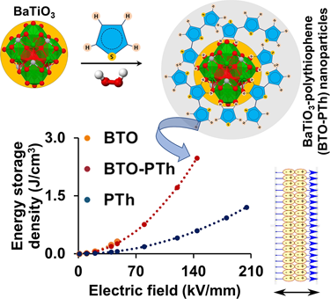
- Department of Chemistry, College of Science, University of Hafr Al Batin, PO Box 1803, Hafr Al Batin, 39524, Saudi Arabia 10.3762/bjnano.11.103 Abstract High permittivity and breakdown strength are desired to improve the energy storage density of dielectric materials based on reinforced polymer composites
- excellent dielectric properties with high permittivity (25.2) and low loss (0.04) at high frequency (106 Hz). A thick PTh encapsulation layer on the surface of the BTO nanoparticles improves their breakdown strength from 47 to 144 kV/mm and the energy storage density from 0.32 to 2.48 J/cm3. A 7.75-fold
- increase in the energy storage density of the BTO-PTh nanoparticles is attributed to simultaneously high permittivity and breakdown strength, which are excellent for potential energy storage applications. Keywords: barium titanate (BaTiO3) nanoparticles; breakdown strength; dielectric materials; energy




Nonadiabatic superconductivity in a Li-intercalated hexagonal boron nitride bilayer
Beilstein J. Nanotechnol. 2020, 11, 1178–1189, doi:10.3762/bjnano.11.102
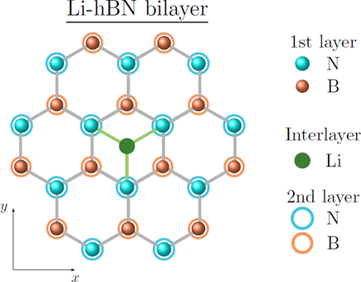
- result is radically different from the data obtained for graphene/SiO2 [33]. In addition, hBN monolayers exhibit a high temperature stability, a low dielectric constant (ε = 3–4), and a high thermal conductivity [34]. The band gap of hBN is about 5.9 eV [35]. Furthermore, which is also important, hBN is


![[Graphic 34]](/bjnano/content/inline/2190-4286-11-102-i54.svg?max-width=637&scale=1.18182) for Li-hBN. The results were obta...
for Li-hBN. The results were obta...
Hybridization vs decoupling: influence of an h-BN interlayer on the physical properties of a lander-type molecule on Ni(111)
Beilstein J. Nanotechnol. 2020, 11, 1168–1177, doi:10.3762/bjnano.11.101
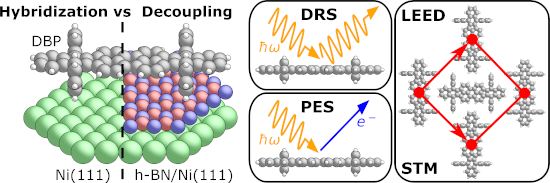
- of both DBP layers on h-BN/Ni(111). The numerical algorithm is described in [28]. In the following, we will focus on the imaginary part of the dielectric function (ε'') only, which is depicted in Figure 2, as this physical quantity is indicative of the optical absorption. The comparison between DBP
- illustrated in Supporting Information File 1, Figure S1. While the shift can be explained by a different dielectric environment of second-layer DBP molecules compared with those in the first layer, the new optical species can be clearly assigned to the fingerprint of DBP aggregates. The similarity of the
- background. Imaginary part of the dielectric function obtained from the differential reflectance spectra of 1 MLE DBP on h-BN/Ni(111) (blue: substrate temperature = 25 °C, green: substrate temperature approx. 170 °C). Black dashed lines mark the spectral position of the S0→S1 transition. (a) LEED image


Excitonic and electronic transitions in Me–Sb2Se3 structures
Beilstein J. Nanotechnol. 2020, 11, 1045–1053, doi:10.3762/bjnano.11.89
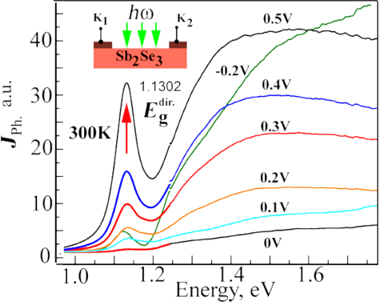
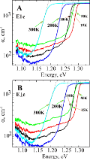
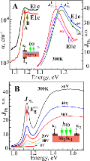
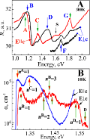
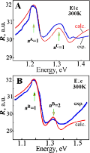
- the reflection spectra for both Е||с and Е⟂с polarization cases at 300 K. The calculations showed that for the polarization Е||с the background dielectric constant (εb) is equal to 7.5, the energy of the transversal exciton (ωТ) is 1.192 eV, the longitudinal-transversal splitting (ωLT) is 15 meV, the
- effective mass (μ*) is calculated for the excitons A, B, C and D. For excitons A and B when the background dielectric constant is εb = 7.5 and the binding energy is Ry = 130–136 meV the reduced exciton mass is μ* = 0.56m0. For the exciton series C at εb = 7.5 and at the binding energy Ry = 82 meV, the


A new photodetector structure based on graphene nanomeshes: an ab initio study
Beilstein J. Nanotechnol. 2020, 11, 1036–1044, doi:10.3762/bjnano.11.88
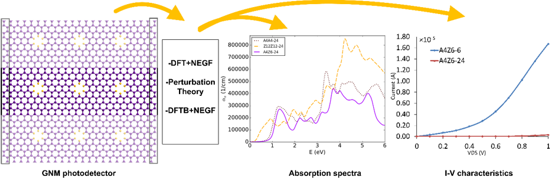
- permittivity and system volume, respectively. The relative dielectric constant, εr, is related to the susceptibility, χ, as [26][27]: The photocurrent is calculated by first-order perturbation theory in the framework of the Born approximation. In short, light–electron interaction is added to the Hamiltonian as


Microwave-induced electric discharges on metal particles for the synthesis of inorganic nanomaterials under solvent-free conditions
Beilstein J. Nanotechnol. 2020, 11, 1019–1025, doi:10.3762/bjnano.11.86
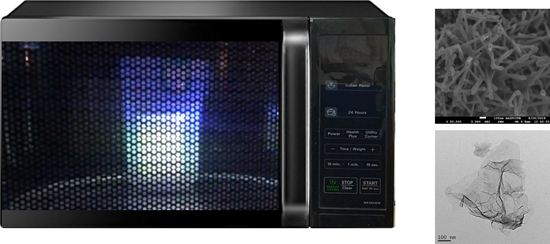
- , require either large amounts of chemicals or longer synthesis times, or both [1]. Microwave synthesis has become popular in the last three decades as an alternative route for synthesizing molecules and materials at a significantly shorter time scale [2][3][4][5][6][7][8]. Dielectric heating under


Gas-sensing features of nanostructured tellurium thin films
Beilstein J. Nanotechnol. 2020, 11, 1010–1018, doi:10.3762/bjnano.11.85
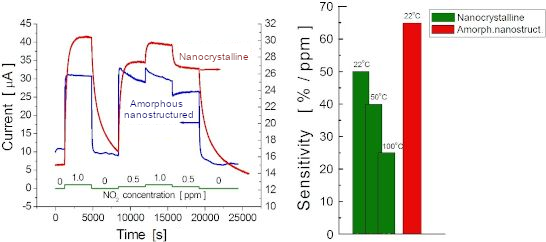
- aims of the present work were to investigate and improve the gas-sensing parameters of nanostructured Te films by using a mechanical nanostructuring approach. Crystalline and amorphous Te films were grown, respectively, on glass or porous, nanostructured, dielectric substrates. These two physically
- time delay between measurements was 2 s, which was, simultaneously, much smaller than the sensor response time and much higher than the assessed dielectric relaxation time value. In order to transform the resistance signal into a voltage signal, the sample was connected in series to a load resistance
- a study regarding two different types of nanostructured Te films physically built either in the form of nanocrystals, grown onto flat substrates, or vitreous Te, deposited onto nanostructured (porous) dielectric templates. It was expected that the physical properties, including the adsorptive ones


Measurement of electrostatic tip–sample interactions by time-domain Kelvin probe force microscopy
Beilstein J. Nanotechnol. 2020, 11, 911–921, doi:10.3762/bjnano.11.76
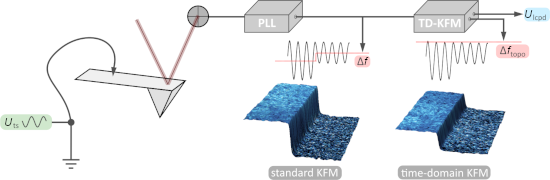
- active nanoelectronic devices. Kelvin probe force microscopy (KFM) is a technique used to quantitatively characterize such electrical properties [1][2][3]. It is applied to map material compositions via changes in the work function, to localize charge distributions in dielectric samples [4][5], and to
- properties of tip and sample, e.g., the dielectric properties of a sample or the quantum capacitance [14]. Furthermore, this signal can be used to adjust the sensitivity of the KFM feedback loop [15]. Open-loop KFM techniques exploit the relationship of the contributions at ωm and 2ωm. Namely, Ulcpd can be


Light–matter interactions in two-dimensional layered WSe2 for gauging evolution of phonon dynamics
Beilstein J. Nanotechnol. 2020, 11, 782–797, doi:10.3762/bjnano.11.63
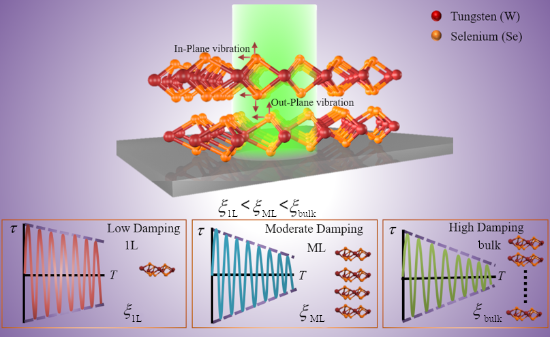
- present, where the equilibrium average lattice vibrational amplitude is reduced; hence the frequencies of the modes here in the out-of-plane direction will blue-shift as thickness increases [37]. The red-shift of the mode as thickness increases is attributed to dielectric screening effects of the long
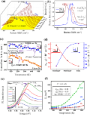
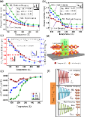
Hexagonal boron nitride: a review of the emerging material platform for single-photon sources and the spin–photon interface
Beilstein J. Nanotechnol. 2020, 11, 740–769, doi:10.3762/bjnano.11.61
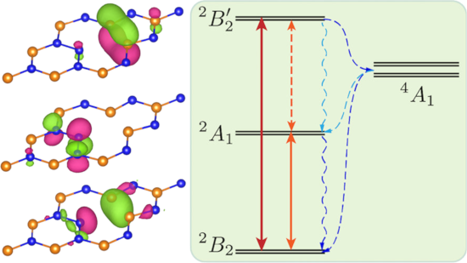


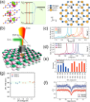


A novel dry-blending method to reduce the coefficient of thermal expansion of polymer templates for OTFT electrodes
Beilstein J. Nanotechnol. 2020, 11, 671–677, doi:10.3762/bjnano.11.53
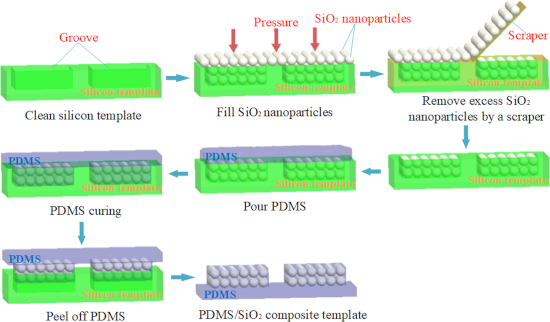
- thermal expansion (CTE) of the polymer template is much higher than the CTE of the dielectric layer. Here, a novel dry-blending method is described in which SiO2 nanoparticles are filled into a grooved silicon template, followed by permeation of polydimethylsiloxane (PDMS) into the SiO2 nanoparticle gaps
- (analytical grade). Poly(methyl methacrylate) (PMMA) as the dielectric layer was used as purchased from MicroChem, with a molecular weight of 350,000 and a concentration of 4% in anisole (analytical grade). Preparation of the PDMS/SiO2 composite template via dry blending The experimental procedure for
- electrode alignment in the wet-blended template is that the CTE of the PDMS/SiO2 composite template is 214 ppm/°C, while that of the PMMA dielectric layer to be contacted is 115.2 ppm/°C [24]. The CTE of the PDMS/SiO2 composite template prepared via dry blending was 96 ppm/°C, which better matches that of


Evolution of Ag nanostructures created from thin films: UV–vis absorption and its theoretical predictions
Beilstein J. Nanotechnol. 2020, 11, 494–507, doi:10.3762/bjnano.11.40
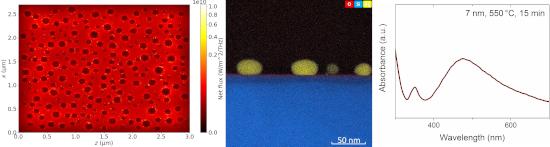
- nanostructures, in which LSPR occurs in the visible spectrum. The frequency of LSPR depends on the size and shape of the nanostructures and the dielectric function of the surrounding medium [6][7][8]. Regarding a potential implementation, Ag nanoparticles are especially interesting because of their very high
- ), instead as full spheres, is a novel approach in the present simulations. It is expected, that this procedure should lead to a better agreement with the experiment. The grid size for the computations was set to 4 nm (limited by the available computer memory). The dielectric function of silver and silicon
- employed to calculate the scattering efficiencies for a single silver nanoparticle (described by the same dielectric function as previously), surrounded by air. This was done in order to describe absorption, scattering and overall extinction maxima as function of the size of the nanoparticles, since the