


Search results
Search for "dye" in Full Text gives 347 result(s) in Beilstein Journal of Nanotechnology. Showing first 200.
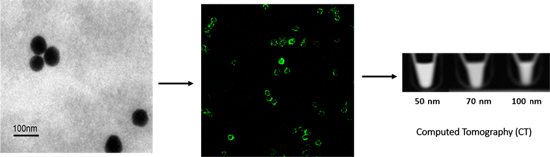
Gold-coated plant virus as computed tomography imaging contrast agent
Beilstein J. Nanotechnol. 2019, 10, 1983–1993, doi:10.3762/bjnano.10.195
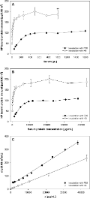
- together and incubated at 60 °C for 10 min. The samples were left to cool for 30 min and then centrifuged at 14000g for 40 min (Thermo Scientific CL10 Centrifuge) to pellet the particles. The supernatant BCA dye absorbance was measured at λ = 565 nm using a microplate reader. The change in absorbance is a




Engineered superparamagnetic iron oxide nanoparticles (SPIONs) for dual-modality imaging of intracranial glioblastoma via EGFRvIII targeting
Beilstein J. Nanotechnol. 2019, 10, 1860–1872, doi:10.3762/bjnano.10.181
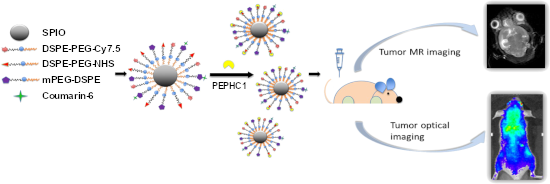
- visualization of pathophysiological processes with high sensitivity but with relatively low spatial resolution and shallow penetration into the tissue [30][31]. Cyanine7.5 NHS ester (Cy7.5), a near infrared fluorescence dye, has attracted extensive attention from researchers in various fields, including optical
- nanoprobe which could be specifically accumulated in EGFRvIII-positive glioblastoma. The DSPE-PEG-Cy7.5 system was chosen as Cy7.5 is a widespread near-infrared dye with a long emission wavelength and has been applied extensively as a live imaging agent in the biomedical field. The as-synthesized DSPE-PEG




Nanoarchitectonics meets cell surface engineering: shape recognition of human cells by halloysite-doped silica cell imprints
Beilstein J. Nanotechnol. 2019, 10, 1818–1825, doi:10.3762/bjnano.10.176
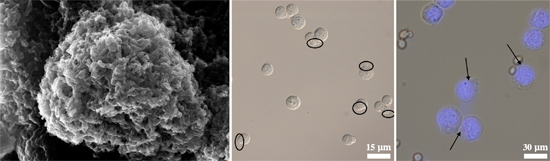
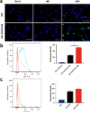
- occurs. However, flow cytometry-based cell proliferation monitoring performed with cells stained with 5(6)-carboxyfluorescein diacetate N-succinimidyl ester (CFSE) dye has confirmed that cells coated with pure silica or silica/halloysite display a similar cell proliferation pattern as intact HeLa cells
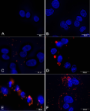
- happen. Finally, to demonstrate the selective recognition, we prepared mixtures of HeLa cells with yeast cells and then added HeLa cell-templated imprints. HeLa cells were pre-stained with a DAPI nuclear dye for better visualisation of mammal cells in a mixture with fungi cells. As shown in Figure 4G


Toxicity and safety study of silver and gold nanoparticles functionalized with cysteine and glutathione
Beilstein J. Nanotechnol. 2019, 10, 1802–1817, doi:10.3762/bjnano.10.175
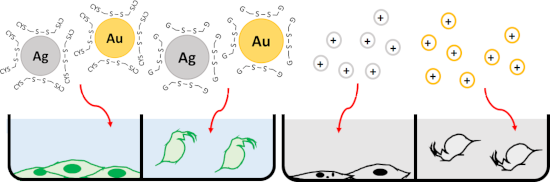
- were regularly tested for absence of mycoplasma by means of a direct DNA dye test [85]. When the cells reached 80% confluence, the culture medium was removed with a pipette; the cells were washed once with sterile phosphate buffer saline (PBS), detached from the flask by adding trypsin/EDTA (0.25
- cells were washed three times with PBS (200 μL per well) and MTT solution (50 μL, 1000 mg L−1) was added to each well. The dye was left to incubate for 4 h at 37 °C, after which the MTT solution was removed by aspiration. The remaining formazan crystals were dissolved by addition of DMSO (50 μL) and
- were recorded using a Leica TCS-SPE CLSM (Leica, Munich, Germany). ROS production in cells treated with AgNPs and AuNPs was determined by the 2′,7′-dichlorodihydrofluorescein diacetate (DCFH-DA) staining. DCFH-DA is a non-fluorescent dye that can freely permeate the cell membrane. Inside the cell, it


A highly efficient porous rod-like Ce-doped ZnO photocatalyst for the degradation of dye contaminants in water
Beilstein J. Nanotechnol. 2019, 10, 1157–1165, doi:10.3762/bjnano.10.115
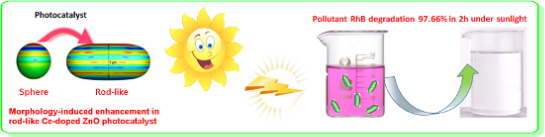
- rods and optimal synthesis conditions were determined by testing samples with different Ce/ZnO molar ratios calcined at 500 °C for 3 hours via a one-step pyrolysis method. The photocatalytic activity was assessed by the degradation of a common dye pollutant found in wastewater, rhodamine B (RhB), using
- ; Introduction Organic dyes used in the textile and dye industries account for a large proportion of pollutants in wastewater. Most of the organic dyes used are difficult to degrade, resulting in irreversible damage to the environment [1]. Although many efficient approaches have been applied to manage this
- , XPS, SEM and ICP, respectively. Furthermore, to supply a helpful reference for large-scale dye degradation, the optimum photocatalytic conditions of undoped and doped catalysts were also screened. Sample preparation Materials and instruments In this study, zinc acetate dihydrate was purchased from


Photoactive nanoarchitectures based on clays incorporating TiO2 and ZnO nanoparticles
Beilstein J. Nanotechnol. 2019, 10, 1140–1156, doi:10.3762/bjnano.10.114
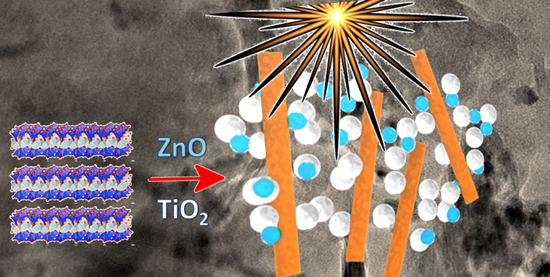
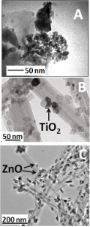
- ]. Probably the first contribution was introduced by Bel Hadjltaief and co-workers [158], using a Tunisian Na+-smectite treated with titanium(IV) isopropoxide and zinc acetate. This ZnO–TiO2@clay material shows that a rapid and complete mineralization of methyl green dye in water can be achieved with the



Fe3O4 nanoparticles as a saturable absorber for giant chirped pulse generation
Beilstein J. Nanotechnol. 2019, 10, 1065–1072, doi:10.3762/bjnano.10.107
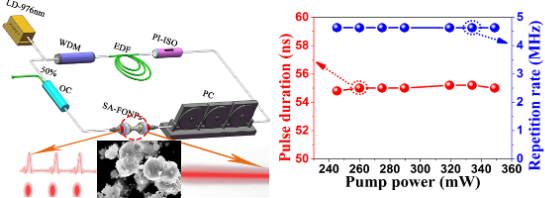
- lasers and can effectively overcome the shortcomings of actively mode-locked lasers, which require an electronic driver and active modulator that make the system more complex and unstable. In 1972, Ippen realized continuous mode-locked pulse output using a dye SA (rhodamine 6G) [8]. Bell labs used an


Correlation of surface-enhanced Raman scattering (SERS) with the surface density of gold nanoparticles: evaluation of the critical number of SERS tags for a detectable signal
Beilstein J. Nanotechnol. 2019, 10, 1016–1023, doi:10.3762/bjnano.10.102
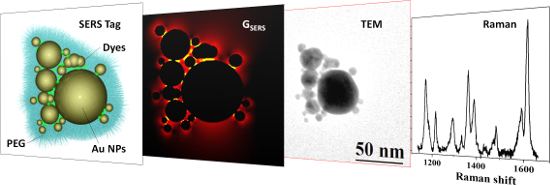
- plate placed at the bottom of a cell containing a 10−4 M NaCl solution in double distilled water [18][19][41]. Dye solutions of either hexacyanin 3 (HITC, perchlorate, Exciton), malachite green (MG, oxalate salt, Sigma-Aldrich) or malachite green isothiocyanate (MGITC, Invitrogen) were added to a 2 nM


Serum type and concentration both affect the protein-corona composition of PLGA nanoparticles
Beilstein J. Nanotechnol. 2019, 10, 1002–1015, doi:10.3762/bjnano.10.101
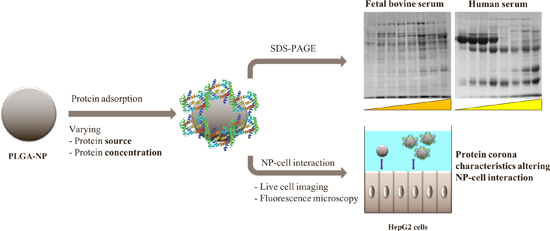
- human liver cancer cell line HepG2 was used for in vitro incubation experiments. For an easy tracking of NPs in cell culture experiments, the fluorescent dye Lumogen® Red was incorporated into the hydrophobic particle matrix. Due to the lipophilic properties of the dye molecule an average of 8.14 µg
- -containing medium [37]. Therefore, we assumed a stable entrapment of the model drug even in the presence of proteins. Consequently, the Lumogen® Red fluorescence measured in cell culture experiments could be directly associated with the interaction between NPs and cells and is not distorted by effects of dye
- with water instead of serum (PLGA NPs). We then added the NPs as well as the free dye Lumogen® Red to the cells and monitored the cell interaction under serum-free conditions over a time period of 24 h by live-cell imaging (Figure 7). The results revealed that the interaction between the unformulated



Comparing a porphyrin- and a coumarin-based dye adsorbed on NiO(001)
Beilstein J. Nanotechnol. 2019, 10, 874–881, doi:10.3762/bjnano.10.88
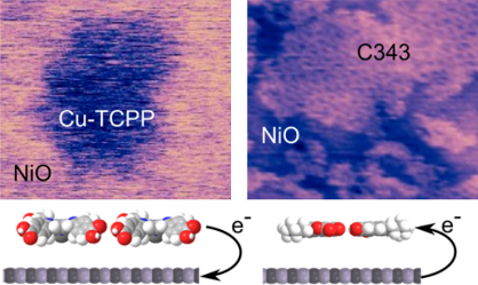
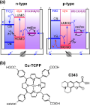
- technologies such as dye-sensitized solar cells. A key optimization parameter for such devices is the choice of the compounds in order to control the direction and the intensity of charge transfer across the interface. Here, the deposition of two different molecular dyes, porphyrin and coumarin, as single
- -layered islands on a NiO(001) single crystal surface have been studied by means of non-contact atomic force microscopy at room temperature. Comparison of both island types reveals different adsorption and packing of each dye, as well as an opposite charge-transfer direction, which has been quantified by
- Kelvin probe force microscopy measurements. Keywords: coumarin; Kelvin probe force microscopy; metal oxide; molecular resolution; nickel oxide (NiO); non-contact atomic force microscopy; porphyrin; Introduction With regard to its use in dye-sensitized solar cells (DSSCs), the wide-bandgap n-type



Tungsten disulfide-based nanocomposites for photothermal therapy
Beilstein J. Nanotechnol. 2019, 10, 811–822, doi:10.3762/bjnano.10.81
- of 157 µm × 157 µm in the middle of each frame was irradiated with a 700 nm laser (Chameleon Vision II) at 123 mW for 1 min. The same frames were then imaged again. A dye exclusion test of cell viability was performed, using Trypan Blue for staining. A mixture of 0.5 wt % trypan blue solution and PBS
- images was stained, but only the squared area was irradiated. Only dead cells are dyed by trypan blue, and in the images they appear gray and blurry due to the collapse of the cell membrane and the penetration of the dye. The images show cell death only in the squared area, for only the cells incubated






Polydopamine-coated Au nanorods for targeted fluorescent cell imaging and photothermal therapy
Beilstein J. Nanotechnol. 2019, 10, 794–803, doi:10.3762/bjnano.10.79
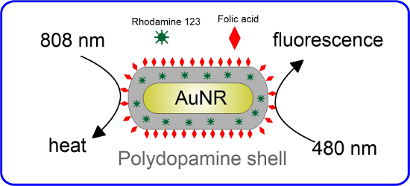
- were functionalized with folates and rhodamine 123. Folate receptors are commonly overexpressed in cancer cells, e.g., in HeLa cells, enabling an easy targeting with folic acid [44]. Rhodamine 123 was used as a fluorescent dye to control the nanocomposite interaction with cells using fluorescent
- AuNRs, PDA-coated AuNRs and AuNRs-PDA-R123-folate nanocomposite particles. The inclusion of the rhodamine dye into the composite nanoparticles can be confirmed by the increased extinction in the wavelength region around 500 nm. The differential spectrum peak of AuNR-PDA composites before and after
- loading of rhodamine 123 corresponds to the absorption peak of rhodamine 123 in solution, thus confirming the successful inclusion of dye molecules into the PDA shell via amine groups through a simple one-step procedure. The number of R123 molecules per composite particle can be estimated as follows


Towards rare-earth-free white light-emitting diode devices based on the combination of dicyanomethylene and pyranine as organic dyes supported on zinc single-layered hydroxide
Beilstein J. Nanotechnol. 2019, 10, 760–770, doi:10.3762/bjnano.10.75
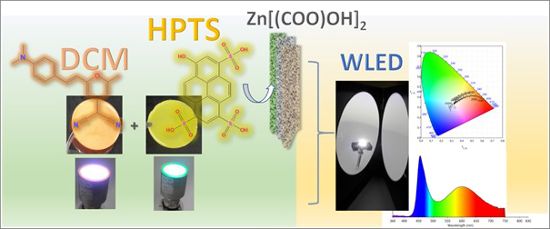
- are dispersed in an inorganic matrix such as silica [7]. Studies have been carried out on materials obtained by mixing a dye and a double-layered hydroxide solid compound [8][9][10][11]. Unfortunately, the optical properties of these materials, particularly their performance, are not yet satisfactory
- for the stabilization of negatively charged molecules or molecules with electron donor sites, i.e., double bonds [11]. The luminescent organic dye is selected so as to ensure good compatibility with the SLH compound and satisfy the synthesis conditions of the latter. It must therefore (i) exhibit
- the same time the organic dyes from aggregation [16]. Indeed, the aggregation of organic molecules leading to the quenching of their fluorescence occurs when the hybrid compound (SLH-Dye) is prepared in the dry solid state. The originality of our preparation process lies in the dispersion of the


Deposition of metal particles onto semiconductor nanorods using an ionic liquid
Beilstein J. Nanotechnol. 2019, 10, 718–724, doi:10.3762/bjnano.10.71
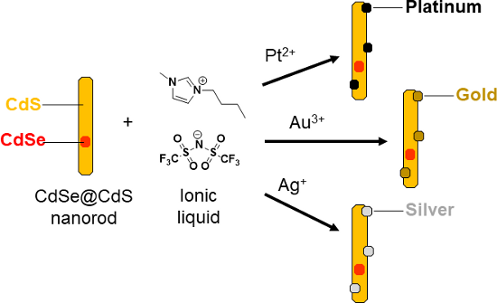
- agents. Photocatalytic dye degradation experiments showed that catalysts with platinum particles deposited using the ionic liquid out-performed similar materials synthesized using organic solvents and ligands. We concluded that metal particles can be deposited onto well-defined semiconductor nanorods
- catalysts were prepared from a single batch of CdSe@CdS nanorods to eliminate any differences in nanorod substrates from our study. Thus, the only significant difference between the samples at the time of dye degradation experiments was whether the platinum particles were deposited in [bmim][Tf2N] or
- toluene/triethylamine. A known amount of the nanoparticle catalyst was combined with methylene blue and chloroform for photocatalytic dye degradation experiments (Figure 2a), based on the concentration of cadmium and platinum in the toluene dispersions obtained from ICP-AES. Control experiments were also


Ceria/polymer nanocontainers for high-performance encapsulation of fluorophores
Beilstein J. Nanotechnol. 2019, 10, 522–530, doi:10.3762/bjnano.10.53
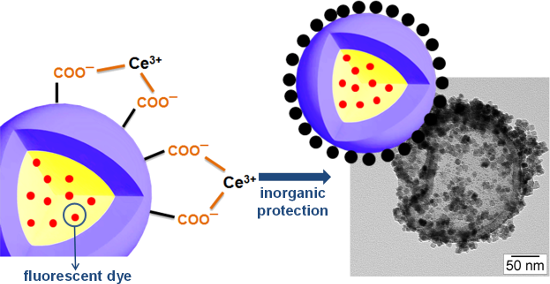
- ; singlet oxygen; Introduction Hybrid polymeric core–shell nanoparticles with encapsulated fluorescent dye molecules are frequently employed for life-science applications, such as cell labeling and drug delivery [1][2][3][4][5]. In recent years, polymeric hybrid nanoparticles and nanocapsules with tailored
- inorganic components on the surface have attracted great interest because of the possibility to tune size, composition, porosity, stability, surface functionality, and colloidal stability [6][7][8][9][10][11][12]. Generally, fluorescent dye molecules are sensitive to the external environment, which leads to
- alkyl chain length of the alkanes [17][18]. Furthermore, the oxygen quenching is less efficient in high-viscosity media [13]. In bulk fluorescent samples with a dye content between 10−4 and 10−5 M, oxygen quenching does not play a significant role. By applying standard degassing techniques such as


Ultraviolet patterns of flowers revealed in polymer replica – caused by surface architecture
Beilstein J. Nanotechnol. 2019, 10, 459–466, doi:10.3762/bjnano.10.45
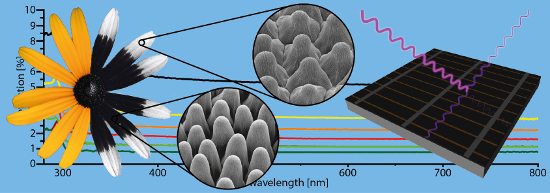
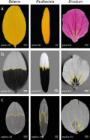
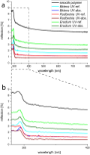
- integrating sphere on the opposite side of the opening where the light source was situated. The polymer replicas were colored black using black dye and a thin layer of carbon black was embedded at the backside of the replicas. Both steps were undertaken to avoid reflection at the backside of the replicas and


Electromagnetic analysis of the lasing thresholds of hybrid plasmon modes of a silver tube nanolaser with active core and active shell
Beilstein J. Nanotechnol. 2019, 10, 294–304, doi:10.3762/bjnano.10.28
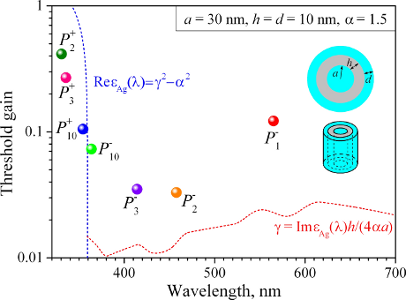
- of ways. After initial theorizing in the mid-2000s, this has led to the experimental demonstration of the smallest plasmonic laser in a random solution of colloidal gold nanospheres enveloped with dye-doped silica shells [3]. Today, plasmonic nanolasers attract great attention in research. A number
- electromagnetic waves non-attenuating in time, one must equip it with an active zone filled with a material possessing optical gain. Such material can be a semiconductor, a dye-doped polymer, or a material doped with ions of erbium or some other rare-earth elements. All of them are able, under pumping, to


![[Graphic 29]](/bjnano/content/inline/2190-4286-10-28-i46.svg?max-width=637&scale=1.18182) λ = 565.03...
λ = 565.03...

![[Graphic 36]](/bjnano/content/inline/2190-4286-10-28-i53.svg?max-width=637&scale=1.18182) ...
...


New micro/mesoporous nanocomposite material from low-cost sources for the efficient removal of aromatic and pathogenic pollutants from water
Beilstein J. Nanotechnol. 2019, 10, 119–131, doi:10.3762/bjnano.10.11
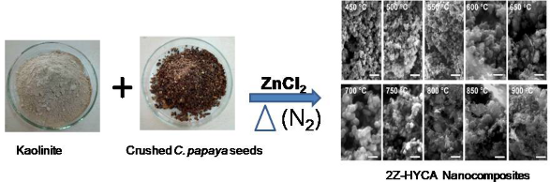
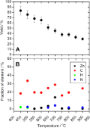
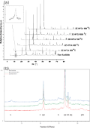
- +, Ni2+ [1], and methylene blue [4] from an aqueous solution. However, this material fails when attempting to remove anionic pollutants such as 4-nitrophenol (with a pKa of 7.2 [45]), methyl orange dye, or phosphate. The data demonstrate that the 2Z-HYCA nanocomposite is able to overcome the limitations




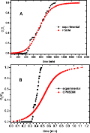
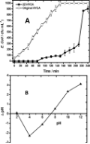
Zn/F-doped tin oxide nanoparticles synthesized by laser pyrolysis: structural and optical properties
Beilstein J. Nanotechnol. 2019, 10, 9–21, doi:10.3762/bjnano.10.2
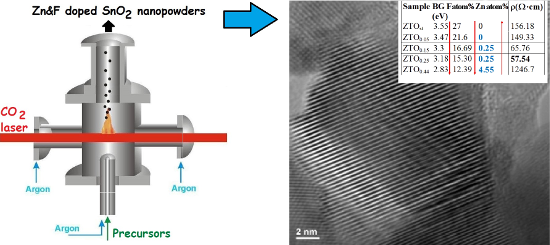
- ], photocatalysts for rhodamine 6G dye degradation in aqueous solution [27] and were proposed as a thermal UV sensor for high-radiation environments [4]. Moreover, the ZTO materials were also employed as volatile organic compound (VOC) (such as methanol, ethanol or acetone vapors) sensors [28], as an anode for Li
- -ion microbatteries [29], as photocatalysts for brilliant green dye degradation in solution under solar light [30] and even as a component for supercapacitors [31]. The in situ synthesis of SnO2-based nanoparticles co-doped with F and Zn is demonstrated in this work. For this purpose we use the

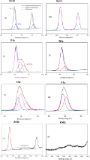


Electrolyte tuning in dye-sensitized solar cells with N-heterocyclic carbene (NHC) iron(II) sensitizers
Beilstein J. Nanotechnol. 2018, 9, 3069–3078, doi:10.3762/bjnano.9.285
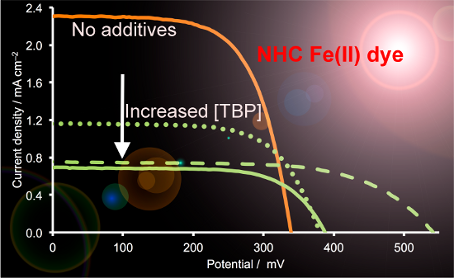
- Mariia Karpacheva Catherine E. Housecroft Edwin C. Constable Department of Chemistry, University Basel, BPR 1096, Mattenstrasse 24a, CH-4058 Basel, Switzerland 10.3762/bjnano.9.285 Abstract We demonstrate that the performances of dye-sensitized solar cells (DSCs) sensitized with a previously
- reported N-heterocyclic carbene iron(II) dye in the presence of chenodeoxycholic acid co-adsorbant, can be considerably improved by altering the composition of the electrolyte while retaining an I−/I3− redox shuttle. Critical factors are the solvent, presence of ionic liquid, and the use of the additives 1
- the addition of TBP improves VOC, it causes significant decreases in JSC. The best performing DSCs with the NHC-iron(II) dye employ an I−/I3−-based electrolyte with MPN as solvent, DMPII ionic liquid (0.6 M) with no or 0.01 M MBI; values of JSC = 2.31 to 2.78 mA cm−2, VOC = 292 to 374 mV have been



Oriented zinc oxide nanorods: A novel saturable absorber for lasers in the near-infrared
Beilstein J. Nanotechnol. 2018, 9, 2730–2740, doi:10.3762/bjnano.9.255
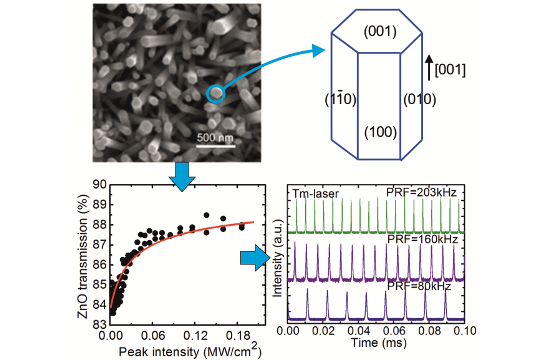
- due to the high sensitivity of ZnO to chemical environments [6], for light-emitting diodes due to the compatibility with the GaN technology and random lasing [7] (in the blue, around 0.390 µm), and in dye-sensitized solar cells [8]. The absorption and emission properties of the ZnO nanomaterials are




Low cost tips for tip-enhanced Raman spectroscopy fabricated by two-step electrochemical etching of 125 µm diameter gold wires
Beilstein J. Nanotechnol. 2018, 9, 2718–2729, doi:10.3762/bjnano.9.254
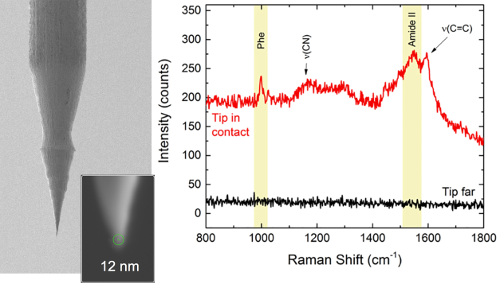
- on the shaft (red line). Typical laser powers are 1.0–2.5 mW and integration times are 0.5–1.0 s per pixel. TERS spectra of dyes, pigments and biomolecules The tips have been applied to evaluate the spectra of analyze standard dye molecules such as rhodamine 6G (R6G), crystal violet (CV), methylene


Size-selected Fe3O4–Au hybrid nanoparticles for improved magnetism-based theranostics
Beilstein J. Nanotechnol. 2018, 9, 2684–2699, doi:10.3762/bjnano.9.251
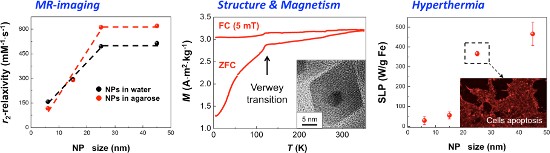
- /necrosis detection kit (abcam). Apopxin deep red dye stained phosphatidylserine on the membrane of apoptotic cells and nuclear green dye – the cells with loss of plasma membrane integrity (i.e., cells at late stage apoptosis or necrotic cells). After the hyperthermia treatment, the cells were washed twice


Polarization-dependent strong coupling between silver nanorods and photochromic molecules
Beilstein J. Nanotechnol. 2018, 9, 2657–2664, doi:10.3762/bjnano.9.247
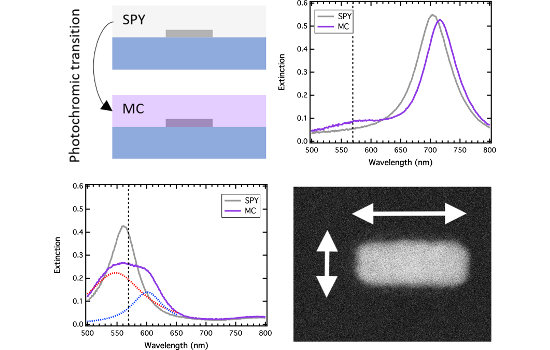
- equal to 132 and 235 nm, leading to linewidths of 655 and 697 meV. This difference in the hybrid mode linewidths has already been observed for a gold nanogroove arrays coated with a J-aggregate dye film [25]. In this work, they observed different damping rates for the hybrid modes attributed to the



Enhanced antineoplastic/therapeutic efficacy using 5-fluorouracil-loaded calcium phosphate nanoparticles
Beilstein J. Nanotechnol. 2018, 9, 2499–2515, doi:10.3762/bjnano.9.233
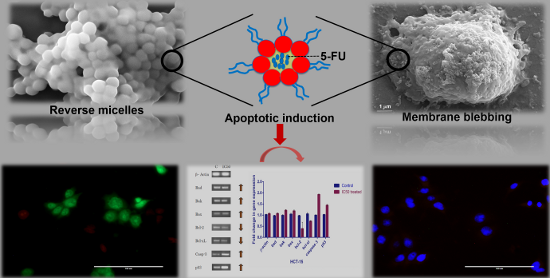
- this assay, drug-induced apoptosis was confirmed by CaP@5-FU NP treatment. Hoechst 33342 and rhodamine B Apoptotic cells show specific characteristic features such as morphological changes, nuclear fragmentation, and cytoplasmic constriction [41]. The nucleic acid specific dye Hoechst 33342 and the
- cytoplasmic dye rhodamine B were used to stain the cells treated with an IC50 concentration of CaP@5-FU NPs incubated for different time periods. The morphological changes can be effectively tracked by microscopic examination after the staining procedure. Hoechst 33342 is a fluorescent DNA intercalating dye
- 33342 dye signal denotes the nuclear fragmentation leaving the blue-dyed nucleus, whereas reduction in the rhodamine B dye signal infers cytoplasmic constriction. In this assay, both the untreated A549 and HCT-15 cells display bright red and blue fluorescence, indicating healthy, intact cells (Figure 5B





