


Search results
Search for "electrochemical" in Full Text gives 513 result(s) in Beilstein Journal of Nanotechnology. Showing first 200.
Nanocasting synthesis of BiFeO3 nanoparticles with enhanced visible-light photocatalytic activity
Beilstein J. Nanotechnol. 2020, 11, 1822–1833, doi:10.3762/bjnano.11.164
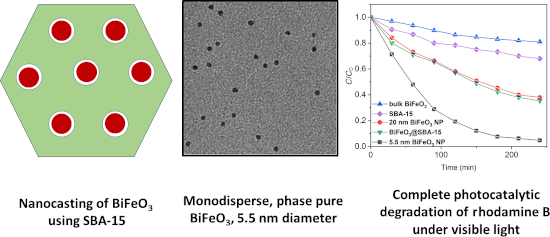
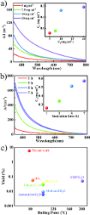
- dyes from wastewater such as precipitation (chemical coagulation, flocculation), membrane and electrochemical processes, as well as biological treatment methods [9]. The main disadvantages of these treatment methods are very often incomplete dye removal, high energy consumption and capital cost, and




Self-standing heterostructured NiCx-NiFe-NC/biochar as a highly efficient cathode for lithium–oxygen batteries
Beilstein J. Nanotechnol. 2020, 11, 1809–1821, doi:10.3762/bjnano.11.163
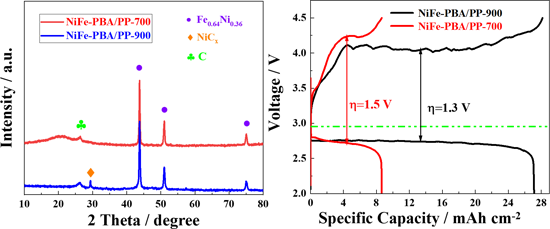
- . The structure of NiCx-NiFe-NC efficiently improved the electron and ion transfer between the cathode and the electrolyte during the electrochemical processes, resulting in superior electrocatalytic properties in lithium–oxygen batteries. This study indicates that nickel carbide supported on N-doped
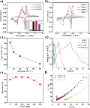
- Kα radiation. Electrochemical measurement The electrochemical performance of the obtained products was evaluated in CR2025 coin cells with 17 holes, each with a diameter of 1.0 mm, on the cathode side. The obtained products were directly used as the binder-free air cathode, lithium foil was used as
- placed in a glass bottle filled with pure oxygen. The discharge/charge was carried out in a cell voltage range from 2.0 to 4.5 V (vs Li+/Li) at room temperature on a battery tester (Neware, CT-3008, China). The specific capacity was calculated using the mass of the entire cathode. Electrochemical






Selective detection of complex gas mixtures using point contacts: concept, method and tools
Beilstein J. Nanotechnol. 2020, 11, 1631–1643, doi:10.3762/bjnano.11.146
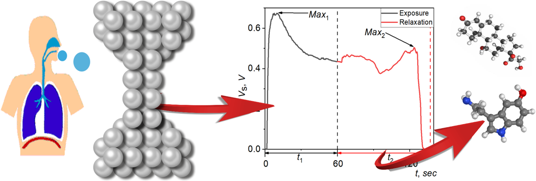
- special technique during the synthesis of this nanostructure. The production of the energy source and the matrix as a whole is based on electrochemical processes described previously [34][37][38]. The applied technology guaranteed high reliability and longevity to the sensor elements. Point-contact sensor


![[Graphic 4]](/bjnano/content/inline/2190-4286-11-146-i8.svg?max-width=637&scale=1.18182) in th...
in th...

![[Graphic 7]](/bjnano/content/inline/2190-4286-11-146-i11.svg?max-width=637&scale=1.18182) in the...
in the...
High-responsivity hybrid α-Ag2S/Si photodetector prepared by pulsed laser ablation in liquid
Beilstein J. Nanotechnol. 2020, 11, 1596–1607, doi:10.3762/bjnano.11.142
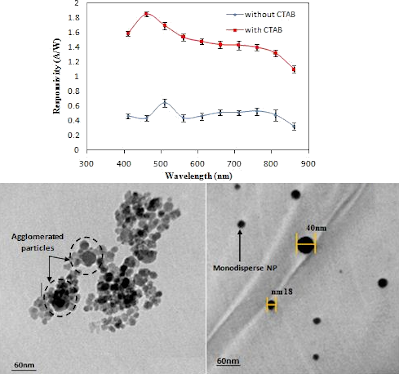
- hydrothermal methods, chemical bath deposition, laser ablation in liquid reverse microemulsion, electrospinning, sol–gel, electrochemical method, template method, sonochemical method, and hydrochemical bath deposition [10][11][12][13]. The size of Ag2S NPs depends on the preparation conditions [14]. Ag2S NPs




Fabrication of nano/microstructures for SERS substrates using an electrochemical method
Beilstein J. Nanotechnol. 2020, 11, 1568–1576, doi:10.3762/bjnano.11.139
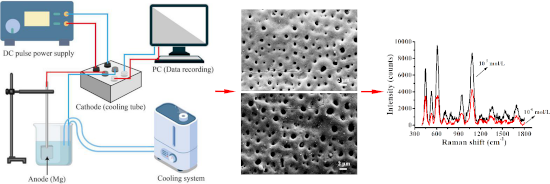
- electrochemical method, three-dimensional arrayed nanopore structures are machined onto a Mg surface. The structured Mg surface is coated with a thin gold (Au) film, which is used as a surface-enhanced Raman scattering (SERS) substrate. A rhodamine 6G (R6G) probe molecule is used as the detection agent for the
- SERS measurement. Different sizes of arrayed micro/nanostructures are fabricated by different treatment time using the electrochemical process. The topographies of these micro/nanostructures and the thickness of the Au film have an influence on the Raman intensity of the Mg substrate. Furthermore, when
- . Additionally, a 10−6 mol·L−1 solution of lysozyme was successfully detected using the Mg–Au nanopore substrates. Our low-cost method is reproducible, homogeneous, and suitable for the fabrication of SERS substrates. Keywords: electrochemical machining; gold (Au); lysozyme detection; magnesium (Mg); micro


Antimicrobial metal-based nanoparticles: a review on their synthesis, types and antimicrobial action
Beilstein J. Nanotechnol. 2020, 11, 1450–1469, doi:10.3762/bjnano.11.129
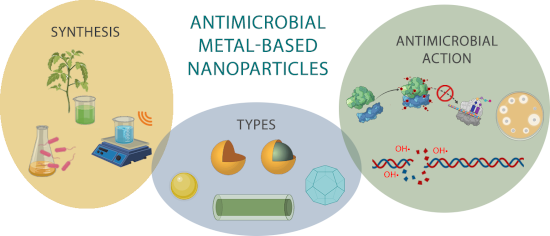
- , chemical vapor deposition, electrochemical anodization method, hydrolysis, hydrothermal method, precipitation–hydrothermal method, reverse micellar route, sol–gel method, solution-based synthesis, solvothermal synthesis, and the sonochemical method. The most relevant ones, along with the typical resulting
- -condensation of the vapors on the cold surface of the vacuum reactor. Sergeev et al. [45] obtained Ag nanoparticles with sizes ranging from 20 to 150 nm using this technique. The electrochemical anodization method is based on the reactions that occur between the electrode and the electrolyte. In this method
- , electricity is used as the driving or controlling force. The main advantages of using electrochemical techniques include using vacuum-free systems, simple operation procedures, high flexibility, low cost, low contamination (pure product), and the fact that it is an environmentally friendly process. In


One-step synthesis of carbon-supported electrocatalysts
Beilstein J. Nanotechnol. 2020, 11, 1419–1431, doi:10.3762/bjnano.11.126

- applications as they show significantly improved electrochemical long-term stability compared to the industrial standard HiSPEC 4000. The PE-CVD process is furthermore expected to be extendable to the general deposition of metal-containing carbon materials from other commercially available metal
- commercial production of fuel cell catalysts, especially the scarcity of noble metals and the insufficient electrochemical long-term stability. Even though the surface-to-volume ratio can be drastically increased by the use of nanoparticles instead of thin films, the amount of noble metal (usually platinum
- electrochemical long-term stability of these electrodes is often unsatisfactory due to particle coalescence and Ostwald ripening [15]. These degradation processes can be avoided by increasing interparticle distance (at the expense of the electrochemically active surface) or by creating barriers to prevent NP




Transient coating of γ-Fe2O3 nanoparticles with glutamate for its delivery to and removal from brain nerve terminals
Beilstein J. Nanotechnol. 2020, 11, 1381–1393, doi:10.3762/bjnano.11.122
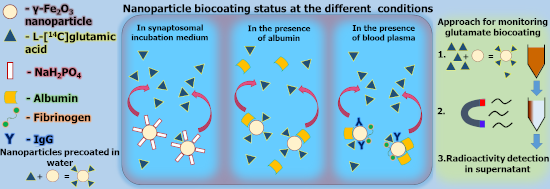
- membrane Na+-dependent glutamate transporters is responsible for the maintenance of the extracellular glutamate concentration. The transporters use Na+/K+ electrochemical gradients across the plasma membrane to accomplish glutamate transport. Glutamate is a potential growth factor in tumor development. The


Growth of a self-assembled monolayer decoupled from the substrate: nucleation on-command using buffer layers
Beilstein J. Nanotechnol. 2020, 11, 1291–1302, doi:10.3762/bjnano.11.113
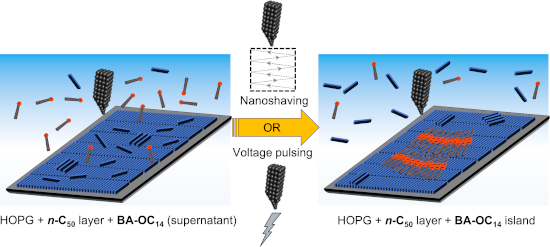
- controlled electrochemical polymerization of thiophene to produce polythiophene nanowires with tunable lengths [36][37]. In the context of their use for controlling surface architectures, insertion of the buffer layers between the assembling moiety and the solid substrate affects the assembly process via the


Structure and electrochemical performance of electrospun-ordered porous carbon/graphene composite nanofibers
Beilstein J. Nanotechnol. 2020, 11, 1280–1290, doi:10.3762/bjnano.11.112
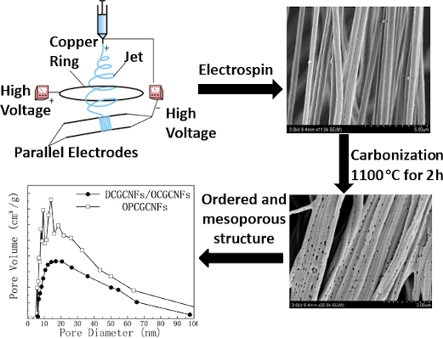
- were submitted to carbonization under a N2 atmosphere at 1100 °C. The influence of the ordering and porosity of CGCNFs on their electrochemical performance was studied. The results showed that by adding deionized water to the spinning solution one could increase the number of mesopores and the specific
- improvement of the current supercapacitor electrochemical performance, the capacitance and cycle stability of supercapacitors are still subjects of research interest. Electrospinning is one of the most convenient methods to synthesize nanofibers in a continuous manner. Electrospinning has many advantages over
- conductivity impedes their use in high-power-density supercapacitors. Therefore, by adding high-performance conductive materials one can enhance the electrochemical performance of carbon nanofibers. Experiments have shown that by introducing graphene into the carbon matrix, various mechanical and


Role of redox-active axial ligands of metal porphyrins adsorbed at solid–liquid interfaces in a liquid-STM setup
Beilstein J. Nanotechnol. 2020, 11, 1264–1271, doi:10.3762/bjnano.11.110
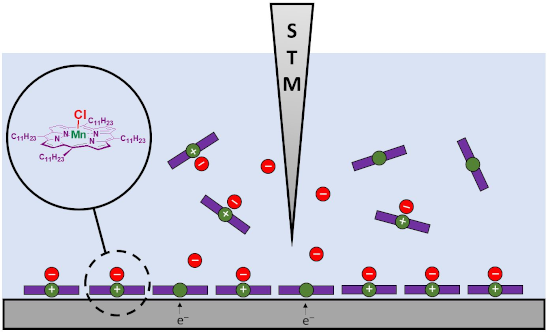
- of these complications may be eliminated by adding a third, reference electrode to the setup and by using a conducting electrolyte (so that it turns into a so-called electrochemical (EC) STM [20][21]). At the same time, the absence of an electrolyte, which typically contains a high concentration of
- added salts, allows us to pinpoint the behavior of the axial ligand of our catalyst in the non-polar liquid in which also our catalysis studies were carried out. Still, our system shows several of the characteristics of a conventional electrochemical cell. Apart from the bias dependency of the reaction


Ultrasensitive detection of cadmium ions using a microcantilever-based piezoresistive sensor for groundwater
Beilstein J. Nanotechnol. 2020, 11, 1242–1253, doi:10.3762/bjnano.11.108
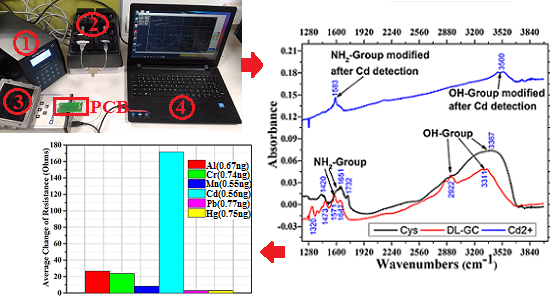
- , expensive, and not suitable for on-site determination. The calorimetric approach proposed by [34][35][36][37] is free from these problems but not capable of differentiating between two nearby ranges and the LOD is also on the higher side. The electrochemical sensor described in [38] is a good approach, but




Gas sorption porosimetry for the evaluation of hard carbons as anodes for Li- and Na-ion batteries
Beilstein J. Nanotechnol. 2020, 11, 1217–1229, doi:10.3762/bjnano.11.106
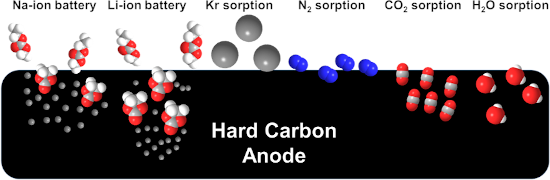
- pores is nontrivial, we herein employ Kr, N2 and CO2 gas sorption porosimetry, as well as H2O vapor sorption porosimetry, to investigate eight hard carbons. Electrochemical lithium as well as sodium storage tests are compared to the obtained apparent surface areas and pore volumes. H2O, and more
- decomposition at potentials below the stability window of the electrolyte (for LIBs typically around 0.8 VLi) [21]. Since the dielectric SEI passivates the electrode, an irreversible capacity proportional to the electrochemical active surface area is expected. Accordingly, the reduction of the specific surface
- –electrolyte interphase, HCs can act as molecular sieves. Here, Na ions are adsorbed in the pores in a metal-plating-like mechanism and separated from bigger solvent molecules that suffer from electrochemical reductive decomposition at potentials below ca. 0.8 VLi or towards the alkali metal, respectively


Excitonic and electronic transitions in Me–Sb2Se3 structures
Beilstein J. Nanotechnol. 2020, 11, 1045–1053, doi:10.3762/bjnano.11.89
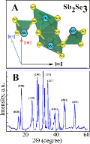
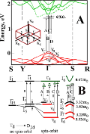
- (In–Sb2Se3) contacts, the structures were obtained by either thermal sputtering under vacuum or electrochemical deposition onto the cleaved faces of single crystals (Figure 3A). Current–voltage characteristics suggest that the contacts have an ohmic behavior. The impedance has a frequency dependence
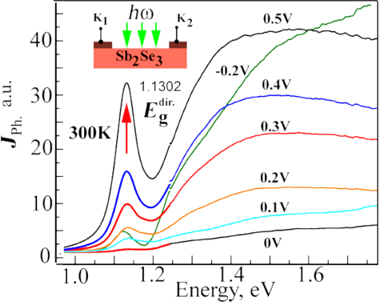
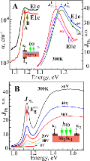
- . The increase in intensity with the applied voltage confirms the excitonic character of the maximum, which is consistent with the fact that the binding energy of these excitons is 130–136 meV. The In–Sb2Se3 structures, in which the contacts were deposited by electrochemical methods, show
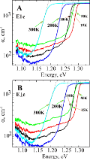
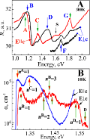
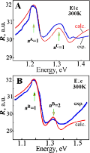
- structures and the excitonic band symmetries in the Brillouin zone center for crystals with an orthorhombic symmetry (Pnma). The In–Sb2Se3 structures were generated either by thermal sputtering under vacuum or by electrochemical deposition. The photoconductivity spectra at different applied voltages were


Gas-sensing features of nanostructured tellurium thin films
Beilstein J. Nanotechnol. 2020, 11, 1010–1018, doi:10.3762/bjnano.11.85
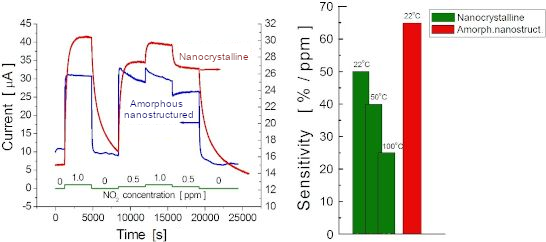
- given to growing, studying and applying nanostructured Te. To achieve these goals, different and sometimes quite sophisticated chemical, electrochemical and physical methods have been developed. In line with this, Wang and collaborators [12] used thermal decomposition of Te dietyldithiocarbamato film to


Electrochemical nanostructuring of (111) oriented GaAs crystals: from porous structures to nanowires
Beilstein J. Nanotechnol. 2020, 11, 966–975, doi:10.3762/bjnano.11.81
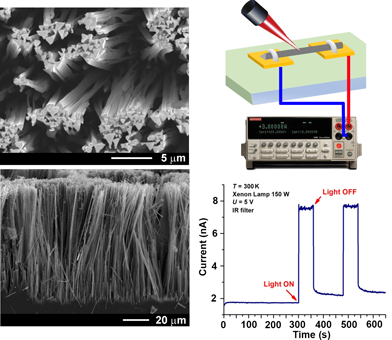
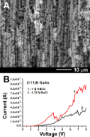
- , Chisinau MD-2001, Republic of Moldova Leibniz IFW Dresden, Helmholtzstr. 20, 01069 Dresden, Germany 10.3762/bjnano.11.81 Abstract A comparative study of the anodization processes occurring at the GaAs(111)A and GaAs(111)B surfaces exposed to electrochemical etching in neutral NaCl and acidic HNO3 aqueous
- Electrochemical technology became an established and cost-effective approach for the preparation of porous semiconductor matrices and arrays of nanowires with tailored architecture at the submicrometer scale [1][2][3]. Semiconductor nanotemplates provide many possibilities for nanofabrication through
- templating, anisotropic chemical etching, localized anodic etching, and isotropic anodic oxidation [15][16]. However, this is a complex multistep technology. A more simple and cost-effective technology was applied for obtaining triangular GaAs nanowires through electrochemical etching of GaAs(100) surfaces





Atomic layer deposition for efficient oxygen evolution reaction at Pt/Ir catalyst layers
Beilstein J. Nanotechnol. 2020, 11, 952–959, doi:10.3762/bjnano.11.79
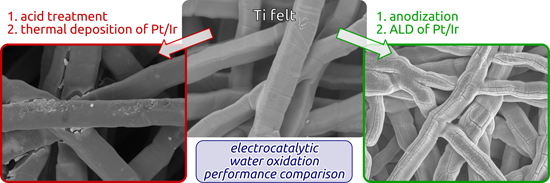
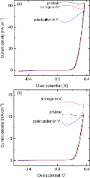
- well documented in the literature, and this paper provides a direct comparison under identical experimental conditions of electrochemical measurements and in identical units. In the first method, based on classical engineering, the bimetallic catalyst is deposited by dip-coating in a precursor solution
- ); Introduction Reversible electrochemical energy storage devices such as rechargeable batteries, redox flow batteries (RFBs) and regenerative fuel cells (bifunctional devices able to work as electrolyzers and fuel cells) are at the forefront of a renewable energy economy as they allow one to overcome the
- methods [12] as well as particles of various sizes [13] and shapes [14]. However, each study is presented as a self-sufficient piece of work with limited critical comparison to the state of the art. The conditions under which electrochemical performance is quantified (electrode substrate, electrolyte


Nickel nanoparticles supported on a covalent triazine framework as electrocatalyst for oxygen evolution reaction and oxygen reduction reactions
Beilstein J. Nanotechnol. 2020, 11, 770–781, doi:10.3762/bjnano.11.62
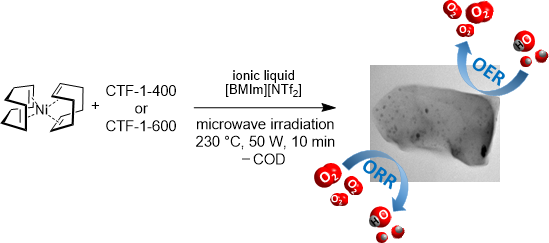
- method. CTF-1-600 and Ni/CTF-1-600 show high catalytic activity towards OER and a clear activity for the electrochemical oxygen reduction reaction (ORR). Ni/CTF-1-600 requires 374 mV overpotential in OER to reach 10 mA/cm2, which outperforms the benchmark RuO2 catalyst, which requires 403 mV under the
- OER catalysts or catalyst support and the activities were far lower than that of benchmark OER catalysts [38][39]. At present, there are no reports about nickel/CTF catalysts for electrochemical OER studies, to the best of our knowledge. Although various carbon materials or nitrogen-doped carbon
- nanoparticles supported on CTF-1 in the ionic liquid (IL) [BMIm][NTf2] using a microwave-assisted synthesis. The obtained material Ni/CTF-1 was investigated as a catalyst for electrochemical OER and ORR for the first time and showed a superior OER performance compared to commercial RuO2 under alkaline


Hexagonal boron nitride: a review of the emerging material platform for single-photon sources and the spin–photon interface
Beilstein J. Nanotechnol. 2020, 11, 740–769, doi:10.3762/bjnano.11.61




Exfoliation in a low boiling point solvent and electrochemical applications of MoO3
Beilstein J. Nanotechnol. 2020, 11, 662–670, doi:10.3762/bjnano.11.52
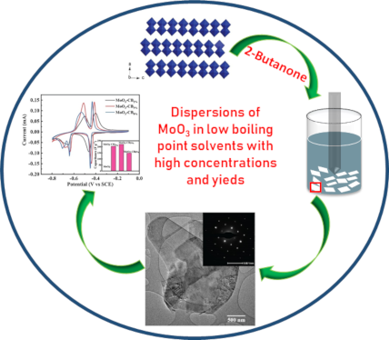
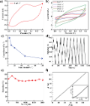
- Zetasizer NanoZS. All electrochemical measurements were carried out using Autolab PGSTAT302N. Electrode preparation and electrochemical testing Three-electrode system: A glassy carbon electrode (GCE, 0.3 cm diameter) as the working electrode, Pt wire as counter electrode and a saturated calomel electrode
- (SCE) as reference electrode were used for the electrochemical testing of the exfoliated MoO3 dispersions and its composites. In brief, the GCE was cleaned with a polishing cloth using fine alumina abrasive powders and washed thoroughly in deionized water. The required amount of the dispersion of known
- were then dripped on the GCE. All electrochemical measurements were performed in 1 M H2SO4 electrolyte. Two-electrode system: The optimized ratio obtained from measurements of the three-electrode configuration were used to fabricate two-electrode devices. The respective amounts of MoO3 and carbon black

Preparation, characterization and photocatalytic performance of heterostructured CuO–ZnO-loaded composite nanofiber membranes
Beilstein J. Nanotechnol. 2020, 11, 631–650, doi:10.3762/bjnano.11.50
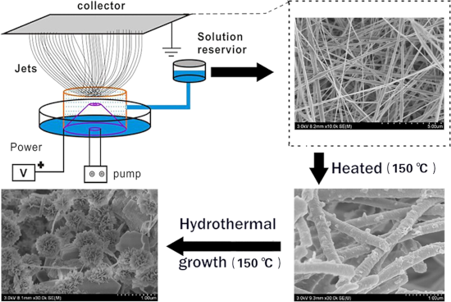
- protection. Water pollution with organic dyes (such as congo red, methylene blue, and methyl orange) is becoming a major environmental problem. Therefore, water purification technologies, such as photocatalytic purification, electrochemical oxidation, membrane filtration, ozonation, and chlorination











Soybean-derived blue photoluminescent carbon dots
Beilstein J. Nanotechnol. 2020, 11, 606–619, doi:10.3762/bjnano.11.48
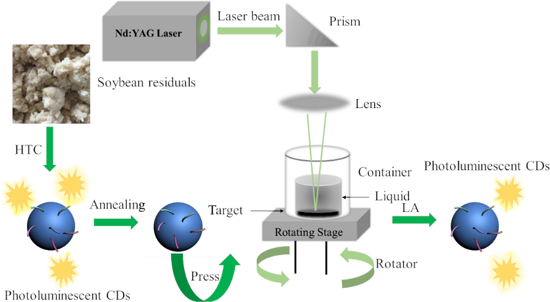
- producing biocompatible CDs from biomass and biowaste and manipulating their PL characteristics. It is worth mentioning that we [33] previously studied the electrochemical performance of carbon particles of micrometer size, which were synthesized from the soybean residuals via hydrothermal carbonization and
- high-temperature annealing in nitrogen. In contrast to the analysis of the electrochemical performance of large carbon particles of micrometer size [33], this work is focused on the optical characteristics of nanometer-sized CDs, which are synthesized by two different approaches. One is similar to the
- one used for the electrochemical study and the other uses multiple processes including annealing in argon. Note that filtration is needed to obtain carbon nanoparticles from the carbonized soybean residual. Experimental Hydrothermal carbonization Following the approach in Wang et al. [33], we


Comparison of fresh and aged lithium iron phosphate cathodes using a tailored electrochemical strain microscopy technique
Beilstein J. Nanotechnol. 2020, 11, 583–596, doi:10.3762/bjnano.11.46
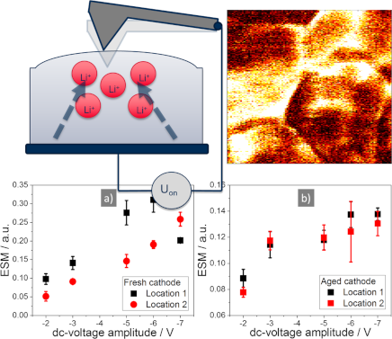
- , Institute of Building Energetics, Thermal Engineering and Energy Storage (IGTE), Pfaffenwaldring 31, 70569 Stuttgart, Germany 10.3762/bjnano.11.46 Abstract Electrochemical strain microscopy (ESM) is a powerful atomic force microscopy (AFM) mode for the investigation of ion dynamics and activities in energy
- ionic concentration in the material volume under the AFM tip. The ageing of the cathode is found to be governed by a decrease of the electrochemical activity and the loss of available lithium for cycling, which can be stored in the cathode. Keywords: activity; ageing; cathode; electrochemical strain
- additional mechanical (stiffness, elasticity), electrical (conductivity, surface potential), electrochemical (reactivity, mobility and activity), mechanoelectrical (piezoelectricity) and chemical (chemical bonding) material properties. In situ AFM imaging of the sample topography is often used to study the



Nanoarchitectonics: bottom-up creation of functional materials and systems
Beilstein J. Nanotechnol. 2020, 11, 450–452, doi:10.3762/bjnano.11.36

- spectroscopy [37], bio-nanocomposites with clay nanoarchitectures for electrochemical devices [38], a biomimetic nanofluidic diode with polymeric carbon nitride nanotubes [39], and a unique Janus-micromotor applied as a luminescence sensor for sensitive TNT detection [40]. The variety of nanoarchitectonics

Electrochemically derived functionalized graphene for bulk production of hydrogen peroxide
Beilstein J. Nanotechnol. 2020, 11, 432–442, doi:10.3762/bjnano.11.34
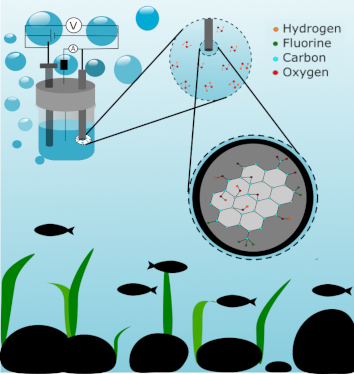
- Munaiah Yeddala Pallavi Thakur Anugraha A Tharangattu N. Narayanan Tata Institute of Fundamental Research - Hyderabad, Sy. No. 36/P, Gopanapally Village, Serilingampally Mandal, Hyderabad 500107, India 10.3762/bjnano.11.34 Abstract On-site peroxide generation via electrochemical reduction is
- gaining tremendous attention due to its importance in many fields, including water treatment technologies. Oxidized graphitic carbon-based materials have been recently proposed as an alternative to metal-based catalysts in the electrochemical oxygen reduction reaction (ORR), and in this work we unravel
- the role of C=O groups in graphene towards sustainable peroxide formation. We demonstrate a versatile single-step electrochemical exfoliation of graphite to graphene with a controllable degree of oxygen functionalities and thickness, leading to the formation of large quantities of functionalized





