Search results
Search for "eye" in Full Text gives 187 result(s) in Beilstein Journal of Nanotechnology.
Correlative infrared nanospectroscopic and nanomechanical imaging of block copolymer microdomains
Beilstein J. Nanotechnol. 2016, 7, 605–612, doi:10.3762/bjnano.7.53
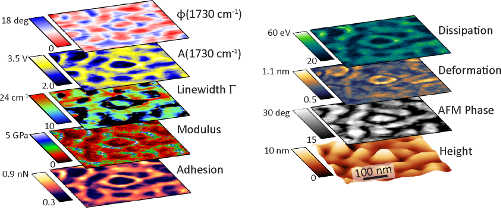
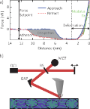
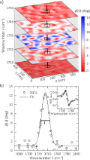
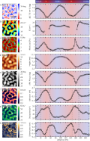
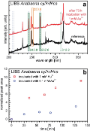
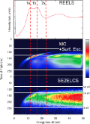
- Gaussian fits to spectra at each pixel. Corresponding amplitude spectrum (inset) also shown for completeness, with fit to a dispersive lineshape as a guide to the eye. Multidimensional dataset showing maps of PS and PMMA microdomains, with corresponding profiles along the line indicated in (a) averaged


![[Graphic 9]](/bjnano/content/inline/2190-4286-7-53-i10.png?max-width=637&scale=1.18182) (1730 ...
(1730 ...
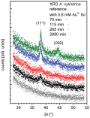
Time-dependent growth of crystalline Au0-nanoparticles in cyanobacteria as self-reproducing bioreactors: 2. Anabaena cylindrica
Beilstein J. Nanotechnol. 2016, 7, 312–327, doi:10.3762/bjnano.7.30
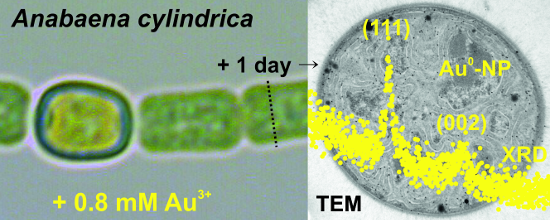
- represent a recorded nanoparticle. Since the grey scale is not changing stepwise (electron dense background) and electron microscopy images are always noisy, this could not be done precisely by eye and an image processing tool had to be used. A home-made software was developed and successfully applied to
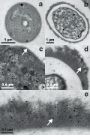
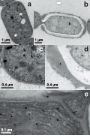
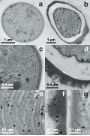
- (b), (d) and (e). The white arrows guide the eye to one already formed nanoparticle in each panel with larger magnification. TEM images of Anabaena cylindrica incubated with an overall concentration of 0.8 mM Au3+ for 9.25 hours. Vegetative cells are displayed in panel (a) and (c), heterocysts in (b



Hydration of magnesia cubes: a helium ion microscopy study
Beilstein J. Nanotechnol. 2016, 7, 302–309, doi:10.3762/bjnano.7.28
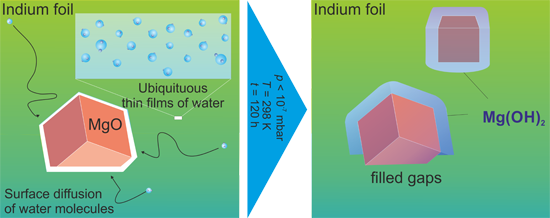
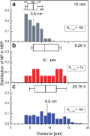
- of the tilt (maximum 30° tilt, inducing a possible underestimation of the edge length of 15%). The continuous black lines (exponential fits) are shown as guides to the eye. (b) The indium foil was dried under vacuum before being used as a substrate. In addition to morphological changes under high


Surface coating affects behavior of metallic nanoparticles in a biological environment
Beilstein J. Nanotechnol. 2016, 7, 246–262, doi:10.3762/bjnano.7.23
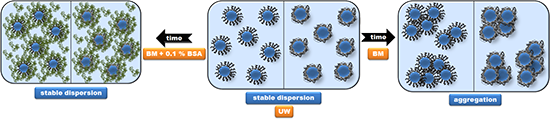
- from Figure 5. Thus, the high ionic strength of BM caused an agglomeration expected to be close to diffusion-limited. Moreover, the fast agglomeration of investigated NPs in BM was visible even to the naked eye. Immediately after the addition of clear NP stock solution into the BM, a cloudy black

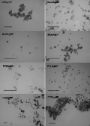
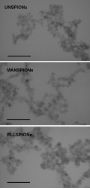


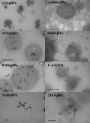

Influence of calcium on ceramide-1-phosphate monolayers
Beilstein J. Nanotechnol. 2016, 7, 236–245, doi:10.3762/bjnano.7.22
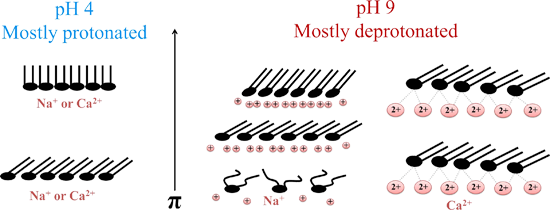
- ) stretching mode at approx. 925 cm−1 [14]. It is important to note that the phosphate bands region is noisy and the accurate analysis of the peak position of the bands is challenging. Therefore no fitting was performed, and the peak positions were defined by an eye analysis. Apart from the asymmetrical PO32


Plasticity-mediated collapse and recrystallization in hollow copper nanowires: a molecular dynamics simulation
Beilstein J. Nanotechnol. 2016, 7, 228–235, doi:10.3762/bjnano.7.21
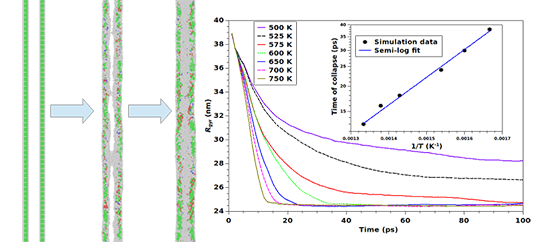
- ) recovery are plotted as functions of temperature. The solid curves are to guide the eye. Acknowledgements AD acknowledges the financial support provided by DST (Govt. of India) under the INSPIRE faculty scheme. AKR acknowledges the financial support from Nanomission, DST, for a sponsored project (Unit for


3D solid supported inter-polyelectrolyte complexes obtained by the alternate deposition of poly(diallyldimethylammonium chloride) and poly(sodium 4-styrenesulfonate)
Beilstein J. Nanotechnol. 2016, 7, 197–208, doi:10.3762/bjnano.7.18
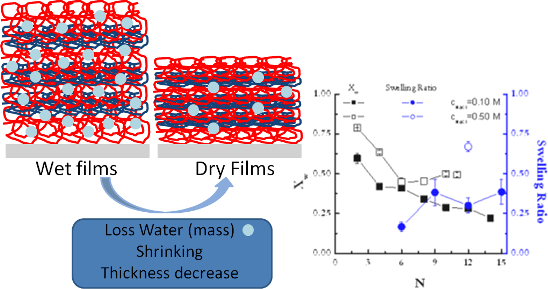
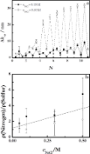
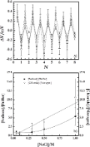
- through XPS (open triangles). The solid lines are to guide the eye. (a) Multilayer thickness of (PDADMAC + PSS)N films formed at an ionic strength of 0.10 M as a function of N, measured under wet conditions (ellipsometry) and dry conditions (X-ray reflectivity). (b) Swelling ratio as a function of N for
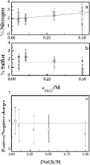
- the multilayers of part a. The lines are to guide the eye. (a) Dependence on the salt concentration of the atomic fraction of nitrogen in (PDADMAC + PSS)N films, obtained by XPS measurement at different angles of electron emission: (squares) −40°, (circles) −30°, (upward triangles) −20°, (downward
- triangles) −10°, (diamonds) 0°, (leftward triangles) 10°. The solid lines are to guide the eye. (b) Dependence on the salt concentration of the atomic fraction of sulfur in (PDADMAC + PSS)N films, obtained by XPS measurement at different angles of electron emission: (squares) −40°, (circles) −30°, (upward



Sonochemical co-deposition of antibacterial nanoparticles and dyes on textiles
Beilstein J. Nanotechnol. 2016, 7, 1–8, doi:10.3762/bjnano.7.1
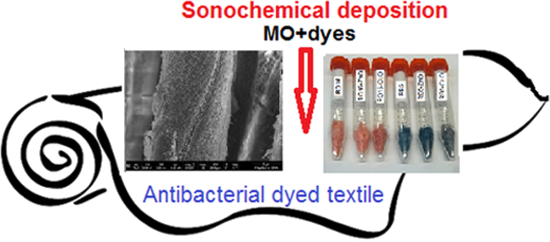
- the best reaction parameters, which resulted in the highest antibacterial activity and coloration are reported in the experimental section. The presence of the dye on the fabric after the sonochemical reaction can be easily observed by the naked eye (Figure 2). While the color of RO16 changed only




pH-Triggered release from surface-modified poly(lactic-co-glycolic acid) nanoparticles
Beilstein J. Nanotechnol. 2015, 6, 2504–2512, doi:10.3762/bjnano.6.260
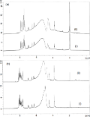
- substance. In Figure 5, 1H NMR spectra of all polymeric components are shown, except for PLGA, which is insoluble in D2O. Recorded spectra are stacked as a guide to the eye, while each polymer spectrum is normalized to the signal of residual water protons (HDO), calibrated by a chemical shift of 4.8 ppm


Large area scanning probe microscope in ultra-high vacuum demonstrated for electrostatic force measurements on high-voltage devices
Beilstein J. Nanotechnol. 2015, 6, 2485–2497, doi:10.3762/bjnano.6.258
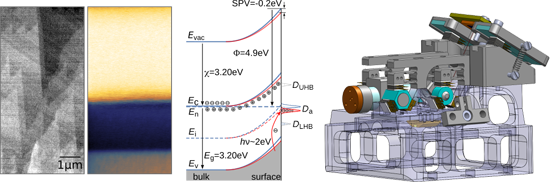
- sections across the complete sample always located at a centre of a p+-doped shield. In total 14 curves starting from the left to the right are presented. Beside the variation between the differently doped areas the most eye-catching feature is the pronounced change of the potential in the p-type SiC layer


Vibration-mediated Kondo transport in molecular junctions: conductance evolution during mechanical stretching
Beilstein J. Nanotechnol. 2015, 6, 2417–2422, doi:10.3762/bjnano.6.249
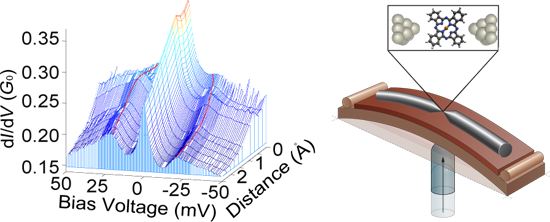
- absence of a zero-bias Kondo effect. (b) Schematic representation of a mechanically controllable break junction device. (a) Differential conductance curves measured during the elongation process of the junction. The red lines are a guide to the eye outlining the changing trend of the voltage shift of the


A simple and efficient quasi 3-dimensional viscoelastic model and software for simulation of tapping-mode atomic force microscopy
Beilstein J. Nanotechnol. 2015, 6, 2233–2241, doi:10.3762/bjnano.6.229
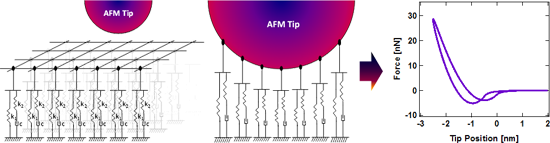
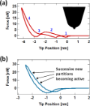
- tip with a narrow protrusion at the apex, which leads to surprising anomalies, which at first glance may seem unreasonable. However, careful inspection leads to the eye-opening conclusion that this is not so: The region of the curve labeled with the number ‘1’ shows a small force minimum indicating



Controlled switching of single-molecule junctions by mechanical motion of a phenyl ring
Beilstein J. Nanotechnol. 2015, 6, 2088–2095, doi:10.3762/bjnano.6.213
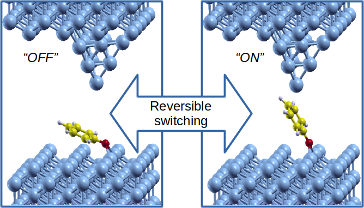
- conducting molecule is in the lifted configuration. The horizontal arrows guide the eye to the differences between PhO to PhS around EF, mainly observed in the transmission and chalcogen-site PDOS. Comparison between STM images of (a) PhO, (b) m-cresoxy, and (c) 3,5-xylenoxy molecules on Cu(110). The images


High Ion/Ioff current ratio graphene field effect transistor: the role of line defect
Beilstein J. Nanotechnol. 2015, 6, 2062–2068, doi:10.3762/bjnano.6.210
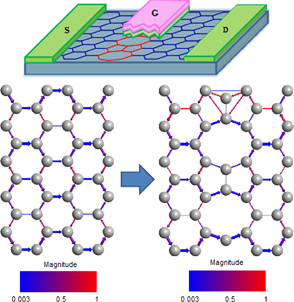
- = Voff + VDD (VDD = 0.7 V), where Voff = Vgs at Ids = Ioff). Symbols show the exact value, and dashed lines are fitted to data points. Channel length dependence of (a) on-current (b) off current (c) on/off current. The lines are a guide to the eye. The dashed blue line is for ELD-GNRFET and the dashed
- red line is for GNRFET. Comparison between average of (a) transconductance and (b) subthreshold swing of ELD-GNRFET and GNRFET as a function of the channel length. The lines are a guide to the eye. Channel width dependence of (a) on-current (b) off current (c) on/off current. The lines are a guide to
- the eye. The dashed blue line is for ELD-GNRFET and the dashed red line is for GNRFET. Comparison between average of (a) transconductance and (b) subthreshold swing of ELD-GNRFET and GNRFET as a function of the channel width. Symbols show the exact value, and dashed lines are fitted to data points.


Comprehensive characterization and understanding of micro-fuel cells operating at high methanol concentrations
Beilstein J. Nanotechnol. 2015, 6, 2000–2006, doi:10.3762/bjnano.6.203
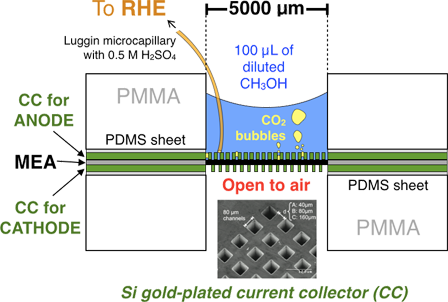
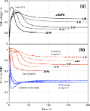
- drowning it in the alcohol (observed with the naked eye). Therefore, oxygen is not further supplied at the Pt active sites and MOR at the cathode prevails over the ORR. The final result is a slow dropping in the cathode potential until the cell reaches 0 V making the µDMFC operable just for 420 s. A



The role of low-energy electrons in focused electron beam induced deposition: four case studies of representative precursors
Beilstein J. Nanotechnol. 2015, 6, 1904–1926, doi:10.3762/bjnano.6.194








Imaging of carbon nanomembranes with helium ion microscopy
Beilstein J. Nanotechnol. 2015, 6, 1712–1720, doi:10.3762/bjnano.6.175
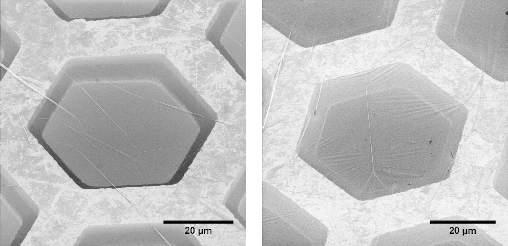
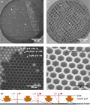
- appear dark in all parts of this image. To guide the eye, white arrows in Figure 1a,b depict the same position in the sample. Note that regardless of the CNM grid mounting, in both cases, a fast evaluation regarding the area of intact CNMs is easily obtained due to the large field of view (of more than 2
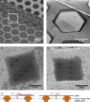
- a guide to the eye. (c) CNMs on a TEM grid with a bright background and substantial membrane charging. (d) CNMs are imaged on a dark background with negligible membrane charging. (e) Schematic cross-section and superimposed line profile of the image greyscale values along the dotted line in (c) with




Influence of surface chemical properties on the toxicity of engineered zinc oxide nanoparticles to embryonic zebrafish
Beilstein J. Nanotechnol. 2015, 6, 1568–1579, doi:10.3762/bjnano.6.160
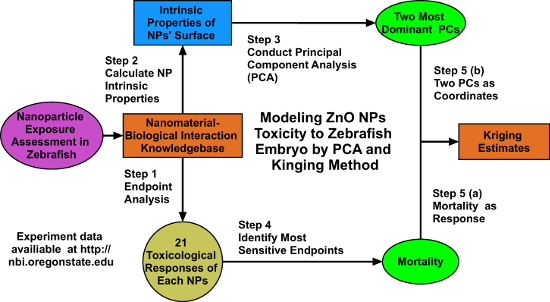
- (SP), notochord (N), yolk sac edema (Y), axis (A), eye (E), snout (Sn), jaw (J), otic (O), heart (H), brain (B), somite (So), pectoral fin (PF), caudal fin (CF), pigment (P), circulation (C), trunk (T), swim bladder (SB), and touch response (TR). Statistical analysis Due to the non-parametric nature
- . The 19 sub-lethal endpoints are developmental progression (DP), spontaneous movement (SP), notochord (N), yolk sac edema (Y), axis (A), eye (E), snout (Sn), jaw (J), otic (O), heart (H), brain (B), somite (So), pectoral fin (PF), caudal fin (CF), pigment (P), circulation (C), trunk (T), swim bladder
- (SB), and touch response (TR). Supporting Information File 28: Fisher’s exact test p-value. The 19 sub-lethal endpoints are developmental progression (DP), spontaneous movement (SP), notochord (N), yolk sac edema (Y), axis (A), eye (E), snout (Sn), jaw (J), otic (O), heart (H), brain (B), somite (So




Surface excitations in the modelling of electron transport for electron-beam-induced deposition experiments
Beilstein J. Nanotechnol. 2015, 6, 1260–1267, doi:10.3762/bjnano.6.129
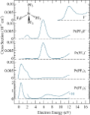
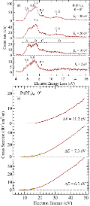
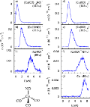
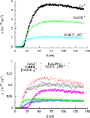
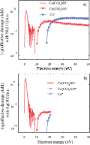
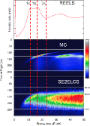
- SE yield, differential with respect to the energy loss of the primary electron and with respect to the energy (or the time of flight) of the emitted secondary electron [55]. These experimental data are displayed for Si under 100 eV electron bombardment in the lower panel of Figure 4 as a bird’s-eye


Improved optical limiting performance of laser-ablation-generated metal nanoparticles due to silica-microsphere-induced local field enhancement
Beilstein J. Nanotechnol. 2015, 6, 1199–1204, doi:10.3762/bjnano.6.122
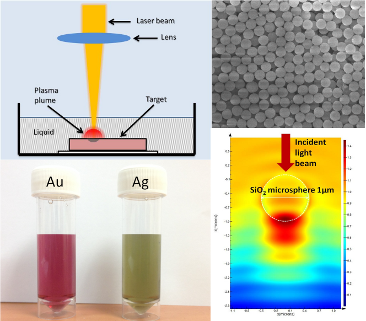
- University, 1001 Ta hsueh Rd., Hsinchu 30010, Taiwan 10.3762/bjnano.6.122 Abstract For practical application, optical limiting materials must exhibit a fast response and a low threshold in order to be used for the protection of the human eye and electro-optical sensors against intense light. Many
- into the environment to form a colloidal nanoparticle dispersion [7][8][9]. The nanoparticles have wide application in physics, chemistry, biology and engineering. One of the important applications is that the nanoparticles can be used as optical limiting materials for the protection of the human eye


Magnetic properties of iron cluster/chromium matrix nanocomposites
Beilstein J. Nanotechnol. 2015, 6, 1158–1163, doi:10.3762/bjnano.6.117
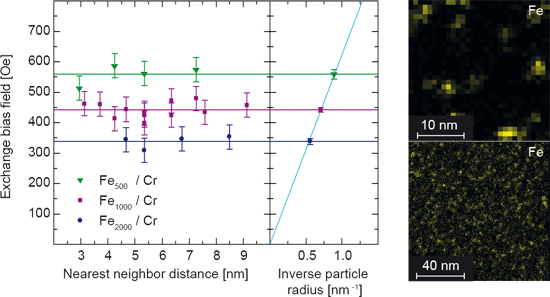
- individual Fe clusters, it was recorded using EDX and the Fe K signal. Blocking temperature TB versus approximated nearest neighbor distances DNN for Fex/Cr samples. The solid lines on three series of samples with 500, 1000 and 2000 atoms are just guides to the eye. A clear dependence of TB on the cluster


Superluminescence from an optically pumped molecular tunneling junction by injection of plasmon induced hot electrons
Beilstein J. Nanotechnol. 2015, 6, 1100–1106, doi:10.3762/bjnano.6.111
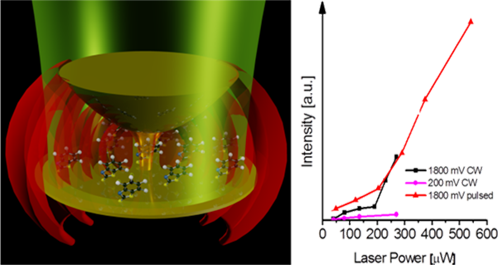
- μW) for a constant bias voltage of +1800 mV. Spectrally integrated intensity (blue dots) and the full width at half maxium (FWHM) (red diamonds) of the of the luminescence peak as a function of optical pump power are given in (b). The dashed lines are guides to the eye. (c) Spectral narrowing


Tunable magnetism on the lateral mesoscale by post-processing of Co/Pt heterostructures
Beilstein J. Nanotechnol. 2015, 6, 1082–1090, doi:10.3762/bjnano.6.109
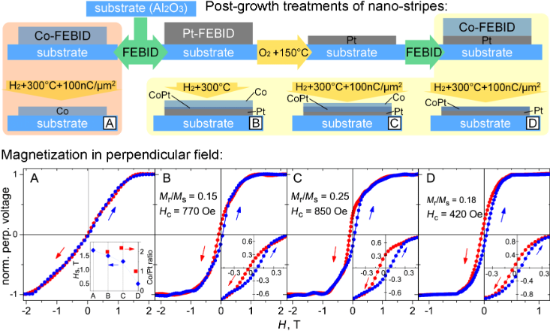
- cycling for sample D at a series of temperatures, as indicated. Insets: Temperature dependencies of the squareness Mr/Ms and the coercive field Hc for sample D. The lines are guides for the eye. Geometrical dimensions, thickness-integrated composition, and magnetic properties of the samples. l: length; w


From lithium to sodium: cell chemistry of room temperature sodium–air and sodium–sulfur batteries
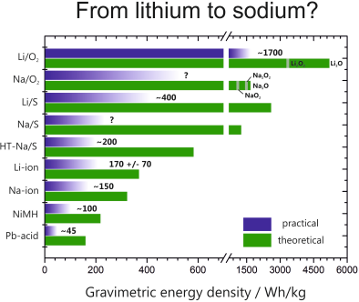
Beilstein J. Nanotechnol. 2015, 6, 1016–1055, doi:10.3762/bjnano.6.105


Protein corona – from molecular adsorption to physiological complexity
Beilstein J. Nanotechnol. 2015, 6, 857–873, doi:10.3762/bjnano.6.88
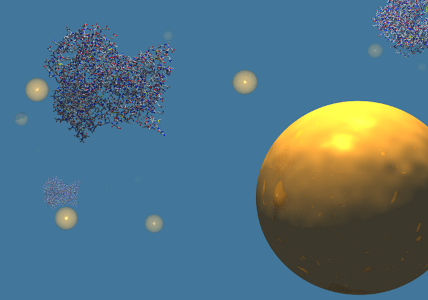
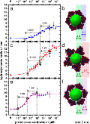
- eye. The collision efficiency becomes zero around the point where monolayer surface coverage can be expected. (b): Data-plot of surface coverage versus the logarithmic HSA-concentration from the same study [53]. Surface coverage was inferred from the stabilizing effect of the HSA corona forming around