Search results
Search for "fitting" in Full Text gives 523 result(s) in Beilstein Journal of Nanotechnology. Showing first 200.
Measurement of electrostatic tip–sample interactions by time-domain Kelvin probe force microscopy
Beilstein J. Nanotechnol. 2020, 11, 911–921, doi:10.3762/bjnano.11.76
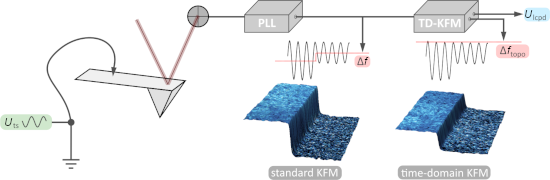
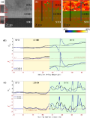
- performed on Δftopo, where all electrostatic forces are compensated, including the static contribution . So far, recovering and fitting the Kelvin parabola is known as an open-loop technique, the so-called Kelvin probe force spectroscopy [22][23][24][25]. A real-time closed-loop technique has not been


Integrated photonics multi-waveguide devices for optical trapping and Raman spectroscopy: design, fabrication and performance demonstration
Beilstein J. Nanotechnol. 2020, 11, 829–842, doi:10.3762/bjnano.11.68
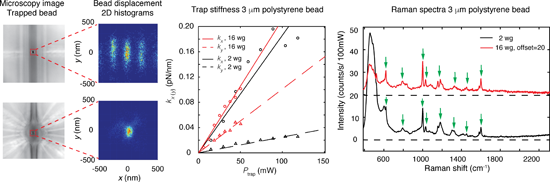
- the bead (taken from one of the frames) and each frame of the video. The maximum in the respective correlation maps indicates the position of the bead. We find the position of the maxima with a resolution of a few nanometers by fitting a 2D parabola to the correlation maps in a limited range near the
- is the Boltzmann constant and T = 293 K is the temperature. Generally, the proportionalities kx(y) ∝ Ptrap and are found to hold (Ptrap is the power offered to the trap by the waveguides), in agreement with the above relation. By fitting 2D Gaussian functions to the 2D histograms, we obtain σΔx(Δy


Light–matter interactions in two-dimensional layered WSe2 for gauging evolution of phonon dynamics
Beilstein J. Nanotechnol. 2020, 11, 782–797, doi:10.3762/bjnano.11.63
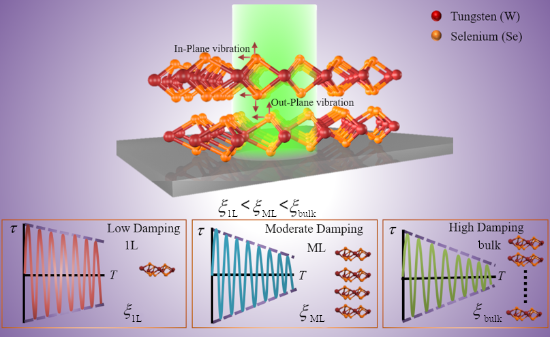
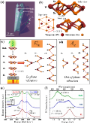
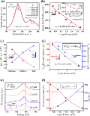
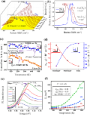
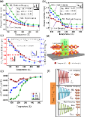
- the E0(T) data as a function of T, where A1, B1 are constants having dimension of energy, and R0 is the exponential increment rate of E0. From the fitting, the value of R0 (1L) for WSe2 was found to be ≈0.0017/K, which is almost 3× < R0 (ML) and R0 (bulk), as shown by the comparative values in Table 2
- consequently (Figure 4e) vary widely in 1L, ML, and bulk WSe2, as nanostructure differences become the more dominant scattering source at low T. These dissimilarities in the decay in 1L, ML and bulk WSe2 at low T are characterized by fitting the results of Figure 4a, i.e., τ(T) for the mode, to the
Quantitative determination of the interaction potential between two surfaces using frequency-modulated atomic force microscopy
Beilstein J. Nanotechnol. 2020, 11, 729–739, doi:10.3762/bjnano.11.60
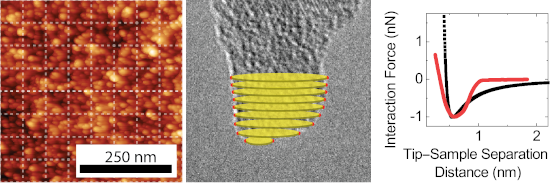
- , the best-fit parameters for Wadh and z0 are 0.0860 J/m2 and 0.55 nm, respectively. (b) An example of a square-rooted variance map produced using a least squares fitting technique to compare the experimental F(z) curves to LJ F(z) curves. (c, d) Histograms of the best-fit Wadh and z0 values


Observation of unexpected uniaxial magnetic anisotropy in La2/3Sr1/3MnO3 films by a BaTiO3 overlayer in an artificial multiferroic bilayer
Beilstein J. Nanotechnol. 2020, 11, 651–661, doi:10.3762/bjnano.11.51
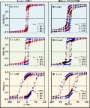
- uniaxial (ku) and biaxial (k1) anisotropy constants for the LSMO layer and BTO/LSMO bilayer grown on STO substrate. First, we determine the anisotropy energy ratios (ku/k1) by fitting the polar plots and determining the angles that minimize the general anisotropy energy equation. To separate ku/k1, we



Soybean-derived blue photoluminescent carbon dots
Beilstein J. Nanotechnol. 2020, 11, 606–619, doi:10.3762/bjnano.11.48
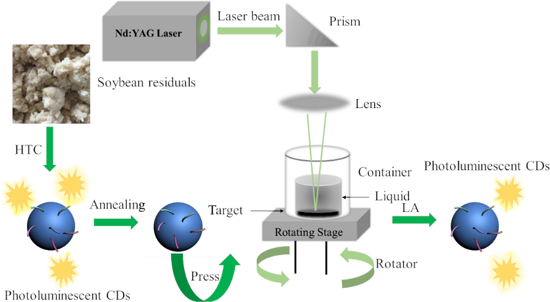
- constants of Bi. The fitting curves are included in the corresponding figures. It is evident that Equation 1 is appropriate to describe the 440 and 459 nm PL-decay behavior of the HTC-CDs and the LA-CDs-10%, respectively. Table 1 lists the lifetimes and the corresponding contributions obtained from the
- curve fitting. It is evident that the PL decays of both the HTC-CDs and LA-CDs-10% consist of three rate processes with the fastest one, τ1, attributed to the intrinsic state of the CDs, and two slower processes, τ2 and τ3, attributed to the decays of the extrinsic states associated with the surface
- ” state, as shown schematically in Figure 6. From Figure 3, we note that the strongest emssion is at 440 nm for the HTC-CDs and 459 nm for the LA-CDs-10%. From Figure 6, we note that both peaks indeed can be fitted with a two-Gassian function, respectively. The fitting results reveal that the 440 nm


Comparison of fresh and aged lithium iron phosphate cathodes using a tailored electrochemical strain microscopy technique
Beilstein J. Nanotechnol. 2020, 11, 583–596, doi:10.3762/bjnano.11.46
- [30][33][36][40], but the power law [29] or stretched exponential decay [41] functions are applied, too. The drawback of fits employing single exponential functions is the poor fitting quality compared to higher-order exponential functions or fitting functions with more parameters. Nevertheless, the
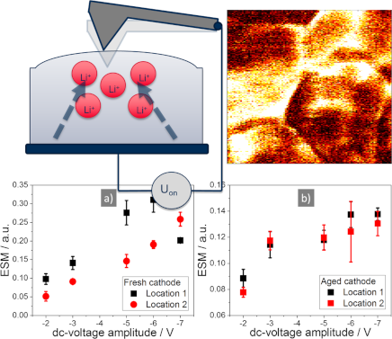
- additional fitting parameters increase the complexity of the interpretation and can lead to false conclusions [33][36]. Therefore, we used a single exponential decay function in form of Equation 2 for the fitting of the measurement signal with b = 1/τ. Luchkin et al. used ESM to study the changes in fresh
- voltage amplitude. However, the slope of the ESM signal is much smaller for the aged cathode, as compared to the fresh one. Fitting the ESM relaxation after the applied voltage pulse provides time constants which represent diffusion coefficients in the range of 2.5 × 10⁻¹⁴ m2 s−1. These values are in the



Evolution of Ag nanostructures created from thin films: UV–vis absorption and its theoretical predictions
Beilstein J. Nanotechnol. 2020, 11, 494–507, doi:10.3762/bjnano.11.40
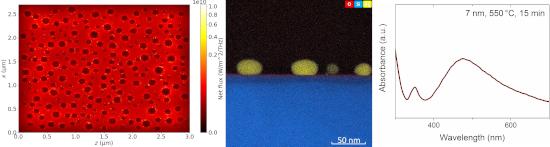
- of 4 mm was used for analyzing the emitted photoelectrons. The binding energies were corrected using the background C 1s line (285.0 eV). XPS spectra were analyzed with the Casa-XPS software using a Shirley background subtraction and Gaussian–Lorentzian curves as fitting algorithm. The theoretical
- was taken from [15] and [16], respectively, and fitted to the Drude–Lorentz model [17] in the range of 287–1000 nm. The fitting error for Si was 1%/0.79% (real/imaginary part), and that for Ag was 0.12%/6.1%. These errors were calculated as the root mean square of the original curves and the fitted




Implementation of data-cube pump–probe KPFM on organic solar cells
Beilstein J. Nanotechnol. 2020, 11, 323–337, doi:10.3762/bjnano.11.24
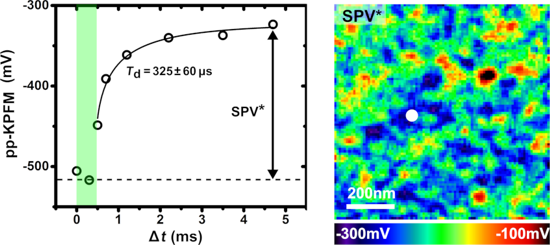
- exponents lower than 0.7 required for fitting of the spectroscopic curves (with the exception of the data in Figure 6f). These traps can be partially filled by applying a continuous white light background in addition to the pump pulse, which results in a significant reduction of the effective decay-time





An advanced structural characterization of templated meso-macroporous carbon monoliths by small- and wide-angle scattering techniques
Beilstein J. Nanotechnol. 2020, 11, 310–322, doi:10.3762/bjnano.11.23
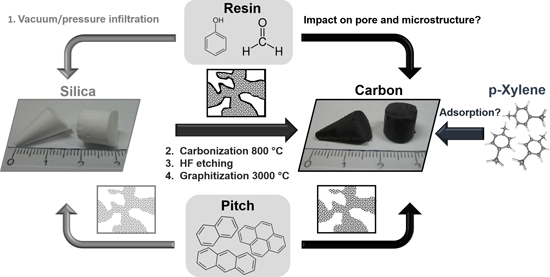
- . The degree of disorder in the graphene stacks can be determined by evaluating wide-angle X-ray (WAXS) and neutron (WANS) scattering data of turbostratic carbon materials. Several current evaluation methods for WAXS and WANS are based on the fitting of entire WAXS/WANS data sets using suitable
- inaccessible voids and sealed porosity hinders the penetration of the pore network, and the adsorption of DPX on the external surface leads to a larger scattering contrast, which in turn increases the overall intensity. The chord-length distributions g(r) (Figure 4B) were obtained by fitting the SANS data with


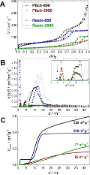


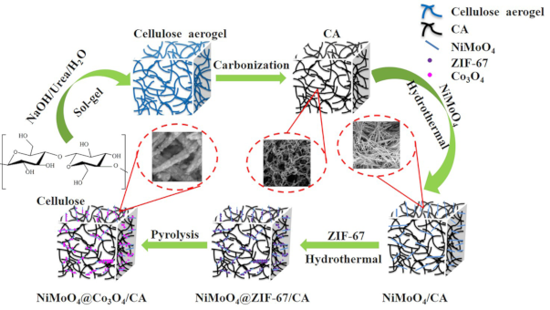
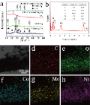
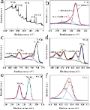
High-performance asymmetric supercapacitor made of NiMoO4 nanorods@Co3O4 on a cellulose-based carbon aerogel
Beilstein J. Nanotechnol. 2020, 11, 240–251, doi:10.3762/bjnano.11.18
- electrodes impede the diffusion less strongly, which is attributed to the faster transport of electrons and the charge transfer resistance (Rct). Fitting the electrochemical impedance spectroscopy (EIS) plots based on the equivalent circuit model (inset of Figure 6d), reveals a solution resistance (Rs) of




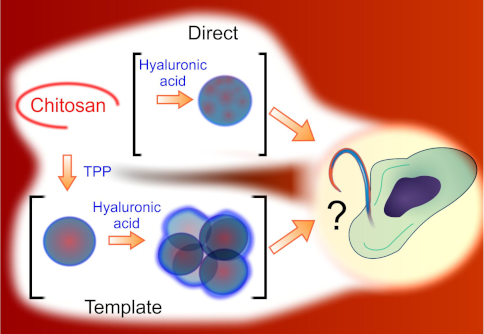
The different ways to chitosan/hyaluronic acid nanoparticles: templated vs direct complexation. Influence of particle preparation on morphology, cell uptake and silencing efficiency
Beilstein J. Nanotechnol. 2019, 10, 2594–2608, doi:10.3762/bjnano.10.250
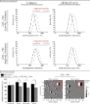
- -normal fit of the differential Rg distributions, in the second graph are the errors of the fitting. Protection of siRNA payload from enzymatic degradation. Left: PAGE analysis of entrapped siRNA after nanoparticle incubation with increasing concentrations of RNAse I, followed by quenching of nucleases



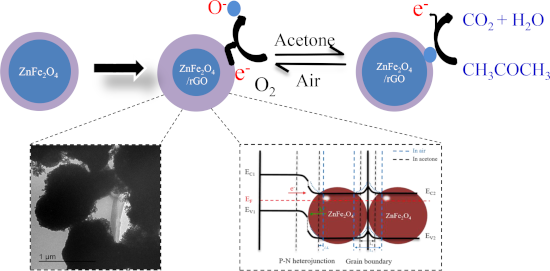
Synthesis and acetone sensing properties of ZnFe2O4/rGO gas sensors
Beilstein J. Nanotechnol. 2019, 10, 2516–2526, doi:10.3762/bjnano.10.242
- concentration at 200 °C and the corresponding fitting data. The results demonstrate that the response of the hollow spheres made of pure ZnFe2O4 and of ZnFe2O4/rGO with 0.5 wt % rGO are more intense at higher concentration of acetone. Moreover, it is obvious that the linear response of the 0.5 wt % ZnFe2O4/rGO




Abrupt elastic-to-plastic transition in pentagonal nanowires under bending
Beilstein J. Nanotechnol. 2019, 10, 2468–2476, doi:10.3762/bjnano.10.237
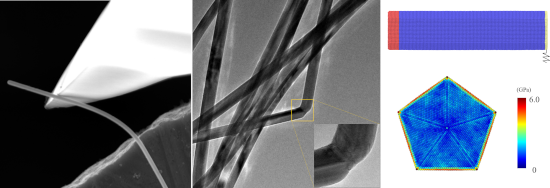
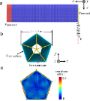
- mesh used in these simulations is described in previous work [29]. The yield strength values were obtained from the FEM NW model by fitting its profile to the experimentally bent profiles of Ag or Au NWs at the critical bending angle, before the abrupt transition to plastic deformation. MD simulations



Mobility of charge carriers in self-assembled monolayers
Beilstein J. Nanotechnol. 2019, 10, 2449–2458, doi:10.3762/bjnano.10.235
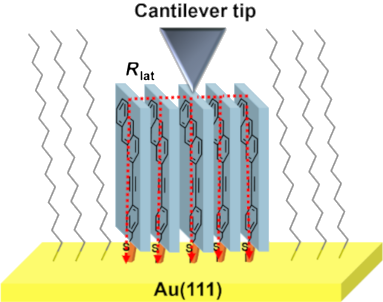
- only along the (112) direction. The values Rmol and Rlat were determined by fitting the experimental resistance vs island diameter curve with the formula provided in Equation 1 (see Figure 2d). Note that the fit is not very good, indicating that the 1D model used for the derivation of Equation 1


Polyvinylpyrrolidone as additive for perovskite solar cells with water and isopropanol as solvents
Beilstein J. Nanotechnol. 2019, 10, 2374–2382, doi:10.3762/bjnano.10.228
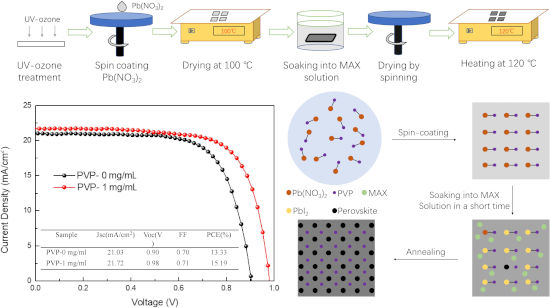
- simulator (Newport Oriel Sol3A Class AAA, 64023A Simulator), which was calibrated using a NREL standard Si solar cell. Electrochemical impedance spectroscopy (EIS) measurements were conducted by using an electrochemical workstation (CHI660d) (1 MHz to 100 Hz) and for fitting the Zview software was used. The




Atomic force acoustic microscopy reveals the influence of substrate stiffness and topography on cell behavior
Beilstein J. Nanotechnol. 2019, 10, 2329–2337, doi:10.3762/bjnano.10.223
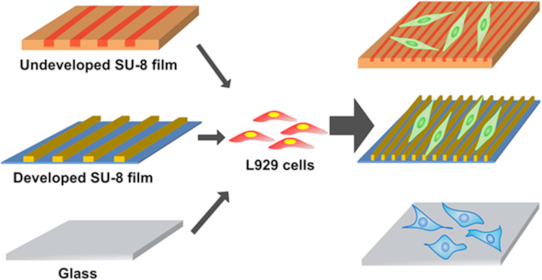
- using the same parameters. The Young’s moduli of the fabricated substrates were evaluated by fitting the force–distance curves with a Hertzian cone. A probe sensor (ContAl-G, Budget Sensors) was used in the force modulation mode for measuring the Young’s moduli. The cantilever spring constant was 0.2 N


Ultrathin Ni1−xCoxS2 nanoflakes as high energy density electrode materials for asymmetric supercapacitors
Beilstein J. Nanotechnol. 2019, 10, 2207–2216, doi:10.3762/bjnano.10.213
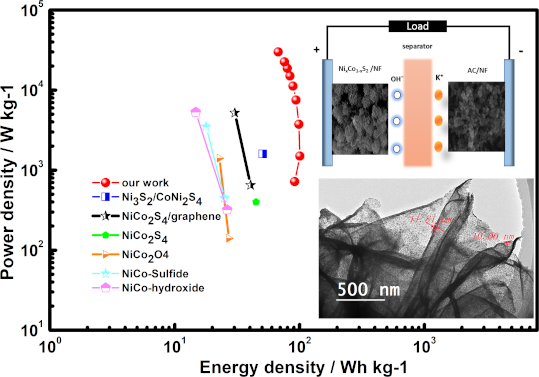
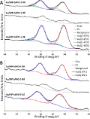
- supported by aluminium SEM sample stages. Chemical composition and valence states of each element in the material are further confirmed by using XPS. The high-resolution XPS spectra confirm the existence of nickel, cobalt, and sulfur. After fitting the XPS with the Gaussian method, the HRXPS spectrum of Ni


Improved adsorption and degradation performance by S-doping of (001)-TiO2
Beilstein J. Nanotechnol. 2019, 10, 2116–2127, doi:10.3762/bjnano.10.206
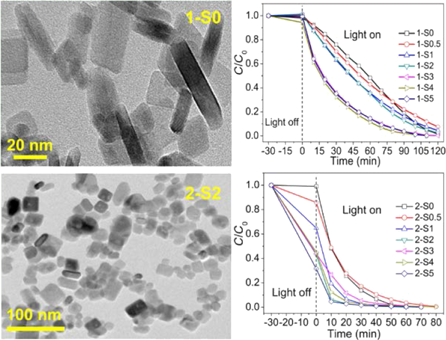
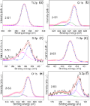
- performed for the samples 1-S0, 1-S2 and 1-S5. The results are not shown here because the S element was not detected possibly be due to the small amount of S atoms doped into the samples or adsorbed at the TiO2 surface [39]. By fitting the XP spectra of Ti 2p and O 1s we deduce that the CSs correspond to




Microbubbles decorated with dendronized magnetic nanoparticles for biomedical imaging: effective stabilization via fluorous interactions
Beilstein J. Nanotechnol. 2019, 10, 2103–2115, doi:10.3762/bjnano.10.205
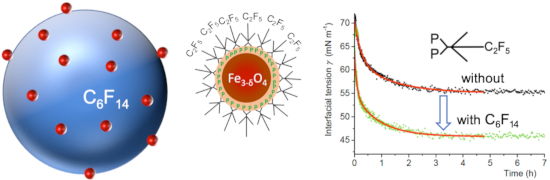
- or not. The interfacial tension at equilibrium (σeq) of the dendronized IONP dispersions and characteristic times of adsorption (τ) of the latter for various Fe concentrations are collected in Table 1. The τ values were determined by fitting the adsorption profiles (Figure 3) to an exponential decay


Green and scalable synthesis of nanocrystalline kuramite
Beilstein J. Nanotechnol. 2019, 10, 2073–2083, doi:10.3762/bjnano.10.202
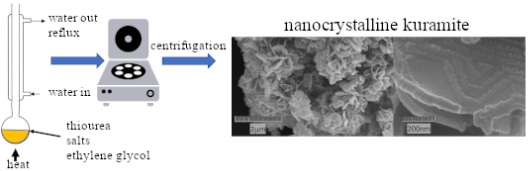
- each sample, but sample S2 shows an additional very pronounced shoulder at 350 cm−1. Figure 4a,c shows the results of a nonlinear fitting process carried out with two Lorentzian peaks for samples S1 and S3 (adding further Lorentzian components to the spectra did not lead to an reduction in the R factor
- with Sn in tetrahedral coordination with S atoms in a CTS structure. Although the EXAFS signal is characterized by an almost single-frequency oscillation, the fitting procedure with the sole Sn–S path leads to a residual signal with a well-defined oscillation period. Most of the residual signal was


Synthesis of highly active ETS-10-based titanosilicate for heterogeneously catalyzed transesterification of triglycerides
Beilstein J. Nanotechnol. 2019, 10, 2039–2061, doi:10.3762/bjnano.10.200
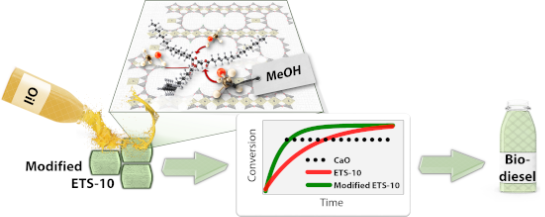
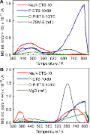
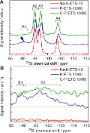
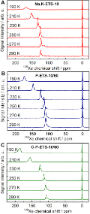
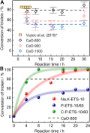
- using Equation 2 and a sum of three diffusion modes. The result of the fitting procedure is presented in Table 4. In the utilized oversaturated sample, that is, when the bulk excess was present, one component (the fastest amongst all others and labelled as “1”) shall be assigned to the diffusion of the
- bulk triolein. This value was also measured in a separate experiment with triolein only, resulting in 2.0 × 10⁻¹⁰ m2 s−1 (see the dashed line in Figure 16) and was fixed during the fitting procedure. The second mode “2” (with diffusivity 2.9 × 10⁻¹¹ m2 s−1) presumably originates from the diffusion








Magnetic properties of biofunctionalized iron oxide nanoparticles as magnetic resonance imaging contrast agents
Beilstein J. Nanotechnol. 2019, 10, 1964–1972, doi:10.3762/bjnano.10.193
- selected in Figure 2 are very similar (a = 0.84 nm), and hence magnetite (Fe3O4) and disordered maghemite γ-Fe2O3 compounds cannot be resolved by HRTEM in such images. The Raman spectrum of the uncoated nanoparticles is shown in Figure 4, and the fitting of the peaks in the frequency region up to 950 cm−1
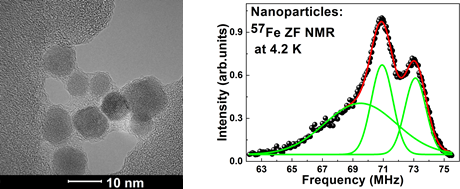
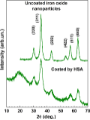
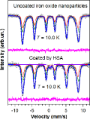
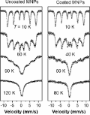
- was used in our ZF-NMR experiment. XRD patterns of coated and uncoated magnetic nanoparticles. HRTEM images of uncoated (a) and HSA-functionalized samples (b). The particle size distribution estimated from the HRTEM images in Figure 2. Raman spectrum of uncoated nanoparticles. Fitting of the peaks in




The influence of porosity on nanoparticle formation in hierarchical aluminophosphates
Beilstein J. Nanotechnol. 2019, 10, 1952–1957, doi:10.3762/bjnano.10.191
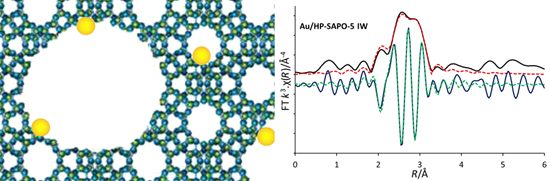
- loading of the WI systems makes fitting infeasible. These measurements confirm that the different porosity of the two systems has only a subtle influence on the nanoparticle environment and coordination. A potential cause of this being the lack of porosity in the Au/MP-SAPO-5 species, hindering the
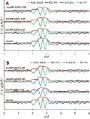
- -SAPO-5 (B) showing the oxidation states present in the samples. XAS fitting paths of Au-doped SAPO systems and Au foil.a Supporting Information Supporting Information File 230: Additional experimental data. Acknowledgements Panashe Mhembere acknowledges AdvanSix and Honeywell LLC for financial
First principles modeling of pure black phosphorus devices under pressure
Beilstein J. Nanotechnol. 2019, 10, 1943–1951, doi:10.3762/bjnano.10.190
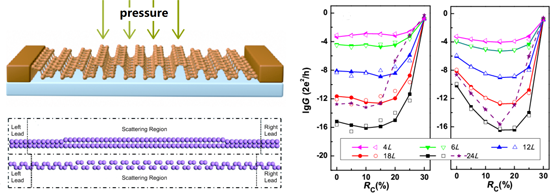
- thickness of BP and S the pressure area [42][43][44]. As shown in Figure 2d, Ps increases continuously from zero to 54 GPa when RC changes from zero to 40%. This is reasonable because it becomes more and more difficult to bring the atoms closer together with increasing pressure. By fitting the stress curve
- . More importantly, the conductance is not sensitive to the pressure when RC < 15% for the fully relaxed zigzag BP device, while it decreases rapidly for the fully relaxed armchair BP device. Band alignment analysis and WKB fitting The different behavior of conductance as a function of the pressure for
- calculation, we performed an empirical WKB fitting with parameters obtained from the DFT calculations to predict the pressure-dependent conductance of pure BP devices at larger scales. Using the WKB method, the conductance GWKB can be estimated empirically by [46][47][48][49][50] where A and B are two