Search results
Search for "hydrothermal" in Full Text gives 241 result(s) in Beilstein Journal of Nanotechnology. Showing first 200.
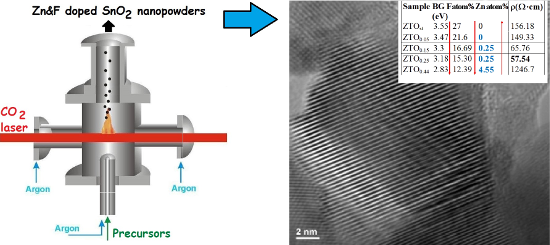
Zn/F-doped tin oxide nanoparticles synthesized by laser pyrolysis: structural and optical properties
Beilstein J. Nanotechnol. 2019, 10, 9–21, doi:10.3762/bjnano.10.2
- fluorine provided by SF6 decomposition with the alkyl radicals from metallic precursors) at 686.35 eV. The ≈685 eV F1s XPS peak was also detected in fluoride-doped SnO2 from milled PVdF (polyvynilidene fluoride)/SnO2 mixtures [42] and in solid or hollow fluoride-mediated hydrothermal synthesized SnO2



Characterization and influence of hydroxyapatite nanopowders on living cells
Beilstein J. Nanotechnol. 2018, 9, 3079–3094, doi:10.3762/bjnano.9.286
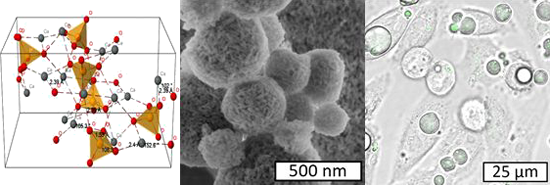
- manufactured using many different methods, such as hydrothermal synthesis, sol–gel synthesis, wet-chemical precipitation and microwave processing [16][17][18][19]. Many studies have shown that HAp can cause different biological responses depending on its physicochemical properties [20][21][22]. It is also

![[Graphic 1]](/bjnano/content/inline/2190-4286-9-286-i2.svg?max-width=637&scale=1.18182) .
.




Nanostructure-induced performance degradation of WO3·nH2O for energy conversion and storage devices
Beilstein J. Nanotechnol. 2018, 9, 2845–2854, doi:10.3762/bjnano.9.265
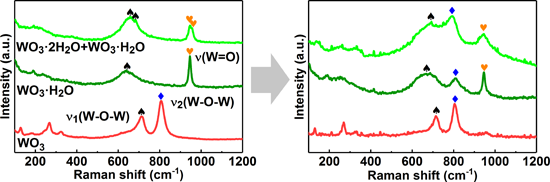
- their 3D counterparts. Herein, WO3·nH2O (n = 0, 1, 2), as the most common and important electrochemical and electrochromic active nanomaterial, is synthesized in 3D and 2D structures through a facile hydrothermal method, and the disadvantages of the corresponding 2D structures are examined. The weakness
- to fabricate WO3·2H2O electrochemical energy storage electrodes with a higher rate capability than annealed WO3 [38]. The investigation of 2D sheets of WO3 and a rGO–WO3 composite prepared via a one-pot hydrothermal method suggested that the rGO–WO3 composite could be a promising material for
- by a facile hydrothermal method for the first time at the different termperatures to investigate the disadvantages of 2D structures. The growth mechanism analyzed by X-ray diffraction (XRD) and scanning electron microscopy (SEM) suggested a 2D to 3D structural transition upon temperature increment


Graphene-enhanced metal oxide gas sensors at room temperature: a review
Beilstein J. Nanotechnol. 2018, 9, 2832–2844, doi:10.3762/bjnano.9.264
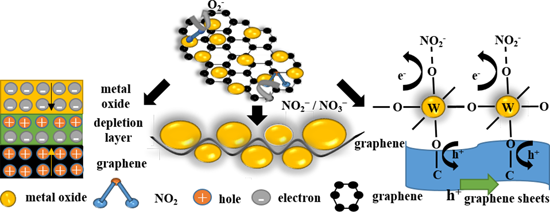
- , ammonia adsorbed on the surface of sensor by dissolving into water, leading to the higher response. This is quite different from the usual opinion that sensitivity will decrease at high humidity levels. Zhang et al. [47] synthesized CuO nanoflowers via hydrothermal method, then CuO and rGO were deposited
- heterojunctions are responsible for the exceptional NO2 sensing performance of CeO2–rGO sensor. Zhang et al. [59] added GO suspension to a Fe(NO3)3·9H2O solution, then synthesized α-Fe2O3–rGO hybrids via hydrothermal method. During the process of testing, the authors found that the doping amount of graphene
- ] reported that a NH3 room-temperature sensor based on TiO2–rGO hybrids, synthesized by a hydrothermal method, exhibited a two-times higher response and a much shorter response time than the TiO2–rGO sensor fabricated by direct deposition as mentioned above. Apart from the porous and undulating graphene



Near-infrared light harvesting of upconverting NaYF4:Yb3+/Er3+-based amorphous silicon solar cells investigated by an optical filter
Beilstein J. Nanotechnol. 2018, 9, 2788–2793, doi:10.3762/bjnano.9.260
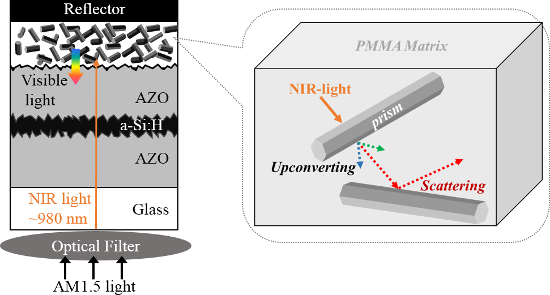
- light seriously restricts the photoelectric conversion efficiency of hydrogenated amorphous silicon (a-Si:H) thin film solar cells. Spectral upconversion is of great significance in reducing the wastage. Herein, the upconverting compound NaYF4:Yb3+/Er3+ was synthesized via a hydrothermal method. SEM and
- UC effect; however, it does not imitate the actual solar irradiation in practical devices. In the present work, the upconverting NaYF4:Yb3+/Er3+ nanorods were synthesized thorugh a hydrothermal method and their UC effect on NIR light harvesting in a-Si:H solar cell was scrutinized by using a facile
- scattering. Our results explicitly demonstrated the feasibility of UC in NIR light harvesting for a-Si:H solar cells. Experimental The NaYF4:Yb3+/Er3+ was prepared via a hydrothermal method based on a alcohol/water/oleic acid system [21]. Lanthanide chloride hexahydrate (RECl3·6H2O, RE = Y, Yb and Er; 99.99


Oriented zinc oxide nanorods: A novel saturable absorber for lasers in the near-infrared
Beilstein J. Nanotechnol. 2018, 9, 2730–2740, doi:10.3762/bjnano.9.255
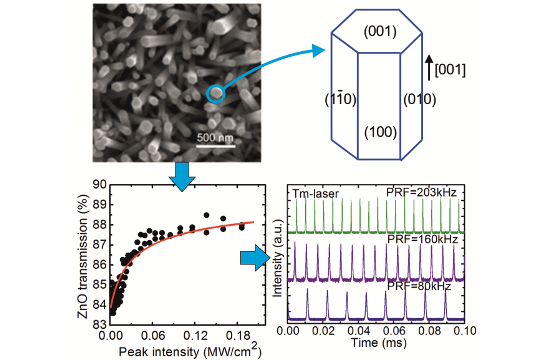
- , Applied Physics Department, School of Engineering Sciences, KTH Royal Institute of Technology, Isafjordsgatan 22, SE-164 40 Kista Stockholm, Sweden 10.3762/bjnano.9.255 Abstract Zinc oxide (ZnO) nanorods (NRs) oriented along the crystallographic [001] axis are grown by the hydrothermal method on glass
- epitaxy, metal-organic chemical vapor deposition, pulsed laser deposition), or by wet-chemical processes (e.g., the hydrothermal method, electrochemical deposition) [4]. The hydrothermal growth of ZnO NRs is a relatively simple, versatile and low temperature process [5]. ZnO NRs are used in gas sensors
- a hydrothermal process [43]. A ZnO seed layer was initially deposited on cleaned glass slides by spraying 5 mM zinc acetate dehydrate solution in ethanol at 350 °C. The role of this seed layer was to provide nucleation sites for the subsequent growth of ZnO NRs. The seeded substrates were then




ZnO-nanostructure-based electrochemical sensor: Effect of nanostructure morphology on the sensing of heavy metal ions
Beilstein J. Nanotechnol. 2018, 9, 2421–2431, doi:10.3762/bjnano.9.227
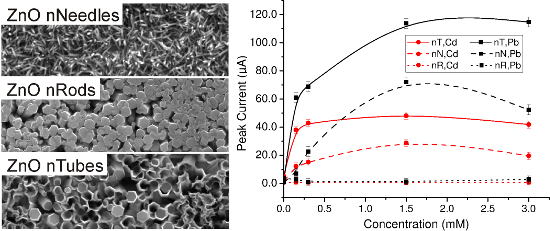
- nanostructures are promising candidates for use in sensors, especially in electrochemical sensors and biosensors, due to their unique physical and chemical properties, as well as sensitivity and selectivity to several types of contamination, including heavy metal ions. In this work, using the hydrothermal method
- working electrode surface area, and consequently, large number of active links that raises the overall sorption capability. Our research team performed a series of experiments aimed at determining the influence of hydrothermal growth conditions on the parameters of the obtained nanostructures, as well as
- electrochemical sensor of heavy metal ions. In this work, using the hydrothermal method, nanostructures of ZnO were synthesized in four different morphologies: nanorods (NRs), nanoneedles (NNs), nanotubes (NTs) and nanoplates (NPs). The samples described in this article were obtained using a preparation protocol


Hydrothermal-derived carbon as a stabilizing matrix for improved cycling performance of silicon-based anodes for lithium-ion full cells
Beilstein J. Nanotechnol. 2018, 9, 2381–2395, doi:10.3762/bjnano.9.223
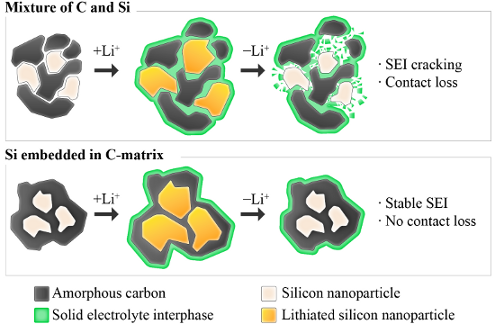
- 46, 48149 Münster, Germany 10.3762/bjnano.9.223 Abstract In this work, silicon/carbon composites are synthesized by forming an amorphous carbon matrix around silicon nanoparticles (Si-NPs) in a hydrothermal process. The intention of this material design is to combine the beneficial properties of
- morphology and structure of the composite materials, as well as the resilience of the hydrothermal carbon against the volumetric changes of Si, in order to examine the opportunities and limitations of the applied matrix approach. Compared to a physical mixture of Si-NPs and the pure carbon matrix, the
- structures, depicts the hydrothermal synthesis of carbohydrates [52]. Due to the fact, that this synthesis can be carried out at mild reaction conditions (<200 °C), using water as a solvent and carbohydrates as a carbon source, this process is environmentally friendly and quite inexpensive. Cakan et al. [41


Magnetism and magnetoresistance of single Ni–Cu alloy nanowires
Beilstein J. Nanotechnol. 2018, 9, 2345–2355, doi:10.3762/bjnano.9.219
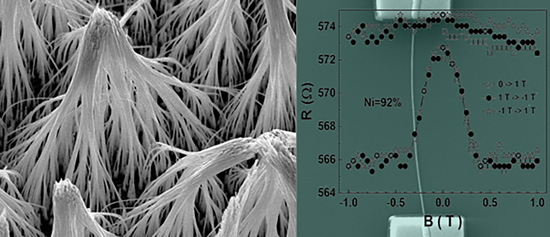
- -resistance and magneto-thermopower measurements on single Co–Ni alloy nanowires have been reported [10]. Several methods have been reported for the controlled fabrication of magnetic nanowires including lithographical techniques, chemical vapor deposition and hydrothermal growth [11][12][13]. The main


Lead-free hybrid perovskites for photovoltaics
Beilstein J. Nanotechnol. 2018, 9, 2209–2235, doi:10.3762/bjnano.9.207
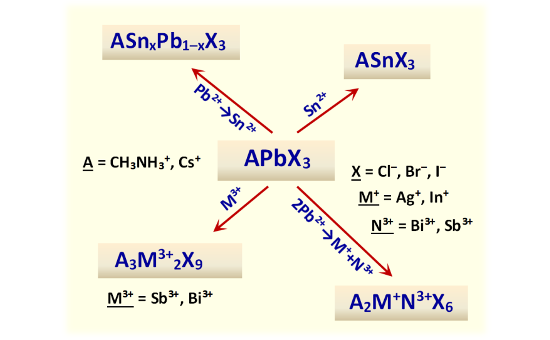
- . Cs2AgInCl6 HP was produced by a hydrothermal synthesis allowing the size of the final crystallites to be tailored by adjusting the hydrothermal treatment duration [179]. The perovskite crystallizes in the rock-salt structure with alternating [AgCl6] and [InCl6] octahedra (Figure 15a) and shows a direct


Electrospun one-dimensional nanostructures: a new horizon for gas sensing materials
Beilstein J. Nanotechnol. 2018, 9, 2128–2170, doi:10.3762/bjnano.9.202
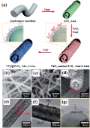
- similar sensitivity to acetone. ZnO–SnO2 hollow NF based sensors show excellent selectivity to ethanol as compared with acetone, ammonia, glacial acetic acid, DMF, and formaldehyde [222]. A ZnO shell grown on SnO2 NFs by a hydrothermal method exhibits a response of 392.29 toward 100 ppm of ethanol at 200






Metal-free catalysis based on nitrogen-doped carbon nanomaterials: a photoelectron spectroscopy point of view
Beilstein J. Nanotechnol. 2018, 9, 2015–2031, doi:10.3762/bjnano.9.191
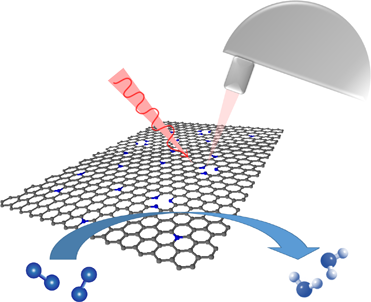
- -sensitized solar cells [67]. A high-performance anode material for lithium-ion batteries was obtained using graphene co-doped with nitrogen and fluorine, which was prepared by a hydrothermal reaction of an aqueous dispersion of graphene oxide with trimethylamine trihydrofluoride [68]. In nitrogen-doped




Synthesis of a MnO2/Fe3O4/diatomite nanocomposite as an efficient heterogeneous Fenton-like catalyst for methylene blue degradation
Beilstein J. Nanotechnol. 2018, 9, 1940–1950, doi:10.3762/bjnano.9.185
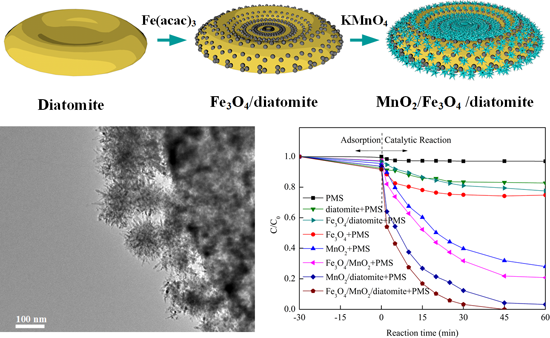
- ethanol and water for three times, then the resulting Fe3O4/diatomite was dried in vacuum for further application. The MnO2/Fe3O4/diatomite nanocomposite was synthesized by hydrothermal synthesis starting from Fe3O4/diatomite [13]. Dried Fe3O4/diatomite was added into 70 mL water and stirred vigorously
- , revealing the small size of the loaded Fe3O4 particles. The average crystal size of the Fe3O4 nanoparticles estimated with the Scherrer formula is about 10 nm. After the hydrothermal treatment with KMnO4, no new characteristic peaks are detected in the pattern of the as-prepared MnO2/Fe3O4/diatomite
- surface is observed after the hydrothermal treatment with KMnO4, and almost all the pores are blocked by a layer of MnO2. As shown in the magnified image of MnO2/Fe3O4/diatomite (Figure 3e), the prepared nanosized MnO2 shows a flower-like or urchin-like structure on the surface of diatomite. Meanwhile


Synthesis of hafnium nanoparticles and hafnium nanoparticle films by gas condensation and energetic deposition
Beilstein J. Nanotechnol. 2018, 9, 1868–1880, doi:10.3762/bjnano.9.179

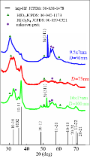
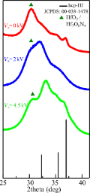
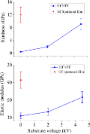
- fragile coatings that tend to fracture under small loads, making them in many cases unsuitable for industrial use. Mechanical reinforcement is necessary to improve mechanical stability. Some proposed methods in this direction are calcination [28], atomic layer deposition [29], hydrothermal treatment [30






A visible-light-controlled platform for prolonged drug release based on Ag-doped TiO2 nanotubes with a hydrophobic layer
Beilstein J. Nanotechnol. 2018, 9, 1793–1801, doi:10.3762/bjnano.9.170
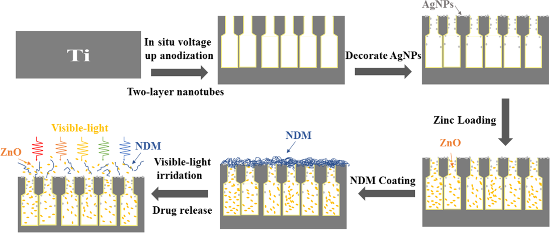
- yellow fluorescent light-emitting diode (LED) lamp irradiation (λ > 450 nm). Subsequently, the treated TNTs arrays were soaked in 70 mL 0.1 M Zn(AC)2 solution and then the samples were treated by hydrothermal reaction in 0.1 M Zn(Ac)2 solution for 3 h at 200 °C to fabricate the Zn-loaded Ag-TNTs, which





Uniform cobalt nanoparticles embedded in hexagonal mesoporous nanoplates as a magnetically separable, recyclable adsorbent
Beilstein J. Nanotechnol. 2018, 9, 1770–1781, doi:10.3762/bjnano.9.168
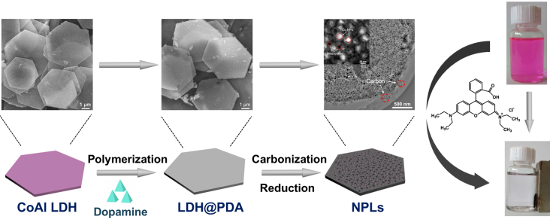
- used as an adsorbent for efficient removal of RhB dye from aqueous solutions. As illustrated in Scheme 1, firstly, CoAl LDH is synthesized with urea through a hydrothermal method. Subsequently, the LDH@PDA composite is obtained by coating CoAl LDH with PDA through self-polymerization of dopamine in
- used without any further purification. Ultrapure water with a resistivity of 18.25 MΩ·cm was used in all experiments. Synthesis of CoAl layered double hydroxide CoAl LDH was synthesized via a simple hydrothermal method using urea as the alkali source. In a typical process, CoCl2·6H2O, AlCl3·6H2O, and


Controllable one-pot synthesis of uniform colloidal TiO2 particles in a mixed solvent solution for photocatalysis
Beilstein J. Nanotechnol. 2018, 9, 1715–1727, doi:10.3762/bjnano.9.163
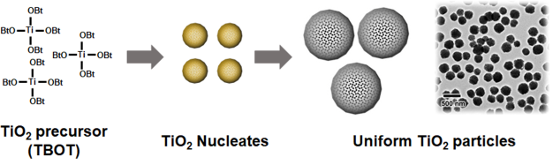
- , large surface area, uniform photocatalytic activity for each particle, and improved accessibility for the reactant molecules. To fabricate the uniform, colloidal TiO2 spheres, several synthetic methods have been reported including hydrothermal, solvothermal, and sol–gel processes [10][26][28][29
- ]. Although hydrothermal or solvothermal process are simple and convenient, they are typically conducted under high pressure and high temperature conditions for an elongated reaction time in a sealed reactor which requires high energy and large expense. In addition, it is difficult to monitor the overall




Toward the use of CVD-grown MoS2 nanosheets as field-emission source
Beilstein J. Nanotechnol. 2018, 9, 1686–1694, doi:10.3762/bjnano.9.160
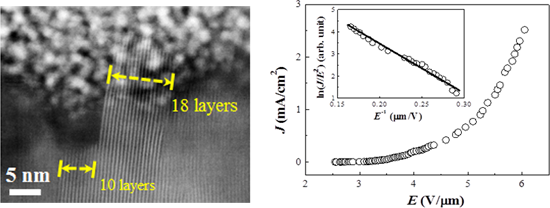
- ][16] and the number of layers [16]. Various methods have been used to synthesize vertically aligned MoS2 NSs: liquid-phase exfoliation [17], hydrothermal synthesis [8] or chemical vapor deposition (CVD) [15][17][18]. CVD is regarded as the most promising method to synthesize high-quality MoS2 with



Nanocomposites comprised of homogeneously dispersed magnetic iron-oxide nanoparticles and poly(methyl methacrylate)
Beilstein J. Nanotechnol. 2018, 9, 1613–1622, doi:10.3762/bjnano.9.153
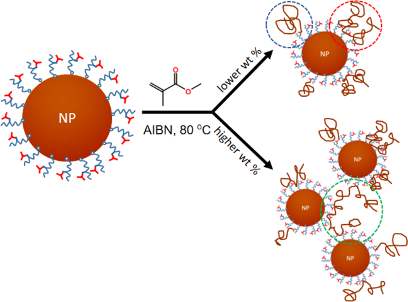
- next step, the magnetic properties of the prepared nanocomposites were studied, and their potential for hyperthermia treatment was evaluated. Experimental Synthesis Ricinoleic-acid-coated iron-oxide nanoparticles (NP-RA) were synthesized using the hydrothermal method at 180 °C and with a molar ratio of


Sheet-on-belt branched TiO2(B)/rGO powders with enhanced photocatalytic activity
Beilstein J. Nanotechnol. 2018, 9, 1550–1557, doi:10.3762/bjnano.9.146
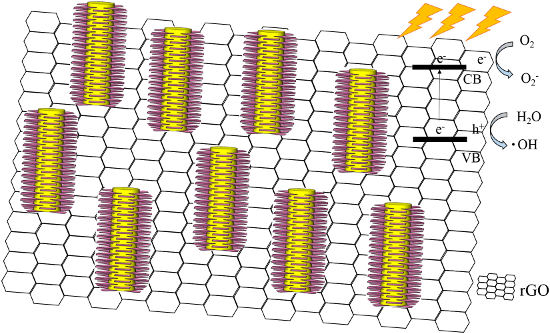
- nanocrystals on TiO2(B) single-crystal fibrils by a two-step process [23]. Li et al. prepared a biphase TiO2 core/shell nanofiber with anatase core and TiO2(B) shell [24]. Kandiel et al. used a hydrothermal technique to synthesize TiO2(B) nanofibers simultaneously decorated with anatase nanoparticles [25]. The
- for details of the sample ID). All Bragg diffraction peaks can be indexed to the monoclinic TiO2(B) phase (JCPDS card no. 74-1940) [28][29][30]. This suggests that both the alkali-hydrothermal synthesized TGN and the branches precipitated from the precursor solution are TiO2(B). No XRD peaks
- difference can be discerned, suggesting that the incorporation of GO does not change the growth of TiO2 nanobelts during the alkali-hydrothermal procedure. The belt-like structure shows a typical size of 100–300 nm in width and several micrometers in length. Figure 2c and Figure 2d indicate that, after being


Cr(VI) remediation from aqueous environment through modified-TiO2-mediated photocatalytic reduction
Beilstein J. Nanotechnol. 2018, 9, 1448–1470, doi:10.3762/bjnano.9.137
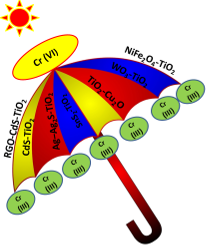
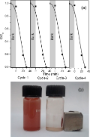
- for efficient photocatalytic Cr(VI) reduction [134]. They prepared the photocatalyst using a direct-wrapped route followed by hydrothermal etching. The high charge separation efficiency and redox ability are due to the synergetic effect of formation of a Z scheme photocatalytic process and its
- et al. fabricated Mn-doped TiO2–RGO photocatalysts through a one-pot hydrothermal method and studied the photocatalytic reduction of Cr(VI) under solar illumination. The high photocatalytic activity is attributed to the Mn doping and synergetic effect of adsorption and photocatalysis by the RGO
- as co-catalysts because of their intriguing properties such as small size, high dispersion, abundant surface functional groups, unique photoluminescence and good electron transfer ability [141][142]. Carbon dot–TiO2 (CD–TiO2) nanosheet composites synthesized by a hydrothermal route were studied for


Understanding the performance and mechanism of Mg-containing oxides as support catalysts in the thermal dry reforming of methane
Beilstein J. Nanotechnol. 2018, 9, 1162–1183, doi:10.3762/bjnano.9.108
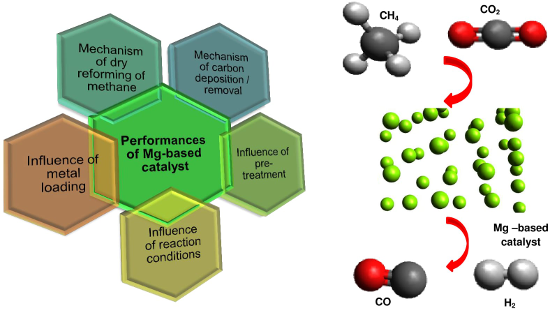
- stability in stabilizing the zirconia tetragonal phase, improved basicity sites for the support, and decreased reducibility of Ni2+. Li et al. [118] designed a Ni@Ni–Mg phyllosilicate core–shell catalyst using the hydrothermal treatment of Ni@SiO2 with Mg(NO3)2. The alkalinity and porosity of the catalyst
- can be controlled during various hydrothermal treatment durations applied (such as 2.5, 10, and 24 h). Interestingly, the optimum hydrothermal treatment time for this catalyst was 10 h, resulting in good catalytic performance of 80% and 78% CO2 and CH4 conversion, respectively. Moreover, the increase
- in hydrothermal treatment time enhanced the basicity of the catalyst from the high exposure to the Mg phase. The strong basicity properties of Mg enhanced CO2 adsorption and suppressed carbon deposition via the reverse Boudouard reaction (C + CO2 ↔ 2CO). However, the core–shell structure became






Review on nanoparticles and nanostructured materials: history, sources, toxicity and regulations
Beilstein J. Nanotechnol. 2018, 9, 1050–1074, doi:10.3762/bjnano.9.98

- naturally formed and are present in the Earth’s spheres, such as the atmosphere, which includes the whole of troposphere, the hydrosphere, which includes oceans, lakes, rivers, groundwater and hydrothermal vents, the lithosphere, which is comprised of rocks, soils, magma or lava at particular stages of


Facile chemical routes to mesoporous silver substrates for SERS analysis
Beilstein J. Nanotechnol. 2018, 9, 880–889, doi:10.3762/bjnano.9.82
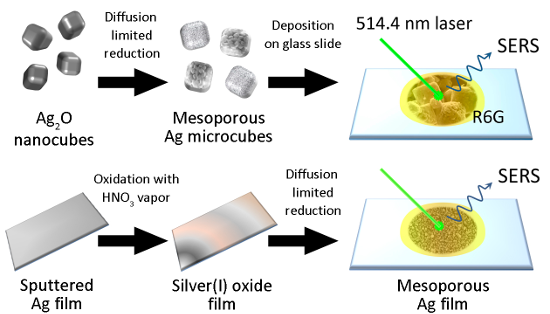
- the production of different mesoporous materials. Most of these materials are ordered or disordered oxides, which can be successfully produced by many methods such as wet chemistry [1][2], hydrothermal treatment [3], aerosol spray pyrolysis [4], etc. In contrast, metal mesoporous materials are rare


Surface-plasmon-enhanced ultraviolet emission of Au-decorated ZnO structures for gas sensing and photocatalytic devices
Beilstein J. Nanotechnol. 2018, 9, 771–779, doi:10.3762/bjnano.9.70
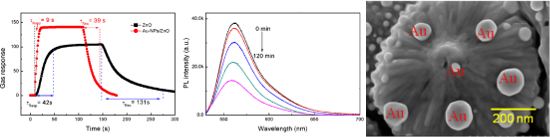
- found that the synthesis of very diverse ZnO structures was easily controllable by different methods, for example, using hydrothermal routes. Thus, ZnO nano- or even microstructures decorated by some noble metals (Au, Ag and Pt) to form plasmonic metal/semiconductor structures are very attractive and