


Search results
Search for "in situ" in Full Text gives 552 result(s) in Beilstein Journal of Nanotechnology. Showing first 200.
An overview of microneedle applications, materials, and fabrication methods
Beilstein J. Nanotechnol. 2021, 12, 1034–1046, doi:10.3762/bjnano.12.77
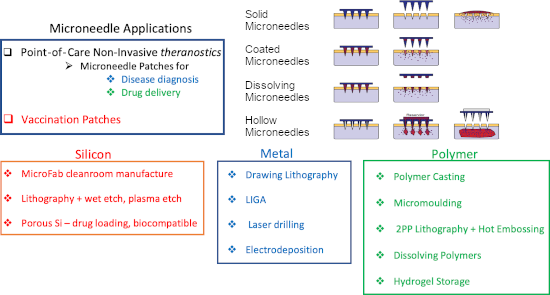
- interstitial fluid for point-of-care clinical diagnostics. As sensitive, rapid, early diagnosis and treatment of diseases are often critical, microneedle patches may soon play a vital role in point-of-care theranostics. By integrating microneedles with microfluidic chips capable of in situ measurements of


Progress and innovation of nanostructured sulfur cathodes and metal-free anodes for room-temperature Na–S batteries
Beilstein J. Nanotechnol. 2021, 12, 995–1020, doi:10.3762/bjnano.12.75
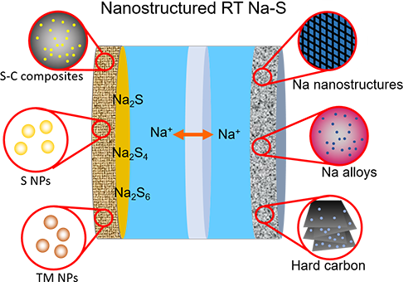
- undergo a sodiation process to form Na2S2. Then, the Na2S2 intermediate is converted to Na2S. Another remarkable electrocatalyst are gold nanodots, as reported by Wang et al. [49]. The in situ synchrotron XRD results show that gold can effectively catalyze the transformation of Na2S4 into Na2S in the




Is the Ne operation of the helium ion microscope suitable for electron backscatter diffraction sample preparation?
Beilstein J. Nanotechnol. 2021, 12, 965–983, doi:10.3762/bjnano.12.73
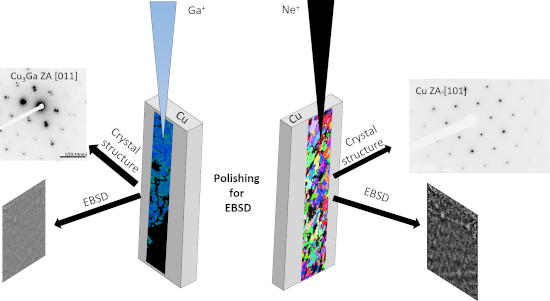
- irradiated as well as the non-irradiated area of the TEM lamella. For TEM lamella preparation, the irradiated area was immediately covered with a protective layer in situ, making oxidation unlikely. The angles between the reflections were measured to be α = 55° and β = 62° and the ratio of distances




Molecular assemblies on surfaces: towards physical and electronic decoupling of organic molecules
Beilstein J. Nanotechnol. 2021, 12, 950–956, doi:10.3762/bjnano.12.71

- successfully employed hBN to investigate the pristine properties of particular molecules. Schaal et al. [86] showed that hBN on Ni(111) electronically decoupled tetraphenyldibenzoperiflanthene such that the molecular vibronic progression was observable by in situ differential reflectance spectroscopy, which is
In situ transport characterization of magnetic states in Nb/Co superconductor/ferromagnet heterostructures
Beilstein J. Nanotechnol. 2021, 12, 913–923, doi:10.3762/bjnano.12.68
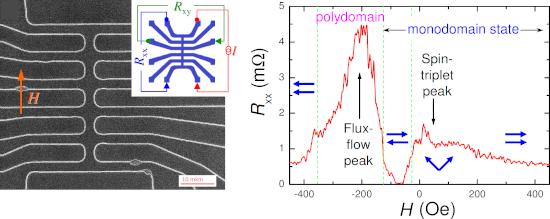
- demonstrate how FORC can be used for detailed in situ characterization of magnetic states. It reveals that upon reduction of the external field, the magnetization in ferromagnetic layers first rotates in a coherent scissor-like manner, then switches abruptly into the antiparallel state and after that splits
- unconventional odd-frequency spin-triplet order parameter should appear. The non-hysteretic nature of this state allows for reversible tuning of the magnetic orientation. Thus, we identify the range of parameters and the procedure for in situ control of devices based on S/F heterostructures. Keywords: cryogenic
- memory elements and spin valves [22][29][34][39][40][41][42][43]. The need for establishing experimental characterization techniques for the in situ monitoring of magnetic states in S/F micro- and nanoscale devices is our main motivation. Here we study experimentally in-plane transport properties of


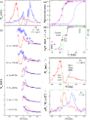
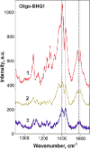
Modification of a SERS-active Ag surface to promote adsorption of charged analytes: effect of Cu2+ ions
Beilstein J. Nanotechnol. 2021, 12, 902–912, doi:10.3762/bjnano.12.67
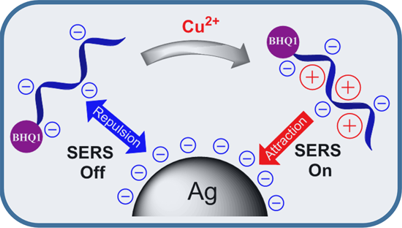
- ). Thiocholine was generated in situ by basic hydrolysis of its acetyl ether in sodium carbonate buffer at pH 10.8. The supports were soaked for 30 min in the corresponding reagent solution, washed with deionized water, and dried. Treatment with doubly charged metal ions was carried out in 5 mg/mL Cu sulfate or


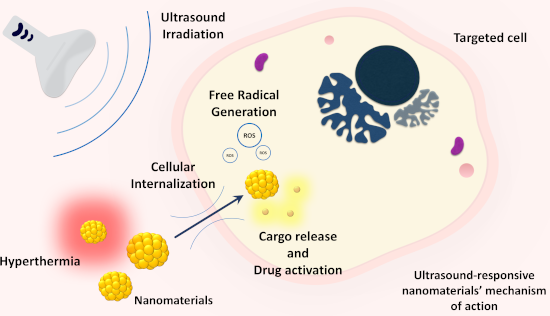
Comprehensive review on ultrasound-responsive theranostic nanomaterials: mechanisms, structures and medical applications
Beilstein J. Nanotechnol. 2021, 12, 808–862, doi:10.3762/bjnano.12.64


A review of defect engineering, ion implantation, and nanofabrication using the helium ion microscope
Beilstein J. Nanotechnol. 2021, 12, 633–664, doi:10.3762/bjnano.12.52
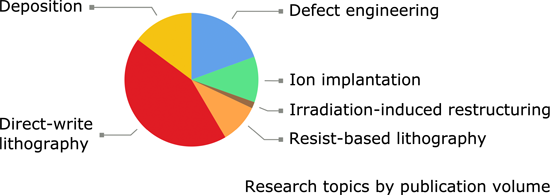
- with neon, sputtering at higher rates is made possible while retaining a small probe size. This has also opened the door to in situ materials analysis in the HIM using secondary ion mass spectrometry [8]. Further forms of materials analysis using the HIM include techniques based on the collection of
- introduction of lattice vacancy defects, and with an increase in the average interatomic distances due to swelling, that is, a magnetovolume effect. And in a recent report implementing in situ current–voltage characterization, site-selective helium ion irradiation of cobalt-based magnetic multilayer structures
- specimens were irradiated at room temperature with known doses of helium ions to generate the gas bubble superlattice (Figure 3c) and subsequently nanomechanical compression testing of the implanted structures was performed by in situ TEM to enable direct and quantitative observation of the superlattice


Nanoporous and nonporous conjugated donor–acceptor polymer semiconductors for photocatalytic hydrogen production
Beilstein J. Nanotechnol. 2021, 12, 607–623, doi:10.3762/bjnano.12.50
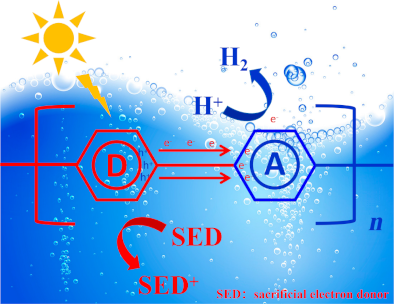
- absorption (400–700 nm) and high photogenerated charge separation rate [101]. This heterojunction realized an AQY of up to 7.5% at 420 nm. By in situ solvothermal growth of CdS nanoparticles on ultrathin polyimide (PI) nanosheets, Zou et al. [102] achieved a HER of 30.65 μmol h−1 (50 mg) with 15% CdS/PI as




Local stiffness and work function variations of hexagonal boron nitride on Cu(111)
Beilstein J. Nanotechnol. 2021, 12, 559–565, doi:10.3762/bjnano.12.46
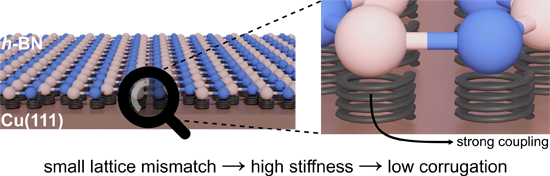
- ) sample to 980 K and exposing it to 25 L of borazine (HBNH3) gas (Katchem spol s.r.o.). h-BN grows in a self-terminating growth process [19]. It is then transferred in situ to the nc-AFM for characterisation. (a.) Scheme of the experiment. (b.) Large-scale (200 × 125 nm2) constant-current (I = 20 pA, V


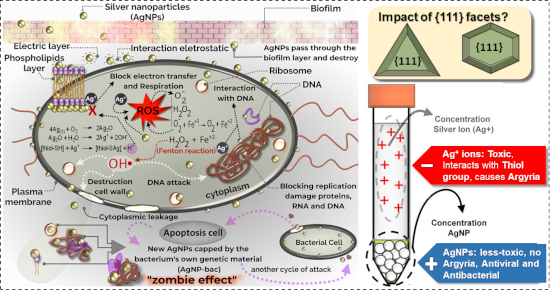
A review on nanostructured silver as a basic ingredient in medicine: physicochemical parameters and characterization
Beilstein J. Nanotechnol. 2021, 12, 440–461, doi:10.3762/bjnano.12.36


Structural and optical characteristics determined by the sputtering deposition conditions of oxide thin films
Beilstein J. Nanotechnol. 2021, 12, 354–365, doi:10.3762/bjnano.12.29
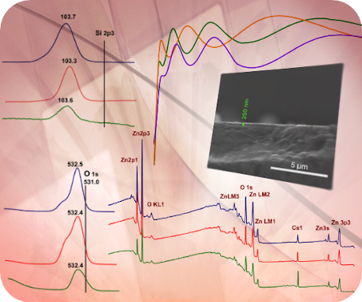
- be, later on, integrated into metamaterial structures to improve their functionality. Experimental The VARIAN ER 3119 EletroRava deposition equipment (available at the National Institute for Laser, Plasma and Radiation Physics, INFLPR) is provided with a deposition chamber, two magnetrons, and in
- situ thickness monitoring. Thus, rfMS [27][36][37] was used to deposit SiO2 and ZnO oxide films. This technique ensures material deposition onto large areas and quality thin films for multiple applications. They are obtained at room temperature on quartz substrates with thickness values ranging from


Nickel nanoparticle-decorated reduced graphene oxide/WO3 nanocomposite – a promising candidate for gas sensing
Beilstein J. Nanotechnol. 2021, 12, 343–353, doi:10.3762/bjnano.12.28
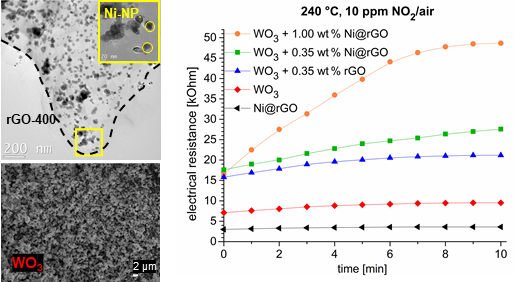
- achieved [47]. Thermally reduced graphene oxide was tested before with different metals in ionic liquids [48][49]. The decoration of nanoparticles on rGO can be achieved in situ or by mixing previously prepared solutions [50]. Here, we chose the ionic liquid [BMIm][NTf2] for an in situ microwave


Gold(I) N-heterocyclic carbene precursors for focused electron beam-induced deposition
Beilstein J. Nanotechnol. 2021, 12, 257–269, doi:10.3762/bjnano.12.21
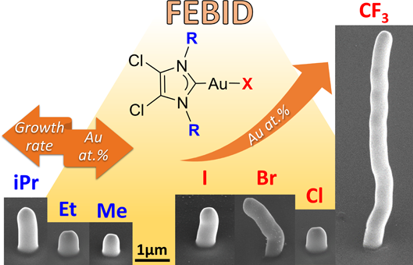
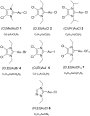
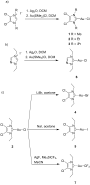
- iodides [48]. For the triazolium salt the two alkylation reactions were carried out together in a one-pot synthesis [36]. The resulting salts were then reacted with silver oxide to generate the respective Ag(I) NHC complexes. Upon the addition of 1 equiv of gold precursor Au(SMe2)Cl in situ, a
- was obtained by reaction of 2 with a mixture of AgF and Me3SiCF3 [51]. This reaction created in situ a AgCF3 species that, through a transmetalation reaction, yielded compound 7 (Scheme 1c). All these compounds are, under ambient conditions, inert colourless crystals or white powders that are stable





The nanomorphology of cell surfaces of adhered osteoblasts
Beilstein J. Nanotechnol. 2021, 12, 242–256, doi:10.3762/bjnano.12.20
- coating was measured online by a quartz crystal thickness monitor (Cressington MTM 10, UK) and the sputter process was stopped at a nominal value of approximately 10 nm. The Au layers were only applied to half of the glass area in order to create an in situ reference. Since we observed spread cells


A review on the green and sustainable synthesis of silver nanoparticles and one-dimensional silver nanostructures
Beilstein J. Nanotechnol. 2021, 12, 102–136, doi:10.3762/bjnano.12.9
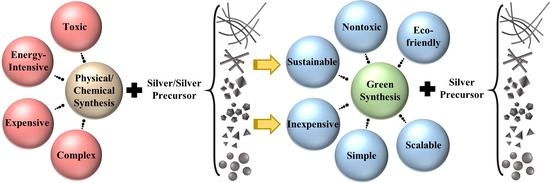
- how plant-mediated synthesis can emerge as a novel and alternative methodology towards the synthesis of 1D silver nanostructures, which have several applications in electronics. Finally, novel future directions including application of in situ characterization techniques in the course of reaction
- , continuous green and sustainable synthesis of silver nanostructures adaptable for in situ characterization, and incorporation of artificial intelligence (AI) in green silver nanostructures synthesis are discussed. 2 Physical and chemical synthesis methodologies of silver nanoparticles In this section


Bulk chemical composition contrast from attractive forces in AFM force spectroscopy
Beilstein J. Nanotechnol. 2021, 12, 58–71, doi:10.3762/bjnano.12.5
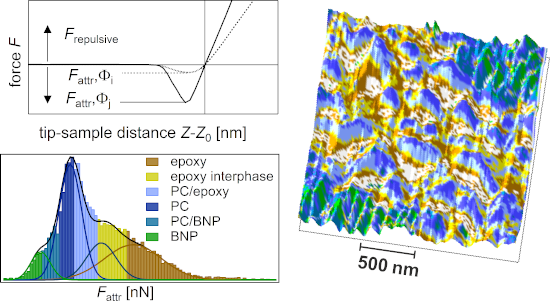
- include additional Raman and IR instrumentation, respectively. The effort to perform TERS or AFM-IR experiments is only justified if a detailed analysis of the chemical structure is needed. In this study, however, we aim to identify the material contrast which is provided by more accessible in situ


Bio-imaging with the helium-ion microscope: A review
Beilstein J. Nanotechnol. 2021, 12, 1–23, doi:10.3762/bjnano.12.1
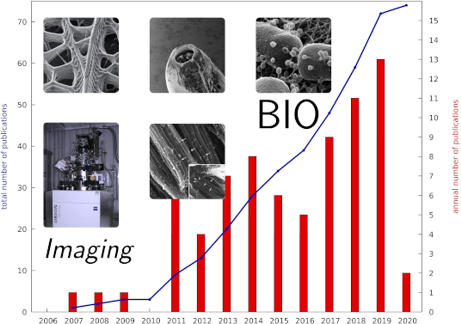
- not ready, for studying the finest details of the ultrastructure of cells or to resolve protein structures, which is state of the art in modern transmission electron microscopy. Another obstacle which had to be overcome was the absence of in situ chemical nanoscale analytical tools for the HIM, which


Free and partially encapsulated manganese ferrite nanoparticles in multiwall carbon nanotubes
Beilstein J. Nanotechnol. 2020, 11, 1891–1904, doi:10.3762/bjnano.11.170
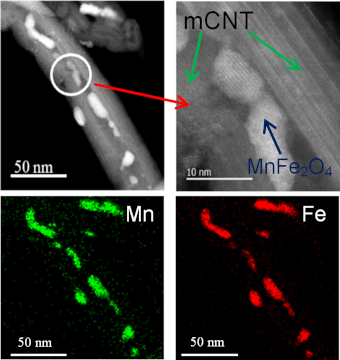
- in the literature are and generally compared to encapsulation processes (i.e., in situ syntheses of nanomaterials in CNT cavities). The latter suffers from a lack of tube-filling capacity along with unknown interactions between the inner parts of the tube and the hosted materials. Despite these




Nanocasting synthesis of BiFeO3 nanoparticles with enhanced visible-light photocatalytic activity
Beilstein J. Nanotechnol. 2020, 11, 1822–1833, doi:10.3762/bjnano.11.164
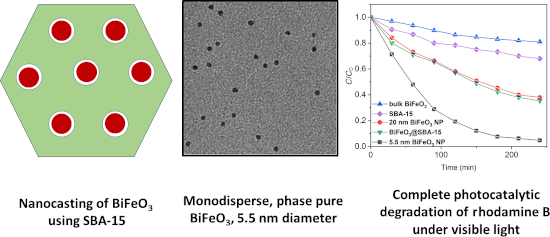
- synthesis of pure-phase BiFeO3 is the in situ formation of Fe/Bi mixed metal complexes by using different complexing agents such as carboxylic acids. During the calcination process the carboxylate ligands in the Fe/Bi complexes decompose to CO2 and BiFeO3 is formed [29]. This synthetic technique requires
- impregnation nanocasting technique using SBA-15 as the hard-template and in situ generated mixed metal carboxylates as precursors. Reaction optimization included the study of the influence of different organic ligands, solvents, molar ratio of the precursors, and calcination temperature. The techniques used to




Self-standing heterostructured NiCx-NiFe-NC/biochar as a highly efficient cathode for lithium–oxygen batteries
Beilstein J. Nanotechnol. 2020, 11, 1809–1821, doi:10.3762/bjnano.11.163
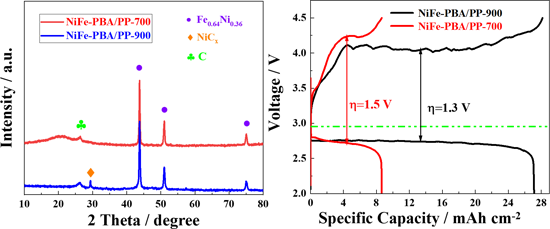
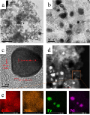
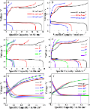
- of NiFe-PBA (inset, black curve). (a–c) HR-TEM images and (d,e) element mappings of NiFe-PBA/PP-900. High-resolution XPS spectra of NiFe-PBA/PP-T calcined at 700 (top panels) and 900 °C (bottom panels) for (a) C 1s, (b) N 1s, (c) Ni 2p, and (d) Fe 2p. (a) In situ cyclic voltammetry curves of Li–O2






Mapping of integrated PIN diodes with a 3D architecture by scanning microwave impedance microscopy and dynamic spectroscopy
Beilstein J. Nanotechnol. 2020, 11, 1764–1775, doi:10.3762/bjnano.11.159
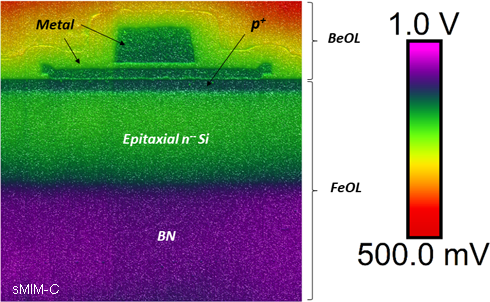
- second area of interest was the bottom of a deep trench (area 2 in Figure 2). Deep trenches were fabricated by dry etching pores with a high aspect ratio and a diameter of 1 µm. During the FEOL processing, trenches were filled with a dielectric layer, followed by an in situ highly phosphorus-doped


Helium ion microscope – secondary ion mass spectrometry for geological materials
Beilstein J. Nanotechnol. 2020, 11, 1504–1515, doi:10.3762/bjnano.11.133
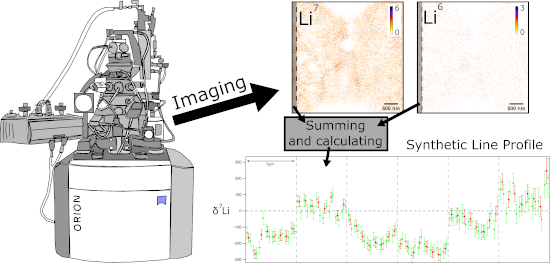
- , reaches a plateau at relatively low Z values of around 50 [7], limiting its use to lighter elements only. SIMS, however, opens the entire range of mass numbers, from a few atomic mass units up to several hundred atomic mass units, whilst also leaving open the possibility of in situ isotopic measurements



Wafer-level integration of self-aligned high aspect ratio silicon 3D structures using the MACE method with Au, Pd, Pt, Cu, and Ir
Beilstein J. Nanotechnol. 2020, 11, 1439–1449, doi:10.3762/bjnano.11.128
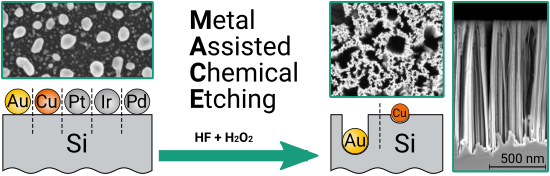
- by an in situ micro quartz crystal sensor. The particle formation has been done by thermal annealing under vacuum conditions. The wafers with Cu and Pt have been annealed in vacuo, while the wafers with Au and Pd were annealed ex situ. Each annealing consists of a heating phase, 30 min of annealing


Protruding hydrogen atoms as markers for the molecular orientation of a metallocene
Beilstein J. Nanotechnol. 2020, 11, 1432–1438, doi:10.3762/bjnano.11.127
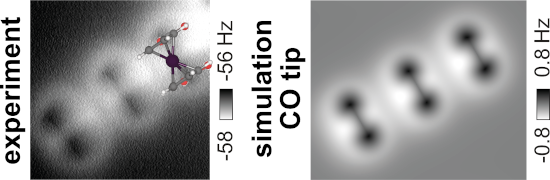
- /CaF1/Si(111) thin film samples under ultrahigh vacuum conditions (p < 5 × 10⁻¹⁰ mbar) in two separate systems equipped with appropriate facilities for in situ sample preparation. Bulk CaF2 crystals (Korth Kristalle, Altenholz, Germany) were cleaved in vacuum [24] after degassing the crystal and sample
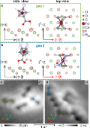


![[Graphic 10]](/bjnano/content/inline/2190-4286-11-127-i10.svg?max-width=637&scale=1.18182) row of FDCA molecules in geo 2. (a–c) Constant-height frequency-shi...
row of FDCA molecules in geo 2. (a–c) Constant-height frequency-shi...



