


Search results
Search for "magnetic" in Full Text gives 898 result(s) in Beilstein Journal of Nanotechnology. Showing first 200.
Simultaneous electrochemical determination of uric acid and hypoxanthine at a TiO2/graphene quantum dot-modified electrode
Beilstein J. Nanotechnol. 2024, 15, 719–732, doi:10.3762/bjnano.15.60
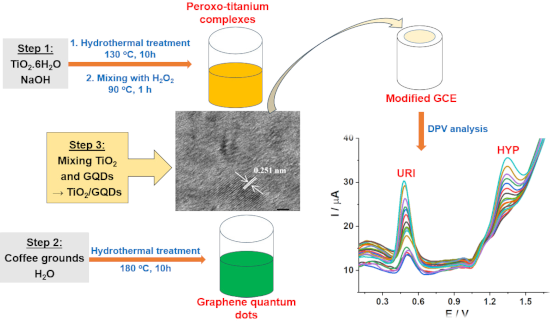
- with 0.1 M HCl and distilled water until a supernatant with neutral pH was obtained. The solid was dried at 80 °C for 2 h. This product was then mixed with 30 mL of H2O2 (35%, d = 1.11 g·cm3) at 90 °C under magnetic stirring for 1 h to obtain a clear yellow solution of peroxo titanium complexes. The


Gold nanomakura: nanoarchitectonics and their photothermal response in association with carrageenan hydrogels
Beilstein J. Nanotechnol. 2024, 15, 678–693, doi:10.3762/bjnano.15.56

- temperature [2]. The mean free path of an electron is influenced by shape/size of the metal nanoparticles which ultimately governs their physical, chemical, optical, magnetic, catalytic, and electronic properties [3]. All plasmonic metals exhibit optical phenomena over a range of electromagnetic radiation







Radiofrequency enhances drug release from responsive nanoflowers for hepatocellular carcinoma therapy
Beilstein J. Nanotechnol. 2024, 15, 569–579, doi:10.3762/bjnano.15.49
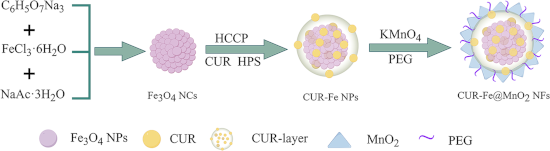
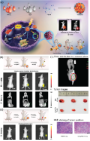
- significantly suppressed HCC cell proliferation. Moreover, CUR-Fe@MnO2 NFs were effective T1/T2 contrast agents for molecular magnetic resonance imaging due to the release of Mn2+ and Fe3O4 NCs. Keywords: curcumin; hepatocellular carcinoma; magnetic resonance imaging (MRI); radiofrequency (RF) hyperthermia
- (Fe3O4 NCs), – CUR layer, – and MnO2 (CUR-Fe@MnO2 NFs). These NFs carry CUR and Fe3O4 NCs, achieve sustained and concurrent drug release, and can be used for molecular magnetic resonance imaging (MRI). Moreover, we explored the ability of the NFs to release drugs and evaluated their cytotoxic effects
- of a layer on CUR-Fe NPs and CUR-Fe@MnO2 NFs. Furthermore, the three new diffraction peaks at 28.7°, 37.34°, and 64.8° confirmed the presence of MnO2. The magnetic properties of the NFs were verified by magnetic hysteresis loops. Figure 2h shows that Fe3O4 NCs and CUR-Fe@MnO2 NFs were


Electron-induced deposition using Fe(CO)4MA and Fe(CO)5 – effect of MA ligand and process conditions
Beilstein J. Nanotechnol. 2024, 15, 500–516, doi:10.3762/bjnano.15.45
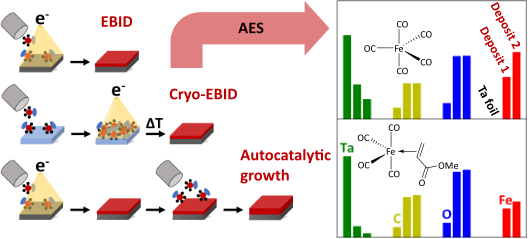
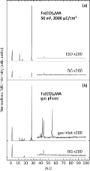
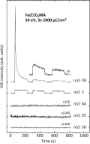
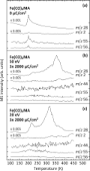
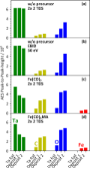
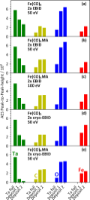
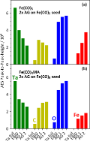
- atom to be deposited is surrounded by suitable ligands. In an ideal case, these ligands are converted to volatile species upon fragmentation of the precursor during electron irradiation and desorb from the surface while the desired element is deposited. Owing to their magnetic properties, iron
- nanostructures produced by FEBID are of interest for diverse applications including magnetic data storage devices [4][5][6], tips for magnetic force microscopy [4][7], or sensors [4][8]. The same applies to cobalt nanostructures, which can be prepared with high purity and shape fidelity using, in particular, the
- interesting magnetic properties [9][14][15]. However, considering that Fe is by orders of magnitude more abundant than Co, the further development of FEBID processes based on Fe precursors is appealing. Although there were early attempts to use triiron dodecacarbonyl (Fe3(CO)12) or ferrocene (Fe(C5H5)2) for



Photocatalytic degradation of methylene blue under visible light by cobalt ferrite nanoparticles/graphene quantum dots
Beilstein J. Nanotechnol. 2024, 15, 475–489, doi:10.3762/bjnano.15.43
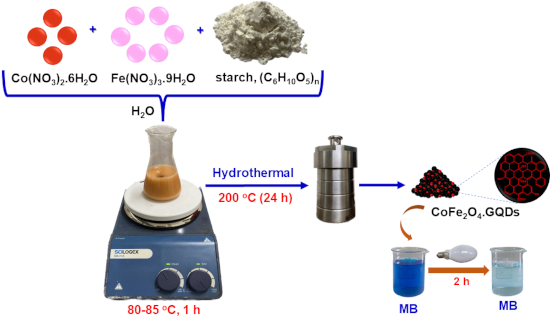
- degradation of methylene blue (MB) under visible light. The catalyst can be recycled with an external magnetic field and displays suitable stability. Also, it was reused in three successive experiments with a loss of efficiency of about 5%. The CF/GQDs are considered as an efficient photocatalyst for MB
- [4]. Several magnetic nanomaterials that can be recycled and reused have been developed for catalysis or adsorption [5]. Among them are ferrites with the general formula of MFe2O4 (M: Mn, Fe, Co, Ni, Cu, and Zn). They are important magnetic materials. Among the spinel ferrites, CoFe2O4 (CF) is one of
- the most important soft-magnetic ferrite materials because of its ferromagnetic properties, high magnetic and thermal stability, low conductivity, and anisotropy [6]. The controllable synthesis of spherical CF nanoparticles from corresponding salts and Arabic gum as surfactant agent using a




Fabrication of nanocrystal forms of ᴅ-cycloserine and their application for transdermal and enteric drug delivery systems
Beilstein J. Nanotechnol. 2024, 15, 465–474, doi:10.3762/bjnano.15.42
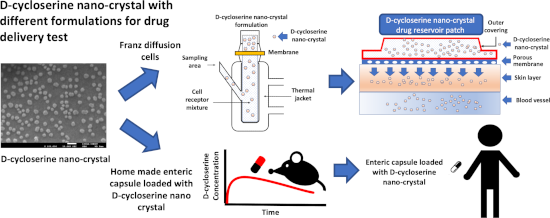
- evaporation. The deionized water was continuously stirred with a Teflon-coated magnetic bar at 32 °C. The samples (0.2 mL) were withdrawn from the release medium at 6, 24, 48, 72, 96, 120, and 144 h and were replaced with an equal volume of deionized water to maintain the filtration. The samples were diluted


Superconducting spin valve effect in Co/Pb/Co heterostructures with insulating interlayers
Beilstein J. Nanotechnol. 2024, 15, 457–464, doi:10.3762/bjnano.15.41
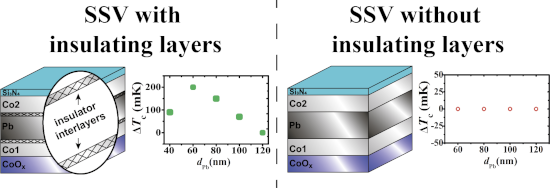
- the two magnetic layers. Common knowledge suggests that this spin valve effect, which is due to the S/F proximity effect, is most pronounced in the case of perfect metallic contacts at the interfaces. Nevertheless, in our structures with intentionally deteriorated interfaces, we observed a significant
- oxidized layers became insulating but presumably remained magnetic. In a later experiment by Li et al. [41], the F layers themselves were insulating by design. In this special situation, even a very thin additional nonmagnetic insulating interlayer at the interface immediately suppressed the S/F proximity
- its deposition, thereby, forming an insulating magnetic interlayer at the S/F interface. We consider an oxidation of the Pb layer to be unlikely because it was deposited at a low substrate temperature and exposed to a very low atmospheric pressure for a very short time, as specified above. According



![[Graphic 6]](/bjnano/content/inline/2190-4286-15-41-i6.svg?max-width=637&scale=1.18182)
Unveiling the nature of atomic defects in graphene on a metal surface
Beilstein J. Nanotechnol. 2024, 15, 416–425, doi:10.3762/bjnano.15.37
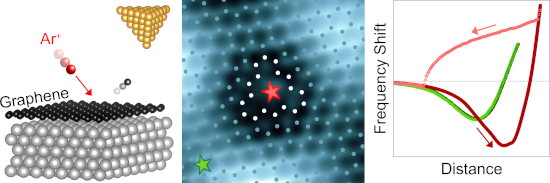
- ; scanning tunneling microscopy and spectroscopy; Introduction Defects in lattices of two-dimensional (2D) materials are considered as promising building blocks for tailoring electronic and phononic band structures, magnetic texture, photon emission, and charge carrier concentration [1]. In addition
- ][14][15][16][17][18][19][20][21][22][23]. Even single missing C atoms were demonstrated to severely change electronic [11][13][14][18], mechanical [17], and magnetic [7][8][10][12] characteristics. It is therefore not surprising that the intentional creation of defects, which has mainly been achieved


Classification and application of metal-based nanoantioxidants in medicine and healthcare
Beilstein J. Nanotechnol. 2024, 15, 396–415, doi:10.3762/bjnano.15.36
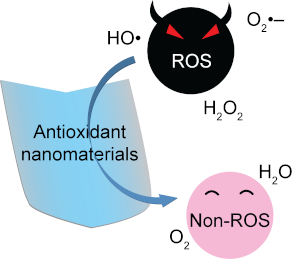
- personalized and targeted treatments for sclerosis. Recently developed Fe3O4–CeO2 core–shell NPs have shown great potential as platforms for both the diagnosis and treatment of vascular disorders associated with ROS. This is attributed to their impressive magnetic resonance imaging (MRI) capabilities and


Investigating ripple pattern formation and damage profiles in Si and Ge induced by 100 keV Ar+ ion beam: a comparative study
Beilstein J. Nanotechnol. 2024, 15, 367–375, doi:10.3762/bjnano.15.33
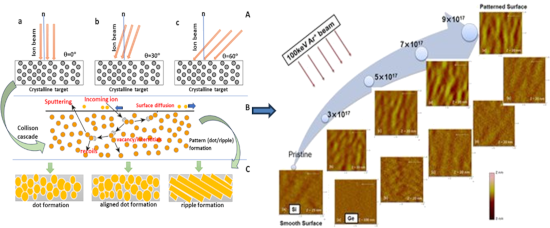
- electron microscopy; Introduction Scientific research varying from electronics to photonics, homeland security, high-resolution parallel patterning of magnetic media, biotechnology, and medicine are based upon nanotechnology. These applications require nanopatterning techniques to fabricate devices or


Modulated critical currents of spin-transfer torque-induced resistance changes in NiCu/Cu multilayered nanowires
Beilstein J. Nanotechnol. 2024, 15, 360–366, doi:10.3762/bjnano.15.32
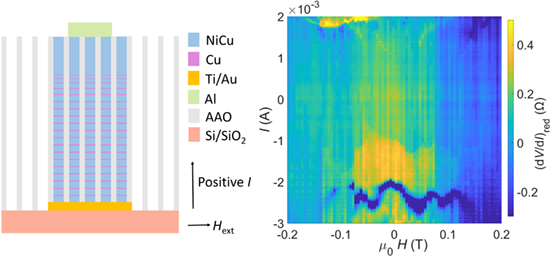
- vertically patterned magnetic nanowires on a Si substrate. With this approach we fabricated three-dimensional nanowire-based spin valve devices without the need of complex etching processes or additional spacer coating. Through this method, we successfully obtained NiCu/Cu multilayered nanowire arrays with a
- controlled sequence along the long axis of the nanowires. Both magnetic switching and excitation phenomena driven by spin-polarized currents were clearly demonstrated in our NiCu/Cu multilayered nanowires. Moreover, the critical currents for switching and excitation were observed to be modulated in an
- oscillatory manner by the magnetic field in the nanowire-based devices. We present a toy model to qualitatively explain these observations. Keywords: AAO template; critical current; multilayered magnetic nanowires; spin-transfer torque; three-dimensional devices; Introduction Spin-transfer torque (STT) has


Vinorelbine-loaded multifunctional magnetic nanoparticles as anticancer drug delivery systems: synthesis, characterization, and in vitro release study
Beilstein J. Nanotechnol. 2024, 15, 256–269, doi:10.3762/bjnano.15.24
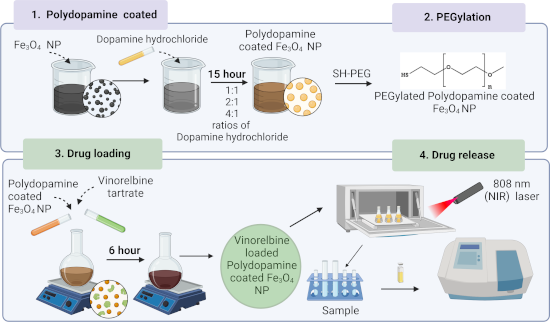
- , magnetic response, and controlled drug release with photothermal effect brings a different perspective to advanced cancer treatment research. Keywords: drug efficacy; iron oxide nanoparticles; photothermal; solvothermal method; Introduction Cancer is a widespread condition characterized by the
- nanostructures employed, particular emphasis has been placed on iron oxide (Fe3O4) nanoparticles. The biocompatibility and low toxicity of Fe3O4 nanoparticles have garnered significant attention in magnetic drug delivery for cancer diagnosis and treatment, primarily because of their magnetic properties [11][12
- ., cancer, diabetes, and atherosclerosis), magnetic resonance imaging (MRI), targeted drug delivery, photothermal therapy, gene therapy, and molecular and cellular monitoring [15][16]. Photothermal therapy (PTT), a treatment in which nanostructures are used, induces drug release or damages tumor cells with


Nanocarrier systems loaded with IR780, iron oxide nanoparticles and chlorambucil for cancer theragnostics
Beilstein J. Nanotechnol. 2024, 15, 180–189, doi:10.3762/bjnano.15.17
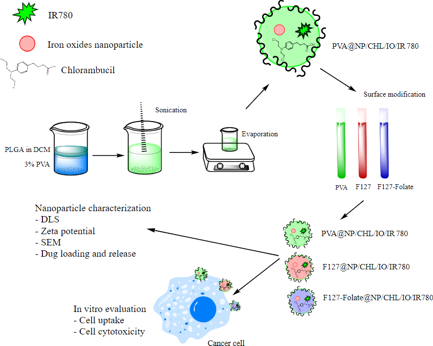
- nanocarrier that can be loaded with the chemotherapeutic medication chlorambucil and magnetic resonance imaging agents (e.g., iron oxide nanoparticles and near-infrared fluorophore IR780) for theragnostics. Poly(lactic-co-glycolic acid) was combined with the aforementioned ingredients to generate poly(vinyl
- . Clinical use of superparamagnetic oxide nanoparticles (SPIONs) has been authorized [9]. SPIONs have been utilized in magnetic particle imaging (MPI), magnetic resonance imaging (MRI), computer tomography (CT), and additional imaging models [9][10][11]. SPIONs have been modified to be applicable to a


Modification of graphene oxide and its effect on properties of natural rubber/graphene oxide nanocomposites
Beilstein J. Nanotechnol. 2024, 15, 168–179, doi:10.3762/bjnano.15.16
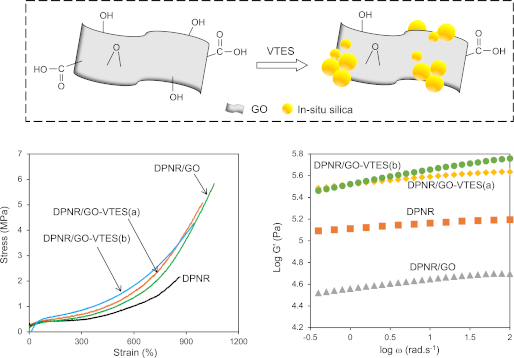
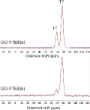
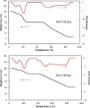
- with the diffraction angle (2-theta) ranging from 5 to 80°. Solid-state 29Si NMR spectra were recorded with a JNM ECA-400 (JEOL, Japan) spectrometer operating at a magnetic field of 400 MHz. A suitable amount of rubber sample was inserted in an NMR tube and injected into an NMR system equipped with a






Ferromagnetic resonance spectra of linear magnetosome chains
Beilstein J. Nanotechnol. 2024, 15, 157–167, doi:10.3762/bjnano.15.15
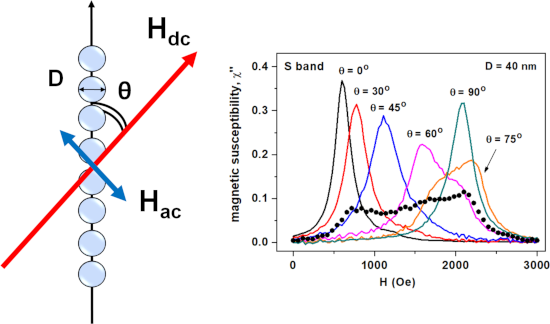
- chain, the distance between the centers of neighboring particles, the mutual orientation of the cubic axes of particle anisotropy, and the value of the magnetic damping constant is studied. It is shown that FMR spectra of non-oriented chain assemblies depend on the average particle diameter at a fixed
- thickness of the lipid magnetosome membrane, as well as on the value of the magnetic damping constant. At the same time, they are practically independent of the number Np of particles in the chain under the condition Np ≥ 10. The FMR spectra of non-oriented assemblies of magnetosome chains are compared with
- produce elongated magnetite nanoparticles [1][2][10][11]. A linear chain of uniformly magnetized magnetosomes grown inside a magnetotactic bacterium is a kind of magnetic needle that helps the bacterium navigate in the weak Earth's magnetic field in search of the best habitat [1][2][3][4]. Chains of


In situ optical sub-wavelength thickness control of porous anodic aluminum oxide
Beilstein J. Nanotechnol. 2024, 15, 126–133, doi:10.3762/bjnano.15.12
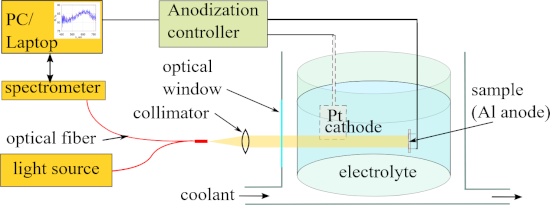
- samples at constant 40 V potential. Platinum cathode and single crystal Al(100) (MTI Corp. mcALa101010) anode were immersed in 0.3 M oxalic acid electrolyte inside a multiwalled container with a transparent optical window. The container was placed on a magnetic stirrer and cooled to 5 °C. The reflectance


Assessing phytotoxicity and tolerance levels of ZnO nanoparticles on Raphanus sativus: implications for widespread adoptions
Beilstein J. Nanotechnol. 2024, 15, 115–125, doi:10.3762/bjnano.15.11
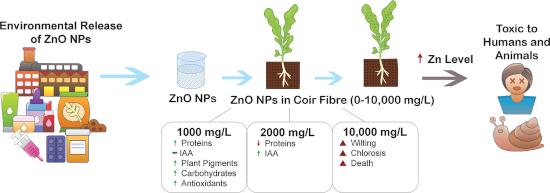
- rpm in a magnetic stirrer and NaOH was added dropwise, the mixture was kept under constant stirring for 2 more hours and then sealed and kept overnight. The Zn(OH)2 obtained from the reaction was collected by centrifugation, washed with distilled water, and calcined at 400 °C for 2 h to obtain ZnO NPs


Development and characterization of potential larvicidal nanoemulsions against Aedes aegypti
Beilstein J. Nanotechnol. 2024, 15, 104–114, doi:10.3762/bjnano.15.10
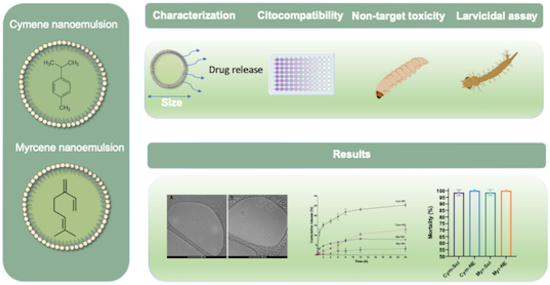
- . Briefly, an oil phase composed of the terpene (cymene or myrcene) (5% w/w) was mixed with the surfactants (Span 80/Tween 20) (5% w/w) using a magnetic stirrer. After homogenization, the aqueous phase of ultrapure water (90% w/w) was added dropwise. The terpenes were obtained commercially from Sigma
- ethanol (50:50 v/v), pH 5.5. 1 mL of the formulations was used, as allowed by the Franz cell. The acceptor solution was constantly agitated at 300 rpm using mini-magnetic agitators. The temperature was maintained at 37 ± 2 °C by utilizing a circulating heating bath in the jacketed cells. The evaluation of


Berberine-loaded polylactic acid nanofiber scaffold as a drug delivery system: The relationship between chemical characteristics, drug-release behavior, and antibacterial efficiency
Beilstein J. Nanotechnol. 2024, 15, 71–82, doi:10.3762/bjnano.15.7
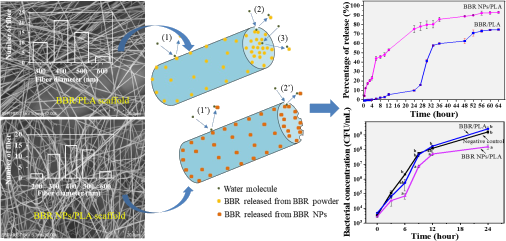
- Berberine nanoparticles were formed through the antisolvent precipitation process described in our previous report [7]. A 7.0 wt % PLA solution was prepared by dissolving the PLA pellets in a solvent mixture of DCM/DMF with a weight ratio of 80/20 under magnetic stirring for 1 h at 50 °C. After that, the


Measurements of dichroic bow-tie antenna arrays with integrated cold-electron bolometers using YBCO oscillators
Beilstein J. Nanotechnol. 2024, 15, 26–36, doi:10.3762/bjnano.15.3
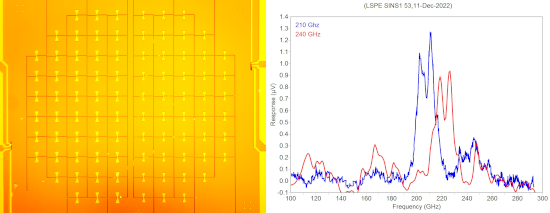
- –frequency characteristics of resonant bolometers was set up as follows: The generator chip with JJs was mounted on the sample holder with a 4 mm Si hyperhemispherical lens thermally coupled with a 2.7 K cryostat plate. The control magnetic field required to create a flux-flow regime in a long Josephson


TEM sample preparation of lithographically patterned permalloy nanostructures on silicon nitride membranes
Beilstein J. Nanotechnol. 2024, 15, 1–12, doi:10.3762/bjnano.15.1
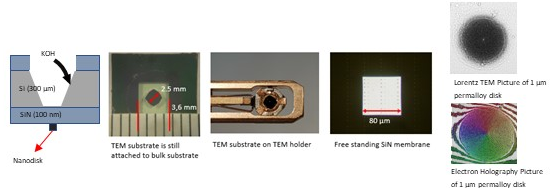
- . Finally, we observed the vortex dynamics of the Py nanodisk under magnetic fields using LTEM and off-axis electron holography. A correlation between preparation methods and the properties of the Py nanostructures was made. Keywords: electron holography; Lorentz transmission electron microscopy; magnetic
- in Py nanodisks [1][2] with independent polarity and helicity [3]. Since then, many studies have been done on manipulating magnetic vortices inside Py nanodisks using micromagnetic simulations [4][5][6] and a variety of magnetic measurement techniques including magnetic force microscopy [7
- ], transmission electron microscopy (TEM) [1][8][9][10][11], scanning transmission X-ray microscopy [12][13], and magneto-optical Kerr effect microscopy [14][15]. Possible applications of Py nanodisks were proposed for zero-hysteresis magnet sensors, magnetic logic devices, and data storage [16]. Py is a nickel


A bifunctional superconducting cell as flux qubit and neuron
Beilstein J. Nanotechnol. 2023, 14, 1116–1126, doi:10.3762/bjnano.14.92
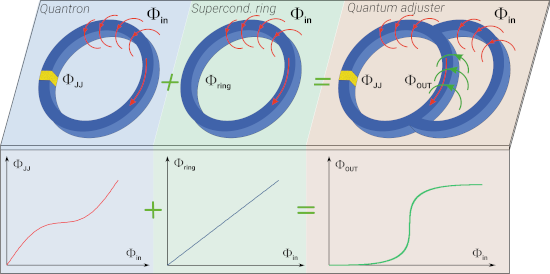
- ][30][31][32]. Furthermore, a natural extension of current progress would be the use of “quantum” degrees of freedom for adiabatic superconducting circuits, which share many similarities with qubits in terms of their representation of information via magnetic flux. From a formal point of view, the
- system under consideration is a superconducting circuit in a quantum state, transforming the input magnetic flux Φin into an output magnetic flux Φout according to a specific (e.g., sigmoidal) function Φout = f(Φin) [33][34]. If we only want to use the circuit in the “classical” neuromorphic mode, the
- transfer characteristic should be such that small fluctuations at the input do not produce a noticeable response, but above a certain threshold, any signal at the input produces a fixed magnetic flux at the output. Also, if it were possible to adapt the ASL cell in a perceptron to process the signal from a



A visible-light photodetector based on heterojunctions between CuO nanoparticles and ZnO nanorods
Beilstein J. Nanotechnol. 2023, 14, 1018–1027, doi:10.3762/bjnano.14.84
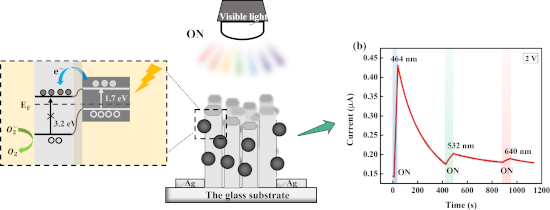
- temperature. Then, 1 mL HNO3 solution was added dropwise into this mixture under vigorous magnetic stirring. After annealing at 180 °C for 18 h, the black precipitate was washed several times and centrifuged (Supporting Information File 1, Figure S2). The formation of nanoparticles was observed through the


Exploring internal structures and properties of terpolymer fibers via real-space characterizations
Beilstein J. Nanotechnol. 2023, 14, 1004–1017, doi:10.3762/bjnano.14.83
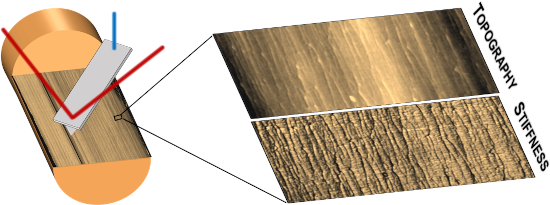
- , this distinction in fundamental chemistry has significant implications for the structures and properties of the resulting fibers. To date, structure–property characterizations of Technora® in the literature have primarily focused on (i) X-ray diffraction (XRD), (ii) nuclear magnetic resonance (NMR
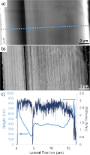
- voltage and current of 16 kV and 3.3 nA, respectively. After FIB notching, specimens were mounted onto magnetic discs with double-sided tape as shown (Figure 1c) for AFM characterization [9]. The internal fiber surfaces produced by FIB notching closely match corresponding surfaces obtained using other






Nanoarchitectonics of photothermal materials to enhance the sensitivity of lateral flow assays
Beilstein J. Nanotechnol. 2023, 14, 988–1003, doi:10.3762/bjnano.14.82
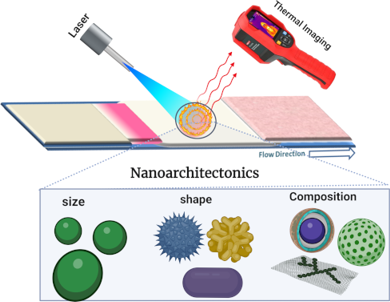
- , and magnetic materials [18][19]. Among them, noble metal nanostructures are a new class of photothermal nanomaterials with favourable characteristics to increase the sensitivity of an assay. For example, gold nanoparticles (GNPs) can generate a strong heat signal in addition to the visual colour
- , iron oxide nanoparticles are the most prominent ones because of their biocompatibility, low toxicity, ease of synthesis, and high photothermal conversion efficiency. The influence of a magnetic field can also increase temperature generation by such nanoparticles, which is called magnetic hyperthermia
- a low-power laser source. In a multimodal system of gold, iron oxide, and graphene oxide (GO) nanoparticles, the photothermal properties of graphene, the magnetic properties of iron oxide, and the surface plasmon resonance of gold enable multiple functions in a single system. The presence of gold





