


Search results
Search for "nickel" in Full Text gives 186 result(s) in Beilstein Journal of Nanotechnology.
Effect of nanostructured carbon coatings on the electrochemical performance of Li1.4Ni0.5Mn0.5O2+x-based cathode materials
Beilstein J. Nanotechnol. 2016, 7, 1960–1970, doi:10.3762/bjnano.7.187
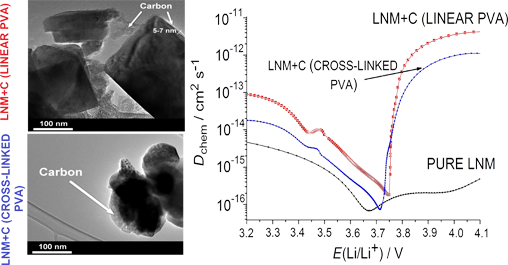
- electrochemical properties (C = 160–180 mAh·g−1 at C/10; U = 2.5–4.6 V) remains attractive until now [2][3][4]. Most of the studies deal with Li(Ni,Mn)O2 with equimolar amounts of nickel and manganese. The influence of the Ni/Mn ratio on the properties of these materials is discussed in [5]. One of the obstacles



Ferromagnetic behaviour of ZnO: the role of grain boundaries
Beilstein J. Nanotechnol. 2016, 7, 1936–1947, doi:10.3762/bjnano.7.185
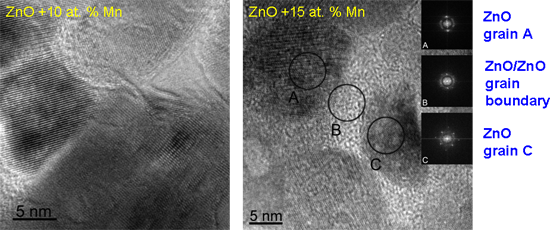
- the role of GB in ferromagnetic behaviour was supported by our new results on ZnO doped with nickel and iron [6][9][12] as well as by measurements with low-energy muon spin relaxation combined with molecular dynamics modeling and density functional theory calculations [13]. These new results
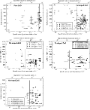
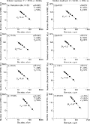
- ferromagnetic behaviour of zinc oxide and developed our own method for the synthesis of pure and doped nanocrystalline ZnO films. The obtained data are summarized in Figure 1 for pure ZnO and ZnO doped with manganese, cobalt, iron and nickel [6][7][8][9]. The full list of used references can be found in [6][7
- . Indeed, pure ZnO possesses ferromagnetic properties at sGB > sth = 5.3 × 10⁷ m2/m3 [7], in other words at grain sizes below 20 nm (Figure 1a). However, the addition of manganese, cobalt, iron and nickel positively influences the FM of ZnO polycrystals. Such additions decrease the amount of GBs needed for


A new approach to grain boundary engineering for nanocrystalline materials
Beilstein J. Nanotechnol. 2016, 7, 1829–1849, doi:10.3762/bjnano.7.176
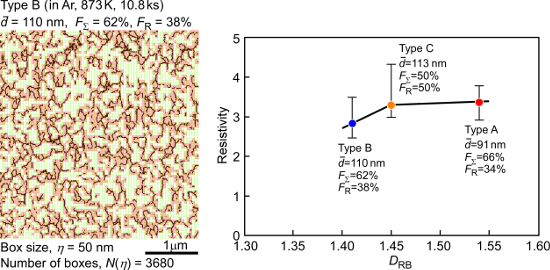
- , hardness, and the control of segregation-induced intergranular brittleness and intergranular fatigue fracture in electrodeposited nickel and nickel alloys with initial submicrometer-grained structure. A new approach to GBE based on fractal analysis of grain boundary connectivity is proposed to produce high
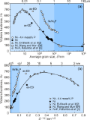
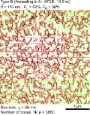
- relationship between the Vickers hardness and the average grain size for pure nickel (Ni) and nickel–phosphorus (Ni–P) alloy specimens produced by electrodeposition and subsequent annealing. The data obtained from our recent investigation are shown together with those for pure Ni [62][64] and Ni–1.2 mass % P
- alloy [3] reported by other researchers. The state of the supersaturated solid solution in as-electrodeposited Ni–4.4 mass % P alloy specimens was confirmed, although the Ni–P phase diagram [65] indicates that the solubility limit of phosphorus into nickel matrix is 0.17 mass %. Accordingly, the Ni3P







Properties of Ni and Ni–Fe nanowires electrochemically deposited into a porous alumina template
Beilstein J. Nanotechnol. 2016, 7, 1709–1717, doi:10.3762/bjnano.7.163
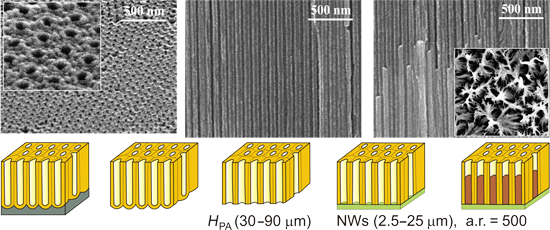
- using NiSO4·7H2O and FeSO4·6H2O as sources of Ni and Fe ions, and H3BO3 as a stabilizer. To fabricate Ni NWs, we used a solution containing NiSO4·6H2O and NiCl2·6H2O as a nickel source, and boric acid as a stabilizer. NaOH was used to adjust the pH value of the solution (pH meter HI83141, HANNA
- are shown in Figure 4 and Figure 5, and summarized in Table 3. The character of these XRD data with narrow peaks suggests a crystalline phase in the both cases. The nickel phase (Figure 4) crystallized in a fcc lattice, as evidenced by identification of Ni samples, Table 3, using the ICDD
- with each other and with those of bulk nickel. In Figure 6, the σ(T) dependence of Ni NWs fabricated in the alumina template with HPA of 50 μm at a current density of 3 mA·cm−2 and a deposition duration of 120 min is presented. The same results for Ni–Fe NWs fabricated in the alumina template with HPA


Hydrophilic silver nanoparticles with tunable optical properties: application for the detection of heavy metals in water
Beilstein J. Nanotechnol. 2016, 7, 1654–1661, doi:10.3762/bjnano.7.157
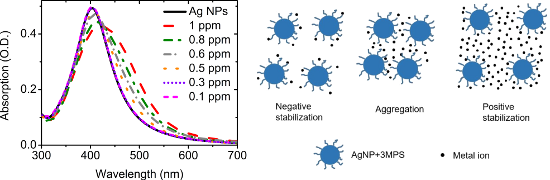
- AgNPs show good response to nickel (II) and presented good sensibility properties for the detection of low amount of ions in water in the working range of 1.0–0.1 ppm. Keywords: heavy metal sensor; nickel (II); optical materials; optical sensors; silver nanoparticles; Introduction Nanomaterials have
- concentration of 1 ppm at room temperature. Our system showed sensibility mainly to nickel (II) ions. For this type of ion, we tested the sensitivity as a function of the ion concentration in the range 1.0–0.1 ppm and we estimated a limit of detection (LOD) of 0.3 ppm. Results and Discussion Silver nanoparticle
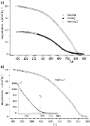
- performed absorption measurements as a function of concentration of nickel ions. Figure 7a shows the optical absorption spectrum of the AgNP-3MPS solution with nickel for different ion concentrations in the range 1.0–0.1 ppm. Figure 7b presents the maximum wavelength of the absorption peak as a function of


Scanning probe microscopy studies on the adsorption of selected molecular dyes on titania
Beilstein J. Nanotechnol. 2016, 7, 1642–1653, doi:10.3762/bjnano.7.156
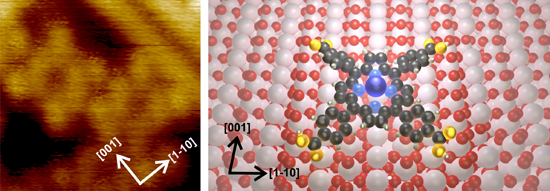
- adsorption of metal-free porphyrins on the TiO2(110)-(1 × 1) surface, Wang et al. [53] investigated the metalation process of 2H-TPP with nickel atoms. The authors showed that it is possible to synthesize in situ NiTPP molecules from vapour-deposited Ni atoms and 2H-TPP molecules. The reaction to form NiTPP


Development of adsorptive membranes by confinement of activated biochar into electrospun nanofibers
Beilstein J. Nanotechnol. 2016, 7, 1556–1563, doi:10.3762/bjnano.7.149
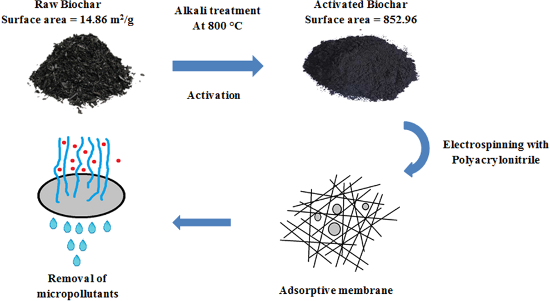
- affinity towards metallic ions, such as copper and lead [13]. In a similar study, Aliabadi et al. used PEO/Chitosan for NFM fabrication to remove nickel, cadmium, lead and copper from aqueous solutions and reported no considerable change in the adsorption capacity after five cycles [14]. Also, there are




Voltammetric determination of polyphenolic content in pomegranate juice using a poly(gallic acid)/multiwalled carbon nanotube modified electrode
Beilstein J. Nanotechnol. 2016, 7, 1104–1112, doi:10.3762/bjnano.7.103
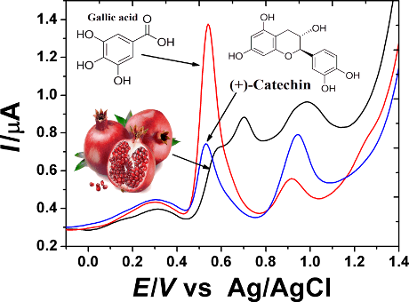
- with thionine and nickel hexacyanoferrate [13]. A polyethyleneimine-functionalized graphene oxide modified glassy carbon electrode sensor was developed for sensitive detection of gallic acid [14]. A polyepinephrine modified glassy carbon electrode electrochemical sensor was developed for adsorptive


Customized MFM probes with high lateral resolution
Beilstein J. Nanotechnol. 2016, 7, 1068–1074, doi:10.3762/bjnano.7.100
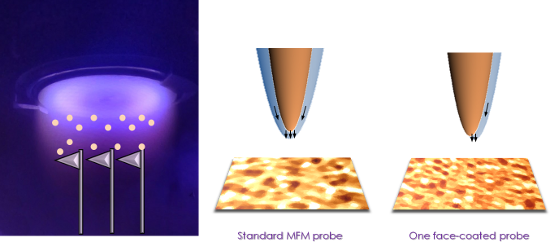
- influence exerted on an array of single-domain nickel nanowires embedded in an Al2O3 membrane was used to calibrate the stray field of the MFM tip– we can estimate the value of the stray field emerging from the custom-coated tips and compare it to the stray field of commercial tips. The axial field


Synthesis of cobalt nanowires in aqueous solution under an external magnetic field
Beilstein J. Nanotechnol. 2016, 7, 990–994, doi:10.3762/bjnano.7.91
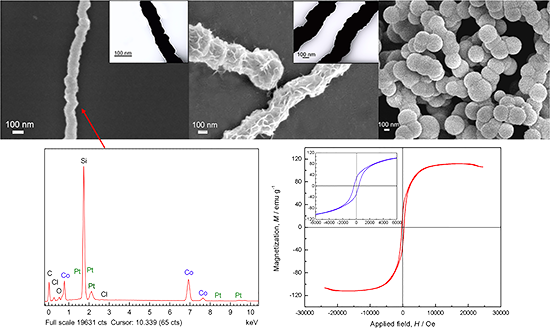
- preparing cobalt nanowires in aqueous solution up to now [13]. In our previous studies, we have successfully prepared nickel and nickel/copper nanowires [14][15][16], and cobalt nanowires were synthesized using NaBH4 as initiator without surfactant in ethylene glycol solution with an external magnetic field


Thickness dependence of the triplet spin-valve effect in superconductor–ferromagnet–ferromagnet heterostructures
Beilstein J. Nanotechnol. 2016, 7, 957–969, doi:10.3762/bjnano.7.88
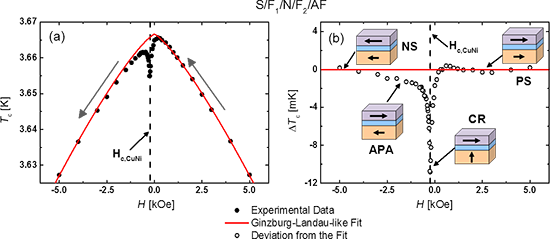
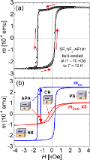
- layers according to Equation 1. The copper–nickel signal is enlarged by a factor of 5 to improve visibility. The pictograms indicate the different magnetic configurations of the system (PS: positive (H > 0) saturated; NS: negative (H < 0) saturated; APA: antiparallel alignment of the magnetic moments of






Investigating organic multilayers by spectroscopic ellipsometry: specific and non-specific interactions of polyhistidine with NTA self-assembled monolayers
Beilstein J. Nanotechnol. 2016, 7, 544–553, doi:10.3762/bjnano.7.48
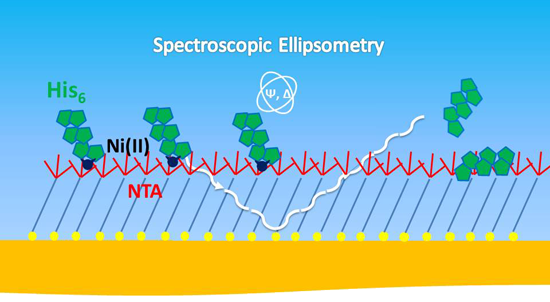
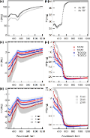
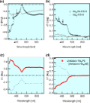
- (NTA) group, after loading with nickel ions (Ni(II)), provide platforms able to specifically bind his-tag proteins [13][14][15][16][17][18] and enzymes that retain their activity upon immobilization [19][20][21]. The affinity between the adsorbent surface and the protein can be modulated, e.g., by



Case studies on the formation of chalcogenide self-assembled monolayers on surfaces and dissociative processes
Beilstein J. Nanotechnol. 2016, 7, 263–277, doi:10.3762/bjnano.7.24
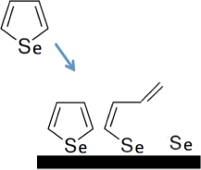
- . We discuss some recent studies based on X-ray photoelectron spectroscopy that shed light on these aspects for a series of such organic molecules. Keywords: copper; nickel; palladium; reactivity; selenol; selenophene; self-assembly; thiol; thiophene; Introduction In recent years research related to
- chalcogenide self-assembled monolayers on surfaces and dissociative processes. Selenide synthesis; XPS spectra for selenium on nickel and tables of Se 3d peak positions; LEED images for Se on Ni(111); X-ray damage verification for selenophene. Acknowledgements T. Jiang and Y. Tong thank the Chinese


Synthesis and applications of carbon nanomaterials for energy generation and storage
Beilstein J. Nanotechnol. 2016, 7, 149–196, doi:10.3762/bjnano.7.17
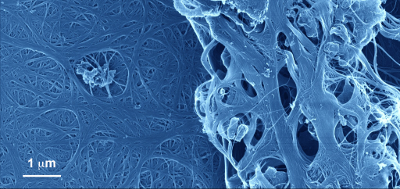
- graphite sample containing 1% nickel and cobalt catalyst particles [51]. In the resulting vapor, the metal aggregates into carbon-saturated catalyst nanoparticles, which instigate the growth of CNTs [48]. These catalyst particles are necessary to produce SWNTs rather than MWNTs [52]. The relative amount of
- types, as well as the operating temperature [54]. The production of MWNTs typically involves ethylene or acetylene feedstock with an iron, nickel or cobalt catalyst and operating temperatures of 550–750 °C. SWNTs are produced by using methane or ethane feedstock, similar catalysts, and operating















Kelvin probe force microscopy for local characterisation of active nanoelectronic devices
Beilstein J. Nanotechnol. 2015, 6, 2193–2206, doi:10.3762/bjnano.6.225
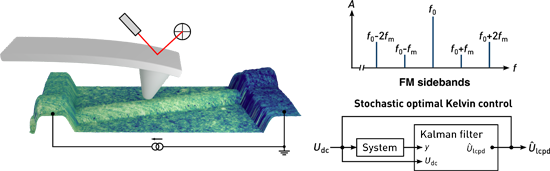
- dopant profiling [26]. In Figure 4, we show experimental data of modulation indices and , calculated from the ωm and 2ωm sidebands, respectively, as a function of Udc for different electrostatic modulation amplitudes, Uac. During this experiment, the tip was positioned above a nickel electrode with
- nickel (Ni) contacts (height ≈ 120 nm), obtained at a bias current of 1.4 μA under ambient conditions using a commercial AFM (Cypher, Asylum Research). The steep edges at the electrodes necessitated AM topography feedback. Oftentimes the contact resistances between nanowire and metal contacts are uneven


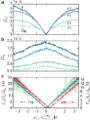
![[Graphic 33]](/bjnano/content/inline/2190-4286-6-225-i48.png?max-width=637&scale=1.18182) for different modulation amplitu...
for different modulation amplitu...




Self-assembly mechanism of Ni nanowires prepared with an external magnetic field
Beilstein J. Nanotechnol. 2015, 6, 2123–2128, doi:10.3762/bjnano.6.217
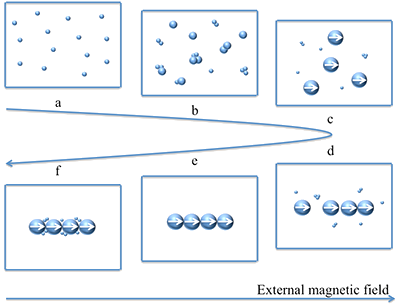
- Xiaoyu Li Hu Wang Kenan Xie Qin Long Xuefei Lai Li Liao School of Chemical Engineering, Sichuan University, Chengdu 610065, PR China 10.3762/bjnano.6.217 Abstract Nickel nanowires with a mean diameter of about 95 nm and lengths of up to 26 μm were prepared by a chemical reduction method in
- between the nickel particles. The self-assembly phenomenon occurs only when nickel particles grow to a size of about 60 nm in the reaction system. This critical size, which is proposed for the first time, is very important to comprehend the self-assembly mechanism of Ni nanowires prepared with an external
- as preparing and removing the templates are required for this method. Recently, a self-assembly method employing a magnetic field to prepare ferromagnetic nanowires has been extensively studied because of its simplicity and effectiveness. For example, Wang et al. [13][14] synthesized nickel and




Metal hydrides: an innovative and challenging conversion reaction anode for lithium-ion batteries
Beilstein J. Nanotechnol. 2015, 6, 1821–1839, doi:10.3762/bjnano.6.186
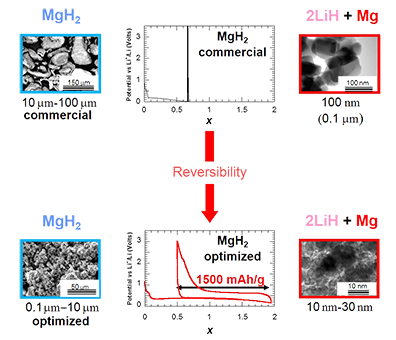
- patent [44][45]. A charge–discharge efficiency of 93.9% for the conversion reaction with MgH2 is reported by the grinding addition of 3 atom % of a nickel catalyst (particle size 20 nm) in the hydride MCMB carbon mixture. In this last case the irreversible loss can be drastically reduced to 7% for a










Scalable, high performance, enzymatic cathodes based on nanoimprint lithography
Beilstein J. Nanotechnol. 2015, 6, 1377–1384, doi:10.3762/bjnano.6.142
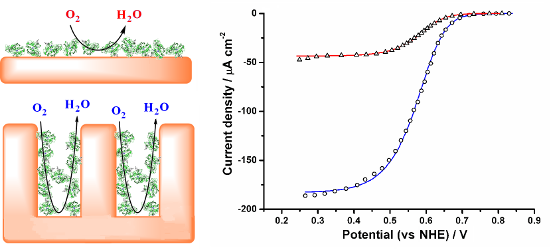
- characterisation Fabrication of imprinted substrates The nanostructured electrodes were fabricated by a thermal NIL process using a nickel stamp purchased from NIL Technologies ApS (Kongens Lyngby, Denmark). The NIL stamp, produced by nickel electroplating, had an array of 100 nm features defined by UV
- thermoplastic polymer suitable for thermal imprint with nickel stamps, but its exact composition has not been revealed by the manufacturer. In the current work, the polymer sheet was used to make the nanostructured electrodes with the active Au surface, thus the composition of the nanostructured polymer film


The Kirkendall effect and nanoscience: hollow nanospheres and nanotubes
Beilstein J. Nanotechnol. 2015, 6, 1348–1361, doi:10.3762/bjnano.6.139
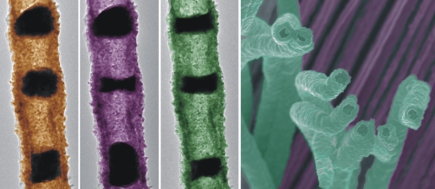
- hollowing process previously described were found to vary according to the selected metal and the reactive atmosphere [25][27][28][43]. For example, when oxidizing nickel nanospheres under ambient atmosphere, Nakamura et al. found that the shape of the resulting nickel oxide hollow nanoparticles was
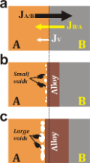
- their early report, Nakamura et al. concluded that the formation of an off-centered, single void during oxidation of nickel is related to the intrinsic properties of nickel itself [32]. They came to such a conclusion by comparing the ratio between the diffusion coefficient of Ni in NiO and the self
- formation of a hollow Cu2O nanoparticle with a uniform shell thickness. The asymmetrical conversion mechanism identified when oxidizing spherical nickel nanoparticles was recently encountered by Railsback et al. who have shown that such an effect becomes more or less pronounced according to the size of the



Preparation of Ni/Cu composite nanowires
Beilstein J. Nanotechnol. 2015, 6, 1268–1271, doi:10.3762/bjnano.6.130
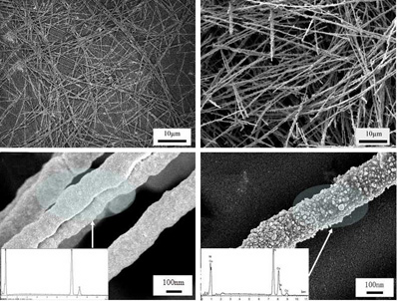
- nickel nanowires were prepared through chemical reduction in solution under a magnetic field. Secondly, copper was reduced on the surface of the nickel nanowires, during which Ni/Cu composite nanowires with an average length of 80 µm and diameter of about 200 nm were synthesized. The products were
- characterized by XRD, SEM and TEM. The method has notable advantages: It is template-free, inexpensive, easy-to-operate, and it only needs a short reaction time, which makes it suitable for large-scale preparation. Keywords: copper nanoparticles; nickel nanowires; Ni/Cu composite nanowires; Introduction In
- recent years, the catalytic hydrogenation of CO2 to light hydrocarbons has been recognized as one of the most effective and economical ways to fix and utilize a large amount of anthropogenic CO2 [1][2][3]. Nickel and copper, which are extensively applied in industry, are efficient hydrogenation catalysts


High sensitivity and high resolution element 3D analysis by a combined SIMS–SPM instrument
Beilstein J. Nanotechnol. 2015, 6, 1091–1099, doi:10.3762/bjnano.6.110
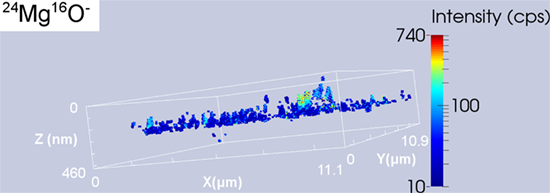
- spectrometry (SIMS) data was combined with topographical data from the scanning probe microscopy (SPM) module for five test structures in order to obtain accurate chemical 3D maps: a polystyrene/polyvinylpyrrolidone (PS/PVP) polymer blend, a nickel-based super-alloy, a titanium carbonitride-based cermet, a
- intensity is slightly increased at the position where a dip is present on the PVP dome, which is most likely due to variations of the sputtering yield with the local angle of incidence. Nickel-based super-alloy Differential sputtering can also be observed when analysing nickel-based super-alloys, which are
- reconstruction. Artefacts related to inhomogeneous secondary ion extraction efficiencies due to local field distortions caused by topography with high aspect ratios are also revealed by the combined SIMS–AFM approach. This is nicely illustrated from the analysis of a nickel-based super-alloy. Thus, a fraction of


From lithium to sodium: cell chemistry of room temperature sodium–air and sodium–sulfur batteries
Beilstein J. Nanotechnol. 2015, 6, 1016–1055, doi:10.3762/bjnano.6.105


Mapping of elasticity and damping in an α + β titanium alloy through atomic force acoustic microscopy
Beilstein J. Nanotechnol. 2015, 6, 767–776, doi:10.3762/bjnano.6.79
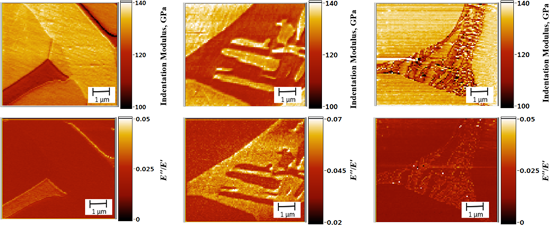
- micrometer resolution. An improved UAFM technique was used for mapping the resonance frequency and the quality factor, Q, in carbon reinforced plastics composites [7]. In recent years, AFAM has been extensively used to determine elastic stiffness or damping properties in nano-crystalline nickel [2], PMMA
- films [8], NiMnGa films [9], Arabidopsis plant [10], polystyrene–propylene blends [11], nickel base alloys [12][13], ferritic steels [13], and metallic glasses [14]. Besides contact-resonance based methods, multi-frequency AFM techniques have also been used for measurement of elastic and damping


Filling of carbon nanotubes and nanofibres
Beilstein J. Nanotechnol. 2015, 6, 508–516, doi:10.3762/bjnano.6.53
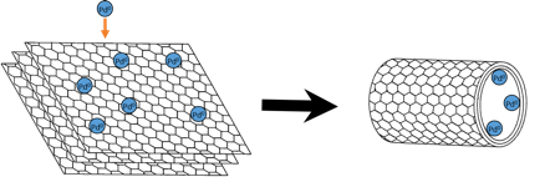
- gold electrodes [72]. This was shown to not only decorate the external surface, but also to fill some MWCNTs with a gold nanowire. Ordered, open MWCNTs produced from the AAO template method have also undergone an electrochemical filling process with nickel–iron alloys [73]. It was shown that this
- technique could be used to control the nickel/iron ratio and the amount of filling. Electrochemical methods have also been used to fill TCNSs with water [74] and can take advantage of the presence of oxygen within TCNSs applied as an electrode for Li–O2 rechargeable batteries [75]. Filling through
- within the core of a filled MWCNT. This was achieved by first filling a MWCNT with iron, cobalt, nickel, or an iron–cobalt alloy using capillary action. Following this step, the sample was placed inside a transmission electron microscope (with the sample stage temperature set at 600 °C) and subjected to


X-ray photoelectron spectroscopy of graphitic carbon nanomaterials doped with heteroatoms
Beilstein J. Nanotechnol. 2015, 6, 177–192, doi:10.3762/bjnano.6.17
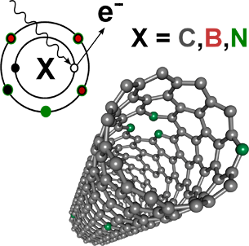
- C 1s spectra of N-graphene freshly prepared on nickel, intercalated by gold, and treated by post-annealing. Note the large shifts caused by interaction with the substrate in the non-intercalated spectrum. The N 1s spectra shown in (b) have been background-subtracted. In the post-annealed sample, a





