


Search results
Search for "oxidation" in Full Text gives 778 result(s) in Beilstein Journal of Nanotechnology. Showing first 200.
Recognition mechanisms of hemoglobin particles by monocytes – CD163 may just be one
Beilstein J. Nanotechnol. 2023, 14, 1028–1040, doi:10.3762/bjnano.14.85
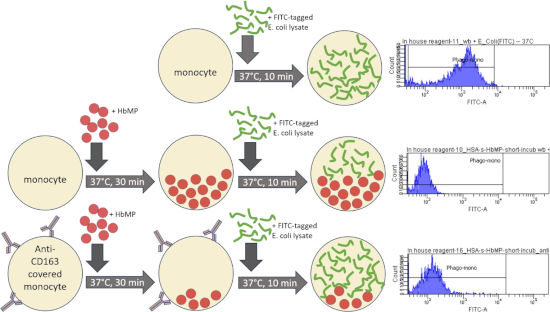
- h at room temperature under stirring. After another washing in aqua dest. the MnCO3 matrix was dissolved using 0.25 M EDTA. After 30 min incubation time, 0.2 mg/mL NaBH4 in 0.1 M NaOH was added to prevent oxidation of Hb to met-Hb. Incubation for another 30 min followed. After triplicate washing in
- = dilution factor (2.1); molar mass of Hb (tetrameric) = 64.5; (monomer) molar extinction coefficient (ε) = 6.945). Percentage of functional hemoglobin Each hemoglobin molecule contains an Fe2+ ion on which the ability of Hb to bind oxygen is based. Methemoglobin has undergone an oxidation process. The




Isolation of cubic Si3P4 in the form of nanocrystals
Beilstein J. Nanotechnol. 2023, 14, 971–979, doi:10.3762/bjnano.14.80
- Kα map tends to outline the shape of the NPs, confirming surface hydrolysis and oxidation of the material in air during storage. When the EDX spectra (Supporting Information File 1, Figure S1) were normalized to the intensity of the Si Kα line, it was observed that the growth in the relative
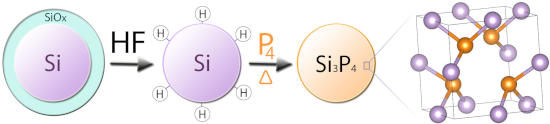
- ] (the benefit of the gaseous etching is that the particles remain dry, resulting in a lower oxidation rate [45]). One of the samples had also been pre-annealed in vacuum at 900 °C for 6 h before the etching step to estimate the influence of an amorphous surface layer of the NPs on Si3P4 phase formation
- gradually form on the surface oxide layer to prevent combustion. In an attempt to prevent hydrolysis/oxidation, a quartz ampoule with NPs synthesized at 400 °C was opened inside an evacuated and sealed copper ampoule partially filled with octadecene. Hydrosilylation was carried out for 30 min at 315 °C. In


Upscaling the urea method synthesis of CoAl layered double hydroxides
Beilstein J. Nanotechnol. 2023, 14, 927–938, doi:10.3762/bjnano.14.76
- demonstrated to be a powerful technique for layered hydroxide characterization, especially in the case of earth-abundant 3d cations where this technique can provide information about coordination environments and oxidation states [50]. The spectrum of reference x1 depicts a main signal at 525 nm containing
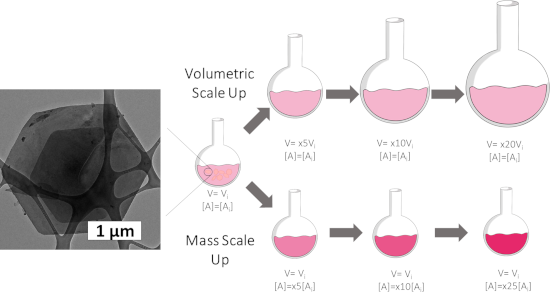
- Co atoms are in the same oxidation state (2+), they would be found in different environments, as suggested by PXRD and confirmed by UV–vis spectroscopy. This means the presence of the α-CoII LH impurity. To quantify its fraction, the spectrum of sample x25M was reproduced by using a linear


Antibody-conjugated nanoparticles for target-specific drug delivery of chemotherapeutics
Beilstein J. Nanotechnol. 2023, 14, 912–926, doi:10.3762/bjnano.14.75
- . Maleimide chemistry: Maleimide chemistry is another covalent immobilization technique, which comprises binding through thiol groups (–SH) of the antibodies. This oriented covalent conjugation technique requires various steps, such as chemical modification achieved either by oxidation of sugar moieties or
- the reduction of disulfide bonds. Thiols, also called sulfhydryls, in the cysteine side chain are slightly less abundant than primary amines; therefore, the coupling by thiol groups is more selective [52]. Thiols in cysteines are linked by disulfide bonds (–S–S–) through an oxidation process where the



Ni, Co, Zn, and Cu metal-organic framework-based nanomaterials for electrochemical reduction of CO2: A review
Beilstein J. Nanotechnol. 2023, 14, 904–911, doi:10.3762/bjnano.14.74
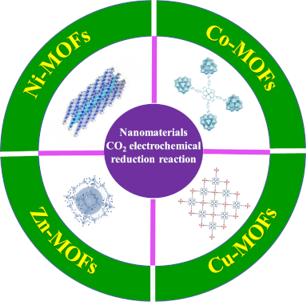
- reduction–oxidation states and are, thus, considered potential candidates in electrocatalysis. Co-related MOFs have been extensively investigated for their applicability in CO2 conversion processes. Wang et al. introduced an interesting work based on four distinct structures, including Co-PMOF, Ni-PMOF, Fe


Silver nanoparticles loaded on lactose/alginate: in situ synthesis, catalytic degradation, and pH-dependent antibacterial activity
Beilstein J. Nanotechnol. 2023, 14, 781–792, doi:10.3762/bjnano.14.64
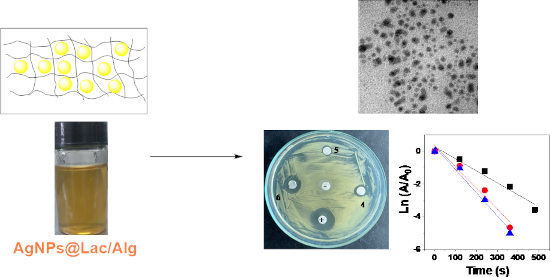
- nanocomposite. DSC analysis revealed weakly exothermic peaks in the range of 150–300 °C, corresponding to the oxidation of organic components in the nanocomposites. The temperature peak for the blank sample was found at 248 °C, while for the nanocomposites AgNPs@Lac/Alg-0.3 and AgNPs@Lac/Alg-0.7, the peaks


Carboxylic acids and light interact to affect nanoceria stability and dissolution in acidic aqueous environments
Beilstein J. Nanotechnol. 2023, 14, 762–780, doi:10.3762/bjnano.14.63
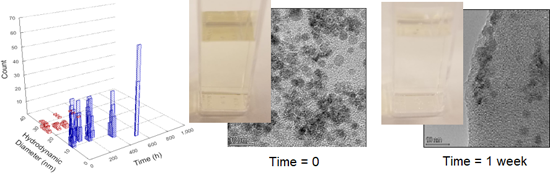
- yellow upon addition of H2O2, due to oxidation of Ce3+ to Ce4+. The solution then transitions back to colorless after approximately 15 days, due to reduction of Ce4+ to Ce3+ [47][48]. A similar color change, from colorless to dark orange, was observed upon addition of H2O2 produced enzymatically from
- glucose oxidase, suggesting the use of this phenomenon as a colorimetric sensor for bioanalysis [49]. This color transition is an important observation since nanoceria degradation will likely result in the change in oxidation state of surface cerium ions from Ce4+ to Ce3+. Results and Discussion Nanoceria
- conditions, a color change from yellow to colorless was observed, indicating a valence state transition from Ce4+ to Ce3+. As nanoceria particles dissolve and become smaller, the surface oxidation state transitions from Ce4+ to Ce3+. Of the 16 carboxylic acids tested, nanoceria exposed to only three acids
In situ magnesiothermic reduction synthesis of a Ge@C composite for high-performance lithium-ion batterie anodes
Beilstein J. Nanotechnol. 2023, 14, 751–761, doi:10.3762/bjnano.14.62
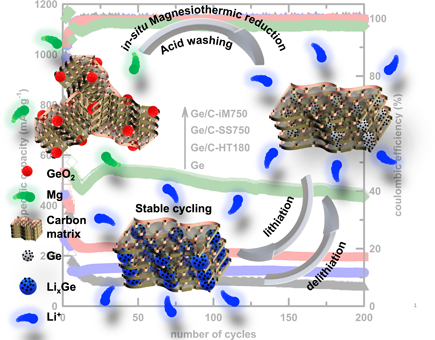
- ]. The difference in Raman signals between Ge/C-iM750 and pure Ge is more notable. New peaks appear at 252, 264, 438 and 509 cm−1, indicating further in situ surface oxidation of newly formed Ge and functional groups containing oxygen on the carbon material [47]. The intensity ratio of the Ge–Ge (ca. 300
- functional groups of biomass carbon induce the oxidation of Ge [47]. However, the lower ratio observed in Ge/C-SS750 suggests a less tight contact between Ge and carbon matrix than in Ge/C-iM750. In addition, the emergence of a new signal at 208 cm−1 and the decreased intensity of the transverse optic mode


Control of morphology and crystallinity of CNTs in flame synthesis with one-dimensional reaction zone
Beilstein J. Nanotechnol. 2023, 14, 741–750, doi:10.3762/bjnano.14.61
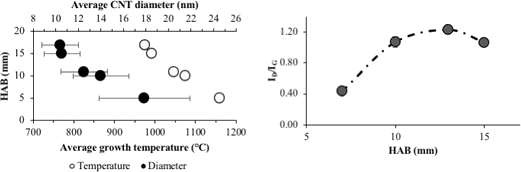
- morphology of the MWCNTs similar to that of MWCNTs obtained from CVD. Raman spectroscopy showed constant IG/ID ratios after all runs, and thermogravimetric analysis (TGA) results showed almost equal CNT oxidation temperatures, indicating similar purity. The constant crystallinity determined from the ID/IG


Cross-sectional Kelvin probe force microscopy on III–V epitaxial multilayer stacks: challenges and perspectives
Beilstein J. Nanotechnol. 2023, 14, 725–737, doi:10.3762/bjnano.14.59
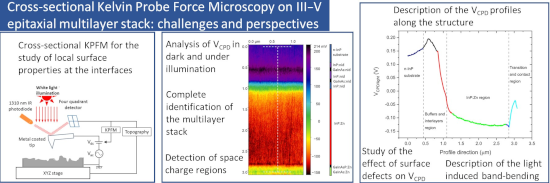
- and, thus, on the measured VCPD. All these aspects can lead to surface inhomogeneities, which result in VCPD variations compared to an otherwise constant measurement on bulk material. KPFM analysis was carried out under ambient conditions, which result in surface oxidation and in the adsorption of


Nanomaterials for photocatalysis and applications in environmental remediation and renewable energy
Beilstein J. Nanotechnol. 2023, 14, 722–724, doi:10.3762/bjnano.14.58

- , and related fields [4]. To reduce contaminants (e.g., air pollution (CO2, NOx, SO2), POPs) there are many routes (e.g., physicochemical approaches, biological fixation, advanced oxidation process, and photocatalysis [5][6][7][8]). Among the aforementioned methods, the photocatalysis route is

A graphene quantum dots–glassy carbon electrode-based electrochemical sensor for monitoring malathion
Beilstein J. Nanotechnol. 2023, 14, 701–710, doi:10.3762/bjnano.14.56
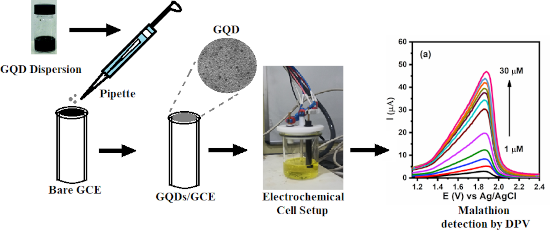
- , the sensor’s oxidation–reduction behavior was investigated. Electrochemical impedance spectroscopy was conducted to study the electrochemical properties of the modified the GQDs/GCE working electrode, which showed excellent charge transfer properties. We measured malathion in varying concentrations
- organophosphate pesticide malathion. Graphene quantum dots were synthesized hydrothermally using glucose as precursor. The glassy carbon electrode that served as working electrode in the electrochemical cell was modified with graphene quantum dots by drop casting. To evaluate the modified electrode’s oxidation
- on a SP Biologic 150 electrochemical workstation at room temperature. A solution of 0.1 M KCl containing 0.05 M K3[Fe(CN)6] was used as an electrolyte to analyze the oxidation–reduction behavior of the working electrode through cyclic voltammetry. For detection and quantification of pesticides


The microstrain-accompanied structural phase transition from h-MoO3 to α-MoO3 investigated by in situ X-ray diffraction
Beilstein J. Nanotechnol. 2023, 14, 692–700, doi:10.3762/bjnano.14.55
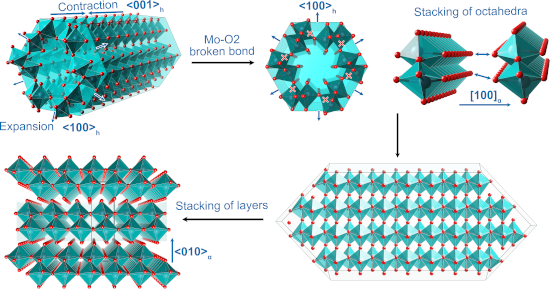
- octahedron layers in the ⟨100⟩α direction. The octahedron layers are bonded by van der Waals interactions in the ⟨010⟩α direction, crystalizing into the α-MoO3 structure. Keywords: microstrain; molybdenum oxide; phase transition; thermal expansion; Introduction Molybdenum exhibits oxidation states ranging


Humidity-dependent electrical performance of CuO nanowire networks studied by electrochemical impedance spectroscopy
Beilstein J. Nanotechnol. 2023, 14, 683–691, doi:10.3762/bjnano.14.54
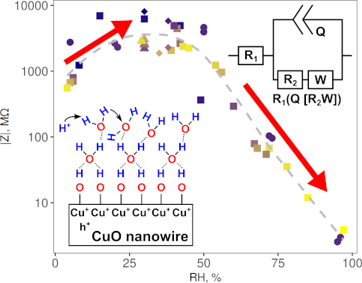
- nanowires are synthesized by thermal oxidation [9] and aligned between metallic microelectrodes by DEP [26]. Electrical properties of the nanowire-based system at various RH values are assessed by EIS [27][28]. To attempt a systematic study on the suitability of the CuO nanowire networks for different
- % purity) by thermal oxidation [9]. The substrates were heated in air from room temperature to 500 °C for 30 min and maintained at the constant temperature for 210 min inside a GSL-1100X (MTI Corporation) quartz tube furnace. Then the heater was switched off, and the oxidized substrates cooled down
- cell geometry and a parallel circuit scheme. Scanning electron microscopy: (a) CuO nanowires grown on Cu substrate by thermal oxidation; (b) system of Cr/Au microelectrodes with teeth-like shape; (c–f) pairs of microelectrodes (c, e) without and (d, f) with dielectrophoretically aligned nanowires


Metal-organic framework-based nanomaterials as opto-electrochemical sensors for the detection of antibiotics and hormones: A review
Beilstein J. Nanotechnol. 2023, 14, 631–673, doi:10.3762/bjnano.14.52
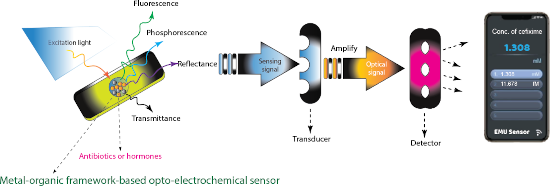
- electrode in the form of an electrical signal. The potential of the working electrode is a function of the analyte concentration in the solution. Amperometric sensors use a potential applied between a working and a reference electrode to produce the reduction or oxidation of an electroactive species and
- , which are commonly referred to as rare earth elements. All lanthanoids, with the exception of Eu2+ and Ce4+, exist in the trivalent oxidation state (Ln3+). Ln3+ has a firmly seated 4f orbital in its ground state electronic configuration ([Xe]4fn, where n = 0–14), and the electrons in this orbital are


Titania nanoparticles for photocatalytic degradation of ethanol under simulated solar light
Beilstein J. Nanotechnol. 2023, 14, 616–630, doi:10.3762/bjnano.14.51
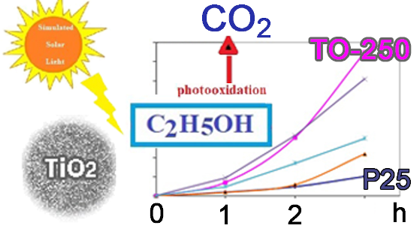
- many studies carried out in gas and liquid phases concerning the photodegradation of ethanol through TiO2-based materials, targeting both hydrogen production [25][26] and the photocatalytic oxidation of ethanol to CO2 [27][28]. Hydrogen production and depollution via ethanol photodegradation are of
- differences could promote the fabrication of new devices with higher efficiency in electron–hole separation [33]. There are a lot of methods to obtain TiO2 powder, from chemical reactions in solvents [34][35][36] to simple oxidation at high temperatures [37]. Every method has its particular yield and
- . Photocatalytic performance of the nanopowders These experiments have been conducted in environments with low oxygen concentration. Ethanol vapors play a double role here, that is, they generate hydrogen by photodehydrogenation and also undergo oxidation to carbon dioxide and water under the action of simulated




Mixed oxides with corundum-type structure obtained from recycling can seals as paint pigments: color stability
Beilstein J. Nanotechnol. 2023, 14, 467–477, doi:10.3762/bjnano.14.37
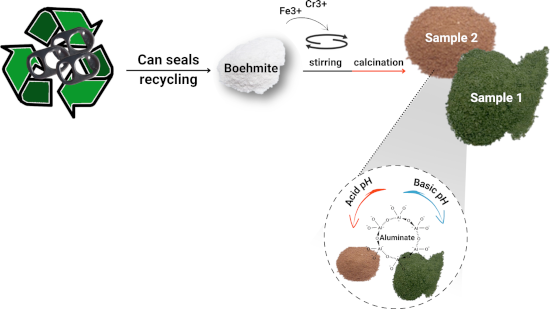
- structure. The pigments are obtained via the addition of coloring ions to boehmite from recycled metallic aluminium. X-ray diffractometry (XRD) and Raman spectroscopy confirmed the crystallographic phase. Additionally, the oxidation state 3+ responsible for the greenish (chromium) and reddish (iron
- a color change with increasing particle size from brighter yellow-green to darker blue-green [14]. Usually, chromium oxide pigments are synthesized starting from dichromats with chromium in the oxidation state +6, which are toxic [15]. However, using boehmite as a host matrix, the opportunity arises
- together with recycled boehmite. The absorbance spectra indicate the presence of 3+ ions in the samples, which are responsible for the colors. The spectra also confirm the type of structure found via XRD and the oxidation state determined from XPS. SEM images show the characteristic morphology of this type




Evaluation of electrosynthesized reduced graphene oxide–Ni/Fe/Co-based (oxy)hydroxide catalysts towards the oxygen evolution reaction
Beilstein J. Nanotechnol. 2023, 14, 420–433, doi:10.3762/bjnano.14.34
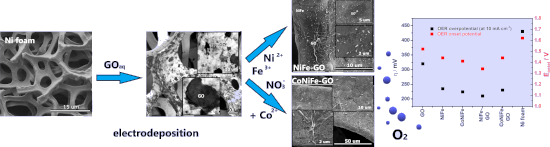
- substitutional GO (carbon) [30]. In the case of the edge of iron (Figure 3b), the XAS spectra indicate the presence of iron atoms in the oxidation state Fe3+ in each of the studied catalysts [28][29]. The iron edge peak observed at 707 eV disappeared after the addition of GO to CoNiFe, indicating a change in the
- previous work [25]. The appearance of Ni3+ was also observed after the addition of GO to NiFe. Both, GO and the addition of Co to NiFe resulted in the formation of nickel species in the oxidation states Ni2+ and Ni3+ with the same Ni2+/Ni3+ ratio of around 80%/20%. The addition of GO to CoNiFe did not
- oxidation with four different components corresponding to carbon atoms in different functional groups, that is, non-oxygenated ring C–C (284.9 eV), the C in C–O (286.6 eV) and C=O (288.5 eV) bonds, and carboxylate carbon O–C=O (290.0 eV), which agrees with the XAS analysis (Figure 3) [35]. The analysis




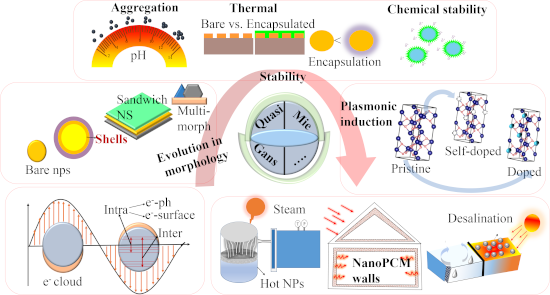
Plasmonic nanotechnology for photothermal applications – an evaluation
Beilstein J. Nanotechnol. 2023, 14, 380–419, doi:10.3762/bjnano.14.33




Bismuth-based nanostructured photocatalysts for the remediation of antibiotics and organic dyes
Beilstein J. Nanotechnol. 2023, 14, 291–321, doi:10.3762/bjnano.14.26
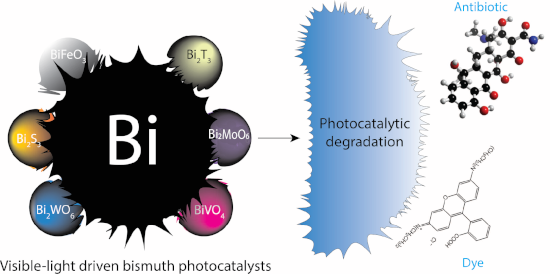
- environment worldwide, in addition to the global energy crisis, is the increasing water pollution caused by micropollutants such as antibiotics and persistent organic dyes. Nanostructured semiconductors in advanced oxidation processes using photocatalysis have recently attracted a lot of interest as a
- applications, are addressed. Keywords: advanced oxidation processes; emerging contaminants; low-dimensional nanomaterials; pharmaceutical by-products; Schottky junction; Review Introduction Worldwide, water pollution is rising, endangering the economic potential and development objectives of severely
- treat contaminated water and wastewater, including adsorption, bioremediation, precipitation, electrocoagulation, filtration, membrane separation, flocculation, centrifugation, advanced oxidation processes based on photocatalysis, and chemical coagulation [4][5][6][7][8][9][10][11]. Each of these


Recent progress in cancer cell membrane-based nanoparticles for biomedical applications
Beilstein J. Nanotechnol. 2023, 14, 262–279, doi:10.3762/bjnano.14.24
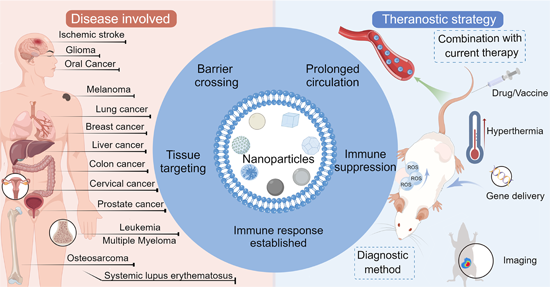
- oxidation, which leads to a decrease in heating efficiency [100]. In addition, magnetic NPs are usually recognized and cleared from the body, which prevents them from reaching their target [101]. Biomimetic cancer cell membrane technology can enhance the performance of magnetic iron oxide NPs (e.g., prevent
- oxidation, improve biocompatibility, enhance colloidal stability, and enhance targeting), enabling the ablation of tumor tissues by thermal energy [79]. MDA-MB-231 cell membrane-coated NPs loaded with superparamagnetic iron oxide nanoparticles (SPIONs) and PTX were designed for the combination treatment of


A novel approach to pulsed laser deposition of platinum catalyst on carbon particles for use in polymer electrolyte membrane fuel cells
Beilstein J. Nanotechnol. 2023, 14, 190–204, doi:10.3762/bjnano.14.19
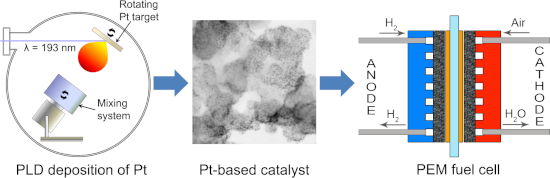
- commonly used catalyst in PEMFCs is platinum on various carbon support materials, which is used in both the anode and cathode because of its high catalytic activity toward the hydrogen oxidation reaction (HOR) and oxygen reduction reaction (ORR) [6][17][18][19][21][22][23][24][25]. Pt is also characterized
- water and acetone, and dried at 80 °C to constant weight. The black carbon product was referred to as a C-11. The research assumed the synthesis and use of a carbon material with a high degree of graphitization as carbon support, which is more resistant to the high-temperature oxidation process in a
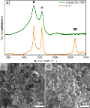
- the reference catalyst 20% Pt XC-72R, along with the analysis of the oxidation state of platinum, are shown in Figure 4. The method of analysis used, its justification, and the Pt 4f band model have been described in detail in our earlier work [41]. The analysis showed that in both materials, Pt is in



Formation of nanoflowers: Au and Ni silicide cores surrounded by SiOx branches
Beilstein J. Nanotechnol. 2023, 14, 133–140, doi:10.3762/bjnano.14.14
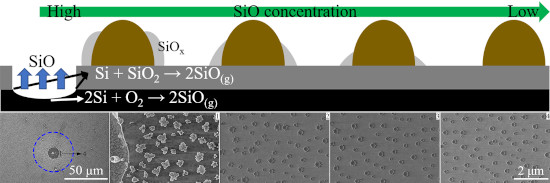
- it can be enhanced more by Au compared to Ni. SiO gas from the decomposition of SiO2 and the active oxidation of Si is the source of Si for the growth of the SiOx branches of the nanoflowers. The concentration of SiO gas around the decomposition cavities is inhomogeneously distributed. Closer to the
- also been obtained by depositing Au thin films on Si substrates with a thick silicon dioxide (SiO2) layer and subsequent rapid heating in reducing atmosphere. Here, the Si vapor source is silicon monoxide (SiO) gas produced by the decomposition of the SiO2 layer or the active oxidation of the Si
- . It has been reported after the annealing of Au thin films deposited on SiO2/Si substrates with different thicknesses of the SiO2 layer [3][4][36]. The active oxidation of Si also occurs once the Si substrate is exposed [2][3][37], which can be proved by the calculated oxygen partial pressure


Combining physical vapor deposition structuration with dealloying for the creation of a highly efficient SERS platform
Beilstein J. Nanotechnol. 2023, 14, 83–94, doi:10.3762/bjnano.14.10
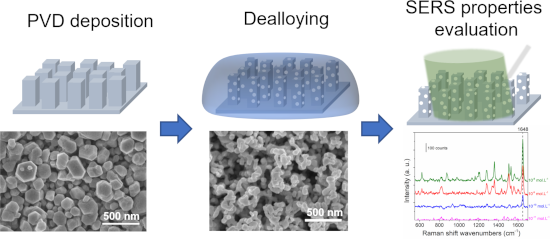
- efficiency compared to that of Au, Ag nanoparticles (NPs) are prone to oxidation. Moreover, they are less thermodynamically stable leading to morphology variation and ultimately to deterioration of their SERS efficiency [13][14]. Besides that, most studies report on the high SERS properties for NPs in
- efficient nanoporous platforms are based on gold due to their high stability towards oxidation. Therefore, heading towards simple and inexpensive approaches to reach the industrial market turns out to be a necessity. The origin of the SERS effect relies on the interaction between an intense electromagnetic
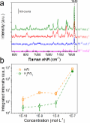
- a sample and on two samples made in the same conditions. To evaluate the surface composition and oxidation state, XPS was used. The XPS measurements were carried out on a PHI 5000 VersaProbe using a monochromatic Al Kα X-ray source (1486.6 eV). The high-resolution spectra were recorded with a pass




Two-step single-reactor synthesis of oleic acid- or undecylenic acid-stabilized magnetic nanoparticles by thermal decomposition
Beilstein J. Nanotechnol. 2023, 14, 11–22, doi:10.3762/bjnano.14.2
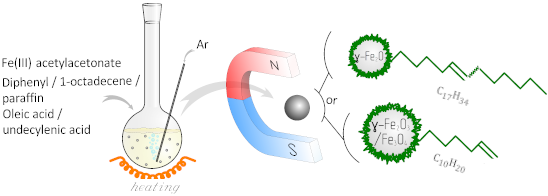
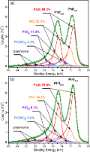
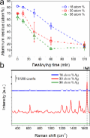
- particle mass. The result is a significantly different resistance to oxidation of the nanoparticle inorganic cores. The core of the particles synthesized using oleic acid is composed of more than 90% of maghemite. When undecylenic acid is used for the synthesis, the core is composed of 75% of magnetite
- , studying the morphology and phase composition of iron-oxide-based nanoparticles is a critical issue. Nevertheless, magnetite and maghemite particles remain the most commonly used nanoparticles in biomedical applications. However, it must be noted that magnetite nanoparticles undergo rapid oxidation in air
- , leading to maghemite layer formation on their surface. The oxidation is significantly enhanced in the case of nanoparticles characterized by a large specific surface area. Thus it can be concluded that the smaller the nanoparticles, the more important the problem of protecting the surface of the magnetite





