


Search results
Search for "patterning" in Full Text gives 191 result(s) in Beilstein Journal of Nanotechnology.
Patterning technique for gold nanoparticles on substrates using a focused electron beam
Beilstein J. Nanotechnol. 2015, 6, 1010–1015, doi:10.3762/bjnano.6.104
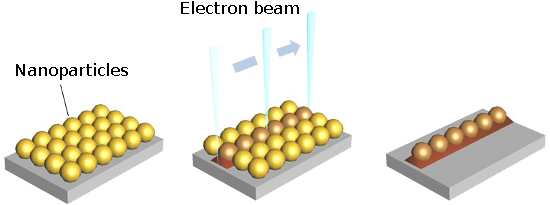
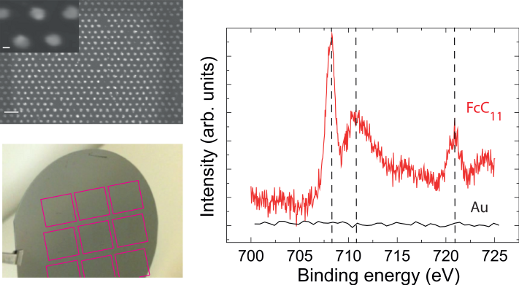
- , Midori-ku, Yokohama, 226-8502, Japan 10.3762/bjnano.6.104 Abstract We propose a novel patterning technique for gold nanoparticles on substrates that combines a chemical reaction with electron beam irradiation. First, gold nanoparticles are placed in a two-dimensional arrangement on the substrate. Then
- nanoparticle arrays of a designed shape is needed. In this paper, we propose a new patterning technique for gold nanoparticles on substrates. The nanoparticles are first placed in a two-dimensional arrangement on a substrate by chemical methods. Thereafter, the desired nanoparticles are immobilized by focused
- , while most particles were washed away outside of the irradiated area. This patterning process for nanoparticles, which combines both chemical and electron beam techniques, could contribute to the fabrication of single electron transistors [14], Fano resonance devices [15] and plasmonic waveguides, as




Fabrication of high-resolution nanostructures of complex geometry by the single-spot nanolithography method
Beilstein J. Nanotechnol. 2015, 6, 976–986, doi:10.3762/bjnano.6.101
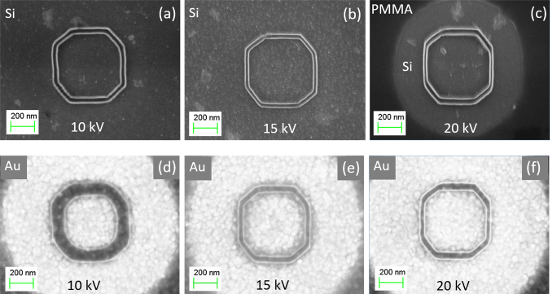
- reflection and absorption of electrons to be manipulated and can be used for precise tuning of the parameters of the pattern. Patterning of complex nanostructures of various geometries For the fabrication of polymer nanostructure patterns of complex geometry, the Si substrate was spin-coated with a PMMA A2
- method is very promising for fabrication of high-quality, artificial, spin-ice lattices [21][22], magnonic [23] and photonic [24] crystals on large scale. An important additional advantage of the proposed method is the fast patterning of a template as compared with the exposure time required for the


Electron-stimulated purification of platinum nanostructures grown via focused electron beam induced deposition
Beilstein J. Nanotechnol. 2015, 6, 907–918, doi:10.3762/bjnano.6.94
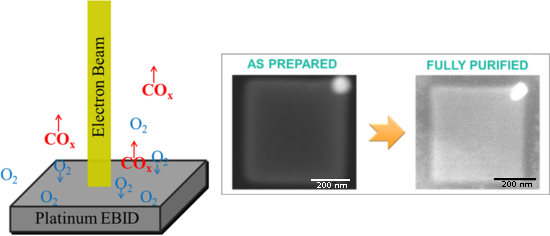
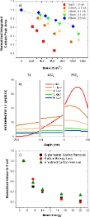
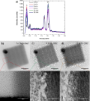
- performed using the FEI GIS and MeCpPt(IV)Me3 precursor which raised the chamber pressure to ≈1.5 × 10⁻⁵ mbar. 500 × 500 nm boxes were synthesized at this elevated pressure using the NOVA patterning software with a beam energy of 5 keV, beam current of 120 pA, point pitch of 13.55 nm, a pixel dwell time of



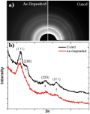

Electroburning of few-layer graphene flakes, epitaxial graphene, and turbostratic graphene discs in air and under vacuum
Beilstein J. Nanotechnol. 2015, 6, 711–719, doi:10.3762/bjnano.6.72
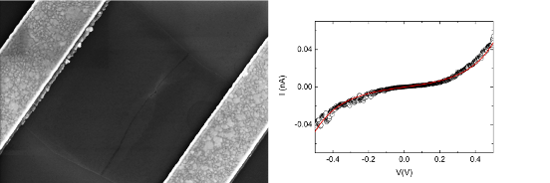
- formation than working in air. Conversely, for graphene on SiC the EB process is not successful under vacuum. Finally, the EB is possible with turbostratic graphene discs only after the creation of a constriction in the sample using lithographic patterning. Keywords: graphene; graphene based electrodes
- are deposited on the same substrate as the exfoliated graphene. Here, we found that the EB process leads to a breaking of the graphene devices only after the patterning of a constriction. This hardness with respect to exfoliated graphene suggests that the different morphology of the edges also plays a
- role to initiate the burning. Indeed, the presence of nonsaturated carbon bonds makes the edges the most reactive part of the device. Edges cleaved during the exfoliation (exfoliated graphene), edges created during the oxygen plasma (graphene on SiC and turbostratic discs after the patterning), and



Fundamental edge broadening effects during focused electron beam induced nanosynthesis
Beilstein J. Nanotechnol. 2015, 6, 462–471, doi:10.3762/bjnano.6.47
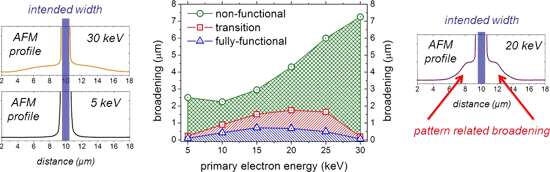
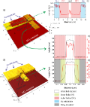
- –3)·10−6 mbar. Prior to patterning, the GIS was opened for about 2 min to establish stable precursor conditions at the surface at a chamber pressure of (1–2)·10−5 mbar. All structures have been fabricated by using stream-files that were generated through a patterning algorithm custom-written in C
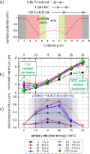
- varying the number of patterning loops. Beam currents, DTs and PoPs were based on previous studies, suggesting a widely balanced working regime without strong excess of electrons or molecules [10][44][45][47]. Preliminary experiments were performed without precursor gas by using the same patterns at the
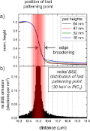
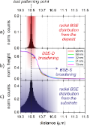
- . The dotted vertical line gives the last patterning point at the edge (intended patterning edge) revealing the final slope to be symmetrically distributed at half maximum. Previous studies by Arnold et al. [44] revealed that the achievable width of single lines is determined by BSE/SE-II contributions




Electrical properties of single CdTe nanowires
Beilstein J. Nanotechnol. 2015, 6, 444–450, doi:10.3762/bjnano.6.45
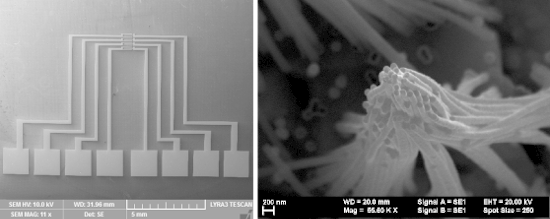
- nanowire suspension was placed on Si/SiO2 substrates on which interdigitated Ti/Au electrodes were patterned by photolithography (Figure 4). FIBIM is a direct patterning method employed for the design of metallic nanostructures. The method is based on the interaction of an ion beam with the surface


Boosting the local anodic oxidation of silicon through carbon nanofiber atomic force microscopy probes
Beilstein J. Nanotechnol. 2015, 6, 215–222, doi:10.3762/bjnano.6.20
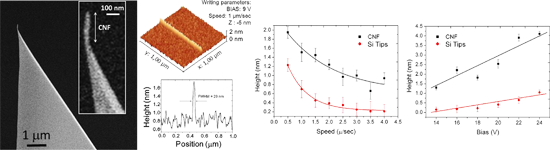
- nanofabrication methods based on scanning probe microscopy have been developed during the last decades. Local anodic oxidation (LAO) is one of such methods: Upon application of an electric field between tip and surface under ambient conditions, oxide patterning with nanometer-scale resolution can be performed
- and chemical properties, intrinsic very high aspect ratios and tiny tip radii, CNTs looked very promising for LAO-AFM application. Indeed, both single and multi-walled CNTs showed remarkable patterning capabilities [16]. However, this approach has been nearly abandoned, due to the high cost and poor
- current experiments we focus on the definition of line patterns. Prior to patterning, the AFM control feedback is disabled and the required voltage is applied. However, in order to keep a constant tip–surface distance, previously the surface inclination with respect to the X–Y piezo-scanning plane is


Bright photoluminescence from ordered arrays of SiGe nanowires grown on Si(111)
Beilstein J. Nanotechnol. 2014, 5, 2498–2504, doi:10.3762/bjnano.5.259
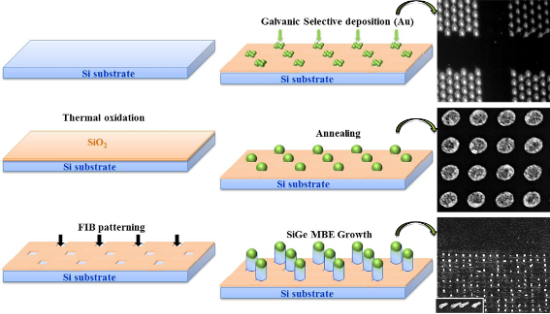
- in the substrate by focused ion beam patterning for the preferential nucleation and growth of these well-organized NWs. The NWs thus produced have a diameter of 200 nm, a length of 200 nm, and a Ge concentration x = 0.15. Their photoluminescence (PL) spectra were measured at low temperatures (from 6
- patterning; (c) galvanic selective deposition of Au; (d) induced phase transition in AuSi catalysts; and (e) selective growth of SiGe NWs. With this method we have produced Si1−xGex NWs with diameters in the range 50–200 nm, although the size can potentially be tuned between 30 and 300 nm, and with Ge
- concentration x in the range 0 ≤ x ≤ 0.15. Prior to the substrate patterning (Figure 1a), the Si(111) substrates, which were either 5 cm diameter wafers or wafer sections of dimensions 2 × 2 cm2 and 1 × 1 cm2, were first systematically cleaned by a modified Shiraki ex situ process and then capped with an ultra


Mammalian cell growth on gold nanoparticle-decorated substrates is influenced by the nanoparticle coating
Beilstein J. Nanotechnol. 2014, 5, 2479–2488, doi:10.3762/bjnano.5.257
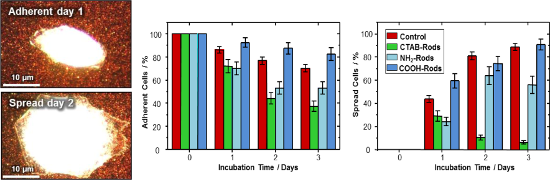
- filamentous residue remains (Figure 1D). However, this residue emerges in control samples without nanoparticle patterning as well (Supporting Information File 1, Figure S1) and corresponds to retracting filopodia [25]. Therefore, no specific anchoring of the membrane to the nanoparticles seems to be necessary
- internalization. Hence, applications involving nanoparticle patterning of implants should also consider any stabilizing agents with respect to cellular interaction. Conclusion Gold nanoparticles scatter and absorb light strongly, which makes them amenable to biomedical applications. However, unintended impact on


Si/Ge intermixing during Ge Stranski–Krastanov growth
Beilstein J. Nanotechnol. 2014, 5, 2374–2382, doi:10.3762/bjnano.5.246
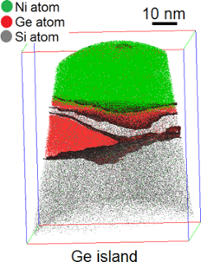
- dot assembly [1][2][3][4][5][6][7]. The focus of these investigations was devoted to understanding the shape of the islands and density variations versus stress (or strain) or substrate surface modifications (e.g., patterning, Si(Ge) buffer or surfactant variations) [6][7][8][9][10][11], using




Electrical contacts to individual SWCNTs: A review
Beilstein J. Nanotechnol. 2014, 5, 2202–2215, doi:10.3762/bjnano.5.229
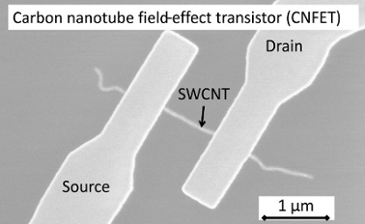
- processes which could be used as a scale-up process for patterning metal–nanotube contacts. For instance, Vazquez-Mena et al. [72] developed a stencil lithography process to fabricate metallic nanowires at the wafer level. Nanoslits with a width down to 70 nm were defined on a wafer level membrane made of


Biopolymer colloids for controlling and templating inorganic synthesis
Beilstein J. Nanotechnol. 2014, 5, 2129–2138, doi:10.3762/bjnano.5.222
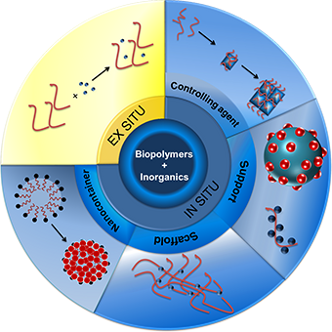
- nanoparticles [7]. In a different approach, biopolymers can also be applied to modify surfaces and induce the deposition of nanoparticles. For instance, Nochomovitz et al. [8] described the deposition and patterning of gold colloidal nanoparticles and carbon nanotubes on surfaces previously modified with


Properties of plasmonic arrays produced by pulsed-laser nanostructuring of thin Au films
Beilstein J. Nanotechnol. 2014, 5, 2102–2112, doi:10.3762/bjnano.5.219
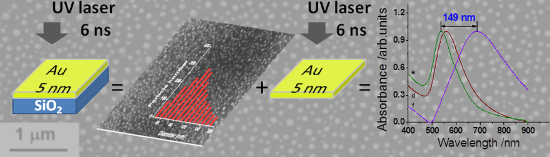
- the plasmon resonance peak resulting from repeated film deposition and laser annealing observed for the first time is reported. Results and Discussion Nanoparticle structures The photothermally stimulated patterning path from a thin metal film to a nanostructured array of particles is initiated by
- to the synthesis problem of sensor materials based on the SPR effect. This has been confirmed by using the patterning effect induced by a single laser pulse at 532 nm and intensities up to 1000 mJ/cm2 in a thin Au film deposited onto an ITO substrate [12]. The Au nanoclusters (20–40 nm) produced in
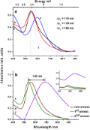


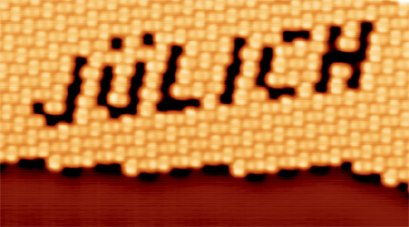
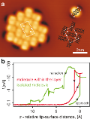
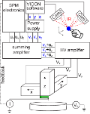
Patterning a hydrogen-bonded molecular monolayer with a hand-controlled scanning probe microscope
Beilstein J. Nanotechnol. 2014, 5, 1926–1932, doi:10.3762/bjnano.5.203


High speed e-beam lithography for gold nanoarray fabrication and use in nanotechnology
Beilstein J. Nanotechnol. 2014, 5, 1918–1925, doi:10.3762/bjnano.5.202
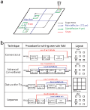
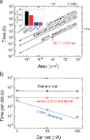
- actual limitation of the proposed high-speed writing technique is the resist exposure time. Recently, direct patterning of high density sub-15 nm gold dot array using ultrahigh contrast electron beam lithography process on positive tone resist has been demonstrated [21]. Combination of high contrast


The influence of molecular mobility on the properties of networks of gold nanoparticles and organic ligands
Beilstein J. Nanotechnol. 2014, 5, 1664–1674, doi:10.3762/bjnano.5.177
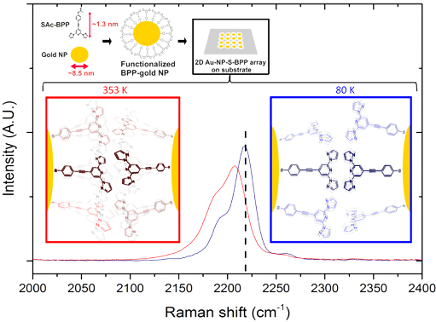
- patterning Ti(3 nm)/Au(47 nm)-electrodes of 20 μm width, separated by a gap of around 100 nm (about 10 nanoparticles), are created on Si/SiO2 substrates. We transfer the nanoparticle array onto these electrodes via a PDMS stamp. Samples containing 2D single-layer Au-NP–S-BPP arrays typically exhibited very

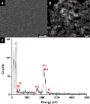

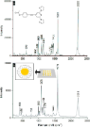


Near-field photochemical and radiation-induced chemical fabrication of nanopatterns of a self-assembled silane monolayer
Beilstein J. Nanotechnol. 2014, 5, 1441–1449, doi:10.3762/bjnano.5.156
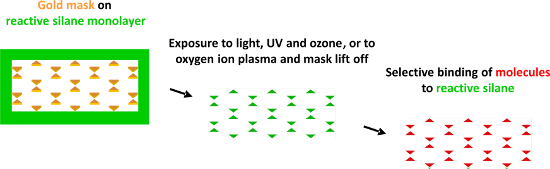
- . Patterning by oxygen plasma led to a chemically functional SAM nanopattern of limited resolution of the order of 200 nm. Only the combined UV near-field photochemical and ozone-induced chemical process led to functional nanopatterns of a chemically reactive SAM which could be used for the selective


Review of nanostructured devices for thermoelectric applications
Beilstein J. Nanotechnol. 2014, 5, 1268–1284, doi:10.3762/bjnano.5.141
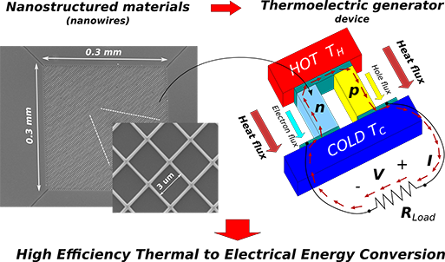
- obtained by using metal masks with suitable patterning. However, if the generation of holes through the reducing reaction (Equation 13) is faster than the silicon oxidation/etching reaction, holes generated at the silicon–metal interface can diffuse toward confining, metal-free, regions [127]. Thus


Topology assisted self-organization of colloidal nanoparticles: application to 2D large-scale nanomastering
Beilstein J. Nanotechnol. 2014, 5, 1203–1209, doi:10.3762/bjnano.5.132
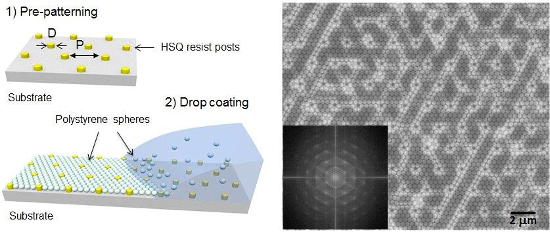
- analysis were used to characterize the morphology of the ordered surfaces. Finally, the production of silicon molds is demonstrated by using the beads as a template for dry etching. Keywords: assisted self-organization; dislocations; patterning; polystyrene beads; single crystal; Introduction The
- development of nanoscience and nanotechnology has led to a continuous miniaturization of microelectronic components. 193 nm optical-mask lithography is the driving force behind this evolution [1]. Techniques such as double patterning lithography [2], extreme UV (EUV) or electron beam have been developed or
- patterns. By using patterned silicon substrates, we were able to minimize the presence of these dislocations resulting in the formation of single crystal structures of PS beads on the entire pre-patterned area, which is scalable depending on the technique used for pre-patterning. Results and Discussion


Nanoforging – Innovation in three-dimensional processing and shaping of nanoscaled structures
Beilstein J. Nanotechnol. 2014, 5, 1066–1070, doi:10.3762/bjnano.5.118
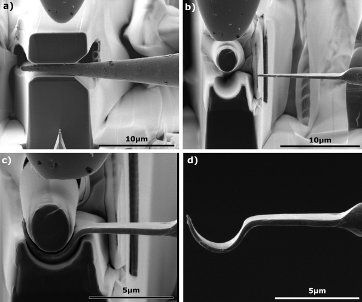
- submicron- and nanoscale do not seem to be feasible. For electromechanical and optical application numerous patterning techniques were developed. Only a few are applicable for patterning metals. An example is imprinting. This techniques uses a macroscopic stamp with structures in the micro- and nano-range
- . By pressing it into a substrate the structure of the stamp is replicated as imprint. Polymers [5], but also metallic glasses [6], are used as substrate material for this surface patterning process. It is less applicable for three-dimensional forming of individual objects than for structuring of large
- and plain surfaces. Another example is electrodeposition [7]. This technique enables three dimensional patterning in the nano-range by deposition of metals electrochemically. Like imprinting, electrodeposition is less suitable for direct and individual shaping of freestanding structures. Recently


DNA origami deposition on native and passivated molybdenum disulfide substrates
Beilstein J. Nanotechnol. 2014, 5, 501–506, doi:10.3762/bjnano.5.58
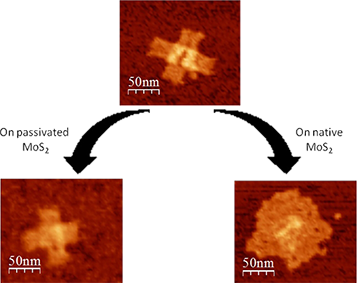
- proteins [5][6], and act as templates for the organization of carbon nanotubes [6][7][8][9]. This bottom-up process offers a tremendous advantage over photolithography, because is enables the patterning of surfaces with feature sizes less than 20 nm [10]. However, some materials may interfere with the base
- pairing responsible for origami structure formation and maintenance and are therefore unsuitable substrates for DNA origami deposition and patterning. For example, the folded structures are lost when they are deposited onto a graphene surface, because of π–π stacking between the single-stranded DNA and
- atomically smooth to enable optimal patterning and imaging through atomic force microscopy (AFM) because the origami structures are very thin and conformal. A final substrate property that needs to be considered for maximal utility is that the material should possess conductive or semiconductive electronic


Effect of contaminations and surface preparation on the work function of single layer MoS2
Beilstein J. Nanotechnol. 2014, 5, 291–297, doi:10.3762/bjnano.5.32
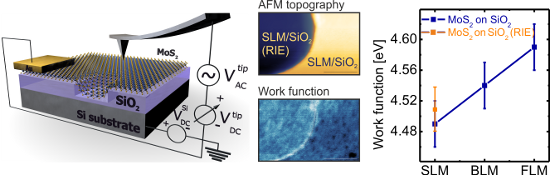
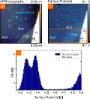
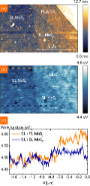
- can be observed on the MoS2 flake. We attribute these features, marked in Figure 3a with green circles, to contaminations due to the patterning process. The height of these contaminations varies between 1 nm and 20 nm. These contaminations have a noticeable effect on the work function of SLM, as ΦSLM



Nanoscale patterning of a self-assembled monolayer by modification of the molecule–substrate bond
Beilstein J. Nanotechnol. 2014, 5, 258–267, doi:10.3762/bjnano.5.28
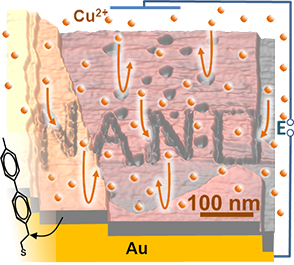
- self-assembled monolayer (SAM) and a Au(111)/mica substrate by underpotential deposition (UPD) is studied as a means of high resolution patterning. A SAM of 2-(4'-methylbiphenyl-4-yl)ethanethiol (BP2) prepared in a structural phase that renders the Au substrate completely passive against Cu-UPD, is
- patterned by modification with the tip of a scanning tunneling microscope. The tip-induced defects act as nucleation sites for Cu-UPD. The lateral diffusion of the metal at the SAM–substrate interface and, thus, the pattern dimensions are controlled by the deposition time. Patterning down to the sub-20 nm
- bilayer of metal, which is intercalated at the SAM–substrate interface [20][21][22][23][24]. The interest in this process arises from the alteration in the strength of the S–substrate bond. Following the order Au < Ag < Cu [25] patterning is enabled by a localised UPD of Cu or Ag on Au and the subsequent


Fabrication of carbon nanomembranes by helium ion beam lithography
Beilstein J. Nanotechnol. 2014, 5, 188–194, doi:10.3762/bjnano.5.20
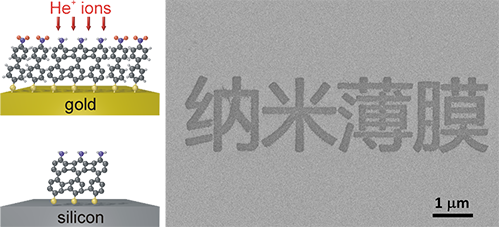
- formed is still missing. Further modification and patterning of SAMs have been achieved by using ion irradiation (e.g. Ar+, Ga+, Si+, etc.), which leads to the desorption and the fragmentation of molecules [14][15]. High energy helium ions passing through polymer films modify the macroscopic properties


Surface assembly and nanofabrication of 1,1,1-tris(mercaptomethyl)heptadecane on Au(111) studied with time-lapse atomic force microscopy
Beilstein J. Nanotechnol. 2014, 5, 26–35, doi:10.3762/bjnano.5.3
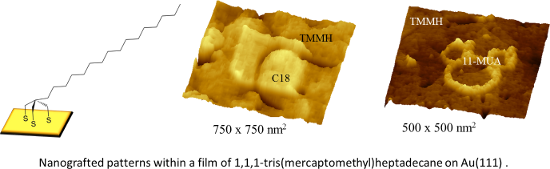
- junction, and tailgroups of tunable chemical composition [3][4][5][6]. The nature of the headgroup, junctions, hydrocarbon backbone, and tailgroups of SAMs enable designs of complex architectures for applications and surface patterning [7][8][9]. The stability of organosulfur-based adsorbates on noble
- metal surfaces is a consideration for applications of SAMs, which impacts the reliability and durability of the related products [10][11][12][13][14][15][16][17]. To realize the full potential of patterning surfaces for manufacturing processes, challenges need to be addressed for designing robust





