Search results
Search for "reflectance" in Full Text gives 228 result(s) in Beilstein Journal of Nanotechnology. Showing first 200.
Cathodoluminescence as a probe of the optical properties of resonant apertures in a metallic film
Beilstein J. Nanotechnol. 2018, 9, 1491–1500, doi:10.3762/bjnano.9.140
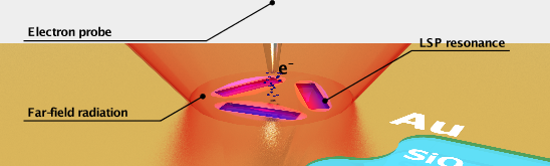
- optical investigations of isolated holes are, however, challenging since the throughput and reflectance are low despite the enhanced localized fields. Furthermore, plasmonic cavities exhibit a wide range of modes, many of which are “dark” to normally incident plane waves and challenging to excite using


Cr(VI) remediation from aqueous environment through modified-TiO2-mediated photocatalytic reduction
Beilstein J. Nanotechnol. 2018, 9, 1448–1470, doi:10.3762/bjnano.9.137
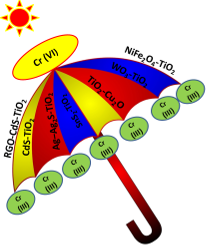
- studies. Optical studies such as ultraviolet–visible diffuse reflectance spectroscopy (UV–vis DRS) and photoluminescence spectroscopy (PL) explain the shift of the absorption range to the visible region and prohibition of recombination of charge carriers, respectively. The doping of nonmetals such as N, S


Tailoring polarization and magnetization of absorbing terahertz metamaterials using a cut-wire sandwich structure
Beilstein J. Nanotechnol. 2018, 9, 1437–1447, doi:10.3762/bjnano.9.136
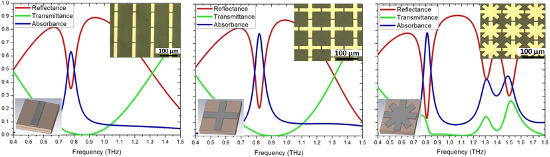
- Discussion The absorbance (A(ω)) of the material was calculated from the reflectance (R(ω)) and transmittance (T(ω)) by using the following equation: A(ω) = 1 − R(ω) − T(ω). Smith et al. [36] defined transmittance and reflectance as and Where t(ω), r(ω), n, k0, d and z are the transmissivity, reflectivity
- , refractive index, wave number in free space, substrate thickness and impedance, respectively. In the matching air impedance condition (i.e., z = 1 + i0), the reflectance would be zero and Equation 1 is expressed as where nr and ni are the real and imaginary parts of the refractive index, respectively
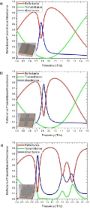
- × 1015 s−1. ω, ωp,Au and ΓAu are the angular frequency, angular plasma frequency of gold, and damping constant of gold, respectively. Figure 3 presents the reflectance–transmittance–absorbance (RTA) simulation result of cut-wire (Figure 3a), cross-shaped (Figure 3b) and star-shaped sandwich structures






Colorimetric detection of Cu2+ based on the formation of peptide–copper complexes on silver nanoparticle surfaces
Beilstein J. Nanotechnol. 2018, 9, 1414–1422, doi:10.3762/bjnano.9.134
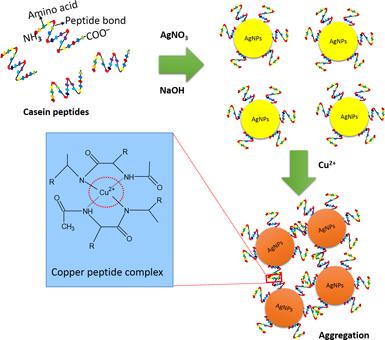
- Scientific Nicolet iS5 FTIR spectrometer equipped with a attenuated total reflectance tool, in the 1000–4000 cm−1 wavelength range at 0.48 cm−1 resolution. Selectivity To assess the selectivity of the proposed method, coordination of the functionalized AgNPs was tested with various ions, including Cu2+, Mn2


Ag2WO4 nanorods decorated with AgI nanoparticles: Novel and efficient visible-light-driven photocatalysts for the degradation of water pollutants
Beilstein J. Nanotechnol. 2018, 9, 1308–1316, doi:10.3762/bjnano.9.123
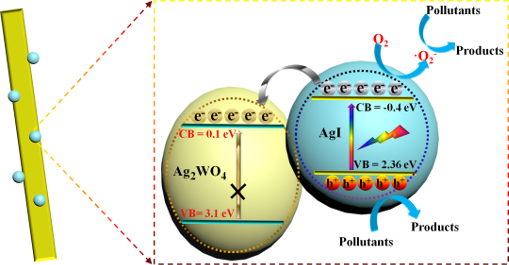
- the formation of the AgI/Ag2WO4 heterojunctions, thereby facilitating the charge transfer between them [12]. Subsequently, the optical properties of as-prepared photocatalysts were investigated by UV–vis diffuse reflectance spectroscopy (DRS) analysis (Figure 4). As indicated from Figure 4, pure
- scanning electron microscope (FE-SEM, Hitachi S–4800) and a high-resolution transmission electron microscope (HRTEM, JEOL JEM–2010F). Energy-dispersive X-ray (EDX) spectroscopy coupled with SEM was employed to identify the chemical composition of the sample. UV–vis diffuse reflectance spectra (UV–vis DRS
- 0.4AgI/Ag2WO4. SEM (a, b) images of Ag2WO4; SEM (c, d), TEM (e), and HRTEM (f) images of 0.3AgI/Ag2WO4. Energy-dispersive X-ray (EDX) spectrum of 0.3AgI/Ag2WO4. UV–vis diffuse reflectance spectra of Ag2WO4, AgI, 0.1AgI/Ag2WO4, 0.2AgI/Ag2WO4, 0.3AgI/Ag2WO4, and 0.4AgI/Ag2WO4. (a) The photocatalytic




Semi-automatic spray pyrolysis deposition of thin, transparent, titania films as blocking layers for dye-sensitized and perovskite solar cells
Beilstein J. Nanotechnol. 2018, 9, 1135–1145, doi:10.3762/bjnano.9.105
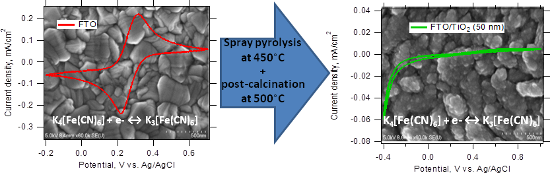
- microscopy (SEM) (Hitachi FE SEM S-4800 microscope), and UV–vis spectroscopy (Varian CARY 100 with integrating sphere DRA-CA-30I and 8° reflectance geometry, Varian, USA). X-ray fluorescence spectroscopy (XRF) analysis was performed on an ARL 9400 XP sequential WD-XRF spectrometer (Thermo ARL, Switzerland


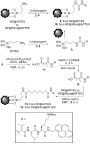
Enzymatically promoted release of organic molecules linked to magnetic nanoparticles
Beilstein J. Nanotechnol. 2018, 9, 986–999, doi:10.3762/bjnano.9.92
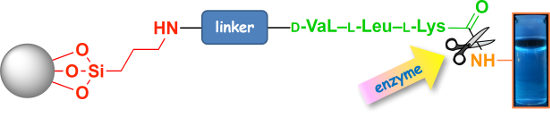
- reflectance (ATR) sampling accessory. The morphology of the particles was analysed using a field emission scanning electron microscope (FE-SEM, ZEISS SUPRA 40VP), collecting the signal (secondary electrons) by means of an in-lens detector; the particle microanalyses were performed with an energy dispersive X




Facile chemical routes to mesoporous silver substrates for SERS analysis
Beilstein J. Nanotechnol. 2018, 9, 880–889, doi:10.3762/bjnano.9.82
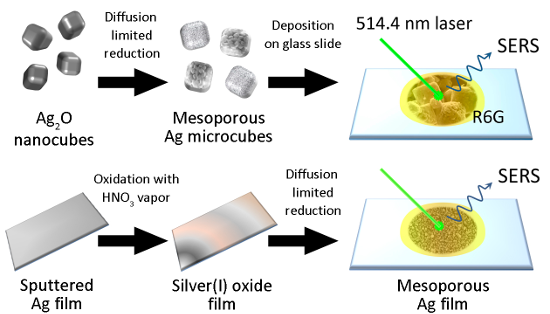
- Perkin Elmer Lambda 950 UV/Vis/NIR spectrophotometer in total reflectance regime. The samples were placed onto the reflectance port of a Spectralon-coated integrating sphere (d = 150 mm). The specular and diffusive reflectance signals were detected in the 300–1200 nm range (1 nm step) and replotted in
- of mesoporous silver films after immersion for 40 min in NaBH4 (a) without PVP and (b) with 5 mM of PVP, respectively. In (c) and (d) the micrographs of initial magnetron silver film and Ag2O films are presented. Optical absorbance spectra replotted from total reflectance data collected by an


Noble metal-modified titania with visible-light activity for the decomposition of microorganisms
Beilstein J. Nanotechnol. 2018, 9, 829–841, doi:10.3762/bjnano.9.77
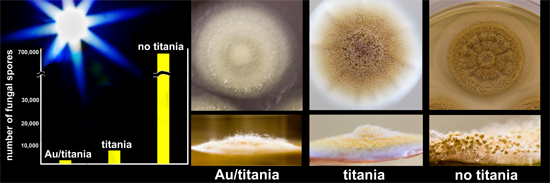
- were modified with silver and gold by photodeposition, and characterized by diffuse reflectance spectroscopy (DRS), X-ray powder diffraction (XRD), X-ray photoelectron spectroscopy (XPS) and scanning transmission electron microscopy (STEM). It was found that silver co-existed in zero valent (core) and
- silver-modified samples were brown-violet. Exemplary diffuse reflectance spectra (DRS) are shown in Figure 4. It should be pointed out that LSPR of silver could overlap with photoabsorption of titania, and thus to obtain clear LSPR peak of silver, DRS taken with bare titania as reference is recommended


Perovskite-structured CaTiO3 coupled with g-C3N4 as a heterojunction photocatalyst for organic pollutant degradation
Beilstein J. Nanotechnol. 2018, 9, 671–685, doi:10.3762/bjnano.9.62
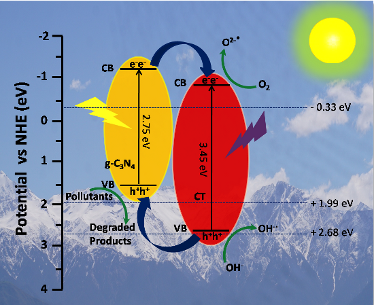
- disk was measured by diffuse reflectance spectroscopy (DRS). DRS studies were performed on a Perkin Elmer UV–visible–NIR Lambda 750 spectrophotometer by utilizing polytetrafluoroethylene (PTFE) polymer as a diffuse reflectance standard in the wavelength range 200–800 nm. Photoluminescence (PL
- ) CTCN heterojunctions. TEM images of (a, b) g-C3N4 nanosheets, (c, d) CT flakes and (e, f) CTCN heterojunction. (a) UV–visible diffuse reflectance spectroscopy (DRS) spectra for g-C3N4, CT and CTCN heterojunction; Plot of transformed Kubelka–Munk function vs energy for (b) g-C3N4, (c) CT and (d) CTCN


Optimisation of purification techniques for the preparation of large-volume aqueous solar nanoparticle inks for organic photovoltaics
Beilstein J. Nanotechnol. 2018, 9, 649–659, doi:10.3762/bjnano.9.60
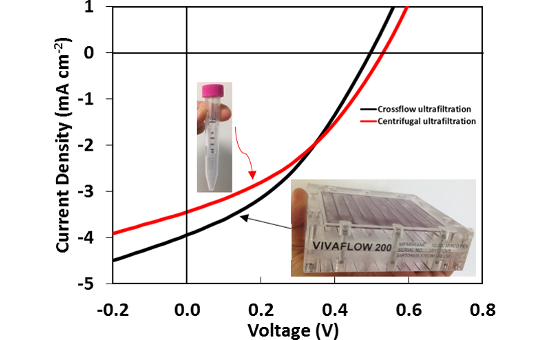
- changing wetting properties for each DF required the spin coating procedure for each device type to be optimized in order to achieve similar layer thicknesses of 105 ± 5 nm. The uniformity of active layer thicknesses was investigated by measuring the reflectance of the prepared devices (seen in Supporting
- Information File 1, Figure S6). The reflectance measurements illustrate uniform absorption across devices with very different current densities, meaning that the JSC trends are clearly not a function of reduced absorption. The real challenge in the OPV community is the upscaling of devices from small area lab
- (KLA-Tencor Alpha-step 500 surface profilometer) over a scratch on annealed (140 °C for 4 min) spin coated samples on a glass substrate. The spin coating recipe was adjusted for each sample to obtain the desired thickness. Reflectance of the prepared devices was measured on a Varian Cary 6000i with an


Fabrication and photoactivity of ionic liquid–TiO2 structures for efficient visible-light-induced photocatalytic decomposition of organic pollutants in aqueous phase
Beilstein J. Nanotechnol. 2018, 9, 580–590, doi:10.3762/bjnano.9.54
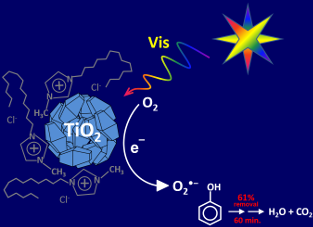
- photoelectron spectroscopy (XPS), diffuse reflectance spectroscopy (DRS), scanning transmission microscopy (STEM) and the Brunauer–Emmett–Teller (BET) surface area method, whereas the photocatalytic activity was evaluated by the degradation of phenol in aqueous solution under visible light irradiation (λ > 420
- further growth and agglomeration. For the TiO2_O(1:3) sample, the dominant fraction were microspheres with diameter ranging from 2–3 μm (38%), whereas for TiO2_T(1:3), the main fraction was particles with an average diameter of 3–5 μm (42%). Diffuse reflectance spectroscopy, UV–vis spectroscopy and BET
- size of 0.1 eV. CasaXPS software was used to evaluate the XPS data. The binding energy (BE) scale of all detected spectra was referenced by setting the BE of the aliphatic carbon peak (C–C) signal to 284.8 eV. The UV–vis reflectance and absorbance spectra of TiO2 photocatalysts were recorded using a




Influence of the preparation method on the photocatalytic activity of Nd-modified TiO2
Beilstein J. Nanotechnol. 2018, 9, 447–459, doi:10.3762/bjnano.9.43
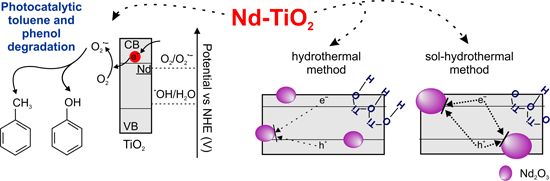
- (SHT) methods. The as-prepared samples were characterized by X-ray diffraction (XRD), BET surface area measurements, scanning electron microscopy (SEM), diffuse reflectance spectroscopy (DRS), luminescence spectroscopy and X-ray photoelectron spectroscopy (XPS). The photocatalytic activity of the
- that for photocatalysts obtained by the SHT method the agglomerates are a bit smaller. Optical and photoluminescence properties To study the optical absorption properties of the as-prepared photocatalysts, diffuse reflectance spectra (DRS) in the range of 200–850 nm were investigated, and the results
- samples were degassed at 200 °C prior to nitrogen adsorption measurements. The morphology of obtained Nd-TiO2 was determined using scanning electron microscopy (SEM, FEI Quanta 250 FEG). UV–vis diffuse reflectance spectra of the synthesized materials were recorded in the range of 200–850 nm with a




Facile synthesis of ZnFe2O4 photocatalysts for decolourization of organic dyes under solar irradiation
Beilstein J. Nanotechnol. 2018, 9, 436–446, doi:10.3762/bjnano.9.42
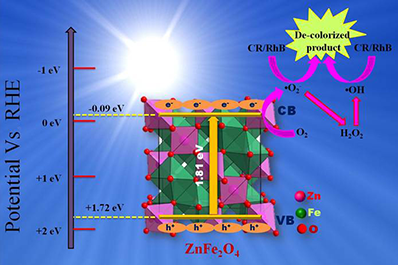
- characterization The phase composition, crystal structure and crystallinity were examined by a Rigaku Miniflex XRD instrument using Cu Kα radiation (λ = 1.54056 Å). The UV–vis diffused reflectance spectra were analysed by a UV–vis spectrophotometer (JASCO 750) using BaSO4 as the reflectance reference. The
- analysis UV–vis diffuse reflectance spectra (DRS) were measured to determine the optical absorption properties of the ZFO samples. The samples show a wide absorption range from 200 to 700 nm as depicted in Figure 4a, and among them ZFO-500 shows the highest absorption. With increasing calcination
- samples with different calcination temperatures. (a) FESEM image and (b) enlarged view of ZFO-500. (a) TEM image and (b) magnified TEM image of ZFO-500. (a) Diffuse reflectance spectra of ZFO samples with different calcinantion temperatures with ZFO-500 showing the highest absorbance; (b) Tauc plot of ZFO


Sugarcane juice derived carbon dot–graphitic carbon nitride composites for bisphenol A degradation under sunlight irradiation
Beilstein J. Nanotechnol. 2018, 9, 353–363, doi:10.3762/bjnano.9.35
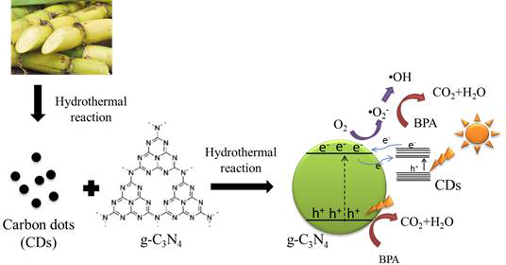
- diffuse reflectance spectra (UV–vis DRS) results. Although the CDs did not display upconversion photoluminescence (UCPL) properties, the π-conjugated CDs served as a photosensitizer (like organic dyes) to sensitize g-C3N4 and injected electrons to the conduction band (CB) of g-C3N4, resulting in the


BN/Ag hybrid nanomaterials with petal-like surfaces as catalysts and antibacterial agents
Beilstein J. Nanotechnol. 2018, 9, 250–261, doi:10.3762/bjnano.9.27
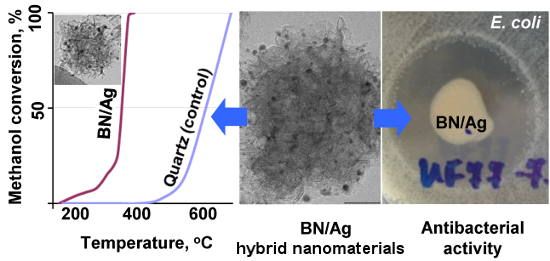
- detector (JEOL). FTIR spectroscopic measurements of BN/Ag HNMs were carried out in the attenuated total reflectance (ATR) mode using a Vertex 70v vacuum spectrometer (Bruker) in the range of 400–4000 cm−1 with a resolution of 4 cm−1. The chemical composition of the sample surfaces was characterized by X





Al2O3/TiO2 inverse opals from electrosprayed self-assembled templates
Beilstein J. Nanotechnol. 2018, 9, 216–223, doi:10.3762/bjnano.9.23
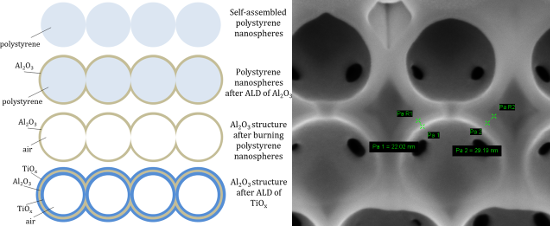
- , the reflectance of the fabricated samples has been measured over an area of 36 mm2 using a Fourier transform infrared (FTIR) spectrometer with an integrating sphere. We have conducted characterization measurements on the three steps of our process: (A) after step 1 in Figure 1a, (B) after step 3 in
- Figure 1c and (C) after step 4 in Figure 1d. The reflectance values as a function of the wavelength are shown in Figure 5. Looking to the plot corresponding to the measurement for step (A) related to the “polystyrene opal”, a broad peak of 81% reflectance located around 940 nm can be seen. The value of
- consistent with our measurements, and similar results are found elsewhere [37]. A secondary gap is also found centered at 470 nm wavelength. The measurements performed for step (B) that corresponds to the Al2O3 inverse opal are shown in Figure 5. A 72% reflectance peak centered at 686 nm and a secondary peak


Study of the vertically aligned in-plane switching liquid crystal mode in microscale periodic electric fields
Beilstein J. Nanotechnol. 2018, 9, 11–19, doi:10.3762/bjnano.9.2
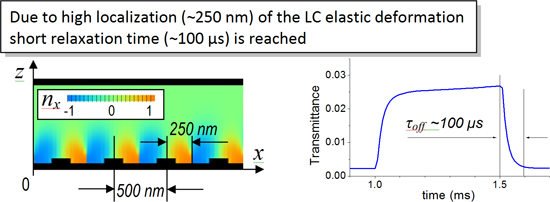
- data in Figure 3, the transmittance achieves a level of 0.18, which is quite good regarding the absorbance of the microscope polarizers (ca. 65% of the incident non-polarized light) and reflectance of the chromium electrodes. While searching a fast and light efficient LC cell design, we have also






Facile synthesis of silver/silver thiocyanate (Ag@AgSCN) plasmonic nanostructures with enhanced photocatalytic performance
Beilstein J. Nanotechnol. 2017, 8, 2781–2789, doi:10.3762/bjnano.8.277
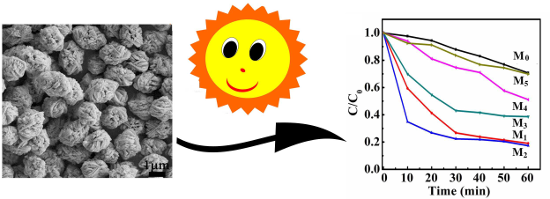
- irradiated for 3 h, indicating the slow reduction of AgSCN under UV irradiation. UV–vis diffuse reflectance spectra of M0, M1, M2, M3, M4, and M5 are shown in Figure 2a. Here, the characteristic absorption of AgSCN appears at 200–350 nm and that from the surface plasmon resonance of Ag particles is above 350
- ) diffuse reflectance spectra (DRS) were recorded on an Agilent Cary 100 UV–vis spectrophotometer coupled to an integrating sphere with BaSO4 as reference. X-ray photoelectron spectra (XPS) were recorded on a Perkin-Elmer PHI-5300 ESCA spectrometer with a pass energy of 35.75 eV and an Al Kα line excitation
- -Elmer Lambda-35 UV–vis spectrometer. (a) XRD patterns of Ag@AgSCN nanostructures with different molar ratios of Ag to AgSCN. An (b) SEM image and (c) SAED pattern of the Ag@AgSCN nanostructure (sample M2). (a) UV–vis diffuse reflectance spectra of M0, M1, M2, M3, M4, M5. (b) Kubelka–Munk plots of M0 and


CdSe nanorod/TiO2 nanoparticle heterojunctions with enhanced solar- and visible-light photocatalytic activity
Beilstein J. Nanotechnol. 2017, 8, 2741–2752, doi:10.3762/bjnano.8.273
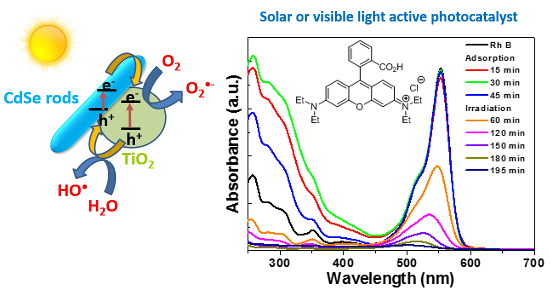
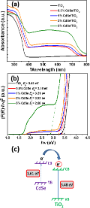
- UV–visible spectrophotometer. Diffuse reflectance spectra (DRS) were recorded on a Shimadzu 2600 UV−visible spectrophotometer. BaSO4 powder was used as a standard for baseline measurements and spectra were recorded in a range of 250–1400 nm. Raman spectra were recorded using an Xplora spectrometer






Enhanced photoelectrochemical water splitting performance using morphology-controlled BiVO4 with W doping
Beilstein J. Nanotechnol. 2017, 8, 2640–2647, doi:10.3762/bjnano.8.264
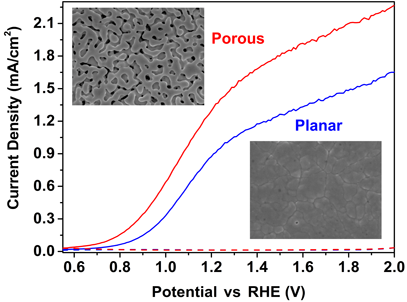
- nanostructured W-doped BiVO4 in comparison with the planar structure, two representative samples with planar and nanoporous structure, 0-water and 1-EG, were selected. Figure 4 shows the light absorption efficiency of the samples 0-water and 1-EG by measuring the light transmittance and reflectance [12]. The
- °. Elemental analysis was conducted by energy-dispersive X-ray spectroscopy (EDX) equipped on a field-emission scanning electron microscopy (FESEM, JEOL JSM-7600F). Light absorption was measured using a UV–visible spectrophotometer by measuring the reflectance and transmittance with an integrating sphere


Optical contrast and refractive index of natural van der Waals heterostructure nanosheets of franckeite
Beilstein J. Nanotechnol. 2017, 8, 2357–2362, doi:10.3762/bjnano.8.235
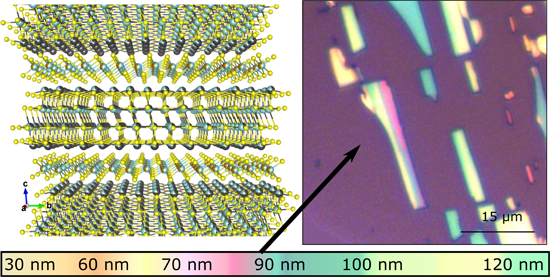
- -illumination-mode optical microscopy images provides a rapid method to estimate the thickness of the exfoliated flakes at first glance. A quantitative analysis of the optical contrast spectra by means of micro-reflectance allows one to determine the refractive index of franckeite over a broad range of the
- values because they are the most common SiO2 thicknesses in the research of graphene and other 2D materials. Prior to the study of the optical properties of the franckeite nanosheets, we experimentally verify the thickness of the SiO2 capping layers of each employed substrate by means of reflectance
- determination. We use micro-reflectance spectroscopy to quantitatively characterize the optical contrast of franckeite flakes of different thicknesses transferred to SiO2/Si substrates [25][26]. The sample is illuminated in epi-illumination mode with the white light coming from the tungsten halogen lamp of a


Hydrothermal synthesis of ZnO quantum dot/KNb3O8 nanosheet photocatalysts for reducing carbon dioxide to methanol
Beilstein J. Nanotechnol. 2017, 8, 2264–2270, doi:10.3762/bjnano.8.226
- images were obtained with a Tecnai G2 F20 instrument. The UV–vis diffuse reflectance spectra were captured by a Shimadzu UV–2550 UV–vis spectrophotometer using BaSO4 as a reference in the wavelength region of 200–800 nm. Photoluminescence (PL) spectra were measured at room temperature on a Renishaw 1000
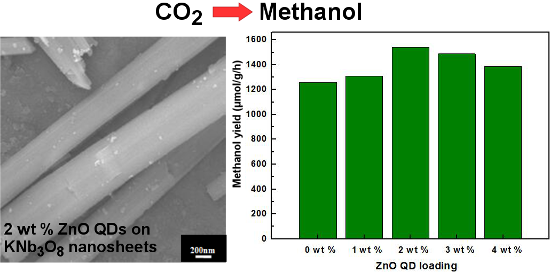
- reflectance spectra for different amounts of ZnO quantum dots loaded onto KNb3O8 nanosheets are illustrated in Figure 7. The steep absorption edge of the pure KNb3O8 nanosheets occurred around 343 nm under UV light owing to its large intrinsic band gap. When increasing the ZnO quantum dot loading, the sample
- % ZnO quantum dot/KNb3O8 nanosheet composite photocatalyst. (a) UV–vis diffuse reflectance spectra of the ZnO quantum dot/KNb3O8 nanosheet composite photocatalysts; (b) (αhv)1/2 versus the photon energy of the ZnO quantum dot/KNb3O8 nanosheet composite photocatalysts. Yield of methanol using KNb3O8




Bi-layer sandwich film for antibacterial catheters
Beilstein J. Nanotechnol. 2017, 8, 1982–2001, doi:10.3762/bjnano.8.199
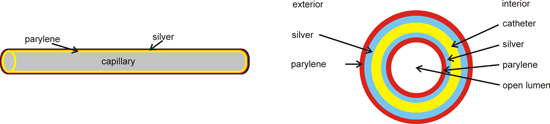
- deposited layer (1,500 μm vs 0.3 μm), this method is hardly applicable. But recording the broad-band reflectance of the capillary will lead to success. We applied the spectrometer F20e from Filmetrics (Unterhaching, Germany) using a light spot with a diameter d of 30 μm. For a radius r of the capillary of


Growth and characterization of textured well-faceted ZnO on planar Si(100), planar Si(111), and textured Si(100) substrates for solar cell applications
Beilstein J. Nanotechnol. 2017, 8, 1939–1945, doi:10.3762/bjnano.8.194
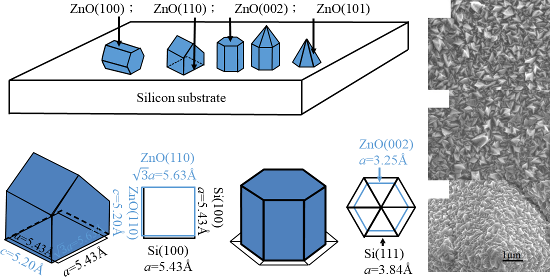
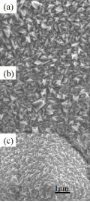
- , and CL as well. The reflectance spectra of these three samples show that the antireflection function provided by theses samples mostly results from the nanometer-scaled texture of the ZnO films, while the micrometer-scaled texture of the Si substrate has a limited contribution. The results of this
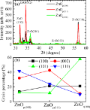
- almost fully agrees with the CL intensity. Reflectance spectra The reflectance spectra of the three samples were measured, as shown in Figure 8. It shows that the difference in the reflectance spectra between the ZnOp(100) and ZnOp(111) samples is insignificant. The ZnOt(100) sample has smaller
- reflectance due to the additional texture provided by the micrometer-sized pyramid structure of the texture Si(100) substrate. Therefore, it could be concluded that the antireflection function provided by theses samples mostly results from the nanometer-sized texture of the ZnO films while the micrometer



![[Graphic 2]](/bjnano/content/inline/2190-4286-8-194-i4.png?max-width=637&scale=1.18182) × lattice constant a) by 5.20 Å (l...
× lattice constant a) by 5.20 Å (l...